- Prince Mahāsattva and the Tigress
- The Boy Who Made Flowers Fall from the Sky
- The Golden Deer King
- The Golden Elephant and the Monk's Journey
- The Lamp That Changed Destiny
- The Patient Buffalo
- The Silver Tusked Savior
- The White Cloth
- The Mirror Clarifying the Results of Karma: Chapter 1
- The Mirror Clarifying the Results of Karma: Chapter 10
- The Mirror Clarifying the Results of Karma: Chapter 2
- The Mirror Clarifying the Results of Karma: Chapter 3
- The Mirror Clarifying the Results of Karma: Chapter 4
- The Mirror Clarifying the Results of Karma: Chapter 5
- The Mirror Clarifying the Results of Karma: Chapter 6
- The Mirror Clarifying the Results of Karma: Chapter 7
- The Mirror Clarifying the Results of Karma: Chapter 8
- The Mirror Clarifying the Results of Karma: Chapter 9
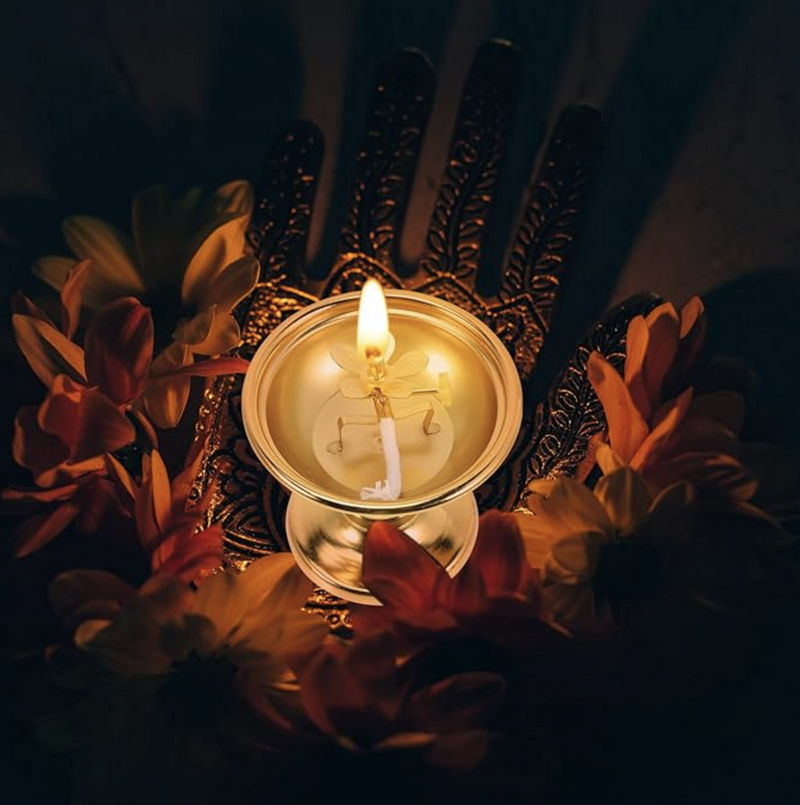
This Buddhist parable tells the story of Nima, a destitute woman in ancient Śrāvastī who sacrifices her only coin to offer a humble oil lamp to the Buddha instead of buying food for herself after two days without eating. Her lamp miraculously continues burning long after the elaborate offerings from wealthy donors extinguish. The Buddha reveals that Nima's perfect generosity—giving from need rather than excess—created an inextinguishable light. He prophesies that she will become the Buddha Dīpaṃkara ("Maker of Light") in a future age. The tale illustrates the Buddhist principle that the intention behind an offering matters more than its size, and that genuine sacrifice from the heart creates the greatest merit. This story comes from one of many stories in The Sutra of the Wise and Foolish, (མདོ་མཛངས་བླུན། mdo mdzangs blun), Damamūkasūtra.
- This is a creative retelling of a story from the traditional Jātakamāla and not an exact translation of the text.
Once, long ago in the ancient city of Śrāvastī, there lived a woman named Nima, though most people in town simply called her "the beggar." Every day, she walked the dusty streets with her small wooden bowl, hoping for a few scraps or coins to survive another day.
Nima hadn't always been poor. In a past life—though she couldn't remember it—she had been a wealthy noblewoman, married to a prince. But one careless moment of pride had changed everything.
It was the festival of lights, and most people in Śrāvastī were bustling around with excitement. The air smelled of incense and sweet pastries. Children ran laughing through the marketplace, and merchants called out their wares. But while others prepared for celebration, Nima huddled in the shadows, watching.
The king and his ministers swept by in a grand procession, carrying elaborate gifts for the Buddha, who was staying at Jetavana Grove. Noble families followed with baskets of fruit, fine silks, and golden ornaments. Even the humble shopkeepers and farmers brought bundles of fresh vegetables and newly woven cloth.
Nima pressed herself against a wall, trying to become invisible. Her stomach ached with hunger—she hadn't eaten in two days. But what hurt more was the weight of shame and regret.
"What terrible things must I have done in my past lives," she whispered to herself, "to be born so poor that I cannot even make a simple offering to the Awakened One?"
A tear slid down her weathered cheek. She'd spent the entire day begging but had received only a single copper coin—not enough for food, certainly not enough for any kind of offering. The Buddha was the field where merit could be planted, but she had no seed to sow.
That evening, clutching her single coin, Nima made a decision. Rather than buying food, she would spend her only money on something to offer the Buddha. With trembling legs, she walked to the oil merchant's stall just as he was closing for the day.
"I wish to buy some oil," she said softly, holding out her coin.
The merchant laughed. "One coin? That won't buy enough oil to keep a lamp lit for even an hour. What could you possibly want with such a small amount?"
Nima looked directly into his eyes. "I have nothing else. I haven't eaten in two days. But rather than feed myself, I wish to offer a lamp to the Buddha."
The oil merchant's expression changed. He studied her face, saw the sincerity there, and something stirred in his heart. Without a word, he filled a small clay lamp with the finest oil and added a new wick.
"Take this," he said, handing it to her. "I've given you ten times what your coin would buy. May your offering bring light to your life as well."
Nima cradled the lamp carefully as she made her way to Jetavana Grove. The monastery grounds were already glowing with hundreds of lamps offered by wealthy donors. Monks moved silently between buildings, and the soft sound of chanting floated on the evening breeze.
Finding a small space near the Buddha's dwelling, she knelt and placed her humble lamp among the more elaborate offerings. As she lit the wick, she closed her eyes and made a heartfelt wish:
"I have nothing but this tiny lamp to offer. By this small act of generosity, may I someday gain the wisdom to dispel the darkness of ignorance in all beings. May I become a light for the world."
As night fell, people returned to their homes. The monks retired to their meditation. One by one, the grand lamps offered by the wealthy began to flicker and die as their oil was consumed. Yet somehow, Nima's small lamp continued to burn, its flame growing stronger and brighter with each passing hour.
By dawn, when Elder Maudgalyāyana came to collect the spent lamps, he was astonished to find one still burning brilliantly. Puzzled, he tried to blow it out—it continued to shine. He attempted to snuff it with his fingers—the flame remained steady. Even when he tried to smother it with his robe, the lamp burned on.
The Buddha, watching from the doorway of his dwelling, smiled.
"What are you trying to do, Maudgalyāyana?" he asked.
"This lamp should have burned out hours ago, yet it's still alight. It seems unnatural," the monk replied.
"You could pour all the waters of the four great oceans over that flame, and still it would not be extinguished," said the Buddha. "That lamp was offered with the purest intention, by someone who gave not from excess, but from need. Such generosity creates a light that cannot be extinguished."
That very morning, Nima returned to the monastery. Though weak from hunger, her heart was lighter than it had been in years. She wanted to see if her lamp had lasted the night, never expecting the miracle she would find.
When she saw her lamp still burning among the extinguished offerings of the wealthy, she fell to her knees in wonder. The Buddha approached her, his face radiating compassion.
"You gave everything you had," he said gently. "Such perfect generosity is rare, even among the gods."
Tears filled Nima's eyes as the Buddha continued: "In a future time, after two kalpas have passed, you will become a fully enlightened Buddha known as Dīpaṃkara—"Maker of Light." Your wisdom will illuminate countless worlds, and beings beyond measure will find liberation through your teachings."
The monastery erupted with excitement at this prophecy. The king, hearing what had happened, immediately sent servants with food, clothing, and shelter for Nima. Inspired by her example, children and adults from every corner of the city—from the wealthiest nobles to the humblest servants—brought lamps to offer. For seven days, the Jetavana Grove blazed with thousands of lights, like stars brought down from heaven.
Nima asked to join the Buddha's order of nuns, a request he granted immediately. As she received her robes, her past was revealed to her—how she had once been a wealthy noblewoman who had become angry when the Buddha visited a poor woman's house before her own. That moment of pride and anger had led to five hundred lifetimes of poverty.
Yet even in her suffering, she had found the path to ultimate joy. Through one small lamp, offered with a pure heart, she had kindled a light that would eventually lead countless beings from darkness to awakening.
As the Buddha later explained to his disciple Ānanda: "This is why I teach that what matters is not the size of the gift but the intention behind it. The greatest offering is that which comes from the heart, especially when giving means sacrificing something essential to oneself."
To this day, people still tell the story of the beggar woman's lamp—how a single act of perfect generosity, performed with unwavering faith, can illuminate the darkest night and transform the most humble life into one of extraordinary purpose.[1]
Other Stories from the Jātaka Tales
Notes
- ↑ Source for this story: http://www.rkts.org/etexts/complete.php?id=D341&coll=D.
