Bodhicaryāvatāra and Tibetan Mind Training (Lojong)
Articles/Bodhicaryāvatāra and Tibetan Mind Training (Lojong)
| 🤓 Admin Zone 🛠️ hidden to non-admins | |
- A Buddhist 'good life' Theory: Śāntideva's Bodhicaryāvatāra
- A Buddhist Carol
- A Fearless Heart
- A Flash of Lightning in the Dark of Night
- A Mirror Is for Reflection
- A Study of the Wisdom Chapter (Prajñāpāramitā Pariccheda) of the Bodhicaryāvatārapañjikā of Prajñākaramati
- Altruism as Antidote to Demagoguery: Shantideva’s Bodhicharyavatara Chapter 3 as Method for Countering Identity Divisions
- An Argument for Cittamātra: Reflections on Bodhicaryāvatāra 9:28 (Tib. 27) cd
- An Introduction to Buddhist Ethics
- Atiśa's Introduction to the Two Truths, and Its Sources
- Becoming Bodhisattvas
- Bodhi(sattva)caryāvatāra als Lehrschrift und Vorhaben: Zum Thema Ritual, Religion, Philosophie und Mystik im Buddhismus
- Bodhicaryāvatāra 9:2 as a Focus for Tibetan Interpretations of the Two Truths in the Prāsangika Mādhyamika
- Bodhicaryāvatāra and Bodhicaryāvatāra-Pañjikā (Malalasekera)
- Bodhicaryāvatāra and Tibetan Mind Training (Lojong)
- Bodhicaryāvatāra no kihon seikaku: Ichininshō no imi suru mono
- Bodhicharyavatara (Rigpa Shedra Wiki)
- Bodhicitta: Cultivating the Compassionate Mind of Enlightenment
- Bodhisattvacaryāvatāra: Exposition de la pratique des bodhisattvas
- Bodies and Embodiment in the Bodhicaryāvatāra
- Bu ston and the Bodhisattvacaryāvatāravyākhyāna (-pañjikā)
- Buddhist Ethics (2003)
- Buddhist Ethics and Globalization on the Basis of Bodhicaryavatara
- Buddhist Ethics in the Context of Conventional Truth: Path and Transformation
- Built on Emptiness: Śūnyatā as a Basis for Mahāyāna Ethics, With References to Śāntideva’s Bodhicaryāvatāra
- Can We Kill Illusory People? Some Philosophical Reflections on Bodhi(sattva)caryāvatāra 9:11-13ab
- Characteristics of the Buddhist Mongolian Texts: The Lineage of the Bodhicaryāvatāra
- Commentaries on Śāntideva's Bodhicaryāvatāra (Ejima 1966)
- Compassion and Equality
- Compassion in Our Day: Learning from Shantideva
- Consequences of Compassion
- Consequences of Compassion: An Interpretation and Defense of Buddhist Ethics-Review by Meyers
- Courageous Compassion
- Das Ritual der Entschlussfassung im Bodhicaryāvatāra (Kap. II und III)
- Demandingness, Self-Interest and Benevolence in Santideva's Introduction to the Practice of Awakening (Bodhicaryavatara)
- Die "Vollkommenheiten" im BCA und seinen tibetischen Kommentaren
- Die Lehre von Satyadvaya in 'Ju Mi phams Nor bu ke ta ka
- Does "Buddhist Ethics" Exist?
- Does Anātman Rationally Entail Altruism? On Bodhicaryāvatāra 8:101-103
- Drops of Nectar: Khenpo Kunpal's Commentary on Shantideva's Entering the Conduct of the Bodhisattvas
- Dīpaṃkaraśrījñāna's Commentary on the Bodhicaryāvatāra
- Emptiness and Moral Perfection
- Enlightened Vagabond
- Enlightenment to Go
- Epitome of the Bodhicaryāvatāra with Its Pañjikā, Chap. IX
- Ethical Revaluation in the Thought of Śāntideva
- Ethics (Garfield)
- Ethics in Indian and Tibetan Buddhism
- Ethics without Self, Dharma without Atman
- Exchanging Self and Other
- Extreme Giving: The Vessantara Jātaka and Shantideva's A Guide to the Bodhisattva Way of Life
- Fierce Devotion to all Beings: The Role of Emotions in Śāntideva’s Introduction to the Way of the Bodhisattva (Bodhicaryāvatāra)
- Following in the Buddha's Footsteps
- For the Benefit of All Beings
- From Madhyamaka to Consequentialism: A Road Map
- From the Profound View of the Ultimate to Everyday Practice: Tokme Zangpo's Integration of Śāntideva's Teachings into Mind Training
- General Introduction: Śāntideva and His World
- Gleichheit und Mitgefühl: Prajñākaramatis Kommentar zu Bodhicaryāvatāra VIII. 89-108
- Gser gling pa's Bodhisattvacaryāvatārapiṇḍārtha and Its Thought
- Guidance for the Spiritual Caregiver from the Bodhicaryavatara by Shantideva
- Healing Anger
- Healing Anger: The Power of Patience from a Buddhist Perspective-Review by Naga
- Identifying the Object of Negation: On Bodhicaryāvatāra 9:140 (Tib. 139)
- In Praise of Great Compassion
- Innate Human Connectivity and Śāntideva's Cultivation of Compassion
- Introduction to Gzhan gyis brtsad pa'i lan mdor bsdus pa rigs lam rab gsal de nyid snang byed: An Answer to Blo-bzang-rab-gsal's Refutation of the Author's 'Sher le nor bu ke ta ka' and Its Defence, the Brgal lan nyin byed snang ba
- Jitāri, Śāntideva and Prabhākarakīrti
- Le commentaire de Mi-pham au chapitre IX du Bodhicaryāvatāra de Śāntideva: Échos modernes d'une controverse du XVème siècle
- Madhyamaka Ethics
- Making and Remaking the Ultimate in Early Tibetan Readings of Śāntideva
- Mapping the Bodhicaryāvatāra
- Mental Purification (Blo sbyong): A Native Tibetan Genre of Religious Literature
- Mi pham and the Philosophical Controversies of the Nineteenth Century
- Mindfulness and Ethics: Attention, Virtue and Perfection
- Mindfulness and Moral Transformation: Awakening to Others in Śāntideva's Ethics
- Moonpaths: Ethics and Emptiness
- Moral Pluralism, Skillful Means, and Environmental Ethics
- Moral Theory in Śāntideva's Śikṣāsamuccaya
- Moral Theory in Śāntideva's Śikṣāsamuccaya-Review by Osto
- Moral Theory in Śāntideva's Śikṣāsamuccaya: Cultivating the Fruits of Virtue-Review by Goodman
- Nachlese zum Mongolischen Turfanfragment des Bodhicaryāvatāra
- Nichtselbst, Leerheit und Altruistische Ethik im Bodhicaryāvatāra (Lecture Transcript)
- Nichtselbst, Leerheit und Altruistische Ethik im Bodhicaryāvatāra (Official Publication)
- No Time to Lose
- Notes on the Deśanā-ritual in the Bodhicaryāvatāra: Evidence of Its Revision
- Nyubosatsugyō-ron kaisetsu saisho no Shyāntidēva rikai
- On Agama and Yukti in Bu ston's Byang chub sems dpa'i spyod pa la 'jug pa'i 'grel pa
- On Altruism and Rebirth: Philosophical Comments on Bodhicaryāvatāra 8: 97-8
- On Learning to Overhear the "Vanishing Poet"
- On Prakṛtinirvāṇa-Prakṛtinirvṛta in the Bodhicaryāvatāra: A Study in the Indo-Tibetan Commentarial Tradition
- On the Classification of Śāntideva's Ethics in the Bodhicaryāvatāra
- On the Role of Vairocanarakṣita in the Later Transmission Period: A Cross-section of the "Bodhisattva theory" Tradition
- On the Sanskrit Manuscript of the Śikṣāsamuccaya
- On the Textual Problems of Śāntideva's Bodhi(sattva)caryāvatāra: With Special Reference to Chapter 9 Entitled "Perfection of Wisdom (Prajñāpāramitā)"
- On Śāntideva's Position in the History of Mādhyamika Philosophy
- One Aspect of the Acceptance of the Bodhisattva-śīla in Tibet
- Patience and Perspective
- Perfecting Patience
- Performing Text as Practice: Rdza Dpal sprul's Practice Manual on the Bodhi(sattva)caryāvatāra
- Plant Seed, Pull Weed
- Polemics in Indo-Tibetan Scholasticism - A Late 19th-Century Debate Between 'Ju Mi pham and Dpa' ris Rab gsal
- Proof of the Authenticity of the Mahāyāna in Akṣayamati's Bodhi(sattva)caryāvatāra
- Puṇya and Pāp in Public Health: Everyday Religion, Material Culture, and Avenues of Buddhist Activism in Urban Kathmandu
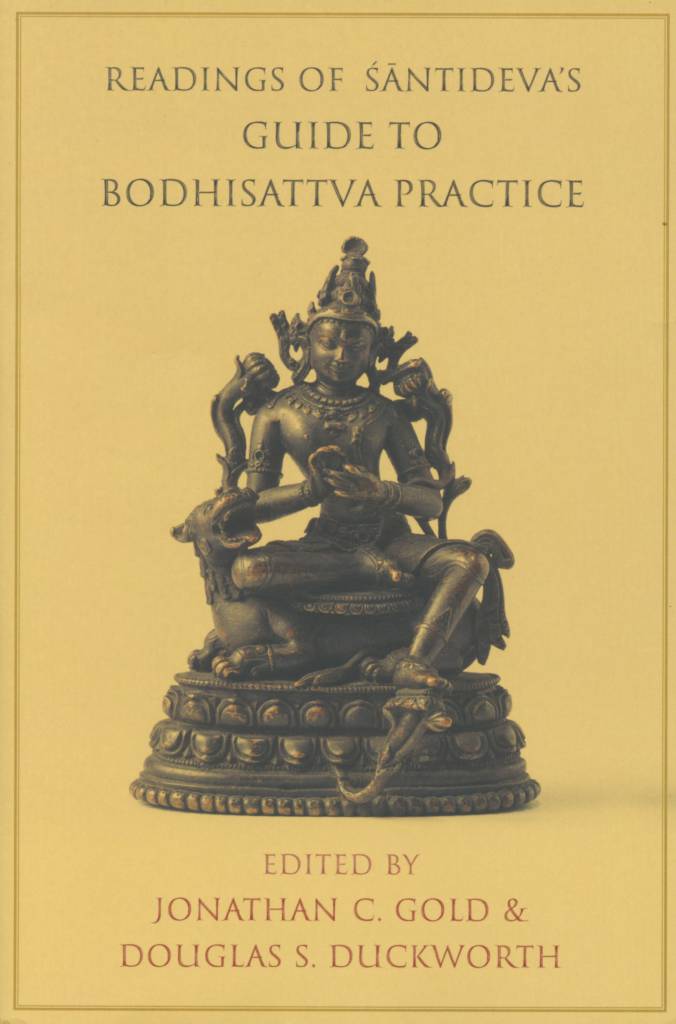
- Readings of Śāntideva's Guide to Bodhisattva Practice
- Readings of Śāntideva's Guide to Bodhisattva Practice-Review by Harris
- Regional Characteristics of Mongolian Buddhism: A Study on the Basis of the Bodhicaryāvatāra
- Remarks on Akṣayamati (Blo gros mi zad pa), Being the Author of the Earlier Version of the Bodhisattvacaryāvatāra
- Remarks on an Instance of Intertextuality in the Eleventh Chapter of the Śikṣāsamuccaya and the Phrase Tṛṇagulmauṣadhivanaspati in Buddhist Sūtra Literature
- Remarks on the Philosophical Standpoint of the Anonymous Commentary, Bodhisattvacaryāvatāravyākhyāna(-pañjikā)
- Remarks on the Tabo Manuscript of the Bodhisattvacaryāvatāra
- René Girard, Śāntideva, and the Emptiness of Desire
- Resentment and Reality: Buddhism on Moral Responsibility
- Ritual Structure and Material Culture in the Guide to Bodhisattva Practice
- Seeing from All Sides
- Self-Protection through Mindfulness, Śāntideva
- Shantideva: How to Wake Up a Hero
- Some New Remarks on the Bodhicaryāvatāra Chapter V
- Stoics and Bodhisattvas: Spiritual Exercise and Faith in Two Philosophical Traditions
- Suffering Made Sufferable: Śāntideva, Dzongkaba, and Modern Therapeutic Approaches to Suffering's Silver Lining
- Suvarṇadvīpa's "Commentaries" on the Bodhicaryāvatāra
- Taming Śāntideva: Tsongkhapa's Use of the Bodhicaryāvatāra
- Tangut Texts of the Five Early Translations and the Texts on the Awakening of the Bodhicitta
- Textcritical Notes on Sanskrit Texts: I. Bodhi(sattva)caryāvatāra
- The Awakening Mind (Tsering 2008)
- The Bodhi-caryâvatāra and Its Monastic Aspects: On the Problem of Representation
- The Bodhicittotpādasamādanāvidhi by Jitari
- The Bodhisattva Doctrine in Buddhist Sanskrit Literature
- The Bodhisattva Guide
- The Bodistw-a Čari-a Awatar-un Tayilbur of 1312 by Čosgi Odsir
- The Buddhist Roots of Secular Compassion Training: A Comparative Study of Compassion Cultivation in Indian and Tibetan Mahāyāna Sources with the Contemporary Secular Program of Compassion Cultivation Training (CCT)
- The Case of 'Ju Mi pham (1846–1912) and Dpa' ris Rab gsal (1840–1912): A Study in Dgag lan Debate
- The Center of the Sunlit Sky
- The Changing Way of the Bodhisattva: Superheroes, Saints, and Social Workers
- The Circle of Compassion: An Interpretive Study of Karuṇā in Indian Buddhist Literature
- The Compassionate Gift of Vice: Śāntideva on Gifts, Altruism, and Poverty
- The Concept of Bodhicitta in Santideva's Bodhicaryavatara
- The Concept of Bodhicitta in Śāntideva's Bodhicaryāvatāra (Diss)
- The Concept of Bodhicitta in Śāntideva's Bodhicaryāvatāra-Review by Edelglass
- The Concept of Bodhicitta in Śāntideva's Bodhicaryāvatāra-Review by Tatz
- The Literature of the Madhyamaka School of Philosophy in India
- The Meaning of Sugata in the Bodhicaryāvatārapañjikā
- The Middle Way of the Bodhisattva
- The Original Bodhicaryāvatāra
- The Reflexive Nature of Awareness (1998)
- The Role of Solitude (viveka) in the Eighth Chapter (Dhyānapāramitā) of the Bodhicaryāvatāra
- The Self and the Suffering Other: Levinas and Śāntideva on the Ethics of Compassion
- The Social Message of Mahayana Buddhism
- The Tanjur Bodhicaryāvatāra Auxiliaries: A Few Collected Bibliographical Pointers
- The Training Anthology of Śāntideva
- The Transmission of the Bodhicaryāvatāra: The History, Diffusion, and Influence of a Mahāyāna Buddhist Text
- The Śāntideva Passage: Bodhicaryāvatāra VIII.90–103
- Two Kinds of Saṃvṛtis in the Bodhicaryāvatārapañjikā IX 3-8
- Uncommon Happiness
- Why War? Why Not Peace? Santideva's Answer to Einstein's Famous Question to Freud
- Zu einer zentralen philosophischen Kontroverse mit den "orthodoxen" Philosophen
- Zum Bodhisattvacāryāvatārabhāṣya des Dīpaṃkaraśrījñāna
- Śāntideva (Internet Encyclopedia of Philosophy)
- Śāntideva and Bodhicaryāvatāra
- Śāntideva and an Ethic of Radical Compassion
- Śāntideva and the Moral Psychology of Fear
- Śāntideva in the History of Mādhyamika Philosophy
- Śāntideva on Roots and Resolutions of Violence
- Śāntideva's Critique of 'I' or Self in the Early and Later Recensions of the Bodhi(sattva)caryāvatāra
- Śāntideva's Impartialist Ethics
- Śāntideva's Philosophy as Expressed in the Early Version of His Bodhisattvacaryāvatāra, Chapter 8
- Śāntideva's Statement about Confession
- Śāntidevas Bodhicaryāvatāra: Das Weiterwirken des Werkes dargestellt anhand der Überlieferungsgeschichte des Textes und seiner Kommentare
Description
All Tibetan sources agree that Śāntideva's Guide to Bodhisattva Practice (Bodhicaryāvatāra, hereafter Guide), one of the most celebrated Indian Buddhist texts, constitutes a principal origin for the Tibetan mind training or lojong tradition. Mind training refers to a specific genre of instructions and their associated spiritual exercises, which include, among others, the famed practice of tonglen, "giving and taking," and traces its immediate origin to the legacy of the Indian Bengali teacher Atiśa, who came to Tibet in the middle of the eleventh century. As in the Guide, the central concern of lojong is to cultivate Mahāyāna Buddhism's highest spiritual ideal of bodhicitta (the altruistic intention to attain enlightenment for the sake of all beings) and to live one's life in accord with that aspiration. The Tibetan term for mind training, lojong, is composed of two syllables, with lo standing for "mind," "thought," or "attitudes," while jong connotes "to purify, cleanse, refine, exercise, or train" (as in sports training). Associated, originally, with the Kadam School of Atiśa (982-1054) and his principal Tibetan disciple Dromtönpa (1005-64), over time, the lojong tradition became part of the common heritage of all Tibetan schools.
Today, as Tibetan Buddhism becomes more widely accessible to the world outside Tibet, it is often the lojong instructions that the Tibetan teachers share first with their new audiences. For example, when His Holiness the Dalai Lama spoke to a crowd of nearly a hundred thousand in New York's Central Park in 1999, he chose the "Eight Verses on Mind Training" as the basis of his talk. When the Dalai Lama returned to speak once more in Central Park in 2002, he chose as the topic for his talk Atiśa's "Bodhisattva's Jewel Garland," an important source text for lojong.
On the surface, the relationship between the Guide and Tibetan mind training appears fairly straightforward. First and foremost, there seems to be a direct link, if not an equivalence, between the exchanging of self and others as outlined in chapter 8 of the Guide and lojong's "giving and taking" (tonglen) meditation, which involves imaginatively taking on others' suffering, misfortune, and negative karma and giving to others one's happiness, good fortune, and positive karma. Second, the Guide is listed as one of the "six treatises of Kadam," which also include Śāntideva's Compendium of Training.[1] Third, most lojong texts, especially since the appearance of Chekawa's "Seven-Point Mind Training" in the twelfth century, seem to contain disproportionately high numbers of citations from the Guide. Fourth, Atiśa's explicit acknowledgment of Serlingpa (literally, "the one from the Island of Sumatra") as the principal source for his instruction on generating bodhicitta, combined with the fact that Serlingpa's approach is thought to emphasize the exchanging of self and others, suggest the Guide to be the direct source of lojong's approach to cultivating bodhicitta.[2] Finally, it cannot be a matter of pure coincidence that most Tibetan masters who have been Guide enthusiasts were also great advocates of lojong. This is true from the earliest Tibetan lojong teachers, especially Langri Thangpa (1054-1123) and Chekawa (1101-75), to Ngulchu Thokmé Sangpo (1297-1371) and Tsongkhapa (1357-1419), and from Yongzin Yeshé Gyaltsen in the eighteenth century to Dza Paltrül in the nineteenth century.
That said, a closer examination reveals that the actual relationship between the Guide and lojong is far more complex. In what follows I shall examine this important question so we might appreciate more accurately how the Guide may have shaped the development of this unique Tibetan tradition. My chapter is divided into four sections. Part 1 presents a brief outline of the key features of lojong so that its unique characteristics—terminology, outlook, and approach, as well as its spiritual exercises—can be recognized. Then, part 2 sketches a broad outline of the central theme of the Guide with specific focus on the unique practice of equalizing and exchanging of self and others as found in its eighth chapter. In part 3 I then correlate the Guide with lojong and trace the Indian sources, especially in Śāntideva, for the specific features of lojong and practice. Finally, in part 4, I conclude with some general observations on the place of the Guide in today's pluralistic world, and how it (and by extension Tibetan mind training) could play an influential role in the growing emergence of Buddhist-derived contemplative practices in the shared public domain, especially in the West. (Jinpa, preliminary remarks, 146–48)
Notes
- For a succinct explanation of the rationale for the choice of these six texts and how they are grouped into three sets of two, including their specific roles in the development of the practitioner on the path, see Kapstein, "Stoics and Bodhisattvas," 102 and note 3.
- On Serlingpa (Dharmakīrti) and Atiśa's relationship with him, including the legend of the latter's travel to the island of Sumatra to receive bodhicitta instructions from Serlingpa, see Shonu and Gyaltsen, eds., Mind Training, introduction as well as "The Story of Atiśa's Voyage to Sumatra," 57-70. On the identity of Serlingpa, see Chattopadaya, Atiśa in Tibet, 84-95.