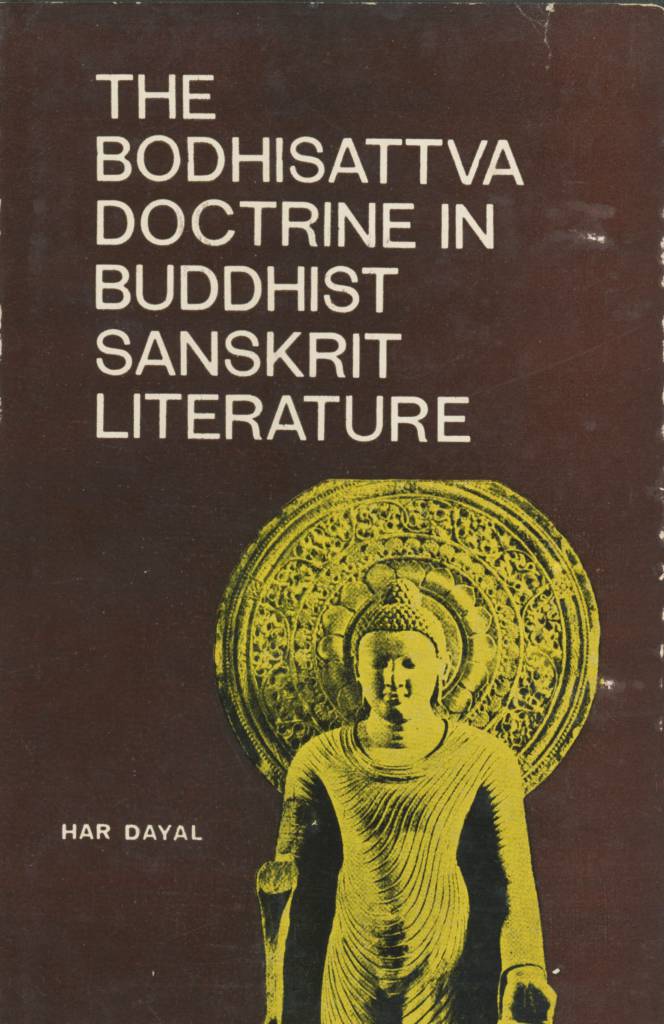
The Bodhisattva Doctrine in Buddhist Sanskrit Literature
From Bodhicitta
< BooksBooks/The Bodhisattva Doctrine in Buddhist Sanskrit Literature
| 🤓 Admin Zone 🛠️ hidden to non-admins | |
The Bodhisattva Doctrine in Buddhist Sanskrit Literature
Book
- A Commentary on Shantideva's Engaging in the Conduct of the Bodhisattvas
- A Dialogue between Thomas Merton on Agape and Shantideva on Karuna: Some Moral Dimensions of a Catholic and Mahayana Exchange
- A Fearless Heart
- A Flash of Lightning in the Dark of Night
- A Mahāyāna Liturgy
- A Precursory Phrase of Tantric Definition of Bodhicitta in the Śāntideva's Śikṣāsamuccaya
- A Short Presentation of Śāntideva's Bodhicaryāvatāra
- A Study of Akṣayamati (Śāntideva)'s Bodhisattvacaryāvatāra as Found in the Tibetan Manuscripts From Tun-huang
- A Summons to Buddhahood: The Bodhicaryavatara as Santideva's Call to Embrace the Bodhicitta
- Account of the Period of the Kings Cala, Pañcamasiṃha and Others
- Akṣayamati and Śāntideva
- Becoming Bodhisattvas
- Bodhi(sattva)caryāvatāra als Lehrschrift und Vorhaben: Zum Thema Ritual, Religion, Philosophie und Mystik im Buddhismus
- Bodhicaryāvatāra and Tibetan Mind Training (Lojong)
- Bodhicitta (Ringu Tulku)
- Bodhicitta and Bodhisattva: A Study of the Bodhicaryāvatāra of Śāntideva
- Bodhicitta and Charity: A Comparison
- Bodhicitta: Cultivating the Compassionate Mind of Enlightenment
- Bodhisattvacaryāvatāra: Exposition de la pratique des bodhisattvas
- Bodhisattvas of the Forest and the Formation of the Mahayana
- Bu ston on the sPyod 'jug (Bodhisattvacaryāvatāra)
- Buddha Mind - Christ Mind
- Buddha's Lions
- Buddhist Ethics (2003)
- Buddhist Texts Through the Ages
- Compassion in Mahayana Buddhism
- Compassion in Our Day: Learning from Shantideva
- Compassion in Schopenhauer and Śāntideva
- Conclusion: The Socratic Paradigm
- Consequentialism, Particularism, and the Emptiness of Persons: A Response to Vishnu Sridharan
- Courageous Compassion
- Cultivating Bodhicitta: Wisdom and Compassion in Śāntideva's Introduction to the Awakened Life
- Das Ritual der Entschlussfassung im Bodhicaryāvatāra (Kap. II und III)
- Demandingness, Self-Interest and Benevolence in Santideva's Introduction to the Practice of Awakening (Bodhicaryavatara)
- Die Aufnahme des Erleuchtungsgeistes: Eine Übersetzung von Prajñākaramatis Bodhicaryāvatārapañjikā 3.1-19
- Die zwei Wahrheiten
- Does Anātman Rationally Entail Altruism? On Bodhicaryāvatāra 8:101-103
- Drops of Nectar: Khenpo Kunpal's Commentary on Shantideva's Entering the Conduct of the Bodhisattvas
- Entering the Path of Enlightenment
- Entering the Path of Enlightenment-Review by Cook
- Entering the Path of Enlightenment-Review by Seyfort Ruegg
- Ethical Revaluation in the Thought of Śāntideva
- Ethics in Schopenhauer and Buddhism
- Ethics in the Śikṣāsamuccaya: A Study in Mahāyāna Morality
- Facts or Fictions: Reconsidering Śāntideva's Names, Life, and Works
- Fierce Devotion to all Beings: The Role of Emotions in Śāntideva’s Introduction to the Way of the Bodhisattva (Bodhicaryāvatāra)
- Following in the Buddha's Footsteps
- For the Benefit of All Beings
- From the Profound View of the Ultimate to Everyday Practice: Tokme Zangpo's Integration of Śāntideva's Teachings into Mind Training
- General Introduction: Śāntideva and His World
- Gleichheit und Mitgefühl: Prajñākaramatis Kommentar zu Bodhicaryāvatāra VIII. 89-108
- How to Be a Bodhisattva: Introduction to the Practice of the Bodhisattva Path (The Bodhicaryāvatāra)
- In Praise of Great Compassion
- Innate Human Connectivity and Śāntideva's Cultivation of Compassion
- La légende de Śāntideva
- Love in Christianity and Buddhism: A Comparative Study of Thomas Aquinas's Summa Theologiae and Śāntideva's Bodhicaryāvatāra
- Mahasiddhas: La vie de 84 sages de l'Inde
- Mapping the Bodhicaryāvatāra
- Masters of Mahāmudrā
- Mental Purification (Blo sbyong): A Native Tibetan Genre of Religious Literature
- Mindfulness and Moral Transformation: Awakening to Others in Śāntideva's Ethics
- Moral Theory in Śāntideva's Śikṣāsamuccaya
- Moral Theory in Śāntideva's Śikṣāsamuccaya-Review by Osto
- Moral Theory in Śāntideva's Śikṣāsamuccaya: Cultivating the Fruits of Virtue-Review by Goodman
- No Time to Lose
- On Akṣayamati's Bodhisattvacaryāvatāra
- One Aspect of the Acceptance of the Bodhisattva-śīla in Tibet
- Peaceful Heart
- Perfecting Patience
- Performing Text as Practice: Rdza Dpal sprul's Practice Manual on the Bodhi(sattva)caryāvatāra
- Plant Seed, Pull Weed
- Proof of the Authenticity of the Mahāyāna in Akṣayamati's Bodhi(sattva)caryāvatāra
- Readings of Śāntideva's Guide to Bodhisattva Practice
- Readings of Śāntideva's Guide to Bodhisattva Practice-Review by Harris
- Reason, Irrationality and Akrasia (Weakness of the Will) in Buddhism: Reflections upon Śāntideva's Arguments with Himself
- Remarks on Akṣayamati (Blo gros mi zad pa), Being the Author of the Earlier Version of the Bodhisattvacaryāvatāra
- Ritual Structure and Material Culture in the Guide to Bodhisattva Practice
- Santideva's Bodhicaryāvatāra
- Santideva, un mistico del Buddhismo
- Seeing from All Sides
- Self-Protection through Mindfulness, Śāntideva
- Shantideva (From Butön's History of Buddhism in India and Its Spread to Tibet, Translated by Lisa Stein and Ngawang Zangpo)
- Shantideva (Nariman)
- Shantideva and Bodhicaryavatara: A Close Reading
- Shantideva's Bodhicaryavatara: An Internal Pilgrimage to Universal Peace and Compassion
- Shantideva's Teaching
- Shāntideva (Tib. Shi-wa-lha)
- Stotra, Psychological Conditioning, and the Bodhicaryāvatāra: Together with a Translation of the Bodhicittānuśaṃsapariccheda
- Suffering Made Sufferable: Śāntideva, Dzongkaba, and Modern Therapeutic Approaches to Suffering's Silver Lining
- The Awakening Mind (Tsering 2008)
- The Bodhi-caryâvatāra and Its Monastic Aspects: On the Problem of Representation
- The Bodhisattva Doctrine in Buddhist Sanskrit Literature
- The Bodhisattva Guide
- The Bodhisattva and the Ideal of Moral Wisdom in Śāntideva's Śikṣāsamuccaya
- The Buddhist Roots of Secular Compassion Training: A Comparative Study of Compassion Cultivation in Indian and Tibetan Mahāyāna Sources with the Contemporary Secular Program of Compassion Cultivation Training (CCT)
- The Center of the Sunlit Sky
- The Circle of Compassion: An Interpretive Study of Karuṇā in Indian Buddhist Literature
- The Concept of Bodhicitta in Santideva's Bodhicaryavatara
- The Concept of Bodhicitta in Śāntideva's Bodhicaryāvatāra (Diss)
- The Concept of Bodhicitta in Śāntideva's Bodhicaryāvatāra-Review by Edelglass
- The Concept of Bodhicitta in Śāntideva's Bodhicaryāvatāra-Review by Tatz
- The Contrasts between the Bodhisattvayāna and the Śrāvakayāna in the Śikṣāsamuccaya's Theory of Bodhicitta
- The Ethics of Śaṅkara and Śāntideva
- The Ethics of Śaṅkara and Śāntideva-Review by Abramson
- The Ethics of Śaṅkara and Śāntideva-Review by Javanaud
- The Ethics of Śaṅkara and Śāntideva-Review by O'Leary
- The Literature of the Madhyamaka School of Philosophy in India
- The Mahāsiddha Bhusuku (Śāntideva), The Idle Monk
- The Masters and Poets of the Mahāyāna
- The Perfection of Wisdom (Schopen)
- The Resolve to Become a Buddha
- The Self and the Suffering Other: Levinas and Śāntideva on the Ethics of Compassion
- The Training Anthology of Śāntideva
- The Triskandha, Practice in Three Parts: Study of an Early Mahāyāna Buddhist Ritual
- Uncommon Happiness
- Virtues-Pāramitās: St. Ignatius of Loyola and Śāntideva as Companions on the Way of Life
- Waking into Compassion: The Three Ālambana of Karuṇā
- Śāntideva (Internet Encyclopedia of Philosophy)
- Śāntideva (Potter, Kalupahana, and Sweet)
- Śāntideva (Stanford Encyclopedia of Philosophy)
- Śāntideva and Bodhicaryāvatāra
- Śāntideva and an Ethic of Radical Compassion
- Śāntideva and the Moral Psychology of Fear
- Śāntideva and the Mādhyamika: The Prajñāpāramitā-Pariccheda of the Bodhicaryāvatāra
- Śāntideva as a Mantracarin
- Śāntideva in the History of Mādhyamika Philosophy
- Śāntideva on Developing the Thought of Awakening
- Śāntideva's Criticism of Vijñānavāda and Bodhicitta
- Śāntideva's Impartialist Ethics
- Śāntideva's Statement about Confession
- Śāntideva, A Mystic of Buddhism
- Śāntideva, il Bodhicaryāvatāra e le kārikā del Śikṣāsamuccaya
- Śāntideva, il Bodhicaryāvatāra e le kārikā del Śikṣāsamuccaya-Review by Pāsādika
- Śāntideva: Mystique Bouddhiste des VIIe et VIIIe siècles
- Śāntideva: Mystique Bouddhiste des VIIe et VIIIe siècles-Review by Cabezón
- Śāntideva: The Author and His Project
- Śāntidevas Bodhicaryāvatāra: Das Weiterwirken des Werkes dargestellt anhand der Überlieferungsgeschichte des Textes und seiner Kommentare
Please note that many items in our library are simply pages that represent a detailed library catalog entry and citation of someone else's work, presentation, or performance. Read our General Disclaimer for more information. You can find more information about this item on the publisher website.

Description
The present work consists of seven chapters that deal with the Bodhisattva doctrine as expounded in the principal Buddhist Sanskrit Literature. Chapter 1 describes the nature of the Bodhisattva doctrine with particular stress on the distinct characteristics of arhat, Bodhisattva and śrāvaka. Chapter II recounts the different factors including the influence Persian religio-cult, Greek art and Christian ethics that contributed to the rise and growth of the Bodhisattva doctrine. Chapter III expounds the production of the thought of Enlightenment for the welfare and liberation of all creatures. Chapter IV describes thirty-seven practices and principles conducive to the attainment of Enlightenment. Chapter V explains the ten perfections that lead to welfare, rebirth, serenity, spiritual cultivation, and supreme knowledge. Chapter VI states different stages of spiritual progress in the aspirant's long journey to the goal of final emancipation and Chapter VII relates the events of the Gautama Buddha's past lives as Bodhisattva. The book contains comprehensive notes and references besides a general index appended at the end. It is written in a very lucid style that speaks of the writer's scholarly acumen and mastery of literary art. (Source: Motilal Banarsidass)
Citation
Dayal, Har. The Bodhisattva Doctrine in Buddhist Sanskrit Literature. Delhi: Motilal Banarsidass, 1970. First published 1932 by K. Paul, Trench, Trubner & Co. (London). https://ahandfulofleaves.files.wordpress.com/2013/07/the-bodhisattva-doctrine-in-buddhist-sanskrit-literature_dayal.pdf.
Publisher Link
Table of contents
- Chap.Page
- List of Abbreviationsxi
- I. The Bodhisattva Doctrine1
- II. Origin and Development of the Bodhisattva Doctrine30
- III. The Thought of Enlightenment50
- IV. The Thirty-Seven "Dharmas"80
- V. The Pāramitās165
- VI. The Bhūmis270
- VII. The Last Life and Enlightenment292
- Notes and References319
- Appendix382
- Index387
Interconnections
1 Scholarship on
.jpg)
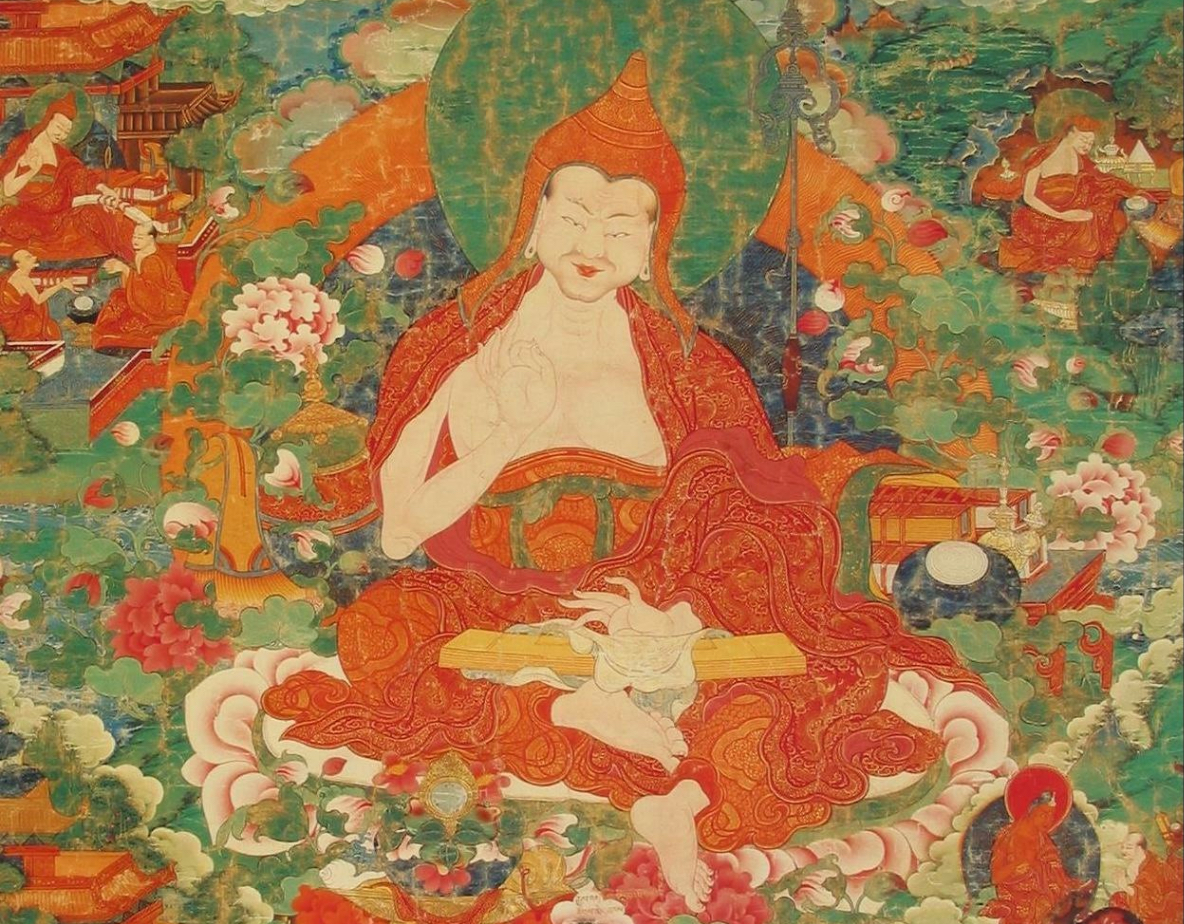
The Bodhisattvabhūmi (literally "The Stage of a Bodhisattva") stands as one of the most comprehensive and systematic expositions of the Mahāyāna Buddhist path from classical India. Formally the fifteenth section of the massive Yogācārabhūmi corpus, this foundational treatise provides an encyclopedic manual detailing the entire spiritual trajectory of a bodhisattva—from the initial arising of the "mind of awakening" (bodhicitta) to the ultimate attainment of perfect buddhahood.
Traditionally attributed to Ārya Asaṅga (c. fourth–fifth century CE) through revelation from the future buddha Maitreya, the text likely represents a compilation of earlier materials (c. 230–300 CE) that predates the fully developed Yogācāra philosophical system. Its existence in multiple Chinese translations from the early fifth century onward confirms its early date and widespread influence across Asian Buddhism.