Ritual Structure and Material Culture in the Guide to Bodhisattva Practice
| 🤓 Admin Zone 🛠️ hidden to non-admins | |
- A Fearless Heart
- A Flash of Lightning in the Dark of Night
- A Mahāyāna Liturgy
- Becoming Bodhisattvas
- Bodhicaryāvatāra and Tibetan Mind Training (Lojong)
- Bodhicitta: Cultivating the Compassionate Mind of Enlightenment
- Bodhisattvacaryāvatāra: Exposition de la pratique des bodhisattvas
- Buddhist Ethics (2003)
- Comparative Confession: A Comparative Study of Confession in the Writings of Tertullian, Cassian, and Śāntideva
- Courageous Compassion
- Das Ritual der Entschlussfassung im Bodhicaryāvatāra (Kap. II und III)
- Demandingness, Self-Interest and Benevolence in Santideva's Introduction to the Practice of Awakening (Bodhicaryavatara)
- Ethical Revaluation in the Thought of Śāntideva
- Features of Śraddhā in the Śikṣāsamuccaya
- Following in the Buddha's Footsteps
- For the Benefit of All Beings
- From the Profound View of the Ultimate to Everyday Practice: Tokme Zangpo's Integration of Śāntideva's Teachings into Mind Training
- In Praise of Great Compassion
- Mapping the Bodhicaryāvatāra
- Mental Purification (Blo sbyong): A Native Tibetan Genre of Religious Literature
- No Time to Lose
- Notes on the Deśanā-ritual in the Bodhicaryāvatāra: Evidence of Its Revision
- On the Pariṇāmanā Chapter of the Bodhicaryāvatāra
- One Aspect of the Acceptance of the Bodhisattva-śīla in Tibet
- Perfecting Patience
- Performing Text as Practice: Rdza Dpal sprul's Practice Manual on the Bodhi(sattva)caryāvatāra
- Plant Seed, Pull Weed
- Readings of Śāntideva's Guide to Bodhisattva Practice
- Readings of Śāntideva's Guide to Bodhisattva Practice-Review by Harris
- Ritual Structure and Material Culture in the Guide to Bodhisattva Practice
- Seeing from All Sides
- Self-Protection through Mindfulness, Śāntideva
- Suffering Made Sufferable: Śāntideva, Dzongkaba, and Modern Therapeutic Approaches to Suffering's Silver Lining
- The Awakening Mind (Tsering 2008)
- The Bodhisattva Doctrine in Buddhist Sanskrit Literature
- The Bodhisattva Guide
- The Buddhist Roots of Secular Compassion Training: A Comparative Study of Compassion Cultivation in Indian and Tibetan Mahāyāna Sources with the Contemporary Secular Program of Compassion Cultivation Training (CCT)
- The Concept of Bodhicitta in Santideva's Bodhicaryavatara
- The Concept of Bodhicitta in Śāntideva's Bodhicaryāvatāra-Review by Edelglass
- The Concept of Bodhicitta in Śāntideva's Bodhicaryāvatāra-Review by Tatz
- The Triskandha, Practice in Three Parts: Study of an Early Mahāyāna Buddhist Ritual
- Uncommon Happiness
- Śāntideva (Internet Encyclopedia of Philosophy)
- Śāntideva and the Moral Psychology of Fear
- Śāntideva's Statement about Confession
Description
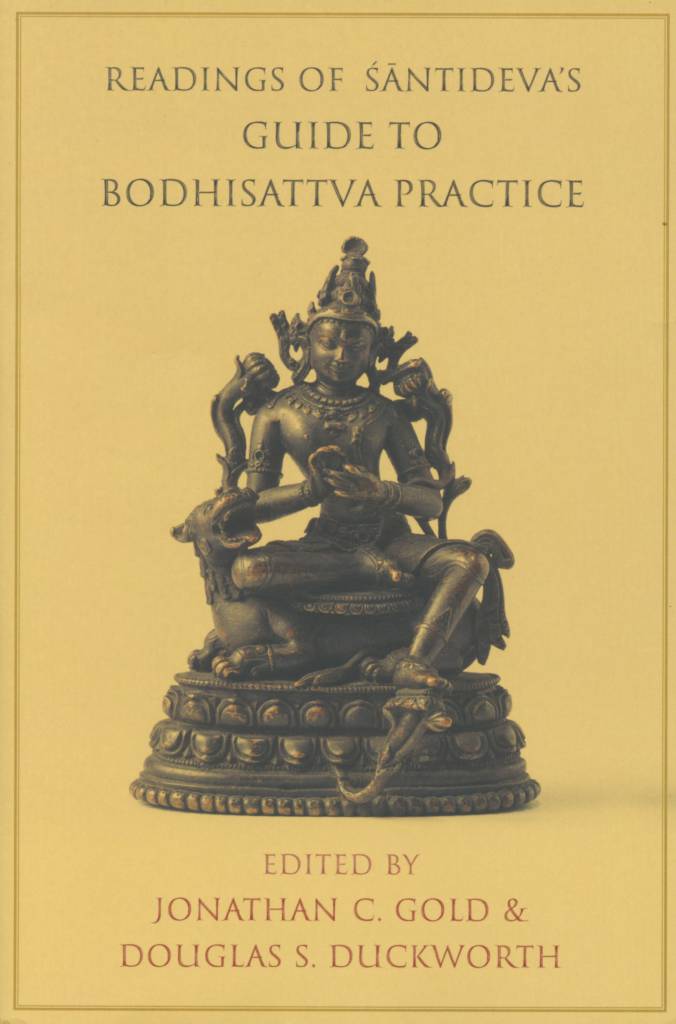
The Guide to Bodhisattva Practice (Bodhicaryāvatāra, henceforth Guide) is rightly praised as a literary masterpiece of philosophy and ethics, so some modern readers might be surprised to learn of the importance of ritual and devotion both in Śāntideva's own text and in its broader reception in Buddhist history. Indeed, while the Guide compellingly portrays the internal struggles of an author, it clearly relies on a framework of common Buddhist practices and even serves as a basis for ritual in and of itself. If nothing else, such rituals provide a structure that reinforces specific progressions along the Buddhist path. Complementing the personal transformations through self-awareness that are foregrounded by the text, these rituals employ faith in higher powers and repetition to bolster the practitioner at critical moments. Accompanying its captivating philosophy and ethics, then, the Guide can be read to reveal actual practices of physical and material worship, such as making offerings to artistic images of the Buddha placed on an altar. Such activities are among the most common forms of Buddhist religiosity, and while they are only loosely addressed in Śāntideva's training text, they clearly underlie its composition and practice.
This chapter investigates the overall ritual structure of the Guide and describes material practices that correspond to specific passages. As with many aspects of Buddhist tradition, these rituals allow multiple, simultaneous levels of interpretation. In one sense, many of the rituals of the text directly support its well-known goals of mental transformation. Rituals of confession and dedication, in which one repeatedly rejects bad actions and devotes oneself to the benefit of others, may be considered mechanisms for improving the habits of one's mind. Such practices can also be understood in terms of faith and material performance. Confession, for example, depends on the real or imagined presence of a more awakened being to act as recipient and help subjects overcome the negative consequences of their past mistakes. The confession ritual described later in this chapter invokes thirty-five separate buddhas who are frequently depicted in paintings as a visual support for the practice. More elaborate rituals of offering involve not only artistic images of buddhas but also the daily placement of precious substances on altars, recitations, and other activities rarely noted when the Guide is treated solely in terms of its doctrines. (Huntington, introductory remarks, 132–33)