On Learning to Overhear the "Vanishing Poet"
| 🤓 Admin Zone 🛠️ hidden to non-admins | |
- A Buddhist 'good life' Theory: Śāntideva's Bodhicaryāvatāra
- A Buddhist Carol
- A Fearless Heart
- A Guide to the Bodhisattva Way of Life
- A Guide to the Bodhisattva's Way of Life of Shantideva (2002)
- A Mirror Is for Reflection
- A Study of the Wisdom Chapter (Prajñāpāramitā Pariccheda) of the Bodhicaryāvatārapañjikā of Prajñākaramati
- Altruism as Antidote to Demagoguery: Shantideva’s Bodhicharyavatara Chapter 3 as Method for Countering Identity Divisions
- An Introduction to Buddhist Ethics
- Becoming Bodhisattvas
- Bodhicaryāvatāra and Tibetan Mind Training (Lojong)
- Bodhicaryāvatāra-pañjikā VIII.90-103 by Prajñākaramati, Commenting on Śāntideva
- Bodhicaryāvatāra: Governing the Bodhisattvas Way of Life
- Bodies and Embodiment in the Bodhicaryāvatāra
- Buddha Mind - Christ Mind
- Buddhist Ethics and Globalization on the Basis of Bodhicaryavatara
- Buddhist Ethics in the Context of Conventional Truth: Path and Transformation
- Built on Emptiness: Śūnyatā as a Basis for Mahāyāna Ethics, With References to Śāntideva’s Bodhicaryāvatāra
- Can We Kill Illusory People? Some Philosophical Reflections on Bodhi(sattva)caryāvatāra 9:11-13ab
- Compassion in Our Day: Learning from Shantideva
- Consequences of Compassion
- Consequences of Compassion: An Interpretation and Defense of Buddhist Ethics-Review by Meyers
- Demandingness, Self-Interest and Benevolence in Santideva's Introduction to the Practice of Awakening (Bodhicaryavatara)
- Die Aufnahme des Erleuchtungsgeistes: Eine Übersetzung von Prajñākaramatis Bodhicaryāvatārapañjikā 3.1-19
- Does "Buddhist Ethics" Exist?
- Does Anātman Rationally Entail Altruism? On Bodhicaryāvatāra 8:101-103
- Emptiness and Moral Perfection
- Enlightenment to Go
- Entering the Path of Enlightenment
- Ethics (Garfield)
- Ethics in Indian and Tibetan Buddhism
- Ethics without Self, Dharma without Atman
- Extreme Giving: The Vessantara Jātaka and Shantideva's A Guide to the Bodhisattva Way of Life
- From Madhyamaka to Consequentialism: A Road Map
- Guidance for the Spiritual Caregiver from the Bodhicaryavatara by Shantideva
- Healing Anger
- Healing Anger: The Power of Patience from a Buddhist Perspective-Review by Naga
- Indian Madhyamaka Buddhist Philosophy after Nagarjuna, Vol. 2
- Innate Human Connectivity and Śāntideva's Cultivation of Compassion
- Madhyamaka Ethics
- Mapping the Bodhicaryāvatāra
- Moonpaths: Ethics and Emptiness
- Moral Pluralism, Skillful Means, and Environmental Ethics
- Moral Theory in Śāntideva's Śikṣāsamuccaya
- Moral Theory in Śāntideva's Śikṣāsamuccaya-Review by Osto
- Moral Theory in Śāntideva's Śikṣāsamuccaya: Cultivating the Fruits of Virtue-Review by Goodman
- On Altruism and Rebirth: Philosophical Comments on Bodhicaryāvatāra 8: 97-8
- On Learning to Overhear the "Vanishing Poet"
- On the Classification of Śāntideva's Ethics in the Bodhicaryāvatāra
- Patience and Perspective
- Plant Seed, Pull Weed
- Prajñākaramati on Śāntideva's Case Against Anger: A Translation of Bodhicaryāvatāra-pañjikā VI.1-69
- Puṇya and Pāp in Public Health: Everyday Religion, Material Culture, and Avenues of Buddhist Activism in Urban Kathmandu
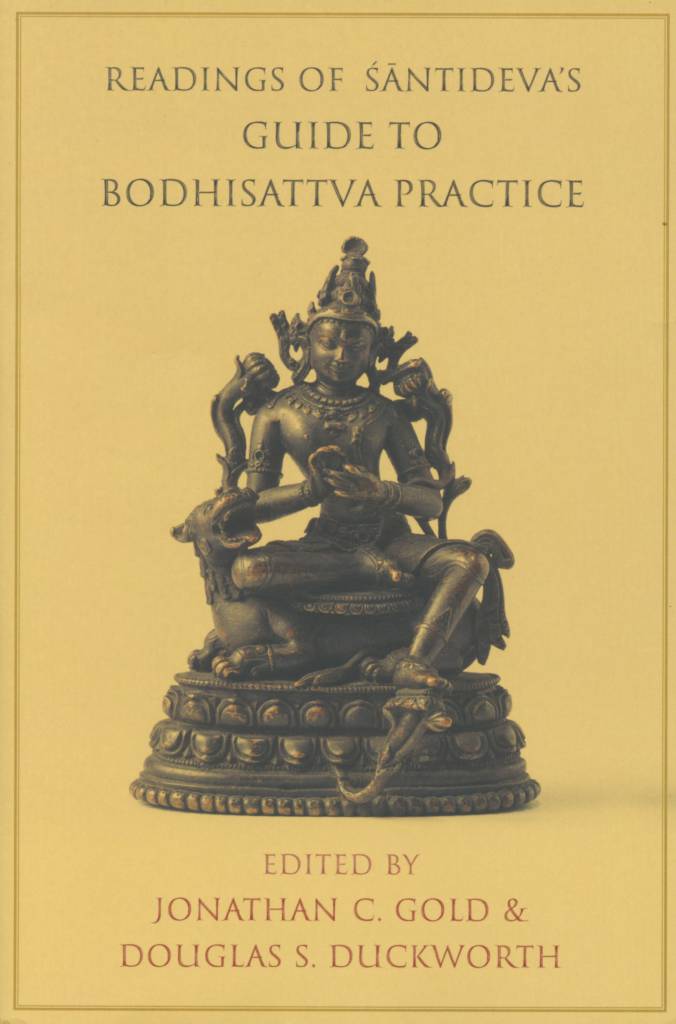
- Readings of Śāntideva's Guide to Bodhisattva Practice
- Readings of Śāntideva's Guide to Bodhisattva Practice-Review by Harris
- René Girard, Śāntideva, and the Emptiness of Desire
- Resentment and Reality: Buddhism on Moral Responsibility
- Santideva's Bodhicharyavatara (Weeraratne)
- Shantideva: How to Wake Up a Hero
- Stoics and Bodhisattvas: Spiritual Exercise and Faith in Two Philosophical Traditions
- Studies in the Philosophy of the Bodhicaryāvatāra (2000)
- The Bodhi-caryâvatāra and Its Monastic Aspects: On the Problem of Representation
- The Bodhicaryāvatāra: A Guide to the Buddhist Path to Awakening
- The Changing Way of the Bodhisattva: Superheroes, Saints, and Social Workers
- The Compassionate Gift of Vice: Śāntideva on Gifts, Altruism, and Poverty
- The Path of Light (1909)
- The Path of Light (1959)
- The Self and the Suffering Other: Levinas and Śāntideva on the Ethics of Compassion
- The Social Message of Mahayana Buddhism
- The Training Anthology of Śāntideva
- Why War? Why Not Peace? Santideva's Answer to Einstein's Famous Question to Freud
- Śāntideva and an Ethic of Radical Compassion
- Śāntideva on Roots and Resolutions of Violence
- Śāntideva's Impartialist Ethics
- Śāntidēva's Bodhicharyāvatāra
Description
Truly, Śāntideva is "the vanishing poet." Paul Harrison once memorably characterized him thus when speaking of Śāntideva's Training Anthology (Śikṣāsamuccaya). He had in mind the curious fact that editors and readers often found themselves lost in the woods of what was presented as continuous prose in our editions, failing to see that more than a few trees among the thickets were lyrical verses. When verses were identified as such, many were identified as being citations rather than Śāntideva's own compositions.[1] To speak of "the vanishing poet," then, can mean that we have not always been in a position even to begin to hear Śāntideva aright, much less to interpret him.
In a sense, the poet Śāntideva vanishes even when we read the Guide. It is easy enough to speak of the beauty of individual verses, but Louis
Gómez is right: "Alas, for all our expressed admiration for the poetical beauty of [the Guide], we do not have to date any detailed explorations of the literary characteristics and merits of the work."[2] Nor, to the best of my knowledge, have even individual verses received the kind of literary attention they so richly deserve. Consider what follows, then, to be a very tentative introduction to the vanishing poet, and merely one cautiously suggested orientation to an altogether remarkable work. (Kachru, introductory remarks, 60)
Notes
- Harrison, "The Case of the Vanishing Poet," 215-248; see also Harrison, "Verses by Śāntideva in the 'Śikṣāsamuccaya.'"
- Gómez, "The Way of the Translators," 267. See also the remarks of Kate Crosby and Andrew Skilton about being cautious when assessing Śāntideva's literary merits, particularly in light of the norms and values of literature (kāvya) in Sanskrit, in Śāntideva, The Bodhicaryāvatāra, trans. Crosby and Skilton, xxxviii-xxxix.


Translation of selected verses.