Explore: Difference between revisions
No edit summary |
(VSCode edit) |
||
| (12 intermediate revisions by 3 users not shown) | |||
| Line 1: | Line 1: | ||
<div class="d-none"> | <div class="d-none">__NOTOC____NOEDITSECTION__{{RemoveFirstHeading}}</div>{{#widget:CustomExpandLinks}} | ||
| Line 5: | Line 5: | ||
|title=Explore | |title=Explore | ||
|subtitle=Wisdom and compassion as a way of life | |subtitle=Wisdom and compassion as a way of life | ||
}}{{ | }}{{ReadingTime}} | ||
| Line 14: | Line 14: | ||
|classes=my-5 | |classes=my-5 | ||
|header=Bodhicitta and the Path of the Bodhisattva | |header=Bodhicitta and the Path of the Bodhisattva | ||
|text=The bodhisattva path, which ultimately leads to full buddhahood, is found across all Buddhist traditions, though it receives particular emphasis in Mahāyāna teachings. In the Mahāyāna tradition, the cultivation of bodhicitta—the mind of awakening that aspires to achieve enlightenment for the benefit of all sentient beings—forms the very foundation of the bodhisattva path, transforming our spiritual journey from one of personal liberation to universal compassion. This profound motivation naturally gives rise to the practice of the six perfections (''pāramitā''s), through which bodhisattvas develop the wisdom, generosity, patience, and skillful means necessary to effectively benefit others while progressing toward buddhahood. The systematic training of the mind through ''lojong'' practice provides essential methods for nurturing and stabilizing bodhicitta, offering practical techniques to transform our habitual patterns of self-cherishing into genuine concern for others' welfare. As practitioners engage with these teachings, the integration of study and meditation becomes crucial—scholarly understanding of the bodhisattva ideal must be balanced with contemplative practice that allows these insights to ripen into lived experience and authentic compassion. Through this harmonious approach of intellectual comprehension and meditative cultivation, students can gradually embody the bodhisattva's commitment to remain in samsara until all beings are liberated from suffering. | |text=The bodhisattva path, which ultimately leads to full buddhahood, is found across all Buddhist traditions, though it receives particular emphasis in Mahāyāna teachings. In the Mahāyāna tradition, the cultivation of bodhicitta—the mind of awakening that aspires to achieve enlightenment for the benefit of all sentient beings—forms the very foundation of the bodhisattva path, transforming our spiritual journey from one of personal liberation to universal compassion. This profound motivation naturally gives rise to the practice of the six perfections (''pāramitā''s), through which bodhisattvas develop the wisdom, generosity, patience, and skillful means necessary to effectively benefit others while progressing toward buddhahood. The systematic training of the mind through ''[[lojong]]'' practice provides essential methods for nurturing and stabilizing bodhicitta, offering practical techniques to transform our habitual patterns of self-cherishing into genuine concern for others' welfare. As practitioners engage with these teachings, the integration of study and meditation becomes crucial—scholarly understanding of the bodhisattva ideal must be balanced with contemplative practice that allows these insights to ripen into lived experience and authentic compassion. Through this harmonious approach of intellectual comprehension and meditative cultivation, students can gradually embody the bodhisattva's commitment to remain in samsara until all beings are liberated from suffering. | ||
<div class="row mt-4 mt-lg-5 mb-n4">{{Tile | <div class="row mt-4 mt-lg-5 mb-n4">{{Tile | ||
| Line 307: | Line 307: | ||
}} | }} | ||
</div> | </div> | ||
</div> | </div> | ||
{{VerticalSpacer|5}} | |||
<div class="mx-0 | <div class="mx-0 mb-5 mt-n4 rounded-lg offwhite-bg tsdwiki-depth-1 overflow-hidden"> | ||
<div class="p-3 p-md-4 p-lg-5"> | <div class="p-3 p-md-4 p-lg-5"> | ||
<div class="row"> | <div class="row"> | ||
<div class="col- | <div class="col-md-7 col-lg-8"> | ||
<h2 class="pt-0 mt-0">Overview of Śāntideva's ''Śikṣāsamuccaya'' </h2> | |||
<h4>''In-Depth Chapter Overviews''</h4> | <h4>''In-Depth Chapter Overviews''</h4> | ||
<div class="text-article mb-4">The ''Śikṣāsamuccaya'' (literally "The Compendium of Training") is Śāntideva's other great contribution to the literature of bodhicitta—a vast anthology that remains far less studied than its companion work, the ''Bodhicaryāvatāra'', yet richly rewards those who engage with it. This ambitious work takes the form of a prose commentary on twenty-seven short mnemonic verses, drawing on passages from approximately one hundred early Sanskrit sūtras to create both an authoritative guide to the complete bodhisattva path and an invaluable window into the Mahāyāna scriptural world of Śāntideva's time. The text's organizational genius lies in its fourfold structure of giving, protecting, purifying, and enhancing—a framework through which Śāntideva traces both the aspiration to awaken for the sake of all beings and the practical engagement in the disciplines that bring that aspiration to life. The ''Śikṣāsamuccaya'' has long been overshadowed by the more accessible ''Bodhicaryāvatāra'', and we present it here with the hope of bringing this extraordinary text to a wider audience—beginning with the in-depth, chapter-by-chapter overviews below, organized according to these four themes.</div> | <div class="text-article mb-4">The ''Śikṣāsamuccaya'' (literally "The Compendium of Training") is Śāntideva's other great contribution to the literature of bodhicitta—a vast anthology that remains far less studied than its companion work, the ''Bodhicaryāvatāra'', yet richly rewards those who engage with it. This ambitious work takes the form of a prose commentary on twenty-seven short mnemonic verses, drawing on passages from approximately one hundred early Sanskrit sūtras to create both an authoritative guide to the complete bodhisattva path and an invaluable window into the Mahāyāna scriptural world of Śāntideva's time. The text's organizational genius lies in its fourfold structure of giving, protecting, purifying, and enhancing—a framework through which Śāntideva traces both the aspiration to awaken for the sake of all beings and the practical engagement in the disciplines that bring that aspiration to life. The ''Śikṣāsamuccaya'' has long been overshadowed by the more accessible ''Bodhicaryāvatāra'', and we present it here with the hope of bringing this extraordinary text to a wider audience—beginning with the in-depth, chapter-by-chapter overviews below, organized according to these four themes.</div> | ||
</div> | </div> | ||
<div class="col-md-5 col-lg-4 pt-3 pt-md-0 text-center mb-4 mb-md-0"> | |||
[[File:Shantideva_(seated).jpg|class=img-fluid rounded-lg shadow-sm|style=max-height:350px;width:auto;margin:0 auto;]] | |||
</div> | |||
</div> | |||
<div class="row"> | |||
{{Tile | |||
|wrapper-classes=col-md-6 mb-4 | |||
|min-height=156px | |||
|header=Giving | |||
|image=Giving jan-canty-Ps8ffpzGJxM-unsplash.jpeg | |||
|text=Chapter 1 of ''The Compendium of Training'' discusses the first of four activities that make up the practice of a bodhisattva—giving one's body, possessions, and virtues to all sentient beings. | |||
|label=Chapter 1 | |||
|page=Articles/Chapter_1:_Giving_One's_Body,_Possessions,_and_Virtues | |||
}} | |||
{{Tile | |||
|wrapper-classes=col-md-6 mb-4 mw-customtoggle-sscprotecting | |||
|min-height=156px | |||
|image=Karana Mudra istockphoto larger.jpg | |||
|header=Protecting | |||
|text=Chapters 2–7 discuss the various practices bodhisattvas can engage in to guard and protect their body, possessions, and virtues. | |||
|label=Click to expand | |||
|extracontent= | |||
<div class="row mw-collapsible mw-collapsed py-3" id="mw-customcollapsible-sscprotecting"> | |||
{{MiniTile|link=Articles/Chapter_2:_Upholding_the_Dharma_from_the_Perfection_of_Discipline|image=Karana Mudra istockphoto larger.jpg|text=Śikṣāsamuccaya - Chapter 2}} | |||
{{MiniTile|link=Articles/Chapter_3:_Perfection_of_Discipline:_Protecting_the_Dharma_Teacher|image=Karana Mudra istockphoto larger.jpg|text=Śikṣāsamuccaya - Chapter 3}} | |||
{{MiniTile|link=Articles/Chapter_4:_Perfection_of_Discipline:_Discussion_of_Major_Harms_in_the_Sūtras|image=Karana Mudra istockphoto larger.jpg|text=Śikṣāsamuccaya - Chapter 4}} | |||
{{MiniTile|link=Articles/Chapter_5:_Perfection_of_Discipline:_Avoiding_the_Harms|image=Karana Mudra istockphoto larger.jpg|text=Śikṣāsamuccaya - Chapter 5}} | |||
{{MiniTile|link=Articles/Chapter_6:_Protecting_the_Body|image=Karana Mudra istockphoto larger.jpg|text=Śikṣāsamuccaya - Chapter 6}} | |||
{{MiniTile|link=Articles/Chapter_7:_Protecting_the_Possessions_and_Merit|image=Karana Mudra istockphoto larger.jpg|text=Śikṣāsamuccaya - Chapter 7}} | |||
</div> | |||
}} | |||
{{Tile | |||
|wrapper-classes=col-md-6 mb-4 mw-customtoggle-sscpurifying | |||
|min-height=156px | |||
|image=Lotus jimmy-chang-LP5WXkrnxX0-unsplash.jpeg | |||
|header=Purifying | |||
|text=In chapter 8–15, Śāntideva turns to the topic of purification and discusses the various practices bodhisattvas can engage in to purify themselves of sinful actions and afflictive emotions. These actions include: confession and atonement, the practice of patience, putting forth effort in study and learning, purifying the mind through meditation, and applying the mind to the practice of mindfulness. | |||
|label=Click to expand | |||
|extracontent= | |||
<div class="row mw-collapsible mw-collapsed py-3" id="mw-customcollapsible-sscpurifying"> | |||
{{MiniTile|link=Articles/Chapter_8:_Expiation_of_Sinful_Actions|image=Lotus jimmy-chang-LP5WXkrnxX0-unsplash.jpeg|text=Śikṣāsamuccaya - Chapter 8}} | |||
{{MiniTile|link=Articles/Chapter_9:_Perfection_of_Patience|image=Lotus jimmy-chang-LP5WXkrnxX0-unsplash.jpeg|text=Śikṣāsamuccaya - Chapter 9}} | |||
{{MiniTile|link=Articles/Chapter_10:_Perfection_of_Effort|image=Lotus jimmy-chang-LP5WXkrnxX0-unsplash.jpeg|text=Śikṣāsamuccaya - Chapter 10}} | |||
{{MiniTile|link=Articles/Chapter_11:_Praise_of_Wilderness|image=Lotus jimmy-chang-LP5WXkrnxX0-unsplash.jpeg|text=Śikṣāsamuccaya - Chapter 11}} | |||
{{MiniTile|link=Articles/Chapter_12:_Purifying_the_Mind|image=Lotus jimmy-chang-LP5WXkrnxX0-unsplash.jpeg|text=Śikṣāsamuccaya - Chapter 12}} | |||
{{MiniTile|link=Articles/Chapter_13:_Mindfulness|image=Lotus jimmy-chang-LP5WXkrnxX0-unsplash.jpeg|text=Śikṣāsamuccaya - Chapter 13}} | |||
{{MiniTile|link=Articles/Chapter_14:_Purification_of_the_Body|image=Lotus jimmy-chang-LP5WXkrnxX0-unsplash.jpeg|text=Śikṣāsamuccaya - Chapter 14}} | |||
{{MiniTile|link=Articles/Chapter_15:_Purification_of_Possessions_and_Merit|image=Lotus jimmy-chang-LP5WXkrnxX0-unsplash.jpeg|text=Śikṣāsamuccaya - Chapter 15}} | |||
</div> | |||
}} | |||
{{Tile | |||
|wrapper-classes=col-md-6 mb-4 mw-customtoggle-sscenhancing | |||
|min-height=156px | |||
|image=Hundred Buddhas hermann-wittekopf-J27Q9nFiMf8-unsplash.jpeg | |||
|header=Enhancing | |||
|text=Chapters 16–19 cover the enhancement of the body, possessions, and merit. | |||
|label=Click to expand | |||
|extracontent= | |||
<div class="row mw-collapsible mw-collapsed py-3" id="mw-customcollapsible-sscenhancing"> | |||
{{MiniTile|link=Articles/Chapter_16:_Enhancement_of_Body,_Possessions,_and_Merit|image=Hundred Buddhas hermann-wittekopf-J27Q9nFiMf8-unsplash.jpeg|text=Śikṣāsamuccaya - Chapter 16}} | |||
{{MiniTile|link=Articles/Chapter_17:_Benefit_of_Prostration_and_Other_Practices|image=Hundred Buddhas hermann-wittekopf-J27Q9nFiMf8-unsplash.jpeg|text=Śikṣāsamuccaya - Chapter 17}} | |||
{{MiniTile|link=Articles/Chapter_18:_Recollecting_the_Three_Jewels|image=Hundred Buddhas hermann-wittekopf-J27Q9nFiMf8-unsplash.jpeg|text=Śikṣāsamuccaya - Chapter 18}} | |||
{{MiniTile|link=Articles/Chapter_19:_Enhancing_Merit|image=Hundred Buddhas hermann-wittekopf-J27Q9nFiMf8-unsplash.jpeg|text=Śikṣāsamuccaya - Chapter 19}} | |||
</div> | |||
}} | |||
</div> | </div> | ||
</div> | </div> | ||
</div> | </div> | ||
{{VerticalSpacer|5}} | {{VerticalSpacer|5}} | ||
| Line 488: | Line 418: | ||
|bg-image=File:Miro-bca-mindmap-screenshot-cropped.webp | |bg-image=File:Miro-bca-mindmap-screenshot-cropped.webp | ||
|styles=background-position: 35% 50%; | |styles=background-position: 35% 50%; | ||
|header=Mindmap of the Bodhicaryāvatāra & Śikṣāsamuccaya | |header=Mindmap of the ''Bodhicaryāvatāra'' & ''Śikṣāsamuccaya'' | ||
|offset=col-md-4 p-0 order-md-last | |offset=col-md-4 p-0 order-md-last | ||
|text=Explore the outlines of Śāntideva's main works: A new, interactive way to navigate the texts via themes and chapters. Click on the Miro Mindmaps here. Use two fingers to move the cursor and to zoom in and out. '''If you open this on your computer and it appears blank, please simply scroll around and zoom in or out to see and you will find it.''' | |text=Explore the outlines of Śāntideva's main works: A new, interactive way to navigate the texts via themes and chapters. Click on the Miro Mindmaps here. Use two fingers to move the cursor and to zoom in and out. '''If you open this on your computer and it appears blank, please simply scroll around and zoom in or out to see and you will find it.''' | ||
| Line 544: | Line 474: | ||
</div>{{#set: | </div>{{#set: | ||
|Classification=Doorway | |Classification=Doorway | ||
|TileLabel=Doorway | |||
|Title=Explore | |Title=Explore | ||
|AllTopics=Bodhicitta; Awakening Heart; Path of the Bodhisattva; Mahayana Buddhism; Six Perfections; Paramitas; Lojong; Mind Training; Bodhisattva Vow; Shantideva; Bodhicaryavatara; Way of the Bodhisattva; Compassion; Wisdom; Three Higher Trainings; Sila; Samadhi; Prajna; Seven-Point Cause and Effect; Equalizing and Exchanging Self and Others; Tonglen; Four Immeasurables; Buddha-nature; Emptiness; Sunyata; Two Truths; Dependent Origination; Madhyamaka; Nagarjuna; Asanga; Atisa; Sikshasamuccaya; Jataka Tales; Universal Compassion | |AllTopics=Bodhicitta; Awakening Heart; Path of the Bodhisattva; Mahayana Buddhism; Six Perfections; Paramitas; Lojong; Mind Training; Bodhisattva Vow; Shantideva; Bodhicaryavatara; Way of the Bodhisattva; Compassion; Wisdom; Three Higher Trainings; Sila; Samadhi; Prajna; Seven-Point Cause and Effect; Equalizing and Exchanging Self and Others; Tonglen; Four Immeasurables; Buddha-nature; Emptiness; Sunyata; Two Truths; Dependent Origination; Madhyamaka; Nagarjuna; Asanga; Atisa; Sikshasamuccaya; Jataka Tales; Universal Compassion | ||
Latest revision as of 16:35, 13 August 2026
Bodhicitta and the Path of the Bodhisattva
The bodhisattva path, which ultimately leads to full buddhahood, is found across all Buddhist traditions, though it receives particular emphasis in Mahāyāna teachings. In the Mahāyāna tradition, the cultivation of bodhicitta—the mind of awakening that aspires to achieve enlightenment for the benefit of all sentient beings—forms the very foundation of the bodhisattva path, transforming our spiritual journey from one of personal liberation to universal compassion. This profound motivation naturally gives rise to the practice of the six perfections (pāramitās), through which bodhisattvas develop the wisdom, generosity, patience, and skillful means necessary to effectively benefit others while progressing toward buddhahood. The systematic training of the mind through lojong practice provides essential methods for nurturing and stabilizing bodhicitta, offering practical techniques to transform our habitual patterns of self-cherishing into genuine concern for others' welfare. As practitioners engage with these teachings, the integration of study and meditation becomes crucial—scholarly understanding of the bodhisattva ideal must be balanced with contemplative practice that allows these insights to ripen into lived experience and authentic compassion. Through this harmonious approach of intellectual comprehension and meditative cultivation, students can gradually embody the bodhisattva's commitment to remain in samsara until all beings are liberated from suffering.
Developing Bodhicitta
The mind of bodhicitta is the ultimate extension of compassion and altruism—it revolutionizes how we relate to ourselves and others. But this mind of enlightenment does not arise spontaneously. It comes about through a process of cultivating increasingly positive and altruistic states of mind, and will not emerge unless a very specific set of causes are in place. In order to generate bodhicitta, it is essential that we reduce our self-centered attitudes and learn to cultivate mental states that deeply cherish others. The tradition offers many powerful methods for this, of which two great lineages stand at the center: the Vast Conduct tradition of the seven-point cause-and-effect instructions, and the Profound View tradition of equalizing and exchanging self and others—which includes the practice of tonglen. Alongside these, the cultivation of compassion and equanimity, the four immeasurables, and the mind training practices of lojong all serve as essential foundations for awakening bodhicitta.
The Mahāyāna Tradition and Bodhicitta
Bodhicitta, the "mind of awakening" or compassionate aspiration for enlightenment, is fundamental to Mahāyāna Buddhism. It represents the bodhisattva's commitment to achieve buddhahood not for personal liberation, but to help all sentient beings escape suffering. This altruistic motivation distinguishes Mahāyāna from earlier Buddhist traditions focused on individual awakening. Explore the Mahāyāna tradition of Buddhism and its core ideas.
Philosophy and Bodhicitta
The cultivation of bodhicitta is deeply intertwined with the philosophical foundations of Mahāyāna Buddhism. This awakened heart cannot be fully developed without understanding the profound wisdom teachings that illuminate the nature of reality and the path to liberation. The concepts explored in this section—including the two accumulations of merit and wisdom, the two truths of conventional and ultimate reality, the liberating insight of emptiness (śunyatā), the teaching of non-self, the interdependent origination of all phenomena, and the inherent potential of buddha-nature—form the intellectual and contemplative framework that supports authentic bodhicitta. These philosophical teachings provide the necessary understanding that transforms compassionate aspiration into genuine awakened activity, making this exploration essential for anyone seeking to develop the bodhisattva path.
Buddha-Nature: Wisdom and Compassion as Our True Nature
A Short Overview of Śāntideva's Bodhicaryāvatāra
The Bodhicaryāvatāra (literally "Entering the Path of the Bodhisattva") is one of Buddhism's most beloved guides to cultivating bodhicitta. Written by the eighth-century Indian Buddhist monk Śāntideva, this poetic masterwork has inspired practitioners for over a millennium with its profound wisdom and practical guidance. Across ten chapters, Śāntideva charts the complete journey of the bodhisattva path, from generating the initial awakening of compassion to perfecting the wisdom that sees the true nature of reality. Revered for its clarity, devotional beauty, and unflinching honesty about the challenges of spiritual practice, the Bodhicaryāvatāra remains essential reading for anyone seeking to develop a heart of genuine compassion and work toward the welfare of all living beings. Below you'll find links to brief overviews of each chapter, offering a roadmap through Śāntideva's teachings. For those seeking deeper exploration, each overview includes a link to a more comprehensive essay that unpacks the verses in greater detail and draws upon excerpts from numerous commentaries on the text by scholars from multiple traditions.
Generating Bodhicitta
Protecting Bodhicitta
Perfecting Bodhicitta
Dedication of Merit
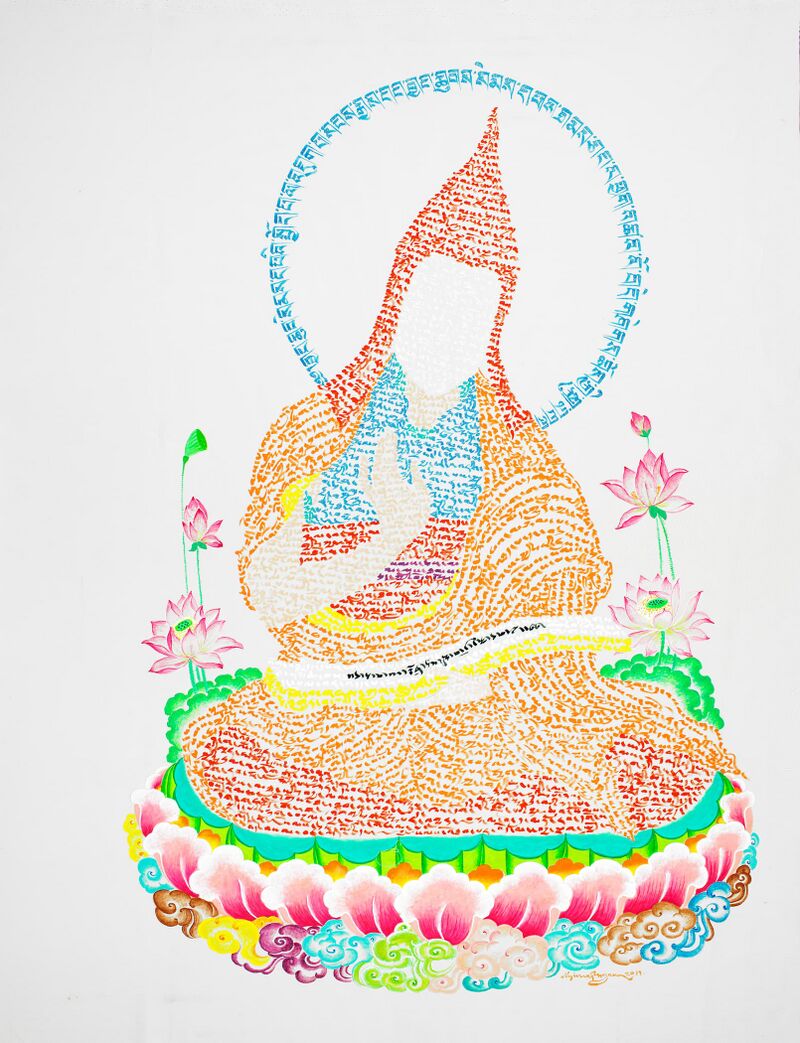
Overview of Śāntideva's Śikṣāsamuccaya
In-Depth Chapter Overviews
.jpg)
Boundless Compassion from the Jātaka Tales and The Sūtra of the Wise and the Foolish
The Jātaka Tales represent one of Buddhism's most beloved collections of stories, depicting the Buddha's previous lives in various forms—as humans, animals, and divine beings. The selection of narratives presented here primarily illuminate the profound concept of bodhicitta, the "awakened heart" or "enlightened mind" that forms the cornerstone of Mahāyāna Buddhist practice.
These tales were not merely meant to entertain but to inspire practitioners toward cultivating the same unlimited compassion and selflessness in their own lives—revealing how small acts of generosity, like offering a single lamp or cloth with pure intention, can create profound karmic ripples across lifetimes.
Mindmap of the Bodhicaryāvatāra & Śikṣāsamuccaya
Explore the outlines of Śāntideva's main works: A new, interactive way to navigate the texts via themes and chapters. Click on the Miro Mindmaps here. Use two fingers to move the cursor and to zoom in and out. If you open this on your computer and it appears blank, please simply scroll around and zoom in or out to see and you will find it.