- Chapter 1 - The Excellence and Benefits of Bodhicitta
- Chapter 10 - Dedication
- Chapter 2 - Confession of Negativity
- Chapter 3 - Taking Hold of Bodhicitta
- Chapter 4 - Conscientiousness
- Chapter 5 - Vigilant Introspection
- Chapter 6 - Patience
- Chapter 7 - Diligence
- Chapter 8 - Meditative Concentration
- Chapter 9 - Wisdom
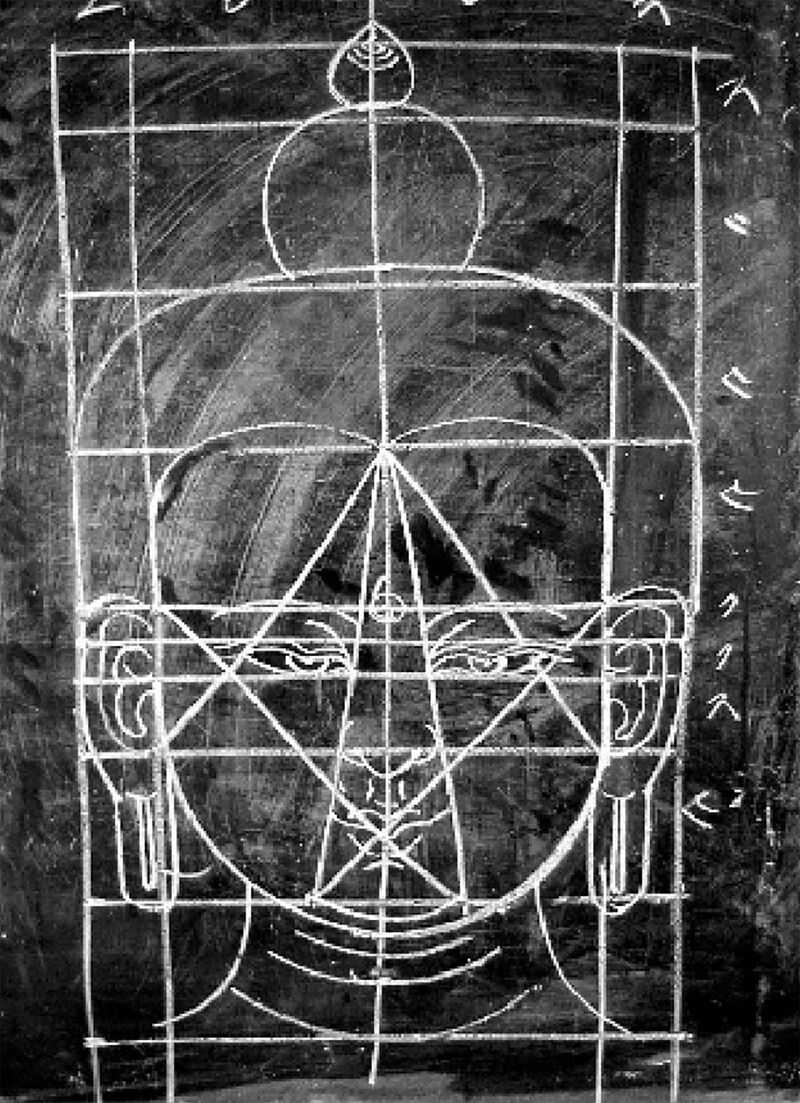
In chapter 9, Śāntideva more explicitly discusses the subject of the wisdom of emptiness. Without a correct understanding and direct realization of emptiness, the practice of true compassion that is the activity of bodhisattvas is impossible. Śāntideva therefore spends a considerable amount of time in this chapter discussing the cultivation and experience of wisdom, expounding upon topics such as the two truths, the selflessness of the person and the selflessness of phenomena, and the function of the realization of emptiness.
Concise Summary of Essential Points
Some people try to get peaceful by sitting quietly and having nothing disturb them at all, but that's like being dead. The practice of samādhi is for developing wisdom and understanding.
- —Ajahn Chah, "Still, Flowing Water"[1]
Techniques to develop concentration are not uniquely Buddhist. They have been valued and cultivated in many spiritual traditions. However, in the Buddhist traditions, although the concentrated mind is considered to be very beneficial, it is not a spiritual goal in itself. Meditative concentration, or samādhi, is a helpful tool that must be directed to the goal of attaining knowledge and wisdom. This is also true in secular life. We see individuals with exceptional focus who do not necessarily direct that concentration toward virtuous ends. Without the lamp of wisdom to light our way, we risk doing more harm than good.
To emphasize the vital role of wisdom on the path to enlightenment, Śāntideva stresses at the start of chapter 9 that the practices explained in the preceding chapters—such as purification, patience, and concentration—were taught specifically to facilitate the arising of wisdom.
All these branches of the Doctrine The Enlightened Sage expounded for the sake of wisdom.106As already stated in the introduction, the ninth chapter of the Bodhicharyāvatāra is an extremely concise exposition of the Madhyamaka view, recapitulating its various stages of development and polemical interaction with other schools, both Buddhist and non-Buddhist. It is worth bearing in mind that on that famous occasion when Shāntideva recited his text from the lofty throne at Nālandā, he did so to a public already deeply versed in both the content and history of Madhyamaka. And his ninth chapter was no doubt intended as a brilliant and perhaps even lighthearted exposition of a highly recondite subject to a specialist audience of philosophers and academics. As it stands, the ninth chapter is scarcely comprehensible to the unassisted reader, and an extensive commentary is indispensable. Those of Kunzang Pelden and Minyak Kunzang Sönam are already available in translation, and the interested student will also derive much assistance from the other commentaries listed in the Bibliography. In an attempt to render the root text at least intelligible, almost all translators have resorted to the expedient of indicating in parentheses the different points of view (Sāṃkhya, Nyāya-Vaisheshika, Ābhidharmika, and so on) referred to as the chapter progresses. But it is doubtful whether, in the absence of an extensive commentary, these additions do any more than complicate the issue and increase the dismay of the bewildered reader. In any case, they tend to obscure the fact that the ninth chapter, like the rest of the book, is composed in seamless verse, and is in fact a fast-moving, scintillating tour de force. With regard to the present translation, the aim has been to facilitate comprehension as much as possible, and a certain latitude of expression seemed justifiable, mainly in the way of explanatory paraphrase where possible and appropriate. The interpretation given in the commentary of Kunzang Pelden, and by implication that of his teachers Patrul Rinpoche and Mipham Rinpoche, has been consistently followed. See also Crosby and Skilton, p. in, for a helpful breakdown of the subject matter of this chapter. Therefore they must cultivate this wisdom Who wish to have an end of suffering.
Page(s) 137
Blankleder, Helena, and Wulstan Fletcher (Padmakara Translation Group), trans. The Way of the Bodhisattva: A Translation of the Bodhicharyāvatāra. By Śāntideva. Rev. ed. Shambhala Classics. Boston: Shambhala Publications, 2006.
༈ ཡན་ལག་འདི་དག་ཐམས་ཅད་ནི། །
ཐུབ་པས་ཤེས་རབ་དོན་དུ་གསུངས། ། དེ་ཡི་ཕྱིར་ན་སྡུག་བསྔལ་དག །
ཞི་བར་འདོད་པས་ཤེས་རབ་བསྐྱེད། །yan lag 'di dag thams cad ni/_/
thub pas shes rab don du gsungs/_/ de yi phyir na sdug bsngal dag_/
zhi bar 'dod pas shes rab bskyed/_/This wisdom, known as prajñā, is knowledge of the deeper levels of the reality of phenomena and must be developed in order to escape from an existence characterized by suffering. Prajñā is the sword of understanding that cuts through delusion, breaking the chains of ignorance that tie us to samsaric life. The ninth chapter explains how to develop this exalted wisdom through the technique of insight meditation, vipaśyanā. This form of meditation does not merely aim to remain concentrated on the meditative object but performs an analytical role, examining and distinguishing phenomena and their characteristics. Śāntideva adopts a systematic approach to the cultivation of this insight into the nature of reality and the analytic method used to investigate it.
The opening verses of chapter 9 are devoted to presenting a fundamental key to the Buddha's teachings—the two truths, conventional truth and ultimate truth. He presents the division of the two truths, an explanation of the meaning of each, as well as examples of the different beings who realize each of the truths.
There follow refutations of doubts raised about the two truths as a basic ground of phenomena. For instance, from an ordinary perspective, if it were true that there was no inherent reality, then it would be difficult to see how this could be explained to those whose very lives are embedded in a sense of the "true" reality of existence.
Among Buddhist traditions, the Sautrāntika school objects that if things are only an illusion and have no intrinsic reality, then both positive and negative actions would have no consequences at all. Śāntideva counters these arguments by explaining that a lack of intrinsic existence does not imply a total absence of existence.
The text then presents the objections of the Mind Only (Cittamātra) school to the Madhyamaka perspective as laid out by Śāntideva. Their own position on the nature of reality is presented and then critiqued. Within this discussion, there is a particularly extensive refutation of their presentation of self-awareness (svasaṃvedana). This debate covers the very important topic of how memory functions and how it is possible for our very own minds to have awareness of our mental states.
Here, through analogy, Śāntideva asks the proponents of the Mind Only school how it could be that the mind can be aware of itself. Is it not the same as a sword that is unable to cut itself or a lamp that is unable to illuminate itself?
But if the mirage is the mind itself, What is then perceived by what? The Guardian of the World himself has said That mind cannot be seen by mind.
Page(s) 139
Blankleder, Helena, and Wulstan Fletcher (Padmakara Translation Group), trans. The Way of the Bodhisattva: A Translation of the Bodhicharyāvatāra. By Śāntideva. Rev. ed. Shambhala Classics. Boston: Shambhala Publications, 2006.
གང་ཚེ་སེམས་ཉིད་སྒྱུ་མ་ན། །
དེ་ཚེ་གང་ཞིག་གང་གིས་མཐོང་། ། འཇིག་རྟེན་གྱི་ནི་མགོན་པོས་ཀྱང་། །
སེམས་ཀྱིས་སེམས་མི་མཐོང་ཞེས་གསུངས། །gang tshe sems nyid sgyu ma na/_/
de tshe gang zhig gang gis mthong /_/ 'jig rten gyi ni mgon pos kyang /_/
sems kyis sems mi mthong zhes gsungs/_/In just the same way, he has said,
The sword’s edge cannot cut the sword.
"But,” you say, "it’s like the flame
That perfectly illuminates itself.”[p.140]The Way of the Bodhisattva (2006)
Blankleder, Helena, and Wulstan Fletcher (Padmakara Translation Group), trans. The Way of the Bodhisattva: A Translation of the Bodhicharyāvatāra. By Śāntideva. Rev. ed. Shambhala Classics. Boston: Shambhala Publications, 2006.
Page(s) 139
Blankleder, Helena, and Wulstan Fletcher (Padmakara Translation Group), trans. The Way of the Bodhisattva: A Translation of the Bodhicharyāvatāra. By Śāntideva. Rev. ed. Shambhala Classics. Boston: Shambhala Publications, 2006.
རལ་གྲི་སོ་ནི་རང་ལ་རང་། །
ཇི་ལྟར་མི་གཅོད་དེ་བཞིན་ཡིད། ། ཇི་ལྟར་མར་མེ་རང་གི་དངོས། །
ཡང་དག་གསལ་བར་བྱེད་བཞིན་ན། །ral gri so ni rang la rang /_/
ji ltar mi gcod de bzhin yid/_/ ji ltar mar me rang gi dngos/_/
yang dag gsal bar byed bzhin na/_/Śāntideva then moves on to present arguments to establish that the teachings of the Mahāyāna tradition are indeed the true teachings of the Buddha.[2] The remainder of this chapter deals extensively with the presentation of the two main forms of selflessness presented in the Buddhist schools of philosophy—the selflessness of persons and the selflessness of phenomena.
Followers of the Śrāvaka vehicle (Śrāvakayāna) contend that there is no need to understand the selflessness of phenomena in order to attain liberation from samsara, arguing that the understanding of the lack of a personal self will be enough to put an end to the afflictions. Śāntideva, in contrast, stresses that the understanding of the lack of inherent existence of everything, whether it be the self or other phenomena, is crucial, even if one wishes only to attain liberation from suffering, let alone attain the fully enlightened state.
In the section refuting the self of persons, Śāntideva guides us through a critique of not just the non-Buddhist schools but also the logical fallacies that he finds in the lower systems of Buddhist philosophical tenets. He presents a detailed refutation of the tenets of the early Indian non-Buddhist traditions and their presentations of a conscious self, a material self, and the ineffable primordial principle (prakṛti) of the Sāṃkhya tradition.
These protagonists counter with objections that if there is no existing self or real person, then the principle of karma—the law of cause and effect—would be untenable. Again, Śāntideva refutes these objections by explaining that just because the person lacks any true existence, it is still possible for them to have a degree of functionality at the conventional level.
The next section of the text explores the selflessness of phenomena and presents key arguments refuting even the tiniest speck of intrinsic existence. The main focus is on meditation on the four foundations of mindfulness. Also called the four close placements of mindfulness, these four contemplations take respectively as their object (1) the body, (2) feelings, (3) the mind, and (4) phenomena, putting each of them under the analytical microscope to look into their deeper reality. Although this method of meditation is shared across all Buddhist traditions, Śāntideva has a unique take on its meaning. The more mainstream approach to these foundations of mindfulness is to watch the flow of sensations in the body or the stream of our thoughts and to see through their solidity. Here, Śāntideva goes beyond those levels of analysis and encourages us to look into the deeper level of reality of these phenomena—their lack of any intrinsic reality or existence from their own side.
The last verses of the ninth chapter present classical arguments from the Mahāyāna sūtras that establish emptiness as the ultimate nature of phenomena. These include many of the arguments from the five great reasonings (gtan tshigs chen po lnga), such as the diamond-splinters argument, the argument of identity and difference, the reasoning of dependent arising, and the reasoning of existence and nonexistence. The diamond-splinters argument, whose main protagonist is the Sāṃkhya school, is dealt with extensively in this chapter.
The chapter concludes by expounding the benefits of emptiness and explaining how the true power of compassion is built on an understanding of emptiness. To have true compassion for sentient beings, we must realize how our own ignorance of the nature of reality creates suffering for us. Seeing that clearly in our own lives, we can then understand the depths of others' ignorance, and only then does our compassion for them really deepen.
Notes
- ↑ Ajahn Chah, "Still, Flowing Water," in Living Dhamma (Ubon Rachathani: Thailand, The Sangha, Wat Nong Pah Pong, 2007), 80–81. https://www.ajahnchah.org/pdf/living_dhamma.pdf.
- ↑ There is a debate between non-Mahāyāna and Mahāyāna proponents regarding which teachings of the Buddha are authentic and how they can be validated as true teachings of the Buddha.
Additional resources
Learn About Śāntideva's Texts
The Way of the Bodhisattva
The Compendium of Training
Recommended Texts Related to Chapter 9
Recommended Books Related to Chapter 9
issues of Buddhist thought relating to the coherence of a reductionist model of the person. He argues for an irreducible subject-involvement of pain statements and suggests that given an approach to the person explicitly avowed in the Bodhicaryāvatāra it becomes impossible to make sense of subject-involvement, and thus of the removal of pain which is central to the path to Buddhahood.
Paul Williams approaches selected verses from the Bodhicaryāvatāra in the light of all the extant Indian commentaries available as well as many indigenous Tibetan commentaries from all Tibetan traditions. He is thus able to indicate varieties and
shifting patterns of interpretation and influence, showing how the Bodhicaryāvatāra comes to be used by the different Tibetan traditions according to their differing overall religious and philosophical agendas.
This book will be of interest to those concerned with the history and
interpretation of Indian and Tibetan philosophy, particularly
Madhyamaka, the detailed study of the text of the Bodhicaryāvatāra, and also those whose interest is primarily
Recommended Articles Related to Chapter 9
The Guide to Bodhisattva Practice (Bodhicaryavatara, hereafter, Guide) of Śāntideva is, before all else, a practical guide for those who aspire to the life of a bodhisattva, an individual whose determining principle is the attainment of bodhi, or spiritual awakening. Not just his or her personal awakening, but rather the awakening of all, for bodhi, in the Mahāyāna Buddhism that Śāntideva espouses, is a universal principle. To become an individual determined by an orientation to awakening in this tradition, one must abandon the personal, self-centered viewpoint that is our habitual condition, in favor of a growing embrace of an all-encompassing vision.[1]
To accomplish this requires a severe ethical and spiritual discipline. Egoistical tendencies to possessiveness, impulsiveness, indolence, and the like must be overturned by a rigorous commitment to generosity, dignified behavior, forbearance, and effort, while the mind itself must be collected and calm. The goal, however, is not merely to become a well-mannered person adept in tranquility meditation, however praiseworthy that may be. For manners and meditative calm alone remain compatible with the narrow perspective of the self-regarding individual. Indeed, they may well become sources of personal pride, wherein lies an inevitable danger. For Buddhism, as for the other wisdom traditions of India, the sole
means to avert such pitfalls on the path to spiritual perfection is to be
found in the acquisition of wisdom, insight into the real nature of things.
But just how this is to be understood is by no means immediately evident. Within classical Indian thought, just what constitutes wisdom came to be
sharply contested, not only between differing schools but also within them. Debate and philosophical inquiry thus became indissociable from the pursuit of wisdom, and in the ninth chapter of Śāntideva's book his preeminently practical concerns seem sometimes to give way to wrangling over philosophical fine points. However, philosophy in this case is placed in the service of the cultivation of contemplative insight. Śāntideva's practical and theoretical concerns are found, in the end, to be one.[2]
The subject of the ninth chapter of the Guide is prajñā, often translated "wisdom," "higher knowledge," or "discrimination." As such, it is the "Perfection of Wisdom" (prajñāpāramitā), the pinnacle of the six perfections of the bodhisattva's path and identified as the goal of insight (vipaśyanā),
the contemplative "seeing through" that, conjoined with tranquility
(śamatha), forms the heart of Buddhist meditation. Prajñā, as Śāntideva expounds it, corresponds to the teaching of the Madhyamaka tradition of Buddhist philosophy, spearheaded by Nāgārjuna during the second century CE. Nāgārjuna is widely known for his emphasis on the universal "emptiness" (śūnyatā) of phenomena, but the meaning of this concept has been subject to much debate.[3] Just how Śāntideva understands it will be among the chief concerns throughout this chapter.
Notes
- I have examined Śāntideva's approach to the Mahāyāna path in relation to what French philosopher Pierre Hadot, in the context of Hellenistic philosophy, has termed "spiritual exercise," forging a passage between an inauthentic, troubled existence and authentic peace and freedom. See Kapstein, "Stoics and Bodhisattvas."
- On the relationship between the theoretical concerns of Buddhist philosophy and Buddhism's practical ends, see Kapstein, "Introduction," in Reason's Traces and Kapstein, '"Spiritual Exercise' and Buddhist Epistemologists in India and Tibet."
- A nuanced philosophical introduction, with reference to much of the earlier scholarship, can be found in Westerhoff, Nāgārjuna's Madhyamaka.
The Bodhicaryāvatāra, the "Entry of the Course towards Enlightenment", is one of the greatest classics of the Mahayana tradition. In approximately 1000 verses Śāntideva has outlined the entire process through which the aspirant attains the stage of Bodhisattva.
It is recorded that Śāntideva's fellow monks at Nālanda regarded him as a lazy oaf whose sole functions were eating, sleeping and excreting. They felt that such idle monks were unworthy to enjoy the alms offered by the faithful. After all, was it not the obligation of monks constantly to study the dharma? They determined to expel him from their midst and consequently summoned him to recite
what he knew of the Buddha's teaching. Śāntideva appeared as he had been commanded before the monastic assemblage, but refused to begin, as they had
intended, his final farewell until he had been bidden by his teacher. When Jayadeva, his preceptor, commanded him, he ascended the lofty throne his hecklers had raised in order to increase his discomfiture and asked his audience whether they wished him to recite that which was known or that which was new. They reached a consensus that they desired him to expound that which was hitherto unknown.
He decided that his own Śikṣāsamuccaya was too long and the Sūtrasamuccaya[1] too brief for the occasion; so he began to create, while reciting, the Bodhicaryāvatāra. The lucidity of its expression and the profundity of its thought held his audience spellbound. Fortunately, several of the assemblage thought to take down his words; and three versions of the verses uttered on that occasion were circulated. Ultimately, Śāntideva held for the one in 1000 ślokas.
The Bodhicaryāvatāra is superficially not an especially difficult text. Taken as a whole, it is one of the clearest of the Buddhist shastras. In the ninth and final chapter it was Śāntideva's intention to condense all Buddhist and, specifically, Mādhyamika thought around the concept of Transcendental Wisdom (prajñā)[2], to describe the process of the transformation of all consciousness into pure wisdom. To explain this chapter, the Prajñāpariccheda, commentators, Indian and Tibetan, have written volumes on the Bodhicaryavatāra. (Smith, preliminary remarks, 1–2)
Notes
- Bu-ston, Tāranātha, and a number of other Tibetan authorities refer to a Sūtrasamuccaya by Śāntideva. The Sūtrasamuccaya that we know today is attributable to Nāgārjuna. A number of ingenious solutions have been put forth to explain this situation. Please see Murti, T. R. V., The Central Philosophy of Buddhism. 2nd ed. London, Allen and Unwin, 1960, p. 101, fn. 3.
- Prof. H.V. Guenther (Jewel Ornament of Liberation. London, Rider, 1959, p. 3 and 225) translates this key term with the superbly accurate but verbose "discriminating awareness born from wisdom". He points out that prajñā is a transcending function: with the help of prajñā we may "pass beyond the borders of our habitually unenlightened attitude and enter the realm of spirituality and enlightenment". It is this transcending function that would seem to be the most significant.
Recommended Dissertations Related to Chapter 9
The Prāsangika-Mādhyamika school had long been of interest to me, and I had also greatly admired those portions of the BCA that I had read in Sanskrit and Tibetan in the course of my graduate training. Therefore when Prof. Geshe L. Sopa suggested in 1972 that I make a translation and study of the PP the subject of my dissertation I found it a most congenial project. In the years that followed I have become well aware of the difficulties that beset the translator of a complex work of philosophy like the PP. Obviously the few years that I have devoted to this task are insufficient to produce the definitive treatment of a work about which some of Tibet’s finest thinkers have debated for over five hundred years without causing a definite consensus of opinion to be reached. It has been my object merely to render Śāntideva's verses into English with as little distortion of their meaning as possible, and to provide a reasonable exegesis of them according to the major Indian and Tibetan commentaries. There is of course often more than one plausible explanation for a verse, and while I have followed my personal preference on such occasions I have also tried to indicate all possible alternatives. In addition, I have included a brief introduction dealing with the PP in the context of Śāntideva's writings, and with some of the philosophical problems contained in it. (Sweet, preface, ii-iii)
Recommended Videos Related to Chapter 9
Lesson 9. Wisdom - 17 June 2021
Online Course hosted by The Buddhist Society - Thursday 22nd April 2021 during lockdown
Ringu Tulku Rinpoche will analyse the Bodhicaryāvatāra, often translated as A Guide to the Bodhisattva's Way of Life, an 8th-century masterpiece from Indian scholar and yogi Shantideva. In each of the ten lessons, H.E. Ringu Tulku Rinpoche will focus on one of the ten chapters of the Bodhicaryāvatāra.
The Bodhicaryāvatāra is regarded as one of the most important Tibetan Buddhist texts and is studied extensively by Tibetan Buddhist practitioners everywhere. Rinpoche delivers his understanding of the text in a way that makes it fully accessible to anyone who is looking for support and help in these times.
Course Outline
Lesson 1. The Excellence of Bodhicitta - Thursday 18th February at 12pm
Lesson 2. Confession - Thursday 25th February at 12pm
Lesson 3. Taking Hold of Bodhicitta - Thursday 11th March at 12pm
Lesson 4. Carefulness - Thursday 25th March at 12pm
Lesson 5. Vigilance - Thursday 22nd April at 12pm
Lesson 6. Patience - Thursday 6th May at 12pm
Lesson 7. Diligence - Thursday 20th May at 12pm
Lesson 8. Meditation - Thursday 3rd June at 12pm
Lesson 9. Wisdom - Thursday 17th June at 12pm
