- Buddha-Nature
- Compassion
- Defining Bodhicitta
- Emptiness
- Equalizing & Exchanging Self and Others
- Equanimity
- History of Bodhicitta Teachings
- How to Develop Bodhicitta
- Interdependent Origination
- Lineage of the Profound View
- Lineage of the Vast Conduct
- Mahāyāna
- Mind Training
- Non-Self
- Seven-Point Instructions of Cause and Effect
- The Bodhisattva Ideal
- The Bodhisattva Path
- The Bodhisattva Vow
- The Bodhisattva's Goal
- The Four Immeasurables
- The Six Perfections
- The Three Higher Trainings
- The Two Accumulations
- The Two Truths
- Tonglen: The Practice of Sending and Receiving
- Types of Bodhicitta
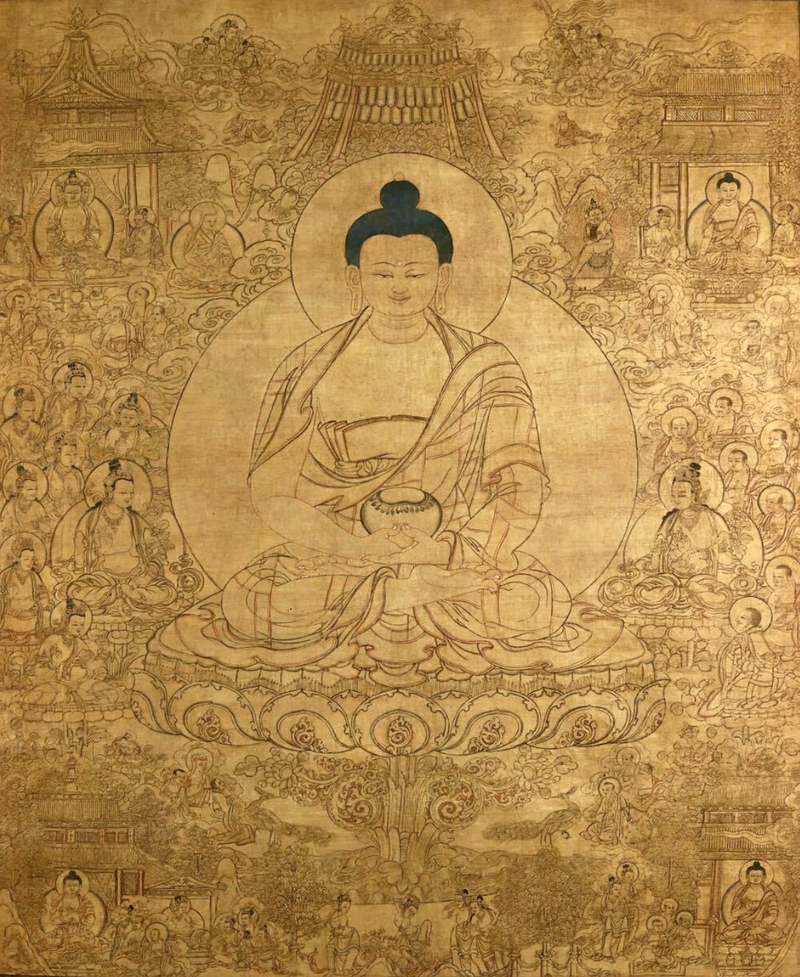
Mahāyāna Buddhism emerged around the first century BCE as a reform movement emphasizing universal liberation over individual enlightenment. Distinguished from earlier Theravāda Buddhism by the bodhisattva ideal, Mahāyāna practitioners vow to delay their own nirvana to help all beings achieve awakening. Central to this tradition is bodhicitta—the "mind of awakening" or the compassionate aspiration for enlightenment motivated by concern for all sentient beings' suffering, rather than personal liberation alone.
The Mahāyāna
Mahāyāna, meaning "Great Vehicle," represents one of the two major branches of Buddhism that emerged around the first century BCE in ancient India. The tradition earned its name because it offers a path to enlightenment that carries all sentient beings toward liberation, like a large carriage capable of transporting many passengers, rather than focusing solely on individual awakening. Today, Mahāyāna is the largest Buddhist tradition worldwide, practiced predominantly in China, Japan, Korea, Tibet, Vietnam, and other East and Southeast Asian countries, with approximately 59% of the world's Buddhists following its various schools and practices.
The defining characteristic of Mahāyāna Buddhism is the bodhisattva ideal—the aspiration to attain full buddhahood not for oneself alone but for the benefit of all beings. Unlike earlier Buddhist schools that emphasized personal liberation from the cycle of rebirth, Mahāyāna practitioners cultivate bodhicitta, the "awakening mind" or compassionate determination to achieve enlightenment in order to help free all sentient beings from suffering. This fundamental shift in motivation transforms the spiritual journey from an individual pursuit into a universal mission of compassion. Mahāyāna also introduced new approaches to philosophical concepts, including the doctrine of emptiness (śūnyatā), which teaches that all phenomena lack inherent, independent existence. The tradition also expanded the Buddhist cosmology to include numerous buddhas and bodhisattvas beyond the historical Buddha Śākyamuni.
Mahāyāna is considered "great" in several senses: the vastness of its philosophical understanding, the breadth of its compassionate scope, the depth of its practices, and the comprehensiveness of its methods for achieving awakening. The tradition developed an extensive collection of texts called Mahāyāna sūtras, including famous works like the Lotus Sūtra and the perfection of wisdom (prajñāpāramitā) literature. Over the centuries, Mahāyāna Buddhism evolved into various schools and subtraditions, including the tantric practices of Vajrayāna in Tibet and the Himalayas, as well as distinct philosophical schools such as Madhyamaka (Middle Way) and Yogācāra (Mind Only), each offering unique approaches to understanding reality and the path to enlightenment. A significant framework for understanding these traditions within the broader Tibetan Buddhist context is the distinction between the two lineages of "Profound View" and "Vast Conduct," which derive from the teachings of Asaṅga/Maitreya and Nāgārjuna/Mañjuśrī, respectively. To learn more about these two lineages and about concept of bodhicitta in the Mahāyāna tradition, visit the links below.
Hīnayāna, Mahāyāna, and Vajrayāna
In traditional Tibetan explanations of Buddhism, it is common to come across the terms Hīnayāna, Mahāyāna, and Vajrayāna (or Tantrayāna).
- Hīnayāna - ཐེག་པ་དམན་པ (theg pa dman pa) or ཐེག་དམན (theg dman) - literally "lesser vehicle"
- Mahāyāna - ཐེག་པ་ཆེན་པོ (theg pa chen po) - literally "great vehicle"
- Vajrayāna - རྡོ་རྗེ་ཐེག་པ (rdo rje theg pa) - literally "vajra/diamond vehicle"
- OR
- Tantrayāna - གསང་སྔགས་ཀྱི་ཐེག་པ (gsang sngags kyi theg pa) - literally "secret mantra vehicle"
In contemporary writings on Buddhism, however, these three major schools of Buddhism are often listed as Theravāda, Mahāyāna, and Vajrayāna. It should be noted that Theravāda is not a "lesser vehicle" and is not equivalent to the Tibetan term menpe tekpa (དམན་པའི་ཐེག་པ་). The Theravāda traditions are found around the world as contemporary expressions of Buddhism based on the Pāli tradition. Derived from the earliest Buddhist sources, they constitute a genuine transmission of the Buddha's teachings that evolved independently from the Tibetan traditions. To learn more about Theravāda, please see the works of Bhikkhu Bodhi, Bhikkhu Anālayo, Richard Gombrich, and Jeffrey Samuels. The Pāli canon has been translated into English, and you can find more information online at places like SuttaCentral.
