Timeline of BCA Translations: Difference between revisions
(VSCode edit) |
(VSCode edit) |
||
| Line 20: | Line 20: | ||
|?Description | |?Description | ||
|?FullTitle | |?FullTitle | ||
|?FrontCoverImg | |||
|named args=true | |named args=true | ||
|format=template | |format=template | ||
Revision as of 21:30, 26 January 2026




Notes
- I have much pleasure in acknowledging my debt of gratitude to Professor Poussin's masterly French translation of the text published in the Revue d'Histoire et de Littérature Religieuses, vols. x.-xii. (1905-1907) under the title Bodhicaryāvatāra: Introduction à la Pratique des futurs Bouddhas.




Notes
- I have much pleasure in acknowledging my debt of gratitude to Professor Poussin's masterly French translation of the text published in the Revue d'Histoire et de Littérature Religieuses, vols. x.-xii. (1905-1907) under the title Bodhicaryāvatāra: Introduction à la Pratique des futurs Bouddhas.

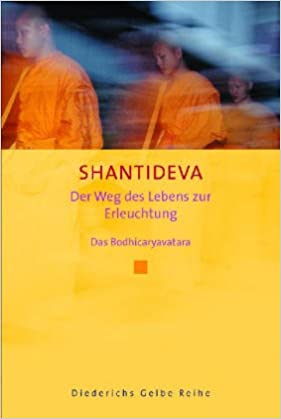

Mit dieser Neuübertragung gelingt es Ernst Steinkellner, daß das Werk des buddhistischen Mönchs Sāntideva aus dem 7. Jahrhundert uns unmittelbar anspricht.
»Wenn du das Selbst liebst, darfst du dich selbst nicht lieben. Wenn du das Selbst schützen mußt, darfst du es nicht schützen. (Source: back cover)


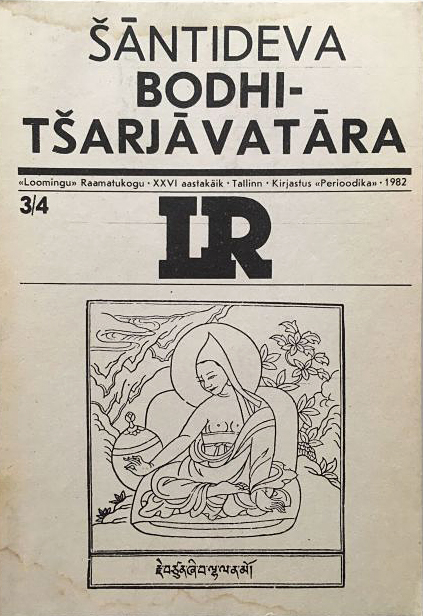

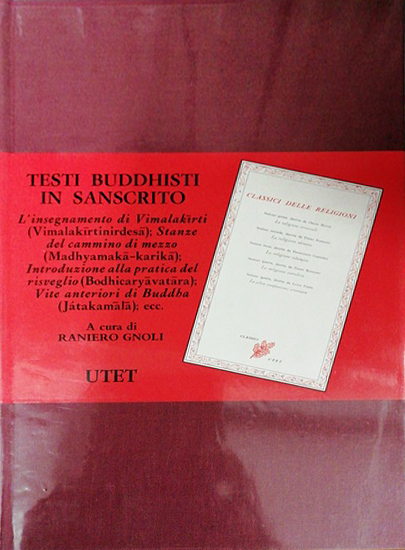


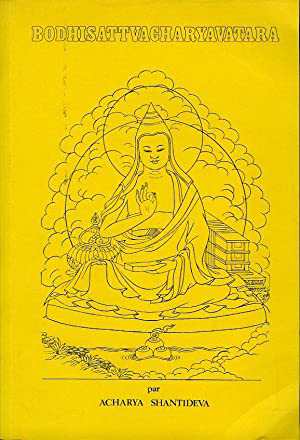

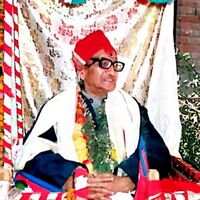
Note 78 in Fredrik Liland's Master's thesis, "The Transmission of the Bodhicaryāvatāra: The History, Diffusion, and Influence of a Mahāyāna Buddhist Text," reads "Recently V. Divyavajra (1986) published what seems to be a Sanskrit edition with Newari translations of the BCA and the BCAP. This has not been available to me so far, but would indeed be of interest in further work on the BCANew." (see p. 26)
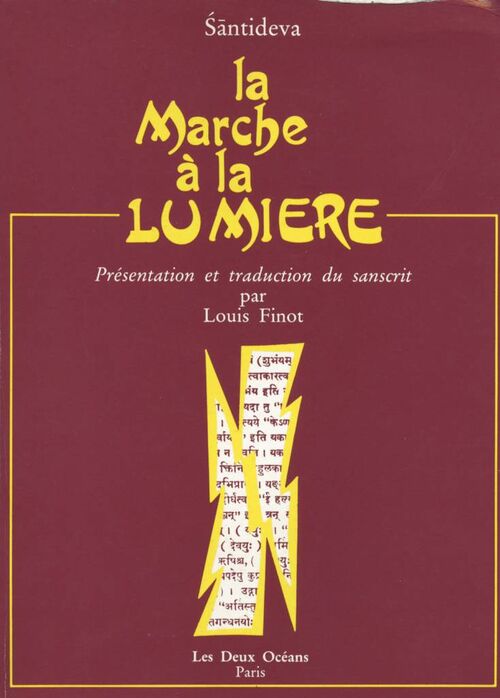


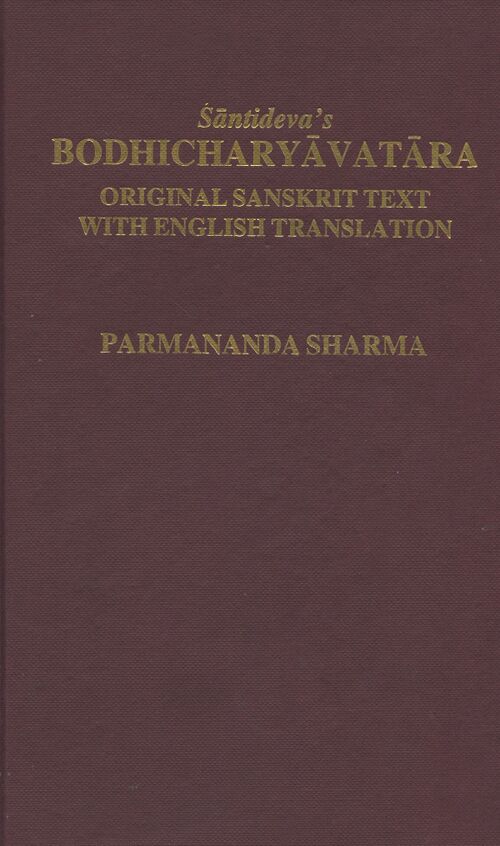



Sources:




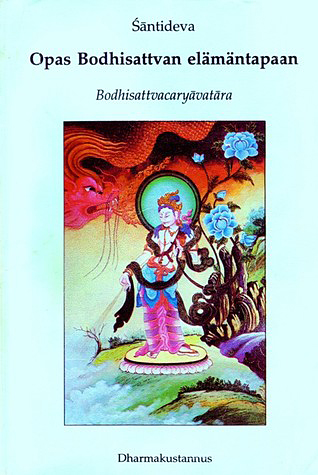




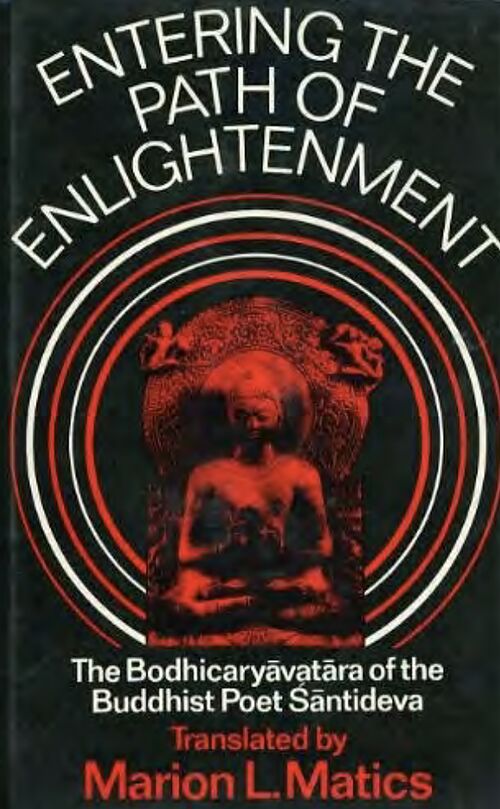
- Written in India in the early 8th century AD, Śāntideva's Bodhicaryāvatāra addresses the profound desire to become a Buddha and rescue all beings from suffering. The person who acts upon such a desire is a Bodhisattva. Śāntideva not only makes plain what the Bodhisattva must do and become, he also invokes the powerful feelings of aspiration that underlie such a commitment, employing language which has inspired Buddhists ever since it first appeared. Indeed, his book has long been regarded as one of the most popular accounts of the Buddhist's spiritual path. Important as a manual of training among Mahāyāna Buddhists, especially in the Tibetan Buddhist tradition, this text continues to be used as the basis for teaching by modern Buddhist teachers. This new translation from the original language provides detailed annotations explaining allusions and technical references. Also, the Introduction both serve to locate Śāntideva's work in its proper context, and for the first time explain its structure. (Source: Oxford University Press)


Originally written in India in Sanskrit, the text first appeared in Tibetan translation soon after its composition in the eighth century. The fact that it has been expounded, studied, and practiced in Tibet in an unbroken tradition lends the Tibetan version of this classic a particular authority. The present translation has therefore been rendered from the Tibetan, following a commentary by the Nyingma master Kunzang Pelden, renowned for its thoroughness, clarity, and accessibility.
Shantideva begins with a celebration of the mind of enlightenment, explaining in detail how this is cultivated. There are chapters devoted to the transcendent perfections of patience, heroic perseverance, meditation, and wisdom. The teaching on meditation culminates in the profound practices of equality and exchange of self and other. The celebrated ninth chapter presents the direct realization of emptiness, the perfection of wisdom, as explained in the Madhyamika, or "Middle Way" tradition. Throughout the verses of this text, Shantideva is able to communicate the qualities of precision, contemplative experience, and lyrical beauty, which have served to inspire generations of spiritual aspirants. (Source: back cover)








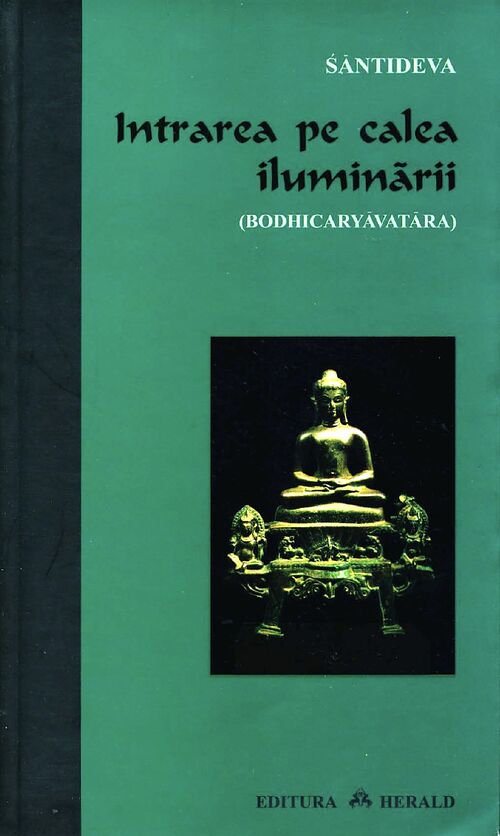

Mesajul este totuşi unul optimist; prin compasiunea celor deja iluminaţi se oferǎ oricǎrei fiinţe, oricât ar fi ea de decǎzutǎ, şansa de a se elibera din ciclul existenţei prin cultivarea "gǎndului iluminǎrii". (Source: back cover)


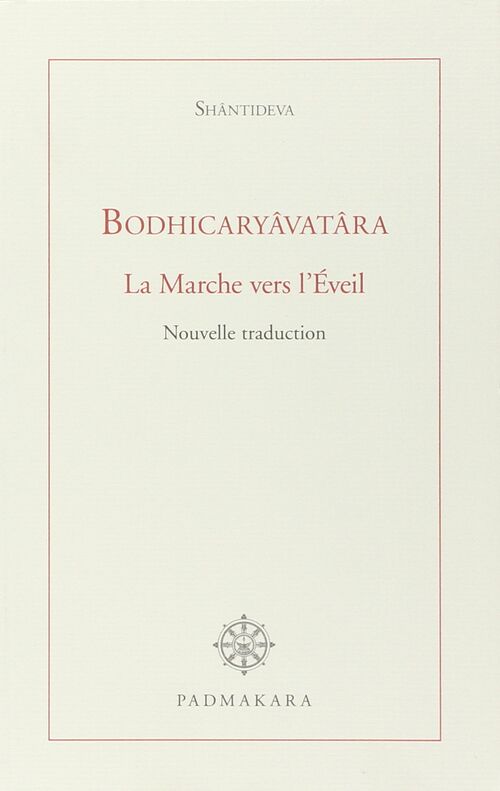

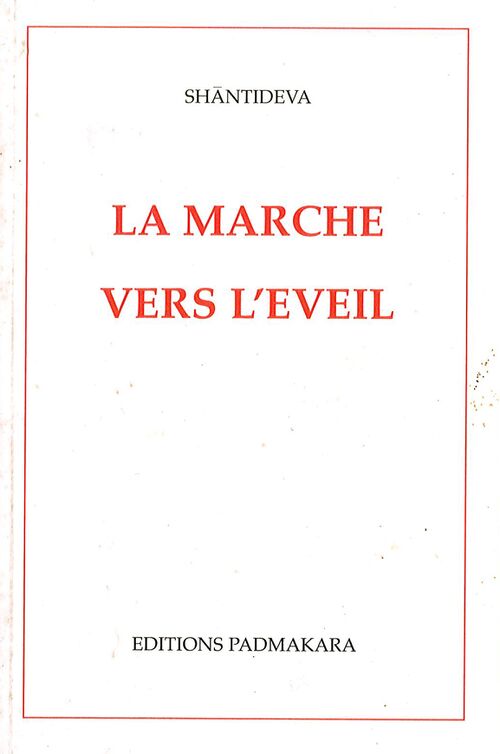
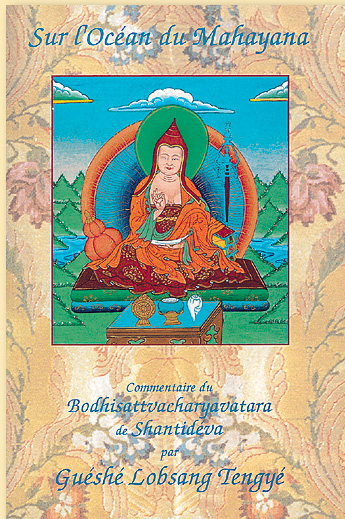
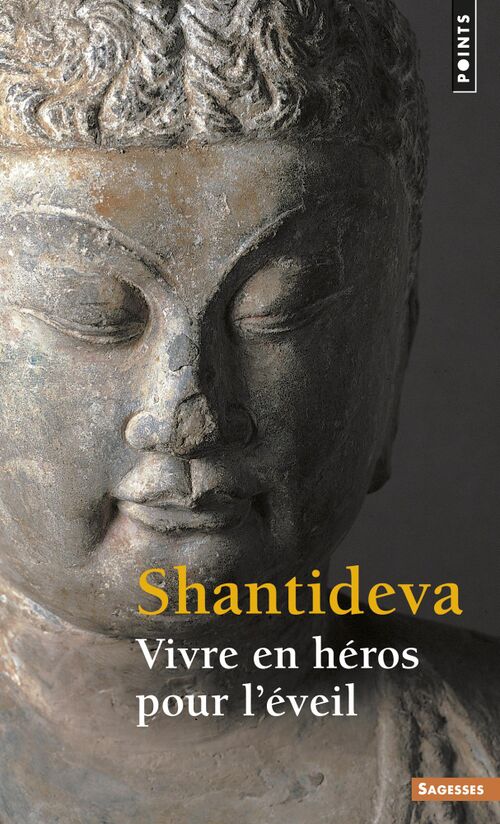
Cette nouvelle traduction de La Marche vers l ’Éveil de Shântideva (VIIIe-IXe siècles) a été réalisée à partir du tibétain d’après l’interprétation et les explications détaillées du khenpo Kunzang Palden, disciple de Patrul Rinpoché et héritier d’une tradition millénaire de commentaire de ce texte. Ces explications, traduites intégralement en français, font l’objet des trois volumes des Perles d ’ambroisie parues aux éditions Padmakara en 2006 et 2007. (Source: back cover)
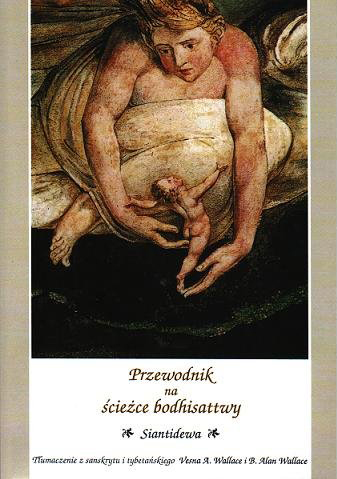


Treasured by Buddhists of all traditions, The Way of the Bodhisattva (Bodhicharyavatara) is a guide to cultivating the mind of enlightenment, and to generating the qualities of love, compassion, generosity, and patience. This text has been studied, practiced, and expounded upon in an unbroken tradition for centuries, first in India, and later in Tibet. Presented in the form of a personal meditation in verse, it outlines the path of the Bodhisattvas—those who renounce the peace of individual enlightenment and vow to work for the liberation of all beings and to attain buddhahood for their sake.
This version, translated from the Tibetan, is a revision by the translators of the 1997 edition. Included are a foreword by His Holiness the Dalai Lama, a new translator's preface, a thorough introduction, a note on the translation, and three appendices of commentary by the Nyingma master Kunzang Pelden. (Source: Shambhala Publications)
Description from Ediciones Dharma:
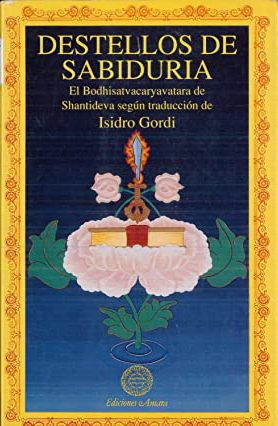
La práctica del bodisatva (o Bodisatvacharyavatara, literalmente «La aplicación de la práctica del bodisatva») es uno de los grandes clásicos del budismo mahayana.
Presentada en la forma de una meditación personal en verso, expone el camino de los bodisatvas, esos seres que, habiéndose alejado de la futilidad del samsara y sus sufrimientos, renuncian sin embargo a la paz de una liberación individual y se comprometen a trabajar para la liberación de todos los seres y a obtener la Iluminación suprema para su beneficio.
Shantideva, uno de los autores budistas indios más influyentes de la tradición mahayana, empieza su obra elogiando la mente de la Iluminación y explica en detalle cómo se cultiva. Hay capítulos sobre las perfecciones transcendentales de la paciencia, la diligencia, la meditación y la sabiduría.
Las enseñanzas sobre la meditación culminan con la profunda práctica de igualarse y cambiarse uno mismo por los demás. El célebre capítulo noveno expone las enseñanzas sobre la vacuidad, la perfección de la sabiduría, tal como se explican en el Madyamaka, o tradición del “Camino medio”. Mediante los versos de este texto, Shantideva ha sido capaz de inspirar a generación tras generación de practicantes.
Este texto, escrito originalmente en India en sánscrito, apareció por primera vez traducido al tibetano poco después de su composición en el siglo VIII y ha sido explicado, estudiado y practicado en Tíbet en una tradición ininterrumpida hasta nuestros días. En la actualidad sigue teniendo plena vigencia y es enormemente apreciado por los budistas de todas las tradiciones. (Ediciones Dharma. Source Accessed May 13, 2025)

To embark on the reading, let alone the study of, the Bodhicaryāvatāra takes guts. Its 914 verses challenge every fibre in your body, every corner or your mind and when you complete the book, it leaves you feeling embarrassed at having your innermost thoughts and deeds spread out on a page in front of you. Yet, hope is a little brighter because the possibilities are infinite.
Like a captain on a ship built for the high seas, Geshe Tenzin Zopa skilfully steers us through the turbulent waters of our minds, spotlighting our flaws, praising our efforts, showing the way by his explanations on the verses. When the brutal honesty of this text gets too much, Geshela steadfastly keeps us afloat by sharing his personal encounters and finally brings us to shore, soggy and whip-lashed but holding a glow in the heart – one that is inspired to take the first baby-step in the Bodhisattva’s way of life. Such is the kindness of Gurus. (Huei, editor's note, 2–3)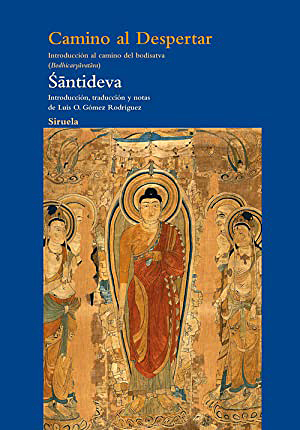





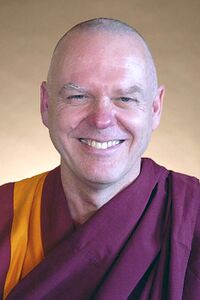


While there were many translations of the root text published, I had not seen one I liked. Many seem to have been translated without relying on a good commentary, and seem to have quite a few mistakes. The verses are often also translated much more flowery and poetic, and the verses are often also fuller, then what appears to my mind when I read the Tibetan.
In my view a translation of a root text should be as much as possible a mirror image in the target language of the source language, while avoiding the traps of a literal translation only. Being restricted to 9 syllables per line, and the target audience being having a lot of merit, the verses in a root text often ended up as cryptic, incomplete sentences.
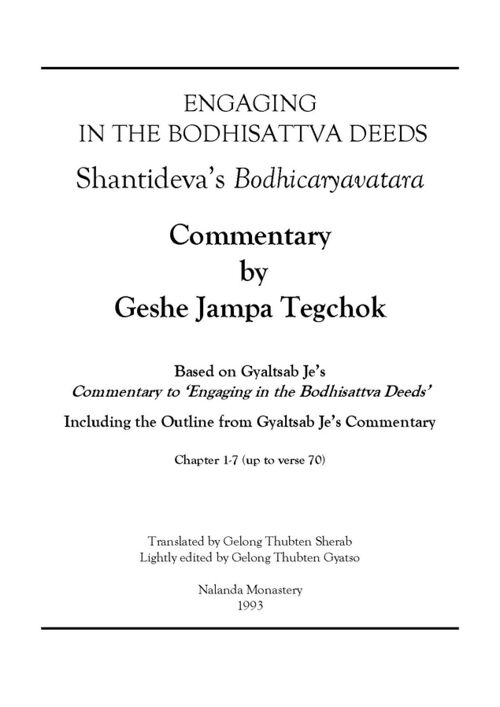
It is the job of the word commentary, such as the commentary by Gyaltsab Je, to fill in the gaps, and it is not the job of the translator to do that in-text. This brings me to the commentary, which is written in a particular scholarly style using repetitions, often with difficult double negatives, and very long sentences, which were seen as a sign of good writing, and works in the Tibetan, but it does not work for the western reader, and so I took some liberties there. I did not translated the commentary literally, like a computer program would do, but tried to keep in mind my target audience and read ability. Therefore I would say it is an accurate but not a literal translation.
My translating style is however to first err on the side of caution and being literal, to avoid mistakes, and then, in repeated editions, edge myself to the middle without loosing the meaning, by improving style, expression and read ability. This process is not yet finalized. But no matter how much good will one may have, it is still a translation of an ancient text, written by a great great scholar, whose target audience was not necessarily the modern reader accustomed to receiving information in 140 characters.
Gyaltsab Je sometimes packs a lot of profound information into a few paragraphs, information that actually will take years to understand, such as the explanations of the ninth chapter, and some explanations are very sophisticated, such as the explanation of the homage. However, the benefit is derived from making the mental effort to understand, and the mind, being clear and knowing, has the ability to understand new things it did not understand before. . Since one can become omniscient, there is nothing one cannot understand over time. And the very difficult points one can always leave to return to later.
One aspect of the commentary that one soon notices is that it is outlined in a very detailed manner, and to help finding one’s way through the text there is a mind map and a leveled outline at the back of each chapter. (Stracke, translator's foreword, 7–8)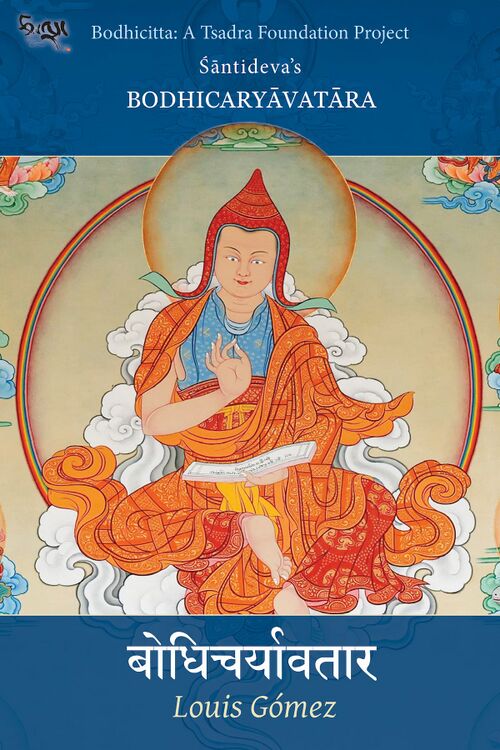
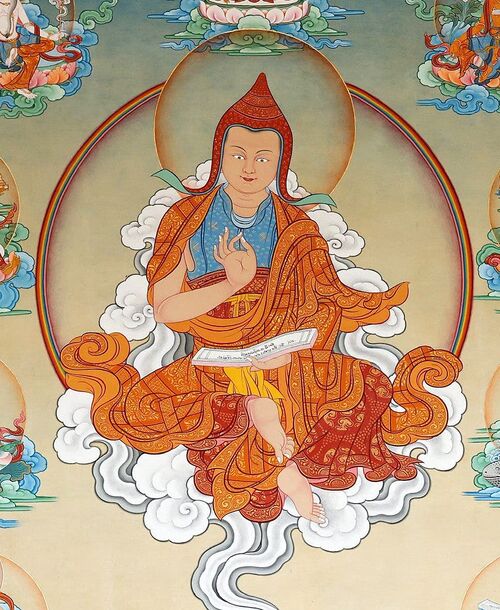
As is true of so many Indian works, almost nothing can be said with certainty about its author. Only two works by him survive; the other is an anthology of sutra passages titled the Compendium for Training (Shikshasamucchaya), organized around the elements of a bodhisattva's practice. An entertaining story about the origins of the text presented here has also been passed down.
According to the legends, Shantideva was of royal birth but renounced the world before his investiture as king, as the Buddha had done. He was ordained and entered Nalanda, a monastery in north India renowned as a great center of learning. However, he remained for the most part in his cell and became known as an indolent monk, earning the nickname bhusuku, which meant that he was engaged in only three activities: eating, sleeping, and defecating. In order to humiliate him, one day his fellow monks challenged him to recite scriptures before the assembly, preparing a throne for him to sit on. Shantideva agreed, but asked whether the monks wished to hear him recite a well-known scripture or something new. They opted for something new, and he recited the Introduction to the Practice of the Bodhisattva Path. He eventually reached the thirty-fourth stanza of the ninth chapter—the chapter on wisdom—which reads, "When one no longer apprehends an entity that one could conceive as not existing, then all being has lost its ground. How could it appear before the mind again?" At that point, he began to rise into the air, making it difficult for everyone to hear how the recitation ended (and thus there are two recensions of the text, of different lengths).
There are of course a great many expositions and extolments of the bodhisattva in the Mahayana sutras, commentaries, treatises, and poems. We have seen an example of the bodhisattva’s extreme charity in the Shibi Jataka (p. 100), which describes King Shibi cutting the flesh from his own body to save the life of a dove. Poetic evocations of the bodhisattva’s various virtues appear in the Avatamsaka Sutra. But what sets Shantideva's work apart from these other classics is its humanity. To vow "I will free all beings in the universe from suffering" is a noble but insane sentiment. How could a single person ever possibly do that? Shantideva's text, written largely in the first person, represents the most powerful attempt in Indian Buddhist literature to take the profound difficulties of the bodhisattva's vow seriously, treating it not simply as words spoken in a prayer but as the guiding principle of the ordinary activities of one's life. Particularly famous are his arguments for patience in the sixth chapter, his argument for "the exchange of self and other" at the end of the eighth chapter, and the prayer that concludes the work, which is often recited alone.
Because of its remarkable appeal, all of the text is presented here—except for some highly technical sections of the ninth chapter, which remain difficult to grasp, just as they were for those who watched Shantideva disappear into the sky. (Gómez, preliminary remarks, 395)

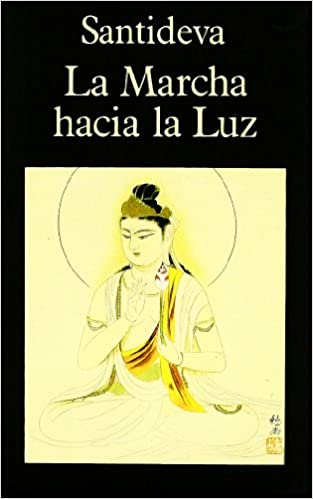
El Camino del Bodhisattva es considerado un manual para Bodhisattvas: seres que postergan su Iluminación hasta salvar a todos los seres sintientes del océano del nacimiento y la muerte del Samsara - la existencia cíclica.
Este libro presenta una nueva traducción al español con un estudio de sus enseñanzas en práctica.
El traductor de esta obra, Myoren, es sacerdote budista Tendai y autor de numerosos libros sobre Budismo y espiritualidad, y te presenta El Camino del Bodhisattva de Shantideva, en un lenguaje reverente y sencillo, para que puedas aplicar sus enseñanzas en tu vida diaria. (Source: back cover)



Guide to the Bodhisattva's Way of Life is a work composed in the eighth century by the Buddhist monk Shantideva. From the time it appeared until today, it has occupied an irreplaceable place in all Mahayana Buddhist schools, while in Tibet itself it enjoys a reputation comparable to the importance of the New Testament for all Christians. As its name suggests, Shantideva explained in it, in an inspired and concise manner, how a bodhisattva should behave and act, placing special emphasis on the development of bodhicitta – the mind of wisdom and compassion. It was precisely based on this text that numerous systems for developing the 'awakened mind' appeared throughout history, which are taught, studied, and practiced to this day.
The first version of the translation of this text into Croatian was made back in 2002, on the occasion of His Holiness the Dalai Lama's visit to Croatia, who then joyfully received it as a gift. That first Croatian version was based on Stephen Batchelor's English translation from Tibetan, published by the Library of Tibetan Works and Archives from Dharamsala.
However, over the years it became clear that the existing Croatian translation needed to be thoroughly refreshed with numerous corrections and new interpretations: this is a text that contains so many different levels of interpretation that even the Tibetans themselves have been adapting it to their own language for centuries. If we limit ourselves to just the most significant European languages, today there are at least six English translations of this text, five French and four German, as well as a significant number of translations of its commentaries.
Batchelor based his translation on the commentary of the fourteenth-century Tibetan teacher Thogme Zangpo, Ocean of Good Explanations. Seeking to make reading easier and provide context for the most demanding ninth chapter, he presented it in the form of an extended prose dialogue, although the original text was written, like the rest of the work, in concise verse form. Wishing to convey to readers something of the pithy style of Shantideva's expression and provide the possibility of additional understanding of the complexity of the ninth chapter, we have included in the Croatian translation verses from two additional English translations: that of Vesna and Alan Wallace and that of the Padmakara translation group. The Wallaces' translation relies on both the Sanskrit and Tibetan originals, while Padmakara's represents an extremely meticulous reading of the Tibetan original. The reader will therefore be able to compare three versions of translations of the same verses, thus obtaining three different keys to understanding them.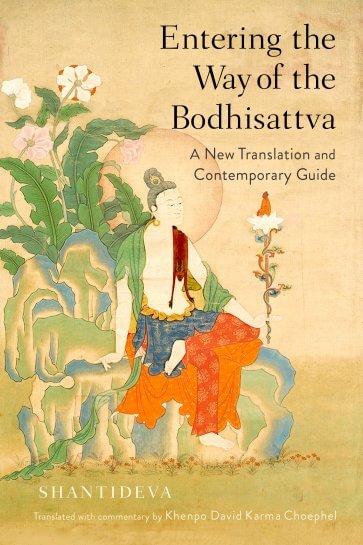

After presenting the full translation, Khenpo David Karma Choephel then introduces readers to the text, explaining the key points of each chapter with clarity and wisdom. Combining a uniquely poetic translation with detailed analysis, this book is a comprehensive guide to developing oneself in service of others. Teachings that have been at the heart of Mahayana practice for centuries are given new life, and the supporting commentary makes the text accessible and applicable to practitioners. Readers interested in the bodhisattva path will find this a comprehensive resource filled with captivating verse and incisive interpretations. (Source: Shambhala Publications)






Śāntideva's Way of the Bodhisattva (Bodhicaryāvatāra) is without a doubt one of the greatest masterpieces of Indian Buddhism and the single most influential text on Mahāyāna ethical theory. Since it was composed in around the eighth century, it has continuously animated the living tradition, especially in Tibet but now in the West as well, as more translations have become available. Its poetic evocations of the spirit of awakening allow readers to enter the mind of the bodhisattva.
Its longest commentary in any language is the one translated here, by the nineteenth-century master Minyak Kunzang Sönam. It came to be known as the Great Hūṃ because it fills the entirety of the third or hūṃ volume of the author's collected works. Citing hundreds of sūtras, he shows how Śāntideva's verses are beautifully integrated within, and express, the Buddhist textual universe. In particular, he ties Śāntideva's verses with the Anthology of Training, the thematic collection of scriptural citations also compiled by Śāntideva, creating a detailed tapestry of Mahāyāna thought and practice. This volume presents Kunzang Sönam’s commentary on the first eight chapters, detailing the generation of the spirit of awakening, the cultivation of positive qualities, and the practice of meditation. Embedded in the commentary is a fresh translation of Śāntideva’s verses, making this an unparalleled guide to appreciating their layers of meaning and applying them in one’s practice and life. (Source: Wisdom Publications)