The Way of the Translators: Three Recent Translations of Śāntideva's Bodhicaryāvatāra
Articles/The Way of the Translators: Three Recent Translations of Śāntideva's Bodhicaryāvatāra
| 🤓 Admin Zone 🛠️ hidden to non-admins | |
- A Critical Study of Ācārya Śāntideva's Bodhicaryāvatāra
- A Critical Study of Ācārya Śāntideva's Bodhicaryāvatāra (diss)
- A Guide to the Bodhisattva Way of Life (Bodhicaryāvatāra)-Review by Cantwell
- A Guide to the Bodhisattva Way of Life-Review by De Jong
- A Guide to the Bodhisattva Way of Life-Review by Pettit
- A Short Presentation of Śāntideva's Bodhicaryāvatāra
- A Study of the Ṡikṣasamuccaya of Āchārya Shāntideva
- Akṣayamati's Bodhisattvacaryāvatāra as Found in the Tibetan Manuscripts from Dūn-huáng
- An Inquiry into the Relationship between the Śikṣāsamuccaya and the Bodhi(sattva)caryāvatāra
- Bodhi(sattva)caryāvatāra and Śikṣāsamuccaya
- Bodhicaryāvatāra (Weeraratne)
- Bodhicaryāvatāra and Bodhicaryāvatāra-Pañjikā (Malalasekera)
- Bodhisattvacaryāvatāra: Exposition de la pratique des bodhisattvas
- Buddha Mind - Christ Mind
- Camino al Despertar
- Die "Vollkommenheiten" im BCA und seinen tibetischen Kommentaren
- Drops of Nectar: Khenpo Kunpal's Commentary on Shantideva's Entering the Conduct of the Bodhisattvas
- Entering the Path of Enlightenment-Review by Cook
- Entering the Path of Enlightenment-Review by Seyfort Ruegg
- Epitome of the Bodhicaryāvatāra with Its Pañjikā, Chap. IX
- Ethical Revaluation in the Thought of Śāntideva
- Ethics in the Śikṣāsamuccaya: A Study in Mahāyāna Morality
- Facts or Fictions: Reconsidering Śāntideva's Names, Life, and Works
- General Introduction: Śāntideva and His World
- Gleichheit und Mitgefühl: Prajñākaramatis Kommentar zu Bodhicaryāvatāra VIII. 89-108
- La légende de Śāntideva
- Moral Theory in Śāntideva's Śikṣāsamuccaya
- Moral Theory in Śāntideva's Śikṣāsamuccaya-Review by Osto
- Moral Theory in Śāntideva's Śikṣāsamuccaya: Cultivating the Fruits of Virtue-Review by Goodman
- Notes on the Deśanā-ritual in the Bodhicaryāvatāra: Evidence of Its Revision
- Notes on the Interpretation of Bodhi(sattva)caryāvatāra V.104–106
- Of the Progresse of the Bodhisattva: The Bodhisattvamārga in the Śikṣāsamuccaya
- On Akṣayamati's Bodhisattvacaryāvatāra
- On Another Sūtrasamuccaya
- On the Pariṇāmanā Chapter of the Bodhicaryāvatāra
- Prolegomena to an English Translation of the Sūtrasamuccaya
- Readings of Śāntideva's Guide to Bodhisattva Practice
- Readings of Śāntideva's Guide to Bodhisattva Practice-Review by Harris
- Reason and Knowledge on the Path: A Protreptic Reading of the Guide
- Reason, Irrationality and Akrasia (Weakness of the Will) in Buddhism: Reflections upon Śāntideva's Arguments with Himself
- Relocation of the Verses on "The Equality of Self and Others" in the Bodhicaryāvatāra
- Remarks on an Instance of Intertextuality in the Eleventh Chapter of the Śikṣāsamuccaya and the Phrase Tṛṇagulmauṣadhivanaspati in Buddhist Sūtra Literature
- Santideva (Indian Antiquary, Vol. 42, 1913)
- Santideva's Bodhicaryāvatāra
- Santideva, un mistico del Buddhismo
- Seven Important Points (Marmasthāna) in the Śikṣāsamuccaya
- Shantideva (Nariman)
- The Bodhi-caryâvatāra and Its Monastic Aspects: On the Problem of Representation
- The Bodhicaryāvatāra: A Buddhist Treatise Translated into Western Languages
- The Bodhicaryāvatāra: A Guide to the Buddhist Path to Awakening-Review by Gethin
- The Bodhisattva Path: Śāntideva's Bodhicaryāvatāra
- The Case of the Vanishing Poet: New Light on Śāntideva and the Śikṣā-samuccaya
- The Changing Way of the Bodhisattva: Superheroes, Saints, and Social Workers
- The Literature of the Madhyamaka School of Philosophy in India
- The Masters and Poets of the Mahāyāna
- The Meaning of Sugata in the Bodhicaryāvatārapañjikā
- The Path of the Bodhisattva
- The Relationship between Morality and the Body in Monastic Training according to the Śikṣāsamuccaya
- The Training Anthology of Śāntideva
- The Transmission of the Bodhicaryāvatāra: The History, Diffusion, and Influence of a Mahāyāna Buddhist Text
- The Way of the Bodhisattva: A Translation of the Bodhicharyāvatāra-Review by Cantwell
- The Way of the Bodhisattva: An Introduction and Commentary to Shantideva's The Way of Life of the Bodhisattva
- The Way of the Translators: Three Recent Translations of Śāntideva's Bodhicaryāvatāra
- Verses by Śāntideva in the Śikṣāsamuccaya: A New English Translation
- Virtuous Bodies
- Śikṣāsamuccaya (Anthology of Instruction)
- Śikṣāsamuccaya et Sūtrasamuccaya
- Śāntideva (Internet Encyclopedia of Philosophy)
- Śāntideva (Potter, Kalupahana, and Sweet)
- Śāntideva (Stanford Encyclopedia of Philosophy)
- Śāntideva and Bodhicaryāvatāra
- Śāntideva and the Mādhyamika: The Prajñāpāramitā-Pariccheda of the Bodhicaryāvatāra
- Śāntideva as a Mantracarin
- Śāntideva on Developing the Thought of Awakening
- Śāntideva's Bodhicaryāvatāra in Translation: A Century of Interpretation of a Sanskrit Mahāyāna Text
- Śāntideva, il Bodhicaryāvatāra e le kārikā del Śikṣāsamuccaya
- Śāntideva, il Bodhicaryāvatāra e le kārikā del Śikṣāsamuccaya-Review by Pāsādika
- Śāntideva: Mystique Bouddhiste des VIIe et VIIIe siècles
- Śāntideva: Mystique Bouddhiste des VIIe et VIIIe siècles-Review by Cabezón
- Śāntideva: The Author and His Project
- Śāntidevas Bodhicaryāvatāra: Das Weiterwirken des Werkes dargestellt anhand der Überlieferungsgeschichte des Textes und seiner Kommentare
Description
- It is possible that translation is like the
flight of the bumblebee: unlikely in principle
but a fact nonetheless. (Hensey, 1982).[1]
- It is possible that translation is like the
1.0. Introductory
As in other bodies of literature, a few Buddhist works have gained special favor among modern scholars and readers. Some have achieved the exalted status of membership in the modem canon of Buddhist texts. Śāntideva's Bodhicaryāvatāra can claim to be among these select few.[2] Without question it is the most translated among Indian Buddhist works of the śāstra genre. Although it is difficult to keep up to date with, or keep an accurate census of, the many modern language renderings of classical Buddhist texts that appear in contemporary libraries and bookstores, I would venture to say that the Bodhicaryāvatāra most likely now occupies the third position among the most frequently translated Indian Buddhist texts, after the Dhammapada and the "Heart Sutra."[3]
It held a privileged position in Tibetan territory, where it seems to have been translated at least twice.[4] The Bodhicaryāvatāra most likely was greatly esteemed in the Indian subcontinent, and perhaps for a short time among the elites of Buddhist Indonesia.[5] In other parts of Asia it failed to make much of an impression. It was clumsily translated into Chinese only once and it was virtually unknown in East Asia until Western Buddhist Studies brought the text to the attention of scholars in China and Japan.[6] A good portion of the text is preserved in fragmentary manuscripts from Dunhuang in a Tibetan translation that differs significantly from both the Tanjur version and the extant Nepalese Sanskrit version).[7] But among contemporary believers in the West and among scholars in contemporary Japan, Europe, and North America, the Bodhicaryāvatāra continues to hold a special
fascination.[8] It has seen a number of translations, mostly from the Sanskrit, but some from the Tibetan text in the Tanjur.[9] We have three translations into French. It has been available, until recently, in two complete and one partial English renditions (not counting assorted fragments in anthologies). It has been translated into several other European languages: Danish, Dutch, German, and Spanish and Japanese—and into a number of modern Asian languages: Chinese, Hindi, Japanese, and Newari. It is also available in one partial translation into Italian.
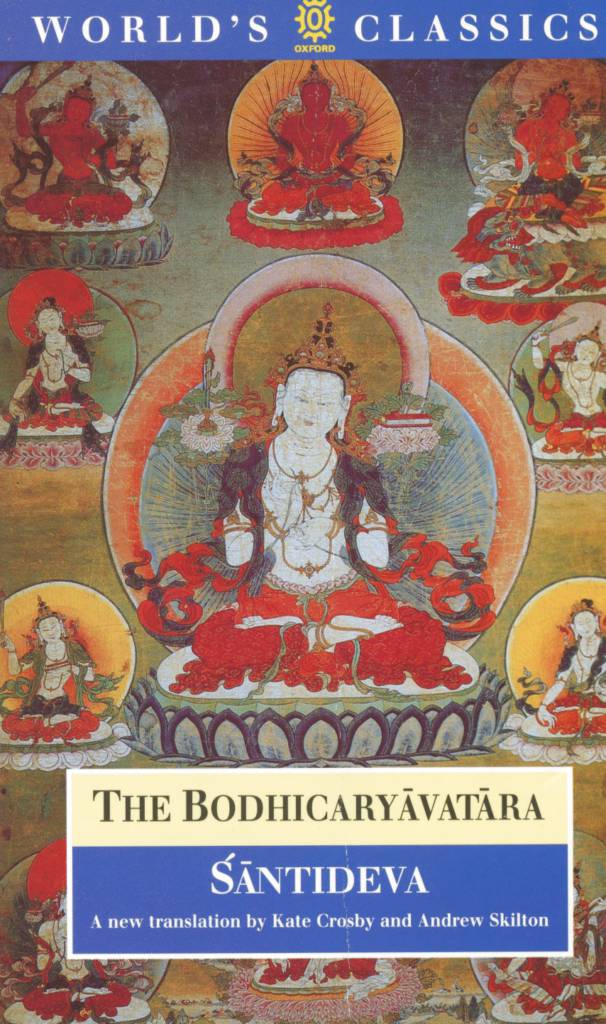
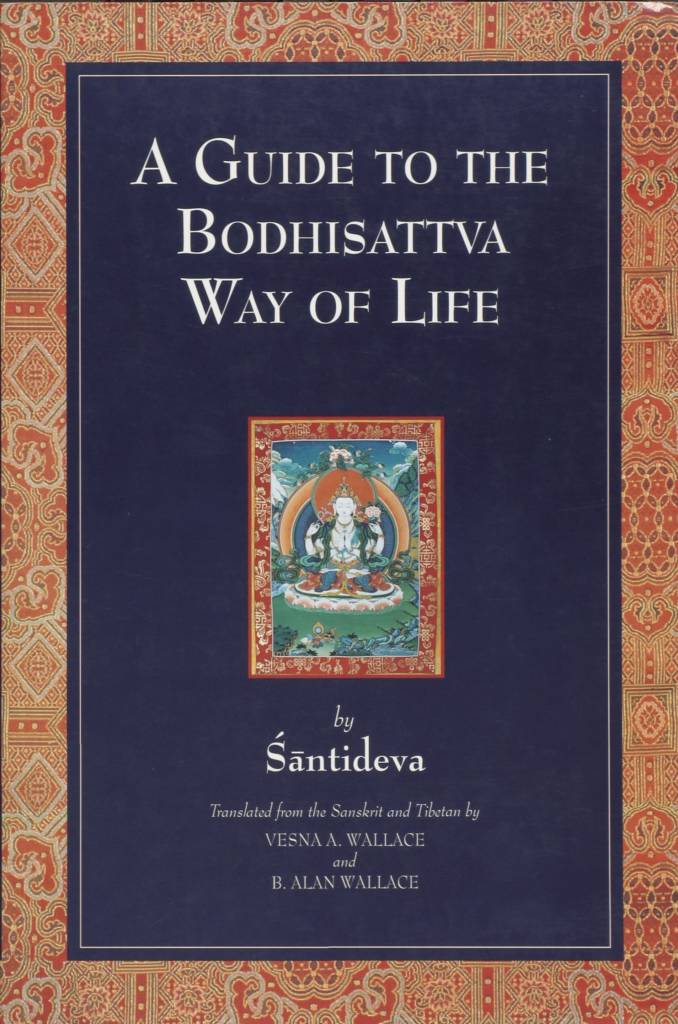
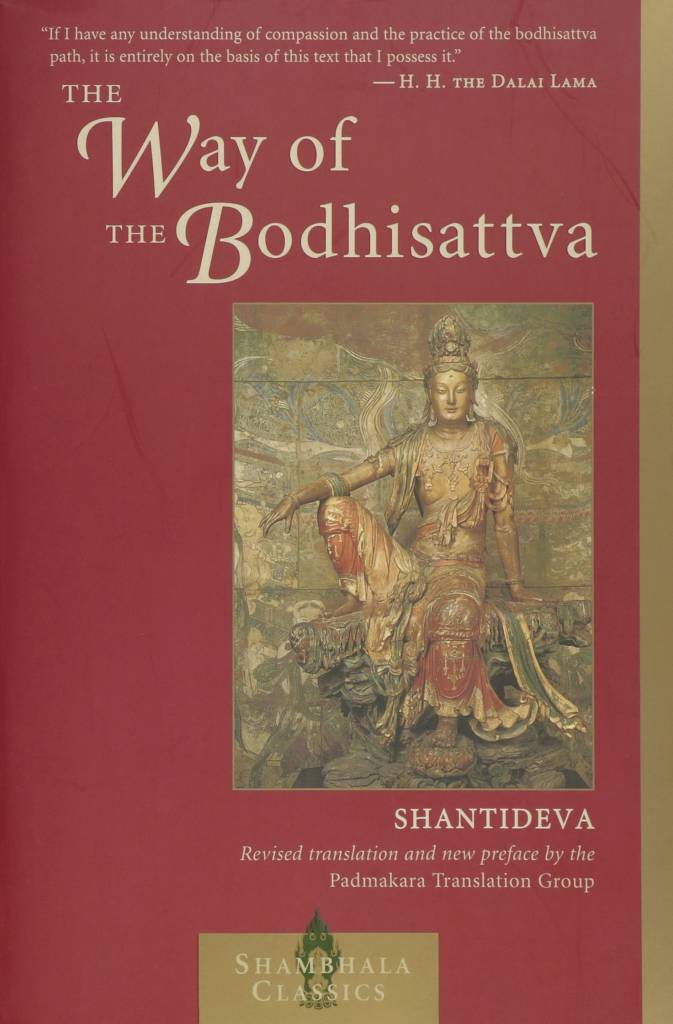
Three English renditions have appeared in the last two years, bringing the number of complete English translations to five. First, a version from the Sanskrit by Crosby and Skilton was published by Oxford University Press in 1996 (abbreviated CS).[10] This was followed in 1997 by a translation from the canonical Tibetan version by Wulstan Fletcher of the Padmakara Translation Group (abbreviated PG).[11] Soon thereafter, we saw the publication of still another English rendering, this time by Vesna A. Wallace and B. Alan Wallace, based on the edited Sanskrit versions, with copious extracts translated from the canonical Tibetan version (abbreviated WW). These three most recent English translations bring the total of contemporary translations to at least twenty-seven.[12]
1.1. Indian Document or World Classic?
Although the translation of Buddhist śāstras presents special problems, the difficulties, methods, and assumptions we find in translations of Buddhist scholastic treatises have much in common with those encountered in any other body of translated literature. This is especially true of a text like the Bodhicaryāvatāra, which combines elements of several genres in a manner that must be characterized as unique in Indian literature.[13] Furthermore, śāstras are sometimes read as if they had some sort of universal or timeless appeal, yet they are also assumed to be highly technical, if not scientific treatises. Modern interpreters seldom acknowledge the tension between these two characterizations.
Notes
- All references within the main body of the text and in the notes are to the last name of the author or translator as listed in the Bibliography at the end of this review; the date of publication is added only when necessary to distinguish two works by the same author or authors. Abbreviations are noted on their first occurrence and are also listed at the end of the article.
- The common title, Bodhicaryāvatāra, is abbreviated as Bca. in the footnotes and in textual references in the main body of the paper, and in the comments that follow some of the entries in the Bibliography. The alternative title Bodhisattvacaryāvatāra is not used in this essay, essentially in order to avoid the entering into a discussion of its sources.
- In the case of the latter, it is hard to tell what should count as a separate or distinct translation—furthermore, its Indian origin has been called into question (see Nattier, 1992). I will not attempt a comparison with Buddhist texts composed or preserved in Chinese or Tibetan, or works in Japanese, several of which also have sometimes a semi-canonical status. They include the Lotus Sutra, the Platform Sutra, the Shōbōgenzō, and the Bodhipathapradīpa.
- This is counting the two extant and clearly distinct versions: the Tanjur (or "canonical") version and the Dunhuang version. But the canonical version was most likely revised extensively from an earlier prototype of the 9th century. This version is listed in the Bibliography under the name of Sarvajñadeva as main translator. The Dunhuang version has been studied extensively by Saitō.
- This statement is, of course, primarily impressionistic. There is no basis for a stronger statement, like that of Wallace and Wallace (p. 7) claiming that the Bca. "has been the most widely read, cited, and practiced text in the whole of the Indo-Tibetan Buddhist tradition." The suggested connection with Indonesia is only based on the existence of two compendia or abridgements of Bca. by Atiśa's teacher Dharmakīrti (Eimer, 1981), who was known by the name of his land of origin, Gser-gling-pa, that is, Suvarṇadvīpa (Chattgpadhyaya & Lama Chimpa).
- The Chinese text has never been translated into a Westem language. It was "translated" once into Japanese in the style of paraphrase known as kokuyaku (Byōdō, 1931).
- The Dunhuang text, moreover, is attributed to a different author by the name of Akṣayamati. It is preserved in four manuscripts: Stein 628, 629, 630, and Pelliot 729. Henceforth references and allusions to "the Tibetan" or "Tib." will be to the Tanjur version of Bca., unless it is specified otherwise. This version is among the earliest texts translated into Tibetan (ca. first half of the 9th century C.E.). The translators were Sarvajñadeva and Dpal-brtsegs—it is No. 5272 (vol. 99, pp. 243-262) in the Peking edition (Otani Reprint). It was revised by three scholars generally dated in the 9th century (Dharmaśrībhadra, Rin-chen-bzang-po, and Sakya-blo-gros), but was then revised much later by scholars dated in the early and late 11th century (Sumatikīrti and Blo-ldan shes-rab—1059–1109 C.E.). The Mongolian versions, including the late translation of Chos-kyi 'od-zer also have some interesting variants (see Poppe, 1954, Ruegg, 1967, Lokesh Chandra, 1976, and Rachewiltz, 1996).
- An exploration of the reasons for this fascination would yield interesting insights into the Orientalist frame of mind. One of our graduate students at the University of Michigan, Mr. Kaoru Ohnishi, is at present engaged in such an investigation. I myself am of two views. As a hold-out in the "canon wars," I would argue that the work is a classic and deserves the attention it has received; but as a child of post-modernity, I also recognize that much of the attraction is the result of a mirror effect that seems to allow the Westem scholar and practitioner to recognize in Bca. a Western ascetic subconscious. This mirror allows us the fantasy of a "spirituality" with all the glory, but none of the gore, of classical ascetic traditions. Needless to say, the Bca. satisfies neither the requirement of a pure spirituality nor the expectation of tame asceticism.
- Full references for all of the translations mentioned in the following paragraphs will be found in the Bibliography.
- When the abbreviations used for the new Bca. translations are used to mean the book or the work, the abbreviation is construed as the singular (e.g., CS = Crosby and Skilton's translation). When the abbreviation stands for the translators, it is construed as a plural (e.g., CS =Crosby and Skilton).
- In a self-effacing gesture, the book is published as the work of the Padmakara Translation Group, but the introduction strongly suggests to me that the translation is primarily the work of Fletcher. Nevertheless, in deference to their wish, I refer to this version as "the Padmakara translation."
- My count is based on the translations I have been able to examine, or for which I have found reliable references. I am not always comfortable listing as more or less independent translations some of these texts, even some of the ones I have examined. I also have little confidence in my list of the translations into contemporary Indian languages. Pezzali, for instance, lists others, but her references are at times obscure, and often unreliable. I have also not attempted to count fragmentary or partial translations in anthologies (some of which are slightly edited excerpts from the complete translations-see, e.g., Conze, Nyanaponika). A good example of an anthologized excerpt, translated with care, is Winternitz, 1930. In all, I have been able to obtain and examine 19 complete or close to complete translations into modern languages (counting LVP's efforts as only one translation), another 8 have not been accessible to me. Versions in modern languages that are known to me are listed in the Bibliography. Those I have been able to examine are listed under "Modern Translations Examined by the Reviewer" the others under "Modern Translations Not Examined by the Reviewer."
- This does not imply necessarily the originality of a single author. I am not sure we can confidently eliminate the possibility that Bca. is a composite text formed by agglutination. The existence of the Dunhuang recension at the very least suggests this alternative hypothesis.


-front.jpg)