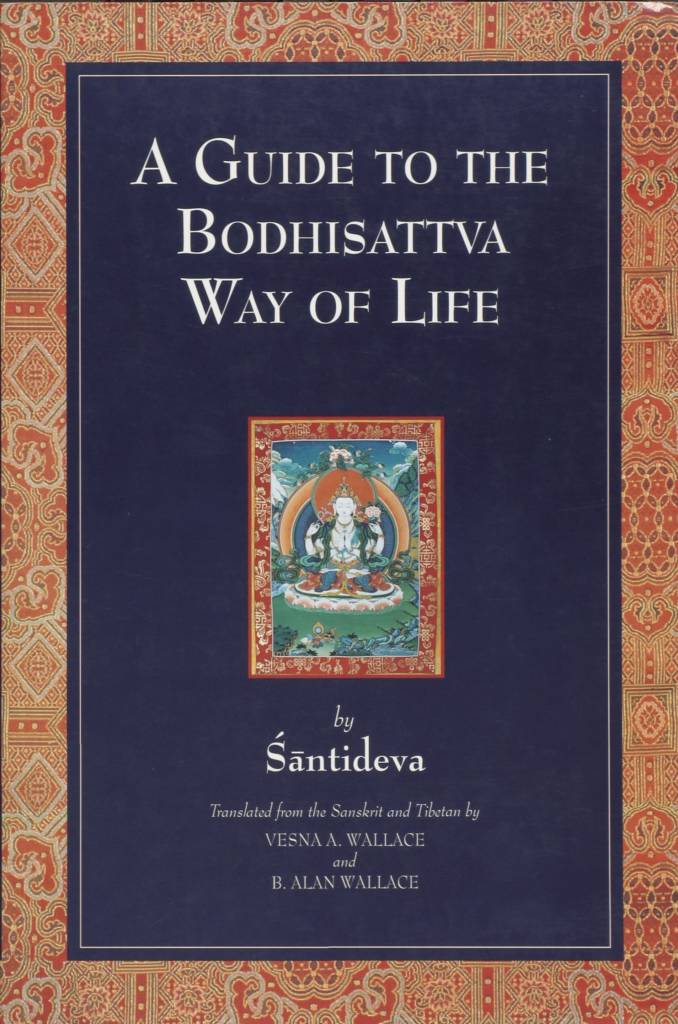
A Guide to the Bodhisattva Way of Life-Review by Pettit
| 🤓 Admin Zone 🛠️ hidden to non-admins | |
- A Guide to the Bodhisattva Way of Life (Bodhicaryāvatāra)-Review by Cantwell
- A Guide to the Bodhisattva Way of Life-Review by De Jong
- A Guide to the Bodhisattva Way of Life-Review by Pettit
- Entering the Path of Enlightenment-Review by Cook
- Entering the Path of Enlightenment-Review by Seyfort Ruegg
- The Bodhicaryāvatāra: A Guide to the Buddhist Path to Awakening-Review by Gethin
- The Way of the Bodhisattva: A Translation of the Bodhicharyāvatāra-Review by Cantwell
- The Way of the Translators: Three Recent Translations of Śāntideva's Bodhicaryāvatāra
Description
The Bodhicharyavatara (The Guide) of the eighth-century Indian master Shantideva is one of the great works of Buddhist literature. It has been translated into Western languages at least a dozen times in this century, and is already well-known to many students of Buddhism in its venerable translation by Stephen Batchelor, published by the Library of Tibetan Works and Archives as A Guide to the Bodhisattva’s Way of Life. Though Batchelor’s work will not soon be eclipsed as one of the best translations of Tibetan material available, these two new translations are significant contributions, both stylistically and methodologically.
Shantideva’s masterpiece shows the way to transcend the limitations of selfishness and realize the boundless compassion of the Bodhisattva, whose only concern is the benefit of others. As the Padmakara translation notes, one of the greatest exemplars of the Bodhisattva’s way is His Holiness the Dalai Lama, who credits The Guide as his chief inspiration.
The central concept of The Guide is bodhichitta, or the mind (chitta) that aspires and practices for the enlightenment (bodhi) of all beings. In the first chapter of the Padmakara translation, Shantideva says, “All other virtues, like the plantain tree,/ Produce their fruit, but then their force is spent./ Alone the marvelous tree of bodhichitta/ Will bear its fruit and grow unceasingly.” As all happiness comes from wishing others well, and all suffering from caring only for ourselves, bodhichitta, he proclaims, is the best medicine for what ails the world. Shantideva paints our prospects for the future in no uncertain terms. In the second chapter, titled “Confession,” he begins by making symbolic offerings to all the buddhas and bodhisattvas, and then declares: “Due to delusion, attachment, and hatred, I have sinned in many ways… Negligent and unaware of this danger, I have acquired many vices out of attachment to this transient life” (Wallace and Wallace). Neither translation shrinks from the use of the words “sin” and “evil,” which might conjure up unpleasant associations for anyone ever brainwashed with the teaching of Original Sin. But whether we call them sins or not, Shantideva’s frank discussion packs a punch. Death, he observes, does not discriminate between old and young, healthy and ill; it descends like a thunderbolt. The specter of our actions looms large in light of mortality, and the choice is clear: shape up and strive for enlightenment, or be prepared to suffer the consequences. (Pettit, "Review.") Read more here