| 🤓 Admin Zone 🛠️ hidden to non-admins | |
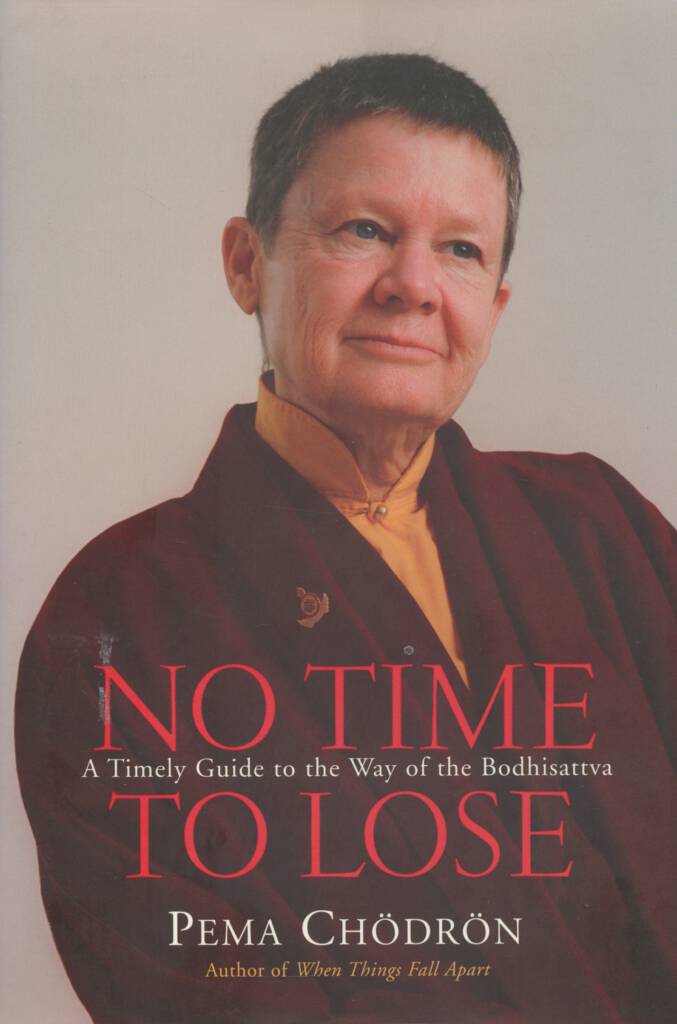
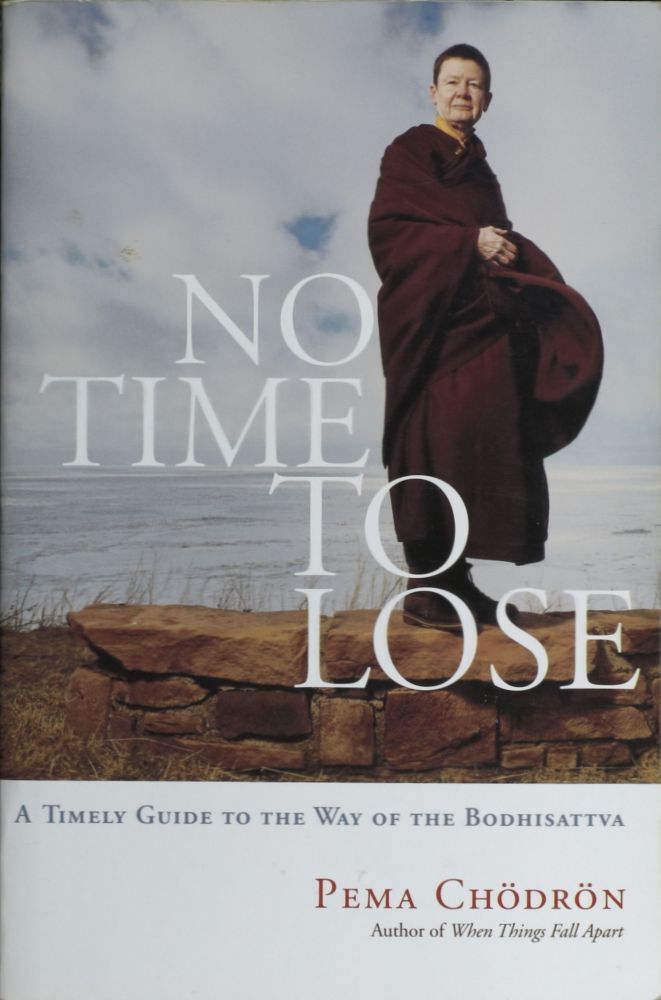
No Time to Lose: A Timely Guide to the Way of the Bodhisattva
Book
Please note that many items in our library are simply pages that represent a detailed library catalog entry and citation of someone else's work, presentation, or performance. Read our General Disclaimer for more information.
-front.jpg)
Description
In No Time to Lose Chödrön reveals the traditional Buddhist teachings that guide her own life: those of The Way of the Bodhisattva (Bodhicharyavatara), a text written by the eighth-century sage Shantideva. This treasured Buddhist work is remarkably relevant for our times, describing the steps we can take to cultivate courage, caring, and joy—the key to healing ourselves and our troubled world. Chödrön offers us a highly practical and engaging commentary on this essential text, explaining how its profound teachings can be applied to our daily lives.
Full of illuminating stories and practical exercises, this fresh and accessible guide shows us that the path of the bodhisattva is open to each and every one of us. Pema Chödrön urges us to embark on this transformative path today, writing, "There is no time to lose—but not to worry, we can do it." (Source: Shambhala Publications)
Citation
Chödrön, Pema. No Time to Lose: A Timely Guide to the Way of the Bodhisattva. Edited by Helen Berliner. Boston: Shambhala Publications, 2005.
Table of contents
- People Like Us Can Make a Difference ix
- Developing Clear Intention 1
- Preparing the Ground 25
- Transcending Hesitation 53
- Using Our Intelligence 75
- Taming the Mind 103
- The Three Disciplines 129
- Working with Anger 159
- Specific Situations for Practicing Patience 189
- Enthusiasm 225
- Heartbreak with Samsara 269
- Dissolving the Barriers 303
- Dedication 341
- Acknowledgements 363
- Appendix: Study Guidelines 365
- Glossary 367
- Bibliography 371
- Index 375
Interconnections
1 Full translation of

An "Introduction to Bodhisattva Practice," the Bodhisattvacaryāvatāra is a poem about the path of a bodhisattva, in ten chapters, written by the Indian Buddhist Śāntideva (fl. c. 685–763). One of the masterpieces of world literature, it is a core text of Mahāyāna Buddhism and continues to be taught, studied, and commented upon in many languages and by many traditions around the world. The main subject of the text is bodhicitta, the altruistic aspiration for enlightenment, and the path and practices of the bodhisattva, the six perfections (pāramitās). The text forms the basis of many contemporary discussions of Buddhist ethics and philosophy.
2 Other editions

Pema Chödrön presents Shantideva's Bodhicaryāvatāra verse-by-verse, offering both illuminating stories and practical exercises to enrich the text.

Chödrön reveals the traditional Buddhist teachings of the Bodhicharyavatara, describing the steps we can take to cultivate courage, caring, and joy.
1 Teaching based on
An "Introduction to Bodhisattva Practice," the Bodhisattvacaryāvatāra is a poem about the path of a bodhisattva, in ten chapters, written by the Indian Buddhist Śāntideva (fl. c. 685–763). One of the masterpieces of world literature, it is a core text of Mahāyāna Buddhism and continues to be taught, studied, and commented upon in many languages and by many traditions around the world. The main subject of the text is bodhicitta, the altruistic aspiration for enlightenment, and the path and practices of the bodhisattva, the six perfections (pāramitās). The text forms the basis of many contemporary discussions of Buddhist ethics and philosophy.
1 Reviews

No Time to Lose is based primarily on transcripts of teachings on the Bodhicharyavatara that Pema Chödrön gave at Gampo Abbey in 2001. It is, so far as I know, the first published commentary on the bulk of the Bodhicharyavatara by a Western-born teacher, and so represents a milestone in the course of the text’s transmission to the West. The translation of Shantideva’s verses on which she comments is that of the Padmakara Translation Committee (The Way of the Bodhisattva, Shambhala). Based on the Tibetan version rather than the Sanskrit original, it is, nevertheless, the clearest and most poetic Bodhicharyavatara translation in English. Chödrön comments on nearly every verse in nine of the text’s ten chapters. She has omitted chapter nine, on wisdom, noting that it involves a daunting and complex discussion of Madhyamaka philosophy that would merit a book of its own. (Jackson, para. 10)