| 🤓 Admin Zone 🛠️ hidden to non-admins | |
To Buddhistiske Læredigte - Nāgārjuna: "Brev til en ven" (Suhṛllekha) - Śāntadeva: "Om en Bodhisattvas Livsform" (Bodhisattvacaryāvatāra)
Book
Please note that many items in our library are simply pages that represent a detailed library catalog entry and citation of someone else's work, presentation, or performance. Read our General Disclaimer for more information.
Description
A Danish translation of Nāgārjuna's Suhṛllekha and Śāntideva's Bodhicaryāvatāra by Christian Lindtner.
Citation
Lindtner, Chr., trans. To Buddhistiske Læredigte; Nāgārjuna: "Brev til en ven" (Suhṛllekha); Śāntadeva: "Om en Bodhisattvas Livsform" (Bodhisattvacaryāvatāra). (In Danish.) Indiske studier, 1. Copenhagen: Kommission hos Akademisk Forlag, 1981.
Interconnections
2 Full translation of

An "Introduction to Bodhisattva Practice," the Bodhisattvacaryāvatāra is a poem about the path of a bodhisattva, in ten chapters, written by the Indian Buddhist Śāntideva (fl. c. 685–763). One of the masterpieces of world literature, it is a core text of Mahāyāna Buddhism and continues to be taught, studied, and commented upon in many languages and by many traditions around the world. The main subject of the text is bodhicitta, the altruistic aspiration for enlightenment, and the path and practices of the bodhisattva, the six perfections (pāramitās). The text forms the basis of many contemporary discussions of Buddhist ethics and philosophy.

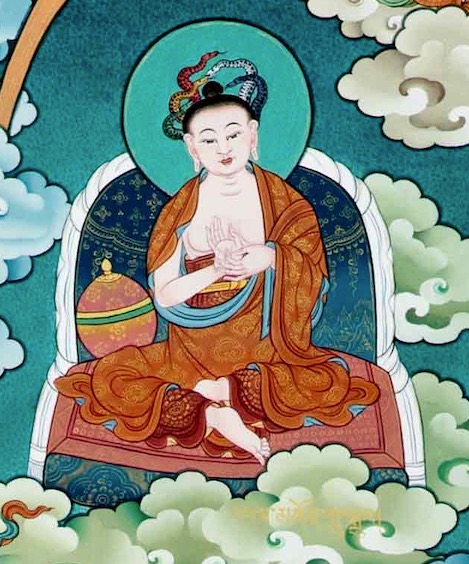
Letter to a Friend (Skt. Suhṛllekha; Tib. བཤེས་པའི་སྤྲིང་ཡིག་, shepé tring yik, Wyl. bshes pa'i spring yig) — a śāstra by Nāgārjuna, which belongs to his Collection of Advice.
Nāgārjuna (1st-2nd century A.D.) wrote this celebrated poem as a letter of advice to his friend King Gautamiputra/Satavahana.
This advice gives a concise and comprehensive introduction to the entire path and practice of Buddhism. It guides both householders and the ordained onto the path leading to liberation and enlightenment. The instructions are of special interest to those who wish to take up spiritual activity while continuing to live and work in society; they are meant to convey the whole meaning of the Dharma to the ordinary person in a language and style that are easy to understand.
Despite its short length (123 verses), it covers the whole Mahāyāna path with unusual clarity and memorable imagery; thus it is widely quoted by Tibet's great masters and scholars in the many commentaries they have written on the Buddhist path. (Source Accessed Feb 13, 2026)