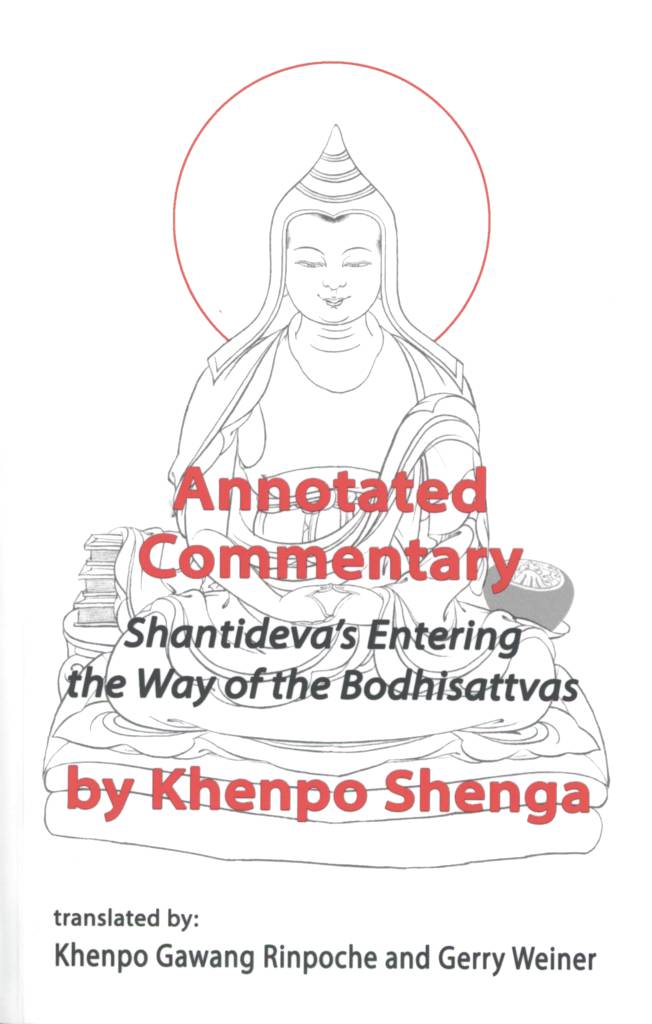
Annotated Commentary: Shantideva's Entering the Way of the Bodhisattvas
From Bodhicitta
< BooksBooks/Annotated Commentary: Shantideva's Entering the Way of the Bodhisattvas
| 🤓 Admin Zone 🛠️ hidden to non-admins | |
Annotated Commentary: Shantideva's Entering the Way of the Bodhisattvas
Book
Please note that many items in our library are simply pages that represent a detailed library catalog entry and citation of someone else's work, presentation, or performance. Read our General Disclaimer for more information.

Description
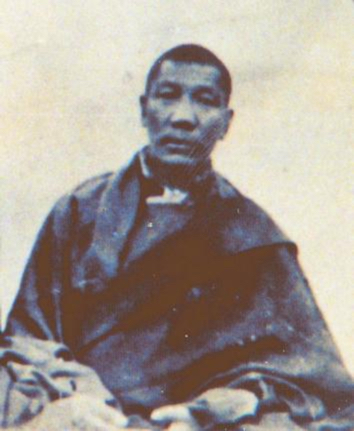
Khenpo Shenga's (Gzhan phan chos kyi snang ba, 1871-1927) annotated commentaries form the core of the present curriculum in many Buddhist colleges throughout the Himalayan region. It is said that he was able to teach texts such as Bodhicharyavatara entirely from memory.
Foreward by Alak Zenkar Rinpoche.
Citation
Gawang, Khenpo, and Gerry Weiner, trans. Annotated Commentary: Shantideva's Entering the Way of the Bodhisattvas. Memphis, TN: Jeweled Lotus Publications, 2023.
Table of contents
- Introduction to the Text1
- Translator's Homage and Homage2
- Vow2
- Verse of Humility3
- Giving Rise to Joy3
- Chapter One: An Explanation of the Benefits of Bodhichitta5
- The Supports of Bodhichitta — the Body6
- The Supports of Bodhichitta — the Mind6
- The General Benefit of Bodhichitta7
- Aspiration and Engagement Bodhichitta13
- Distinguishing the Benefits of Aspiration14
- and Application Bodhichitta16
- Establishing the Benefit of Bodhichitta Through Scriptures and Reasoning22
- The Greatness of the Individual Possessing Bodhichitta22
- Chapter Two: Confessing Unwholesome Deeds25
- The Branch of Offering26
- The Branch of Taking Refuge34
- The Branch of Prostration35
- The Branch of Confessing Unwholesome Deeds35
- Chapter Three: Completely Holding Bodhichitta51
- The Branch of Rejoicing52
- The Branch of Supplicating to Turn the Wheel of Dharma53
- The Branch of Supplicating to Remain, not Passing into Nirvana53
- The Branch of Dedication of Merit54
- The Main Trunk of Training the Mind of Bodhichitta55
- Taking the Bodhisattva Vow59
- Being Delighted60
- Praying for Others to be Happy63
- Chapter Four: The Teaching on Heedfulness65
- A Brief Explanation of Attentiveness66
- A Detailed Explanation of Attentiveness67
- Protecting Bodhichitta from Deteriorating67
- Protecting Exertion from Deteriorating71
- Contemplating the Difficulty of Obtaining a Free and Well-favored Human Birth73
- Contemplating the Difficulty of Freeing Oneself from the Lower Realms75
- The Necessity of Striving for Virtue When We Have Obtained Free and Well-favored Conditions76
- An Explanation of the Faults of the Kleshas78
- Bearing Difficulty in Abandoning the Kleshas81
- How to Abandon the Kleshas84
- Chapter Five: Protecting Attentiveness89
- Protecting Mind in Order to Protect Discipline90
- Relying on Mindfulness and Attentiveness in Order to Protect Mind98
- The Way of Training the Mind by Means of Mindfulness and Attentiveness102
- Additional Branches of Perfect Practice125
- Chapter Six: Teachings on Patience133
- Abandoning Anger134
- Identifying the Object of Patience137
- Practicing Patience139
- Respecting Sentient Beings174
- Chapter Seven: Teachings on Exertion183
- The Need for Developing Exertion184
- Identifying Exertion184
- Abandoning Habits Discordant with Exertion184
- Adopting Habits that are Concordant with Exertion195
- Chapter Eight: Teachings on Meditation213
- The Connection of Meditation with Exertion214
- Abandoning Conditions Discordant with Meditation214
- The Actual Practice of Meditation244
- Meditating on the Equality of Self and Others244
- Meditating on Exchanging Self and Others252
- Instructions on the Way to Practice Meditation276
- Chapter Nine: Teachings on Prajna279
- A Short Explanation on Giving Rise to Prajna280
- Establishing the Two Truths by Means of the View281
- Experience Gained Through Meditation — Meditating on the Selflessness310
- Cutting Misconceptions through Reasoning335
- The Functioning of the Realization of Emptiness353
- Chapter Ten: Dedication361
- A Brief Explanation of Dedication362
- General Dedication that Frees Sentient Beings from the Three Realms of Suffering362
- Particular Dedication that Frees Beings of the Three Lower Realms from Suffering363
- The Dedication that Fulfills the Intent of the Supreme Ones378
- The Dedication that Causes Bodhisattvas to Act to Benefit Oneself380
- The Dedication that Causes the Teachings that Benefit Oneself and Others to Spread and Flourish381
- Prostrating Having Recalled your Kindness381
- The Author of the Text381
- The Translators of the Text381
- The Translator of the Text382
- End Notes383
Interconnections
2 Full translation of

An "Introduction to Bodhisattva Practice," the Bodhisattvacaryāvatāra is a poem about the path of a bodhisattva, in ten chapters, written by the Indian Buddhist Śāntideva (fl. c. 685–763). One of the masterpieces of world literature, it is a core text of Mahāyāna Buddhism and continues to be taught, studied, and commented upon in many languages and by many traditions around the world. The main subject of the text is bodhicitta, the altruistic aspiration for enlightenment, and the path and practices of the bodhisattva, the six perfections (pāramitās). The text forms the basis of many contemporary discussions of Buddhist ethics and philosophy.

This is Khenpo Zhenga's annotated commentary (mchan 'grel) on all of the chapters of the Bodhicaryāvatāra. It contains no topical outline.