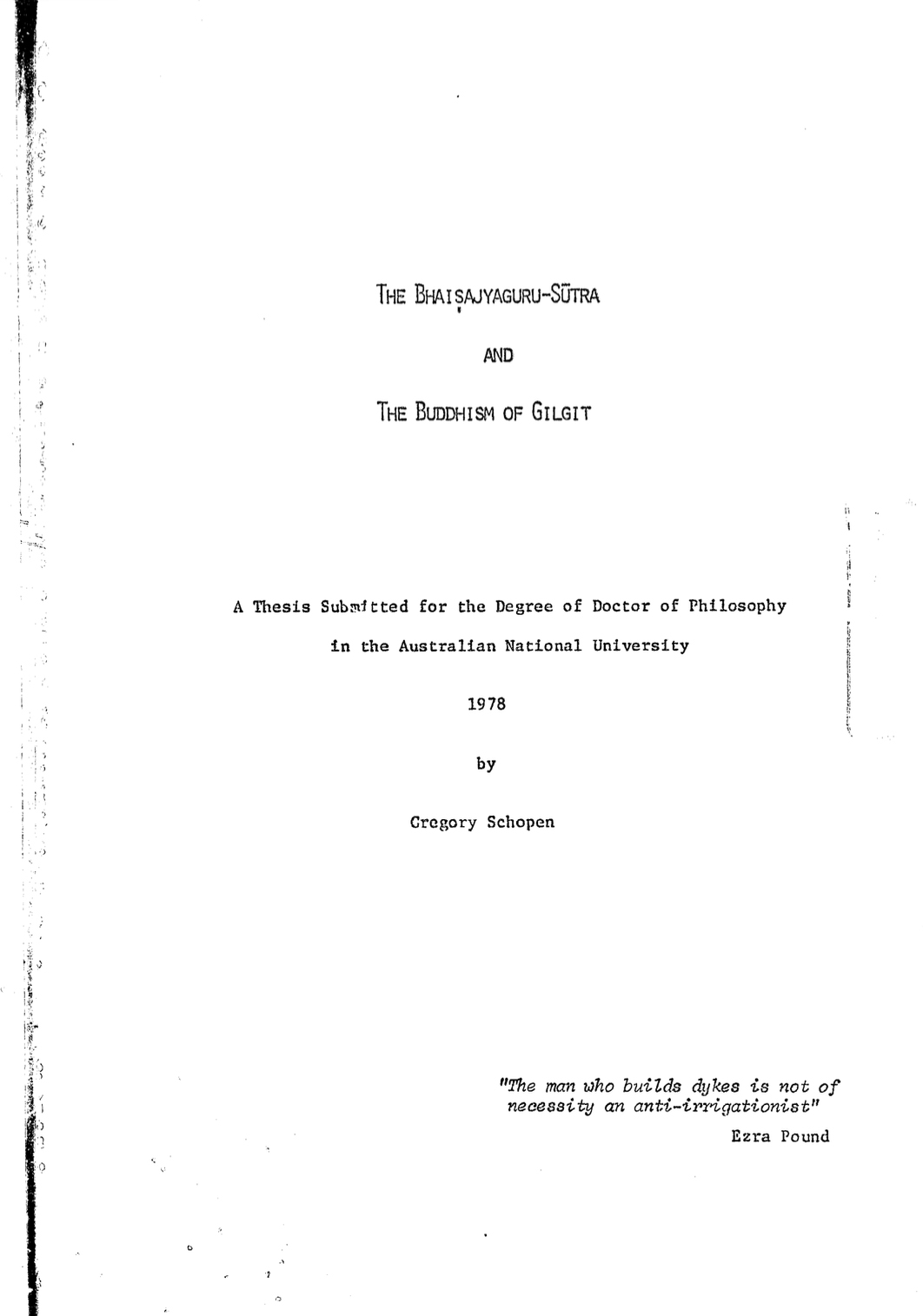
The Bhaiṣajyaguru-Sūtra and the Buddhism of Gilgit
| 🤓 Admin Zone 🛠️ hidden to non-admins | |
- 'phags pa dri ma med par grags pas bstan pa zhes bya ba theg pa chen po'i mdo (Jeweled Lotus Publishing, 2015)
- A Buddha Within: The Tathāgatagarbhasūtra
- A Few Good Men
- A New Translation of the Sanskrit Bhadracarī with Introduction and Notes
- A Revised Edition of the Laṅkāvatāra-Sūtra, Kṣaṇika-Parivarta
- A Revised Edition of the Laṅkāvatāra-sūtra, "Kṣaṇika-parivarta" (in Collected Papers)
- Affirmation in Negation: A Study of the Tathāgatagarbha Theory in the Light of the Bodhisattva Practices
- Akṣayamatinirdeśasūtra, Vol. 1 (Braarvig, J.)
- Akṣayamatinirdeśasūtra, Vol. 2 (Braarvig, J.)
- Amida Dhāraṇī Sūtra and Jñānagarbha's Commentary
- Annotated Translation of the Daśabhūmika-sūtra
- Ashṭasāhasrikā: A Collection of Discourses on the Metaphysics of the Mahāyāna School of the Buddhists
- Aṣṭa-sāhasrikā prajñāparamitā: A Sanskrit Manuscript from Nepal
- Aṣṭasāhasrikā Prajñāpāramitā, with Haribhadra's Commentary called Ālokā
- Bhaisajya-guru-sutra: Original Sanskrit Text with Introduction and Commentary
- Bhaiṣajyaguruvaidūryaprabharājasūtram (Dutt, N.)
- Bhaiṣajyaguruvaidūryaprabharājasūtram (Vaidya, P. L.)
- Bhaiṣajyaguruvaiḍūryaprabharājasūtra (Vira and Chandra)
- Bodhisattvas of the Forest and the Formation of the Mahayana
- Bodhisatvapiṭaka (Bibliotheca Polyglotta)
- Bouddhisme: Notes et Bibliographie
- Buddhist Wisdom Books Containing the Diamond Sutra and the Heart Sutra (1972)
- Catalogue of Buddhist Sanskrit Manuscripts in the Possession of the Royal Asiatic Society (Hodgson Collection)
- Caturdharmikasūtra (Tseng, V.)
- Cuṇḍīdevīdhāraṇī (Zieme, P.)
- Das Gilgit-Fragment Or. 11878A im Britischen Museum zu London
- Daśabhūmikasūtra (Rahder, J.)
- Daśabhūmikasūtra et Bodhisattvabhūmi
- Daśabhūmikasūtram
- Daśabhūmīśvaro nāma Mahāyānasūtraṃ
- Dharma-Samuccaya: Compendium de la Loi, Vol. 1
- Dharma-Samuccaya: Compendium de la Loi, Vol. 2
- Dharma-Samuccaya: Compendium de la Loi, Vol. 3
- Die Bhadracari, eine probe buddhistisch-religiöser lyrik
- Die Überlieferung vom Lebensende des Buddha, Part 1
- Gaṇḍavyūhasūtra (Vaidya, P. L.)
- Gilgit Manuscripts, Vol. 2 (Part 1)
- Gilgit Manuscripts, Vol. 2 (Part 2)
- Gilgit Manuscripts, Vol. 2 (Part 3)
- Lalita Vistara: Leben und Lehre des Çâkya-Buddha, Erster Teil: Text
- Lalita-Vistara (Vaidya, P. L.)
- Lankavatara-Sutra (Das, Sarat Chandra)
- Laṅkāvatāra-sūtra: Sanskrit Manuscript from Nepal
- Mahā-megha-sūtra
- Mārīcīdhāraṇī (Zieme, P.)
- Narayanapariprccha: Sanskrit and Tibetan Texts
- Rāṣṭrapālaparipṛcchā (Vaidya, P. L.)
- Rāṣṭrapālaparipṛcchā: Sūtra du Mahāyāna (1901)
- Saddharma-Puṇḍarīka or the Lotus of the True Law (1963)
- Saddharma-Puṇḍarīka-Sūtra: Kashgar Manuscript
- Saddharmalankavatarasutram (Vaidya, P. L.)
- Saddharmapuṇḍarīka (1908)
- Saddharmapuṇḍarīka-sūtram (Wogihara and Tsuchida)
- Saddharmapuṇḍarīkanāmamahāyānasūtram (Kawaguchi and Ikeda)
- Saddharmapuṇḍarīkasūtra (Vaidya, P. L.)
- Saddharmapuṇḍarīkasūtram (Dutt, N.)
- Samantabhadracaryā-praṇidhānarāja (Devi)
- Samādhirāja-Sūtram (Das, Sarat)
- Samādhirājasūtra (Vaidya, P. L.)
- Samādhirājasūtra (Vira and Chandra)
- Sarvadharmāpravṛttinirdeśa (Braarvig, J.)
- Saṃgharakshita (Cowell and Neil)
- Saṃgharakṣitāvadāna (Bibliotheca Polyglotta)
- Saṃgharakṣitāvadānam (Vaidya, P. L.)
- Saṅgharakṣita-avadāna (Hiraoka)
- Scripture of the Lotus Blossom of the Fine Dharma
- Siṃhaparipṛcchāsūtra (Tseng, V.)
- Studies in the Divyāvadāna: I. Sūkarikāvadāna
- Studies in the Literature of the Great Vehicle
- Suvarna Prabhā
- Suvarṇaprabhāsasūtram (Bagchi, S.)
- Suvarṇaprabhāsottamasūtra: Das Goldglanz-Sūtra (Nobel 1937)
- Sūkarikāvadāna (Cowell and Neil)
- Sūkarikāvadānam (Vaidya, P. L.)
- Sūtra of Aṅgulimālika
- The Acceptance of Evil Acts in the Śīla-paṭala of the Yogācārabhūmi
- The Bhaiṣajyaguru-Sūtra and the Buddhism of Gilgit
- The Diamond Sutra (Conze)
- The Diamond Sutra: The Perfection of Wisdom
- The Diamond Sutra: Transforming the Way We Perceive the World
- The Final Leaves of the Pravrajyāvastu Portion of the Vinayavastu Manuscript Found Near Gilgit: Part 1 Saṃgharakṣitāvadāna
- The Gandavyuha Sutra (1949)
- The Gilgit Text of the Vajracchedikā
- The Gāthās of the Daśabhūmika-Sūtra (1–5)
- The Gāthās of the Daśabhūmika-Sūtra (6–10)
- The Hymn of the Life and Vows of Samantabhadra
- The Khotanese Bhadracaryādeśanā
- The Khotanese Śūraṅgamasamādhisūtra
- The Lalita-Vistara, or Memoirs of the Early Life of Śákya Siñha (English)
- The Lalita-Vistara, or Memoirs of the Early Life of Śákya Siñha (Sanskrit)
- The Lankavatara Sutra (1966)
- The Laṅkāvatāra Sūtra (1978)
- The Laṅkāvatāra Sūtra (2003)
- The Laṅkāvatāra Sūtra (Bunyu)
- The Laṅkāvatāra-ratna-sūtram: Sarva-buddha-pravacana-hṛdayam
- The Manuscript of the Vajracchedikā Found at Gilgit
- The Origins and Early History of the Mahāratnakūṭa Tradition of Mahāyāna Buddhism with a Study of the Ratnarāśisūtra and Related Materials
- The Perfection of Wisdom (Jamieson)
- The Perfection of Wisdom (Schopen)
- The Perfection of Wisdom in Eight Thousand Lines (1994) (South Asia Books)
- The Perfection of Wisdom in Eight Thousand Lines (1994) (Sri Satguru Publications)
- The Perfection of Wisdom in Eight Thousand Lines (Four Seasons Foundation)
- The Range of the Bodhisattva: A Study of an Early Mahāyānasūtra - Āryasatyakaparivarta
- The Ratnarāśisūtra Quoted in the Śikṣāsamuccaya
- The Saddharma Laṅkāvatārasūtra (Vaipulya Sūtra)
- The Samādhi Lists of the Akṣayamatinirdeśasūtra and the Mahāvyutpatti
- The Skill in Means (Upāyakauśalya) Sūtra
- The Story of Saṅgharakṣita (Stories 23–25)
- The Story of a Wretched Pig: Sūkarika-avadāna
- The Suvarṇaprabhāsa Sūtra (Nanjio and Idzumi)
- The Suvarṇaprabhāsa Sūtra: A Mahayana Text called "The Golden Splendour"
- The Sūtra of the Golden Light
- The Sūtra of the Young Rice Plant (Śālistambasūtra)
- The Tathāgatagarbha Sūtra
- The Ten Grounds Sutra
- The Ugraparipṛcchā, the Mahāratnakūṭasūtra and Early Mahāyāna Buddhism
- The Vajradhvajapariṇāmanā: An Edition and Translation of the Tibetan Version
- The Śālistamba Sūtra
- The Śālistamba Sūtra and Its Indian Commentaries, Volume II
- Two Sanskrit Manuscripts of the Daśabhūmikasūtra
- Unique Sanskrit Fragments of the "Sūtra of the Golden Light" in the Manuscript Collection of the St. Petersburg Branch of the Institute of Oriental Studies (Russian Academy of Sciences)
- Vajracchedikā Prajñāpāramitā (Conze)
- Vajracchedikā Prajñāpāramitā (Dutt)
- Vajracchedikā Prajñāpāramitā (English)
- Vajracchedikā Prajñāpāramitā (Sanskrit)
- Vajracchedikā Prajñāpāramitāsūtra (Joshi, L.)
- Vajracchedikā in the Original Sanskrit
- Vajracchedikā nāma Triśatikā Prajñāpāramitā
- Vimalakīrtinirdeśa: A Sanskrit Edition Based upon the Manuscript Newly Found at the Potala Palace
- Vimalakīrtinirdeśa: Transliterated Sanskrit Text Collated with Tibetan and Chinese Translations
- Vimalakīrtinirdeśasūtra (Joshi and Prāsādika)
- Vinayaviniścaya Upāliparipṛcchā (Dutt, N.)
- Çatasāhasrikā-Prajñā-Pāramitā: A Theological and Philosophical Discourse of Buddha with His Disciples (in a Hundred-Thousand Stanzas), Vol. 1
- Çatasāhasrikā-Prajñā-Pāramitā: A Theological and Philosophical Discourse of Buddha with His Disciples (in a Hundred-Thousand Stanzas), Vol. 2
- Ārya Śrīaṣṭasāhasrikāprajñāpāramitāsūtram (Vajrācārya, H.)
- Ārya Śālistamba Sūtra (Sastri, N.)
- Āryaśrīdaśabhūmikasūtram (Herākājī Vajrācārya)

Description
This work is made up of three unequal parts. The first part contains an edition of the Sanskrit text of what I have called 'Redaction A' of the Bhaiṣajyaguru-Sūtra. This edition is based on a single manuscript found at Gilgit; with variants from four other manuscripts, also found at Gilgit, given in the critical apparatus. Stylistically 'Redaction A' seems to represent an 'unrevised" version of the text, perhaps a first attempt at Gilgit to commit an oral tradition to writing. The second part consists of a critical edition of the Tibetan translation of a Sanskrit text of the Bhaiṣajyaguru-Sūtra. This edition is based on the Derge, Narthan, Peking and Lhasa versions of the 'phags pa bcom ldan 'das sman gyi bla bai ạu rya'i 'od kyi snon gyi smon lam gyi khyad par rgyas pa and the 'phags pa de bźin gśegs pa bdun gyi snon gyi smon lam gyi khyad par rgyas pa. The Derge versions form the basis of the edition. The first and second parts are preliminary studies to the third and main part, since the whole was not intended as a study of the Bhaiṣajyaguru-Sūtra per se. This third part is devoted to an English translation of the Sanskrit text, with notes; the latter making up the bulk of the work. In these notes I have attempted to show how a literate member of the Gilgit community, assuming he was familiar with the texts known to have been available to him, would have, or could have, understood the Bhaiṣajyaguru-Sūtra, I have also attempted to show what was and what was not unique to the Bhaiṣajyaguru-Sūtra vis-a-vis the Gilgit collection as a whole, and to make the first tentative steps towards reconstructing the 'Buddhism' current at Gilgit in the 5th-6th century.
- Acknowledgementsv
- The Bhaiṣajyaguru-Sūtra. The Sanskrit Text of Redaction A from Gilgit
- Introduction
- I. The Manuscripts of the Bhaiṣajyaguru-sūtra found at Gilgit1
- II. On the Redactional Differences in the Gilgit Manuscripts of the Bhaiṣajyaguru-sūtra4
- III. Notes On and Towards a Methodology27
- The Sanskrit Text36
- 'phags pa bcom ldan 'das sman gyi bla bai ḍū rya'i 'od kyi sṅon gyi
smon lam gyi khyad par rgyas pa źes bya ba theg pa chen po'i mdo:
The Tibetan Translation of a Sanskrit Text of the Bhaiṣajyaguru-sūtra.
- Introduction72
- Concordance of the Kanjur Editions of the 'phags pa bcom ldan 'das sman gyi bla bai ḍū rya'i 'od kyi sṅon gyi
smon lam gyi khyad par rgyas pa źes bya ba theg pa chen po'i mdo75 - Concordance of the Kanjur Editions of the 'phags pa de bźin gśegs pa bdun gyi sṅon gyi smon lam gyi khyad
par rgyas pa źes bya ba theg pa chen po'i mdo77 - The Tibetan Texts79
- The Bhaiṣajyaguru-sūtra and the Buddhism of Gilgit. Translation and Notes.
- Introduction
- I. More Notes On and Towards a Methodology105
- II. Abbreviations, Bibliography and Notes for Textual Sources111
- III. Other Abbreviations123
- Translation and Notes
- 0. Invocation125
- 1. Introduction and Setting162
- a. On the Formula evaṃ mayā śrutam ekasmin samaye162
- 1. Introduction and Setting162
- 2. Request for the Teaching, and the Audience and Time for which it was Intended165
- a. The Epithet Dharmarāja165
- b. Buddhānubhāva and the Problem of Authority in Mahāyāna Sūtra Literature166
- c. Ideas Concerning 'The Last Time': The Formula paścime kāle paścime samaye173
- 2. Request for the Teaching, and the Audience and Time for which it was Intended165
- 3. The Compliance with the Request and Reiteration of the Intention180
- a. Karma and Karmatic Buddhism at Gilgit180
- 3. The Compliance with the Request and Reiteration of the Intention180
- 4. Introduction of Bhaiṣajyaguru, his Buddhafield and Vows191
- a. Praṇidhāna, Satyavacana, and 'Natural Law'191
- 4. Introduction of Bhaiṣajyaguru, his Buddhafield and Vows191
- 5.1. The First Great Vow195
- a. The Thirty-Two Marks of a Great Man195
- 5.1. The First Great Vow195
- 5.2. The Second Great Vow197
- a. Prabhā and the Photic Event: A Literary Commonplace197
- 5.2. The Second Great Vow197
- 5.3. The Third Great Vow202
- a. The Interconnectedness of Material and Spiritual Well-being in a karmatically constructed world.202
- 5.3. The Third Great Vow202
- 5.4. The Fourth Great Vow204
- 5.5. The Fifth Great Vow205
- 5.6. The Sixth Great Vow206
- a. Physical Defects and Deformities: Cause and Prevention206
- 5.6. The Sixth Great Vow206
- 5.7. The Seventh Great Vow210
- a. Sickness, Disease and 'Karmatic Medicine'210
- 5.7. The Seventh Great Vow210
- 5.8. The Eighth Great Vow223
- a. Women and a Fundamental Ambivalence in Buddhist Literature223
- 5.8. The Eighth Great Vow223
- 5.9. The Ninth Great Vow230
- 5.10. The Tenth Great Vow231
- 5.11. The Eleventh Great Vow232
- 5.12. The Twelfth Great Vow233
- 5.13. Conclusion of the Vows234
- 6. Description of Bhaiṣajyaguru's buddhafield235
- a. The Idea of a Buddhafield and 'The World of Maitreya'235
- b. The Formula yādṛśā ca sā sukhāvatī lokadhātu tādṛśāṃ tad buddhakṣetraṃ bhaviṣyati: An Additional Note237
- 6. Description of Bhaiṣajyaguru's buddhafield235
- 7. The 'Vows' in Operation: A First Illustration Connected with Rebirth242
- a. Gifts and Giving as a Source of Merit243
- b. Jātismara and One Kind of Salvation Theory247
- 7. The 'Vows' in Operation: A First Illustration Connected with Rebirth242
- 8. The 'Vows' in Operation: A Second Illustration Connected with Rebirth253
- 9. The 'Vows' in Operation: A Third Illustration Connected with Rebirth255
- 10. The 'Vows' in Operation: A First Illustration Connected with the Temporary Avoidance of Rebirth256
- a. Devas, Yakṣas and Rākṣasas as a Source of Dread256
- b. Kākhordas and Vetāḍas: 'Things' or 'Beings'?259
- c. Ojas and the Threat of its Loss.262
- d. Devas, Yakṣas and Rākṣasas as a Source of Protection264
- e. Conclusions269
- f. The Non-Tantric dhāraṇī and the Question of a Tantric Element in the Buddhism of Gilgit.270
- 10. The 'Vows' in Operation: A First Illustration Connected with the Temporary Avoidance of Rebirth256
- 11. The 'Vows' in Operation: A Fourth Illustration Connected with Rebirth276
- a. The Question of a 'Lay' and a 'Monastic' Buddhism.277
- b. More on Sukhāvatī as a Generalized Religious Goal: the Case of the Karaṇḍavyuha.279
- c. The Importance of the Moment of Death.284
- 11. The 'Vows' in Operation: A Fourth Illustration Connected with Rebirth276
- 12. The 'Vows' in Operation: A Fifth Illustration Connected with Rebirth295
- 13. Mañjuśrī's Assurance to Those Who Preserve the Teaching296
- 14. The Ritual Response for the Temporary Avoidance of Rebirth297
- a. Liturgical Texts and the Ritual Complex at Gilgit298
- b. Bodhic Buddhism and Its Reaction to the Fact of Pūjā: The Case of the Samādhirāja.316
- 14. The Ritual Response for the Temporary Avoidance of Rebirth297
- 15. The 'Vows' in Operation: A Final Illustration341
- 16. The Basis on which the Teaching is to be Received344
- a. The Buddha as 'A Speaker of That which is not Otherwise' and the Centrality of Faith.345
- 16. The Basis on which the Teaching is to be Received344
- 17. The Central Situation of the Text354
- a. More on the Salvation Theory355
- b. The Judgement of the Dead and the puruṣasya sahajā pṛṣṭhānubaddhā devatā.357
- 17. The Central Situation of the Text354
- 18. The Ritual Response to that Situation360
- 19. The Extension of the Response: from the Individual to the State363
- a. Texts and Rituals for 'the Protection of the State'.360
- 19. The Extension of the Response: from the Individual to the State363
- 20. A Question concerning the Situation368
- a. On the Possibility of Lengthening the Individual Life-Span368
- b. The Akālamaraṇas and the bhayas: a Final Case of the Process of Generalization.370
- 20. A Question concerning the Situation368
- 21. The Yakṣa-Generals' Assurance to those who Preserve the Teaching.372
- 22. The Names by which the Sūtra is to be Preserved.373
- 23. Conclusion.374
- 24. Colophon.375