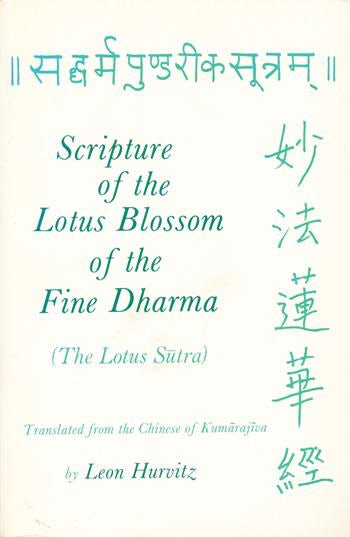
Scripture of the Lotus Blossom of the Fine Dharma
| 🤓 Admin Zone 🛠️ hidden to non-admins | |
- A Few Good Men
- A New Translation of the Sanskrit Bhadracarī with Introduction and Notes
- A Treasury of Mahāyāna Sūtras
- Abiding in Good and Noble Deportment
- Affirmation in Negation: A Study of the Tathāgatagarbha Theory in the Light of the Bodhisattva Practices
- Annotated Translation of the Daśabhūmika-sūtra
- Appendix to the New Edition of the Bodhicaryāvatāra
- Buddha Pronounces the Sūtra of the Great Cundī Dhāraṇī
- Caturdharmikasūtra (Tseng, V.)
- Chapter on Entering the Inconceivable Liberated State of Samantabhadra's Practices and Vows
- Dialogue With Bodhisattva Infinite Wisdom
- Mahāvaipulya Sūtra of the Tathāgata Store
- Myōhō-renge-kyō
- On Entering into the Inconceivable State of Emancipation by the Practice and Vows of the Bodhisattva Samantabhadra of the Mahavaipulya Buddha Avatamsaka Sutra
- On the Pāramitā of Ingenuity
- Saddharma-Puṇḍarīka or the Lotus of the True Law (1963)
- Sarvadharmāpravṛttinirdeśa (Braarvig, J.)
- Saṅgharakṣita-avadāna (Hiraoka)
- Scripture of the Lotus Blossom of the Fine Dharma
- Siṃhaparipṛcchāsūtra (Tseng, V.)
- The Bhaiṣajyaguru-Sūtra and the Buddhism of Gilgit
- The Buddhist Feminine Ideal
- The Definitive Vinaya
- The Dhâranî of Tchundi
- The Diamond Cutter of Doubts: A Commentary on The Diamond Sūtra (Vajracchedikā-prajñā-pāramitā Sūtra) By Ch'an Master Han Shan
- The Diamond Prajna Paramita Sutra
- The Diamond Prajna-Paramita Sutra
- The Diamond Sutra (Chin-Kang-Ching), or Prajna-Paramita
- The Diamond Sutra (Conze)
- The Diamond Sutra (Hsüan Hua)
- The Diamond Sutra (Wai-tao and Goddard)
- The Diamond Sutra and The Sutra of Hui Neng
- The Diamond Sutra: The Perfection of Wisdom
- The Diamond Sutra: Transforming the Way We Perceive the World
- The Diamond Sutra: Translated from Kumarajiva's Chinese Version
- The Diamond That Cuts Through Illusion
- The Essentials of the Dharma Blossom Sutra
- The Final Leaves of the Pravrajyāvastu Portion of the Vinayavastu Manuscript Found Near Gilgit: Part 1 Saṃgharakṣitāvadāna
- The Flower Ornament Scripture: A Translation of The Avatamsaka Sutra
- The Giving Rise of the Ten Kinds of Mind of the Bodhisattva
- The Great Vows of Samantabhadra
- The Healing Buddha (1979)
- The Healing Buddha (1989)
- The Hymn of the Life and Vows of Samantabhadra
- The Khotanese Bhadracaryādeśanā
- The Khotanese Śūraṅgamasamādhisūtra
- The Lalita-Vistara, or Memoirs of the Early Life of Śákya Siñha (English)
- The Lankavatara Sutra (1966)
- The Lankavatara Sutra: A Zen Text
- The Laṅkāvatāra Sūtra (1978)
- The Laṅkāvatāra Sūtra (2003)
- The Lion's Roar of Queen Śrīmālā
- The Lotus Sutra (2016) (BDK)
- The Lotus Sutra (Watson)
- The Lotus Sutra: A Contemporary Translation of a Buddhist Classic
- The Lotus Sutra: The Sutra of the Lotus Flower of the Wonderful Dharma
- The Lotus of the Wonderful Law or The Lotus Gospel (2005)
- The Mahayana Mahaparinirvana-sutra (3 vols.)
- The Manuscript of the Vajracchedikā Found at Gilgit
- The Perfection of Wisdom (Jamieson)
- The Perfection of Wisdom in Eight Thousand Lines (1994) (South Asia Books)
- The Perfection of Wisdom in Eight Thousand Lines (1994) (Sri Satguru Publications)
- The Perfection of Wisdom in Eight Thousand Lines (Four Seasons Foundation)
- The Pratyutpanna Samādhi Sutra: The Śūraṅgama Samādhi Sutra
- The Prediction of Mañjuśrī's Attainment of Buddhahood
- The Scripture of Master of Medicine, Beryl Radiance Tathāgata and The Sutra of the Girl Candrottarā
- The Shurangama Sutra - Volume Eight
- The Shurangama Sutra - Volume Five
- The Shurangama Sutra - Volume Four
- The Shurangama Sutra - Volume One
- The Shurangama Sutra - Volume Seven
- The Shurangama Sutra - Volume Six
- The Shurangama Sutra - Volume Three
- The Shurangama Sutra - Volume Two
- The Shurangama Sutra: Sutra Text and Supplements
- The Skill in Means (Upāyakauśalya) Sūtra
- The Sky as a Mahāyāna Symbol of Emptiness and Generous Fullness: A Study and Translation of the Gaganagañjaparipṛcchā: Volume 2: Edition and Translation
- The Story of Saṅgharakṣita (Stories 23–25)
- The Story of a Wretched Pig: Sūkarika-avadāna
- The Sutra of Queen Śrīmālā of the Lion's Roar and the Vimalakīrti Sutra
- The Sutra of the Lord of Healing
- The Sutra of the Master of Healing
- The Sūtra of the Golden Light
- The Sūtra of the Young Rice Plant (Śālistambasūtra)
- The Tale of King Udayana of Vatsa
- The Ten Grounds Sutra
- The Threefold Lotus Sūtra
- The True Lion's Roar of Queen Śrīmālā
- The Vimalakirti Nirdesa Sutra
- The Vimalakīrti Sūtra (Watson)
- The Vow to Live the Life of Samanta-bhadra
- The Vows of Bodhisattva Samantabhadra Sutra
- The Śūraṅgama Sūtra: A New Translation
- Vaipulya Sūtra of Śrīmālā's Lion's Roar That Reveals the Great Skillful Means of the One Vehicle
- Vajra-chhedika, the "Kin Kong King," or Diamond Sutra
- Vajracchedikā Prajñāpāramitā (Conze)
- Vajracchedikā Prajñāpāramitā (English)
- Vimalakīrti's Discourse on Emancipation
- Vimalakīrti-Nirdeśa-Sūtra: Translated from the Chinese
- Vimalakīrtinirdeśasūtra (Joshi and Prāsādika)

Description
Beloved for its mythology and literary artistry, the Lotus Sutra is one of the most popular and influential texts of Mahayana Buddhism, asserting that there is only one path to enlightenment, the bodhisattva path, and that all followers without exception can achieve supreme awakening. The text argues that the Buddha cannot be delimited by time and space and that a common intent underlies the diversity of Buddhist teachings. Through parables of the burning house, the wayward son, and other tales that have come to be known throughout East Asia, the sutra skillfully concretizes abstract religious concepts and clarifies bold claims about the Buddhist tradition. Urging devotees to revivify doctrine through recitation and interpretation, the sutra powered an organic process of remaking that not only kept its content alive in the poetry and art of premodern Asia but also introduced new forms of practice and scriptural study into contemporary Buddhism. Stephen F. Teiser's foreword addresses this vital quality of the sutra, discusses its background, and reflects on the enduring relevance of Hurvitz's critical work. Columbia University Press
- Roll One
- 1. Introduction1
- 2. Expedient Devices22
- Roll Two
- 3. Parable49
- 4. Belief and Understanding84
- Roll Three
- 5. Medicinal Herbs101
- 6. Bestowal of Prophecy120
- 7. Parable of the Conjured City130
- Roll Four
- 8. Receipt of Prophecy by Five Hundred Disciples157
- 9. Prophecies Conferred on Learners and Adepts168
- 10. Preachers of Dharma174
- 11. Apparition of the Jeweled Stupa183
- Roll Five
- 12. Devadatta195
- 13. Fortitude202
- 14. Comfortable Conduct208
- 15. Welling Up out of the Earth225
- Roll Six
- 16. The Life-span of the Thus Come One237
- 17. Discrimination of Merits245
- 18. The Merits of Appropriate Joy258
- 19. The Merits of the Dharma-Preacher264
- Roll Seven
- 20. The Bodhisattva Never Disparaging279
- 21. The Supernatural Powers of the Thus Come One286
- 22. Entrustment291
- 23. The Former Affairs of the Bodhisattva Medicine King293
- 24. The Bodhisattva Fine Sound303
- Roll Eight
- 25. The Gateway to Everywhere of the Bodhisattva He Who Observes the Sounds of the World311
- 26. Dhāraṇī320
- 27. The Former Affairs of the King Fine Adornment325
- 28. The Encouragements of the Bodhisattva Universally Worthy332
- Glossary339
- Notes on the Sanskrit Text349
- Index417