| 🤓 Admin Zone 🛠️ hidden to non-admins | |
The Laṅkāvatāra Sūtra: A Mahāyāna Text
Book
- A Few Good Men
- A New Translation of the Sanskrit Bhadracarī with Introduction and Notes
- Affirmation in Negation: A Study of the Tathāgatagarbha Theory in the Light of the Bodhisattva Practices
- Annotated Translation of the Daśabhūmika-sūtra
- Caturdharmikasūtra (Tseng, V.)
- Saddharma-Puṇḍarīka or the Lotus of the True Law (1963)
- Sarvadharmāpravṛttinirdeśa (Braarvig, J.)
- Saṅgharakṣita-avadāna (Hiraoka)
- Scripture of the Lotus Blossom of the Fine Dharma
- Siṃhaparipṛcchāsūtra (Tseng, V.)
- The Bhaiṣajyaguru-Sūtra and the Buddhism of Gilgit
- The Diamond Sutra (Conze)
- The Diamond Sutra: The Perfection of Wisdom
- The Diamond Sutra: Transforming the Way We Perceive the World
- The Final Leaves of the Pravrajyāvastu Portion of the Vinayavastu Manuscript Found Near Gilgit: Part 1 Saṃgharakṣitāvadāna
- The Hymn of the Life and Vows of Samantabhadra
- The Khotanese Bhadracaryādeśanā
- The Khotanese Śūraṅgamasamādhisūtra
- The Lalita-Vistara, or Memoirs of the Early Life of Śákya Siñha (English)
- The Lankavatara Sutra (1966)
- The Laṅkāvatāra Sūtra (1978)
- The Laṅkāvatāra Sūtra (2003)
- The Manuscript of the Vajracchedikā Found at Gilgit
- The Perfection of Wisdom (Jamieson)
- The Perfection of Wisdom in Eight Thousand Lines (1994) (South Asia Books)
- The Perfection of Wisdom in Eight Thousand Lines (1994) (Sri Satguru Publications)
- The Perfection of Wisdom in Eight Thousand Lines (Four Seasons Foundation)
- The Skill in Means (Upāyakauśalya) Sūtra
- The Story of Saṅgharakṣita (Stories 23–25)
- The Story of a Wretched Pig: Sūkarika-avadāna
- The Sūtra of the Golden Light
- The Sūtra of the Young Rice Plant (Śālistambasūtra)
- The Ten Grounds Sutra
- Vajracchedikā Prajñāpāramitā (Conze)
- Vajracchedikā Prajñāpāramitā (English)
- Vimalakīrtinirdeśasūtra (Joshi and Prāsādika)
Please note that many items in our library are simply pages that represent a detailed library catalog entry and citation of someone else's work, presentation, or performance. Read our General Disclaimer for more information. You can find more information about this item on the publisher website.

Description
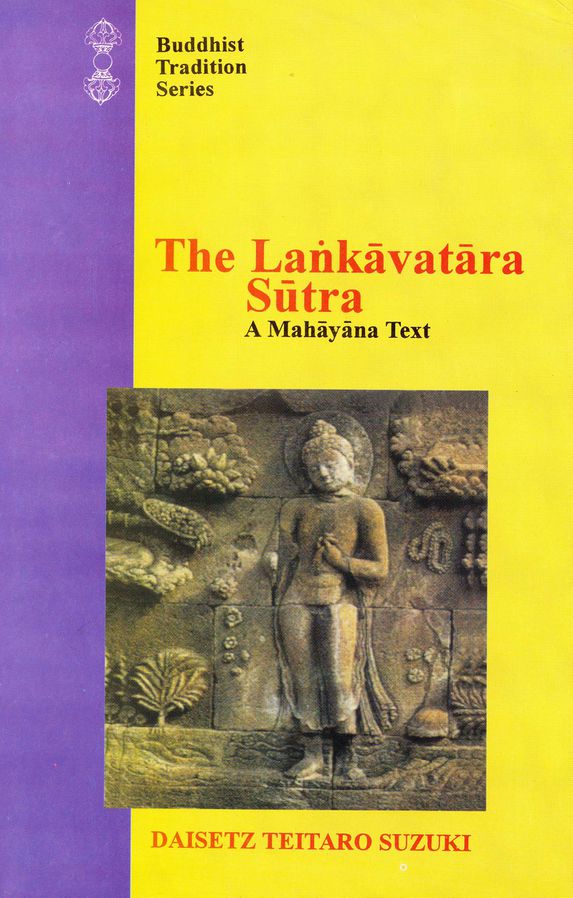
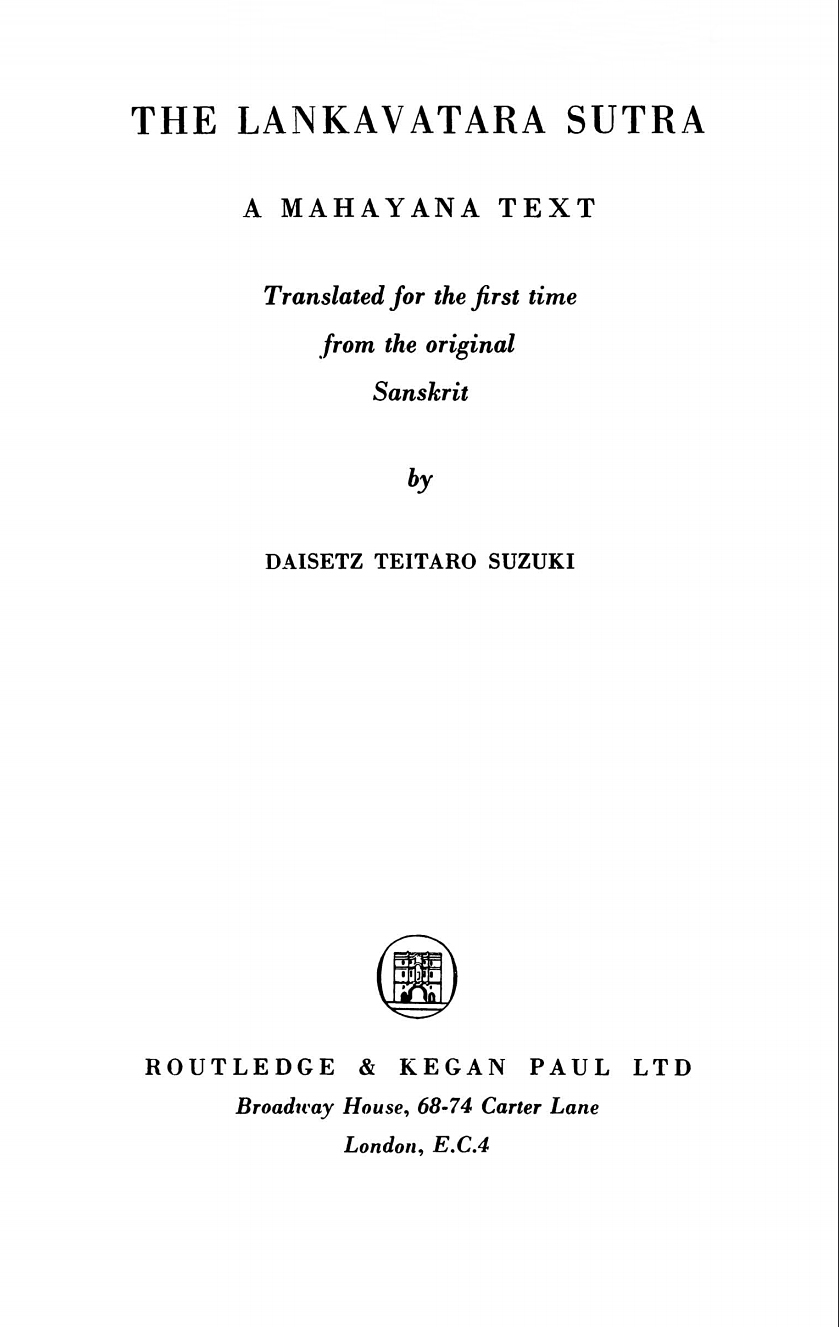
Originally published in 1932, this was the first English translation of the Laṅkāvatārasūtra. It was based on the Sanskrit edition of Nanjo Bunyu, published by the Otani University Press in 1923.
Table of contents
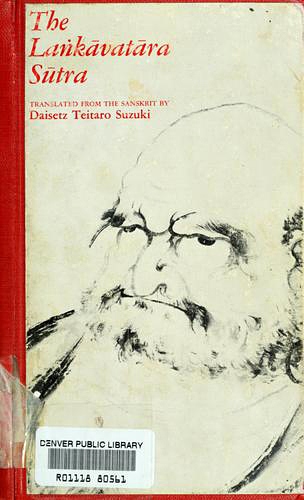
- BODHIDHARMA, by Sesshü (1420-1506)Frontispiece
- PREFACEv
- INTRODUCTIONxi
- CHAPTER ONE. RAVANA, LORD OF LANKA, ASKS FOR INSTRUCTION3
- CHAPTER TWO. COLLECTION OF ALL THE DHARMAS22
- § I. Mahāmati Praises the Buddha with Verses22
- § II. Mahāmati's "One Hundred and Eight Questions"23
- § III. "The One Hundred and Eight Negations"31
- § IV. Concerning the Vijñanas33
- § V. Seven Kinds of Self-nature (svabhāva)35
- § VI. Seven Kinds of First Principle (paramārtha), and the Philosophers' Wrong Views regarding the
Mind Rejected35 - § VII. Erroneous Views held by Some Brahmans and Śramanas Concerning Causation, Continuation, etc.;
The Buddhist Views Concerning Such Subjects as Alayavijñāna, Nirvana, Mind-only, etc.; Attainments
of the Bodhisattva36 - § VIII. The Bodhisattva's Discipling himself in Self-realisation39
- § IX. The Evolution and Function of the Vijñānas; The Spiritual Discipline of the Bodhisattva; Verses on the
Alaya-ocean and Vijñāna-waves39 - § X. The Bodhisattva is to Understand the Signification of Mind-only44
- § XI(a). The Three Aspects of Noble Wisdom (āryajñāna)44
- § XI(b). The Attainment of the Tathāgatakāya45
- § XII. Logic on the Hare's Horns46
- § XIII. Verses on the Alayavijñāna and Mind-only49
- § XIV. Purification of the Outflows, Instantaneous and Gradual49
- § XV. Nishyanda-Buddha, Dharmatā-Buddha, and Nirmāṇa-Buddha51
- § XVI. The Śrāvaka's Realisation and Attachment to the Notion of Self-nature52
- § XVII. The Eternal-Unthinkable53
- § XVIII. Nirvana and Alayavijñāna55
- § XIX. All Things are Unborn55
- § XX. The Five Classes of Spiritual Insight56
- § XXI. Verses on the Triple Vehicle58
- § XXII. Two Classes of the Icchantika58
- § XXIII. The Three Forms of Svabhāva59
- § XXIV. The Twofold Egolessness (nairātmyadvayalakshaṇa)60
- § XXV. Assertion and Refutation (samāropāpavāda)62
- § XXVI. The Bodhisattva Assumes Various Personalities64
- § XXVII. On Emptiness (śūnyatā), No-birth, and Nonduality65
- § XXVIII. The Tathāgata-Garbha and the Ego-soul68
- § XXIX. A Verse on the Philosophers' Discriminations70
- § XXX. The Four Things Needed for the Constitution of Bodhisattvahood70
- § XXXI. On Causation (Six Kinds), and the Rise of Existence72
- § XXXII. Four Forms of Word-discrimination75
- § XXXIII. On Word and Discrimination and the Highest Reality76
- § XXXIV. Verses on Reality and its Representations77
- § XXXV. Mind-only, Multitudinousness, and Analogies, with an Interpolation on the Dualistic Notion
of Existence78 - § XXXVI. The Teaching (dharmadeśanā) of the Tathāgatas84
- § XXXVII. Four Kinds of Dhyāna85
- § XXXVIII. On Nirvana86
- § XXXIX. Two Characteristics of Self-nature87
- § XL. Two Kinds of the Buddha's Sustaining Power (adhishṭhāna)87
- § XLI. On the Chain of Causation (pratītyasamutpāda)90
- § XLII. Words (abhilāpa) and Realities (bhāva)91
- § XLIII. On Eternality of Sound (nityaśabḍa), the Nature of Error (bhrānta), and Perversion (viparyāsa)92
- § XLIV. On the Nature of Māyā95
- § XLV. That All Things are Unborn96
- § XLVI. On Name, Sentence, Syllable, and Their Meaning97
- § XLVII. On Inexplicable Statements (vyākṛitāni)98
- § XLVIII. All Things are and are not (Verses on Four Forms of Explanation)99
- § XLIX. On the Śrāvakas, Srotaāpanna, Sakṛidāgāmin, Anāgāmin, and Arhat; on the Three Knots (samyojāni)100
- § L. The Intellect (buddhi), Examining and Discriminating105
- § LI. The Elements, Primary and Secondary106
- § LII. The Five Skandhas107
- § LIII. Four Kinds of Nirvana and the Eight Vijñānas108
- § LIV. The False Imagination Regarding Twelve Subjects110
- § LV. Verses on the Citta, Parikalpita, Paratantra, and Parinishpanna112
- § LVI. The One Vehicle and the Triple Vehicle114
- CHAPTER THREE. ON IMPERMANENCY118
- § LVII. Three Forms of the Will-body (manomayakāya)118
- § LVIII. The Five Immediacies (pañcānantaryāṇi); Desire as Mother and Ignorance as Father120
- § LIX. The Buddha-nature (buddhatā)122
- § LX. The Identity (samatā) of Buddhahood and its Four Aspects122
- § LXI. Not a Word Uttered by the Buddha; Self-realisation and an Eternally-abiding Reality123
- § LXII. On Being and Non-Being; Realism and Nihilism125
- § LXIII. Realisation and Word-teaching127
- § LXIV. Discrimination, an External World, Dualism, and Attachment129
- § LXV. The Relation between Words (ruta) and Meaning (artha)133
- § LXVI. On Knowledge, Absolute (jñāna) and Relative (vijñāna)135
- § LXVII. Nine Transformations (pariṇāma)137
- § LXVIII. The Deep-seated Attachment to Existence138
- § LXIX. Self-nature, Reality, Imagination, Truth of Solitude, etc.141
- § LXX. The Thesis of No-birth144
- § LXXI. True Knowledge and Ignorance146
- § LXXII. Self-realisation and the Discoursing on it148
- § LXXIII. On the Lokāyatika149
- § LXXIV. Various Views of Nirvana157
- § LXXV. Is Tathāgatahood Something Made? Its Relation to the Skandhas, to Emancipation, to Knowledge161
- § LXXVI. The Tathāgata Variously Designated; Relation Between Words and Meaning; Not a Word Uttered
by the Buddha164 - § LXXVII. Causation, No-birth, Self-mind, Nirvana170
- § LXXVIII. Verses on No-birth and Causation172
- § LXXIX. Various Views of Impermanency176
- CHAPTER FOUR. ON INTUITIVE UNDERSTANDING182
- § LXXX. Perfect Tranquillisation Attained by Śrāvakas, Pratyekabuddhas, and Bodhisattvas; Stages of Bodhisattvahood182
- CHAPTER FIVE. ON THE DEDUCTION OF THE PERMANENCY OF TATHAGATAHOOD187
- § LXXXI. Permanency of Tathagatahood187
- CHAPTER SIX. ON MOMENTARINESS190
- § LXXXII. The Tathāgata-garbha and the Alayavijñāna190
- § LXXXIII. The Five Dharmas, and Their Relation to the Three Svabhāvas193
- § LXXXIV. The Five Dharmas197
- § LXXXV. Tathāgata and Sands of the Gangā198
- § LXXXVI. Momentariness; the Eight Vijñānas202
- § LXXXVII. Three Kinds of the Pāramitās204
- § LXXXVIII. Views on Momentariness; Discrimination206
- CHAPTER SEVEN. ON TRANSFORMATION207
- § LXXXIX. On Transformation207
- CHAPTER EIGHT. ON MEAT-EATING211
- CHAPTER NINE. THE DHĀRANĪS223
- SAGĀTHAKAM226
- APPENDIX297
Interconnections
1 Full translation of

An important Mahāyāna sūtra that was highly influential in East Asia as well as in Nepal, where a manuscript was discovered that remains the only extant Sanskrit recension of this text. It is notable for its inclusion of many doctrinal features that would come to be associated with the Yogācāra philosophy of Mind-Only (Cittamātra), such as the ālayavijñāna, or store-house consciousness, that acts as a repository for the seeds of karmic actions. It also includes several lengthy discussions of tathāgatagarbha and, though it is never actually referenced in the Uttaratantra, it is often listed among the so-called tathāgatagarbha sūtras. While its lack of mention in the Uttaratantra has been interpreted by scholars as evidence that the sūtra postdates the treatise, it should be noted that the ways in which the tathāgatagarbha is discussed in the sūtra is often at odds with its presentation in the Uttaratantra.
2 Other editions

Originally published in 1932, this was the first English translation of the Laṅkāvatārasūtra. It was based on the Sanskrit edition of Nanjo Bunyu published in 1923.

Originally published in 1932, this was the first English translation of the Laṅkāvatārasūtra. It was based on the Sanskrit edition of Nanjo Bunyu published in 1923.