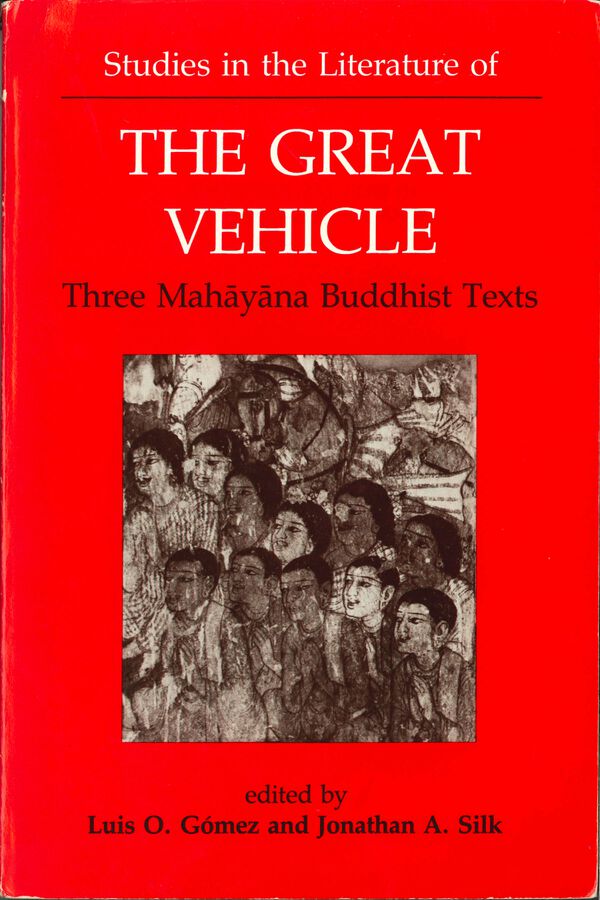
Studies in the Literature of the Great Vehicle
| 🤓 Admin Zone 🛠️ hidden to non-admins | |
- A Revised Edition of the Laṅkāvatāra-Sūtra, Kṣaṇika-Parivarta
- A Revised Edition of the Laṅkāvatāra-sūtra, "Kṣaṇika-parivarta" (in Collected Papers)
- Akṣayamatinirdeśasūtra, Vol. 1 (Braarvig, J.)
- Akṣayamatinirdeśasūtra, Vol. 2 (Braarvig, J.)
- Amida Dhāraṇī Sūtra and Jñānagarbha's Commentary
- Ashṭasāhasrikā: A Collection of Discourses on the Metaphysics of the Mahāyāna School of the Buddhists
- Aṣṭa-sāhasrikā prajñāparamitā: A Sanskrit Manuscript from Nepal
- Aṣṭasāhasrikā Prajñāpāramitā, with Haribhadra's Commentary called Ālokā
- Bhaisajya-guru-sutra: Original Sanskrit Text with Introduction and Commentary
- Bhaiṣajyaguruvaidūryaprabharājasūtram (Dutt, N.)
- Bhaiṣajyaguruvaidūryaprabharājasūtram (Vaidya, P. L.)
- Bhaiṣajyaguruvaiḍūryaprabharājasūtra (Vira and Chandra)
- Bodhisatvapiṭaka (Bibliotheca Polyglotta)
- Bouddhisme: Notes et Bibliographie
- Buddhist Wisdom Books Containing the Diamond Sutra and the Heart Sutra (1972)
- Catalogue of Buddhist Sanskrit Manuscripts in the Possession of the Royal Asiatic Society (Hodgson Collection)
- Caturdharmikasūtra (Tseng, V.)
- Cuṇḍīdevīdhāraṇī (Zieme, P.)
- Das Gilgit-Fragment Or. 11878A im Britischen Museum zu London
- Daśabhūmikasūtra (Rahder, J.)
- Daśabhūmikasūtra et Bodhisattvabhūmi
- Daśabhūmikasūtram
- Daśabhūmīśvaro nāma Mahāyānasūtraṃ
- Dharma-Samuccaya: Compendium de la Loi, Vol. 1
- Dharma-Samuccaya: Compendium de la Loi, Vol. 2
- Dharma-Samuccaya: Compendium de la Loi, Vol. 3
- Die Bhadracari, eine probe buddhistisch-religiöser lyrik
- Die Überlieferung vom Lebensende des Buddha, Part 1
- Gaṇḍavyūhasūtra (Vaidya, P. L.)
- Gilgit Manuscripts, Vol. 2 (Part 1)
- Gilgit Manuscripts, Vol. 2 (Part 2)
- Gilgit Manuscripts, Vol. 2 (Part 3)
- Lalita Vistara: Leben und Lehre des Çâkya-Buddha, Erster Teil: Text
- Lalita-Vistara (Vaidya, P. L.)
- Lankavatara-Sutra (Das, Sarat Chandra)
- Laṅkāvatāra-sūtra: Sanskrit Manuscript from Nepal
- Mahā-megha-sūtra
- Mārīcīdhāraṇī (Zieme, P.)
- Narayanapariprccha: Sanskrit and Tibetan Texts
- Rāṣṭrapālaparipṛcchā (Vaidya, P. L.)
- Rāṣṭrapālaparipṛcchā: Sūtra du Mahāyāna (1901)
- Saddharma-Puṇḍarīka-Sūtra: Kashgar Manuscript
- Saddharmalankavatarasutram (Vaidya, P. L.)
- Saddharmapuṇḍarīka (1908)
- Saddharmapuṇḍarīka-sūtram (Wogihara and Tsuchida)
- Saddharmapuṇḍarīkanāmamahāyānasūtram (Kawaguchi and Ikeda)
- Saddharmapuṇḍarīkasūtra (Vaidya, P. L.)
- Saddharmapuṇḍarīkasūtram (Dutt, N.)
- Samantabhadracaryā-praṇidhānarāja (Devi)
- Samādhirāja-Sūtram (Das, Sarat)
- Samādhirājasūtra (Vaidya, P. L.)
- Samādhirājasūtra (Vira and Chandra)
- Sarvadharmāpravṛttinirdeśa (Braarvig, J.)
- Saṃgharakshita (Cowell and Neil)
- Saṃgharakṣitāvadāna (Bibliotheca Polyglotta)
- Saṃgharakṣitāvadānam (Vaidya, P. L.)
- Siṃhaparipṛcchāsūtra (Tseng, V.)
- Studies in the Divyāvadāna: I. Sūkarikāvadāna
- Studies in the Literature of the Great Vehicle
- Suvarna Prabhā
- Suvarṇaprabhāsasūtram (Bagchi, S.)
- Suvarṇaprabhāsottamasūtra: Das Goldglanz-Sūtra (Nobel 1937)
- Sūkarikāvadāna (Cowell and Neil)
- Sūkarikāvadānam (Vaidya, P. L.)
- Sūtra of Aṅgulimālika
- The Acceptance of Evil Acts in the Śīla-paṭala of the Yogācārabhūmi
- The Bhaiṣajyaguru-Sūtra and the Buddhism of Gilgit
- The Final Leaves of the Pravrajyāvastu Portion of the Vinayavastu Manuscript Found Near Gilgit: Part 1 Saṃgharakṣitāvadāna
- The Gandavyuha Sutra (1949)
- The Gilgit Text of the Vajracchedikā
- The Gāthās of the Daśabhūmika-Sūtra (1–5)
- The Gāthās of the Daśabhūmika-Sūtra (6–10)
- The Hymn of the Life and Vows of Samantabhadra
- The Khotanese Bhadracaryādeśanā
- The Khotanese Śūraṅgamasamādhisūtra
- The Lalita-Vistara, or Memoirs of the Early Life of Śákya Siñha (Sanskrit)
- The Laṅkāvatāra Sūtra (Bunyu)
- The Laṅkāvatāra-ratna-sūtram: Sarva-buddha-pravacana-hṛdayam
- The Manuscript of the Vajracchedikā Found at Gilgit
- The Perfection of Wisdom (Schopen)
- The Ratnarāśisūtra Quoted in the Śikṣāsamuccaya
- The Saddharma Laṅkāvatārasūtra (Vaipulya Sūtra)
- The Samādhi Lists of the Akṣayamatinirdeśasūtra and the Mahāvyutpatti
- The Story of Saṅgharakṣita (Stories 23–25)
- The Suvarṇaprabhāsa Sūtra (Nanjio and Idzumi)
- The Suvarṇaprabhāsa Sūtra: A Mahayana Text called "The Golden Splendour"
- The Tathāgatagarbha Sūtra
- The Śālistamba Sūtra
- Two Sanskrit Manuscripts of the Daśabhūmikasūtra
- Unique Sanskrit Fragments of the "Sūtra of the Golden Light" in the Manuscript Collection of the St. Petersburg Branch of the Institute of Oriental Studies (Russian Academy of Sciences)
- Vajracchedikā Prajñāpāramitā (Conze)
- Vajracchedikā Prajñāpāramitā (Dutt)
- Vajracchedikā Prajñāpāramitā (Sanskrit)
- Vajracchedikā Prajñāpāramitāsūtra (Joshi, L.)
- Vajracchedikā in the Original Sanskrit
- Vajracchedikā nāma Triśatikā Prajñāpāramitā
- Vimalakīrtinirdeśa: A Sanskrit Edition Based upon the Manuscript Newly Found at the Potala Palace
- Vimalakīrtinirdeśa: Transliterated Sanskrit Text Collated with Tibetan and Chinese Translations
- Vimalakīrtinirdeśasūtra (Joshi and Prāsādika)
- Vinayaviniścaya Upāliparipṛcchā (Dutt, N.)
- Çatasāhasrikā-Prajñā-Pāramitā: A Theological and Philosophical Discourse of Buddha with His Disciples (in a Hundred-Thousand Stanzas), Vol. 1
- Çatasāhasrikā-Prajñā-Pāramitā: A Theological and Philosophical Discourse of Buddha with His Disciples (in a Hundred-Thousand Stanzas), Vol. 2
- Ārya Śrīaṣṭasāhasrikāprajñāpāramitāsūtram (Vajrācārya, H.)
- Ārya Śālistamba Sūtra (Sastri, N.)
- Āryaśrīdaśabhūmikasūtram (Herākājī Vajrācārya)

Description
Buddhist literature.
The English translation of the first four chapters of the King of Samādhis Sūtra (Samādhirāja), accompanied by a detailed introduction, is the first western language translation of the introductory chapters of the scripture, which was a central source for the philosophy of Madhyamika Buddhism. This team translation,
based on the Sanskrit text of the sūtra was conceived with a popular audience in mind.
Part II is Gregory Schopen's edition and translation of the so-called Diamond Sūtra (Vajracchedikā), a famous scripture of the Perfection of Wisdom tradition. The Gilgit text presented here is one of the oldest available Sanskrit Buddhist manuscripts and as such directly reveals one aspect of sixth-century Indian Buddhism. Textual notes accompanying the edition highlight the difficulties that face the student who would study such a text.
Masamichi Ichigō's study, edition, and translation of the Madhyamkālaṁkāra of Śāntarakṣita makes available one of the fundamental works of Indian Buddhist philosophy. A detailed introduction situates the thought of Śāntarakṣita in the Madhyamika philosophical system and emphasizes his contribution not only to Indian Buddhist thought but to the Tibetan Buddhist tradition as well.
Through the texts included here and the different methods used in their study, this volume seeks to present an overview of modern research on Indian Mahāyāna Buddhist literature. It is the first volume in the series Michigan Studies in Buddhist Literature. (Source: back cover)
- Prefacevii
- List of Contributorsxv
- PART I
- The Sūtra of the King of Samādhis: Chapters I-IV: Translation Committee1
- Abbreviations and Bibliography3
- Introduction to the English Translation11
- Translation ofthe King of Samadhis51
- Notes79
- PART II
- The Manuscript of the Vajracchedikā Found at Gilgit: Gregory Schopen89
- Abbreviations and Bibliography91
- Introductory Note95
- Transcription of the Gilgit Text99
- Textual Notes109
- Translation of the Gilgit Text123
- Notes133
- PART III
- Śāntarakṣita's Madhyamakālaṁkāra : Masamichi Ichigō141
- Abbreviations and Bibliography143
- ntroduction: The Central Tenet of the Yogācāra-Mādhyamika School151
- Śāntarakṣita's Madhyamakālaṁkāra185
- The Madhyamakālaṁkāra-kārikā: Text and Translation189
- Notes to the Introduction227
- Appendix: Sūtra Quotations in the MAV and MAP237


The first paper in the volume contains a lengthy introduction to the Samādhirāja-sūtra and a translation of its first four chapters. This translation of the King of Samādhis is the result of an experiment in group translation, the members of the group consisting of faculty, visiting scholars, and advanced graduate students at the University of Michigan from 1982 to 1983. An effort was made throughout the introduction and translation to make the presentation of these materials accessible to the interested nonspecialist, while still maintaining rigorous scholarly standards. The introduction contains detailed bibliographic information about the sūtra, its classical versions and its modern editions, translations and studies. A text of capital importance for the Mahāyāna philosophical school called Mādhyamika, this sūtra is quoted extensively in śāstric literature. These quotations are documented in detail. Furthermore, an outline summary of the whole sūtra is given, chapter by chapter. It is hoped that the availability of some portions of the sūtra in English translation might prompt others to undertake translations of the remaining chapters in the near future.
For reasons explained in detail in Part I, the text taken as a basis for
the translation is the version preserved in the Buddhist Sanskrit manuscripts of Nepal. Since many Mahayana sūtras do not survive in their Indian-language originals, Tibetan and Chinese translations provide us with valuable textual materials for the study of Indian Mahāyāna Buddhism. Even in cases like that of the King of Samādhis, for which we still possess a Sanskrit version, careful and judicious use of the Tibetan and Chinese translations can aid our reading of the text. It is important, however, for modern scholars to avoid creating their own new, conflated text of a sūtra. Often scholars will fail to adequately distinguish the various recensions of a given text, using translations not to shed light on one version but to actually rewrite the text. The study in Part I cautions against such a method, and shows in the notes to its translation one