The Vajradhvajapariṇāmanā: An Edition and Translation of the Tibetan Version
| 🤓 Admin Zone 🛠️ hidden to non-admins | |
- 'phags pa dri ma med par grags pas bstan pa zhes bya ba theg pa chen po'i mdo (Jeweled Lotus Publishing, 2015)
- A Buddha Within: The Tathāgatagarbhasūtra
- A Few Good Men
- Akṣayamatinirdeśasūtra, Vol. 1 (Braarvig, J.)
- Akṣayamatinirdeśasūtra, Vol. 2 (Braarvig, J.)
- Ascertaining the Vinaya: Upāli's Questions: Vinayaviniścayopāliparipṛcchā (Erdene-Ochir, B.)
- Bodhisattvas of the Forest and the Formation of the Mahayana
- Bodhisatvapiṭaka (Bibliotheca Polyglotta)
- Creatures: Saṅgharakṣita and the Shape-Shifting Nāga
- Describing the Benefits of Producing Representations of the Thus-Gone One: Tathāgatapratibimbapratiṣṭhānuśaṃsasaṃvarṇana (Teleki, K.)
- Die Überlieferung vom Lebensende des Buddha, Part 1
- Inspiring Determination: Adhyāśayasaṃcodana (Dorje, Lama Sherab)
- Marici-Dharani
- Narayanapariprccha: Sanskrit and Tibetan Texts
- Samantabhadracaryā-praṇidhānarāja (Devi)
- Saṃgharakṣitāvadāna (Bibliotheca Polyglotta)
- Sūtra of Aṅgulimālika
- Teaching How All Phenomena Are without Origin: Sarvadharmāpravṛttinirdeśa (Hinkle, T.)
- The Absorption of the Miraculous Ascertainment of Peace: Praśāntaviniścayaprātihāryasamādhi (Hinkle, T.)
- The Acceptance of Evil Acts in the Śīla-paṭala of the Yogācārabhūmi
- The Application of Mindfulness of the Sacred Dharma: Saddharmasmṛtyupasthāna (Doctor, T.)
- The Array of Virtues of Mañjuśrī's Buddha Realm: Mañjuśrībuddhakṣetraguṇavyūha (Hinkle, T.)
- The Avalokinī Sūtra: Avalokinīsūtra (Collet-Cassart, B.)
- The Bhaiṣajyaguru-Sūtra and the Buddhism of Gilgit
- The Bodhisattva Path: Based on the Ugraparipṛcchā, a Mahāyāna Sūtra
- The Detailed Account of the Previous Aspirations of the Blessed Bhaiṣajyaguruvaiḍūryaprabha: Bhagavānbhaiṣajyaguruvaiḍūryaprabhasya pūrvapraṇidhānaviśeṣavistāra (Krug, A.)
- The Dhāraṇī of the Jewel Torch: Ratnolkādhāraṇī (Jackson, D.)
- The Diamond Sutra (Conze)
- The Exalted Mahāyāna Sūtra on the Wisdom Gone Beyond Called The Vajra Cutter
- The Fortunate Aeon: How the Thousand Buddhas Become Enlightened
- The Good Eon: Bhadrakalpika (Doctor, T.)
- The Holy Teaching of Vimalakīrti
- The Jewel Cloud: Ratnamegha (Doctor, T.)
- The King of Glorious Sutras called the Exalted Sublime Golden Light
- The King of Samādhis Sūtra: Samādhirājasūtra (Roberts, P.)
- The Legend of Saṃgharakṣita
- The Lion's Roar of Queen Śrīmālā
- The Miraculous Play of Mañjuśrī: Mañjuśrīvikrīḍita (Braarvig, J.)
- The Origins and Early History of the Mahāratnakūṭa Tradition of Mahāyāna Buddhism with a Study of the Ratnarāśisūtra and Related Materials
- The Perfection of Wisdom (Schopen)
- The Play in Full: Lalitavistara (Doctor, A.)
- The Precious Discourse on the Blessed One’s Extensive Wisdom That Leads to Infinite Certainty: Niṣṭhāgatabhagavajjñānavaipulyasūtraratnānanta (Doctor, A.)
- The Questions of Rāṣṭrapāla (1): Rāṣṭrapālaparipṛcchā (Brockhausen, K.)
- The Questions of Sāgaramati: Sāgaramatiparipṛcchā (Hinkle, T.)
- The Questions of the Nāga King Sāgara (1): Sāgaranāgarājaparipṛcchā (Hinkle, T.)
- The Questions of the Nāga King Sāgara (2): Sāgaranāgarājaparipṛcchā (Ewing, B.)
- The Questions of the Nāga King Sāgara (3): Sāgaranāgarājaparipṛcchā (Gyaltsen, Kalsang)
- The Range of the Bodhisattva: A Study of an Early Mahāyānasūtra - Āryasatyakaparivarta
- The Rice Seedling Sutra
- The Rice Seedling: Śālistamba (Raktrul, 6th)
- The Seal of Engagement in Awakening the Power of Faith: Śraddhābalādhānāvatāramudrā (Beer, Z.)
- The Skill in Means (Upāyakauśalya) Sūtra
- The Sky as a Mahāyāna Symbol of Emptiness and Generous Fullness: A Study and Translation of the Gaganagañjaparipṛcchā: Volume 1: Introduction
- The Sky as a Mahāyāna Symbol of Emptiness and Generous Fullness: A Study and Translation of the Gaganagañjaparipṛcchā: Volume 2: Edition and Translation
- The Stem Array: Gaṇḍavyūha (Roberts, P.)
- The Story of Saṅgharakṣita (Stories 23–25)
- The Strength of the Elephant: Hastikakṣya (Forgues, G.)
- The Sutra of the Householder Uncouth
- The Ten Bhūmis: Daśabhūmika (Roberts, P.)
- The Ugraparipṛcchā, the Mahāratnakūṭasūtra and Early Mahāyāna Buddhism
- The Vajradhvajapariṇāmanā: An Edition and Translation of the Tibetan Version
- The Voice of the Buddha
- The White Lotus of the Good Dharma: Saddharmapuṇḍarīka (Roberts, P.)
- The Ākāśagarbha Sūtra: Ākāśagarbhasūtra (Tenzin, Jampa, et al)
- The Śālistamba Sūtra
- The Śālistamba Sūtra and Its Indian Commentaries, Volume I
- The Śālistamba Sūtra and Its Indian Commentaries, Volume II
- Vagrakkhedikâ, The Diamond-Cutter
- Vimalakīrtinirdeśa: Transliterated Sanskrit Text Collated with Tibetan and Chinese Translations
- Śāntideva and the Mādhyamika: The Prajñāpāramitā-Pariccheda of the Bodhicaryāvatāra
Description
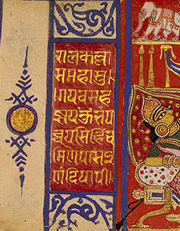
Almost ten years ago, while writing up some research on Tibetan Prajñāpāramitā manuscripts in the possession of the Los Angeles County Museum of Art for a contribution to the Festschrift of another esteemed colleague,[1] I became aware for the first time of the existence of the Vajradhvajapariṇāmanā. Some verses from its Tibetan translation appearing on the last folio of one of the copies of the Śatasāhasrikā in this collection looked intriguing, although the loss of the penultimate folio left me in the dark as to what the beginning of the poem was like. Later I became aware that this text was to be found in the Kanjurs of the Them spangs ma lineage (but not the Tshal pa), and subsequent correspondence with Helmut Tauscher of the University of Vienna revealed that many copies were also available in the various Kanjur and proto-Kanjur collections of West Tibet and elsewhere. I also discovered that two copies were to be found among the Dunhuang manuscripts. This embarras de richesses seemed to me an excellent basis on which to investigate the wording of this short work, to supplement the partial record of the LACMA Yum 'bum which had first attracted my interest, and at the same time to make a contribution to the further exploration of the Kanjur tradition in Tibet. The project, put to one side for a time, was subsequently pushed in a new direction when I learned that there was a Sanskrit manuscript containing the Vajradhvajapariṇāmanā (henceforth VdhP) in the Cambridge University Library.[2] A full edition and translation of that manuscript will be undertaken by Dr Camillo Formigatti,[3] whose thunder I certainly do not wish to steal here: for the purposes of this article I think it will be sufficient to present (finally!) my edition of the Tibetan translation (or translations) of these verses, accompanied by a preliminary English rendition of the same, with occasional references to the Sanskrit version where appropriate. This seems to me a fitting tribute to Jens-Uwe Hartmann, who has devoted much of his scholarly career to the study of Buddhist poetry and Buddhist manuscripts, since, whatever else it is, this text is undoubtedly a poetic work, and the wide diffusion in Tibet of manuscript copies of it indicates a certain degree of popularity.
What exactly is this poem? The VdhP has been characterized as a summary of the similarly titled sūtra, the chapter or, better, component text of the Buddhāvataṃsakasūtra which is quoted at such length in Śāntideva's Śikṣāsamuccaya.[4] This lengthy sūtra does in fact seem to have been an important source for Śāntideva. Whether the 12 (Sanskrit) or 16 (Tibetan) verses of the VdhP, however, can be accurately characterized as a summary of it is somewhat doubtful, although they clearly reference the sūtra's main character, the bodhisattva Vajradhvaja, and recapitulate a number of its themes, including its leitmotif of the dedication of merit and its invocation of Samantabhadra and his practice. This immediately suggests a connection with the well-known Bhadracaryāpraṇidhāna or (Samanta)bhadracarīpraṇidhāna—the text goes by various names—a connection explicitly acknowledged by Śāntideva, who refers to it as the Bhadracaryāgāthā.[5] Like that longer, more popular verse text, which closes the Gaṇḍavyūha and thus the Buddhāvataṃsaka as a whole, the VdhP, i. e. the short poem, offers much more than its title might suggest, but contains in a condensed form most of the basic elements of the ritual sequence known as the Supreme Worship (anuttarapūjā): praise or paying of homage (vandanā), confession of misdeeds (pāpadeśanā), rejoicing in merit (modanā, anumodanā), requesting or exhortation to teach (adhyeṣanā), entreaty to the Buddhas to remain for the benefit of the world (yācanā), and aspiration to awakening (bodhicittotpāda), as well as dedication of merit (puṇyapariṇāmanā). We can understand it, therefore, as a conveniently short but nevertheless comprehensive expression of a key Mahāyāna Buddhist ritual programme. (Harrison, preliminary remarks, 157–59)
Notes
- See Paul Harrison (2007), "Notes on some West Tibetan manuscript folios in the Los Angeles County Museum of Art," in B. Kellner, H. Krasser, H. Lasic, M. T. Much, H. Tauscher, eds., Pramāṇakīrtiḥ: Papers dedicated to Ernst Steinkellner on the occasion of his 70th birthday, Part 1, Wien: 229-245.
- Add. 1643 is a richly illustrated 11th-century manuscript of the Aṣṭasāhasrikā which also contains the Prajñāpāramitāstotra at the beginning. That it ends with the VdhP (on fols. 223r7–223v5), just as the Tibetan Śatasāhasrikā manuscript from Tholing does, provides further evidence of the use of the text during this period.
- I thank Dr Formigatti for sending me a copy of the manuscript and generously sharing his preliminary transliteration of it with me. High-definition images of the entire manuscript can be accessed on the Cambridge University website, at http://cudl.lib.cam.ac.uk/view/MS-ADD-01643/1.
- See Cecil Bendall, ed. (1897-1902), Çikshāsamuccaya: A Compendium of Buddhistic Teaching (Bibliotheca Buddhica I), St. Petersburg (reprint Delhi: 1971): 22.5-33.10 (cited as Āryavajradhvajasūtra); 213.3-216.5 (cited as Vajradhvajapariṇāmanā); 278.14-283.2 (cited as Āryavajradhvajasūtra); 291.10 (reference only, under the title Vajradhvajapariṇāmanā). An English translation of the full text from the Chinese can be found in Thomas Cleary, trans. (1984), The Flower Ornament Scripture, Vol. I. Boulder: 530-693 (Book 25: Ten Dedications).
- See Bendall's edition, 291.8-10. It is quite possible that in this passage Śāntideva is contrasting the Bhadracaryāgāthā with the short poem, rather than with the longer sūtra: "As for the dedication of merit, however, it is done in its complete form with the Ārya-Bhadracaryā, or one should read the Vajradhvajapariṇāmanā" (pariṇāmanā tu sakalasamāptāryabhadracaryayaiva / vajradhvajapariṇāmanāṃ vā paśyet).