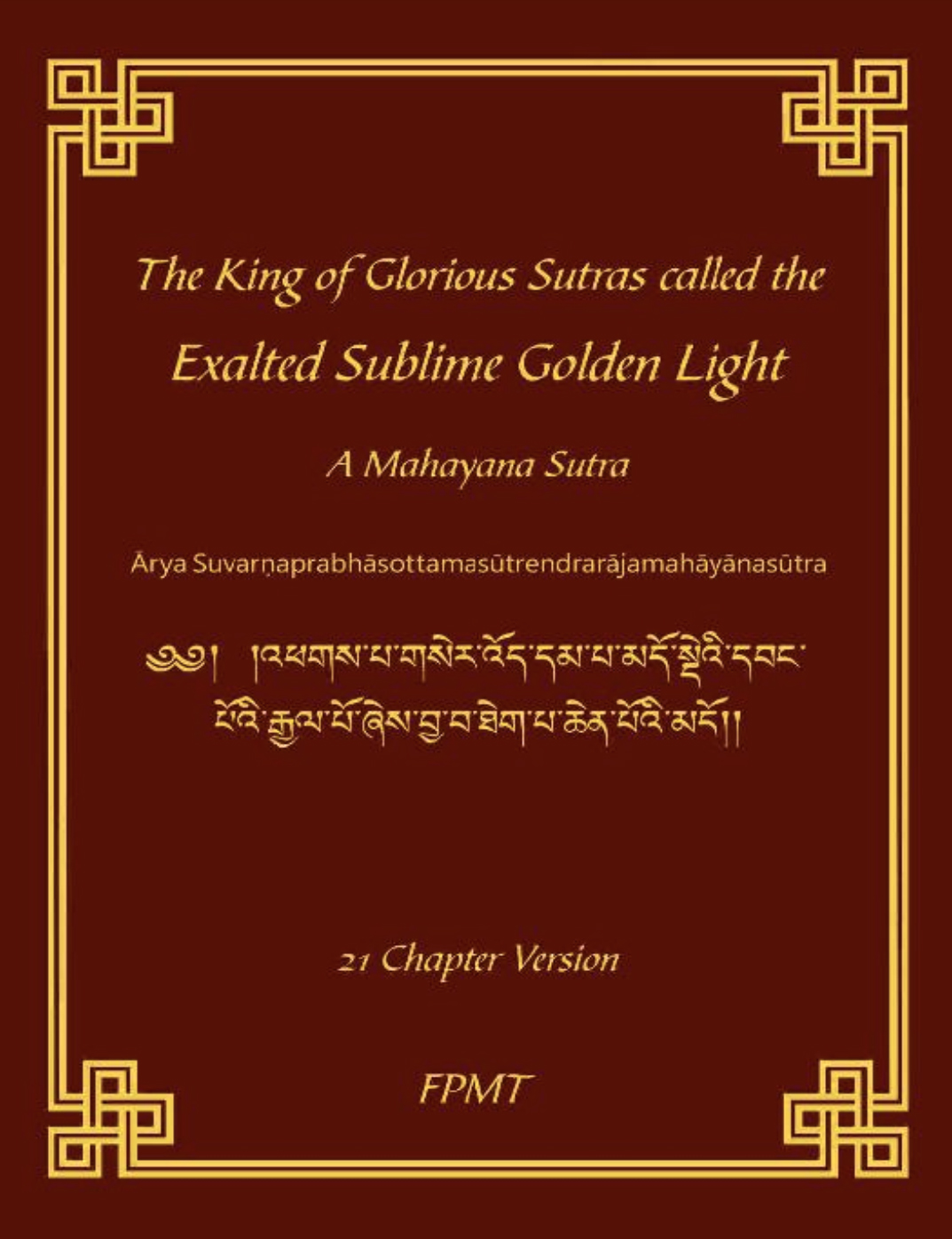
The King of Glorious Sutras called the Exalted Sublime Golden Light
From Bodhicitta
< BooksBooks/The King of Glorious Sutras called the Exalted Sublime Golden Light
| 🤓 Admin Zone 🛠️ hidden to non-admins | |
The King of Glorious Sutras called the Exalted Sublime Golden Light: A Mahayana Sutra (Āryasuvarņaprabhāsottamasūtrendrarājamahāyānasūtra); 21 Chapter Version
Book
- A Buddha Within: The Tathāgatagarbhasūtra
- Ascertaining the Vinaya: Upāli's Questions: Vinayaviniścayopāliparipṛcchā (Erdene-Ochir, B.)
- Bodhisatvapiṭaka (Bibliotheca Polyglotta)
- Creatures: Saṅgharakṣita and the Shape-Shifting Nāga
- Describing the Benefits of Producing Representations of the Thus-Gone One: Tathāgatapratibimbapratiṣṭhānuśaṃsasaṃvarṇana (Teleki, K.)
- Inspiring Determination: Adhyāśayasaṃcodana (Dorje, Lama Sherab)
- Marici-Dharani
- Teaching How All Phenomena Are without Origin: Sarvadharmāpravṛttinirdeśa (Hinkle, T.)
- The Absorption of the Miraculous Ascertainment of Peace: Praśāntaviniścayaprātihāryasamādhi (Hinkle, T.)
- The Application of Mindfulness of the Sacred Dharma: Saddharmasmṛtyupasthāna (Doctor, T.)
- The Array of Virtues of Mañjuśrī's Buddha Realm: Mañjuśrībuddhakṣetraguṇavyūha (Hinkle, T.)
- The Avalokinī Sūtra: Avalokinīsūtra (Collet-Cassart, B.)
- The Bodhisattva Path: Based on the Ugraparipṛcchā, a Mahāyāna Sūtra
- The Detailed Account of the Previous Aspirations of the Blessed Bhaiṣajyaguruvaiḍūryaprabha: Bhagavānbhaiṣajyaguruvaiḍūryaprabhasya pūrvapraṇidhānaviśeṣavistāra (Krug, A.)
- The Dhāraṇī of the Jewel Torch: Ratnolkādhāraṇī (Jackson, D.)
- The Diamond Sutra (Conze)
- The Exalted Mahāyāna Sūtra on the Wisdom Gone Beyond Called The Vajra Cutter
- The Fortunate Aeon: How the Thousand Buddhas Become Enlightened
- The Good Eon: Bhadrakalpika (Doctor, T.)
- The Holy Teaching of Vimalakīrti
- The Jewel Cloud: Ratnamegha (Doctor, T.)
- The King of Glorious Sutras called the Exalted Sublime Golden Light
- The King of Samādhis Sūtra: Samādhirājasūtra (Roberts, P.)
- The Legend of Saṃgharakṣita
- The Lion's Roar of Queen Śrīmālā
- The Miraculous Play of Mañjuśrī: Mañjuśrīvikrīḍita (Braarvig, J.)
- The Origins and Early History of the Mahāratnakūṭa Tradition of Mahāyāna Buddhism with a Study of the Ratnarāśisūtra and Related Materials
- The Play in Full: Lalitavistara (Doctor, A.)
- The Precious Discourse on the Blessed One’s Extensive Wisdom That Leads to Infinite Certainty: Niṣṭhāgatabhagavajjñānavaipulyasūtraratnānanta (Doctor, A.)
- The Questions of Rāṣṭrapāla (1): Rāṣṭrapālaparipṛcchā (Brockhausen, K.)
- The Questions of Sāgaramati: Sāgaramatiparipṛcchā (Hinkle, T.)
- The Questions of the Nāga King Sāgara (1): Sāgaranāgarājaparipṛcchā (Hinkle, T.)
- The Questions of the Nāga King Sāgara (2): Sāgaranāgarājaparipṛcchā (Ewing, B.)
- The Questions of the Nāga King Sāgara (3): Sāgaranāgarājaparipṛcchā (Gyaltsen, Kalsang)
- The Range of the Bodhisattva: A Study of an Early Mahāyānasūtra - Āryasatyakaparivarta
- The Rice Seedling Sutra
- The Rice Seedling: Śālistamba (Raktrul, 6th)
- The Seal of Engagement in Awakening the Power of Faith: Śraddhābalādhānāvatāramudrā (Beer, Z.)
- The Skill in Means (Upāyakauśalya) Sūtra
- The Sky as a Mahāyāna Symbol of Emptiness and Generous Fullness: A Study and Translation of the Gaganagañjaparipṛcchā: Volume 1: Introduction
- The Sky as a Mahāyāna Symbol of Emptiness and Generous Fullness: A Study and Translation of the Gaganagañjaparipṛcchā: Volume 2: Edition and Translation
- The Stem Array: Gaṇḍavyūha (Roberts, P.)
- The Strength of the Elephant: Hastikakṣya (Forgues, G.)
- The Sutra of the Householder Uncouth
- The Ten Bhūmis: Daśabhūmika (Roberts, P.)
- The Ugraparipṛcchā, the Mahāratnakūṭasūtra and Early Mahāyāna Buddhism
- The Vajradhvajapariṇāmanā: An Edition and Translation of the Tibetan Version
- The Voice of the Buddha
- The White Lotus of the Good Dharma: Saddharmapuṇḍarīka (Roberts, P.)
- The Ākāśagarbha Sūtra: Ākāśagarbhasūtra (Tenzin, Jampa, et al)
- The Śālistamba Sūtra
- The Śālistamba Sūtra and Its Indian Commentaries, Volume I
- Vagrakkhedikâ, The Diamond-Cutter
- Śāntideva and the Mādhyamika: The Prajñāpāramitā-Pariccheda of the Bodhicaryāvatāra
Please note that many items in our library are simply pages that represent a detailed library catalog entry and citation of someone else's work, presentation, or performance. Read our General Disclaimer for more information.

Description
This is an English translation of the Suvarṇaprabhāsottamasūtrendrarājasūtra. This translation was prepared by Lobsang Dawa at the request of Lama Zopa Rinpoche and completed on December 21, 2005, at 10:40 in the morning, in Dunedin, New Zealand. Edited by Venerable Gyalten Mindrol, and published by the Foundation for the Preservation of the Mahayana Tradition (FPMT).
Citation
Dawa, Lobsang, trans. The King of Glorious Sutras called the Exalted Sublime Golden Light: A Mahayana Sutra (Āryasuvarņaprabhāsottamasūtrendrarājamahāyānasūtra); 21 Chapter Version. Edited by Gyalten Mindrol. Portland, OR: Foundation for the Preservation of the Mahayana Tradition, 2006. https://fpmt.org/wp-content/uploads/teachers/zopa/advice/pdf/sutragoldenlight0207lttr.pdf.
Interconnections
1 Full translation of

There are three translations of this text included in the Tibetan canon:
- Suvarṇaprabhāsottamasūtrendrarājasūtra (RKTSK 550) translated from the Chinese by Gö Chödrub.
- Suvarṇaprabhāsottamasūtrendrarājasūtra (RKTSK 551) translated from the Sanskrit by Jinamitra, Śīlendrabodhi, and Ye shes sde.
- Suvarṇaprabhāsottamasūtrendrarājasūtra (RKTSK 552). Translator not listed.