The Reflexive Nature of Awareness (1998)
From Bodhicitta
< Books(Redirected from The Reflexive Nature of Awareness (1998))
Books/The Reflexive Nature of Awareness (1998)
Books/The Reflexive Nature of Awareness (1998)
| 🤓 Admin Zone 🛠️ hidden to non-admins | |
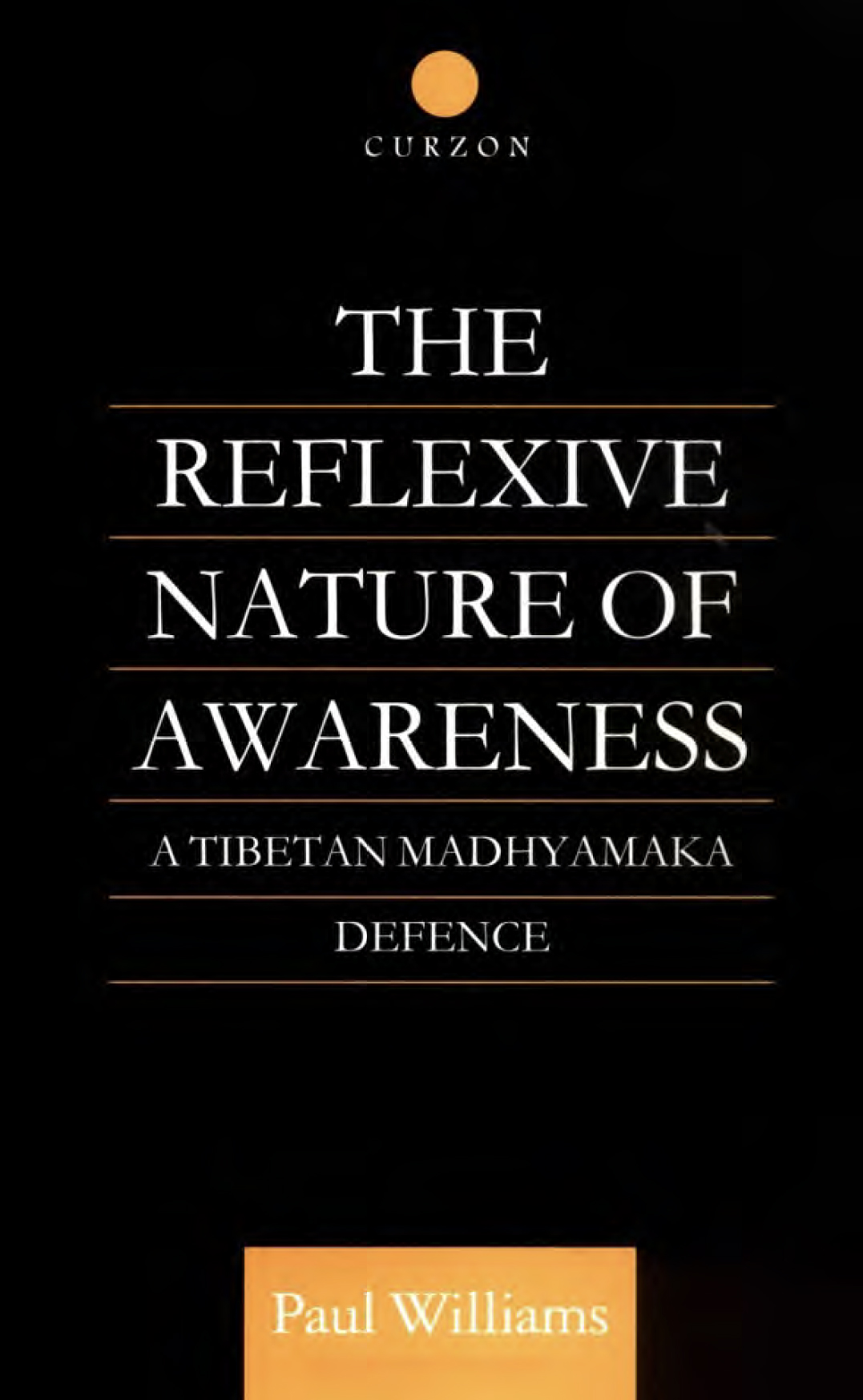
The Reflexive Nature of Awareness: A Tibetan Madhyamaka Defence
Book
- A Commentary on Shantideva's Engaging in the Conduct of the Bodhisattvas
- A Few Good Men
- A Great Commentary on Shantideva's Guide to the Bodhisattva's Way of Life, Vol. 1
- A Guide to the Bodhisattva Way of Life
- A Guide to the Bodhisattva's Way of Life (1985)
- A Guide to the Bodhisattva's Way of Life (1999)
- A Study of the Wisdom Chapter (Prajñāpāramitā Pariccheda) of the Bodhicaryāvatārapañjikā of Prajñākaramati
- An Argument for Cittamātra: Reflections on Bodhicaryāvatāra 9:28 (Tib. 27) cd
- Appendix B: Excerpt from A Lamp Completely Illuminating the Profound Reality of Interdependence
- Atiśa's Introduction to the Two Truths, and Its Sources
- Becoming Bodhisattvas
- Bodhi(sattva)caryāvatāra als Lehrschrift und Vorhaben: Zum Thema Ritual, Religion, Philosophie und Mystik im Buddhismus
- Bodhicaryāvatāra 9:2 as a Focus for Tibetan Interpretations of the Two Truths in the Prāsangika Mādhyamika
- Bodhicaryāvatāra and Bodhicaryāvatāra-Pañjikā (Malalasekera)
- Bodhicaryāvatāra and Tibetan Mind Training (Lojong)
- Bodhicaryāvatāra no kihon seikaku: Ichininshō no imi suru mono
- Bodhicaryāvatāra with Commentary (O'Sullivan)
- Bodhicharyavatara (Rigpa Shedra Wiki)
- Bodhisattvacaryāvatāra: Entering the Way of the Bodhisattvas (2022, Khenpo Gawang and Wiener)
- Bodhisattvacaryāvatāra: Exposition de la pratique des bodhisattvas
- Bu ston and the Bodhisattvacaryāvatāravyākhyāna (-pañjikā)
- Characteristics of the Buddhist Mongolian Texts: The Lineage of the Bodhicaryāvatāra
- Commentaries on Śāntideva's Bodhicaryāvatāra (Ejima 1966)
- Die "Vollkommenheiten" im BCA und seinen tibetischen Kommentaren
- Die Lehre von Satyadvaya in 'Ju Mi phams Nor bu ke ta ka
- Discourses on Bodhicharyāvatāra
- Drops of Nectar: Khenpo Kunpal's Commentary on Shantideva's Entering the Conduct of the Bodhisattvas
- Dīpaṃkaraśrījñāna's Commentary on the Bodhicaryāvatāra
- Emptiness and Moral Perfection
- Engaging in Bodhisattva Behavior
- Engaging in the Bodhisattva Deeds
- Engaging in the Conduct of the Bodhisattvas
- Enlightened Vagabond
- Entering the Way of the Bodhisattva: A New Translation and Contemporary Guide
- Epitome of the Bodhicaryāvatāra with Its Pañjikā, Chap. IX
- For the Benefit of All Beings
- General Introduction: Śāntideva and His World
- Gser gling pa's Bodhisattvacaryāvatārapiṇḍārtha and Its Thought
- Guide to the Bodhisattva's Way of Life (Bodhicaryavatara): A Commentary by Geshe Tenzin Zopa
- Guide to the Good Life
- Healing Anger
- How to Be a Bodhisattva: Introduction to the Practice of the Bodhisattva Path (The Bodhicaryāvatāra)
- Identifying the Object of Negation: On Bodhicaryāvatāra 9:140 (Tib. 139)
- Introduction to Gzhan gyis brtsad pa'i lan mdor bsdus pa rigs lam rab gsal de nyid snang byed: An Answer to Blo-bzang-rab-gsal's Refutation of the Author's 'Sher le nor bu ke ta ka' and Its Defence, the Brgal lan nyin byed snang ba
- Jitāri, Śāntideva and Prabhākarakīrti
- Le commentaire de Mi-pham au chapitre IX du Bodhicaryāvatāra de Śāntideva: Échos modernes d'une controverse du XVème siècle
- Making and Remaking the Ultimate in Early Tibetan Readings of Śāntideva
- Mi pham and the Philosophical Controversies of the Nineteenth Century
- Mipham's Dialectics and the Debates on Emptiness
- Nachlese zum Mongolischen Turfanfragment des Bodhicaryāvatāra
- Nichtselbst, Leerheit und Altruistische Ethik im Bodhicaryāvatāra (Lecture Transcript)
- Nichtselbst, Leerheit und Altruistische Ethik im Bodhicaryāvatāra (Official Publication)
- No Time to Lose
- Notes on the Deśanā-ritual in the Bodhicaryāvatāra: Evidence of Its Revision
- Nyubosatsugyō-ron kaisetsu saisho no Shyāntidēva rikai
- On Agama and Yukti in Bu ston's Byang chub sems dpa'i spyod pa la 'jug pa'i 'grel pa
- On Prakṛtinirvāṇa-Prakṛtinirvṛta in the Bodhicaryāvatāra: A Study in the Indo-Tibetan Commentarial Tradition
- On the Role of Vairocanarakṣita in the Later Transmission Period: A Cross-section of the "Bodhisattva theory" Tradition
- On the Sanskrit Manuscript of the Śikṣāsamuccaya
- On the Textual Problems of Śāntideva's Bodhi(sattva)caryāvatāra: With Special Reference to Chapter 9 Entitled "Perfection of Wisdom (Prajñāpāramitā)"
- On Śāntideva's Position in the History of Mādhyamika Philosophy
- One Aspect of the Acceptance of the Bodhisattva-śīla in Tibet
- Patience: A Guide to Shantideva's Sixth Chapter (Zopa 2020)
- Peaceful Heart
- Perfecting Patience
- Perfecting Wisdom
- Polemics in Indo-Tibetan Scholasticism - A Late 19th-Century Debate Between 'Ju Mi pham and Dpa' ris Rab gsal
- Practicing Wisdom
- Proof of the Authenticity of the Mahāyāna in Akṣayamati's Bodhi(sattva)caryāvatāra
- Readings of Śāntideva's Guide to Bodhisattva Practice
- Readings of Śāntideva's Guide to Bodhisattva Practice-Review by Harris
- Regional Characteristics of Mongolian Buddhism: A Study on the Basis of the Bodhicaryāvatāra
- Remarks on Akṣayamati (Blo gros mi zad pa), Being the Author of the Earlier Version of the Bodhisattvacaryāvatāra
- Remarks on an Instance of Intertextuality in the Eleventh Chapter of the Śikṣāsamuccaya and the Phrase Tṛṇagulmauṣadhivanaspati in Buddhist Sūtra Literature
- Remarks on the Philosophical Standpoint of the Anonymous Commentary, Bodhisattvacaryāvatāravyākhyāna(-pañjikā)
- Remarks on the Tabo Manuscript of the Bodhisattvacaryāvatāra
- Shantideva and Friends
- Shantideva's Guide to the Bodhisattva's Way Of Life: An Oral Explanation of Chapter 4
- Shantideva's Guide to the Bodhisattva's Way Of Life: An Oral Explanation of Chapter 5
- Shantideva's Guide to the Bodhisattva's Way Of Life: An Oral Explanation of Chapter 6
- Shantideva's Guide to the Bodhisattva's Way Of Life: An Oral Explanation of Chapter 7
- Shantideva's Guide to the Bodhisattva's Way Of Life: An Oral Explanation of Chapter 8
- Shantideva's Guide to the Bodhisattva's Way of Life: An Oral Explanation of Chapter 1
- Shantideva's Guide to the Bodhisattva's Way of Life: An Oral Explanation of Chapter 2
- Shantideva's Guide to the Bodhisattva's Way of Life: An Oral Explanation of Chapter 3
- Some New Remarks on the Bodhicaryāvatāra Chapter V
- Studies in the Philosophy of the Bodhicaryāvatāra (2000)
- Suffering Made Sufferable: Śāntideva, Dzongkaba, and Modern Therapeutic Approaches to Suffering's Silver Lining
- Sur l'océan du Mahayana
- Suvarṇadvīpa's "Commentaries" on the Bodhicaryāvatāra
- Sāntideva, The Bodhicaryāvatāra, Chapter 8 (verses 89-140)
- Taming Śāntideva: Tsongkhapa's Use of the Bodhicaryāvatāra
- Tangut Texts of the Five Early Translations and the Texts on the Awakening of the Bodhicitta
- Textcritical Notes on Sanskrit Texts: I. Bodhi(sattva)caryāvatāra
- The Beautiful Way of Life
- The Bodhicittotpādasamādanāvidhi by Jitari
- The Bodhisattva Guide
- The Bodistw-a Čari-a Awatar-un Tayilbur of 1312 by Čosgi Odsir
- The Buddhist Roots of Secular Compassion Training: A Comparative Study of Compassion Cultivation in Indian and Tibetan Mahāyāna Sources with the Contemporary Secular Program of Compassion Cultivation Training (CCT)
- The Case of 'Ju Mi pham (1846–1912) and Dpa' ris Rab gsal (1840–1912): A Study in Dgag lan Debate
- The Center of the Sunlit Sky
- The Circle of Compassion: An Interpretive Study of Karuṇā in Indian Buddhist Literature
- The Concept of Bodhicitta in Śāntideva's Bodhicaryāvatāra (Diss)
- The Entrance for the Children of the Conquerors
- The Literature of the Madhyamaka School of Philosophy in India
- The Meaning of Sugata in the Bodhicaryāvatārapañjikā
- The Middle Way of the Bodhisattva
- The Nectar of Manjushri's Speech
- The Original Bodhicaryāvatāra
- The Profound Reality of Interdependence
- The Profound Reality of Interdependence-Review by Bouthillette
- The Reflexive Nature of Awareness (1998)
- The Tanjur Bodhicaryāvatāra Auxiliaries: A Few Collected Bibliographical Pointers
- The Transmission of the Bodhicaryāvatāra: The History, Diffusion, and Influence of a Mahāyāna Buddhist Text
- The Way of Awakening
- The Way of the Bodhisattva (1997)
- The Way of the Bodhisattva (2006)
- The Wisdom Chapter
- Transcendent Wisdom (2009)
- Two Kinds of Saṃvṛtis in the Bodhicaryāvatārapañjikā IX 3-8
- Vimalakīrtinirdeśa: The Teaching of Vimalakīrti (Gómez, L. and Harrison, P.)
- Wisdom: Two Buddhist Commentaries
- Zu einer zentralen philosophischen Kontroverse mit den "orthodoxen" Philosophen
- Zum Bodhisattvacāryāvatārabhāṣya des Dīpaṃkaraśrījñāna
- Śāntideva (Internet Encyclopedia of Philosophy)
- Śāntideva and Bodhicaryāvatāra
- Śāntideva in the History of Mādhyamika Philosophy
- Śāntideva's Critique of 'I' or Self in the Early and Later Recensions of the Bodhi(sattva)caryāvatāra
- Śāntideva's Philosophy as Expressed in the Early Version of His Bodhisattvacaryāvatāra, Chapter 8
- Śāntidevas Bodhicaryāvatāra: Das Weiterwirken des Werkes dargestellt anhand der Überlieferungsgeschichte des Textes und seiner Kommentare
Please note that many items in our library are simply pages that represent a detailed library catalog entry and citation of someone else's work, presentation, or performance. Read our General Disclaimer for more information. You can find more information about this item on the publisher website.

Description
According to the Tibetan Tsong Kha pa one of the eight difficult points in understanding Madhyamaka philosophy is the way in which Prāsaṅgika Madhyamaka does not accept even conventionally that reflexivity is an essential part of awareness — that in being aware there is also an awareness of being aware (rang rig). One of the most systematic and detailed refutations of Tsong kha pa's approach to this issue can be found in the commentary to the ninth chapter of the Bodhicaryāvatāra by the rNyingma lama Mi pham (1846–1912), together with Mi pham's own replies to his subsequent critics. In the course of this Mi pham reveals a vision of what is going on in the Madhyamaka which is rather different from the more familiar Tibetan approach of Tsong kha pa.
Paul Williams places this controversy in its Indian and Tibetan context. He traces in detail Mi pham's position in his commentary on the Bodhicaryāvatāra, the attack of one of his opponents, and his response, as well as indicating ways in which this controversy over the nature of awareness may be important within the context of Mi pham's rNyingma heritage of rDzogs chen thought and practice.
This book is the first book length study of its subject, and also includes a reprint of a previous paper by Williams on the reflexive nature of awareness, as well as the relevant Tibetan texts from Mi pham. The book will be of interest to all students of Indian and Tibetan Madhyamaka, as well as associated areas of Buddhist thought such as Yogācāra and the philosophy of Dharmakīrti. It will also be of value to those concerned with the intellectual foundations of rDzogs chen. (Source: Back cover of Routledge 2013 edition)
Paul Williams places this controversy in its Indian and Tibetan context. He traces in detail Mi pham's position in his commentary on the Bodhicaryāvatāra, the attack of one of his opponents, and his response, as well as indicating ways in which this controversy over the nature of awareness may be important within the context of Mi pham's rNyingma heritage of rDzogs chen thought and practice.
This book is the first book length study of its subject, and also includes a reprint of a previous paper by Williams on the reflexive nature of awareness, as well as the relevant Tibetan texts from Mi pham. The book will be of interest to all students of Indian and Tibetan Madhyamaka, as well as associated areas of Buddhist thought such as Yogācāra and the philosophy of Dharmakīrti. It will also be of value to those concerned with the intellectual foundations of rDzogs chen. (Source: Back cover of Routledge 2013 edition)
Citation
Williams, Paul. The Reflexive Nature of Awareness: A Tibetan Madhyamaka Defence. Curzon Critical Studies in Buddhism. Richmond, Surrey, England: Curzon Press, 1998.
Publisher Link
Table of contents
- Editor’s Prefacevii
- Acknowledgmentsix
- Prefacexi
- 1 Introducing svasaṃvedana—and its two types1
- 2 Śāntarakṣita on the reflexive nature of consciousness19
- 3 Madhyamākalaṃkāra 16-17 in Prajñākaramati's Bodhcaryāvatārapañjikā on BCA 9:2137
- 4 The verse51
- 5 Mi pham on Bodhicaryāvatāra 9:26 (Tib. 25)85
- 6 The response of Tre bo brag dkar sprul sku bLo bzang dpal Idan bstan 'dzin107
- 7 Mi pham’s reply119
- 8 Concluding note—why all the fuss?183
- Appendix One217
- Appendix Two231
- Bibliography247
- Index260
Interconnections
1 Other editions

According to the Tibetan Tsong Kha pa one of the eight difficult points in understanding Madhyamaka philosophy is the way in which Prāsaṅgika Madhyamaka does not accept even conventionally that reflexivity is an essential part of awareness — that in being aware there is also an awareness of being aware (rang rig). One of the most sysyematic and detailed refutations of Tsong kha pa's approach to this issue can be found in the commentary to the ninth chapter of the Bodhicaryaāvatāra by the rNyingma lama Mi pham (1846–1912), together with Mi pham's own replies to his subsequent critics. In the course of this Mi pham reveals a vision of what is going on in the Madhyamaka which is rather different from the more familiar Tibetan approach of Tsong kha pa.
Paul Williams places this controversy in its Indian and Tibetan context. He traces in detail Mi pham's position in his commentary on the Bodhicaryaāvatāra, the attack of one of his opponents, and his response, as well as indicating ways in which this controversy over the nature of awareness may be important within the context of Mi pham's rNyingma heritage of rDzogs chen thought and practice.
This book is the first book length study of its subject, and also includes a reprint of a previous paper by Williams on the reflexive nature of awareness, as well as the relevant Tibetan texts from Mi pham. The book will be of interest to all students of Indian and Tibetan Madhyamaka, as well as associated areas of Buddhist thought such as Yogācāra and the philosophy of Dharmakīrti. It will also be of value to those concerned with the intelectual foundations of rDzogs chen. (Source: Back cover of Routledge 2013 edition)
Paul Williams places this controversy in its Indian and Tibetan context. He traces in detail Mi pham's position in his commentary on the Bodhicaryaāvatāra, the attack of one of his opponents, and his response, as well as indicating ways in which this controversy over the nature of awareness may be important within the context of Mi pham's rNyingma heritage of rDzogs chen thought and practice.
This book is the first book length study of its subject, and also includes a reprint of a previous paper by Williams on the reflexive nature of awareness, as well as the relevant Tibetan texts from Mi pham. The book will be of interest to all students of Indian and Tibetan Madhyamaka, as well as associated areas of Buddhist thought such as Yogācāra and the philosophy of Dharmakīrti. It will also be of value to those concerned with the intelectual foundations of rDzogs chen. (Source: Back cover of Routledge 2013 edition)
2 Scholarship on

An "Introduction to Bodhisattva Practice," the Bodhisattvacaryāvatāra is a poem about the path of a bodhisattva, in ten chapters, written by the Indian Buddhist Śāntideva (fl. c. 685–763). One of the masterpieces of world literature, it is a core text of Mahāyāna Buddhism and continues to be taught, studied, and commented upon in many languages and by many traditions around the world. The main subject of the text is bodhicitta, the altruistic aspiration for enlightenment, and the path and practices of the bodhisattva, the six perfections (pāramitās). The text forms the basis of many contemporary discussions of Buddhist ethics and philosophy.

Written by Prajñākaramati (950–1030), the Bodhicaryāvatārapañjikā is considered to be the most important Indian commentary on the Bodhicaryāvatāraby Śāntideva. This commentary explains the words in the verses (tshig 'grel), with additional commentaries on difficult points. Excluding The Dedication Chapter, it has only nine chapters.