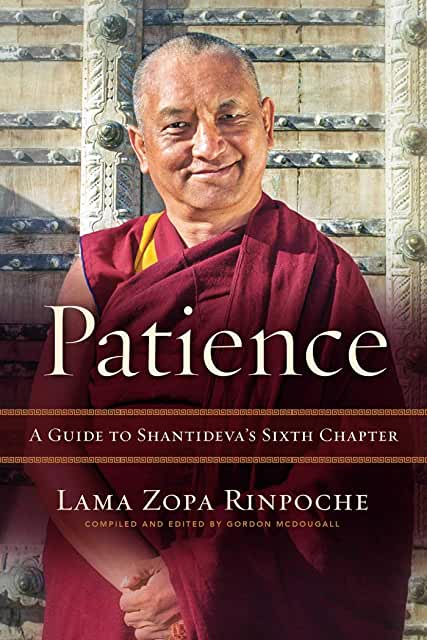
Patience: A Guide to Shantideva's Sixth Chapter
| 🤓 Admin Zone 🛠️ hidden to non-admins | |
- A Few Good Men
- A Flash of Lightning in the Dark of Night
- A Great Commentary on Shantideva's Guide to the Bodhisattva's Way of Life, Vol. 1
- A Guide to the Bodhisattva Way of Life
- A Guide to the Bodhisattva's Way of Life (1985)
- A Guide to the Bodhisattva's Way of Life (1999)
- A Guide to the Bodhisattva's Way of Life of Shantideva (2002)
- Anger: The Seven Deadly Sins
- Appendix B: Excerpt from A Lamp Completely Illuminating the Profound Reality of Interdependence
- Becoming Bodhisattvas
- Bile & Bodhisattvas: Śāntideva on Justified Anger
- Bodhicaryāvatāra para Parama Pāvana Dalāi Lāmā Jī ka viśesha pravacana
- Bodhicaryāvatāra with Commentary (O'Sullivan)
- Bodhisattvacaryāvatāra: Entering the Way of the Bodhisattvas (2022, Khenpo Gawang and Wiener)
- Bodhisattvacaryāvatāra: Exposition de la pratique des bodhisattvas
- Buddha Mind - Christ Mind
- Courageous Compassion
- Das 7. Kapitel über die Tatkraft in Śāntidevas Bodhicaryāvatāra
- Demandingness, Self-Interest and Benevolence in Santideva's Introduction to the Practice of Awakening (Bodhicaryavatara)
- Discourses on Bodhicharyāvatāra
- Drops of Nectar: Khenpo Kunpal's Commentary on Shantideva's Entering the Conduct of the Bodhisattvas
- Engaging in Bodhisattva Behavior
- Engaging in the Bodhisattva Deeds
- Engaging in the Conduct of the Bodhisattvas
- Entering the Way of the Bodhisattva: A New Translation and Contemporary Guide
- For the Benefit of All Beings
- From Sickness to Empathy: How Śāntideva and Jesus's Healing of the Man Blind from Birth Might Help Us Understand the Ongoing Pandemic
- Guide to the Bodhisattva's Way of Life (Bodhicaryavatara): A Commentary by Geshe Tenzin Zopa
- Guide to the Good Life
- Healing Anger
- Healing Anger: The Power of Patience from a Buddhist Perspective-Review by Naga
- How to Be a Bodhisattva: Introduction to the Practice of the Bodhisattva Path (The Bodhicaryāvatāra)
- In Praise of Great Compassion
- Le commentaire de Mi-pham au chapitre IX du Bodhicaryāvatāra de Śāntideva: Échos modernes d'une controverse du XVème siècle
- Mapping the Bodhicaryāvatāra
- Moderation or the Middle Way: Two Approaches to Anger
- No Time to Lose
- Patience and Perspective
- Patience: A Guide to Shantideva's Sixth Chapter (Zopa 2020)
- Peaceful Heart
- Perfecting Patience
- Perfecting Wisdom
- Plant Seed, Pull Weed
- Practicing Wisdom
- Prajñākaramati on Śāntideva's Case Against Anger: A Translation of Bodhicaryāvatāra-pañjikā VI.1-69
- Readings of Śāntideva's Guide to Bodhisattva Practice
- René Girard, Śāntideva, and the Emptiness of Desire
- Shantideva and Friends
- Shantideva's Guide to the Bodhisattva's Way Of Life: An Oral Explanation of Chapter 4
- Shantideva's Guide to the Bodhisattva's Way Of Life: An Oral Explanation of Chapter 5
- Shantideva's Guide to the Bodhisattva's Way Of Life: An Oral Explanation of Chapter 6
- Shantideva's Guide to the Bodhisattva's Way Of Life: An Oral Explanation of Chapter 7
- Shantideva's Guide to the Bodhisattva's Way Of Life: An Oral Explanation of Chapter 8
- Shantideva's Guide to the Bodhisattva's Way of Life: An Oral Explanation of Chapter 1
- Shantideva's Guide to the Bodhisattva's Way of Life: An Oral Explanation of Chapter 2
- Shantideva's Guide to the Bodhisattva's Way of Life: An Oral Explanation of Chapter 3
- Studies in the Philosophy of the Bodhicaryāvatāra (2000)
- Sur l'océan du Mahayana
- Sāntideva, The Bodhicaryāvatāra, Chapter 8 (verses 89-140)
- The Awakening Mind (Tsering 2008)
- The Beautiful Way of Life
- The Bodhisattva Guide
- The Center of the Sunlit Sky
- The Concept of Bodhicitta in Santideva's Bodhicaryavatara
- The Endlessly Fascinating Cry
- The Entrance for the Children of the Conquerors
- The Nectar of Manjushri's Speech
- The Profound Reality of Interdependence
- The Profound Reality of Interdependence-Review by Bouthillette
- The Reflexive Nature of Awareness (1998)
- The Transmission of the Bodhicaryāvatāra: The History, Diffusion, and Influence of a Mahāyāna Buddhist Text
- The Way of Awakening
- The Way of the Bodhisattva (1997)
- The Way of the Bodhisattva (2006)
- The Wisdom Chapter
- Transcendent Wisdom (1988)
- Transcendent Wisdom (2009)
- Uncommon Happiness
- Virtuous Bodies
- What Would a Sage Do?
- Wisdom: Two Buddhist Commentaries

Description
Lama Zopa Rinpoche—a teacher whose very name means “patience”—explores Shantideva’s teachings verse by verse, unpacking its lessons for the modern reader:
Overcoming anger
Accepting suffering
Respecting others and finding happiness in their happiness
In explaining this quintessential quality of a bodhisattva, Rinpoche shows us ordinary beings the profundity of the practice of patience and the relevance it has in our everyday lives.
“Shantideva was like us, but he worked on his mind until he became completely free from delusions . . . A Guide to the Bodhisattva’s Way of Life has inspired countless people since it was written over thirteen hundred years ago. It tells us that we too can develop our mind to the levels of realizations that the great masters have attained—and it shows us how to do it.”—Lama Zopa Rinpoche
(Source: Wisdom Publications)
- Editor's Preface
- Introduction
- 1. Anger Destroys All Peace and Virtue: Verses 1-11
- The Disadvantages of Anger
- Extinguishing the Fuel of Anger
- 1. Anger Destroys All Peace and Virtue: Verses 1-11
- 2. Leaming to Accept Suffering: Verses 12-21
- We Need the Right Kind of Patience
- How to Accept Suffering
- 2. Leaming to Accept Suffering: Verses 12-21
- 3. Overcoming the Wish to Retaliate: Verses 22-52
- Looking at the Source of Harm
- The Ultimate and Conventional Reasons Why Anger Is Inappropriate
- Deluded Beings Harm Others without Control
- Looking at Our Own Faults
- Geshe Chen Ngawa's Four Ways of Controlling Anger
- 3. Overcoming the Wish to Retaliate: Verses 22-52
- 4. Overcoming Self-Concern: Verses 52-97
- Life Is Too Short to Be Angry
- Abandoning the Fire of Anger
- Finding Joy in Others' Happiness
- Overcoming the Need for Praise and Fame
- 4. Overcoming Self-Concern: Verses 52-97
- 5. The Kindness of the Enemy: Verses 98-111
- Only with an Enemy Can We Practice Patience
- The Enemy Is Like the Most Valuable Treasure
- 5. The Kindness of the Enemy: Verses 98-111
- 6. When We Respect Sentient Beings, We Respect the Buddhas: Verses 112-134
- Seeing the Equality of Sentient Beings and Buddhas Enlightenment Comes Only through Serving Others
- 6. When We Respect Sentient Beings, We Respect the Buddhas: Verses 112-134
- Conclusion: The Determination to Develop Patience
- Glossary
- Notes
- Bibliography
- Index
- About the Author