| 🤓 Admin Zone 🛠️ hidden to non-admins | |
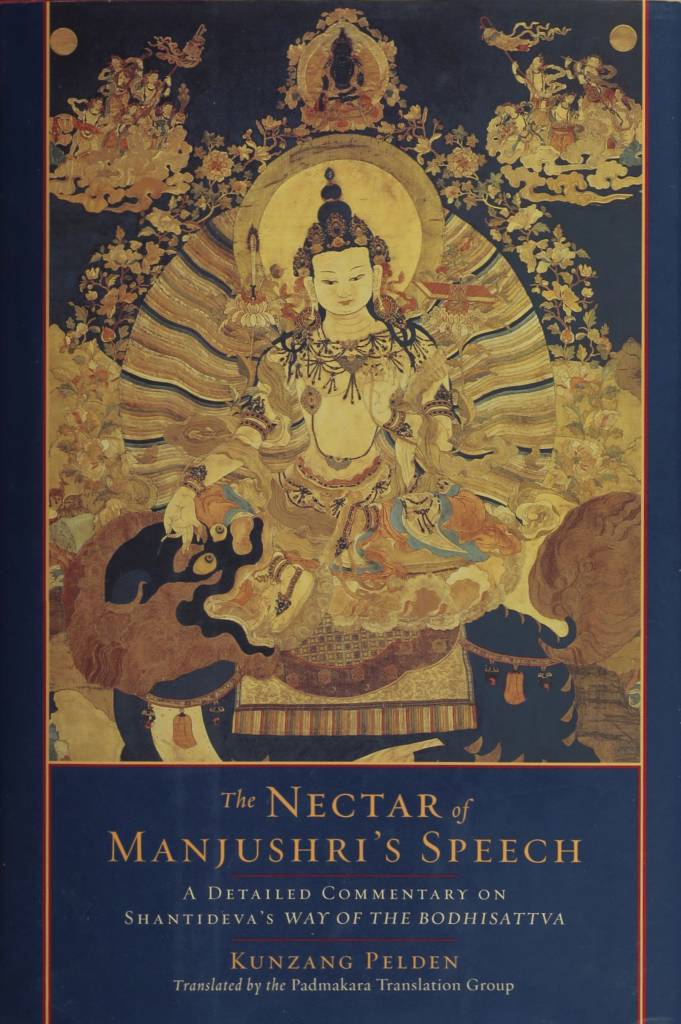
The Nectar of Manjushri's Speech: A Detailed Commentary on Shantideva's Way of the Bodhisattva
Book
- A Commentary on Shantideva's Engaging in the Conduct of the Bodhisattvas
- A Few Good Men
- A Great Commentary on Shantideva's Guide to the Bodhisattva's Way of Life, Vol. 1
- A Guide to the Bodhisattva Way of Life
- A Guide to the Bodhisattva's Way of Life (1985)
- A Guide to the Bodhisattva's Way of Life (1999)
- Appendix B: Excerpt from A Lamp Completely Illuminating the Profound Reality of Interdependence
- Becoming Bodhisattvas
- Bodhicaryāvatāra with Commentary (O'Sullivan)
- Bodhisattvacaryāvatāra: Entering the Way of the Bodhisattvas (2022, Khenpo Gawang and Wiener)
- Discourses on Bodhicharyāvatāra
- Drops of Nectar: Khenpo Kunpal's Commentary on Shantideva's Entering the Conduct of the Bodhisattvas
- Engaging in Bodhisattva Behavior
- Engaging in the Bodhisattva Deeds
- Engaging in the Conduct of the Bodhisattvas
- Entering the Way of the Bodhisattva: A New Translation and Contemporary Guide
- For the Benefit of All Beings
- Guide to the Bodhisattva's Way of Life (Bodhicaryavatara): A Commentary by Geshe Tenzin Zopa
- Guide to the Good Life
- Healing Anger
- How to Be a Bodhisattva: Introduction to the Practice of the Bodhisattva Path (The Bodhicaryāvatāra)
- Le commentaire de Mi-pham au chapitre IX du Bodhicaryāvatāra de Śāntideva: Échos modernes d'une controverse du XVème siècle
- Mipham's Dialectics and the Debates on Emptiness
- No Time to Lose
- Patience: A Guide to Shantideva's Sixth Chapter (Zopa 2020)
- Peaceful Heart
- Perfecting Patience
- Perfecting Wisdom
- Polemics in Indo-Tibetan Scholasticism - A Late 19th-Century Debate Between 'Ju Mi pham and Dpa' ris Rab gsal
- Practicing Wisdom
- Shantideva and Friends
- Shantideva's Guide to the Bodhisattva's Way Of Life: An Oral Explanation of Chapter 4
- Shantideva's Guide to the Bodhisattva's Way Of Life: An Oral Explanation of Chapter 5
- Shantideva's Guide to the Bodhisattva's Way Of Life: An Oral Explanation of Chapter 6
- Shantideva's Guide to the Bodhisattva's Way Of Life: An Oral Explanation of Chapter 7
- Shantideva's Guide to the Bodhisattva's Way Of Life: An Oral Explanation of Chapter 8
- Shantideva's Guide to the Bodhisattva's Way of Life: An Oral Explanation of Chapter 1
- Shantideva's Guide to the Bodhisattva's Way of Life: An Oral Explanation of Chapter 2
- Shantideva's Guide to the Bodhisattva's Way of Life: An Oral Explanation of Chapter 3
- Studies in the Philosophy of the Bodhicaryāvatāra (2000)
- Sur l'océan du Mahayana
- Sāntideva, The Bodhicaryāvatāra, Chapter 8 (verses 89-140)
- The Beautiful Way of Life
- The Bodhisattva Guide
- The Center of the Sunlit Sky
- The Entrance for the Children of the Conquerors
- The Nectar of Manjushri's Speech
- The Profound Reality of Interdependence
- The Profound Reality of Interdependence-Review by Bouthillette
- The Reflexive Nature of Awareness (1998)
- The Way of Awakening
- The Way of the Bodhisattva (1997)
- The Way of the Bodhisattva (2006)
- The Wisdom Chapter
- Transcendent Wisdom (2009)
- Vimalakīrtinirdeśa: The Teaching of Vimalakīrti (Gómez, L. and Harrison, P.)
- Wisdom: Two Buddhist Commentaries
Please note that many items in our library are simply pages that represent a detailed library catalog entry and citation of someone else's work, presentation, or performance. Read our General Disclaimer for more information. You can find more information about this item on the publisher website.

Description
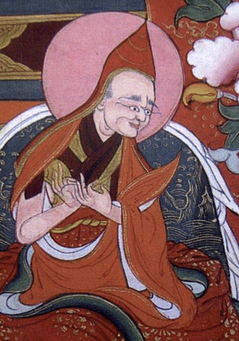
This book is an essential companion volume to the root text of Śāntideva's The Way of the Bodhisattva, translated by Helena and Wulstan of the Padmakara Translation Group. While Patrul Rinpoche (1808–1887), the celebrated author of The Words of My Perfect Teacher, did not compose a work on the Way of the Bodhisattva, he taught it constantly, over one hundred times from beginning to end. His close student, Kunzang Pelden (Khenpo Kunpal, 1862–1943) compiled these pith instructions over many years and created this famous Tibetan commentary to the Chonjuk (སྤྱོད་འཇུག་ for short, Bodhicaryāvatāra in Sanskrit). It is an extensive word and meaning commentary (tshig don gyi 'grel pa) with a topical outline (sa bcad).
Kunzang Pelden was a Nyingma scholar and teacher associated with Katok Monastery and a distinguished student of both Dza Patrul and Ju Mipam Gyatso, as well as an important lineage holder of the Longchen Nyingtik.
This text organizes the text into four parts, which are now common when taught in contemporary Buddhist settings:
- 1. Generating Bodhicitta: Chapters 1-3
- 2. Protecting Bodhicitta: Chapters 4-6
- 3. Perfecting Bodhicitta: Chapters 7-9
- 4. Dedicating Merit for the Benefit of Others: Chapter 10
Citation
Blankleder, Helena, and Wulstan Fletcher (Padmakara Translation Group), trans. The Nectar of Manjushri's Speech: A Detailed Commentary on Shantideva's Way of the Bodhisattva. By Kunzang Pelden. Boston: Shambhala Publications, 2010.
Publisher Link
Table of contents
- Forewordix
- Translators' Introductionxi
- Textual Outline1
- Prologue13
- Introduction15
- Part One. The Generation of Bodhichitta Where It Has Not Previously Existed43
- 1. The Excellence and Benefits of Bodhichitta43
- 2. Confession of Negativity65
- 3. Taking Hold of Bodhichitta119
- Part Two. How to Prevent Bodhichitta from Weakening Once It Has Been Generated139
- 4. Carefulness139
- 5. Vigilant Introspection164
- 6. Patience197
- Part Three. How Bodhichitta Is to Be Developed and Intensified235
- 7. Diligence235
- 8. Meditative Concentration258
- 9. Wisdom313
- Part Four. Dedication of the Resulting Merit for the Benefit of Others393
- 10. Dedication393
- Notes443
- Works Cited463
- Index465
Interconnections
1 Full translation of

Khenpo Kunpal (1862-1943), student of Patrul Rinpoche and Mipham the Great, wrote this famous extensive word and meaning commentary (tshig don gyi 'grel pa) with a topical outline (sa bcad) to Śāntideva's Chonjuk (Bodhisattvacaryāvatāra).
2 Contains chapter or part

This article, part of the translators' introduction from the translation of The Nectar of Manjushri's Speech by the Padmakara Translation Group, provides a concise overview of the commentarial tradition surrounding Śāntideva's Bodhicaryāvatāra in Tibet. It traces the text's introduction to Tibet in the eighth century, highlighting its rapid translation and subsequent revisions. The study outlines the development of Tibetan commentaries on the text, noting two periods of particular scholarly interest: the thirteenth–fourteenth centuries and the nineteenth–early twentieth centuries. It also touches on the text's importance across different Tibetan Buddhist schools and its role in the Rime movement, which sought to revive interest in diverse Buddhist traditions.
This chronological framework proves valuable for understanding how the Bodhicaryāvatāra was received, studied, and commented upon in Tibet over more than a millennium. By highlighting key figures and schools involved in its transmission and interpretation, the article provides a starting point to explore the many commentators and traditions involved in the diffusion of the Bodhicaryāvatāra in Tibet. Moreover, it contextualizes the text's importance within broader historical and cultural developments in Tibet, such as the early diffusion of Buddhism into Tibet, the development of Tibetan scholastic traditions, and the arising of the nonsectarian Rime movement in Eastern Tibet. This broader perspective allows readers to appreciate the Bodhicaryāvatāra not just as a philosophical text but as a living tradition that has played a significant role in shaping Tibetan Buddhist thought and practice.
Fletcher, Wulstan, and Helena Blankleder (Padmakara Translation Group), trans., "Patrul Rinpoche." In The Nectar of Manjushri's Speech: A Detailed Commentary on Shantideva's Way of the Bodhisattva. By Kunzang Pelden, xiv–xvii. Boston: Shambhala Publications, 2007.