Study: Difference between revisions
No edit summary |
No edit summary |
||
| Line 93: | Line 93: | ||
<div class="row"> | <div class="row"> | ||
<div class="col-md-6"> | <div class="col-md-6"> | ||
<h4>Bodhicaryāvatāra <br> <small>''In- | <h4>Bodhicaryāvatāra <br> <small>''In-Depth Chapter Overviews''</small></h4> | ||
<div class="text-article text-120 mb-4">This comprehensive resource provides a detailed, chapter-by-chapter analysis of Śāntideva's ''The Way of the Bodhisattva'' (''Bodhicaryāvatāra''), one of the most influential texts in Mahāyāna Buddhist literature. Each chapter features scholarly essays that examine Śāntideva's teachings through the lens of key Buddhist concepts, supported by extensive academic resources, relevant links, and multimedia content. The material is organized according to the traditional Tibetan framework of generating, protecting, and perfecting bodhicitta, offering students a structured approach to understanding this foundational work on the bodhisattva path.</div> | <div class="text-article text-120 mb-4">This comprehensive resource provides a detailed, chapter-by-chapter analysis of Śāntideva's ''The Way of the Bodhisattva'' (''Bodhicaryāvatāra''), one of the most influential texts in Mahāyāna Buddhist literature. Each chapter features scholarly essays that examine Śāntideva's teachings through the lens of key Buddhist concepts, supported by extensive academic resources, relevant links, and multimedia content. The material is organized according to the traditional Tibetan framework of generating, protecting, and perfecting bodhicitta, offering students a structured approach to understanding this foundational work on the bodhisattva path.</div> | ||
<div class="row"> | <div class="row"> | ||
| Line 186: | Line 186: | ||
</div> | </div> | ||
<div class="col-md-6"> | <div class="col-md-6"> | ||
<h4>Śikṣāsamuccaya <br> <small>''In- | <h4>Śikṣāsamuccaya <br> <small>''In-Depth Chapter Overviews''</small></h4> | ||
<div class="text-article text-120 mb-4">An extensive, in depth, chapter-by-chapter exploration of Śāntideva's ''Śikṣāsamuccaya'', The "Compendium of Training". There are twenty-seven stanzas in the root text, and each of the stanzas is elaborated upon in a prose commentary by the Śāntideva himself. Around 100 early Sanskrit texts are cited in support of the commentary, which makes it an important source for understanding how eight-century Indian Mahāyāna authors thought about sutra sources and provides amazing intertextual interconnections, a kind of window into the larger world of Mahāyāna source material. We present here one way that the Tibetan commentarial tradition organizes the nineteen chapters of the text into the topics of Giving, Protecting, Purifying, and Enhancing.</div> | <div class="text-article text-120 mb-4">An extensive, in depth, chapter-by-chapter exploration of Śāntideva's ''Śikṣāsamuccaya'', The "Compendium of Training". There are twenty-seven stanzas in the root text, and each of the stanzas is elaborated upon in a prose commentary by the Śāntideva himself. Around 100 early Sanskrit texts are cited in support of the commentary, which makes it an important source for understanding how eight-century Indian Mahāyāna authors thought about sutra sources and provides amazing intertextual interconnections, a kind of window into the larger world of Mahāyāna source material. We present here one way that the Tibetan commentarial tradition organizes the nineteen chapters of the text into the topics of Giving, Protecting, Purifying, and Enhancing.</div> | ||
<div class="row"> | <div class="row"> | ||
Revision as of 17:24, 7 August 2025
Study The Core Texts
This curated selection represents essential texts for understanding the concept of bodhicitta within the Indian and Tibetan Buddhist traditions. The resource serves as both a scholarly repository and pedagogical tool, with planned expansions scheduled for 2025 and 2026 to include additional critical texts and research materials. As of August 2025, this comprehensive resource presents extensive scholarship on Śāntideva's Bodhisattvacaryāvatāra and the Śikṣāsamuccaya, featuring both contemporary research and classical texts in multiple languages. The collection prioritizes the Bodhisattvacaryāvatāra as the primary focus, with substantial coverage of the Śikṣāsamuccaya and supplementary materials on related works. Regular updates to the website will expand the coverage of the concept of bodhicitta with important texts such the Bhāvanākrama and Bodhisattvabhūmi, and others listed below.
Overviews of Śāntideva's Works
The Bodhisattvacaryāvatāra and the Śikṣāsamuccaya are Śāntideva's core texts for any would-be bodhisattva. While the Bodhisattvacaryāvatāra is one of the most popular of all Buddhist texts today, the Śikṣāsamuccaya is somewhat less well-known and deserving of further study.
Bodhicaryāvatāra
In-Depth Chapter Overviews
Śikṣāsamuccaya
In-Depth Chapter Overviews
The Sgom Lugs Tradition
The sgom lugs (meditation tradition) was a significant contemplative tradition in Tibetan Buddhism that developed a unique approach to studying and practicing the Bodhicaryāvatāra, Śāntideva's classic eighth-century text on the bodhisattva path.
The sgom lugs approach emphasized the meditative implementation of the Bodhicaryāvatāra rather than purely scholastic analysis. Its practitioners were known for integrating the text's teachings—particularly on bodhicitta (awakened mind), śamatha (calm abiding), and vipaśyanā (insight meditation)—directly into their contemplative practice.
This tradition was especially prominent in the 11th-13th centuries during the later spread of Buddhism in Tibet, with notable practitioners in the Kadam and early Kagyu lineages. The sgom lugs teachers developed distinctive meditation manuals and techniques for embodying the Bodhicaryāvatāra's core ethical and philosophical principles, especially those found in the patience, meditation, and wisdom chapters.
What distinguished the sgom lugs approach was its experiential focus—treating the Bodhicaryāvatāra not merely as a philosophical text to be analyzed, but as a practical guidebook for transformation through meditation and daily application.
This section traces the development of this tradition and the lives and works of the prominent teachers who upheld it.
Living Traditions of Practice
Patrul Rinpoche
Patrul Rinpoche (1808-1887) stands as one of the most influential figures in the modern transmission of Śāntideva's Bodhicaryāvatāra, breathing new life into this masterpiece of Mahāyāna Buddhism during a pivotal period in Tibetan religious history. Through his revolutionary pedagogical approach that made profound Buddhist philosophy accessible to ordinary practitioners, Patrul transformed the Bodhicaryāvatāra from a text of elite monastic study into a living practice guide for all levels of society. His teachings became essential reading in Buddhist communities worldwide, ensuring Śāntideva's timeless wisdom on the bodhisattva path would continue to illuminate practitioners across cultures for future generations.
Śāntideva's Works in India and Beyond
In this section, we take a deeper look at the textual history of Śāntideva's works in India and beyond through their multiple recensions and translations, and we learn more about how they significant these works became for Buddhist communities across Asia.
<more text needed?>
Content coming soon. Please be patient.
Keeping the Flame of the Bodhicaryāvatāra Alive: From 9th-Century India to 19th-Century Tibet
Śāntideva's Bodhicaryāvatāra gave rise to a vibrant commentarial tradition in India and Tibet. In this section, we will learn more about 10 centuries of teachings focusing on teachings drawn from this text. This section is still being developed. We will keep you posted as we add new materials, articles, and resources.
The Tibetan late 19th-Century Debates on the Bodhicaryāvatāra's Wisdom Chapter
The Way of the Bodhisattva Illuminated: Stories and Recitation Guide
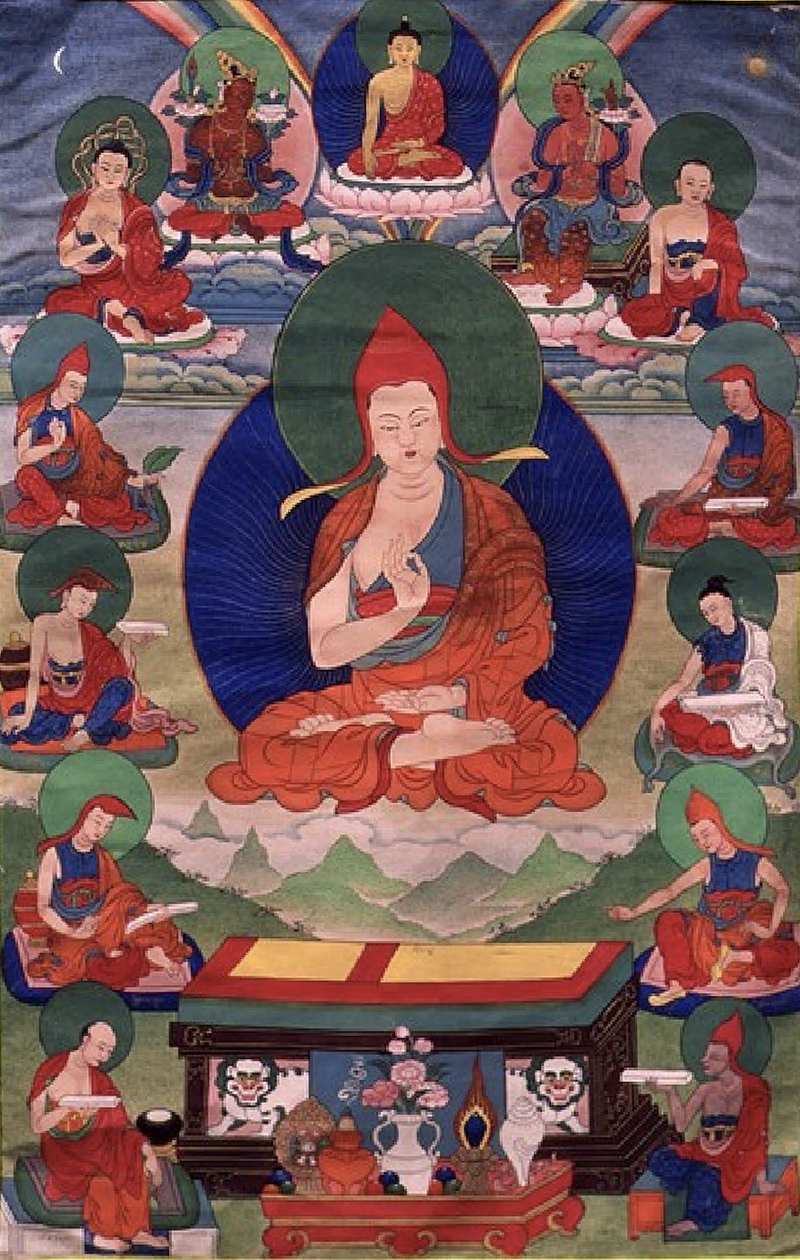
This collection presents exemplary Buddhist narratives illustrating key verses of Śāntideva's Bodhicaryāvatāra (The Way of the Bodhisattva). Each tale demonstrates profound Buddhist principles such as the importance of respecting all worthy beings, the rarity of human rebirth, and the transformative power of bodhicitta (the awakening mind). These morally instructive stories feature kings, merchants, animals, and divine beings to illuminate the path of the bodhisattva—one who dedicates themselves to achieving enlightenment for the benefit of all sentient beings. The tales consistently emphasize the superiority of spiritual wealth over material possessions and demonstrate how bodhisattvas transform adversity into opportunity for both their own spiritual development and that of others.
The Literature (Primary and Secondary sources)
The resources listed below have been tagged to show relationships between classical works and library items (i.e., recensions, translations, scholarship). Content coming soon. Please be patient.
The Library
The Library offers a complete list of all bibliographical resources relevant to the study of Śāntideva's works. Content coming soon. Please be patient.
Tsadra Compendium of Key Terms
This compendium of key terms is provided as a tool to better understand technical terminology used in the context of study and practice.
Resources (Study, Research, Teachings)
More resources. Content coming soon. Please be patient.
- The Other Doorways