| 🤓 Admin Zone 🛠️ hidden to non-admins | |
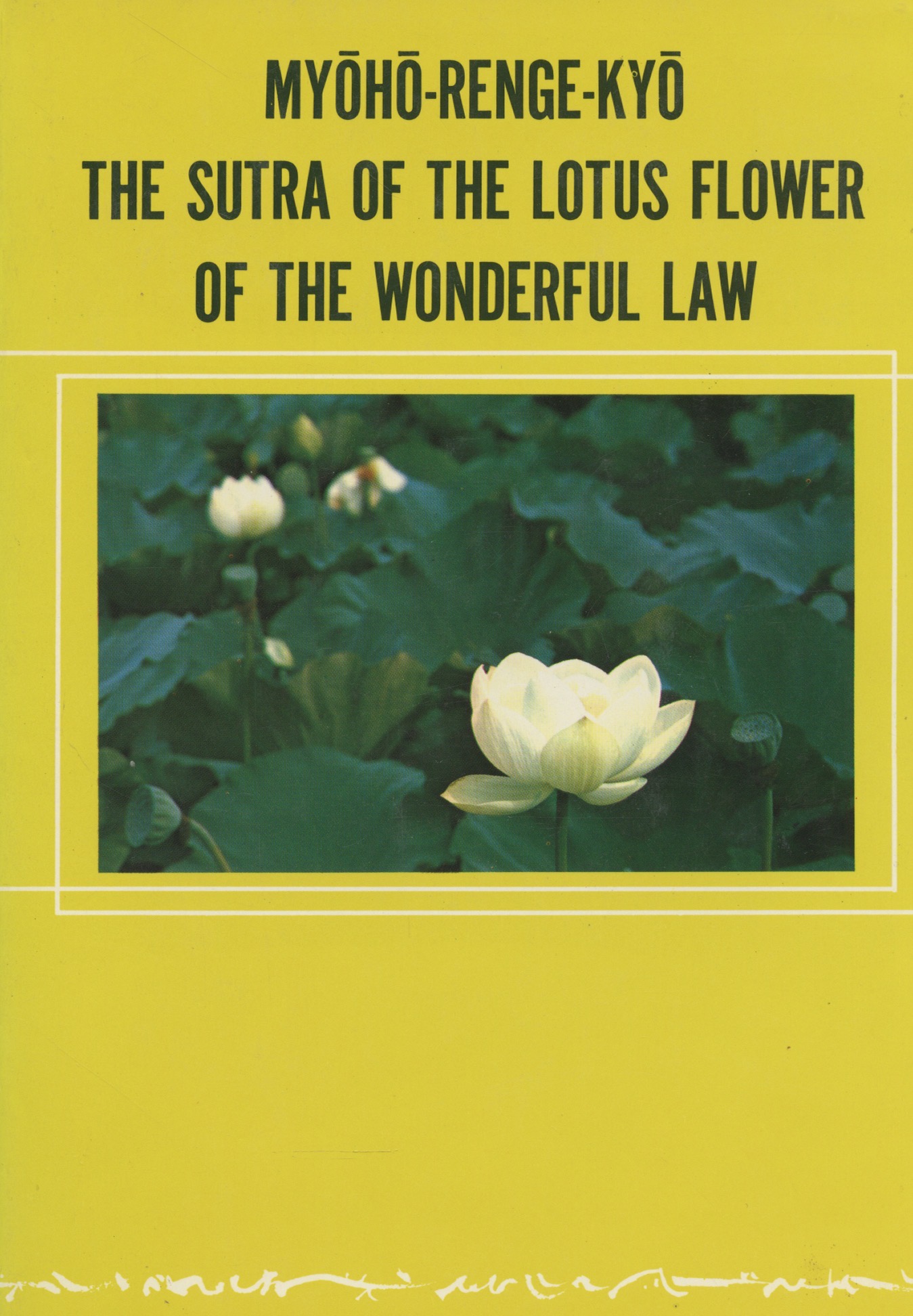
Myōhō-renge-kyō: The Sutra of the Lotus Flower of the Wonderful Law
Book
- A Few Good Men
- A Treasury of Mahāyāna Sūtras
- Abiding in Good and Noble Deportment
- Appendix to the New Edition of the Bodhicaryāvatāra
- Buddha Pronounces the Sūtra of the Great Cundī Dhāraṇī
- Chapter on Entering the Inconceivable Liberated State of Samantabhadra's Practices and Vows
- Dialogue With Bodhisattva Infinite Wisdom
- Mahāvaipulya Sūtra of the Tathāgata Store
- Myōhō-renge-kyō
- On Entering into the Inconceivable State of Emancipation by the Practice and Vows of the Bodhisattva Samantabhadra of the Mahavaipulya Buddha Avatamsaka Sutra
- On the Pāramitā of Ingenuity
- Scripture of the Lotus Blossom of the Fine Dharma
- The Buddhist Feminine Ideal
- The Definitive Vinaya
- The Dhâranî of Tchundi
- The Diamond Cutter of Doubts: A Commentary on The Diamond Sūtra (Vajracchedikā-prajñā-pāramitā Sūtra) By Ch'an Master Han Shan
- The Diamond Prajna Paramita Sutra
- The Diamond Prajna-Paramita Sutra
- The Diamond Sutra (Chin-Kang-Ching), or Prajna-Paramita
- The Diamond Sutra (Hsüan Hua)
- The Diamond Sutra (Wai-tao and Goddard)
- The Diamond Sutra and The Sutra of Hui Neng
- The Diamond Sutra: The Perfection of Wisdom
- The Diamond Sutra: Translated from Kumarajiva's Chinese Version
- The Diamond That Cuts Through Illusion
- The Essentials of the Dharma Blossom Sutra
- The Flower Ornament Scripture: A Translation of The Avatamsaka Sutra
- The Giving Rise of the Ten Kinds of Mind of the Bodhisattva
- The Great Vows of Samantabhadra
- The Healing Buddha (1979)
- The Healing Buddha (1989)
- The Lankavatara Sutra: A Zen Text
- The Lion's Roar of Queen Śrīmālā
- The Lotus Sutra (2016) (BDK)
- The Lotus Sutra (Watson)
- The Lotus Sutra: A Contemporary Translation of a Buddhist Classic
- The Lotus Sutra: The Sutra of the Lotus Flower of the Wonderful Dharma
- The Lotus of the Wonderful Law or The Lotus Gospel (2005)
- The Mahayana Mahaparinirvana-sutra (3 vols.)
- The Pratyutpanna Samādhi Sutra: The Śūraṅgama Samādhi Sutra
- The Prediction of Mañjuśrī's Attainment of Buddhahood
- The Scripture of Master of Medicine, Beryl Radiance Tathāgata and The Sutra of the Girl Candrottarā
- The Shurangama Sutra - Volume Eight
- The Shurangama Sutra - Volume Five
- The Shurangama Sutra - Volume Four
- The Shurangama Sutra - Volume One
- The Shurangama Sutra - Volume Seven
- The Shurangama Sutra - Volume Six
- The Shurangama Sutra - Volume Three
- The Shurangama Sutra - Volume Two
- The Shurangama Sutra: Sutra Text and Supplements
- The Skill in Means (Upāyakauśalya) Sūtra
- The Sky as a Mahāyāna Symbol of Emptiness and Generous Fullness: A Study and Translation of the Gaganagañjaparipṛcchā: Volume 2: Edition and Translation
- The Sutra of Queen Śrīmālā of the Lion's Roar and the Vimalakīrti Sutra
- The Sutra of the Lord of Healing
- The Sutra of the Master of Healing
- The Tale of King Udayana of Vatsa
- The Threefold Lotus Sūtra
- The True Lion's Roar of Queen Śrīmālā
- The Vimalakirti Nirdesa Sutra
- The Vimalakīrti Sūtra (Watson)
- The Vow to Live the Life of Samanta-bhadra
- The Vows of Bodhisattva Samantabhadra Sutra
- The Śūraṅgama Sūtra: A New Translation
- Vaipulya Sūtra of Śrīmālā's Lion's Roar That Reveals the Great Skillful Means of the One Vehicle
- Vajra-chhedika, the "Kin Kong King," or Diamond Sutra
- Vimalakīrti's Discourse on Emancipation
- Vimalakīrti-Nirdeśa-Sūtra: Translated from the Chinese
Please note that many items in our library are simply pages that represent a detailed library catalog entry and citation of someone else's work, presentation, or performance. Read our General Disclaimer for more information.

Description
The late Reverend Bunnō Katō, born in 1888, the translator of Myōhō-Renge-Kyō, The Sutra of the Lotus Flower of the Wonderful Law, was a priest-scholar of the Nichiren Sect of Japanese Buddhism. He completed this translation after three years of devoted work, when he was studying at Oxford University since 1922, with the help of Rev. William Soothill, professor of Chinese. On returning to Japan in 1925, he soon became a lecturer at Risshō University and editor of the Nisshū Shimpō, then a monthly bulletin of the Nichiren Sect. Afterwards he was appointed head of the doctrinal department at the headquarters of the Sect. Katō's hopes of having his English translation of the Lotus Sutra published failed to materialize several times because of the costs involved. After his death, the manuscript was donated by his widow to the library of Risshō University, where it was kept for 35 years until turned over to Dr. Wilhelm Schiffer, professor at Sophia University and director of the International Institute of the Study of Religions, in 1967 for further revision. His translation, indeed, saw the light of day after an elapse of 46 years since he completed the translation in Oxford. (Source: book jacket, Myōhō-Renge-Kyō, The Sutra of the Lotus Flower of the Wonderful Law)
Citation
Katō, Bunnō, trans. Myōhō-Renge-Kyō: The Sutra of the Lotus Flower of the Wonderful Law. Revised by W. E. Soothill and W. Schiffler. Tokyo: Kōsei Publishing, 1971.
Table of contents
- Preface v
- Introduction vii
- Notes xii
- 1. Introductory 1
- 2. Tactfullness 32
- 3. A Parable 69
- 4. Faith-Discernment 116
- 5. The Parable of the Herbs 139
- 6. Prediction 152
- 7. Parable of the Magic City 165
- 8. The Five Hundred Disciples Receive the Prediction of Their Destiny 201
- 9. Prediction of the Destiny of Arhats, Training and Trained 215
- 10. A Teacher of the Law 222
- 11. Beholding the Precious Stupa 235
- 12. Devadatta 251
- 13. Exhortation to Hold Firm 262
- 14. A Happy Life 269
- 15. Springing up out of the Earth 291
- 16. Revelation of the (Eternal) Life of the Tathāgata 307
- 17. Discrimination of Merits 318
- 18. The Merits of Joyful Acceptance 334
- 19. The Merits of the Preacher 342
- 20. The Bodhisattva Never-Despise 361
- 21. The Divine Power of the Tathāgata 370
- 22. The Final Commission 377
- 23. The Story of the Bodhisattva Medicine-King 380
- 24. The Bodhisattva Wonder-Sound 393
- 25. The All-Sidedness of the Bodhisattva Regarder-of-the-Cries-of-the World 404
- 26. Dhāranīs 416
- 27. The Story of King Resplendent 423
- 28. Encouragement of the Bodhisattva Universal-Virtue 432
Interconnections
1 Full translation of

The White Lotus of the Good Dharma, popularly known as the Lotus Sūtra, is taught by Buddha Śākyamuni on Vulture Peak to an audience that includes bodhisattvas from countless realms, as well as bodhisattvas who emerge from under the ground, from the space below this world. Buddha Prabhūtaratna, who has long since passed into nirvāṇa, appears within a floating stūpa to hear the sūtra, and Śākyamuni enters the stūpa and sits beside him. The Lotus Sūtra is celebrated, particularly in East Asia, for its presentation of crucial elements of the Mahāyāna tradition, such as the doctrine that there is only one yāna, or "vehicle"; the distinction between expedient and definite teachings; and the notion that the Buddha's life, enlightenment, and parinirvāṇa were simply manifestations of his transcendent buddhahood, while he continues to teach eternally. A recurring theme in the sūtra is its own significance in teaching these points during past and future eons, with many passages in which the Buddha and bodhisattvas such as Samantabhadra describe the great benefits that come from devotion to it, the history of its past devotees, and how it is the Buddha's ultimate teaching, supreme over all other sūtras. (Source: 84000)