| 🤓 Admin Zone 🛠️ hidden to non-admins | |
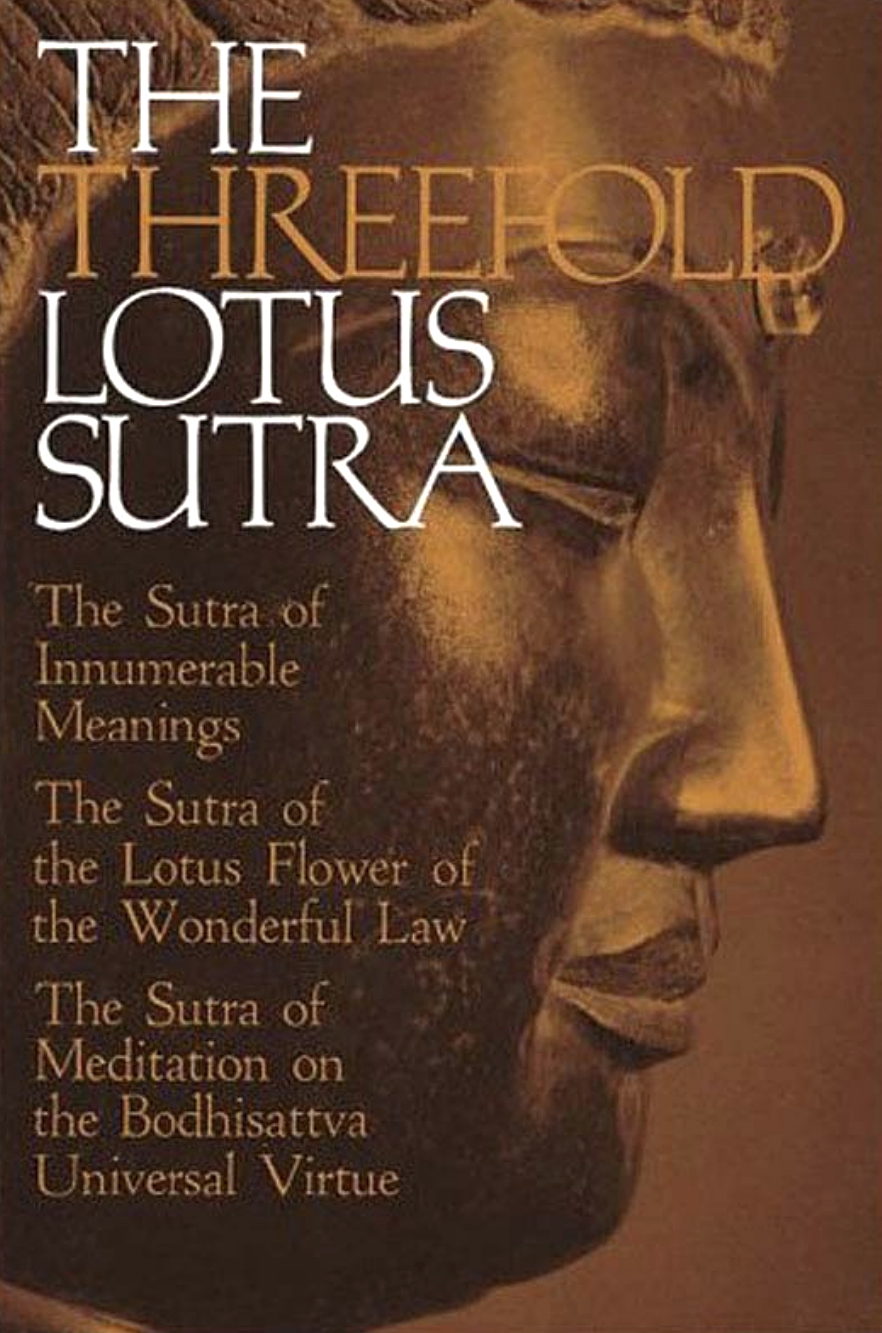
The Threefold Lotus Sūtra: Innumberable Meanings, The Lotus Flower of the Wonderful Law, and Mediation on the Bodhisattva Universal Virtue
Book
- A Few Good Men
- A Treasury of Mahāyāna Sūtras
- Abiding in Good and Noble Deportment
- Appendix to the New Edition of the Bodhicaryāvatāra
- Buddha Pronounces the Sūtra of the Great Cundī Dhāraṇī
- Chapter on Entering the Inconceivable Liberated State of Samantabhadra's Practices and Vows
- Dialogue With Bodhisattva Infinite Wisdom
- Mahāvaipulya Sūtra of the Tathāgata Store
- Myōhō-renge-kyō
- On Entering into the Inconceivable State of Emancipation by the Practice and Vows of the Bodhisattva Samantabhadra of the Mahavaipulya Buddha Avatamsaka Sutra
- On the Pāramitā of Ingenuity
- Scripture of the Lotus Blossom of the Fine Dharma
- The Buddhist Feminine Ideal
- The Definitive Vinaya
- The Dhâranî of Tchundi
- The Diamond Cutter of Doubts: A Commentary on The Diamond Sūtra (Vajracchedikā-prajñā-pāramitā Sūtra) By Ch'an Master Han Shan
- The Diamond Prajna Paramita Sutra
- The Diamond Prajna-Paramita Sutra
- The Diamond Sutra (Chin-Kang-Ching), or Prajna-Paramita
- The Diamond Sutra (Hsüan Hua)
- The Diamond Sutra (Wai-tao and Goddard)
- The Diamond Sutra and The Sutra of Hui Neng
- The Diamond Sutra: The Perfection of Wisdom
- The Diamond Sutra: Translated from Kumarajiva's Chinese Version
- The Diamond That Cuts Through Illusion
- The Essentials of the Dharma Blossom Sutra
- The Flower Ornament Scripture: A Translation of The Avatamsaka Sutra
- The Giving Rise of the Ten Kinds of Mind of the Bodhisattva
- The Great Vows of Samantabhadra
- The Healing Buddha (1979)
- The Healing Buddha (1989)
- The Lankavatara Sutra: A Zen Text
- The Lion's Roar of Queen Śrīmālā
- The Lotus Sutra (2016) (BDK)
- The Lotus Sutra (Watson)
- The Lotus Sutra: A Contemporary Translation of a Buddhist Classic
- The Lotus Sutra: The Sutra of the Lotus Flower of the Wonderful Dharma
- The Lotus of the Wonderful Law or The Lotus Gospel (2005)
- The Mahayana Mahaparinirvana-sutra (3 vols.)
- The Pratyutpanna Samādhi Sutra: The Śūraṅgama Samādhi Sutra
- The Prediction of Mañjuśrī's Attainment of Buddhahood
- The Scripture of Master of Medicine, Beryl Radiance Tathāgata and The Sutra of the Girl Candrottarā
- The Shurangama Sutra - Volume Eight
- The Shurangama Sutra - Volume Five
- The Shurangama Sutra - Volume Four
- The Shurangama Sutra - Volume One
- The Shurangama Sutra - Volume Seven
- The Shurangama Sutra - Volume Six
- The Shurangama Sutra - Volume Three
- The Shurangama Sutra - Volume Two
- The Shurangama Sutra: Sutra Text and Supplements
- The Skill in Means (Upāyakauśalya) Sūtra
- The Sky as a Mahāyāna Symbol of Emptiness and Generous Fullness: A Study and Translation of the Gaganagañjaparipṛcchā: Volume 2: Edition and Translation
- The Sutra of Queen Śrīmālā of the Lion's Roar and the Vimalakīrti Sutra
- The Sutra of the Lord of Healing
- The Sutra of the Master of Healing
- The Tale of King Udayana of Vatsa
- The Threefold Lotus Sūtra
- The True Lion's Roar of Queen Śrīmālā
- The Vimalakirti Nirdesa Sutra
- The Vimalakīrti Sūtra (Watson)
- The Vow to Live the Life of Samanta-bhadra
- The Vows of Bodhisattva Samantabhadra Sutra
- The Śūraṅgama Sūtra: A New Translation
- Vaipulya Sūtra of Śrīmālā's Lion's Roar That Reveals the Great Skillful Means of the One Vehicle
- Vajra-chhedika, the "Kin Kong King," or Diamond Sutra
- Vimalakīrti's Discourse on Emancipation
- Vimalakīrti-Nirdeśa-Sūtra: Translated from the Chinese
Please note that many items in our library are simply pages that represent a detailed library catalog entry and citation of someone else's work, presentation, or performance. Read our General Disclaimer for more information.

Description
The Sutra of the Lotus Flower of the Wonderful Law, popularly known as the Lotus Sutra, is revered by millions of Buddhists as containing the core and culmination of the Buddha's teaching. Together with the two shorter sutras that traditionally accompany it, Innumerable Meanings and Meditation on the Bodhisattva Universal Virtue, it comprises one of the most important scriptures of Mahayana Buddhism and indeed one of the major documents of world religion.
In The Threefold Lotus Sutra all three scriptures are presented together for the first time in English. The sutras of Innumerable Meaning and Meditation of the Bodhisattva Universal Virtue have never before been translated into English, while the present version of the Lotus Sutra itself is based on the translation from the Chinese made by Bunnō Katō and W. E. Soothill, thoroughly revised and annotated in the light of present scholarship. A glossary of Sanskrit and doctrinal terms has been compiled especially for this edition.
The Lotus Sutra consists of a series of sermons delivered by the Buddha toward the end of his forty-year teaching ministry before a great multitude of disciples and other beings ranging from gods to demons. The setting and scope are cosmic, but the sermons themselves, presented in both prose and verse, are replete with parables and graphic anecdotes.
At the heart of the sutra and three major concepts of Mahayana Buddhism: 1) All sentient beings can atain Perfect Enlightenment—that is, buddhahood—and nothing less that this is the appropriate final goal of believers. 2) The Buddha is eternal, having existed from the infinite past and appearing in many forms throughout the ages to guide and succor beings through the teaching of the Wonderful Law. And 3) The noblest form of Buddhist practice is the way of the bodhisattva, one who devotes himself to attaining enlightenment not only for himself but for all sentient beings.
The Sutra of Innumerable Meanings records the sermon preached by the Buddha to a host of bodhisattvas immediately preceding the delivery of the Lotus Sutra. Constituting and introduction to the central sutra, the shorter scripture is traditionally known as the "opening sutra." The Sutra of Meditation on the Bodhisattva Universal Virtue, supposed to have been delivered following the Lotus Sutra, establishes the way of repentance as the practice of the spirit of the Lotus Sutra. Being an epilogue to the main scripture, it is called the "closing sutra," while because of its theme it is also known as the "sutra of repentance." (Source: book jacket)
In The Threefold Lotus Sutra all three scriptures are presented together for the first time in English. The sutras of Innumerable Meaning and Meditation of the Bodhisattva Universal Virtue have never before been translated into English, while the present version of the Lotus Sutra itself is based on the translation from the Chinese made by Bunnō Katō and W. E. Soothill, thoroughly revised and annotated in the light of present scholarship. A glossary of Sanskrit and doctrinal terms has been compiled especially for this edition.
The Lotus Sutra consists of a series of sermons delivered by the Buddha toward the end of his forty-year teaching ministry before a great multitude of disciples and other beings ranging from gods to demons. The setting and scope are cosmic, but the sermons themselves, presented in both prose and verse, are replete with parables and graphic anecdotes.
At the heart of the sutra and three major concepts of Mahayana Buddhism: 1) All sentient beings can atain Perfect Enlightenment—that is, buddhahood—and nothing less that this is the appropriate final goal of believers. 2) The Buddha is eternal, having existed from the infinite past and appearing in many forms throughout the ages to guide and succor beings through the teaching of the Wonderful Law. And 3) The noblest form of Buddhist practice is the way of the bodhisattva, one who devotes himself to attaining enlightenment not only for himself but for all sentient beings.
The Sutra of Innumerable Meanings records the sermon preached by the Buddha to a host of bodhisattvas immediately preceding the delivery of the Lotus Sutra. Constituting and introduction to the central sutra, the shorter scripture is traditionally known as the "opening sutra." The Sutra of Meditation on the Bodhisattva Universal Virtue, supposed to have been delivered following the Lotus Sutra, establishes the way of repentance as the practice of the spirit of the Lotus Sutra. Being an epilogue to the main scripture, it is called the "closing sutra," while because of its theme it is also known as the "sutra of repentance." (Source: book jacket)
Citation
Kāto, Bunnō, Yoshirō Tamura, and Kōjirō Miyasaka, trans. The Threefold Lotus Sutra: Innumberable Meanings, The Lotus Flower of the Wonderful Law, and Mediation on the Bodhisattva Universal Virtue. Tokyo: Kosei Publishing, 1995. https://archive.org/details/threefoldlotussu0000unse_d9v6.
Table of contents
- THE SUTRA OF INNUMERABLE MEANINGS3
- Chapter 1 Virtues3
- Chapter 2 Preaching8
- Chapter 3 Ten Merits12
- THE SUTRA OF THE LOTUS FLOWER OF THE WONDERFUL LAW18
- Introductory18
- Tactfulness31
- A Parable48
- Faith Discernment69
- The Parable of the Herbs79
- Prediction85
- The Parable of the Magic City91
- The Five Hundred Disciples Receive the Prediction of Their Destiny107
- Prediction of the Destiny of Arhats, Training and Trained114
- A Teacher of the Law118
- Beholding the Previous Stupa124
- Devadatta132
- Exhortation to Hold Firm137
- A Happy Life141
- Springing Up Out of the Earth151
- Revelation of the [Eternal] Life of the Tathagata158
- Discrimination of Merits163
- The Merits of Joyful Acceptance170
- The Merits of the Preacher173
- The Bodhisattva Never Despise182
- The Divine Power of the Tathagata186
- The Final Commission189
- The Story of the Bodhisattva Medicine King190
- The Bodhisattva Wonder Sound195
- The All‐Sidedness of the Bodhisattva Regarder of the Cries of the World199
- Dharanis204
- The Story of the King Resplendent207
- Encouragement of the Bodhisattva Universal Virtue211
- THE SUTRA OF MEDITATION ON THE BODHISATTVA UNIVERSAL VIRTUE214
- The Sutra of Meditation on the Bodhisattva Universal Virtue214
Interconnections
1 Full translation of

The White Lotus of the Good Dharma, popularly known as the Lotus Sūtra, is taught by Buddha Śākyamuni on Vulture Peak to an audience that includes bodhisattvas from countless realms, as well as bodhisattvas who emerge from under the ground, from the space below this world. Buddha Prabhūtaratna, who has long since passed into nirvāṇa, appears within a floating stūpa to hear the sūtra, and Śākyamuni enters the stūpa and sits beside him. The Lotus Sūtra is celebrated, particularly in East Asia, for its presentation of crucial elements of the Mahāyāna tradition, such as the doctrine that there is only one yāna, or "vehicle"; the distinction between expedient and definite teachings; and the notion that the Buddha's life, enlightenment, and parinirvāṇa were simply manifestations of his transcendent buddhahood, while he continues to teach eternally. A recurring theme in the sūtra is its own significance in teaching these points during past and future eons, with many passages in which the Buddha and bodhisattvas such as Samantabhadra describe the great benefits that come from devotion to it, the history of its past devotees, and how it is the Buddha's ultimate teaching, supreme over all other sūtras. (Source: 84000)