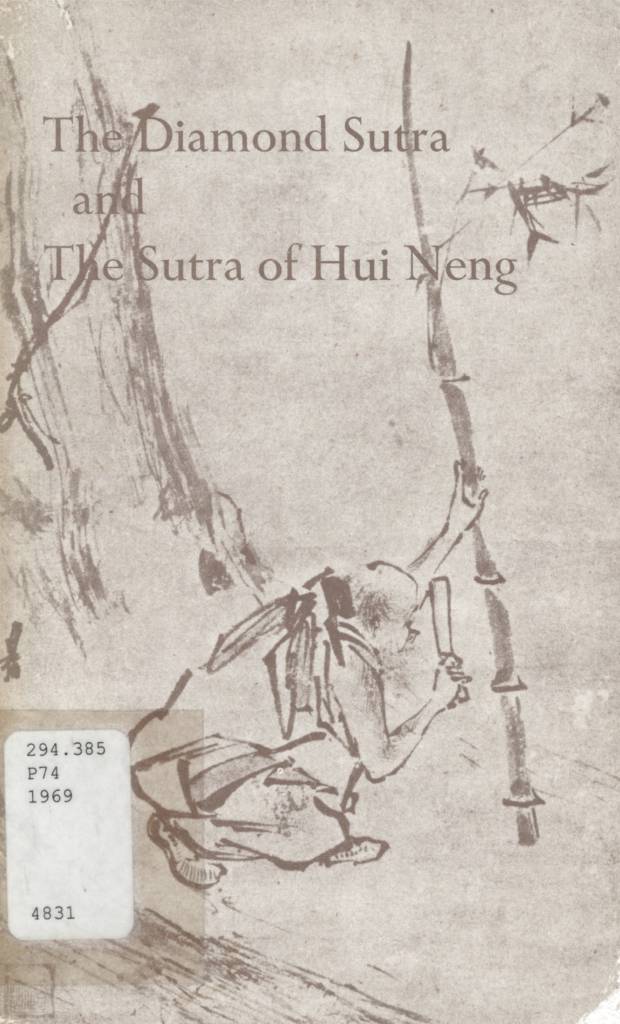
The Diamond Sutra and The Sutra of Hui Neng
From Bodhicitta
< BooksBooks/The Diamond Sutra and The Sutra of Hui Neng
| 🤓 Admin Zone 🛠️ hidden to non-admins | |
The Diamond Sutra and The Sutra of Hui Neng
Book
- A Few Good Men
- A Treasury of Mahāyāna Sūtras
- Abiding in Good and Noble Deportment
- Appendix to the New Edition of the Bodhicaryāvatāra
- Buddha Pronounces the Sūtra of the Great Cundī Dhāraṇī
- Chapter on Entering the Inconceivable Liberated State of Samantabhadra's Practices and Vows
- Dialogue With Bodhisattva Infinite Wisdom
- Mahāvaipulya Sūtra of the Tathāgata Store
- Myōhō-renge-kyō
- On Entering into the Inconceivable State of Emancipation by the Practice and Vows of the Bodhisattva Samantabhadra of the Mahavaipulya Buddha Avatamsaka Sutra
- On the Pāramitā of Ingenuity
- Scripture of the Lotus Blossom of the Fine Dharma
- The Buddhist Feminine Ideal
- The Definitive Vinaya
- The Dhâranî of Tchundi
- The Diamond Cutter of Doubts: A Commentary on The Diamond Sūtra (Vajracchedikā-prajñā-pāramitā Sūtra) By Ch'an Master Han Shan
- The Diamond Prajna Paramita Sutra
- The Diamond Prajna-Paramita Sutra
- The Diamond Sutra (Chin-Kang-Ching), or Prajna-Paramita
- The Diamond Sutra (Hsüan Hua)
- The Diamond Sutra (Wai-tao and Goddard)
- The Diamond Sutra and The Sutra of Hui Neng
- The Diamond Sutra: The Perfection of Wisdom
- The Diamond Sutra: Translated from Kumarajiva's Chinese Version
- The Diamond That Cuts Through Illusion
- The Essentials of the Dharma Blossom Sutra
- The Flower Ornament Scripture: A Translation of The Avatamsaka Sutra
- The Giving Rise of the Ten Kinds of Mind of the Bodhisattva
- The Great Vows of Samantabhadra
- The Healing Buddha (1979)
- The Healing Buddha (1989)
- The Lankavatara Sutra: A Zen Text
- The Lion's Roar of Queen Śrīmālā
- The Lotus Sutra (2016) (BDK)
- The Lotus Sutra (Watson)
- The Lotus Sutra: A Contemporary Translation of a Buddhist Classic
- The Lotus Sutra: The Sutra of the Lotus Flower of the Wonderful Dharma
- The Lotus of the Wonderful Law or The Lotus Gospel (2005)
- The Mahayana Mahaparinirvana-sutra (3 vols.)
- The Pratyutpanna Samādhi Sutra: The Śūraṅgama Samādhi Sutra
- The Prediction of Mañjuśrī's Attainment of Buddhahood
- The Scripture of Master of Medicine, Beryl Radiance Tathāgata and The Sutra of the Girl Candrottarā
- The Shurangama Sutra - Volume Eight
- The Shurangama Sutra - Volume Five
- The Shurangama Sutra - Volume Four
- The Shurangama Sutra - Volume One
- The Shurangama Sutra - Volume Seven
- The Shurangama Sutra - Volume Six
- The Shurangama Sutra - Volume Three
- The Shurangama Sutra - Volume Two
- The Shurangama Sutra: Sutra Text and Supplements
- The Skill in Means (Upāyakauśalya) Sūtra
- The Sky as a Mahāyāna Symbol of Emptiness and Generous Fullness: A Study and Translation of the Gaganagañjaparipṛcchā: Volume 2: Edition and Translation
- The Sutra of Queen Śrīmālā of the Lion's Roar and the Vimalakīrti Sutra
- The Sutra of the Lord of Healing
- The Sutra of the Master of Healing
- The Tale of King Udayana of Vatsa
- The Threefold Lotus Sūtra
- The True Lion's Roar of Queen Śrīmālā
- The Vimalakirti Nirdesa Sutra
- The Vimalakīrti Sūtra (Watson)
- The Vow to Live the Life of Samanta-bhadra
- The Vows of Bodhisattva Samantabhadra Sutra
- The Śūraṅgama Sūtra: A New Translation
- Vaipulya Sūtra of Śrīmālā's Lion's Roar That Reveals the Great Skillful Means of the One Vehicle
- Vajra-chhedika, the "Kin Kong King," or Diamond Sutra
- Vimalakīrti's Discourse on Emancipation
- Vimalakīrti-Nirdeśa-Sūtra: Translated from the Chinese
Please note that many items in our library are simply pages that represent a detailed library catalog entry and citation of someone else's work, presentation, or performance. Read our General Disclaimer for more information.

Description
The Diamond Sutra, composed in India in the fourth century CE, is one of the most treasured works of Buddhist literature and is the oldest existing printed book in the world. It is known as the Diamond Sutra because its teachings are said to be like diamonds that cut away all dualistic thought, releasing one from the attachment to objects and bringing one to the further shore of enlightenment. The format of this important sutra is presented as a conversation between the Buddha and one of his disciples. The Sutra of Hui-neng, also known as the Platform Sutra, contains the autobiography of a pivotal figure in Zen history and some of the most profound passages of Zen literature. Hui-neng (638–713) was the sixth patriarch of Zen in China, but is often regarded as the true father of the Zen tradition. He was a poor, illiterate woodcutter who is said to have attained enlightenment upon hearing a recitation of the Diamond Sutra. Together, these two scriptures present the central teaching of the Zen Buddhist tradition and are essential reading for all students of Buddhism. (Source: Shambhala Publications)
Citation
Price, A. F., and Wong Mou-Lam, trans. The Diamond Sutra and The Sutra of Hui Neng. The Clear Light Series. Berkeley, CA: Shambhala Publications, 1973.
Table of contents
- THE DIAMOND SŪTRA
- Foreword by W. Y. Evans-Wentz3
- Translator's Preface11
- 1. The Convocation of the Assembly17
- 2. Subhūti Makes a Request18
- 3. The Real Teaching of the Great Way19
- 4. Even the Most Beneficent Practices Are Relative20
- 5. Understanding the Ultimate Principle of Reality21
- 6. Rare Is True Faith22
- 7. Great Ones, Perfect Beyond Learning, Utter No Words of Teaching24
- 8. The Fruits of Meritorious Action25
- 9. Real Designation Is Undesignate26
- 10. Setting Forth Pure Lands28
- 11. The Superiority of Unformulated Truth29
- 12. Veneration of the True Doctrine30
- 13. How This Teaching Should Be Received and Retained31
- 14. Perfect Peace Lies in Freedom from Characteristic Distinctions32
- 15. The Incomparable Value of This Teaching35
- 16. Purgation through Suffering the Retribution for Past Sins36
- 17. No One Attains Transcendental Wisdom37
- 18. All Modes of Mind Are Really Only Mind39
- 19. Absolute Reality Is the Only Foundation40
- 20. The Unreality of Phenomenal Distinctions41
- 21. Words Cannot Express Truth; That Which Words Express Is Not Truth42
- 22. It Cannot Be Said That Anything Is Attainable43
- 23. The Practice of Good Works Purifies the Mind44
- 24. The Incomparable Merit of This Teaching45
- 25. The Illusion of Ego46
- 26. The Body of Truth Has No Marks47
- 27. It Is Erroneous to Affirm That All Things Are Ever Extinguished48
- 28. Attachment to Rewards of Merit49
- 29. Perfect Tranquillity50
- 30. The Integral Principle51
- 31. Conventional Truth Should Be Cut Off52
- 32. The Delusion of Appearances53
- THE SŪTRA OF HUI-NENG
- Foreword by Dih Ping-tsze57
- Forewords by Christmas Humphreys58
- Foreword by Joe Miller61
- Translator’s Preface63
- 1. Autobiography67
- 2. On Prajñā79
- 3. Questions and Answers88
- 4. Samādhi and Prajñā94
- 5. Dhyāna98
- 6. On Repentance100
- 7. Temperament and Circumstances109
- 8. The Sudden School and the Gradual School129
- 9. Royal Patronage138
- 10. His Final Instructions142
- Appendix by Ling-t’ao, the Stūpa Keeper155
- Notes157
Interconnections
1 Full translation of

One of the most revered and recited scriptures of the perfection of wisdom genre (prajñāpāramitāsūtras), perhaps second only to the Heart Sūtra, both of which became especially popular in the East Asian Buddhist traditions. It is a crucial source for Mahāyāna tenets of selflessness and the emptiness of phenomena, and its discourse is framed as an explanation of how to enter into the vehicle of the bodhisattvas by developing and sustaining their enlightened perspective.