| 🤓 Admin Zone 🛠️ hidden to non-admins | |
Lankavatara Sutra: A Zen Text
Book
- A Few Good Men
- A Treasury of Mahāyāna Sūtras
- Abiding in Good and Noble Deportment
- Appendix to the New Edition of the Bodhicaryāvatāra
- Buddha Pronounces the Sūtra of the Great Cundī Dhāraṇī
- Chapter on Entering the Inconceivable Liberated State of Samantabhadra's Practices and Vows
- Dialogue With Bodhisattva Infinite Wisdom
- Mahāvaipulya Sūtra of the Tathāgata Store
- Myōhō-renge-kyō
- On Entering into the Inconceivable State of Emancipation by the Practice and Vows of the Bodhisattva Samantabhadra of the Mahavaipulya Buddha Avatamsaka Sutra
- On the Pāramitā of Ingenuity
- Scripture of the Lotus Blossom of the Fine Dharma
- The Buddhist Feminine Ideal
- The Definitive Vinaya
- The Dhâranî of Tchundi
- The Diamond Cutter of Doubts: A Commentary on The Diamond Sūtra (Vajracchedikā-prajñā-pāramitā Sūtra) By Ch'an Master Han Shan
- The Diamond Prajna Paramita Sutra
- The Diamond Prajna-Paramita Sutra
- The Diamond Sutra (Chin-Kang-Ching), or Prajna-Paramita
- The Diamond Sutra (Hsüan Hua)
- The Diamond Sutra (Wai-tao and Goddard)
- The Diamond Sutra and The Sutra of Hui Neng
- The Diamond Sutra: The Perfection of Wisdom
- The Diamond Sutra: Translated from Kumarajiva's Chinese Version
- The Diamond That Cuts Through Illusion
- The Essentials of the Dharma Blossom Sutra
- The Flower Ornament Scripture: A Translation of The Avatamsaka Sutra
- The Giving Rise of the Ten Kinds of Mind of the Bodhisattva
- The Great Vows of Samantabhadra
- The Healing Buddha (1979)
- The Healing Buddha (1989)
- The Lankavatara Sutra: A Zen Text
- The Lion's Roar of Queen Śrīmālā
- The Lotus Sutra (2016) (BDK)
- The Lotus Sutra (Watson)
- The Lotus Sutra: A Contemporary Translation of a Buddhist Classic
- The Lotus Sutra: The Sutra of the Lotus Flower of the Wonderful Dharma
- The Lotus of the Wonderful Law or The Lotus Gospel (2005)
- The Mahayana Mahaparinirvana-sutra (3 vols.)
- The Pratyutpanna Samādhi Sutra: The Śūraṅgama Samādhi Sutra
- The Prediction of Mañjuśrī's Attainment of Buddhahood
- The Scripture of Master of Medicine, Beryl Radiance Tathāgata and The Sutra of the Girl Candrottarā
- The Shurangama Sutra - Volume Eight
- The Shurangama Sutra - Volume Five
- The Shurangama Sutra - Volume Four
- The Shurangama Sutra - Volume One
- The Shurangama Sutra - Volume Seven
- The Shurangama Sutra - Volume Six
- The Shurangama Sutra - Volume Three
- The Shurangama Sutra - Volume Two
- The Shurangama Sutra: Sutra Text and Supplements
- The Skill in Means (Upāyakauśalya) Sūtra
- The Sky as a Mahāyāna Symbol of Emptiness and Generous Fullness: A Study and Translation of the Gaganagañjaparipṛcchā: Volume 2: Edition and Translation
- The Sutra of Queen Śrīmālā of the Lion's Roar and the Vimalakīrti Sutra
- The Sutra of the Lord of Healing
- The Sutra of the Master of Healing
- The Tale of King Udayana of Vatsa
- The Threefold Lotus Sūtra
- The True Lion's Roar of Queen Śrīmālā
- The Vimalakirti Nirdesa Sutra
- The Vimalakīrti Sūtra (Watson)
- The Vow to Live the Life of Samanta-bhadra
- The Vows of Bodhisattva Samantabhadra Sutra
- The Śūraṅgama Sūtra: A New Translation
- Vaipulya Sūtra of Śrīmālā's Lion's Roar That Reveals the Great Skillful Means of the One Vehicle
- Vajra-chhedika, the "Kin Kong King," or Diamond Sutra
- Vimalakīrti's Discourse on Emancipation
- Vimalakīrti-Nirdeśa-Sūtra: Translated from the Chinese
Please note that many items in our library are simply pages that represent a detailed library catalog entry and citation of someone else's work, presentation, or performance. Read our General Disclaimer for more information. You can find more information about this item on the publisher website.

Description
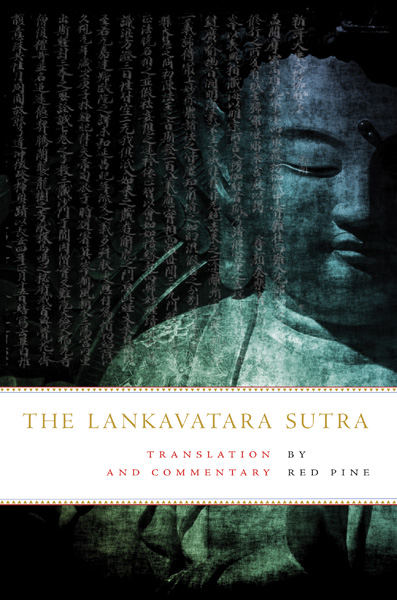
Having translated The Diamond Sutra and The Heart Sutra, and following with The Platform Sutra, Red Pine now turns his attention to perhaps the greatest Sutra of all. The Lankavatara Sutra is the holy grail of Zen. Zen’s first patriarch, Bodhidharma, gave a copy of this text to his successor, Hui-k’o, and told him everything he needed to know was in this book. Passed down from teacher to student ever since, this is the only Zen sutra ever spoken by the Buddha. Although it covers all the major teachings of Mahayana Buddhism, it contains but two teachings: that everything we perceive as being real is nothing but the perceptions of our own mind and that the knowledge of this is something that must be realized and experienced for oneself and cannot be expressed in words. In the words of Chinese Zen masters, these two teachings became known as “have a cup of tea” and “taste the tea.”
This is the first translation into English of the original text used by Bodhidharma, which was the Chinese translation made by Gunabhadra in 443 and upon which all Chinese Zen masters have relied ever since. In addition to presenting one of the most difficult of all Buddhist texts in clear English, Red Pine has also added summaries, explanations, and notes, including relevant Sanskrit terms on the basis of which the Chinese translation was made. This promises to become an essential text for anyone seeking to deepen their understanding or knowledge of Zen. (Source: Counterpoint Press)
Citation
Red Pine, trans. The Lankavatara Sutra: A Zen Text. Berkeley, CA: Counterpoint Press, 2012.
Publisher Link
Interconnections
1 Full translation of

An important Mahāyāna sūtra that was highly influential in East Asia as well as in Nepal, where a manuscript was discovered that remains the only extant Sanskrit recension of this text. It is notable for its inclusion of many doctrinal features that would come to be associated with the Yogācāra philosophy of Mind-Only (Cittamātra), such as the ālayavijñāna, or store-house consciousness, that acts as a repository for the seeds of karmic actions. It also includes several lengthy discussions of tathāgatagarbha and, though it is never actually referenced in the Uttaratantra, it is often listed among the so-called tathāgatagarbha sūtras. While its lack of mention in the Uttaratantra has been interpreted by scholars as evidence that the sūtra postdates the treatise, it should be noted that the ways in which the tathāgatagarbha is discussed in the sūtra is often at odds with its presentation in the Uttaratantra.