Books/The Resolve to Become a Buddha: Difference between revisions
From Bodhicitta
< BooksBooks/The Resolve to Become a Buddha
(CSV import of Library Items) |
No edit summary |
||
| Line 1: | Line 1: | ||
{{LibraryItem}} | {{LibraryItem | ||
|FullRead=No | |||
|DisableRedirects=No | |||
|CheckQuotes=No | |||
|Theme=The Path of the Bodhisattva; Śāntideva's Life and Works; The Practices of the Bodhisattva | |||
|SubTheme=Bodhicitta; Śāntideva's Life and Cultural World; The Bodhisattva Vow | |||
|Approach=Academic | |||
|Audience=Intermediate; Advanced | |||
}} | |||
Revision as of 07:42, 15 December 2021
| 🤓 Admin Zone 🛠️ hidden to non-admins | |
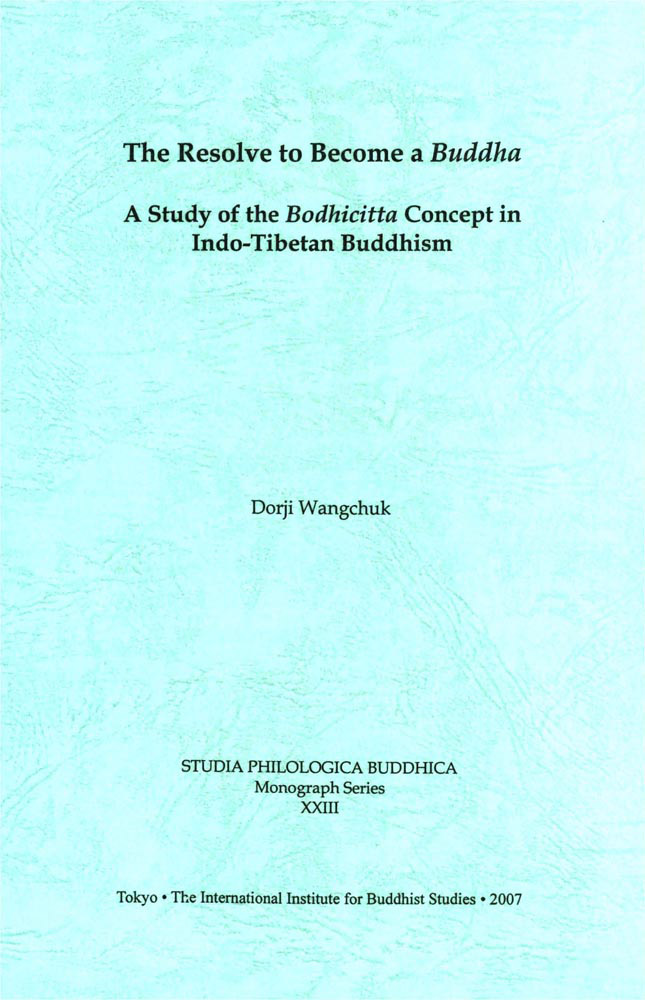
The Resolve to Become a Buddha: A Study of the Bodhicitta Concept in Indo-Tibetan Buddhism
Book
- A Dialogue between Thomas Merton on Agape and Shantideva on Karuna: Some Moral Dimensions of a Catholic and Mahayana Exchange
- A Fearless Heart
- A Flash of Lightning in the Dark of Night
- A Mahāyāna Liturgy
- A Precursory Phrase of Tantric Definition of Bodhicitta in the Śāntideva's Śikṣāsamuccaya
- A Short Presentation of Śāntideva's Bodhicaryāvatāra
- A Study of Akṣayamati (Śāntideva)'s Bodhisattvacaryāvatāra as Found in the Tibetan Manuscripts From Tun-huang
- A Summons to Buddhahood: The Bodhicaryavatara as Santideva's Call to Embrace the Bodhicitta
- Account of the Period of the Kings Cala, Pañcamasiṃha and Others
- Akṣayamati and Śāntideva
- Becoming Bodhisattvas
- Bodhi(sattva)caryāvatāra als Lehrschrift und Vorhaben: Zum Thema Ritual, Religion, Philosophie und Mystik im Buddhismus
- Bodhicitta (Ringu Tulku)
- Bodhicitta and Bodhisattva: A Study of the Bodhicaryāvatāra of Śāntideva
- Bodhicitta and Charity: A Comparison
- Bodhicitta: Cultivating the Compassionate Mind of Enlightenment
- Bodhisattvas of the Forest and the Formation of the Mahayana
- Bu ston on the sPyod 'jug (Bodhisattvacaryāvatāra)
- Buddha Mind - Christ Mind
- Buddha's Lions
- Buddhist Ethics (2003)
- Buddhist Texts Through the Ages
- Compassion in Mahayana Buddhism
- Compassion in Our Day: Learning from Shantideva
- Compassion in Schopenhauer and Śāntideva
- Conclusion: The Socratic Paradigm
- Consequentialism, Particularism, and the Emptiness of Persons: A Response to Vishnu Sridharan
- Courageous Compassion
- Cultivating Bodhicitta: Wisdom and Compassion in Śāntideva's Introduction to the Awakened Life
- Das Ritual der Entschlussfassung im Bodhicaryāvatāra (Kap. II und III)
- Die Aufnahme des Erleuchtungsgeistes: Eine Übersetzung von Prajñākaramatis Bodhicaryāvatārapañjikā 3.1-19
- Die zwei Wahrheiten
- Does Anātman Rationally Entail Altruism? On Bodhicaryāvatāra 8:101-103
- Drops of Nectar: Khenpo Kunpal's Commentary on Shantideva's Entering the Conduct of the Bodhisattvas
- Entering the Path of Enlightenment
- Entering the Path of Enlightenment-Review by Cook
- Entering the Path of Enlightenment-Review by Seyfort Ruegg
- Ethical Revaluation in the Thought of Śāntideva
- Ethics in Schopenhauer and Buddhism
- Ethics in the Śikṣāsamuccaya: A Study in Mahāyāna Morality
- Facts or Fictions: Reconsidering Śāntideva's Names, Life, and Works
- Fierce Devotion to all Beings: The Role of Emotions in Śāntideva’s Introduction to the Way of the Bodhisattva (Bodhicaryāvatāra)
- Following in the Buddha's Footsteps
- For the Benefit of All Beings
- General Introduction: Śāntideva and His World
- Gleichheit und Mitgefühl: Prajñākaramatis Kommentar zu Bodhicaryāvatāra VIII. 89-108
- How to Be a Bodhisattva: Introduction to the Practice of the Bodhisattva Path (The Bodhicaryāvatāra)
- In Praise of Great Compassion
- Innate Human Connectivity and Śāntideva's Cultivation of Compassion
- La légende de Śāntideva
- Love in Christianity and Buddhism: A Comparative Study of Thomas Aquinas's Summa Theologiae and Śāntideva's Bodhicaryāvatāra
- Mahasiddhas: La vie de 84 sages de l'Inde
- Masters of Mahāmudrā
- Mental Purification (Blo sbyong): A Native Tibetan Genre of Religious Literature
- Moral Theory in Śāntideva's Śikṣāsamuccaya
- Moral Theory in Śāntideva's Śikṣāsamuccaya-Review by Osto
- Moral Theory in Śāntideva's Śikṣāsamuccaya: Cultivating the Fruits of Virtue-Review by Goodman
- No Time to Lose
- On Akṣayamati's Bodhisattvacaryāvatāra
- Peaceful Heart
- Performing Text as Practice: Rdza Dpal sprul's Practice Manual on the Bodhi(sattva)caryāvatāra
- Practicing Wisdom
- Proof of the Authenticity of the Mahāyāna in Akṣayamati's Bodhi(sattva)caryāvatāra
- Readings of Śāntideva's Guide to Bodhisattva Practice
- Readings of Śāntideva's Guide to Bodhisattva Practice-Review by Harris
- Reason, Irrationality and Akrasia (Weakness of the Will) in Buddhism: Reflections upon Śāntideva's Arguments with Himself
- Remarks on Akṣayamati (Blo gros mi zad pa), Being the Author of the Earlier Version of the Bodhisattvacaryāvatāra
- Santideva's Bodhicaryāvatāra
- Santideva, un mistico del Buddhismo
- Shantideva (From Butön's History of Buddhism in India and Its Spread to Tibet, Translated by Lisa Stein and Ngawang Zangpo)
- Shantideva (Nariman)
- Shantideva's Bodhicaryavatara: An Internal Pilgrimage to Universal Peace and Compassion
- Shantideva's Teaching
- Shāntideva (Tib. Shi-wa-lha)
- Stotra, Psychological Conditioning, and the Bodhicaryāvatāra: Together with a Translation of the Bodhicittānuśaṃsapariccheda
- The Awakening Mind (Tsering 2008)
- The Bodhi-caryâvatāra and Its Monastic Aspects: On the Problem of Representation
- The Bodhicittotpādasamādanāvidhi by Jitari
- The Bodhisattva Doctrine in Buddhist Sanskrit Literature
- The Bodhisattva Guide
- The Bodhisattva and the Ideal of Moral Wisdom in Śāntideva's Śikṣāsamuccaya
- The Buddhist Roots of Secular Compassion Training: A Comparative Study of Compassion Cultivation in Indian and Tibetan Mahāyāna Sources with the Contemporary Secular Program of Compassion Cultivation Training (CCT)
- The Center of the Sunlit Sky
- The Circle of Compassion: An Interpretive Study of Karuṇā in Indian Buddhist Literature
- The Concept of Bodhicitta in Santideva's Bodhicaryavatara
- The Concept of Bodhicitta in Śāntideva's Bodhicaryāvatāra (Diss)
- The Concept of Bodhicitta in Śāntideva's Bodhicaryāvatāra-Review by Edelglass
- The Concept of Bodhicitta in Śāntideva's Bodhicaryāvatāra-Review by Tatz
- The Contrasts between the Bodhisattvayāna and the Śrāvakayāna in the Śikṣāsamuccaya's Theory of Bodhicitta
- The Ethics of Śaṅkara and Śāntideva
- The Ethics of Śaṅkara and Śāntideva-Review by Abramson
- The Ethics of Śaṅkara and Śāntideva-Review by Javanaud
- The Ethics of Śaṅkara and Śāntideva-Review by O'Leary
- The Literature of the Madhyamaka School of Philosophy in India
- The Mahāsiddha Bhusuku (Śāntideva), The Idle Monk
- The Masters and Poets of the Mahāyāna
- The Perfection of Wisdom (Schopen)
- The Resolve to Become a Buddha
- The Self and the Suffering Other: Levinas and Śāntideva on the Ethics of Compassion
- The Training Anthology of Śāntideva
- The Triskandha, Practice in Three Parts: Study of an Early Mahāyāna Buddhist Ritual
- Uncommon Happiness
- Waking into Compassion: The Three Ālambana of Karuṇā
- Śāntideva (Internet Encyclopedia of Philosophy)
- Śāntideva (Potter, Kalupahana, and Sweet)
- Śāntideva (Stanford Encyclopedia of Philosophy)
- Śāntideva and Bodhicaryāvatāra
- Śāntideva and an Ethic of Radical Compassion
- Śāntideva and the Mādhyamika: The Prajñāpāramitā-Pariccheda of the Bodhicaryāvatāra
- Śāntideva as a Mantracarin
- Śāntideva in the History of Mādhyamika Philosophy
- Śāntideva on Developing the Thought of Awakening
- Śāntideva's Criticism of Vijñānavāda and Bodhicitta
- Śāntideva's Impartialist Ethics
- Śāntideva, A Mystic of Buddhism
- Śāntideva, il Bodhicaryāvatāra e le kārikā del Śikṣāsamuccaya
- Śāntideva, il Bodhicaryāvatāra e le kārikā del Śikṣāsamuccaya-Review by Pāsādika
- Śāntideva: Mystique Bouddhiste des VIIe et VIIIe siècles
- Śāntideva: Mystique Bouddhiste des VIIe et VIIIe siècles-Review by Cabezón
- Śāntideva: The Author and His Project
- Śāntidevas Bodhicaryāvatāra: Das Weiterwirken des Werkes dargestellt anhand der Überlieferungsgeschichte des Textes und seiner Kommentare
Please note that many items in our library are simply pages that represent a detailed library catalog entry and citation of someone else's work, presentation, or performance. Read our General Disclaimer for more information.

Description
Becoming a buddha ('Awakened One') under the Bodhi tree (Ficus religiosa) was undoubtedly the most significant event in the career of the historical Buddha, and may be considered the starting point of Buddhism. According to both Mahāyāna ('Greater Vehicle') and Hīnayāna ('Lesser Vehicle') or non-Mahāyāna, the historical Buddha had sometime in the distant past resolved to become a buddha, thereby launching out on the career of a bodhisattva, that is, a sentient being who strives to attain the highest state of awakening. A major distinction between non-Mahāyāna and Mahāyāna, however, is that for the former the status of being a bodhisattva or buddha is confined to the historical Buddha (or a few others like him), while the ultimate soteriological goal of a disciple is Arhatship (that is, the final state of a saint who has attained release from the cycle of birth and death) primarily for oneself. For the latter, by contrast, even an ordinary sentient being is capable of undertaking the long and arduous career of a bodhisattva by generating bodhicitta and finally becoming a buddha (just like the historical Buddha himself), primarily for the sake of many other sentient beings. In sum, a person who possesses or has generated bodhicitta is considered to be a bodhisattva, and the form of Buddhism concerned with the theory and practice of a bodhisattva is known as Mahāyāna. The idea of bodhicitta in the sense of the resolve to become a buddha is hence the bedrock of Mahāyāna, and is what distinguishes a bodhisattva from a śrāvaka, Mahāyāna from non-Mahāyāna. It is presupposed by all forms of Mahāyāna Buddhism including Vajrayāna ('Diamond Vehicle'), or tantric Mahāyāna.
Multiple internal and external factors must have contributed to the formation and further development of the concept of bodhicitta. The psychological need of the Buddhists to make up in one way or another for the demise of the historical Buddha may have been one of the principal internal factors that contributed to the formation of the idea of the resolve to become a buddha. Such an idea would not have lacked the doctrinal justification or legitimisation that it needed, for the non-Mahāyāna sources seem to abound in doctrinal elements that could easily be used to underpin the concept of bodhicitta. In its early phase of development, the idea of generating bodhicitta probably meant only the initial resolve to become a buddha, a momentous decision made by an aspirant seeking Buddhahood (buddhatva). This was seen as an indispensable but not necessarily a sufficient condition for the attainment of Buddhahood. However, gradually the idea came to encompass the entire theory and practice of a bodhisattva and to be considered not only a necessary but in fact a sufficient condition for such an attainment. In the course of time, even the true reality that a bodhisattva or buddha experiences as a spiritual event, the meditative insight or gnosis by means of which the true reality is experienced, and all conceivable resources or means—be they psycho-physiological, visual, verbal, or visional impulses that could be employed for becoming a buddha—came to be regarded as bodhicitta. It is this idea as found explicated in Indian and Tibetan Mahāyāna Buddhism that the present study seeks to examine. (Wangchuk, introductory remarks, 21–22)
Multiple internal and external factors must have contributed to the formation and further development of the concept of bodhicitta. The psychological need of the Buddhists to make up in one way or another for the demise of the historical Buddha may have been one of the principal internal factors that contributed to the formation of the idea of the resolve to become a buddha. Such an idea would not have lacked the doctrinal justification or legitimisation that it needed, for the non-Mahāyāna sources seem to abound in doctrinal elements that could easily be used to underpin the concept of bodhicitta. In its early phase of development, the idea of generating bodhicitta probably meant only the initial resolve to become a buddha, a momentous decision made by an aspirant seeking Buddhahood (buddhatva). This was seen as an indispensable but not necessarily a sufficient condition for the attainment of Buddhahood. However, gradually the idea came to encompass the entire theory and practice of a bodhisattva and to be considered not only a necessary but in fact a sufficient condition for such an attainment. In the course of time, even the true reality that a bodhisattva or buddha experiences as a spiritual event, the meditative insight or gnosis by means of which the true reality is experienced, and all conceivable resources or means—be they psycho-physiological, visual, verbal, or visional impulses that could be employed for becoming a buddha—came to be regarded as bodhicitta. It is this idea as found explicated in Indian and Tibetan Mahāyāna Buddhism that the present study seeks to examine. (Wangchuk, introductory remarks, 21–22)
Citation
Wangchuk, Dorji. The Resolve to Become a Buddha: A Study of the Bodhicitta Concept in Indo-Tibetan Buddhism. Studia Philologica Buddhica Monograph Series 23. Tokyo: International Institute for Buddhist Studies, 2007. https://dorjipenjore.files.wordpress.com/2014/08/the-resolve-to-become-a-buddha-a-study-of-the-bodhicitta-concept-in-indo-tibetan-buddhism.pdf.
Interconnections
1 Recension of
.jpg)
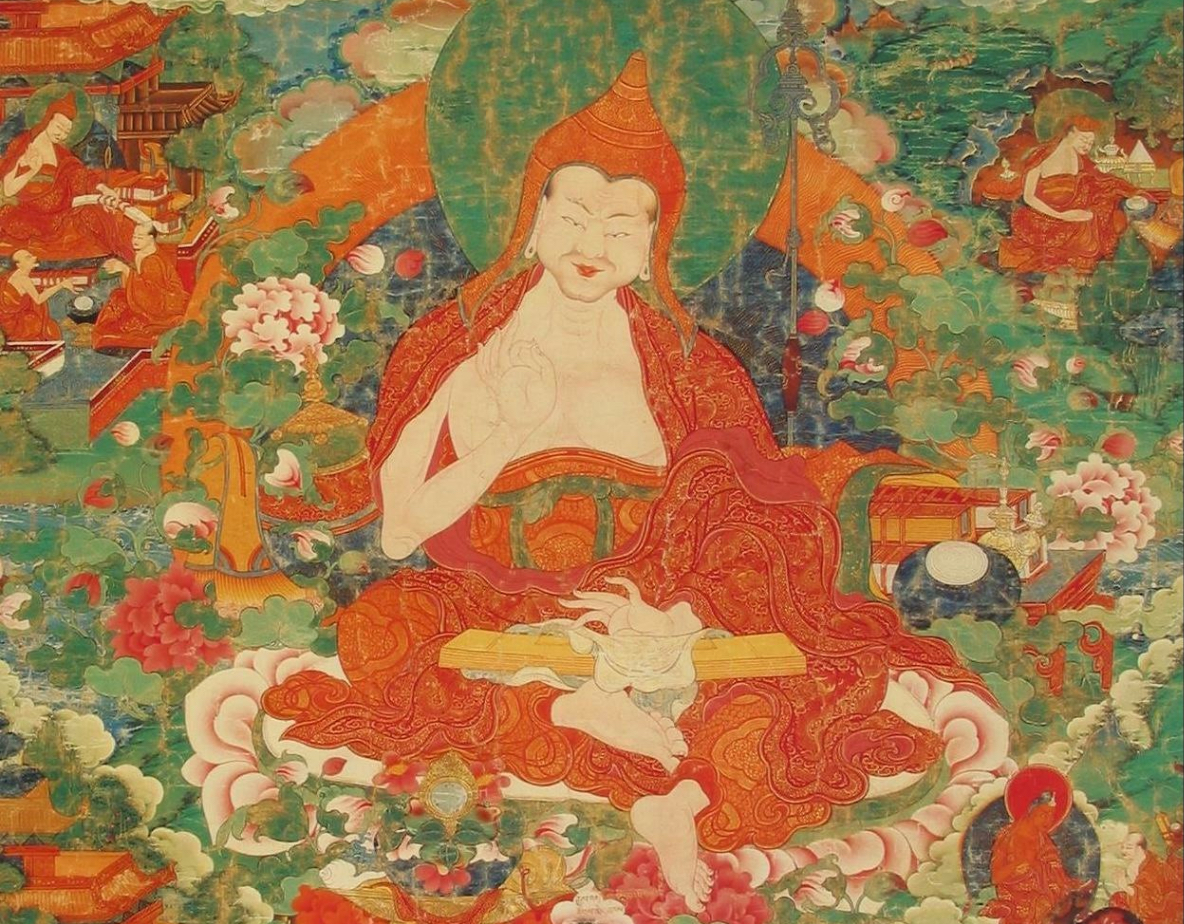
The Bodhisattvabhūmi (literally "The Stage of a Bodhisattva") stands as one of the most comprehensive and systematic expositions of the Mahāyāna Buddhist path from classical India. Formally the fifteenth section of the massive Yogācārabhūmi corpus, this foundational treatise provides an encyclopedic manual detailing the entire spiritual trajectory of a bodhisattva—from the initial arising of the "mind of awakening" (bodhicitta) to the ultimate attainment of perfect buddhahood.
Traditionally attributed to Ārya Asaṅga (c. fourth–fifth century CE) through revelation from the future buddha Maitreya, the text likely represents a compilation of earlier materials (c. 230–300 CE) that predates the fully developed Yogācāra philosophical system. Its existence in multiple Chinese translations from the early fifth century onward confirms its early date and widespread influence across Asian Buddhism.