| 🤓 Admin Zone 🛠️ hidden to non-admins | |
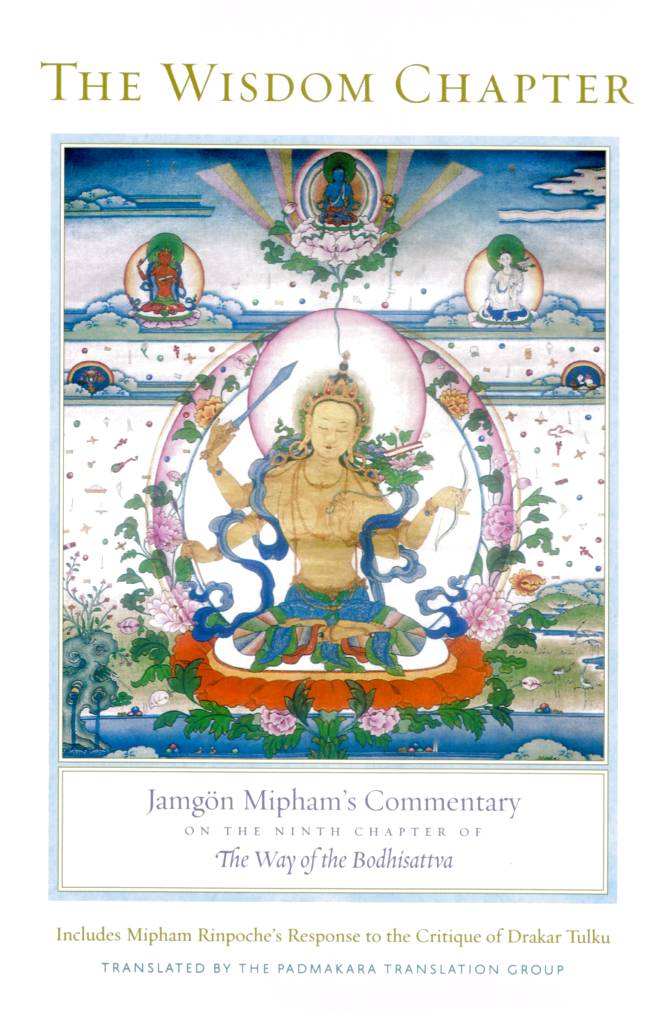
The Wisdom Chapter: Jamgön Mipham's Commentary on the Ninth Chapter of "The Way of the Bodhisattva"
Book
- A Commentary on Shantideva's Engaging in the Conduct of the Bodhisattvas
- A Few Good Men
- A Flash of Lightning in the Dark of Night
- A Great Commentary on Shantideva's Guide to the Bodhisattva's Way of Life, Vol. 1
- A Guide to the Bodhisattva Way of Life
- A Guide to the Bodhisattva's Way of Life (1985)
- A Guide to the Bodhisattva's Way of Life (1999)
- A Study of the Wisdom Chapter (Prajñāpāramitā Pariccheda) of the Bodhicaryāvatārapañjikā of Prajñākaramati
- Altruism and Reality (1998)
- An Intoxication of Mouse Venom: Reading the Guide, Chapter 9
- Appendix B: Excerpt from A Lamp Completely Illuminating the Profound Reality of Interdependence
- Becoming Bodhisattvas
- Bodhicaryāvatāra 9:2 as a Focus for Tibetan Interpretations of the Two Truths in the Prāsangika Mādhyamika
- Bodhicaryāvatāra with Commentary (O'Sullivan)
- Bodhicitta: Cultivating the Compassionate Mind of Enlightenment
- Bodhisattva e Prajñāpāramitā nel Bodhicaryāvatāra di Śāntideva
- Bodhisattvacaryāvatāra: Entering the Way of the Bodhisattvas (2022, Khenpo Gawang and Wiener)
- Can We Kill Illusory People? Some Philosophical Reflections on Bodhi(sattva)caryāvatāra 9:11-13ab
- Comprendre la vacuité
- Courageous Compassion
- Discourses on Bodhicharyāvatāra
- Drops of Nectar: Khenpo Kunpal's Commentary on Shantideva's Entering the Conduct of the Bodhisattvas
- Engaging in Bodhisattva Behavior
- Engaging in the Bodhisattva Deeds
- Engaging in the Conduct of the Bodhisattvas
- Entering the Way of the Bodhisattva: A New Translation and Contemporary Guide
- Epitome of the Bodhicaryāvatāra with Its Pañjikā, Chap. IX
- Following in the Buddha's Footsteps
- For the Benefit of All Beings
- Guide to the Bodhisattva's Way of Life (Bodhicaryavatara): A Commentary by Geshe Tenzin Zopa
- Guide to the Good Life
- Healing Anger
- How to Be a Bodhisattva: Introduction to the Practice of the Bodhisattva Path (The Bodhicaryāvatāra)
- In Praise of Great Compassion
- Indian Madhyamaka Buddhist Philosophy after Nagarjuna, Vol. 2
- Introduction to Gzhan gyis brtsad pa'i lan mdor bsdus pa rigs lam rab gsal de nyid snang byed: An Answer to Blo-bzang-rab-gsal's Refutation of the Author's 'Sher le nor bu ke ta ka' and Its Defence, the Brgal lan nyin byed snang ba
- L'opalescent joyau
- Le commentaire de Mi-pham au chapitre IX du Bodhicaryāvatāra de Śāntideva: Échos modernes d'une controverse du XVème siècle
- Mi pham and the Philosophical Controversies of the Nineteenth Century
- Mipham's Dialectics and the Debates on Emptiness
- No Time to Lose
- Patience: A Guide to Shantideva's Sixth Chapter (Zopa 2020)
- Peaceful Heart
- Perfecting Patience
- Perfecting Wisdom
- Polemics in Indo-Tibetan Scholasticism - A Late 19th-Century Debate Between 'Ju Mi pham and Dpa' ris Rab gsal
- Practicing Wisdom
- Readings of Śāntideva's Guide to Bodhisattva Practice
- Seeing from All Sides
- Shantideva and Friends
- Shantideva's Bodhicaryavatara: An Internal Pilgrimage to Universal Peace and Compassion
- Shantideva's Guide to the Bodhisattva's Way Of Life: An Oral Explanation of Chapter 4
- Shantideva's Guide to the Bodhisattva's Way Of Life: An Oral Explanation of Chapter 5
- Shantideva's Guide to the Bodhisattva's Way Of Life: An Oral Explanation of Chapter 6
- Shantideva's Guide to the Bodhisattva's Way Of Life: An Oral Explanation of Chapter 7
- Shantideva's Guide to the Bodhisattva's Way Of Life: An Oral Explanation of Chapter 8
- Shantideva's Guide to the Bodhisattva's Way of Life: An Oral Explanation of Chapter 1
- Shantideva's Guide to the Bodhisattva's Way of Life: An Oral Explanation of Chapter 2
- Shantideva's Guide to the Bodhisattva's Way of Life: An Oral Explanation of Chapter 3
- Studies in the Philosophy of the Bodhicaryāvatāra (2000)
- Sur l'océan du Mahayana
- Sāntideva, The Bodhicaryāvatāra, Chapter 8 (verses 89-140)
- Tant que durera l'espace
- The Beautiful Way of Life
- The Bodhisattva Guide
- The Buddhist Roots of Secular Compassion Training: A Comparative Study of Compassion Cultivation in Indian and Tibetan Mahāyāna Sources with the Contemporary Secular Program of Compassion Cultivation Training (CCT)
- The Case of 'Ju Mi pham (1846–1912) and Dpa' ris Rab gsal (1840–1912): A Study in Dgag lan Debate
- The Center of the Sunlit Sky
- The Entrance for the Children of the Conquerors
- The Middle Way of the Bodhisattva
- The Nectar of Manjushri's Speech
- The Profound Reality of Interdependence
- The Profound Reality of Interdependence-Review by Bouthillette
- The Reflexive Nature of Awareness (1998)
- The Way of Awakening
- The Way of the Bodhisattva (1997)
- The Way of the Bodhisattva (2006)
- The Wisdom Chapter
- Transcendent Wisdom (1988)
- Transcendent Wisdom (2009)
- Uncommon Happiness
- Vimalakīrtinirdeśa: The Teaching of Vimalakīrti (Gómez, L. and Harrison, P.)
- Wisdom: Two Buddhist Commentaries
- Śāntideva (Internet Encyclopedia of Philosophy)
- Śāntideva and the Mādhyamika: The Prajñāpāramitā-Pariccheda of the Bodhicaryāvatāra
Please note that many items in our library are simply pages that represent a detailed library catalog entry and citation of someone else's work, presentation, or performance. Read our General Disclaimer for more information. You can find more information about this item on the publisher website.

Description
Shāntideva’s guide to the training of a Bodhisattva is one of the most important and beloved texts in the Tibetan tradition. The ninth chapter, however, dealing with Madhyamaka, the Middle Way, the most profound wisdom view of Mahayana Buddhism, has always posed unique challenges to readers. This commentary by the great scholar Mipham Rinpoche presents in quite straightforward terms Shāntideva’s exposition of emptiness, the essential foundation of all Buddhist doctrine, demonstrating that it is not only compatible with, but in fact crucial to, the correct understanding of other important Buddhist teachings such as karma, rebirth, and the practice of compassion. Mipham interprets Shāntideva according to the view of the Nyingma school, which in some respects was at variance with the religiously and politically dominant interpretation of the text in Tibet at that time. As a result, his commentary stirred up a furious debate. With the addition of a critique of Mipham Rinpoche’s view by a prominent scholar of the time, along with Mipham’s response, that debate is beautifully captured in this volume. (Source: Shambhala Publications)
Citation
Fletcher, Wulstan, and Helena Blankleder (Padmakara Translation Group), trans. The Wisdom Chapter: Jamgön Mipham's Commentary on the Ninth Chapter of "The Way of the Bodhisattva." Boulder, CO: Shambhala Publications, 2017.
Publisher Link
Table of contents
- Textual Outline of the Ketaka Jewelxiii
- Translators' Prefacexvii
- Translators' Introduction1
- The Ketaka Jewel by Jamgön Mipham77
- The Light of the Day Star by Jamgön Mipham195
- Question 1: Are Conventional Phenomena No More Than Mental Imputations?201
- Question 2: The Two Kinds of Self-Clinging209
- Question 3: The Liberation of the Shrāvakas215
- Question 4: The State of Arhatship223
- Question 5: The Two Kinds of Self-Clinging and the Two Obscurations233
- Question 6: The Two Truths261
- Question 7: The Self-Knowing Mind279
- Question 8: The Eight Great Difficult Points of the Prāsaṅgika School, according to Tsongkhapa291
- Appendix: A Pleasurable Discourse for Those of Clear Understanding by Drakar Tulku295
- Notes319
- Bibliography359
- Index365
Interconnections
3 Full translation of

This is Mipam Rinpoche's answer to Drakar Tulku's objections to some points in his commentary on the ninth chapter of the Bodhicaryāvatāra (Nor bu ke ta ka).
Nyingma master Mipham Gyatso's (1846-1912) famous word and meaning commentary (tshig don gyi 'grel pa) on the ninth chapter of the Bodhicaryāvatāra.

This is the first polemical text written by the author to refute Mipam's commentary on the ninth chapter of the Bodhicaryāvatāra (Nor bu ke ta ka). The author aims to elucidate the key point of the profound Middle Way (zab mo dbu ma'i gnad) while pointing out and negating Mipam's "misreadings" of them.
4 Contains chapter or part

In The Wisdom Chapter: Jamgön Mipham's Commentary on the Ninth Chapter of "The Way of the Bodhisattva", Wulstan Fletcher and Helena Blankleder give a detailed presentation of Mipham's understanding of Madhyamaka and his responses to criticisms from Gelukpa scholars. Mipham's approach to reconciling the Svātantrika and Prāsaṅgika schools of thought is analyzed in depth in the light of his interpretation of the two truths, his view on ultimate truth, and his efforts to revive a distinct Nyingma voice in the Tibetan hermeneutical debate on how central Indian Buddhist scriptures should be understood.
This examination of Mipham's writings and his responses to critics allows readers to understand the subtleties of the debates and the reasoning behind different positions. It explains the historical and cultural context of these philosophical discussions, including the role of sectarian affiliations and efforts to preserve and revive traditional interpretations, illustrating the diversity of Madhyamaka positions in Tibet.
In this excerpt from the translators' introduction to The Wisdom Chapter, Helena Blankleder and Wulstan Fletcher of the Padmakara Translation Group examine the controversy surrounding Mipham Rinpoche's commentary on the "Wisdom Chapter" of the Bodhicaryāvatāra, known as the Ketaka Jewel. The rise of the Geluk school and its relation to other Tibetan Buddhist traditions are explored, along with Mipham's role in the nonsectarian Rime movement, which aimed to preserve endangered Buddhist Tibetan Buddhist traditions while fostering intellectual freedom.
This exploration of Mipham's motivations, his approach to doctrinal debates, and the challenges faced by non-Geluk traditions provides insight into the complex interplay between different schools of thought and the political landscape of Tibet. It sheds light on the complex relationship between historical and political conditions and the arising of doctrinal interpretations, offering context for understanding the philosophical debates that shaped Tibetan Buddhism.
In this section from The Wisdom Chapter: Jamgön Mipham's Commentary on the Ninth Chapter of The Way of the Bodhisattva, Wulstan Fletcher and Helena Blankleder of the Padmakara Translation Group give a detailed account of Madhyamaka in Tibet as well as of the hermeneutical issues related to the debates between Mipham and Geluk scholars. The evolution of Madhyamaka philosophy in Tibet is traced, from the initial introduction of Śāntarakṣita's Yogācāra-Madhyamaka synthesis to the later influence of Candrakīrti's works, leading to the Svātantrika-Prāsaṅgika distinction. Tsongkhapa's innovative interpretation of Madhyamaka is explored, highlighting his unique positions on the Svātantrika-Prāsaṅgika distinction, the two truths, and the nature of ultimate truth.
The historical context provided helps readers grasp the nuances of different Madhyamaka interpretations and the evolution of related ideas over time. By presenting various viewpoints and controversies in their historical context, this overview also sheds light on the influence of cultural and political factors on the development and transmission of philosophical ideas in Tibet.
In the following excerpt from The Wisdom Chapter: Jamgön Mipham's Commentary on the Ninth Chapter of "The Way of the Bodhisattva", Wulstan Fletcher and Helena Blankleder focus on Mipham's Light of the Day Star, his response to Drakar Lobzang Palden Tenzin Nyendrak's criticism of his commentary on the ninth chapter of the Bodhicaryāvatāra. The debate between Mipham, a Nyingma scholar, and Drakar Tulku, a Gelukpa scholar, regarding the interpretation of Śāntideva's "Wisdom Chapter" in the Bodhicaryāvatāra is discussed in detail. Their differing views on the nature of arhatship and the realization of emptiness in Hīnayāna and Mahāyāna traditions are explored along with biographical information on Drakar Tulku and his contributions to Buddhist scholarship.
This examination offers insight into the intellectual and cultural milieu of early twentieth-century Tibet, showcasing the interconnectedness of scholarship and religious practice. It is also valuable to better understand the complexities involved in interpreting Buddhist texts translated from Sanskrit into Tibetan.