Explore/Chapter 10 - Dedication: Difference between revisions

From Bodhicitta
No edit summary
No edit summary
 
(40 intermediate revisions by 3 users not shown)
Line 1: Line 1:
{{ThemePage
{{EditorialContent
|sub-theme=Chapter Ten - Dedication Overview
|EditorialAuthor=Houlton, S.
|main-text=
|subclass=BCA Chapter Summaries
|sub-theme=Chapter 10
|watermark=Summary
|TermTopics=BCA Chapter 10
|ExtensiveSummaryPage=Articles/Dedication_Overview
|StoriesPage=Practice/The_Mirror_Clarifying_the_Results_of_Karma:_Chapter_10
|jumbo-image=Butter lamp.jpg
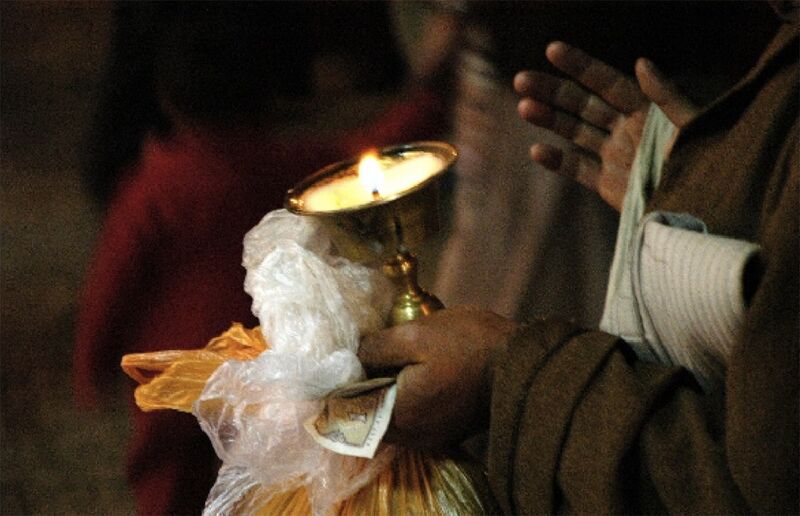
|jumbo-text=Chapter 10 ends the ''Bodhicaryāvatāra'' with a concluding prayer, in which Śāntideva makes a dedication for the benefit of others, a dedication for the benefit of oneself, and a dedication for the flourishing of the teachings.
|add-resources-text=
|add-resources-section={{AddResSection
|header=Learn About Śāntideva's Texts
|tiles=Bodhicaryāvatāra;Śikṣāsamuccaya
}}{{AddResSection
|header=Recommended Texts Related to Chapter 10
|tiles=Akṣayamatinirdeśasūtra;Sāgaramatiparipṛcchāsūtra;Spyod 'jug bsngo le'i nyams len zin tho;Samādhirājasūtra
}}{{AddResSection
|header=Recommended Books Related to Chapter 10
|tiles=The Blaze of Non-Dual Bodhicittas: A Manual for Study, Reflection and Meditation on Bodhicitta and the Wisdom of Emptiness;
}}{{AddResSection
|header=Recommended Articles Related to Chapter 10
|tiles=On the Pariṇāmanā Chapter of the Bodhicaryāvatāra;Breathing Life into Śāntideva's Words: Rago Choktrul's Integration of Tonglen and Dedication;
}}{{AddResSection
|header=Recommended Videos Related to Chapter 10
|tiles=Bodhicharyavatara - Chapter 10: Dedication: Teaching by Ringu Tulku (Part 1 of 8);Shantideva's Guide to the Bodhisattva's Way of Life by Ringu Tulku Rinpoche: Lesson 10. Dedication;Dedication from Shantideva's The Way of the Bodhisattva: Teaching by Venerable Khenpo Tenzin (Part 1);Shantideva's Guide to the Bodhisattva's Way of Life by Don Handrick, Ch. 9 (Part 2) & 10 (Part 9 of 9);


}}{{AddResSection
{{Jumbo
|header=Explore All Resources Related to Chapter 10
        |full-width=yes
|tilesRaw={{Tile
        |image=Butter lamp.jpg
|wrapper-classes=col-lg-6 mb-4
|text=Chapter 10 ends the ''Bodhicaryāvatāra'' with a concluding prayer, in which Śāntideva makes a dedication for the benefit of others, a dedication for the benefit of oneself, and a dedication for the flourishing of the teachings.
|image=Shantideva (Sahil Phopal) cropped.jpg  
|header=Chapter 10 Topics Page<br> <small></small>
|text=A complete list of sources related to ''Bodhicaryāvatāra'' chapter 10
|label=Topic
|page=Topics/BCA_Chapter_10
}}
}}{{AddResSection
|header=Key Terms for Chapter 10
|tilesRaw={{FloatingTermBox
|size=col-sm-6 col-md-4
|term=Puṇya
}}{{FloatingTermBox
|size=col-sm-6 col-md-4
|term=Pariṇāmanā
}}
}}
}}
|main-text=
<h3>Concise Summary of Essential Points</h3>
'''[[File:Bodhicaryāvatāra Chapter 10 precis.mp3|thumb|Listen Here! Read by Laura Swan. <small>[[Media:Bodhicaryāvatāra Chapter 10 precis.mp3|⬇ Download audio file]]</small>|left]]'''<br>
We come to the last chapter of the ''Bodhicaryāvatāra''.
   
   
At the beginning of the text, the first chapter sets the scene for the path of the bodhisattvas by presenting the benefits of developing the mind of enlightenment, bodhicitta. Inspired by the qualities of this vast vision, the wish to act only for the welfare of other beings, we start the process of generating bodhicitta where it has not previously arisen.


The middle eight chapters directly or indirectly cover the six perfections. These come under the umbrella of the other two stages of practice—preventing bodhicitta which has arisen from declining and the further and further increase of this mind of enlightenment.
The middle eight chapters directly or indirectly cover the six perfections. These come under the umbrella of the other two stages of practice—preventing the decline of arisen bodhicitta and ensuring its continual increase.


All these amazing practices of the bodhisattva, whether we train in them mentally or actually implement them practically, create a vast amount of merit. The immense positivity of this mindset, and the actions of body and speech which naturally stem from it, spur us on in our quest to be of maximum benefit for others.
All these amazing practices of the bodhisattva, whether we train in them mentally or actually implement them practically, create a vast amount of merit. The immense positivity of this mindset, and the actions of body and speech which naturally stem from it, spur us on in our quest to be of maximum benefit to others.


This positive potential is often talked about in terms of the two accumulations—the accumulation of merit [Link to GLOSSARY] and the accumulation of wisdom [Link to GLOSSARY]. The goal of all practices within Buddhism is to gather these two accumulations.
This positive potential is often talked about in terms of the two accumulations—the accumulation of merit and the accumulation of wisdom. The goal of all practices within Buddhism is to gather these two accumulations.


But this positive potential needs to be protected. It is like a seed which has been planted but which will wither if we neglect to water and nurture it. Likewise, we need to take great care with this huge positive potential that we have amassed. Just as we protect the newly unfolding bodhicitta from declining, so we must protect this vast collection of merit from going to waste.
But this positive potential needs to be protected. It is like a seed that has been planted but will wither if we neglect to water and nurture it. Likewise, we need to take great care with this huge positive potential that we have amassed. Just as we protect the newly unfolding bodhicitta from declining, so we must protect this vast collection of merit from going to waste.


The way praised as the most effective in protecting this merit is to dedicate it all, without any thought of our own reward, for the welfare of all beings, for both their temporary and ultimate happiness.
The way praised as most effective in protecting this merit is to dedicate it all—without any thought of our own reward—for the welfare of all beings and their temporary and ultimate happiness.


Here, at the end of the text, there is a series of extremely beautiful verses dedicating all of this virtue for the welfare of all the different kinds of living beings. These verses contain a series of dedicated vows (Skt. ''praṇidhāna''), almost like empathic prayers, that hope for the relief of other beings’ suffering and the accomplishment of their wish for all forms of happiness.
Here, at the end of the text, there is a series of extremely beautiful verses dedicating all of this virtue for the welfare of all the different kinds of living beings. These verses contain a series of dedicated vows (''praṇidhāna''), almost like empathic prayers, that hope for the relief of other beings' suffering and the accomplishment of their desire for all forms of happiness.


Śāntideva takes each realm of existence, starting with those reborn in the lower realms, and dedicates his merit to the beings in each of these realms so that they may immediately find relief from those particular sufferings.
Śāntideva takes each realm of existence, starting with those reborn in the lower realms, and dedicates his merit to the beings in each of these realms so that they might find immediate relief from their specific sufferings.


For each of those sufferings, he wishes from the depths of his heart that they be instantly gone and that those beings attain the very opposite, all the joys and happiness and ease. The beauty of the verses is matched only by the sincerity of Śāntideva's wishes.
For each of those sufferings, he wishes from the depths of his heart that they be instantly gone and that those beings attain the very opposite: joy, happiness, and ease. The beauty of the verses is matched only by the sincerity of Śāntideva's wishes.
{{PullBcaVerses|10.19}}
{{PullBcaVerses|10.23}}
{{PullBcaVerses|10.24}}
There are prayers that wish for the spiritual upliftment of sentient beings, that they may be wiser and more compassionate, and that they may more sincerely walk the path.
There are also prayers that wish for the spiritual upliftment of sentient beings, that they may be wiser and more compassionate, and that they may more sincerely walk the path.
{{PullBcaVerses|10.27}}
But there is no sense in the text of holding back from wishing beings more mundane forms of happiness. Personal safety, temporary peace, and even beauty are not beyond the hopes of the bodhisattva.
Line 41: Line 80:
Wealth and beauty are not things to be singularly chased, but it is not necessary to completely shun them either. Śāntideva is pragmatic. He understands that wealth or influence can do a huge amount of good in the world if they are used in ways that do not harm and if attachment to them is kept to a minimum.


Near the end of the chapter, there is a very famous verse which His Holiness the Dalai Lama quotes frequently as one of the sources of inspiration for his motivation to be of maximum welfare for all sentient life until all beings are liberated. The verse is as follows:
Near the end of the chapter, there is a very famous verse which His Holiness the Dalai Lama quotes frequently as one of the sources of inspiration for his motivation to be of maximum benefit to all sentient life until all beings are liberated.
{{PullBcaVerses|10.55}}
 
This verse encapsulates the vast commitment of bodhisattvas to the welfare of all beings. Their vow is to remain not just for this life but for all lives. As long as sentient beings remain trapped by afflictive emotions and karmic webs—continually cast back into the terrifying prison of samsara—the bodhisattvas pledge to remain to dispel their suffering.
This verse points out the extent of the commitment of bodhisattvas to the welfare of all beings. Their vow is to remain not just for this life but for all lives. As long as there are sentient beings trapped in the results of their afflictive emotions and karmic webs, continually thrown back into the terrifying prison of samsara, until then do the bodhisattvas pledge also to remain, to dispel the sufferings of all.


This last chapter is primarily an explanation of how to train in the generosity of giving away one's body, possessions, and roots of virtue for the purpose of others. Taking each object of dedication, they are transformed with strong aspiration into the temporary and ultimate objectives of prayer.


In his commentary to the root text, Gyaltsab Je condenses the intent of this whole chapter down into the following single verse:
In his commentary to the root text, Gyaltsap Je condenses the intent of this whole chapter down into the following single verse:
{{QuoteCite
{{QuoteCite
|quote-text=Whatever virtue there is from listening, contemplating and meditating,  
|quote-text=Whatever virtue there is from listening, contemplating and meditating,  
Line 54: Line 92:
To make all virtues inexhaustible
and to increase them, I adorn them effortfully with dedication.
This is the condensed explanation.<ref>Fedor Stracke, trans., ''The Entrance for the Children of the Conquerors - A Commentary on the Introduction to the Actions of Bodhisattvas. Chapter Ten: The Dedication: An Explanation of the Training in the Generosity of Giving Away Body, Possessions, and Roots of Virtue for the Purpose of Others'' (N.p.: HappyMonksPublication, 2016), 22, https://happymonkspublication.org/product/bodhisattvacharyavatara-chapter-1-10-commentary/.</ref>
This is the condensed explanation.<ref>[[Stracke, F.|Fedor Stracke]], trans., ''[[The Entrance for the Children of the Conquerors|The Entrance for the Children of the Conquerors - A Commentary on the Introduction to the Actions of Bodhisattvas, Chapter Ten: The Dedication: An Explanation of the Training in the Generosity of Giving Away Body, Possessions, and Roots of Virtue for the Purpose of Others]]'', by [[Rgyal tshab rje dar ma rin chen|Gyaltsab Rinpoche]] (N.p.: [[People/Happy_Monks_Publication|HappyMonksPublication]], 2016), 22, https://happymonkspublication.org/product/bodhisattvacharyavatara-chapter-1-10-commentary/.</ref>
}}
}}
   
   
The chapter concludes with a verse of dedication and thanks to Mañjuśrī, who was the empowering condition for Śāntideva to compose this text, and to his gurus, whose kindness inspired him to engage in the way of life of the bodhisattva. {{TextEndMarker}}


The chapter concludes with a verse of dedication and thanks to Mañjuśrī, who was the empowering condition for Śāntideva to compose this text, and to his gurus, whose kindness inspired him to engage in the way of life of the bodhisattva.
<h3>Introductory Essay</h3>
<h4>Dedication</h4>
Right at the beginning of the chapter, Śāntideva dedicates all of the virtue that he has amassed through the composition of this text.
{{PullBcaVerses|10.1}}
The text is, without exception, a manual which shows us how to engage in the path of the bodhisattvas. Therefore, Śāntideva dedicates all of the merit from its composition to every single living being so that they may be able to start out on their journey to full enlightenment.
Dedication of merit is part of an important and widespread Mahāyāna liturgy known as the ''anuttara-pūja'', the supreme worship. The arrangement of practices in this liturgy date back to around the second century CE. It is a traditional practice for accumulating merit and is often arranged in seven limbs or branches. These branches are paying homage, making offerings, confession of negativity, rejoicing in all good actions, requesting for teachings, beseeching the teachers to remain in the world and not pass into nirvana, and dedication.
The first three limbs form the content of chapter two, and the remaining four are covered in chapter three. The limb of dedication is dealt with most extensively in this last chapter of the ''Bodhicaryāvatāra''.<ref>Kate Crosby and Andrew Skilton's translation of the ''Bodhicaryāvatāra'' from the Sanskrit gives an excellent and very detailed explanation of this seven-limb prayer in their introduction to the second chapter. See Crosby and Skilton, trans., ''The Bodhicaryāvatāra: A Guide to the Buddhist Path to Awakening'' (Oxford: Oxford University Press, 1996), 9–13.</ref>
The branch of dedication is both a practice for further accumulation of the merit already accumulated and a way to offer all that up in the most positive way possible—for the greatest short- and long-term welfare of all sentient beings.
As Khenpo Kunpal says in his ''Nectar of Mañjuśrī's Speech'' in relation to the benefits of dedication:
{{QuoteCite
|quote-text=Dedication is the path of never-ending merit
For virtue is augmented and transformed thereby.<ref>Helena Blankleder and Wulstan Fletcher (Padmakara Translation Group), trans., ''The Nectar of Manjushri's Speech: A Detailed Commentary on Shantideva's Way of the Bodhisattva'', by Kunzang Pelden (Boston: Shambhala, 2010), 394. The source of this verse is not identified by either Khenpo Kunpal or the Padmakara Translation Committee.</ref>
}}
Dedication is a way of building virtue on top of virtue. The merit that we have already amassed from other virtuous practices is further increased and augmented in the very process of dedicating it so that all beings attain the highest enlightenment.
As it is said:
{{QuoteCite
|quote-text=If the wishing gem, the two accumulations,
Is not well polished with good aspirations,
The needed, wished-for fruit will not arise.
So finish off all your works with dedication.<ref>Blankleder and Fletcher, ''Nectar of Manjushri's Speech'', 393. The source of this verse is not identified by either Khenpo Kunpal or the Padmakara Translation Committee.</ref>
}}
In his commentary on this verse, Khenpo Kunpal also draws an important distinction here between dedication and aspirational prayers.
{{QuoteCite
|quote-text=Dedication and prayers of aspiration are crucially important. According to our tradition, the difference between dedication and aspiration should be understood in the following way. Dedication consists in pledging one's positive actions to perfect enlightenment for the sake of beings. By contrast, a prayer of aspiration is just the wish that beings themselves attain enlightenment; it is not connected with the performance of wholesome deeds.<ref>Blankleder and Fletcher, ''Nectar of Manjushri's Speech'', 393.</ref>
}}
Aspiration is more akin to the wish for something to happen, and it is not necessary to have been involved in the actual engagement in the deeds associated with it. Dedication, on the other hand, is done after the completion of positive acts to seal them off and make beneficial use of our merit.
Khenpo Kunpal then reminds us of the dangers of not capping off all of our positive actions with dedication and explains how dedicating all our virtue for the purpose of all beings attaining enlightenment protects that virtue from ever drying up.
{{QuoteCite
|quote-text=Failure to dedicate virtuous action to the good of others is a fault:
:Not to dedicate or to dedicate awry,<br>To brag to others or to have regrets:<br>Four things that lay your virtue waste. . . .
Accordingly, without the dedication of the roots of virtue, virtue comes to nothing, for there are many causes for its destruction, such as the occurrence of anger. By contrast, when virtue is dedicated to the attainment of enlightenment, it is as when drops of water fall into the ocean; they will remain for as long as the ocean lasts. Virtue dedicated to the attainment of buddhahood will not be spent until enlightenment is gained. Indeed, it will increase and actually take us there.<ref>Blankleder and Fletcher, ''Nectar of Manjushri's Speech'', 393–94. It is unclear whether the three-line verse here belongs to Khenpo Kunpal or whether he is borrowing it from some other source.</ref>
}}
}}
''The Sūtra Taught by Inexhaustible Intellect'' (Skt. ''Akṣayamatinirdeśasūtra'') reminds us of this important point—if our roots of virtue are properly dedicated, then they cannot be damaged or destroyed until we achieve enlightenment. 
{{QuoteCite
|quote-text=Just as there is no destruction or interruption, until the end of the aeon, of a drop of water that has fallen into a great ocean, there is no destruction or interruption whatsoever of the roots of virtue that have been dedicated to awakening until the bodhisatvas sit on the seat of awakening.<ref>Norwegian Institute of Palaeography and Historical Philology (PHI), trans., ''The Teaching of Akṣayamati'', ''Akṣaya­mati­nirdeśa'', Toh 175 (84000: Translating the Words of the Buddha, 2023), https://read.84000.co/translation/UT22084-060-004.html?#UT22084-060-004-128. For this passage in verse form, see Blankleder and Fletcher, ''The Nectar of Manjushri's Speech'', 394.</ref>
}}
<h4>Dedicating with the Context of Emptiness</h4>
It is often stated that the dedication of our merit should be sealed with the wisdom of emptiness. But how does that process of sealing virtue with emptiness take place? It means that at the time of the virtuous action, there should be an associated wisdom which is unstained or contaminated by concepts of inherent existence in relation to the three spheres [Link to GLOSSARY]. When performing an action, there are three spheres in relation to that action: (1) the agent who is performing the action, the "who," (2) the action itself, the "what," and (3) the person that the action is performed in relation to, the "to whom."
This concept of making dedication unstained by incorrect concepts about these three spheres is mentioned in many chapters of Candrakīrti's ''Entering the Middle Way'' (Skt. ''Madhyamakāvatāra''). For instance, in chapter 2, when discussing the divisions of the perfection of ethical discipline, Candrakīrti explains how the presence or absence of mistaken concepts about the reality of the three spheres at the time of the action itself determines whether the perfection (Skt. ''pāramitā'') qualifies as a mundane one or a supramundane one.
The following verse and commentary from Tsongkhapa's ''Illuminating the Intent'' illustrates this point:
{{QuoteCite
|quote-text=:Who relinquishes what and in relation to whom—<br>when any of these three is objectified,<br>such morality is described as mundane perfection;<br>free of attachment to these three is supramundane. (2.9)
When someone is incapable of ceasing the seed of objectifying the three as real—the person who relinquishes, what objects of abandonment he relinquishes, and in relation to which sentient beings he relinquishes—such morality is described as mundane perfection. If that very morality is free of attachment to these three spheres in the form of perceiving them as real—that is to say, if it is sustained by uncontaminated wisdom realizing them as not perceivable—it is supramundane perfection. Hence, by this distinction, morality is twofold.<ref>Thupten Jinpa, trans., ''Illuminating the Intent: An Exposition of Candrakīrti's Entering the Middle Way'', by Tsongkhapa (Somerville, MA: Wisdom Publications, 2021), 126–27.</ref>
}}
Longchenpa makes a subtle point that the capping off of positive activities ''after'' they are complete with the understanding of emptiness is tantamount to nihilism.<ref>Blankleder and Fletcher, ''Nectar of Manjushri's Speech'', 394.</ref>
This may sound a little strange to us, but his point is that, as much as possible, our positive actions should be informed with the understanding of the lack of intrinsic reality (i.e. the emptiness) of these three spheres at the time of performing the action and not at a later time, only after the action is already complete.
Crosby and Skilton explain that the verses of this tenth chapter are written in the form of a series of dedicatory vows (Skt. ''praṇidhāna'').  These are empathetic prayers wishing that the positive karmic energy we have built up is used for the fulfillment of the happiness of beings. This kind of dedicatory vow is first seen in chapter three.
{{PullBcaVerses|3.7}}
In that chapter Śāntideva makes vast but much more general dedications, that any virtue accrued may completely dispel every single suffering of every living being.<ref> Crosby and Skilton, ''Bodhicaryāvatāra'', 133.</ref>
We may wonder why there is a need to again mention the process of dedication at the end of the text when it has already been covered in earlier chapters. Indeed, why devote an entire chapter to dedication? Is this not unnecessary repetition? There are several reasons for this. Crosby and Skilton point out that in the third chapter what is being dedicated is the merit which arises from developing aspirational bodhicitta, whereas here, in the last chapter, having worked our way through the practices which actually implement the perfections, the merit that is being dedicated is that which arises from engaged bodhicitta [Link to GLOSSARY].<ref>Crosby and Skilton, ''Bodhicaryāvatāra'', 134.</ref> As Śāntideva himself says in the first chapter of this text:
{{PullBcaVerses|1.16}}
Just as there is a difference between having the wish to go somewhere and actually setting out on the road, so too there is a much greater difference in the positive potential which is created from just wishing that we and others attain enlightenment versus actively entering into the practices which lead us directly on that path.
Another reason for the process of dedication here is related to the structure of the six perfections. This last chapter comes at the end of an explanation of how to actively involve ourselves in each of the six perfections. So it is natural that once they are complete we take all that positive action and make sure that it is dedicated to the highest welfare.
Also, as mentioned above, if we can dedicate our accumulated virtue with the seal of the understanding of emptiness, which is covered in most detail in the preceding ninth chapter, then it will be of much greater strength and more resilient to the effects of negative states of mind such as anger.
And finally, it is natural in the flow of our practice that the most extensive dedication would come at the end of the text. As with all of our activities, it is good to rejoice in the positive things we have done. In a worldly context, we might put our feet up at the end of a day spent doing something satisfying and look back and rejoice in our efforts. In the same way, in the spiritual context where our lives are framed with the wish to be of benefit, we look back over what we have done and make sure that none of that positive potential goes to waste by making dedications.
The content of the dedications is also quite different from the earlier chapters. Here, in the last chapter, Śāntideva makes a series of much more specific dedications. He addresses the very particular sufferings of each of the different realms of existence and dedicates the merit he himself has accumulated, praying that those beings be immediately relieved of all that misery and experience the exact opposite of their current situation.
<h4>General Dedication That the Three Realms of Samsara Be Free of Suffering</h4>
With the understanding of the vital role that dedication plays in spiritual practice in general and, in particular, in the structure of the supreme worship which we mentioned in the earlier chapters, we can now look at the flow of this last chapter. Chapter 10 begins with several verses of general dedication that all the merit we have accumulated go to clearing away all the sufferings of beings across the whole of spectrum of samsara, with the wish also that, instead of suffering, all beings will have endless peace and happiness.
{{PullBcaVerses|10.2}}
{{PullBcaVerses|10.3}}
These are indeed lofty ideals. But we may wonder if it is really possible to accomplish these goals. In relation to these verses, the contemporary Kagyu master Thrangu Rinpoche explains how some aspirations we make can be fulfilled, while others cannot.
{{QuoteCite
|quote-text=Some aspirations that we make can be fulfilled and some cannot. For instance, if I wish for a beautiful flower to appear on my table, no flower will appear, no matter how long I pray for it. If, on the other hand, there is soil, a pot, some water and seeds, then there is a good chance that the prayer for a flower will be fulfilled.
So it is important that we don't just pray or wish that things come about by themselves, but we must also try the best to the best of our capabilities to develop the conditions for our wishes to flourish. In samsara the realm of sentient beings is vast. In all directions there are sentient beings and when there are sentient beings, there are disturbing emotions and suffering. Now we pray that all these sentient beings be endowed with perfect happiness, to continually enjoy this happiness which is beyond the happiness that occurs in samsara, and that they remain in perfect happiness from the virtue of our good activities.<ref>Thrangu Rinpoche, ''A Guide to the Bodhisattva's Way of Life of Shantideva: A Commentary by the Venerable Khenchen Thrangu Rinpoche'', trans. Ken and Katia Holmes and Thomas Doctor (Dharamsala: Library of Tibetan Works and Archives, 2016), 230.</ref>
}}
Here, the point being stressed is that we also have to take an active role in helping our lofty wishes come to fruition. It is not enough to just stand on the sidelines and pray. We must act to put the causes in place for the desired result to bear fruit.
<h4>Dedication for the Hell Realm Beings</h4>
Śāntideva then expounds a series of specific dedications to beings who are trapped in samsara with their own particular forms of suffering. He begins with the beings with the most intense suffering. Verses 4 to 15 are dedications for the benefit of beings who have been reborn in the absolute terror and misery of the hell realms. Śāntideva recognizes a variety of terrible states that beings experience in these realms, and he beautifully expresses his wish for their freedom from this excruciating pain.
{{PullBcaVerses|10.4}}
{{PullBcaVerses|10.5}}
Not only does he wish for their release from these sufferings but he makes a dedication that these sufferings will be transformed into their exact opposite—bliss and happiness. He imagines a hail of weapons and lava transformed into a rain of flowers, the pits of hell becoming fragrant lotus ponds, and in the place of iron hills which crush beings on all sides, he imagines instead temples where the buddhas dwell.
<h4>Dedication for the Animal Realm Beings</h4>
Having dedicated his merit to the welfare of beings in the various hell realms, in verse 16 Śāntideva moves on to the animal realm.
{{QuoteCite
|quote-text=And may the stooping animals be freed
From fear of being preyed upon, each other’s food. (10.16ab)<ref>Wulstan Fletcher and Helena Blankleder (Padmakara Translation Group), trans., ''The Way of the Bodhisattva: A Translation of the Bodhicharyāvatāra'', by Śāntideva (Boston: Shambhala Publications, 2006), 165.</ref>
}}
It is said that the animal realm is generally characterized by ignorance. There are certain exceptional cases where animals show unique mental capabilities, but in general animals lack sophisticated cognitive abilities. Crucially, they are nearly always unaware of any consequence to their actions. They are therefore unable to comprehend what would be necessary to abandon to follow the path to liberation and what actions to take up in service of the path.
Some animals have been born through unusual karmic ripening into situations of great comfort and luxury. But the majority of the wild world is usually prey to uninterrupted suffering. The domesticated animals we see around us, especially the pets of humans, lead lives which are not representative of life in the animal realm. In the wild, most creatures are in constant terror of losing their lives. The threat of direct predators is ever-present, and we see with our own eyes how creatures are in a constant state of agitation. They concern themselves only with immediate needs, such as food, shelter, and mates. In addition, these days we see the new and ever-increasing threat of human impact on the natural habitats of the world, with many species being brought closer and closer to extinction. Here, Śāntideva encourages us to dedicate all our merit for these helpless beings trapped in their animal existence, and particularly from the most direct threat of all, the threat of losing their own life.
<h4>Dedication for the Hungry Ghosts</h4>
It is said that coveting the wealth and possessions of others and being miserly with one's own is what produces rebirth as a hungry ghost, or ''preta''. The next verses dedicate all accumulated merit to the relief of suffering for beings in the hungry-ghost realm.
{{QuoteCite
|quote-text=And may the famished spirits have such joy
As those who dwell within the northern continent. (10.16cd)
}}
{{PullBcaVerses|10.17}}
Here, according to traditional Buddhist cosmology, the northern continent (Skt. Uttarakuru) refers to the continent to the north of Mount Sumeru, the sacred five-peaked mountain considered to be the center of all the physical, metaphysical, and spiritual universes. (Our world, Jambudvīpa, is the southern continent.) The northern continent is said to be a place of great harmony and prosperity. There, life is one of perfect pleasure and the people of gentle and virtuous mind, and therefore no one indulges in the ten negative actions.
<h4>Dedication for Human Beings</h4>
Śāntideva then shifts the focus of his dedicatory vows to the beings who inhabit the more fortunate migrations (Skt. ''sugati''). But, of course, though a being may have had the good fortune to avoid the lower realms, and even to have the fortune of a human birth, there are still many kinds of sufferings that they face throughout their lives.
The next sequence of poetic verses, backed up as they are with Śāntideva's deep compassion, are among some of the most stirring in religious literature.
{{PullBcaVerses|10.20}}
{{PullBcaVerses|10.21}}
{{PullBcaVerses|10.22}}
{{PullBcaVerses|10.23}}
{{PullBcaVerses|10.24}}
{{PullBcaVerses|10.25}}
{{PullBcaVerses|10.26}}
{{PullBcaVerses|10.27}}
The verses themselves are self-explanatory, but one can feel the deep compassion and emotions, the empathy and understanding that Śāntideva has for the whole gamut of human beings' sufferings. The verses are reminiscent of lines from a poem by the famous Japanese Buddhist master and hermit-poet Ryōkan, who said the following:
{{QuoteCite
|quote-text=O, that my priest's robe were wide enough
to gather up all the suffering people
in this floating world.<ref>John Stevens, trans. ''One Robe, One Bowl: The Zen Poetry of Ryōkan'' (Boston: Weatherhill, 2014), 75.</ref>
}}
It is important, however, that dedications are not just made for freedom from the manifest sufferings. Eventually, to avoid all these sufferings mentioned above, sentient beings will have to align themselves with the spiritual path and strive to overcome their afflictions and ignorance. That is the only hope of avoiding suffering in the long term. Therefore, Śāntideva also dedicates his merit so that sentient beings will immediately leave aside their nonvirtue and engage in the path that leads to perfect peace.
{{PullBcaVerses|10.31}}
{{PullBcaVerses|10.32}}
There are also dedications for the monastic communities. The monastic communities form an extremely important role in the transmission of the Dharma. Śāntideva therefore makes fervent prayers that monastic institutions of all kinds will flourish and that they will always have harmony.
{{PullBcaVerses|10.42}}
And for those monks who choose a life away from large monastic centers and seek the solitude recommended in chapter 8, he prays that they find perfect places in which their meditation can proceed without interference.
{{PullBcaVerses|10.43}}
<h4>Dedication of the Virtue for Perfecting the Supreme Intention</h4>
In verses 49 and 50, Śāntideva encourages us to dedicate our merit so that the great bodhisattvas will be able to fulfill their highest intentions, to bring beings to liberation and enlightenment, in exactly the way that they make their prayers and wishes.
{{PullBcaVerses|10.49}}
With respect to this verse, the contemporary Sakya master Khenpo Kunga Wangchuk explains that our merit is dedicated not toward a living being as such but toward the mindset that is the perfection of the highest of all intentions, the wish to attain the enlightened state for the welfare of all beings.
{{QuoteCite
|quote-text=May the bodhisattvas residing on the tenth ground achieve everything, both in the short- and long-term, exactly according to the ground of their intention, that is for the purpose of migrator beings. May beings also obtain resources, abilities, and results, and be endowed with them in accord with the intent of the guardians, the perfect buddha bhagavāns, and their heart disciples the bodhisattvas, the intent that is for the sake of the temporary and ultimate welfare of migrator beings.<ref>Khenpo Kunga Wangchuk, ''A Commentary on the Bodhicaryāvatāra, Theg pa chen po'i mdo'i dgongs don gyi bstan bcos byang chub sems dpa'i spyod pa la 'jug pa zhes bya ba'i 'grel pa'' (Taiwan: Chos kyi blo gros rtsom sgrig khang, 2016), 823.</ref>
}}
Although śrāvakas and pratyekabuddhas [Link to GLOSSARY] gain their liberation from samsara through understanding the profound truth of dependent arising, and although they do not hold this precious intent of wishing to attain complete enlightenment for the welfare of all beings, Śāntideva makes a prayer that they will be endowed with the bliss that occurs when suffering is brought to an end and that they attain the great bliss of ultimate and perfect buddhahood.
{{QuoteCite
|quote-text=And may the Hearers and Pratyekabuddhas
Gain their perfect happiness. (10.50)
}}
<h4>Dedication of Virtue for One's Own Sake</h4>
With such focus on others on the bodhisattva path, we may forget to make positive and beneficial prayers and aspirations for ourselves. Here, in verses 51 to 56,  Śāntideva encourages us to also dedicate for our own sake, but this is never for self-indulgent and worldly motives. It is for the positive purpose of being able to have conducive conditions for progress on our spiritual path.
{{PullBcaVerses|10.51}}
Guided by Mañjughoṣa, Śāntideva wishes that throughout all his lifetimes, until he reaches the first bodhisattva ground of perfect joy, he will always retain the memory of his previous existences. Thus, this will help him to maintain a strong conviction in the karmic law of cause and effect and encourage him to never forget bodhicitta.
In relation to the last two lines of the verse, Khenpo Kunpal explains the virtues of monastic life compared to that of a lay person.
{{QuoteCite
|quote-text=He prays that he might "always embrace the perfect discipline of monastic ordination." For whereas to be a householder is the basis of all the faults that bring ruin in this and future lives, to go forth into homelessness is the ground and basis of all excellent qualities and benefits.<ref>Blankleder and Fletcher, ''Nectar of Manjushri's Speech'', 429.</ref>
}}
Furthermore, Khenpo Kunpal quotes from the ''The King of Samādhis Sūtra'' (Skt. ''Samādhi­rāja­sūtra'') to encourage us to realize how incredible it is in this degenerate era to have virtuous thoughts and the wish to follow the bodhisattva path, and especially to wish to take ordination.
{{QuoteCite
|quote-text=In the present age, if one takes and observes just one of the precepts of the Buddha's teaching, one will acquire great merit and benefits. This has been described in the ''Samadhiraja-sutra'':
:Those who for as many aeons trillionfold<br>As grains upon the Ganga's sandy shore,<br>Worship with devoted mind, with food and drink,<br>And lamps and flowers, parasols and banners,<br>A thousand million Buddhas—<br>All are in their merits utterly surpassed<br>By those who—at this time when sacred Dharma perishes<br>And when the teaching of the Tathagata wanes—<br>Will practice day and night a single precept.
This being so, there is no need to speak of the result that will occur when one embraces monastic ordination and observes all the precepts without impairment. One will accomplish perfectly the goals of this and future existences both for oneself and others. The benefits that ensue are inconceivable.<ref>Blankleder and Fletcher, ''Nectar of Manjushri's Speech'', 429-30.</ref>
}}
Śāntideva goes on to pray that he will remain healthy for the sake of practice, living a life sustained only by simple alms. But he also prays that, until he reaches buddhahood, he will have a peaceful living environment which is supportive of the practice of virtue.
{{PullBcaVerses|10.52}}
There then comes one of the most famous verses in the whole of ''The Way of the Bodhisattva'' and one that is quoted regularly by His Holiness the Dalai Lama as one of the greatest inspirations of his life:
{{PullBcaVerses|10.55}}
This beautiful stanza sums up the solemn and heartfelt pledge of bodhisattvas: as long as beings remain trapped in the cycle of samsaric existence, they themselves will also remain in order to help drive away their pain and suffering and guide them on the path of wisdom that leads to liberation from all suffering.
<h4>Dedication for the Propagation and Prosperity of the Buddha's Doctrine</h4>
The chapter concludes with Śāntideva's verse of dedication to Mañjughoṣa and to his gurus. Mañjuśrī's kindness enabled Śāntideva to give up all his attachments to worldly life and to make sincere effort in the virtuous practices of learning, contemplation, and meditation.
{{PullBcaVerses|10.58}}
Particularly because of Mañjuśrī, the wish to cultivate bodhicitta and the urge to compose the ''Bodhicaryāvatāra'' arose in Śāntideva, and so he pays his respects and offers his body, speech, and mind up in homage. In Crosby and Skilton's translation from the Sanskrit, we read the following:
{{QuoteCite
|quote-text=I bow down to Mañjughoṣha
through whose inspiration my mind turns to good.
I honour the spiritual friend
through whose inspiration it grows strong. (10.58)<ref>Crosby and Skilton, ''Bodhicaryāvatāra'', 143.</ref>
}}
This translation gives the feel of how Mañjughoṣa's influence was the initial cause that helped turn Śāntideva's mind to good. Once turned in a positive direction, his gurus then helped him to build on this inspiration and make firm in his mind the realizations related to hearing, contemplation, and meditation.
Khenpo Kunpal says the following of this homage to the gurus:
{{QuoteCite
|quote-text=In the same vein he prostrates respectfully to the holy beings thanks to whose kindness he was able to take monastic ordination and receive the bhikshu vows—the same beings who spread and propagate the Dharma of transmission and realization, namely, the ordaining abbot Jinadeva and the other teachers of the glorious monastery of Nalanda and elsewhere. To all his spiritual teachers, therefore, Shantideva bows down.<ref>Blankleder and Fletcher, ''Nectar of Manjushri's Speech'', 436.</ref>
}}
This provides us with the link back to Śāntideva's history—his gurus and the tradition of Nalanda. Khenpo Kunpal continues by saying that
{{QuoteCite
|quote-text=in the same way, we too should consider as our teachers all those through whose kindness our minds have absorbed some of the qualities of the Dharma of transmission and realization. And remembering their kindness, we too should respectfully reverence them in thought, word, and deed.<ref>Blankleder and Fletcher, ''Nectar of Manjushri's Speech'', 436.</ref>
}}
We should always be reminded that while these are personal reflections of Śāntideva on his experiences of training, they are also an indirect form of advice for ourselves. This is true of the text as a whole. In the first chapter, although he says the text was only composed to familiarize his mind with the topics, inadvertently his audience also gains a complete instruction on the way of the bodhisattva.
For us also, it is important to continually remember the kindness of our teachers. Through them we have received the inspiration to turn our minds toward the Buddhist path. And it is through their continued support and guidance that we traverse the road that leads to buddhahood.

Latest revision as of 15:39, 12 August 2026


Chapter 10 - Dedication
Summary
Listen to this page
| Previous Summary | Last Chapter


Chapter 10 ends the Bodhicaryāvatāra with a concluding prayer, in which Śāntideva makes a dedication for the benefit of others, a dedication for the benefit of oneself, and a dedication for the flourishing of the teachings.

Concise Summary of Essential Points


We come to the last chapter of the Bodhicaryāvatāra.

At the beginning of the text, the first chapter sets the scene for the path of the bodhisattvas by presenting the benefits of developing the mind of enlightenment, bodhicitta. Inspired by the qualities of this vast vision, the wish to act only for the welfare of other beings, we start the process of generating bodhicitta where it has not previously arisen.

The middle eight chapters directly or indirectly cover the six perfections. These come under the umbrella of the other two stages of practice—preventing the decline of arisen bodhicitta and ensuring its continual increase.

All these amazing practices of the bodhisattva, whether we train in them mentally or actually implement them practically, create a vast amount of merit. The immense positivity of this mindset, and the actions of body and speech which naturally stem from it, spur us on in our quest to be of maximum benefit to others.

This positive potential is often talked about in terms of the two accumulations—the accumulation of merit and the accumulation of wisdom. The goal of all practices within Buddhism is to gather these two accumulations.

But this positive potential needs to be protected. It is like a seed that has been planted but will wither if we neglect to water and nurture it. Likewise, we need to take great care with this huge positive potential that we have amassed. Just as we protect the newly unfolding bodhicitta from declining, so we must protect this vast collection of merit from going to waste.

The way praised as most effective in protecting this merit is to dedicate it all—without any thought of our own reward—for the welfare of all beings and their temporary and ultimate happiness.

Here, at the end of the text, there is a series of extremely beautiful verses dedicating all of this virtue for the welfare of all the different kinds of living beings. These verses contain a series of dedicated vows (praṇidhāna), almost like empathic prayers, that hope for the relief of other beings' suffering and the accomplishment of their desire for all forms of happiness.

Śāntideva takes each realm of existence, starting with those reborn in the lower realms, and dedicates his merit to the beings in each of these realms so that they might find immediate relief from their specific sufferings.

For each of those sufferings, he wishes from the depths of his heart that they be instantly gone and that those beings attain the very opposite: joy, happiness, and ease. The beauty of the verses is matched only by the sincerity of Śāntideva's wishes.

And may the naked now be clothed, And all the hungry eat their fill. And may those parched with thirst receive Pure waters and delicious drink.

[ src citation ]The Way of the Bodhisattva (2006)
Page(s) 166
Blankleder, Helena, and Wulstan Fletcher (Padmakara Translation Group), trans. The Way of the Bodhisattva: A Translation of the Bodhicharyāvatāra. By Śāntideva. Rev. ed. Shambhala Classics. Boston: Shambhala Publications, 2006.
[ toggle Tib. ]
[ tib / wyl ]

གཅེར་བུ་རྣམས་ཀྱིས་གོས་དག་དང་། །

བཀྲེས་པ་རྣམས་ཀྱིས་ཟས་དང་ནི། ། སྐོམ་པ་རྣམས་ཀྱིས་ཆུ་དག་དང་། །

བཏུང་བ་ཞིམ་པོ་ཐོབ་པར་ཤོག །

gcer bu rnams kyis gos dag dang /_/

bkres pa rnams kyis zas dang ni/_/ skom pa rnams kyis chu dag dang /_/

btung ba zhim po thob par shog_/

May travelers upon the road Find happiness no matter where they go, And may they gain, without the need of toil, The goals on which they set their hearts.

[ src citation ]The Way of the Bodhisattva (2006)
Page(s) 166
Blankleder, Helena, and Wulstan Fletcher (Padmakara Translation Group), trans. The Way of the Bodhisattva: A Translation of the Bodhicharyāvatāra. By Śāntideva. Rev. ed. Shambhala Classics. Boston: Shambhala Publications, 2006.
[ toggle Tib. ]
[ tib / wyl ]

འགྲོན་པོ་དག་ནི་ཐམས་ཅད་ལ། །

ཕྱོགས་རྣམས་ཐམས་ཅད་བདེ་བར་ཤོག ། གང་གི་དོན་དུ་འགྲོ་བྱེད་པ། །

དེ་འབད་མི་དགོས་འགྲུབ་གྱུར་ཅིག །

gron po dag ni thams cad la/_/

phyogs rnams thams cad bde bar shog_/ gang gi don du 'gro byed pa/_/

de 'bad mi dgos 'grub gyur cig_/

May those who put to sea in boat or ship, Attain the ports that they desire, And may they safely come to shore And sweet reunion with their kith and kin.[p.167]The Way of the Bodhisattva (2006)
Blankleder, Helena, and Wulstan Fletcher (Padmakara Translation Group), trans. The Way of the Bodhisattva: A Translation of the Bodhicharyāvatāra. By Śāntideva. Rev. ed. Shambhala Classics. Boston: Shambhala Publications, 2006.

[ src citation ]The Way of the Bodhisattva (2006)
Page(s) 166
Blankleder, Helena, and Wulstan Fletcher (Padmakara Translation Group), trans. The Way of the Bodhisattva: A Translation of the Bodhicharyāvatāra. By Śāntideva. Rev. ed. Shambhala Classics. Boston: Shambhala Publications, 2006.
[ toggle Tib. ]
[ tib / wyl ]

གྲུ་དང་གྲུ་ཆེན་ཞུགས་པ་རྣམས། །

ཡིད་ལ་བསམ་པ་གྲུབ་གྱུར་ཏེ། །[p.129]Byang chub sems dpa'i spyod pa la 'jug pa rtsa ba dang 'grel pa (1990)
Slob dpon zhi ba lha and Mkhan po kun dpal. Byang chub sems dpa'i spyod pa la 'jug pa rtsa ba dang 'grel pa. Khreng tu'u: Si khron mi rigs dpe skrun khang, 1990. Buda by BDRC Logo.jpg
ཆུ་ཡི་ངོགས་སུ་བདེར་ཕྱིན་ནས། །

གཉེན་དང་ལྷན་ཅིག་དགའ་བར་ཤོག །

gru dang gru chen zhugs pa rnams/_/

yid la bsam pa grub gyur te/_/[p.129]Byang chub sems dpa'i spyod pa la 'jug pa rtsa ba dang 'grel pa (1990)
Slob dpon zhi ba lha and Mkhan po kun dpal. Byang chub sems dpa'i spyod pa la 'jug pa rtsa ba dang 'grel pa. Khreng tu'u: Si khron mi rigs dpe skrun khang, 1990. Buda by BDRC Logo.jpg
chu yi ngogs su bder phyin nas/_/

gnyen dang lhan cig dga' bar shog_/

There are also prayers that wish for the spiritual upliftment of sentient beings, that they may be wiser and more compassionate, and that they may more sincerely walk the path.

May all be freed from states of bondage, May they be possessed of wisdom, faith, and love. With perfect sustenance and conduct, May they always have remembrance of their former lives.

[ src citation ]The Way of the Bodhisattva (2006)
Page(s) 167
Blankleder, Helena, and Wulstan Fletcher (Padmakara Translation Group), trans. The Way of the Bodhisattva: A Translation of the Bodhicharyāvatāra. By Śāntideva. Rev. ed. Shambhala Classics. Boston: Shambhala Publications, 2006.
[ toggle Tib. ]
[ tib / wyl ]

མི་དལ་ཀུན་ལས་ཐར་བ་དང་། །

དད་དང་ཤེས་རབ་བརྩེར་ལྡན་ཞིང་། ། ཟས་དང་སྤྱོད་པ་ཕུན་ཚོགས་ནས། །

རྟག་ཏུ་ཚེ་རབས་དྲན་གྱུར་ཅིག །

mi dal kun las thar ba dang /_/

dad dang shes rab brtser ldan zhing /_/ zas dang spyod pa phun tshogs nas/_/

rtag tu tshe rabs dran gyur cig_/

But there is no sense in the text of holding back from wishing beings more mundane forms of happiness. Personal safety, temporary peace, and even beauty are not beyond the hopes of the bodhisattva.

May those who lose their way and wander In the wild find fellow travelers. And safe from threat of thieves and savage beasts, May they be tireless and their journey light.

[ src citation ]The Way of the Bodhisattva (2006)
Page(s) 167
Blankleder, Helena, and Wulstan Fletcher (Padmakara Translation Group), trans. The Way of the Bodhisattva: A Translation of the Bodhicharyāvatāra. By Śāntideva. Rev. ed. Shambhala Classics. Boston: Shambhala Publications, 2006.
[ toggle Tib. ]
[ tib / wyl ]

མྱ་ངན་ལམ་གོལ་འཁྱམས་པ་རྣམས། །

འགྲོན་པོ་དག་དང་ཕྲད་གྱུར་ནས། ། ཆོམ་རྐུན་སྟག་སོགས་འཇིགས་མེད་པར། །

མི་ངལ་བདེ་བླག་འདོང་བར་ཤོག །

mya ngan lam gol 'khyams pa rnams/_/

'gron po dag dang phrad gyur nas/_/ chom rkun stag sogs 'jigs med par/_/

mi ngal bde blag 'dong bar shog_/

May children and the aged, and all those without protection Wandering in the fearful, pathless wastes, Who fall asleep unconscious of their peril, Have pure celestial beings as their guardians.

[ src citation ]The Way of the Bodhisattva (2006)
Page(s) 167
Blankleder, Helena, and Wulstan Fletcher (Padmakara Translation Group), trans. The Way of the Bodhisattva: A Translation of the Bodhicharyāvatāra. By Śāntideva. Rev. ed. Shambhala Classics. Boston: Shambhala Publications, 2006.
[ toggle Tib. ]
[ tib / wyl ]

དགོན་སོགས་ལམ་མེད་ཉམ་ང་བར། །

བྱིས་པ་རྒན་པོ་མགོན་མེད་པ། ། གཉིད་ལོག་མྱོས་ཤིང་རབ་མྱོས་རྣམས། །

ལྷ་དག་སྲུང་བ་བྱེད་པར་ཤོག །

dgon sogs lam med nyam nga bar/_/

byis pa rgan po mgon med pa/_/ gnyid log myos shing rab myos rnams/_/

lha dag srung ba byed par shog_/

May everyone have unrestricted wealth Just like the treasury of space, Enjoying it according to their wish, Without a trace of harm or enmity.

[ src citation ]The Way of the Bodhisattva (2006)
Page(s) 167
Blankleder, Helena, and Wulstan Fletcher (Padmakara Translation Group), trans. The Way of the Bodhisattva: A Translation of the Bodhicharyāvatāra. By Śāntideva. Rev. ed. Shambhala Classics. Boston: Shambhala Publications, 2006.
[ toggle Tib. ]
[ tib / wyl ]

ཐམས་ཅད་ནམ་མཁའ་མཛོད་བཞིན་དུ། །

ལོངས་སྤྱོད་ཆད་པ་མེད་པར་ཤོག ། རྩོད་པ་མེད་ཅིང་འཚེ་མེད་པར། །

རང་དབང་དུ་ནི་སྤྱོད་པར་ཤོག །

thams cad nam mkha' mdzod bzhin du/_/

longs spyod chad pa med par shog_/ rtsod pa med cing 'tshe med par/_/

rang dbang du ni spyod par shog_/

May beings destitute of splendor, Be magnificent and bright. And those who suffer from deformity Acquire great beauty and perfection.

[ src citation ]The Way of the Bodhisattva (2006)
Page(s) 167
Blankleder, Helena, and Wulstan Fletcher (Padmakara Translation Group), trans. The Way of the Bodhisattva: A Translation of the Bodhicharyāvatāra. By Śāntideva. Rev. ed. Shambhala Classics. Boston: Shambhala Publications, 2006.
[ toggle Tib. ]
[ tib / wyl ]

སེམས་ཅན་གཟི་བརྗིད་ཆུང་ངུ་གང་། །

དེ་དག་གཟི་བརྗིད་ཆེན་པོར་ཤོག ། དཀའ་ཐུབ་ཅན་གང་གཟུགས་ངན་པ། །

གཟུགས་བཟང་ཕུན་སུམ་ཚོགས་གྱུར་ཅིག །

sems can gzi brjid chung ngu gang /_/

de dag gzi brjid chen por shog_/ dka' thub can gang gzugs ngan pa/_/

gzugs bzang phun sum tshogs gyur cig_/

Wealth and beauty are not things to be singularly chased, but it is not necessary to completely shun them either. Śāntideva is pragmatic. He understands that wealth or influence can do a huge amount of good in the world if they are used in ways that do not harm and if attachment to them is kept to a minimum.

Near the end of the chapter, there is a very famous verse which His Holiness the Dalai Lama quotes frequently as one of the sources of inspiration for his motivation to be of maximum benefit to all sentient life until all beings are liberated.

And now as long as space endures, As long as there are beings to be found, May I continue likewise to remain To drive away the sorrows of the world.

[ src citation ]The Way of the Bodhisattva (2006)
Page(s) 171
Blankleder, Helena, and Wulstan Fletcher (Padmakara Translation Group), trans. The Way of the Bodhisattva: A Translation of the Bodhicharyāvatāra. By Śāntideva. Rev. ed. Shambhala Classics. Boston: Shambhala Publications, 2006.
[ toggle Tib. ]
[ tib / wyl ]

ཇི་སྲིད་ནམ་མཁའ་གནས་པ་དང་། །

འགྲོ་བ་ཇི་སྲིད་གནས་གྱུར་པ། ། དེ་སྲིད་བདག་ནི་གནས་གྱུར་ནས། །

འགྲོ་བའི་སྡུག་བསྔལ་སེལ་བར་ཤོག །

ji srid nam mkha' gnas pa dang /_/

'gro ba ji srid gnas gyur pa/_/ de srid bdag ni gnas gyur nas/_/

'gro ba'i sdug bsngal sel bar shog_/

This verse encapsulates the vast commitment of bodhisattvas to the welfare of all beings. Their vow is to remain not just for this life but for all lives. As long as sentient beings remain trapped by afflictive emotions and karmic webs—continually cast back into the terrifying prison of samsara—the bodhisattvas pledge to remain to dispel their suffering.

This last chapter is primarily an explanation of how to train in the generosity of giving away one's body, possessions, and roots of virtue for the purpose of others. Taking each object of dedication, they are transformed with strong aspiration into the temporary and ultimate objectives of prayer.

In his commentary to the root text, Gyaltsap Je condenses the intent of this whole chapter down into the following single verse:

Whatever virtue there is from listening, contemplating and meditating, Whether it is the mere virtue of prostration or offering, To make all virtues inexhaustible and to increase them, I adorn them effortfully with dedication. This is the condensed explanation.[1]

The chapter concludes with a verse of dedication and thanks to Mañjuśrī, who was the empowering condition for Śāntideva to compose this text, and to his gurus, whose kindness inspired him to engage in the way of life of the bodhisattva.

More on this chapter
Chapter 10 ends the Bodhicaryāvatāra with a concluding prayer, in which Śāntideva makes a dedication for the benefit of others, a dedication for the benefit of oneself, and a dedication for the flourishing of the teachings.
Detailed Introduction

Additional resources

Learn About Śāntideva's Texts

 
Bodhicaryāvatāra
The Way of the Bodhisattva
An "Introduction to Bodhisattva Practice," the Bodhisattvacaryāvatāra is a poem about the path of a bodhisattva, in ten chapters, written by the Indian Buddhist Śāntideva (fl. c. 685–763). One of the masterpieces of world literature, it is a core text of Mahāyāna Buddhism and continues to be taught, studied, and commented upon in many languages and by many traditions around the world. The main subject of the text is bodhicitta, the altruistic aspiration for enlightenment, and the path and practices of the bodhisattva, the six perfections (pāramitās). The text forms the basis of many contemporary discussions of Buddhist ethics and philosophy.
Text
 
Śikṣāsamuccaya
The Compendium of Training
The Compendium of Training is an anthology of excerpts from the Mahāyāna sūtras that discusses the bodhisattva path and principles in much greater length and detail., Śikṣāsamuccaya (T. Bslab pa kun las btus pa; C. Dasheng ji pusa xue lun; J. Daijōjū bosatsugakuron; K. Taesǔng chip posal hak non 大乘集菩薩學論). In Sanskrit, "Compendium of Training," a work by the eighth-century Indian Mahāyāna master Śāntideva. It consists of twenty-seven stanzas on the motivation and practice of the bodhisattva, including bodhicitta, the six perfections (pāramitā), the worship of buddhas and bodhisattvas, the benefits of renunciation, and the peace derived from the knowledge of emptiness (śūnyatā). The topic of each of the stanzas receives elaboration in the form of a prose commentary by the author as well as in illustrative passages, often quite extensive, drawn from a wide variety of Mahāyāna sūtras. Some ninety-seven texts are cited in all, many of which have been lost in their original Sanskrit, making the Śikṣāsamuccaya an especially important source for the textual history of Indian Buddhism. These citations also offer a window into which sūtras were known to a Mahāyāna author in eighth-century India. The digest of passages that Śāntideva provides was repeatedly drawn upon by Tibetan authors in their citations of sūtras. Although Śāntideva's Bodhicaryāvatāra and Śikṣāsamuccaya both deal with similar topics, the precise relation between the two texts is unclear. Several of the author's verses appear in both texts and some of the sūtra passages from the Śikṣāsamuccaya also appear in the Bodhicaryāvatāra. One passage in the Bodhicaryāvatāra also refers readers to the Śikṣāsamuccaya, but this line does not occur in the Dunhuang manuscript of the text and may be a later interpolation. (Source: "Śikṣāsamuccaya." In The Princeton Dictionary of Buddhism, 821. Princeton University Press, 2014. http://www.jstor.org/stable/j.ctt46n41q.27.)
Text

Recommended Texts Related to Chapter 10

 
The bodhisatva Akṣayamati arrives in our world from the buddha field of the buddha Samantabhadra. In response to Śāriputra's questions, Akṣayamati gives a discourse on the subject of imperishability. In all, Akṣayamati explains that there are eighty different aspects of the Dharma that are imperishable. When he has given this explanation, the Buddha praises it and declares it worthy of being spread by the countless bodhisatvas gathered there to listen. (Source: 84000)
Text
 
Heralded by a miraculous flood, the celestial bodhisattva Sāgaramati arrives in Rājagṛha to engage in a Dharma discussion with Buddha Śākyamuni. He discusses an absorption called "The Pristine and Immaculate Seal" and many other subjects relevant to bodhisattvas who are in the process of developing the mind of awakening and practicing the bodhisattva path. The sūtra strongly advises that bodhisattvas not shy away from the afflictive emotions of beings—no matter how unpleasant they may be—and that insight into these emotions is critical for a bodhisattva's compassionate activity. The sūtra deals with the preeminence of wisdom and non-grasping on the path. In the end, as a teaching on how to deal with māras, the sūtra illuminates the many pitfalls possible on the path of the Great Vehicle. (Source: 84000)
Text
 
Spyod 'jug bsngo le'i nyams len zin tho
This is an instruction text to train one's mind in The Dedication Chapter of the Bodhicaryāvatāra. Type of Commentary: notes for practicing how to dedicate according to the Bodhicaryāvatāra
Length: 9
Tradition: Nyingma
Text
 
This sūtra, much quoted in later Buddhist writings for its profound statements especially on the nature of emptiness, relates a long teaching given by the Buddha mainly in response to questions put by a young layman, Candraprabha. The samādhi that is the subject of the sūtra, in spite of its name, primarily consists of various aspects of conduct, motivation, and the understanding of emptiness; it is also a way of referring to the sūtra itself. The teaching given in the sūtra is the instruction to be dedicated to the possession and promulgation of the samādhi, and to the necessary conduct of a bodhisattva, which is exemplified by a number of accounts from the Buddha's previous lives. Most of the teaching takes place on Vulture Peak Mountain, with an interlude recounting the Buddha's invitation and visit to Candraprabha's home in Rājagṛha, where he continues to teach Candraprabha before returning to Vulture Peak Mountain. In one subsequent chapter the Buddha responds to a request by Ānanda, and the text concludes with a commitment by Ānanda to maintain this teaching in the future. (Source: 84000)
Text

Recommended Books Related to Chapter 10

 
The Blaze of Non-Dual Bodhicittas (Damdul 2019)
The initial idea for this study, reflection and meditation manual took seed in 2004, when I first started to translate for His Holiness the Dalai Lama. I found many of the Nalanda texts frequently taught by His Holiness to be very useful; it occurred to me that a compilation of these in the English language would greatly benefit many seekers who might otherwise lack the opportunity to access them. It is only now, after many years of sharing the working drafts of this manual at Tibet House in New Delhi, as well as in many other places that the idea has finally come to fruition.

The book is divided into five parts:

I. Daily Recitation and Practice
II. Selected Texts for Study, Reflection and Meditation
III. Additional Prayers, Vows and Commitments
IV. Daily Dedication Prayers
V. Appendix

Part I and Part IV serve as a useful guide for all, who have an inclination towards dharma practice, but do not know how to start and design a daily practice session. It is also useful for those seekers who might be misguided and surmise that dharma practice comprises only of mantra recitation and so forth, thereby missing its essence.

Part II helps strengthen the practitioner’s dharma practice on the basis of selected compositions of great scholars and yogis. The actual breakthrough in the mental transformation happens through changes in the thought process, for which study and reflection are the cornerstones. Any of these profound texts and short extracts may be selected for study, reflection or meditation, on an on-going basis.

Part III reinforces and rejuvenates dharma practice and to that end, may be undertaken on a regular or occasional basis.

Part V introduces the reader to meditation practices, both shamatha (calm abiding) and vipasyana (special insight), including meditation on the breath, as well as methods to cultivate Bodhicitta and the wisdom of emptiness. While there are many texts on the wisdom of emptiness, the meditation included here is designed for all those who are not thoroughly introduced to this subject and still want to familiarise and habituate themselves with the wisdom of emptiness.

Brief notes, Endnotes and Glossary have been added to help the readers unfold the meanings of the texts with ease. (preface, xiv–xv)
Book

Recommended Articles Related to Chapter 10

 
On the Pariṇāmanā Chapter of the Bodhicaryāvatāra
No abstract given. Here are the first relevant paragraphs:

      1. The last chapter of the Bodhicaryāvatāra (BCA) is called the pariṇāmanā pariccheda ('the chapter on the transfer of merit to others'). In spite of this title, the text is not clear as to the merit of what deed is transferred and who transfers the merit. From the context up to the preceding chapter, it is inferred that the same one that has entered the bodhicaryā ('the practices for the enlightenment') transfers its merit. But it is generally understood otherwise that the merit of composing the text entitled Bodhicaryāvatāra is transferred by the author Śāntideva.[1] This understanding is derived from the first verse (BCA 10.1), which summarizes the whole chapter as follows:

BCA 10.1 bodhicaryāvatāraṃ me yad vicintayataḥ śubham/
tena sarve janāḥ santu bodhicaryāvibhūṣaṇāḥ //

"By the merit of me, who is deliberating the entering into the practices for the enlightenment
(bodhicaryāvatāra-), all people shall become embellished with the practices for the enlightenment (bodhicaryā-)."

      The expression bodhicaryāvatāraṃ me...vicintayataḥ is interpreted as "of me (i.e. the author), who is deliberating (i.e. composing a book on) the bodhicaryāvatāra."[2]
      2. Probably, this interpretation has been given on the basis of the apparent correspondence of BCA 10.1 to the opening verses of the text (BCA 1.1-3), where the author declares his making of the book. However, the authenticity of these verses is dubious, because of the fact that the Tun-huang ms. of BCA does not have these verses,[3] but puts devotional verses in their place.[4] The same declaration verses also appear in a more suitable context in the introduction of the Śikṣāsamuccaya (ŚS p. 19-14) which is supposed to have been composed by the same author. ŚS starts with the verses of invitation for all beings to the holy words and thereafter inserts the present verses. It is likely that these declaration verses were borrowed from ŚS into the enlarged vulgate version of BCA,[5] probably on account of the sameness of the next verses of both texts (BCA 1.4=ŚS p. 21-2), which will be examined below. (Kajihara, introductory remarks, 25-26)

Notes
  1. L. de la Vallee Poussin, Introduction à la pratique des futurs Bouddhas (Paris 1907), p. 143; M. L. Matics, Entering the path of Enlightenment (London 1970), p. 284; G. Kelsang Gyatso, Meaningful to Behold (London 19893), p. 359; P. Sharma, Śāntideva's Bodhicharyāvatāra (New Delhi 1990), Vol. II, p. 471f. Cf. also n. 2.
  2. Poussin,"Bodhicaryāvatāra", Muséon XI (1892), p. 103; E. Kanakura, Satori he no michi (in Japanese) (Kyoto 1965), p. 211; and the translations in the books listed in n. 1.
  3. See A. Saito, "Bodhisattvacaryāvatāra Ascribed to Ācārya Akṣayamati" (in Japanese), in Buddhism and society in Tibet『 チ ベ ッ トの 仏 教 と社 会 』(ed. Z. Yamaguchi, Tokyo 1986), p. 84.
  4. Poussin identifies the first two verses as the preliminary stanzas of the Mūlamadhyamaka and translates the third verse, which consists of a salutation to the Buddhas and the Bodhisattvas (Catalogue of the Tibetan Manuscripts from Tun-huang in the India Office Library, London 1962, p. 196).
  5. For the relations between the vulgate longer version and the Tun-huang ms. of a shorter version, see Saitō (1986), pp. 103-105.
Journal Article
 
Breathing Life into Śāntideva's Words: Rago Choktrul's Integration of Tonglen and Dedication
Rago Choktrul Thubten Shedrup Gyatso (1879–1972) was a prominent Tibetan Buddhist master of the Palyul tradition whose extensive four-volume collected works demonstrate his mastery of multiple Buddhist traditions and genres of religious literature. Among his notable contributions to Bodhicaryāvatāra studies are Vines of Amṛta: A Prayer to the Lineage of the Bodhicaryāvatāra, which elaborates on Patrul Rinpoche's shorter lineage prayer, and Drops of Nectar (Bdud rtsi'i thigs pa), a practical meditation guide focused on the dedication chapter. Drops of Nectar transforms Śāntideva's dedication verses into living practice by combining dedication (bsngo ba) with breath meditation (dbugs sbyor) and tonglen techniques. The text provides flexible instruction for practitioners of different capacities, from brief three-to-seven-breath sessions to extended practice periods, emphasizing the visualization of light rays to take in others' suffering and send out happiness and merit. Drawing on inspiring examples from masters like Tokme Zangpo and Karma Chakme, Rago Choktrul's approach makes the profound philosophical understanding of dedication accessible through practical meditation techniques that can transform ordinary breath awareness into bodhisattva practice.
Article

Recommended Videos Related to Chapter 10

 
Bodhicharyavatara - Chapter 10: Dedication: Teaching by Ringu Tulku (Part 1 of 8)
Bodhicharyavatara Chapter 10: Dedication
Multimedia
 
Shantideva's Guide to the Bodhisattva's Way of Life by Ringu Tulku Rinpoche: Lesson 10. Dedication
Shantideva's Guide to the Bodhisattva's Way of Life by Ringu Tulku Rinpoche

Lesson 10. Wisdom - 1st July 2021

Online Course hosted by The Buddhist Society www.thebuddhistsociety.org

Ringu Tulku Rinpoche will analyse the Bodhicaryāvatāra, often translated as A Guide to the Bodhisattva's Way of Life, an 8th-century masterpiece from Indian scholar and yogi Shantideva. In each of the ten lessons, H.E. Ringu Tulku Rinpoche will focus on one of the ten chapters of the Bodhicaryāvatāra.

The Bodhicaryāvatāra is regarded as one of the most important Tibetan Buddhist texts and is studied extensively by Tibetan Buddhist practitioners everywhere. Rinpoche delivers his understanding of the text in a way that makes it fully accessible to anyone who is looking for support and help in these times.

Course Outline
Lesson 1. The Excellence of Bodhicitta - Thursday 18th February at 12pm
Lesson 2. Confession - Thursday 25th February at 12pm
Lesson 3. Taking Hold of Bodhicitta - Thursday 11th March at 12pm
Lesson 4. Carefulness - Thursday 25th March at 12pm
Lesson 5. Vigilance - Thursday 22nd April at 12pm
Lesson 6. Patience - Thursday 6th May at 12pm
Lesson 7. Diligence - Thursday 20th May at 12pm
Lesson 8. Meditation - Thursday 3rd June at 12pm
Lesson 9. Wisdom - Thursday 17th June at 12pm


Lesson 10. Dedication - Thursday 1st July at 12pm
Multimedia
 
Dedication from Shantideva's The Way of the Bodhisattva: Teaching by Venerable Khenpo Tenzin (Part 1)
Dedication from Shantideva's The Way of the Bodhisattva

Commentary Series by Venerable Khenpo Tenzin

Part 1 - September 10, 2024
Multimedia
 
Shantideva's Guide to the Bodhisattva's Way of Life by Don Handrick, Ch. 9 (Part 2) & 10 (Part 9 of 9)
Through acquiring the wisdom discerning the true nature of reality, the bodhisattva draws nearer to and eventually reaches the goal of complete and perfect enlightenment. Shantideva elucidates the way to develop this transcendent wisdom in the latter portion of the ninth chapter and then concludes the text with a beautiful and inspiring chapter of heartfelt prayers and dedications for attaining this result.
Multimedia

Explore All Resources Related to Chapter 10

 
Chapter 10 Topics Page
A complete list of sources related to Bodhicaryāvatāra chapter 10
Topic

Key Terms for Chapter 10

Puṇya
The positive energy or potential created through performing good deeds, such as generosity or kindness. In Buddhism, accumulating this positive force is seen as essential for finding happiness in future lives, and crucial as a foundation for following the spiritual path.
term page
Pariṇāmanā
term page

Bibliography: Works on Chapter 10 - Dedication