Part 1: About the Text
Titles of the Text
The text examined in this study is known in Tibetan as Blo sbyong don bdun ma, which translates as "Mind Training in Seven Points" or "Seven-Point Mind Training." The Tibetan term blo sbyong (lojong) combines blo (mind, thought, attitudes) with sbyong (training, habituation, purification, cleansing), carrying four interrelated but distinct semantic dimensions. The suffix don bdun ma literally means "seven points" or "seven topics," referring to the systematic organization Chekawa Yeshe Dorje imposed upon previously scattered oral instructions. Chekawa arranged the root lines into seven categories, which became the standard presentation of Lojong, thus establishing the term "seven points" as synonymous with this particular formulation of mind training. The work is classified as a didactic manual written in seven-syllable verse, noted for its mnemonic structure and use of colloquial language, including Tibetan proverbs.
The term lojong itself has sparked philological discussion regarding its most appropriate English rendering. Some scholars argue that "mental purification" more accurately reflects the etymological sense of sbyong, while others prefer "mind training" as better capturing the genre's functional character in Tibetan Buddhist pedagogy. This debate extends to whether lojong should be understood prescriptively through its classical etymology or descriptively as a recognized genre name in the Tibetan literary tradition. The seven-point formulation by Chekawa became so influential that The Seven Points functions almost as a proper name for this particular branch of the lojong literature, distinguishing it from other mind training texts such as Langri Thangpa's Eight Verses on Mind Training (Blo sbyong tshig brgyad ma).
Table 1: Language Forms and Canonical Identifiers
| Language |
Form |
BDRC ID |
Notes
|
| Tibetan
|
Blo sbyong don bdun ma
|
WA15433 (BDRC Work ID)
|
Standard title; Wylie transliteration
|
| Tibetan
|
Blo sbyong don bdun ma'i rtsa tshig sogs
|
MW1NLM668 (Mongolia MS)
|
"Root verses . . . and others"
|
| Tibetan
|
Sngags chen lam rim dang blo sbyong don bdun ma'i 'grel pa
|
MW1AC25 (Lhasa print, series 348)
|
Includes Lamrim material
|
| Tibetan
|
Blo sbyong don bdun ma'i snyan brgyud kyi tshig rnams
|
MW1PD89084 (Bka' gdams gsung 'bum)
|
Tokme Zangpo commentary witness
|
| English
|
Seven-Point Mind Training
|
—
|
Most common translation
|
| English
|
Mind Training in Seven Points
|
—
|
Alternative translation
|
| English
|
Seven-Topic Mental Purification
|
—
|
Sweet 1996 translation (prescriptive)
|
Content and Structure
While Chekawa is credited with the seven-point systematization, the root lines themselves are understood to derive from the scattered oral instructions (upadeśa, man ngag) of the Indian master Atiśa Dīpaṃkara Śrījñāna (982–1054). These instructions were initially transmitted as restricted teachings (lkog chos), given orally to select disciples. Chekawa's innovation lay not in authoring entirely original verses but in compiling, organizing, and publicly disseminating what had previously been esoteric transmission material. The biographical literature consistently credits Chekawa as "the great systematizer" of the lojong teachings, a title that captures his historical role more precisely than "author" in the modern compositional sense.
His Seven Points organizes bodhicitta cultivation into a systematic, progressive framework consisting of seven main topics. This structure begins with foundational preliminary practices, proceeds through the core training in ultimate and conventional awakening mind, addresses the transformation of adversities, integrates practice into one's entire life, establishes measures of proficiency, delineates specific commitments, and concludes with practical precepts.
Point 1: Presentation of the Preliminaries
The first point establishes the foundational practices necessary for mind training. Commentarial literature identifies these as contemplating the rarity and preciousness of human birth, meditating on impermanence and death's certainty, and recognizing samsara's pervasive faults. These four contemplations generate the urgency and appropriate motivation required for the main practice.
Point 2: Training in the Awakening Mind
The second point constitutes the core of The Seven-Point Mind Training, divided into training in ultimate awakening mind (don dam byang chub kyi sems) and conventional awakening mind (kun rdzob byang chub kyi sems). This dual structure reflects the Mahāyāna understanding that complete enlightenment requires both wisdom realizing emptiness and compassionate engagement with suffering beings.
Ultimate bodhicitta training centers on emptiness meditation using approaches like viewing all phenomena as dreamlike or examining the nature of unborn awareness. Conventional bodhicitta training centers on tonglen (gtong len), "giving and taking," coordinated with breathing. Practitioners alternate between giving their happiness to others (on exhalation) and taking upon themselves others' suffering (on inhalation). Post-meditation instruction teaches the practitioner to work with "three objects, three poisons, and three roots of virtue," to maintain mindfulness by recognizing types of experiential objects and noting which afflictions they evoke, and to immediately transform afflictive responses into virtuous opposites.
Point 3: Taking Adverse Conditions onto the Path
The third point teaches the distinctive lojong approach to difficulties and obstacles. Rather than viewing hardships as impediments, mind training transforms them into catalysts for awakening. Key instructions include identifying self-cherishing as the sole cause of suffering and recognizing even harmful beings as teachers providing opportunities to practice patience.
Point 4: Condensing Practice into One Lifetime
The fourth point addresses how to integrate the entire path into one's actual life circumstances through the five powers: repeatedly renewing one's commitment to bodhicitta, consistent practice, accumulating merit, rejecting self-cherishing, and dedicating merit toward enlightenment.
Point 5: The Measure of Proficiency
The fifth point establishes criteria for evaluating progress. The primary measure emphasizes the practice aiming at reducing self-grasping and self-cherishing. Other measures include relying on one's own mind as principal witness rather than others' perceptions, maintaining a joyful attitude, and practicing effectively even while distracted.
Point 6: The Commitments of Mind Training
The sixth point delineates specific commitments that practitioners undertake, functioning as safeguards preventing practice from becoming merely theoretical. These address maintaining practice consistency, avoiding spiritual pride, refraining from public display, avoiding dwelling on others' faults, and working on one's own worst defects first.
Point 7: The Precepts of Mind Training
The seventh point presents practical precepts for daily application, expressed in colloquial language reflecting their oral origins. Examples include "do everything with one intention" (maintain bodhicitta in all activities), "correct all wrongs with one remedy" (use awareness and compassion), and "whichever of the two occurs, be patient."
Table 2: Thematic Structure of The Seven Points of Mind Training
| Section/Point |
Primary Theme |
Key Concepts |
Significance
|
| Point 1: Preliminaries
|
Foundational practices
|
Precious human birth, impermanence, samsaric suffering
|
Generates renunciation and urgency; establishes motivation
|
| Point 2.A: Ultimate Bodhicitta
|
Wisdom training
|
Emptiness, dream analogy, unborn awareness, basis-of-all, illusory body
|
Develops wisdom that prevents substantial grasping
|
| Point 2.B: Conventional Bodhicitta
|
Compassion training
|
Tonglen (giving-taking), breath coordination, three objects/poisons/virtues
|
Actualizes exchanging self and other; transforms motivation
|
| Point 3: Adversity as Path
|
Obstacle transformation
|
Blaming self-grasping, recognizing kindness, emptiness of harm, offerings
|
Converts difficulties into spiritual opportunities
|
| Point 4: Lifetime Integration
|
Essential practices
|
Five powers (intention, familiarization, white seed, repudiation, prayer), application to death
|
Condenses path; addresses dying process
|
| Point 5: Proficiency Measures
|
Progress evaluation
|
Reduction of self-grasping, self-witness, joyful attitude, distracted proficiency
|
Provides concrete criteria for assessing development
|
| Point 6: Commitments
|
Ethical safeguards
|
Avoiding pride, maintaining consistency, refraining from exploitation, giving up competition
|
Prevents deviation and self-deception
|
| Point 7: Precepts
|
Daily application
|
One intention, one remedy, beginning/ending practices, three difficulties, three causes
|
Translates principles into moment-by-moment behavior
|
Textual Heritage and Transmission
The Seven-Point Mind Training belongs to the Kadam (Bka' gdams) tradition of Tibetan Buddhism, founded by Atiśa Dīpaṃkara Śrījñāna following his arrival in Tibet in 1042. Atiśa transmitted mind training instructions as "hidden Dharma" (lkog chos) or pith instructions (man ngag) to Dromtön Gyalwai Jungne (1005–1064), who became the primary lineage holder. These instructions remained closely guarded oral teachings, transmitted through several generations: from Atiśa through Dromtön to Potowa Rinchen Sal (1027–1105), then to Sharawa Yonten Drak (1070–1141), who became Chekawa's principal teacher. Following Sharawa's death in 1141, Chekawa succeeded him as teacher and lineage holder.
Initially, Chekawa maintained the tradition of restricted transmission, teaching the instructions to only one or two disciples at a time. However, he later made the landmark decision to teach the system openly as "public Dharma" (tshogs chos), with his composition of The Seven-Point Mind Training serving as the vehicle for this shift. This innovation marked a pivotal moment in the history of lojong literature, transforming previously esoteric oral instructions into a widely accessible written text. The biographical literature explicitly credits Chekawa with originating the public Lojong teaching tradition through this act of opening the transmission. His most important direct disciple was Se Chilbu Chökyi Gyaltsen (1121–1189), who compiled his teacher's lecture notes. Scholarly consensus recognizes Se Chilbu's compilation as the first commentary on The Seven Points, making Tokme Zangpo's fourteenth-century work the second earliest known commentary rather than the first, as some earlier scholarship suggested. Following its organization into seven key points, the text effectively became the root text of Atiśa's mind training teachings, attracting numerous commentaries from major Tibetan teachers across several centuries. As mentioned by Jinpa, at least twelve well-known commentaries exist, representing various lineages and interpretive traditions within Tibetan Buddhism.[1]
Manuscript and printed witnesses of the text exist in multiple locations and formats. The National Library of Mongolia preserves a manuscript witness containing fifteen folios of the root text along with other liturgical materials.[2] The Collected Works of the Kadampas (Bka' gdams gsung 'bum) includes multiple witnesses. The existence of at least six different redactions of the root lines suggests that Chekawa's Seven Points represents one specific—and ultimately the most famous— arrangement of a common oral tradition rather than a singular original composition.
The Tibetan author Sonam Lhai Wangpo's fifteenth-century History of the Kadam Tradition (Bka' gdams chos 'byung rin po che) classifies Atiśa's teachings into four categories: teachings on the stages of the path, scattered sayings, epistles, and pith instructions. Within this taxonomy, he lists the entire collection of mind training teachings as "scattered sayings," which explains why the root lines do not appear in the Tengyur (canonical Buddhist treatises) under Atiśa's name. These lines most probably originated as spontaneous instructions that Atiśa gave to different individuals on various occasions, later compiled by teachers into oral transmissions to prevent their loss. The brevity and vernacular style of the verses confirm their oral origins.
As explained in detail by Jinpa, the transmission lineages of The Seven Points bifurcated into northern and southern streams, each emphasizing different interpretive approaches. This division manifests most clearly in the understanding of the phrase "place your mind on the basis of all that is the path's essence" (kun gzhi). Northern-lineage proponents, following teachers like Radrengpa, identify this as emptiness (śūnyatā), emphasizing the ultimate nature of mind. Southern-lineage advocates, following masters like Tokme Zangpo, interpret it as the uncontrived natural mind, placing greater emphasis on recognizing the mind's innate luminosity. The fourteenth-century master Shönu Gyalchok's Compendium of All Well-Uttered Insights (Blo sbyong legs bshad kun btus) synthesized both approaches, creating a third interpretive tradition that sought to reconcile the divergent readings.[3]
The textual history of The Seven Points involves multiple redactions and versions, reflecting both the oral origins of the root verses and the evolution of the text through successive transmissions. At least six different arrangements of lojong root lines attributed to Atiśa's teachings existed before or contemporaneous with Chekawa's systematization. These variants suggest that different lineages preserved slightly different selections of verses or organized them according to varying pedagogical priorities.
One of the most significant textual variations concerns the ordering of ultimate and conventional bodhicitta within Point 2. Some versions place meditation on ultimate bodhicitta (emptiness) before conventional bodhicitta (compassion practices like tonglen), while others reverse this order. This variation reflects more than arbitrary arrangement; it embodies different views on the relationship between wisdom and method. Versions placing ultimate bodhicitta first suggest that emptiness realization should precede compassion cultivation, preventing compassion from being contaminated by substantial grasping. Versions placing conventional bodhicitta first emphasize that compassionate motivation provides the necessary context for emptiness meditation, preventing wisdom from becoming mere intellectual understanding divorced from care for beings.
Scholarly research, particularly Stenzel's (2018) analysis of early commentarial literature, reveals the historical development of these orderings. Chekawa and his student Se Chilbu Chökyi Gyaltsen (1121–1189) understood ultimate bodhicitta training as a brief preliminary to tonglen practice, serving to prevent dualistic conceptualization of subject and object from tainting the subsequent compassion meditation. In this arrangement, meditation on emptiness comes before the conventional practice of tonglen. However, Sangye Gompa (1179–1250), author of the Public Explications of Mind Training (Blo sbyong tshogs bshad ma), adopted a different approach by positioning his discussion of ultimate bodhicitta at the conclusion of his commentary, thereby indicating that emptiness meditation should follow rather than precede conventional bodhicitta training.
According to Stenzel, citing Thupten Jinpa's research, Sangye Gompa's arrangement significantly influenced the later tradition. His ordering was adopted by Namkha Pal's Rays of the Sun and became the standard presentation in Geluk schools, with ultimate bodhicitta placed after conventional practices. In contrast, most non-Geluk authors follow the text embedded in Tokme Zangpo's (1297–1371) commentary, which places meditation on ultimate bodhicitta before conventional bodhicitta. This variation between schools persists into modern transmission, with different contemporary teachers following the ordering of their lineage's preferred redaction.
Another area of textual variation concerns the precise wording of individual verses. Given the oral origins and mnemonic function of the root lines, slight variations in wording occurred naturally as different students memorized their teacher's instructions. These variations typically preserve the same essential meaning while expressing it through slightly different vocabulary or phrasing. Modern critical editions attempt to document major textual variants, though the full manuscript tradition remains incompletely studied.
A colophon attributed to Chekawa appears in several versions of The Seven Points, with wording variations reflecting the text's oral transmission history. One widely circulated translation renders it: "These instructions, which turn all factors favorable and unfavorable into the path of enlightenment, are the essence of the nectar-like profound oral instructions of Serlingpa. Emerging from the lineage of the golden early Kadampas, they are like the rays of the sun." While specific phrasings vary across editions, the colophon consistently attributes the teachings to Serlingpa (Atiśa's teacher) and characterizes them as transformative instructions capable of converting adverse circumstances into spiritual opportunities. This attribution establishes Chekawa's self-understanding as transmitting Atiśa's lineage while making these formerly restricted teachings accessible to broader audiences.
The Text's Integration into Larger Collections
The Seven Points exists not only as an independent text but also as part of larger anthologies compiled by later masters. The most comprehensive collection is the Lojong Gyatsa (Blo sbyong brgya rtsa), the "Hundred Mahāyāna Mind Trainings," compiled by Shönu Gyalchok (fourteenth/fifteenth c.) and expanded by his student Könchok Gyaltsen (1388–1469). This massive anthology contains diverse lojong texts from various lineages, demonstrating the proliferation of mind training literature following Chekawa's systematization.
The nineteenth-century master Jamgön Kongtrul Lodrö Thaye (1813–1899) included The Seven Points and its commentaries in his encyclopedic Treasury of Precious Instructions (Gdams ngag mdzod). This inclusion alongside teachings from all Tibetan Buddhist schools affirms the text's status as essential Tibetan Buddhist literature transcending sectarian boundaries. Kongtrul's own commentary, titled A Guidebook for the Path to Enlightenment: An Instruction Manual on the Mahāyāna Seven-Point Mind Training, draws on multiple earlier commentarial traditions while offering his synthesis.
Part 2: About the Author
Traditional Attribution and Biographical Profile
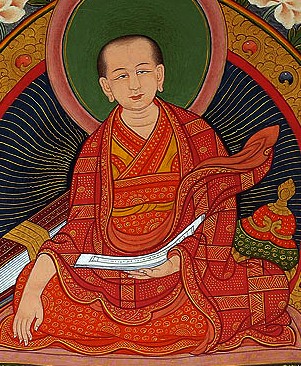
Chekawa Yeshe Dorje (1101–1175) is consistently identified across Tibetan biographical sources and modern catalogs as the author of The Seven Points of Mind Training. He was born in the Iron Snake year of 1101 in Luro or Lura to Pakpa Kyab and Sonam Kyi of the Ja clan (Bya). His birth name was likely Yeshe Dorje, with "Chekawa" deriving from the name of the monastery, Cheka ('Chad kha), he later founded.
The biographical sources present a comprehensive portrait of Chekawa's spiritual formation and achievements. As a youth, he studied with the renowned yogi Rechungpa (1084–1161), a principal disciple of Milarepa, receiving novice ordination at age twenty-one. The choice to ordain relatively late suggests prior engagement with nonmonastic Buddhist practice, possibly influenced by his early exposure to Rechungpa's yogic approach. He took full monastic ordination at age twenty-three in 1123, by which time he had already embarked on a comprehensive Buddhist education. His monastic name remained Yeshe Dorje.
Education and Teachers
Chekawa's education was remarkably thorough and drew from multiple lineages within the Kadam tradition, demonstrating the integrative character of his training. From Geshe Tsen, he received instruction on Asaṅga/Maitreya's Ornament of the Sūtras (Sūtrālaṃkāra) several times. This repeated study of a single major text exemplifies the Kadam approach to textual mastery, ensuring not merely intellectual comprehension but deep internalization of the text's meaning and capacity to apply its teachings. The Sūtrālaṃkāra provided him with systematic understanding of Mahāyāna philosophy, particularly the Yogācāra-influenced presentation of the bodhisattva path and the cultivation of bodhicitta.
From Rechungpa, Chekawa received esoteric meditation instructions associated with Milarepa's lineage. This connection to the Kagyu tradition, though not extensively documented in biographical sources, suggests that Chekawa's education included exposure to Mahāmudrā contemplative approaches alongside Kadam scholastic training.
Geshe Nyangchak Zhingpa introduced Chekawa to Langri Thangpa's Eight Verses on Mind Training, which profoundly affected him. According to his biography, Chekawa was particularly struck by the fifth verse, which articulates the counterintuitive practice of accepting defeat and offering victory to others. This verse moved him so deeply that he resolved to seek out its author and study the complete mind training tradition. The biographical literature emphasizes this encounter as the turning point that redirected Chekawa's spiritual trajectory from general Kadam studies toward specialized focus on lojong teachings.
In 1130, at age twenty-nine, Chekawa traveled to Lhasa with the intention of studying with Langri Thangpa (1054–1123). Upon arriving, he discovered that the master had already died. This disappointment led to his fateful encounter with Sharawa Yönten Drak (1070–1141), who would become his most influential teacher and the source of the complete lojong transmission.
The Decisive Relationship with Sharawa Yönten Drak
Sharawa Yönten Drak became Chekawa's root teacher and the direct source of the mind training instructions he would later systematize. The biographical literature provides detailed information about this crucial relationship. As mentioned in his biography on The Treasury of Lives, Chekawa studied with Sharawa for sixteen years total, including eight intensive years residing at Sharawa's monastery. During thirteen of these sixteen years, Sharawa transmitted extensive mind training instructions, including the secret practice of exchanging self with others that Atiśa had transmitted only to select disciples.[4]
The transmission Chekawa received from Sharawa encompassed not merely the technical instructions but the complete lineage understanding of how these teachings fit within the broader Buddhist path. Sharawa himself had received the lojong teachings through the Kadam lineage tracing back to Atiśa, and he recognized in Chekawa a worthy vessel for this transmission. The biographical sources emphasize that Sharawa entrusted Chekawa with the complete lineage, formally establishing him as a lineage holder authorized to transmit these teachings.
The content of Sharawa's instruction to Chekawa apparently included various redactions of the root verses for mind training that had circulated orally within the Kadam school. These verses derived from Atiśa's oral instructions, preserved and transmitted through successive generations of Kadam teachers but not yet organized into a standardized framework. Chekawa's exposure to multiple versions of these instructions positioned him to recognize patterns and organize them systematically.
Under Sharawa's guidance, Chekawa became a highly regarded teacher in the Kadam tradition, particularly within the Zhungpa (Gzhung pa) subtradition, which emphasized rigorous textual study and systematic application of the gradual path (lam rim). This institutional positioning within the textual lineage of the Kadam school rather than the oral instruction lineage (gdams ngag pa) appears somewhat paradoxical given his later role in systematizing oral instructions. However, the integration of scholarly rigor with practical instruction characterizes Chekawa's approach and may explain his effectiveness in organizing previously unsystematized oral teachings.
Succession and Institutional Leadership
Following Sharawa's death in 1141, Chekawa succeeded him as lineage holder and teacher, assuming responsibility for continuing the transmission of these precious instructions. In 1141 or 1142, shortly after Sharawa's passing, Chekawa founded Chekha Monastery in Meldro (Mal gro), approximately seventy kilometers northeast of Lhasa. The location of this foundation, removed from the major monastic centers of Lhasa and the Tsang region, allowed Chekawa to establish a distinct community focused on intensive mind training practice.
The monastery flourished under his leadership, eventually housing approximately nine hundred monks. This substantial community indicates both Chekawa's effectiveness as a teacher and administrator and the growing appeal of the mind training teachings he championed.
The biographical sources provide conflicting information regarding how long Chekawa served as abbot of Chekha Monastery. One account states that he remained there for eleven years, while another claims thirty-four years. Several possibilities might explain this discrepancy. The eleven-year figure might represent his active leadership period before entering extended retreat, while the thirty-four-year figure might count from founding (1141/42) to death (1175), encompassing both active and semiretired periods.
Later Life and Retreat Practice
Chekawa spent the later portion of his life in intensive retreat practice at Jadurmo (Bya dur mo), though the sources are somewhat less specific about the duration and exact timing of this retreat period. His final months were spent at Tapur (Mtha' phur) in concentrated meditation. The biographical sources suggest this final period involved preparation for death through application of the very practices he had taught—particularly the five powers applied to the dying process. He passed away in 1175 at age seventy-five in the Wood Sheep year. His death is not described as involving unusual circumstances or dramatic displays of realization, consistent with the Kadam emphasis on practical, unsensational spirituality focused on actual inner transformation rather than external signs.
Textual Legacy
Chekawa's most important disciple was Se Chilbu Chökyi Gyaltsen (1121–1189), who compiled his teacher's lecture notes into what scholarly consensus now recognizes as the first commentary on The Seven Points. The existence of this immediate commentarial activity by a direct disciple confirms both the text's rapid acceptance within the Kadam school and its perceived need for explanatory elaboration despite its apparent simplicity. Se Chilbu's compilation from Chekawa's lectures suggests that Chekawa taught extensively on The Seven Points, providing detailed explanations that were necessary to make the terse root verses comprehensible and applicable. The root text alone, with its cryptic verses and minimal elaboration, required oral transmission and commentary to become an effective teaching tool.
Chekawa's relationship with lojong literature extended beyond his famous Seven Points. His biography records that he had received teachings on Langri Thangpa's Eight Verses of Mind Training from Geshe Nyangchak Zhingpa, and a colophon explicitly attributes a commentary on this text to Chekawa himself. This demonstrates his role not only as an innovator who systematized the scattered teachings into seven points but also as a dedicated preserver and commentator within the existing lojong lineage. He simultaneously innovated and conserved, creating a new organizational schema while remaining faithful to the content of received teachings.
Historical Significance and Innovations
The biographical sources consistently present Chekawa as operating within multiple intersecting roles: accomplished meditation master, systematic scholar, monastery founder, and lineage holder. He is celebrated as "the great systematizer" of lojong teachings, a title that accurately captures his primary historical contribution. While he did not compose entirely original teachings—the root lines derive from Atiśa's scattered instructions—his organizational achievement proved extraordinarily influential. By arranging previously disparate oral instructions into a coherent seven-point framework, he created a structure so effective that it became the standard presentation of mind training within Tibetan Buddhism, persisting across centuries and school boundaries.
Chekawa's decision to teach the lojong instructions openly, transforming them from restricted oral transmission to public teaching, represents a pivotal innovation in Tibetan Buddhist history. Prior to Chekawa, these teachings were considered hidden Dharma (lkog chos), transmitted privately to qualified disciples. Biographical accounts attribute this restriction to several factors: the teachings' power and potential for misunderstanding, their status as Atiśa's most precious instructions, and the requirement for proper preliminary training to receive them beneficially.
Chekawa's choice to make them accessible to broader audiences facilitated the access to practices previously reserved for advanced practitioners. This decision reflects both pedagogical confidence in the teachings' value for general practitioners and perhaps institutional recognition that restricting access too tightly risked losing valuable instructions altogether. The biographical literature explicitly credits this act of opening the transmission as the origin of the public Lojong teaching tradition, marking Chekawa as the first Tibetan master to expand the audience for these practices beyond the small circle of qualified disciples.
The innovation of public teaching did not mean indiscriminate distribution without guidance. Chekawa maintained the importance of preliminary training—the four thoughts that turn the mind (blo ldog rnam bzhi)—as essential preparation for mind training practice. His opening of the transmission meant making the teachings available to sincere practitioners who had completed preliminaries, not eliminating the graduated path structure entirely. This balanced approach preserved the teachings' integrity while extending their reach.
Doctrinal Positions and Philosophical Commitments
Regarding the doctrinal positions Chekawa defended, the available sources emphasize his role as transmitter and systematizer rather than as an original doctrinal innovator. His commitment to the Kadam tradition places him firmly within the Madhyamaka philosophical school, specifically the Prāsaṅgika-Madhyamaka interpretation as transmitted through Atiśa. The Kadam school's founder, Atiśa, had established this philosophical orientation, and subsequent Kadam teachers maintained it as the correct view for understanding emptiness.
Chekawa's organization of The Seven Points reflects key Kadam doctrinal emphases: the integration of sūtra and tantra (evident in combining emptiness meditation with compassion practices), the centrality of bodhicitta as the essential Mahāyāna practice, the practical application of philosophical insight to lived experience, and the transformation of adverse conditions through reframing rather than avoidance. His presentation of ultimate and conventional bodhicitta as complementary rather than sequential practices represents a distinctive Kadam approach, contrasting with traditions that emphasize achieving perfect realization of emptiness before cultivating compassion. The Seven Points insists that wisdom and compassion must develop together, each supporting and protecting the other from potential distortions.
Chekawa's emphasis on the practice of tonglen as the principal method for cultivating conventional bodhicitta represents a specifically Kadam approach to implementing Śāntideva's teaching on exchanging self and other. While Śāntideva presented the exchange primarily as an ethical and philosophical reorientation, the Kadam lineage developed concrete meditation techniques—particularly the breath-coordinated tonglen practice—for actualizing this exchange at an experiential level. Chekawa's clear articulation of this practice in The Seven Points contributed significantly to its widespread adoption across Tibetan Buddhist schools.
His systematic presentation of adversity transformation techniques, particularly the instruction on countering self-grasping, reflects the Kadam emphasis on taking personal responsibility for one's experience rather than externalizing blame. This position carries both psychological and doctrinal implications. Psychologically, it empowers practitioners by locating the source of suffering within one's own attitudes rather than in unchangeable external circumstances. Doctrinally, it embodies the Buddhist teaching that suffering arises from afflictive mental states rather than from objects themselves.
Biographical Data Summary
Table 3: Key Biographical Data
| Birth year
|
1101 (Iron Snake)
|
| Death year
|
1175 (Wood Sheep), age 75
|
| Birthplace
|
1175 (Wood Sheep), age 75
|
| Birthplace
|
Luro/Lura
|
| Parents
|
Pakpa Kyab (father), Sonam Kyi (mother)
|
| Clan
|
Ja clan (Tibetan: Bya)
|
| Novice ordination
|
Age 21 (1121)
|
| Full ordination
|
Age 23 (1123)
|
| Primary teacher
|
Sharawa Yönten Drak (1070–1141)
|
| Other teachers
|
Rechungpa (1084–1161), Geshe Tsen, Geshe Nyangchak Zhingpa
|
| Failed meeting
|
Langri Thangpa (1054–1123)
|
| Succession
|
1141
|
| Monastery founded
|
Chekha, Meldro (1141 or 1142)
|
| Retreat location
|
Jadurmo (Bya dur mo)
|
| Death location
|
Tapur (Mtha' phur)
|
| Primary disciple
|
Se Chilbu Chökyi Gyaltsen (1121–1189)
|
Part 3: Significance and Relevance to Bodhicitta
The Seven Points of Mind Training occupies a distinctive position within the vast literature on bodhicitta cultivation, offering particular methodological advantages that account for its enduring influence across Tibetan Buddhist schools and contemporary practice communities. Its significance emerges from several intersecting factors: the integration of ultimate and conventional bodhicitta within a single progressive framework, the concrete practicality of its instructions, the transformation of obstacles into path elements, and the democratization of previously esoteric teachings.
At its core, the text addresses what remains the central challenge of Mahāyāna Buddhism: how to cultivate and sustain the awakening mind—the aspiration to attain enlightenment for the benefit of all sentient beings, coupled with active engagement in pursuing that goal. While numerous Buddhist texts theoretically present bodhicitta as essential, and while Śāntideva's Bodhicaryāvatāra provides extensive philosophical grounding and ethical guidance for the bodhisattva path, The Seven Points offers something distinctive: a systematic, practical, and relatively condensed training manual specifically designed to transform self-cherishing into other-cherishing through concrete meditation techniques.
Conventional and Ultimate Bodhicittas
Many Buddhist presentations treat these two aspects sequentially—first cultivating wisdom realizing emptiness, then developing compassionate bodhicitta based on that wisdom. The Seven Points insists they must develop together, each protecting the other from potential distortions. Ultimate bodhicitta without conventional compassion risks either becoming merely philosophical or leading to a nihilistic misunderstanding of emptiness. Conventional bodhicitta without ultimate wisdom risks being contaminated by substantial grasping, treating the suffering beings one helps as truly existent, thereby reinforcing the very delusion that perpetuates suffering. By training in both simultaneously, practitioners develop a balanced realization that combines wisdom and compassion inseparably.
The Practice of Tonglen
The practice of tonglen (giving and taking) constitutes the text's most distinctive contribution to bodhicitta cultivation methodology. By coordinating the mental acts of giving one's happiness and taking others' suffering with the rhythm of breathing, tonglen creates an embodied practice that works at a deeper level than merely conceptual commitment. The breath coordination makes the practice visceral and immediate, engaging practitioners' somatic experience rather than remaining in the realm of abstract ethical principles.
This pedagogical move from philosophical principle to embodied technique has profound implications. It allows practitioners who have not yet achieved high levels of philosophical realization to begin working directly with self-cherishing and other-cherishing at an experiential level. Rather than waiting until one perfectly understands emptiness before attempting to exchange self and other, practitioners can begin immediately, using the concrete technique to gradually undermine self-cherishing through repeated practice. This accessible entry point helps explain the text's widespread adoption even among practitioners without extensive philosophical training.
The Five Powers to Protect and Develop Bodhicitta
The condensation of practice into the five powers (Point 4) during one’s entire lifetime serves the pedagogical function of making the entire path portable and applicable to any situation, including death. This has significance for bodhicitta cultivation because it ensures that the awakening mind remains central not only during formal meditation sessions but throughout all life activities and circumstances. By identifying the five essential powers necessary for practice—intention, familiarization, accumulation of merit, repudiation of self-cherishing, and aspirational prayer—the text provides practitioners with a checklist applicable to any moment. Whether engaged in mundane activities, facing pleasant or unpleasant circumstances, or approaching death itself, one can ask: "Am I applying the five powers? Am I maintaining bodhicitta motivation?"
The application of these same five powers to the death process holds particular significance within Tibetan Buddhism's concern with the intermediate state (i.e., bardo) and rebirth. By teaching that death can become the most powerful practice session of one's life if approached with the five powers, the text transforms a typically feared moment into an opportunity. For bodhicitta practitioners specifically, this means that even one's final moments can be directed toward the benefit of others—taking others' suffering, giving one's merit, aspiring for rebirth in conditions favorable to continuing bodhisattva activity. This addresses what might otherwise appear as a limit case: How can a dying person, unable to physically help others, continue to cultivate bodhicitta? The text's answer: through maintaining the five powers with especial intensity precisely at the moment of greatest vulnerability.
Historical Impact of the Text
By making previously esoteric teachings public, Chekawa democratized access to powerful transformation techniques. The decision to teach openly what had been restricted meant that ordinary practitioners—householders, those with limited education, those unable to engage in long retreats—could access effective methods for cultivating the awakening mind. This democratization aligns with the Mahāyāna emphasis on universal buddha-nature and the possibility of enlightenment for all beings, not merely monastic elites or accomplished yogis.
The text's relatively brief length and mnemonic structure make it unusually memorable and portable. A practitioner can internalize the entire seven points, keeping them available for mental review in any situation. This portability means that the text functions not merely as an object of study but as an internalized framework that practitioners carry with them, applying its instructions moment by moment throughout daily life. This quality differentiates it from longer, more comprehensive treatises that might offer greater philosophical depth but prove difficult to maintain in active memory during the press of ordinary activities.
Part 4: Study the Text
Core Concepts and Typologies
The Seven Points of Mind Training operates through a constellation of interrelated technical concepts that together constitute a comprehensive system for transforming self-cherishing into other-cherishing. These concepts function simultaneously as philosophical principles, meditation objects, and practical techniques, reflecting the text's integration of theory and practice. Understanding the precise meaning and interrelation of these core concepts proves essential for effective engagement with the tradition.
The Dear Mother Recognition: Affective Foundation for Universal Compassion
The instruction to begin tonglen practice by visualizing one's mother represents a distinctive pedagogical approach to bodhicitta cultivation. This "dear mother" focus, taught in the commentary by Se Chilbu, provides an effective on-ramp to universal compassion. Rather than attempting to generate equal concern for all beings immediately—a task that may feel artificial or overwhelming—practitioners begin with a being toward whom compassion arises naturally and reliably.
The mother serves as this initial object for several reasons. In traditional Buddhist cultures, the mother represents the paradigmatic example of selfless care and kindness. The nine months of pregnancy, the difficulties of childbirth, the years of constant attention to the infant's needs—all exemplify the kind of cherishing of another that bodhicitta aims to develop universally. Additionally, Buddhist cosmology teaches that all beings have been one's mother in countless previous lifetimes, creating karmic connections and debts of gratitude extending across beginningless samsara.
The practice begins by visualizing the mother (or another being who evokes natural warmth if the relationship with one's biological mother is problematic) and systematically reflecting on her kindness. Practitioners contemplate specific instances of care received, allowing genuine gratitude to arise. This affective engagement is central in this practice—the aim is not intellectual acknowledgment but felt appreciation that moves the heart.
Once practitioners can reliably generate warm compassion for the mother, the practice expands in concentric circles: to other family members and friends, then to neutral persons for whom one feels neither particular attraction nor aversion, then to difficult persons or enemies, and finally to all sentient beings throughout space. This graduated expansion allows practitioners to develop the capacity for universal compassion stepwise rather than attempting an impossible leap from self-concern to equal concern for all beings.
The traditional texts note that when this practice is done correctly, physical signs may appear—tears flowing, body hairs standing on end—indicating that genuine affect has been engaged rather than mere conceptual acknowledgment. This affective dimension distinguishes authentic bodhicitta from intellectual appreciation of altruism's value. The practice aims to transform practitioners' actual felt priorities, not merely their stated values.
The Three Objects, Three Poisons, and Three Roots of Virtue
The triad of the three objects, three poisons, and three roots of virtue provides the framework for extending practice beyond formal meditation into the continuous stream of daily experience. The three objects (yul gsum) categorize everything encountered: pleasant objects that attract, unpleasant objects that repel, and neutral objects toward which one feels indifference. The three poisons (dug gsum)—attachment, aversion, and delusion—name the afflictive responses these objects typically evoke in untrained minds. The three roots of virtue (dge ba'i rtsa ba gsum)—detachment, loving-kindness, and equanimity-wisdom—identify the transformed responses practitioners cultivate instead.
Through this teaching, a practitioner can apply continuous awareness moment by moment. When encountering an attractive person or object and a feeling of desire arises, practitioners recognize the arising of attachment and consciously cultivate detachment—not suppressing the experience but recognizing impermanence and emptiness. When meeting criticism or unpleasant circumstances and feeling aversion, practitioners recognize this poison and deliberately generate loving-kindness toward the source of displeasure, seeing even harmful beings as kind teachers providing opportunities to develop patience.
When facing neutral situations—the majority of daily experience—practitioners counter the habitual dull indifference or spacing out by cultivating equanimity-wisdom. This means maintaining clear awareness rather than falling into distraction while recognizing the empty nature of both phenomena and the mind perceiving them. In this way, even mundane moments become opportunities for training rather than gaps in practice.
The instruction to "train by means of words" (tshig gis dran) reinforces this framework through verbal reminders or slogans. Practitioners develop the habit of silently reciting key phrases when the three types of objects arise, creating cognitive anchors that interrupt habitual reactive patterns before they solidify into full-blown afflictive states. These verbal cues create a bridge between formal meditation and daily activity, ensuring that insights developed on the cushion transfer into lived experience.
The Two Witnesses: Internal Verification over External Validation
The instruction regarding the two witnesses addresses a fundamental challenge in spiritual practice: how to assess genuine progress versus mere appearances of advancement. The two witnesses refer to oneself and others—one's own knowledge of whether transformation is occurring versus others' observations and evaluations.
The text teaches: "Of the two witnesses, rely on the principal one." The principal witness is oneself, specifically one's honest assessment of whether self-cherishing has actually decreased. Others may praise a practitioner based on observing one or two good actions or behaviors that please them, but such external observers cannot fully penetrate the depth of character or know the true motivations behind observable conduct. Someone might maintain impeccable external behavior while internally remaining dominated by self-concern and merely seeking others' approval.
The genuine internal witness means being able to feel that even if death came this evening, one could have done nothing more—having striven to one's best capacity with faith, intelligence, and perseverance. This self-knowledge rests not on comforting self-deception but on rigorous honesty about whether self-grasping has loosened its hold and whether bodhicitta has genuinely taken root in the mental continuum.
This teaching addresses a perennial danger in spiritual communities: the cultivation of appearances of realization while actual transformation remains minimal. By emphasizing internal verification over external validation, The Seven Points guards against spiritual materialism—the subtle tendency to accumulate spiritual credentials, accomplishments, and others' admiration while self-cherishing continues unabated. The tradition recognizes that only the practitioner truly knows whether their internal experience matches their external presentation.
This principle extends to the text's definition of proficiency: if practice remains stable even when distracted, genuine integration has occurred. This means that bodhicitta motivation and transformed responses to the three objects arise spontaneously rather than requiring constant effortful attention. When the practice has truly penetrated, it operates even during periods of distraction, indicating that new patterns have replaced old habits rather than merely suppressing them temporarily.
Ālaya: Philosophical Debates and Meditation Object
The instruction to "place your mind on the basis-of-all that is the path’s essence" (ālaya, kun gzhi) has generated extensive interpretive discussion across lineages and traditions. The term ālaya appears in multiple Buddhist philosophical systems with differing technical meanings, creating legitimate ambiguity about its referent in this context.
In Yogācāra philosophy, ālayavijñāna designates the eighth consciousness, the storehouse consciousness that holds karmic seeds accumulating from past actions and serving as the causal basis for future experiences. From this perspective, placing one's mind on the ālaya might mean recognizing this underlying layer of consciousness and its role in perpetuating samsaric patterns while also serving as the basis for transformation.
In Madhyamaka philosophy, the term might instead refer to emptiness itself—the ultimate nature that serves as the basis of all phenomena. From this view, placing one's mind on the basis-of-all means resting in the understanding that all phenomena are empty of intrinsic nature, free from conceptual elaboration. This interpretation emphasizes analytical meditation that progressively refines understanding until the direct, nonconceptual realization of emptiness arises.
In Mahāmudrā and Dzogchen contexts, ālaya can indicate the natural, uncontrived state of mind—mind's intrinsic luminosity, clarity, and awareness. This interpretation emphasizes directly recognizing mind's nature rather than primarily analyzing the absence of inherent existence through one’s dualistic mind. Practice from this perspective focuses on relaxing conceptual elaboration and allowing the mind's natural qualities to manifest.
Northern lineages of The Seven Points tradition, following teachers like Radrengpa, interpret kun gzhi as emptiness, emphasizing the Prāsaṅgika-Madhyamaka philosophical analysis. This approach prioritizes reasoning that deconstructs grasping at phenomena and progressively leads to nonconceptual realization. Southern lineages, following masters like Gyalse Tokme Zangpo, interpret kun gzhi as the uncontrived natural mind, drawing more heavily from Mahāmudrā and Dzogchen influences.
Contemporary teachers often present these interpretations as complementary rather than contradictory. Different practitioners might find different approaches more suitable to their capacities and inclinations while recognizing that ultimate realization transcends the dichotomy between analysis and direct recognition.
This philosophical ambiguity in the root text reflects the capacity of The Seven Points for cross-school adoption. By not specifying a single philosophical interpretation, the text allows practitioners from different traditions to engage with the practice through their respective frameworks while maintaining a shared commitment to reducing self-cherishing and cultivating bodhicitta.
Self-Grasping and Self-Cherishing: Distinguishing Root and Manifestation
Two closely related but distinguishable concepts—self-grasping (bdag 'dzin) and self-cherishing (bdag gces 'dzin)—play crucial roles in how The Seven Points analyzes suffering's root cause. Philosophical precision about their relationship proves essential for effective practice.
Self-grasping refers to the fundamental delusion that mistakes the merely imputed, dependently-arisen self for an inherently existing, independent, permanent entity. This ignorance of the self's actual nature represents the philosophical root of samsara—the first link in the twelve links of dependent origination. Madhyamaka philosophy identifies this basic ignorance as what must be eliminated for liberation. Without self-grasping, the entire edifice of samsaric suffering collapses, as suffering requires a substantially existing self to experience it.
Self-cherishing refers to the emotional-motivational pattern that places one's own interests above the interests of others, seeking one's own happiness while remaining relatively indifferent to others' suffering. This represents the practical manifestation of self-grasping in everyday attitudes and behaviors. Even when one intellectually understands that the self is merely a conventional designation, self-cherishing can persist as the habitual prioritization of "my" welfare over "yours."
The relationship between these concepts involves both philosophical and practical dimensions. Some commentators argue that tonglen practice operates primarily at the level of self-cherishing without requiring complete philosophical understanding of emptiness or elimination of self-grasping. From this view, practitioners can begin reducing self-cherishing through the concrete practice of taking and giving, gradually loosening self-cherishing even without sophisticated philosophical realization.
Other commentators emphasize that without some understanding of emptiness, compassion practice inevitably reinforces delusion by treating suffering beings as truly existent. From this perspective, ultimate and conventional bodhicitta must develop together precisely because compassionate action without wisdom about emptiness merely rearranges samsaric patterns rather than leading to liberation.
The Seven Points integrates both types of bodhicitta training, suggesting that both dimensions must develop in tandem. Understanding the emptiness of self-grasping is understood as conducive to reducing self-cherishing, while reducing self-cherishing through tonglen on an experential level deepens one's understanding of emptiness as a lived reality rather than as mere conceptual knowledge. The practice thus works simultaneously at multiple levels—bodily (through breath coordination), emotionally (through deliberately cultivating willingness to bear others' suffering), cognitively (through recognition of the empty nature of self and phenomena), and behaviorally (through transformed responses to daily experience).
The instruction to "banish all blames to the single source" specifically targets self-cherishing. When someone harms us, ordinary reactive patterns blame the harmful person and their action. The lojong reframe recognizes that suffering experienced results not from harm itself but from self-cherishing's offense at the cherished self being threatened. Without self-cherishing, harm would not produce suffering in the same way—it might be registered as a painful sensation or unfortunate circumstance but without the additional layer of taking it personally, feeling victimized, or generating resentment.
Commentators emphasize that this teaching does not mean accepting abuse, failing to address injustice, or assuming personal responsibility for others' harmful actions. Rather, it means recognizing that one's emotional response to circumstances—particularly the feeling of being victimized or unjustly treated—derives from self-cherishing rather than from circumstances themselves. This distinction allows practitioners to address external problems effectively while not being internally disturbed by them, maintaining bodhicitta even while working to change difficult situations.
Key Verses and Passages
The following passages represent pivotal moments in The Seven Points where philosophical principle, practical instruction, and lived realization converge. Each passage has generated extensive commentarial discussion and continues to serve as a focus for contemporary practice. These verses demonstrate the text's characteristic style: terse, mnemonic, often employing colloquial language and proverbs, yet containing sophisticated teachings that unfold through sustained contemplation and application. The passages are presented here with brief translation excerpts followed by a significance analysis examining their doctrinal, historical, pedagogical, ritual, or aesthetic dimensions.
Passage 1: "First, train in the preliminaries" (Point 1)
This opening instruction, though consisting of only a few syllables in Tibetan (dang po sngon 'gro'i chos la sbyang), establishes the entire pedagogical framework within which The Seven Points operates. The instruction presumes familiarity with the four preliminary contemplations that Kadam teachings identify as essential foundations: reflecting on the precious human birth's rarity and opportunity, meditating on impermanence and death's certainty, and recognizing samsara's pervasive unsatisfactoriness. These three contemplations belong to the graduated path (lam rim) tradition's preliminary stage, designed to generate renunciation and appropriate motivation before practitioners undertake more advanced techniques.
The preliminaries ensure that when practitioners engage with tonglen and adversity transformation, they do so with proper motivation—not seeking worldly benefits but aiming toward liberation and omniscience for the benefit of all beings.
Passage 2: "Reflect that entities are like objects in a dream." (Point 2)
This instruction introduces ultimate bodhicitta meditation through a famous analogy for emptiness: the dream. The verse directs practitioners to recognize that all experienced phenomena—external objects, internal mental states, pleasant and unpleasant experiences—while appearing substantially real, actually lack inherent existence, just as dream objects seem real during sleep but are recognized as insubstantial upon waking. The dream analogy proves pedagogically powerful because everyone has direct experience of being completely convinced by dream appearances during sleep, then seeing their illusory nature afterward. By extending this recognition to waking experience, the instruction points toward the understanding that all phenomena are merely imputed by mind rather than existing from their own side.
From a doctrinal perspective, this verse represents the Madhyamaka philosophy's core insight presented through metaphor rather than philosophical argument. While the prajñāpāramitā literature and Nāgārjuna's treatises establish emptiness through extensive reasoning, the dream analogy communicates the same understanding through accessible experience. The instruction thus serves both as preliminary contemplation for those new to emptiness teachings and as reminder for advanced practitioners to maintain illusory-body awareness throughout activities. Commentaries note that the dream analogy specifically addresses attachment: just as we don't cling to dream wealth or grieve over dream losses once awake, recognizing waking experience's dream-like nature loosens attachment and aversion.
Passage 3: "Cultivate the two exercises of giving and taking alternately. Mount these two on your breath." (Point 2)
These two verses contain the most distinctive practical instruction in The Seven Points: the tonglen technique coordinated with breathing. The first line establishes the dual structure—giving one's happiness and merit to others, taking their suffering and negativity upon oneself—and indicates that these should be practiced alternately rather than simultaneously. The second line provides the crucial technical specification: coordinate these mental acts with the breath rhythm, making the practice embodied rather than merely conceptual.
The ritual and practical significance of this instruction centers on its innovation in making Śāntideva's more philosophical teaching on exchanging self and other into a repeatable meditation technique. While Śāntideva presented self-other exchange through the lens of equality on the basis of the doctrine of emptiness, the Kadam lineage developed concrete meditation methods for actualizing this exchange at an experiential level. The breath coordination proves crucial: breathing constitutes the most basic, continuous, and unavoidable bodily process, occurring roughly 15-20 times per minute without requiring conscious control. By yoking compassionate intention to breathing, the practice becomes sustainable during extended sessions and easily remembered during brief practice moments throughout the day.
Pedagogically, the instruction's brevity requires commentarial elaboration to become practically applicable. Traditional commentaries provide extensive details about visualization techniques, progression from close relations to enemies, methods for generating genuine willingness to take others' suffering, and approaches to maintaining practice when it feels psychologically challenging. This necessary gap between terse root verse and detailed practical application reveals the text's function within an oral teaching tradition where masters provided personalized instruction suited to individual students' capacities. The verse serves as a mnemonic anchor for teachings received from qualified teachers rather than as a self-sufficient stand-alone instruction, reflecting the traditional understanding that advanced practices require direct transmission from realized masters.
Passage 4: "When the vessel and its contents are filled with evil, transform adversity into the path to enlightenment." (Point 3)
This verse presents the Lojong tradition's perhaps most radical teaching: the transformation of obstacles and adversities into supports for awakening. The instruction employs the Tibetan cosmological imagery of "vessel and contents" (snod bcud)—the world as container and sentient beings as contained—to describe pervasive negativity. Rather than viewing such degenerate conditions as impediments to practice requiring removal, the verse directs practitioners to transform them into the very path itself. This represents a fundamental reorientation: difficulties become opportunities rather than obstacles, enemies become teachers rather than adversaries, losses become occasions for practicing generosity rather than causes for grief.
The historical significance of this instruction relates to its function within Tibetan Buddhist soteriology's development. Earlier traditions emphasized purifying obstacles through ritual, accumulating merit to improve conditions, or avoiding difficult circumstances through retreat. The Lojong approach introduces what could be described as an alchemical transformation: just as fire grows stronger when more wood is added, the bodhisattva's realization intensifies through encountering greater difficulties. This teaching addressed practical concerns about whether awakening could be achieved within samsara's imperfect conditions or whether one needed to retreat from worldly engagement. By transforming adversity into path, Lojong masters considered that practice could proceed—indeed, might proceed more effectively—within life's difficulties rather than requiring escape from them.
From a psychological perspective, this verse's significance lies in its cognitive reframing technique. The instruction changes nothing about external circumstances but completely transforms their meaning and impact. When someone harms us, the harm itself doesn't change, but recognizing it as a precious teaching on patience, as an opportunity to practice taking others' negativity through tonglen, or as fuel for reducing self-cherishing fundamentally alters our experience of being harmed. This reframe has particular relevance for contemporary practitioners who cannot retreat from family responsibilities, work demands, or social engagement but must maintain practice within life's complexities. The verse thus serves both traditional and modern contexts, making lojong practice unusually adaptable across cultural and temporal boundaries.
Passage 5: "Place all the blame on one." (Point 3)
In this short instruction, the "single source" refers to self-grasping and self-cherishing, which the verse identifies as the actual cause of all experienced suffering regardless of apparent external causes. When we suffer from criticism, the suffering arises not from the words themselves but from self-cherishing's reaction to the cherished self being criticized. When we suffer from loss, the suffering comes not from the object lost but from grasping at an inherently existing self that owns things. By consistently directing blame toward self-cherishing rather than toward external agents or circumstances, practitioners undermine self-cherishing while avoiding the generation of additional negativity through resentment.
The doctrinal significance of this instruction connects to the Madhyamaka analysis of suffering's ultimate cause. While the four noble truths identify craving (tṛṣṇā) as the immediate cause of suffering, Madhyamaka philosophy traces craving back to ignorance (avidyā) about the self's ultimate nature. The instruction to banish all blames to the single source represents a practical application of this philosophical insight: every instance of suffering, when analyzed deeply enough, reveals self-cherishing as its root. This doesn't deny that external harms occur or that others' actions can be ethically problematic; rather, it identifies where our suffering actually comes from—not from others' actions but from our own self-grasping's reaction to those actions.
The pedagogical power of this verse lies in its immediate applicability to any difficulty. When anything unpleasant occurs—criticism, illness, loss, betrayal, failure—practitioners have a simple question to ask: "Where does the blame belong?" The verse provides the answer: always and only on self-cherishing. This radically simplifies practice in one sense while making it quite demanding in another. It's simple because there's only one response to learn; it's demanding because this response requires abandoning the deeply habitual tendency to externalize blame. The instruction thus functions as both a diagnostic tool (revealing how self-cherishing operates) and a transformative practice (weakening self-cherishing through repeated recognition and rejection).
Passage 6: "All Dharma is based on a single aim." (Point 5)
This verse establishes the criterion for evaluating spiritual progress: Has one's practice actually reduced self-grasping and self-cherishing? The "one point" where all authentic Buddhist teachings converge is precisely the reduction and eventual elimination of self-grasping. Regardless of which specific practices one emphasizes, which philosophical school one follows, or which lineage transmissions one has received, genuine progress manifests as diminishment of self-cherishing. This provides practitioners with a concrete, empirical measure for self-assessment that cuts through potential self-deception about spiritual accomplishment.
The significance of this instruction for Buddhist pedagogy centers on its pragmatic emphasis. Rather than privileging elaborate philosophical understanding, complex ritual performance, or lengthy retreat experience, the verse identifies an observable behavioral change: less self-cherishing equals genuine progress; persistent self-cherishing equals lack of real transformation despite superficial accomplishments. This reflects the Kadam tradition's practical orientation and its suspicion of spiritual materialism—the tendency to accumulate teachings, empowerments, and practices as ego-enhancing attainments rather than as means for undermining ego. By establishing clear criteria for progress, the instruction helps practitioners avoid mistaking the accumulation of knowledge or experience for actual realization.
From a cross-traditional perspective, this verse has ecumenical implications. By identifying the single criterion that all Buddhist teachings share, it provides a basis for recognizing authentic practice across different schools, traditions, and cultural expressions. Whether one practices Theravāda insight meditation, Zen koan study, Pure Land devotion, or Vajrayāna deity yoga, the verse suggests, the ultimate measure remains the same: reduction of self-grasping.
Passage 7: "Accept the most important of the two witnesses." (Point 5)
This instruction identifies two witnesses to one's spiritual progress: oneself and others. While others might perceive us as advanced practitioners based on external comportment—ritual knowledge, philosophical eloquence, meditative stability, ethical conduct—the principal witness, one's own mind, knows the truth of internal motivation and the actual state of self-cherishing. The verse directs practitioners to privilege self-assessment over external reputation or others' perceptions. This teaching addresses a perennial spiritual danger: seeking others' validation of one's practice or spiritual status rather than honestly assessing whether self-cherishing has actually decreased.
The ethical and psychological significance of this instruction relates to authenticity in spiritual life. The verse acknowledges that one can appear spiritually accomplished to others while remaining internally unchanged, suggesting that such appearance-reality gaps represent spiritual failure regardless of external success. By emphasizing the principal witness—one's own honest self-assessment—the teaching cultivates integrity, the alignment of appearance and reality. This proves particularly important in contexts where spiritual status confers social authority or material benefits, creating incentives for cultivating appearance over substance. The instruction thus serves as protection against both self-deception (believing one's own pretense) and calculated deception (consciously maintaining false appearance).
From a contemplative practice perspective, the verse encourages metacognitive awareness: practitioners learn to observe their own minds observing their practice, developing the capacity for honest self-assessment that neither inflates accomplishments nor underestimates difficulties. This second-order awareness—awareness of awareness—proves essential for genuine progress, as it allows practitioners to catch themselves in the act of spiritual materialism, to notice when practice has become performative rather than transformative. The instruction thus functions as both diagnostic tool and corrective practice, helping practitioners maintain an honest relationship with their actual experience rather than their idealized self-image or others' projections.
Part 5: Practice the Text
Historical Context of Lojong: The Kadam Tradition
The historical context for understanding The Seven Points requires examination of the broader Kadam tradition to which Chekawa belonged. As previously mentioned, the tradition traces its origins to the Bengali master Atiśa Dīpaṃkara Śrījñāna (982–1054), whose arrival in Tibet in 1042 marked a turning point in Tibetan Buddhist history. Atiśa came at the invitation of the Ngari rulers during the period of Buddhist revival following the fragmentation of the Tibetan empire and the subsequent persecution of Buddhism under King Langdarma in the mid-ninth century.
Atiśa's principal Tibetan disciple, Dromtön Gyalwai Jungne (1004/5–1064), became his foremost Tibetan disciple and the effective founder of the Kadam school as a distinct institution. According to traditional accounts, the deity Tārā prophesized Atiśa's meeting with Dromtönpa, identifying him as crucial to establishing Buddhism's lasting presence in Tibet. Following Atiśa's death in 1054, Dromtönpa founded Radreng Monastery in 1056/57, which became the institutional center of the early Kadam tradition.
Over time, the Kadam tradition developed into three distinct but interconnected lineages, each emphasizing different aspects of Atiśa's legacy. These three lineages correspond to the "three [Kadam] brothers" (sku mched gsum), Dromtönpa's principal disciples:
- the Kadam lineage of authoritative treatises (gzhung pa) stemming from Potowa,
- the Kadam lineage of essential instructions (gdams ngag pa) stemming from Chengawa, and
- the Kadam lineage of oral transmissions and biographical teachings as enshrined in the collection entitled The Book of Kadam (Bka' gdams glegs bam) stemming from Phuchungwa.
Potowa's Kadam lineage of authoritative treatises emphasized the approach of grounding all of Atiśa and Dromtönpa's spiritual legacy in close study of what came to be called the "six authoritative treatises of Kadam." These texts are: (1) Asaṅga's The Stages of a Bodhisattva (Bodhisattvabhūmi), (2) Asaṅga/Maitreya's Ornament of Mahāyāna Sūtras (Mahāyānasūtrālaṃkāra), (3) Śāntideva's The Way of the Bodhisattava (Bodhicaryāvatāra) and (4) The Compendium of Trainings (Śikṣāsamuccaya), (5) Āryaśūra's Garland of Birth Stories (Jātakamālā), and (6) The Collection of Aphorisms (Udānavarga), attributed to the historical Buddha.
Chengawa's Kadam lineage of essential instructions emphasized an approach whereby Atiśa's essential instructions, rather than classical treatises alone, served as the key basis for practice. These instructions included the guide on the four truths as transmitted through Chengawa, the guide on the two truths as transmitted through Naljorpa, and the guide on dependent origination as transmitted through Phuchungwa. This lineage preserved the more practical, experience-focused aspects of Atiśa's teaching, maintaining the immediacy of personal instruction alongside textual study.
The third lineage, associated with oral transmissions and particularly with the collection called The Book of Kadam, preserved the more mystical dimensions of Atiśa's legacy, especially his devotion to Avalokiteśvara and Tārā. This collection of teachings, known as "secret teachings" (gsang chos), outlined a unique practice called the sevenfold divinity and teaching, centered on four meditation deities: the Buddha as teacher, Avalokiteśvara as the deity of compassion, Tārā as the deity representing enlightened action, and Acala as the protector guardian, along with the three scriptural baskets of discipline, knowledge, and meditation.
Chekawa belonged to the lineage of authoritative treatises.
The Lojong Tradition within Kadam
The mind training (lojong) teachings represent a particular stream within the broader Kadam tradition, traceable through specific transmission lineages from Atiśa. According to traditional accounts, Atiśa received the mind training instructions from three principal teachers: Dharmakīrti of Suvarṇadvīpa (Serlingpa), Maitrīyogi, and Dharmārakṣita. Among these, Serlingpa's transmission proved most influential, emphasizing the immediate accessibility of mind training for practitioners without extensive philosophical preparation. Sangye Gompa (1179–1250) reports in his Public Explication of Mind Training (Blo sbyong tshogs bshad ma) that Serlingpa's instruction lineage was distinctive among Atiśa's three traditions of mind training. While the methods from Dharmarakṣita and Maitrīyogi were considered difficult for beginners, Serlingpa taught that even novice practitioners deluded by self-grasping could begin the practice of exchanging self and others. This approach distinguished Serlingpa's teaching from other presentations of bodhicitta cultivation that required extensive preliminary realization of emptiness. The accessibility Serlingpa emphasized became characteristic of the Kadam Lojong tradition, though it remained balanced with an insistence on completing the preliminary practices (sngon 'gro)—particularly the four thoughts that turn the mind from samsaric concerns.
When Atiśa arrived in Tibet, he transmitted the mind training instructions orally to select disciples, most prominently to Dromtönpa. The teachings remained closely guarded as a whispered lineage (snyan brgyud) or hidden Dharma (lkog chos), restricted to qualified students. From Dromtönpa, the transmission passed through Potowa Rinchen Sal, who received the complete instructions and transmitted them in turn to his disciples. Among Potowa's students, Sharawa Yönten Drak became the key link in the lineage leading to Chekawa. Sharawa received extensive lojong teachings from Potowa and maintained the practice of restricted transmission, teaching these instructions only to carefully selected disciples whom he judged prepared to receive them.
The Kadam Approach to Integrating View and Practice
The Kadam tradition's distinctive character emerged from its particular approach to integrating philosophical view, ethical conduct, and meditation practice. Unlike some Tibetan Buddhist traditions that emphasized either scholastic learning or contemplative realization, the Kadam synthesis insisted on the inseparability of study and practice. This integration manifested first and foremost in the Kadam emphasis that all of the Buddha's teachings, properly understood, constitute practical instructions for transformation rather than merely theoretical knowledge. The famous Kadam approach of considering all phenomena as instructions on the path encapsulates this view. Whether studying philosophical treatises on emptiness or receiving meditation instructions, the practitioner was to recognize all teachings as direct methods for transforming one's mind and conduct.
Second, Kadam doctrine emphasized the gradual path (lam rim), organizing Buddhist teachings according to the practitioner's capacity and progressive development. This graduated approach prevented practitioners from attempting advanced practices without a proper foundation while maintaining the ultimate goal of complete enlightenment for all. The three scopes—initial, intermediate, and great—provided a framework ensuring that foundational practices like renunciation and ethical conduct supported advanced practices like bodhicitta cultivation and emptiness meditation. Complementing this systematic structure was a characteristic teaching style that employed pithy sayings and memorable formulations to condense complex teachings into forms suitable for memorization and daily application. The Seven Points exemplifies this style perfectly, with its terse verses requiring commentary for full understanding but remaining memorable enough for practitioners to recall throughout daily life.
Finally, the Kadam tradition emphasized the integration of ritual, ethical conduct, and meditation as complementary dimensions of practice rather than competing approaches. This holistic orientation meant that the path was not confined to the meditation cushion or the debate courtyard but extended to all aspects of a practitioner's life.
Historical Reception, Commentarial Traditions, and School Uptake
The Seven Points of Mind Training has exercised profound influence across the entire spectrum of Tibetan Buddhism, moving from its origins as a restricted Kadam teaching to become one of the most widely practiced and commented-upon texts in the tradition. The tremendous success of Kadam teachings meant that all major Tibetan Buddhist schools incorporated Kadam elements into their own systems. The Lamrim framework, the emphasis on bodhicitta as the essence of Mahāyāna practice, the integration of sūtra and tantra—all these Kadam teachings became standard across Tibetan Buddhism. In this sense, Kadam "disappeared" through universal adoption of its core contributions.
In addition, the rapid growth of Tsongkhapa's "new Kadam school," whose followers came to be known as Gandenpa or Gelukpa, absorbed much of the institutional infrastructure and identity of the earlier Kadam tradition. Tsongkhapa (1357–1419) explicitly positioned his reformation as reviving and purifying the authentic Kadam teachings of Atiśa and Dromtönpa. Gelukpa institutions adopted Kadam texts, practices, and organizational structures while introducing reforms Tsongkhapa deemed necessary. Over time, many formerly Kadam monasteries converted to Gelukpa affiliation or were absorbed by other schools.
Sakya School Reception and Elaborate Visualization Methods
The Sakya (Sa skya) tradition produced extensive commentaries that significantly elaborated the visualization techniques associated with mind training, drawing on the school's integration of sūtra and tantra methods. Tokme Zangpo (1297–1371), whose commentary became one of the most influential in the tradition, emphasized the profound importance of tonglen within the broader framework of mind training.[5] Following Śāntideva, he characterizes the exchange practice as "extremely important" and quotes the Bodhicaryāvatāra's description of it as "that most sacred mystery: the exchanging of oneself for others." However, his commentary presents tonglen as one essential element within a comprehensive system that includes preliminaries, ultimate bodhicitta meditation, methods for transforming adversity, and extensive commitments and precepts. Rather than positioning tonglen as singularly sufficient, Tokme Zangpo integrates it into a complete path structure encompassing both relative and ultimate bodhicitta training.
Read Tokme Zangpo's Commentary
Ga Rabjampa Kunga Yeshe's (Sga rab 'byams pa kun dga' ye shes, 1397–1470) commentary stands out as particularly vast and all-encompassing in its approach to tonglen visualization. His elaborate presentation incorporates elements more readily associated with tantric practices such as chö (in which a purified, vastly expanded, and transformed version of the body is offered to various types of guests, including evil spirits) and sang (in which billowing clouds of fragrant juniper smoke transform into inexhaustible offerings). Scholars note that his extended presentation of sending and receiving (tonglen) appears to be unique in the Tibetan tradition, featuring detailed visionary meditation instructions that were not found in other commentaries and which expand upon the simpler practices of the early Kadam masters while remaining true to their essential teachings.
Read Ga Rabjampa Kunga Yeshe's Commentary
Geluk School Integration and Lamrim Systematization
The Geluk (Dge lugs) school, founded by Tsongkhapa Lobsang Drakpa (1357–1419), integrated The Seven Points into the lamrim (stages of the path) curriculum as the primary practice for individuals of the highest capacity. Tsongkhapa's monumental Great Treatise on the Stages of the Path to Enlightenment (Lam rim chen mo) presents a comprehensive graduated path from initial motivation through final enlightenment, and within this framework, lojong occupies a crucial position as the practical method for generating bodhicitta, the gateway to the Mahāyāna.
A distinctive feature of Geluk presentations involves the placement of ultimate bodhicitta meditation. While Chekawa's root text presents ultimate bodhicitta training before conventional bodhicitta within Point 2, many Geluk commentaries reverse this order, placing emptiness meditation after the cultivation of conventional compassion. The rationale for this reordering reflects Geluk emphasis on generating strong compassionate motivation before undertaking the philosophically demanding analysis of emptiness. This pedagogical choice aims to prevent emptiness realization from becoming mere intellectual understanding divorced from compassionate application.
While The Seven Points has been widely practiced within the Geluk tradition and taught by many prominent Geluk masters, including the current Fourteenth Dalai Lama who has taught it extensively, it is not part of the formal five-topic geshe curriculum. The text remains an important supplementary practice within Geluk monasteries. Pabongka Rinpoche's Liberation in the Palm of Your Hand, based on teachings he gave in the early twentieth century, represents one of the most comprehensive Geluk presentations of the Lamrim, including extensive treatment of lojong practices. His presentation exemplifies the Geluk approach's characteristic features: rigorous philosophical grounding, systematic progression through graduated stages, integration of study and practice, and an emphasis on generating authentic realization rather than mere intellectual understanding.
Kagyu School Synthesis with Mahāmudrā
The Kagyu (Bka' brgyud) lineages integrated lojong with their distinctive Mahāmudrā meditation instructions, creating a synthesis that emphasized direct recognition of the mind's nature alongside the cultivation of compassion. This integration traces back to Gampopa Sonam Rinchen (1079–1153), who received both Kadam training (including mind training instructions) and Mahāmudrā teachings from Milarepa. Gampopa's synthesis of these two streams—the gradual, study-oriented Kadam approach and the direct, recognition-oriented Mahāmudrā approach—profoundly influenced Kagyu presentations of contemplative practice.
Within the Kagyu interpretation of The Seven Points, the instruction to "Place the mind on the basis-of-all that is the path’s essence" naturally connected with Mahāmudrā teachings on recognizing the mind's natural state. While Geluk presentations might emphasize analytical meditation on emptiness, Kagyu approaches often emphasize directly recognizing awareness itself, resting in an uncontrived natural mind without trying to create or modify experience through conceptual analysis. This interpretation aligns with the southern lineage reading discussed earlier, treating kun gzhi not primarily as emptiness understood through reasoning but as the luminous, aware nature of mind itself.
The Karma Kagyu lineage particularly emphasized the integration of lojong with Mahāmudrā, as evidenced in the teachings of successive Karmapas and other lineage holders. This approach suggests that tonglen practice, when combined with direct recognition of the mind's nature, becomes extraordinarily powerful: compassion arises naturally from recognizing the equality of self and others in emptiness, while this recognition prevents compassion from being contaminated by dualistic grasping. The integration thus addresses potential weaknesses in either approach taken alone—Mahāmudrā without bodhicitta might lead to quietism or indifference, while bodhicitta cultivation without recognition of the mind's nature might reinforce subtle dualism.
Nyingma School Reception and Dzogchen Contextualization
The Nyingma (Rnying ma) tradition engaged with mind training in two distinct ways: through its own Dzogchen-specific lojong lineage and through adoption of Chekawa's Seven Points. The Nyingma school preserved a unique set of seven lojong contemplations within the Dzogchen Nyingthig lineage, found in the works of Longchenpa and later systematized by Jigme Lingpa in Steps to the Great Perfection: The Mind-Training Tradition of the Dzogchen Masters. These Dzogchen lojong teachings share common Mahāyāna elements with other traditions but include distinctive seven-point instructions involving subtle body practices.
Regarding Chekawa's Seven Points specifically, while the twelve major classical commentaries of this text derive primarily from Kadampa, Geluk, and Sakya authors, significant Nyingma and Rime masters did engage with this text. Dilgo Khyentse Rinpoche's Enlightened Courage provides detailed Nyingma instructions on both relative and absolute bodhicitta within the framework of The Seven Points.
Where Nyingma teachers contextualized Chekawa's practices within Dzogchen frameworks, they typically positioned lojong as either preliminary training for recognizing rig pa (nondual awareness) or as complementary methods for exhausting dualistic fixation. This approach emphasizes that formal techniques like tonglen might serve to disclose the spontaneously compassionate quality inherent in awareness rather than construct it through effortful cultivation. As recognition of the natural state stabilizes, compassionate response becomes increasingly effortless and appropriate to circumstances. Such perspectives contributed significantly to the Rime movement's presentation of lojong as compatible with multiple philosophical frameworks while remaining practically effective regardless of doctrinal contextualization.
The Rime Tradition and Jamgön Kongtrul's Synthesis
The nineteenth-century Rime (ris med, "non-sectarian") movement in eastern Tibet sought to preserve and disseminate teachings from all Tibetan Buddhist schools rather than privileging a single tradition's interpretation. Jamgön Kongtrul Lodrö Taye (1813–1899), one of the movement's principal architects, compiled an extensive anthology titled The Treasury of Precious Instructions (Gdams ngag mdzod), which included significant lojong materials from multiple lineages. His own commentary on The Seven Points titled The Great Path of Awakening became popular in contemporary teaching.
Kongtrul's approach exemplifies Rime methodology: presenting the essential instructions in accessible language while acknowledging diverse interpretations from different schools without privileging one over others. His commentary standardized certain visualization elements—particularly black tar imagery as one breathes in all suffering and rays of moonlight as one’s happiness and virtue are absorbed by beings—while emphasizing that such visualizations serve as supports rather than as ends in themselves. Kongtrul received lojong transmissions from teachers of several different schools—Tsewang Norbu (Nyingma), Trinle Shingta (Drukpa Kagyu), Situ Tenpa Nyinje (Karma Kagyu)—and his synthesis reflects this eclectic training.
The twentieth-century Rime master Jamyang Khyentse Chökyi Lodrö (1893–1959) composed Notes on The Seven Points of Mind Training that preserves oral instructions tracing the teaching back through its Indian sources, including Dharmarakṣita, Maitrīyogi, and Serlingpa, each of whom held distinct philosophical views yet transmitted complementary approaches to mind training.[6] His commentary exemplifies the Rime movement's characteristic approach of honoring multiple lineage transmissions and philosophical perspectives while providing practical guidance accessible across sectarian boundaries.
Contemporary Relevance
The Seven Points of Mind Training has experienced remarkable vitality in contemporary contexts, continuing to serve as a primary text for Buddhist teachers transmitting bodhicitta practices to their students.
Contemporary Geluk Transmission
The Geluk school continues to emphasize The Seven Points as a core lamrim practice in both Tibetan monasteries and Western Dharma centers. His Holiness the Fourteenth Dalai Lama has taught from the text on numerous occasions throughout his teaching career, presenting it as an essential Mahāyāna practice applicable to contemporary life's challenges. His presentations typically contextualize lojong within the three principal aspects of the path—renunciation, bodhicitta, and emptiness—emphasizing that mind training provides the practical method for generating authentic bodhicitta, the second of these three essential realizations. When teaching to primarily Buddhist audiences, he provides detailed philosophical grounding in Madhyamaka and extensive discussion of prerequisite practices. When addressing more general audiences, he emphasizes the universal applicability of compassion cultivation and adversity transformation while maintaining the essential Buddhist framework. His teachings consistently stress that effective lojong practice requires proper understanding of emptiness—not as mere intellectual knowledge but as lived realization informing compassionate activity. This emphasis reflects classical Geluk concerns that compassion without wisdom risks reinforcing dualistic grasping.
Other prominent Geluk teachers who regularly teach The Seven Points include Lama Zopa Rinpoche, Geshe Tashi Tsering, and numerous other geshes trained in the traditional monastic curriculum. These teachers typically present the text within multi-week or multi-month teaching cycles that include both theoretical exposition and guided practice sessions. Students attending such courses receive detailed instruction in the preliminaries, learn analytical meditation techniques for developing renunciation and bodhicitta, and practice tonglen under supervision.
Kagyu and Nyingma Contemporary Transmission
Kagyu teachers continue to present mind training teachings within their distinctive synthesis of bodhicitta cultivation and Mahāmudrā, reflecting the tradition's integration of Kadam and Mahāmudrā lineages established by Gampopa. The Seventeenth Karmapa Ogyen Trinley Dorje (born 1985) has given extensive teachings on major lojong texts, particularly The Eight Verses of Training the Mind by Geshe Langri Tangpa, transmitting these as part of the Karma Kagyu's core curriculum. Contemporary Kagyu masters—including Thrangu Rinpoche, Bokar Rinpoche (1940–2004), and Traleg Kyabgon (1955–2012)—have taught The Seven Points specifically, producing commentaries and leading intensive retreats focused on this text. These teachers emphasized that tonglen, when practiced with recognition of the mind's empty, luminous nature, becomes extraordinarily powerful—compassion arises naturally from recognizing the equality of self and others in emptiness. The practice thus serves both to develop compassion and to deepen understanding of emptiness through direct experience rather than purely analytical investigation.
Nyingma teachers have increasingly incorporated lojong teachings into their programs, often presenting them as excellent preliminary training for Dzogchen. Teachers such as Dzigar Kongtrul Rinpoche have offered extensive instruction on The Seven Points specifically, publishing commentaries like The Intelligent Heart (2016) and leading retreats focused on this text. Other Nyingma masters, including Dilgo Khyentse Rinpoche, have taught lojong practices while maintaining Nyingma emphases on natural recognition and effortless presence.
Structured Teaching Programs and Retreat Formats
Contemporary Buddhist centers worldwide offer structured programs specifically devoted to The Seven Points, typically ranging from weekend intensives to month-long retreats. These programs generally follow a consistent format: initial teachings on the preliminaries to generate appropriate motivation, detailed instruction on ultimate and conventional bodhicitta practices, guided meditation sessions with supervision, and integration practices for applying lojong principles to daily life challenges. More intensive retreats might require participants to maintain strict silence, engage in multiple meditation sessions daily, and work one-on-one with qualified instructors to address individual practice questions.
Monasteries in India, Nepal, Bhutan, and Tibet continue to include The Seven Points in their traditional curricula, though pedagogical approaches vary by institution. Some monasteries emphasize extensive memorization of root verses and study of classical commentaries before undertaking practice, while others integrate study and practice more fluidly. Young monks typically memorize the root text early in their training and return to it repeatedly throughout their education as their philosophical understanding deepens. The text thus functions as a constant companion throughout monastic education rather than as a single course completed and then left behind.
Several contemporary Buddhist institutions have developed multi-year programs that systematically work through lamrim materials including extensive lojong training. Founded by Lama Thubten Yeshe and Lama Zopa Rinpoche, FPMT offers in-depth study programs—the Basic Program and Masters Program—that cover lamrim and lojong (e.g., The Wheel of Sharp Weapons), while many FPMT centers also teach Chekawa's Seven Points of Mind Training in separate courses and retreats. Participants in these programs typically spend several months on bodhicitta cultivation, including both study of classical commentaries and guided practice of tonglen. Similar programs exist through Maitripa College, Sera Jey Monastery's program for Western students, and various other institutions.
Part 6: Bibliography
The following resources were used to compose this paper:
- Appey Rinpoche, Khenchen. Cultivating a Heart of Wisdom: Oral Instructions on the Mind Training in Seven Points. Translated by Christian Bernert. Kathmandu, Nepal: Vajra Books, 2014.
go to page
- Jinpa, Thupten, ed. and trans. The Book of Kadam: The Core Texts. By Atiśa and Dromtönpa (attrib.). The Library of Tibetan Classics 2. Boston: Wisdom Publications, 2008.
go to page
- Chekhawa Yeshe Dorje. Blo sbyong tshigs rkang brgyad ma lo rgyus dang bcas pa (Eight Verses of Instruction for Developing a Good Heart, along with a Story About Them). Buddhist Digital Resource Center. Accessed October 28, 2025. https://library.bdrc.io/show/bdr:MW1ALS00380M.
go to page
- Chien, Gloria I-Ling. "Examining the Blo sbyong Component in Thogs med bzang po's Collected Works." Revue d'Etudes Tibétaines, no. 37 (December 2016): 48–68.
go to page
- Chien, I-Ling. "The Life and Collected Works of Tibetan Lojong Master Tokmé Zangpo (1295-1369)." PhD diss., University of Virginia, 2015.
go to page
- Chhosphel, Samten. "Chekhawa Yeshe Dorje." The Treasury of Lives: A Biographical Encyclopedia of Tibet, Inner Asia and the Himalayan Region. July 2012. Accessed October 28, 2025. https://treasuryoflives.org/biographies/view/Chekhawa-Yeshe-Dorje/5791.
go to page
- Gomo Tulku. Becoming a Child of the Buddhas: A Simple Clarification of the Root Verses of Seven Point Mind Training. Translated and edited by Joan Nicell. Somerville, MA: Wisdom Publications, 1998.
go to page
- McLeod, Ken, trans. The Great Path of Awakening: A Commentary on the Mahayana Teaching of the Seven Points of Mind Training. By Jamgon Kongtrul. Boston: Shambhala, 1987.
go to page
- Engle, Artemus B., trans. Kadam: Stages of the Path, Mind Training and Esoteric Practice, Part 1. Vol. 3 of The Treasury of Precious Instructions: Essential Teachings of the Eight Practice Lineages of Tibet (gdams ngag rin po che'i mdzod), compiled by Jamgön Kongtrul Lodrö Taye ('jam mgon kong sprul blo gros mtha' yas). Tsadra Foundation Series. Boulder, CO: Snow Lion, 2024.
go to page
- Ozawa-de Silva, Brendan Richard. "Becoming the Wish-Fulfilling Tree: Compassion and the Transformation of Ethical Subjectivity in the Lojong Tradition of Tibetan Buddhism." PhD diss., Emory University, 2015.
go to page
- Rigpa Translations. trans. To Dispel the Misery of the World: Whispered Teachings of the Bodhisattvas. By Ga Künga Yeshé Rabjampa. Somerville, MA: Wisdom Publications, 2012.
go to page
- Roesler, Ulrike. "The Kadampa: A Formative Movement of Tibetan Buddhism." In Oxford Research Encyclopedias, Religion. Oxford: Oxford University Press, 2019. https://doi.org/10.1093/acrefore/9780199340378.013.568.
go to page
- Jinpa, Thupten, ed. and trans. Mind Training: The Great Collection. Compiled by Shönu Gyalchok and Könchok Gyaltsen. The Library of Tibetan Classics 1. Boston: Wisdom Publications, 2006.
go to page
- Sørensen, Per K. "Introduction." In Civilisation at the Foot of Mount Sham-Po: The Royal House of lHa Bug-pa-can and the History of g. Ya'-bzang, translated by Tsering Gyalbo, Guntram Hazod, and Per K Sørensen. Beiträge zur Kultur- und Geistesgeschichte Asiens Nr. 36, Bd. 290. Wien: Verlag der Österreichischen Akademie der Wissenschaften, 2000.
go to page
- Stenzel, Julia Caroline. "The Buddhist Roots of Secular Compassion Training: A Comparative Study of Compassion Cultivation in Indian and Tibetan Mahāyāna Sources with the Contemporary Secular Program of Compassion Cultivation Training (CCT)." PhD diss., McGill University, 2018.
go to page
- Sweet, Michael J. "Mental Purification (Blo sbyong): A Native Tibetan Genre of Religious Literature." In Tibetan Literature: Studies in Genre, edited by José I. Cabezón and Roger R. Jackson, 244–60. Ithaca, NY: Snow Lion Publications, 1996.
go to page
- Yeshe Dorje. "'chad kha ba ye shes rdo rje'i rnam thar mdor bsdus/ (1101-1175)." In Gangs can mkhas dbang rim byon gyi rnam thar mdor bsdus bdud rtsi'i thigs phreng (deb gnyis pa). Buddhist Digital Resource Center. Accessed October 28, 2025. https://library.bdrc.io/show/bdr:MW25268_73491C.
go to page
Additional Bibliographical Resources
- Apple, James B. Atiśa Dīpaṃkara: Illuminator of the Awakened Mind. Boulder, CO: Shambhala, 2019.
go to page
- Chekawa Yeshe Dorje, and Sonam Rinchen. The Seven Points for Training the Mind: An Oral Commentary by Geshe Sonam Rinchen. Translated and edited by Ruth Sonam. Dharamsala: Library of Tibetan Works and Archives, 2014.
go to page
- Damdul, Geshe Dorji. The Blaze of Non-Dual Bodhicittas: A Manual for Study, Reflection and Meditation on Bodhicitta and the Wisdom of Emptiness. 7th ed. New Delhi: Tibet House, 2019.
go to page
- Dilgo Khyentse Rinpoche. Enlightened Courage: An Explanation of the Seven-Point Mind Training. Translated by the Padmakara Translation Group. Ithaca, NY: Snow Lion Publications, 1993.
go to page
- Khentrul Lodrö T'hayé. The Power of Mind: A Tibetan Monk's Guide to Finding Freedom in Every Challenge. Translated by Paloma Lopez Landry. Boulder, CO: Shambhala Publications, 2022.
go to page
- Kongtrul, Dzigar. The Intelligent Heart: A Guide to the Compassionate Life. Boulder, CO: Shambhala Publications, 2016.
go to page
- McLeod, Ken, trans. The Great Path of Awakening: The Classic Guide to Lojong, a Tibetan Buddhist Practice for Cultivating the Heart of Compassion. By Jamgön Kongtrul. By Boston: Shambhala Publications, 2005.
go to page
- Kyabgon, Traleg. The Practice of Lojong: Cultivating Compassion through Training the Mind. Boston: Shambhala Publications, 2007.
go to page
- Loden, Geshe Thubten. Path to Enlightenment in Tibetan Buddhism. Melbourne: Tushita Publications, 1993.
go to page
- Namkha Pel. Mind Training Like the Rays of the Sun. Translated by Brian Beresford. Dharamsala: Library of Tibetan Works and Archives, 1992.
go to page
- Pabongka Rinpoche. Liberation in the Palm of Your Hand: A Concise Discourse on the Path to Enlightenment. Edited by Trijang Rinpoche. Translated by Michael Richards. Boston: Wisdom Publications, 1997.
go to page
- Rabten, Geshe, and Geshe Ngawang Dhargyey. Advice from a Spiritual Friend: Tibetan Teachings on Buddhist Thought Transformation. Translated by Gonsar Tulku and Sherpa Tulku. New Delhi: Publications for Wisdom Culture, 1984.
go to page
- Rinpoche, Ringu Tulku. Mind Training. Boston: Shambhala Publications, 2007.
go to page
- Tegchok, Geshe Jampa. The Kindness of Others: A Commentary on the Seven-Point Mind Training. Translated by Stephen Carlier. Edited by Andy Wistreich, Linda Gatter, and Nicholas Ribush. Boston: Lama Yeshe Wisdom Archive, 2006.
go to page
- Tharchin, Lobsang. Achieving Bodhichitta: Instructions of Two Great Lineages Combined into a Unique System of Eleven Categories. Translated by Artemus B. Engle. Howell, NJ: Mahayana Sutra and Tantra Press, 1999.
go to page
- Thrangu Rinpoche. The Seven Points of Mind Training. Translated by Maruta Stern, Erik Pema Kunsang, and Michele Martin. Crestone, CO: Namo Buddha Publications, 2004.
go to page
- Trungpa, Chögyam. Training the Mind and Cultivating Loving-Kindness. Edited by Judith L. Lief. Boston: Shambhala Publications, 2003.
go to page
- Wallace, B. Alan. Buddhism with an Attitude: The Tibetan Seven-Point Mind Training. Ithaca, NY: Snow Lion Publications, 2001.
go to page
. The Art of Transforming the Mind: A Meditator's Guide to the Tibetan Practice of Lojong. Boulder, CO: Shambhala Publications, 2022.
go to page
Online Teachings and Courses
Table 4. Structured Digital Programs for Self-Study
| Title/Provider |
Instructor |
Platform/Format |
Notes
|
| Mind Training Online Course
|
Thupten Jinpa
|
Wisdom Academy
|
10-week course; expands beyond The Seven Points to broader lojong
|
| Atisha's Seven Points of Mind Training – Lojong
|
Katog Chöling teachers
|
Katog.org
|
Point-by-point integration for daily practice
|
| The Seven Points of Mind Training
|
Mindfulness Association
|
mindfulnessassociation.net
|
Pragmatic step-by-step exploration
|
| Intermediate Buddhism: The 7 Points of Mind Training
|
Insight Timer
|
Insighttimer.com
|
Audio-guided; focuses on boundless heart
|
| Seven Points of Mind Training
|
Matthew Zalichin
|
Samye Pathways
|
Hermitage-based guidance
|
| Seven-Point Mind Training
|
Way of Compassion Dharma Center
|
wocdc.org
|
Transformative deep dive
|
| Seven Point Mind Training (based on Ga Rabjampa's commentary)
|
Khenpo Jorden
|
IBAS Studies Online
|
3-week course on lojong art
|
| Seven Points of Mind Training
|
Khenpo Sodargye
|
khenposodargye.org
|
Short teachings on bodhicitta
|
Multimedia Resources
Videos, audio, and social media discussions for immersive learning.
Video Teachings
- Seven Points of Mind Training – Part 1 (YouTube, Brother Lobsang, Sep 2023). 10-part series; ad-free audio on SoundCloud. URL: https://www.youtube.com/watch?v=lKMoWSzViAU
- Dzongsar Khyentse Rinpoche Teaches on the 7 Points of Mind Training (Middle Way Education, 2016). Full Mexico City series. URL: https://middlewayeducation.org/resources/video-djkr-7-points-of-mind-training/
- Seven Point Mind Training Part 1 (Adhisthana, 2021). Bodhicitta-based series. URL: https://adhisthana.org/stream/2021/the-seven-point-mind-training-part-1/
- Seven Points of Mind Training [1] (YouTube, Bodhicitta Sangha, Jun 2017). Root verses recitation. URL: https://www.youtube.com/watch?v=PZmwYKZF8RQ
- Seven Points of Mind Training – Part 7 (YouTube, Brother Lobsang, Oct 2023). Advanced integration. URL: https://www.youtube.com/watch?v=J-B44poSAKs
- The Preliminaries & Ultimate Bodhichitta (YouTube, Venerable Thubten Chodron, Mar 2025). Sravasti Abbey series intro. URL: https://www.youtube.com/watch?v=SxkhMN5P7DA
- Lama Zopa Rinpoche Teaches 'Seven-Point Mind Training' (FPMT, Apr 2017). 3-hour video. URL: https://fpmt.org/lama-zopa-rinpoche-news-and-advice/lama-zopa-rinpoche-news/lama-zopa-rinpoche-gives-a-commentary-on-the-seven-point-mind-training-video/
- ↑ The major commentaries on Chekawa Yeshe Dorje's Seven-Point Mind Training include: (1) Se Chilbu's commentary compiled from Chekawa's teaching; (2) Tokme Zangpo's commentary; (3) Shönu Gyalchok (Gzhon nu rgyal mchog, 14th c.), Compendium of All Well-Uttered Insights (Legs bshad kun 'dus); (4) Konchok Gyaltsen (Dkon mchog rgyal mtshan, 1388-1469), Supplement to Oral Transmission (Zhal shes kyi lhan thabs); (5) Radrengpa (Rwa sgreng pa, 15th c.), Stream of the Awakening Mind (Byang chub sems kyi chu rgyun); (6) Horton Namkha Pal (Hor ston nam mkha' dpal, 1440–1511), Mind Training: Rays of the Sun (Blo sbyong nyi ma'i 'od zer); (7) First Dalai Lama Gendün Drup (Dge 'dun grub, 1391–1474), Lucid and Succinct Guide to Mind Training (Blo sbyong gsal bsdus); (8) Khedrup Sangye Yeshe (Mkhas grub sangs rgyas ye shes, 1525–1590), How to Integrate into One's Mind the Well-Known Seven-Point Mind Training (Blo sbyong don bdun ma grags chen ji ltar nyams su len tshul); (9) Kalden Gyatso (Skal ldan rgya mtsho, 1607–1677), Dispelling the Darkness of Mind (Blo sbyong mun sel); (10) Yongzin Yeshe Gyaltsen (Yongs 'dzin ye shes rgyal mtshan, 1713–1793), Essence of Ambrosia (Bdud rtsi snying po); (11) Ngülchu Dharmabhadra (Dngul chu dharma b+ha dra, 1772–1851), Heart Jewel of the Bodhisattvas (Byang sems snying nor); (12) Jamyang Khyentse Wangpo ('Jam dbyangs mkhyen brtse'i dbang po, 1820–1892), Seeds of Benefit and Well-Being (Phan bde'i sa bon). See Thupten Jinpa, trans. and ed., Mind Training: The Great Collection, compiled by Shönu Gyalchok (Gzhon nu rgyal mchog) and Könchok Gyaltsen (Dkon mchog rgyal mtshan). Library of Tibetan Classics 1 (Boston: Wisdom Publications, 2006), 11–12.
- ↑ See 'Chad kha pa ye shes rdo rje, Blo sbyong don bdun maʼi rtsa tshig sogs, 1 vol., http://purl.bdrc.io/resource/MW1NLM668.
- ↑ See Jinpa, Mind Training, 12.
- ↑ See Samten Chhosphel, "Chekhawa Yeshe Dorje," The Treasury of Lives, accessed November 04, 2025, http://treasuryoflives.org/biographies/view/Chekhawa-Yeshe-Dorje/5791.
- ↑ See Adam Pearcey, trans., Commentary on the Seven Points of Mind Training, By Gyalse Tokme Zangpo (Lotsawa House, 2018), https://www.lotsawahouse.org/tibetan-masters/gyalse-thogme-zangpo/commentary-on-seven-points-mind-training.
- ↑ See Jamyang Khyentse Chökyi Lodrö, Notes on the Seven Points of Mind Training, trans. Adam Pearcey (Lotsawa House, 2020), https://www.lotsawahouse.org/tibetan-masters/jamyang-khyentse-chokyi-lodro/notes-on-seven-points-mind-training.