Advice from a Spiritual Friend

From Bodhicitta
< Books(Redirected from Advice from a Spiritual Friend)
Books/Advice from a Spiritual Friend

🤓 Admin Zone 🛠️ hidden to non-admins
Advice from a Spiritual Friend: Tibetan Teachings on Buddhist Thought Transformation
Book


Please note that many items in our library are simply pages that represent a detailed library catalog entry and citation of someone else's work, presentation, or performance. Read our General Disclaimer for more information.
Advice from a Spiritual Friend-front.jpg

Description

The commentary to the Seven Point Thought Transformation was given by the venerable Geshe Rabten, a holder of the direct oral transmission and an accomplished meditation master from Sera monastic university, formerly near Lhasa in Tibet. He is at present the abbot of Rikon monastery in Switzerland. Geshe Rabten's teaching was translated by the venerable Gonsar Tulku and was given to a group of western disciples in Dharamsala, India, in June, 1973. A translation of this has been prepared in French by Georges Driessens of the "Centre d'etudes Tibetaines", 6 Bd. d'Indochine, 75019, Paris.

The commentary to the Jewel Rosary of an Awakening Warrior was given by the most learned Geshe Ngawang Dhargyey and translated by the venerable Sherpa Tulku. It was given in October, 1973, at the Library of Tibetan Works and Archives, and is published here with the kind permission of its director, Mr. Gyatsho Tshering.

Citation
Rabten, Geshe, and Geshe Ngawang Dhargyey. Advice from a Spiritual Friend: Tibetan Teachings on Buddhist Thought Transformation. Translated by Gonsar Tulku and Sherpa Tulku. New Delhi: Publications for Wisdom Culture, Brian Beresford, 1984.
Table of contents
  • General Introduction 9
  • I. Thought Transformation in Eight Stanzas 15
  • II. The Seven Point Thought Transformation 19
  • Introduction 21
    • 1. The Preliminary Practices 25
    • 2. The Main Practice 34
    • Generating the ultimate awakened mind34
      • A. Meditation Period 35
        • i: Discerning the object of refutation 35
        • ii: The Emptiness of the mind 41
        • iii: The Emptiness of emptiness 41
        • iv: Space-like meditation 44
      • B. Post-meditation period 45
      • C. The true mode of existence 46
    • Generating the conventional awakened mind48
    • 3. Changing adverse circumstances into the path 58
    • 4. Elucidating a lifetime's practice 64
    • 5. The measure of thought transformation 70
    • 6. The commitment of thought transformation 73
    • 7. The instructions on thought transformation 79
    • Conclusion87
  • III. The Jewel Rosary of an Awakened Warrior 89
    • The Root Text90
    • The Commentary95
  • IV. A Daily Practice 129
Interconnections
3 Full translation of
Chekawa Yeshe Dorje.jpg
Classical WorksAbout this item
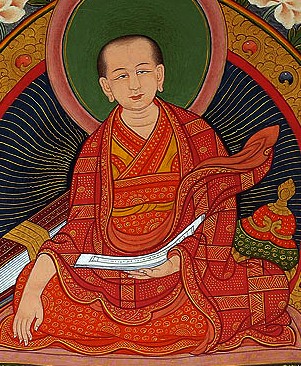
Blo sbyong don bdun ma. (Lojong Döndünma). In Tibetan, "Seven Points of Mind Training"; an influential Tibetan work in the blo sbyong ("mind training") genre. The work was composed by the Bka' gdams scholar 'Chad ka ba ye shes rdo rje, often known as Dge bshes Mchad kha ba, based on the tradition of generating bodhicitta known as "mind training" transmitted by the Bengali master Atiśa Dīpaṃkaraśrījñāna. It also follows the system laid out previously by Glang ri thang pa (Langri Tangpa) in his Blo sbyong tshig brgyad ma ("Eight Verses on Mind Training"). Comprised of a series of pithy instructions and meditative techniques, the Blo sbyong don bdun ma became influential in Tibet, with scholars from numerous traditions writing commentaries to it. According to the commentary of the nineteenth-century Tibetan polymath 'Jam mgon kong sprul, the seven points covered in the treatise are: (1) the preliminaries to mind training, which include the contemplations on the preciousness of human rebirth, the reality of death and impermanence, the shortcomings of saṃsāra, and the effects of karman; (2) the actual practice of training in bodhicitta; (3) transforming adverse conditions into the path of awakening; (4) utilizing the practice in one's entire life; (5) the evaluation of mind training; (6) the commitments of mind training; and (7) guidelines for mind training. (Source: "Blo sbyong don bdun ma." In The Princeton Dictionary of Buddhism, 126–27. Princeton University Press, 2014. http://www.jstor.org/stable/j.ctt46n41q.27.)
Geshe langri tangpa-Wikipedia.jpg
Classical WorksAbout this item
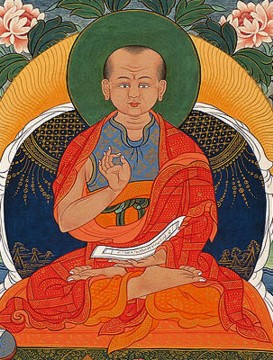
Composed by the Buddhist Master Langri Tangpa (1054-1123), Eight Verses for Training the Mind is a highly revered text from the Mahayana Lojong (mind training) tradition. These instructions offer essential practices for

cultivating the awakening mind of compassion, wisdom, and love. This eight-verse lojong enshrines the very heart of Dharma, revealing the true essence of the Mahayana path to liberation. Even a single line of this practice can be seen as encapsulating the entire teaching of the Buddha. For even a single statement of this mind training practice has the incredible power to help us subdue our self-oriented behavior and mental afflictions. The fundamental theme of mind training practice is the profound reorientation of our basic attitude, both toward our own self and toward our fellow human beings, as well as toward the events around us. The goal of mind training practice is the radical transformation of our thoughts, attitudes, and habits. Presently, we tend to cherish the welfare of our own self at the expense of all others. However, the mind training teaching challenges us to reverse this process. This involves a deep understanding of others as true friends, and the recognition that our

true enemy lies inside of ourselves, not outside. Source Accessed Jan 30, 2025)
Jowo Je Atisha.jpg
Classical WorksAbout this item
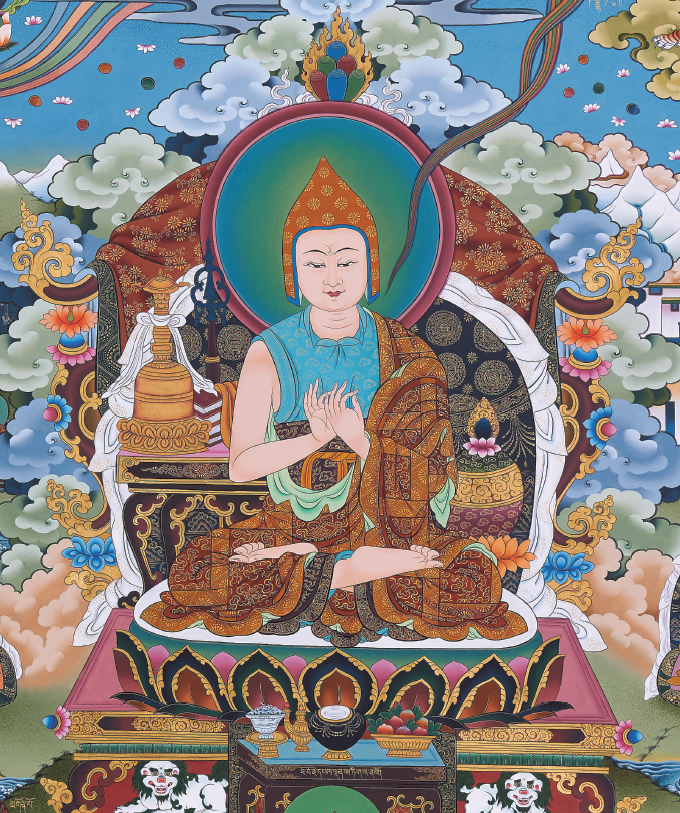
Bodhisattvamaṇyāvalī [alt. Bodhisattvamaṇevalī] (T. byang chub sems dpa'i nor bu'i phreng ba), or The Bodhisattva’s Garland of Jewels, is a lojong text attributed to Atiśa.

According to Thupten Jinpa,

"Although this text appears in the Tengyur (Toh 3951) as a self-standing work, it also exists almost in its entirety in another of Atiśa's works, entitled Letter of Unblemished Precious Jewels (Toh 4188), a letter sent by Atiśa to the Indian Bengali royalty Nayapāla from Nepal. Noting this, the Tibetan historian Pawo Tsuklak Trengwa asserts that Bodhisattva's Jewel Garland may actually have been compiled by Dromtönpa by drawing from Atiśa's writings. See his Joyful Feast for the Learned (Mkas pa'i dga' ston), p. 709." (Source Accessed Mar 14, 2025)