- Buddha-Nature
- Compassion
- Defining Bodhicitta
- Emptiness
- Equalizing & Exchanging Self and Others
- Equanimity
- History of Bodhicitta Teachings
- How to Develop Bodhicitta
- Interdependent Origination
- Lineage of the Profound View
- Lineage of the Vast Conduct
- Mahāyāna
- Mind Training
- Non-Self
- Seven-Point Instructions of Cause and Effect
- The Bodhisattva Ideal
- The Bodhisattva Path
- The Bodhisattva Vow
- The Bodhisattva's Goal
- The Four Immeasurables
- The Six Perfections
- The Three Higher Trainings
- The Two Accumulations
- The Two Truths
- Tonglen: The Practice of Sending and Receiving
- Types of Bodhicitta
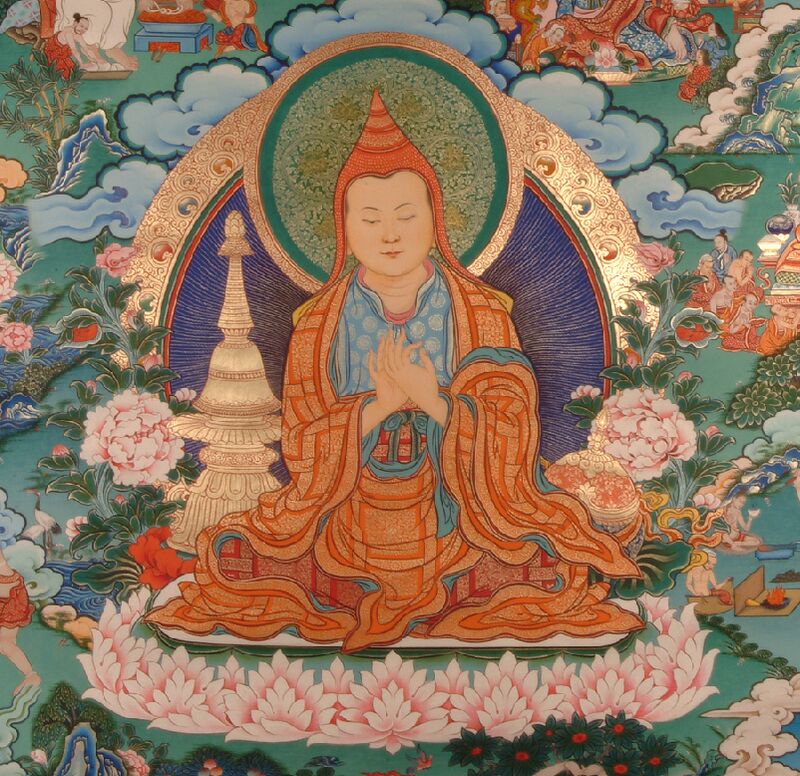
Mind training, or lojong (བློ་སྦྱོང་), is an accessible Tibetan Buddhist practice that reshapes ingrained mental habits through familiarization and purification. This tradition provides straightforward, uncompromising instructions for everyday application, enabling students to eliminate ego-driven tendencies while nurturing kindness and empathy. Using concise and practical sayings or slogans, this approach fosters the compassionate spirit of bodhicitta.
Lojong (Mind Training)
In the Indo–Tibetan Buddhist tradition, there is an entire genre of spiritual literature known as lojong, which in English is rendered as "mind training" or "thought transformation."
The Tibetan term བློ་སྦྱོང་ (lojong) is composed of two syllables, བློ་ lo and སྦྱོང་ jong. The syllable lo refers to "mind," "thought," or "way of thinking." The syllable jong can mean training to acquire a new skill or knowledge, becoming more familiar with something we are already acquainted with, or cleansing or purifying, which here specifically refers to our negative states of mind.
Through a process of purifying and habituation, we train our minds and transform our way of thinking, particularly the habitual patterns of cherishing oneself more than others.
While all the teachings of the Buddha can in some sense be considered a kind of training of the mind, here we are specifically referring to a distinct tradition which may have had its roots in the Indian tradition but that found its fullest expression in Tibet. It is a tradition particularly associated with the great Indian master Atiśa and with Atiśa's students, who are known as the Kadampa masters. This tradition developed practices that help generate the awakening mind of bodhicitta and can therefore be considered part of the broader context of mind training in the Mahāyāna (Great Vehicle).
The lojong teachings are often presented in the form of pithy instructions and aphorisms that point directly to how to practice in our daily lives. It is a very practical tradition, inspirational in its tone, but also known for its hard-hitting approach. These teachings offer pragmatic advice for transforming the way we think, for uprooting negative states of mind and self-centred attitudes, and for cultivating altruistic thoughts and emotions such as compassion, love, patience, and diligence.
Mind training holds a pivotal role in the development of bodhicitta and provides us with a whole range of techniques for reducing our self-centred attitude, an essential precursor to developing the mind that cherishes others. The instructions include advice on cultivating the understanding of both ultimate and relative bodhicitta.
Mind Training Course with Thupten Jinpa
Learn More at The Wisdom Experience: Discover inner transformation for yourself in the Wisdom Academy's new online course with Thupten Jinpa, renowned translator, scholar, author, teacher, and principal English translator for His Holiness the Dalai Lama. In this 10-week course, you'll journey far beyond the traditional seven-point mind training. With Jinpa as your guide, you'll be introduced to a much broader, deeper, and more profound way of understanding and practicing lojong.
Some of the great texts associated with the Lojong tradition are Geshe Langri Thangpa's Eight Verses for Training the Mind, Geshe Chekawa's Seven Points of Mind Training, Dharmarakṣita's The Wheel of Sharp Weapons, and Thokme Zangpo's The Thirty-Seven Practices of a Bodhisattva. In these texts, we are urged to employ systematic methods that help us to work with difficult emotions, challenging situations, and our own mental afflictions. The texts also introduce the central practice of taking adverse conditions into the path. That is, rather than avoiding problems, practitioners learn to transform obstacles into opportunities for spiritual growth. The tradition includes specific techniques for cultivating patience when faced with anger, generating compassion toward enemies, and using suffering as a path to awakening. For instance, in the classic mind training text Eight Verses for Training the Mind, we find the following advice:
When I encounter beings of unpleasant character And those oppressed by intense negative karma and suffering, &, though finding a treasure of precious jewels, I will train myself to cherish them, for they are so rarely found.[1]
Notes
- ↑ Thupten Jinpa, trans. and ed., Mind Training: The Great Collection, compiled by Shönu Gyalchok (Gzhon nu rgyal mchog) and Könchok Gyaltsen (Dkon mchog rgyal mtshan) (Boston: Wisdom Publications, 2006), 275.
