| 🤓 Admin Zone 🛠️ hidden to non-admins | |


Description


-front.jpg)


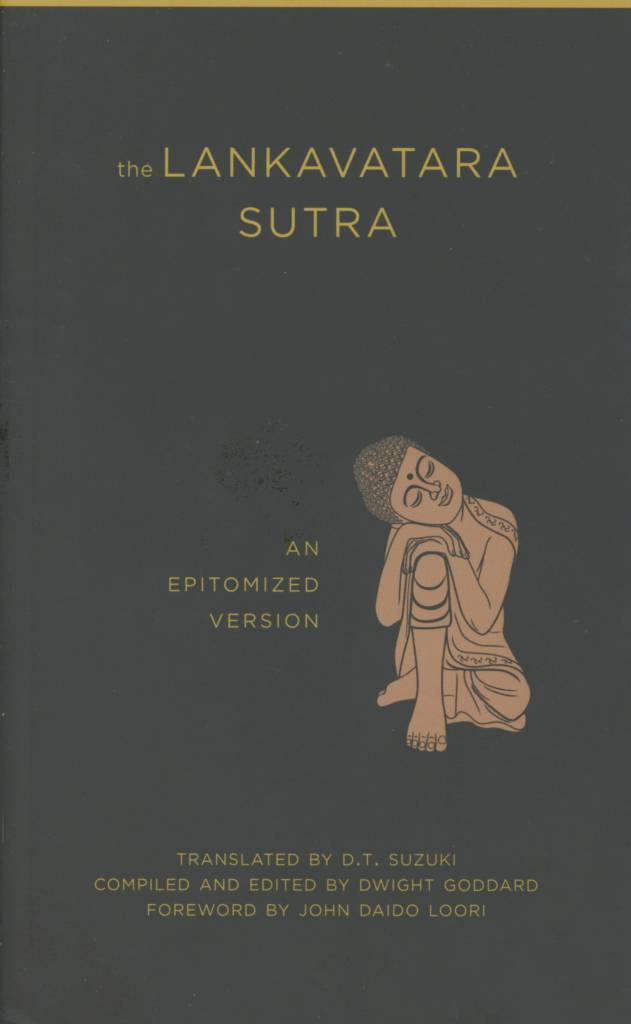
The first edition of this Buddhist Bible was published in 1932. When the need of a new edition became evident, it was decided to enlarge it so as to include other Scriptures of like importance so as to make it more comprehensive. This involved making a number of new translations for which we are indebted to Bhikshu Wai-tao. We are also indebted and are very grateful to a number of other Buddhist Scholars for permission to use their translations, as noted in the Appendix.
The compiling of a Buddhist Bible is a very different matter from compiling the Christian Bible. In the first place, there is no Hierarchy or Ecclesiastic Council to pass upon the authenticity of different scriptures, and as to their canonicity. In the second place, Christian Scriptures are a closed system of doctrines and dogmas that have been inspired by the Holy Spirit and are to be accepted in faith. Buddhism, on the contrary, is looked upon as a growing organism whose scriptures are of many kinds as the organism has developed under different racial, temporal and cultural conditions. As disciples follow the Buddha's Noble Path and practice dhyana concentration and intuitive meditation they have an unfolding experience of spiritual insight and grace which any one of them may describe and elucidate. Some of these expediences are of highest value, some of less value. Some are concerned with
the Dharma, some have to do with the rules of the Brotherhoods, some are philosophical, some psychological, some are commentaries and some are commentaries on commentaries. In the third place, there is the difference of quantity. In the Christian Bible there are sixty-six titles; Buddhist scriptures number over ten thousand, only a fraction of which have thus far been translated. In the Sung Dynasty about 972 AD a Chinese version of these scriptures was published consisting of 1521 works, in more than 5000 volumes, covering 130,000 pages.
The nearest approach to canonicity is the Pali Tripitika. That was the earliest collection and was supposed to be limited to the words of Buddha. Southern Buddhists are passionately devoted to these Pali Scriptures and are inclined to disparage and dispute the more philosophical scriptures of the Northern School that developed later after Buddhism had come in contact with other world religions in Persia, Palestine, Egypt and Greece. Under these conditions there developed in Northern India, and Kashgar, a succession of very able minds,
Ashvaghosha, Nargajuna, Vasobandhu and his brother Asangha from whose writings and teachings there developed various important schools of philosophical thought that profoundly changed the understanding of Buddha's Dharma.
Later on as Buddhism spread into China and came under the influence of its immemorial culture and practical good sense, it took on forms of Taoist naturalism and kindly humanism, and there developed forms of "salvation by faith in Amitabha's mercy" and rebirth in his Pure Land. While in Tibet, coming in contact with its ancient Bon religion, and
under the climatic conditions of its high altitudes, it took on forms of strenuousness and magic and tantric conceptions. Later on in Japan owing to political and social conditions incident to the presence of a limited but powerful noble class dominating a suppressed peasantry, which had developed extremes of loyalty and obedience and self-control, it took on forms of concentrative meditation known as Zen, and a still more widely divergent type of the True Pure Land Sect.
Naturally among these diverse conditions Buddhist scriptures vary widely, and the quantity of them being so enormous, they have become segregated into different groups as they are favored by different schools of thought and practice. The Tien-tai favor the more philosophical scriptures, the Shingon, the more esoteric, the Ch’an (Zen), the more intellectual, and the Pure Land, the more emotional. The present editor has been guided in his selection of scriptures for this Buddhist Bible by a sincere purpose to make the selection as comprehensive as possible within its limits and to represent as truly as possible the original teachings of the Blessed One both as understood by the Southern and more primitive school and by the Northern and more philosophical interpreters. He has also humbly tried to have the choice vouched for by his own spiritual experience in his practice of the Noble Path and especially during its Eighth Stage of intuitive Dhyana.
It follows, therefore, that the scriptures thus selected are the generally accepted scriptures of the Dhyana Sects—Ch’an in China, Zen in Japan and Kargyupta in Tibet. Of course among so enormous a collection of scriptures there are others that are favorites also, notably the Saddharma-pundarika (Lotus of the Perfect Law), and the Avatamsaka, said to be the grandest religious document ever written, but these are very large books in themselves. The late W. E. Soothil of London left a very careful translation of the Lotus that still waits a publisher. Dr. Suzuki of Kyoto has made a translation of the Gandhavyuha sections of the Avatamsaka that is now in process of being published. The inclusion of Laotzu’s Tao-teh-king is open to question as it is not strictly a Buddhist
text, but its teaching has such a close affinity to Buddhist teaching and nearly all early Chinese Masters of Buddhism were Taoist scholars who, upon becoming Buddhists, did not give up their Taoist conceptions and terms, and because the Laotzuan teaching in the Tao-teh-king has had such a wholesome
influence on the development of Chinese Buddhism, and, in later years, wherever the Tao-teh-king is held in reverence, it has tended to restrain individual pride of egoism, religious ceremonial, ecclesiasticism, priestcraft and insincerity generally, we make no apology for including it. In fact, it is our earnest wish that the Tao-teh-king may become one of the foundation stones of American and European Buddhism.
Further introductory notes are reserved for the Appendix
under the heads of the individual Scriptures, as are also -grateful appreciation to those who have contributed to the preparation and publication of this Bible, especially to those Buddhist scholars who have courteously granted the Editor permission to use their translations for this purpose
Just a closing word as to the rules that have guided the
Editor in his choice and handling of textual material. He has always kept in mind the spiritual needs of his readers. This Buddhist Bible is not intended to be a source book for critical literary and historical study. It is only intended to be a source of spiritual inspiration designed to awaken faith and to develop faith into aspiration and full realization. The original texts having for centuries been carried in memory and transcribed by hand by scribes who were often more loyal to their Master than to historical exactness, are often overloaded with interpolations and extensions, and in places are confused and obscure. To carry out the design of the Editor, he has omitted a great deal of matter not bearing directly upon the theme of
the particular Scripture, and has interpreted occasionally where it seemed necessary and advisable, in order to provide an easier and more inspiring reading. The need for this course will become apparent to every earnest minded disciple.
In these days when Western civilization and culture is buffeted as never before by foreboding waves of materialism and selfish aggrandisement both individual and national, Buddhism seems to hold out teachings of highest promise. For two thousand years Dhyana Buddhism has powerfully conditioned the cultural, ethical and spiritual life of the great Oriental nations. It well may be the salvation of Western civilization. Its rationality, its discipline, its emphasis on simplicity and sincerity, its thoughtfulness, its cheerful industry not for profit but for service, its love for all animate life, its restraint of desire in all its subtle forms, its actual foretastes of enlightenment and blissful peace, its patient acceptance of karma and rebirth, all mark it out as being competent to meet the problems of this excitement loving, materialistic, acquisitive and thoughtless age.
Its basic principle of an eternal process based on unchanging law and operating in eternal recurrence, leading to mind-control, to highest cognition, to purest conceptions of love and compassion, to ever clearing insight, to highest perfect wisdom, to the self-giving of Bodhisattvas, and Buddhas, to blissful peace, is worthy of confidence; and its Noble Path worthy of
The theme of this Buddhist Bible is designed to show the unreality of all conceptions of a personal ego. Its purpose is to awaken faith in Buddhahood as being one’s true self-nature; to kindle aspiration to realize one’s true Buddha-nature; to energize effort to follow the Noble Path, to become Buddha. The true response to the appeal of this Buddhist Bible is not in outward activities, but in self-yielding, becoming a clear channel for Buddhahood's indrawing compassion, that all sentient beings may become emancipated, enlightened and brought to Buddhahood. (Goddard, preface, v–viii)

-front.jpg)
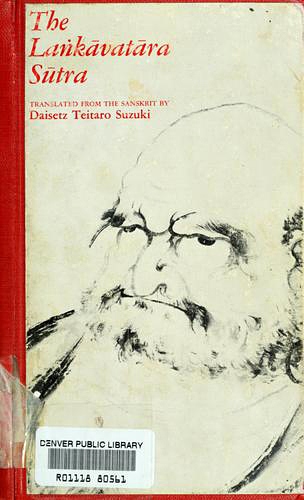
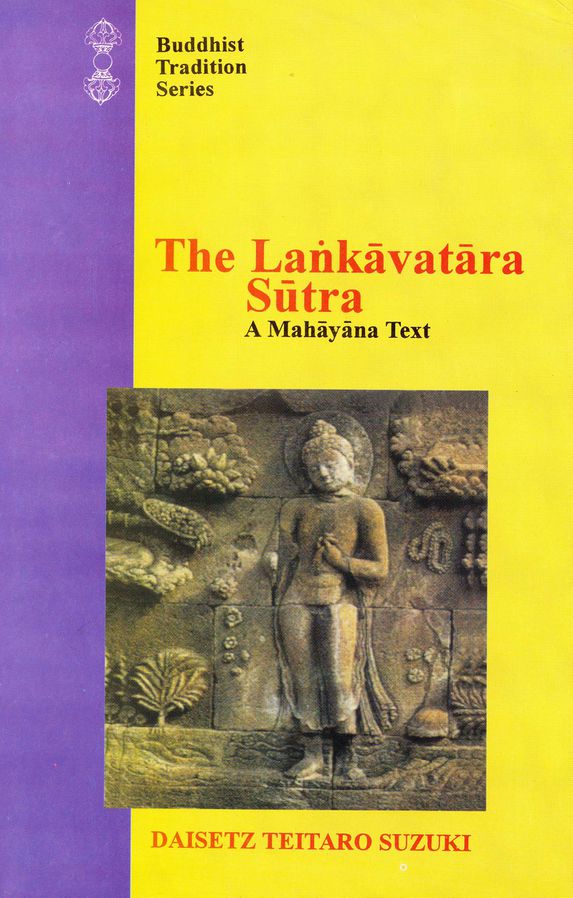
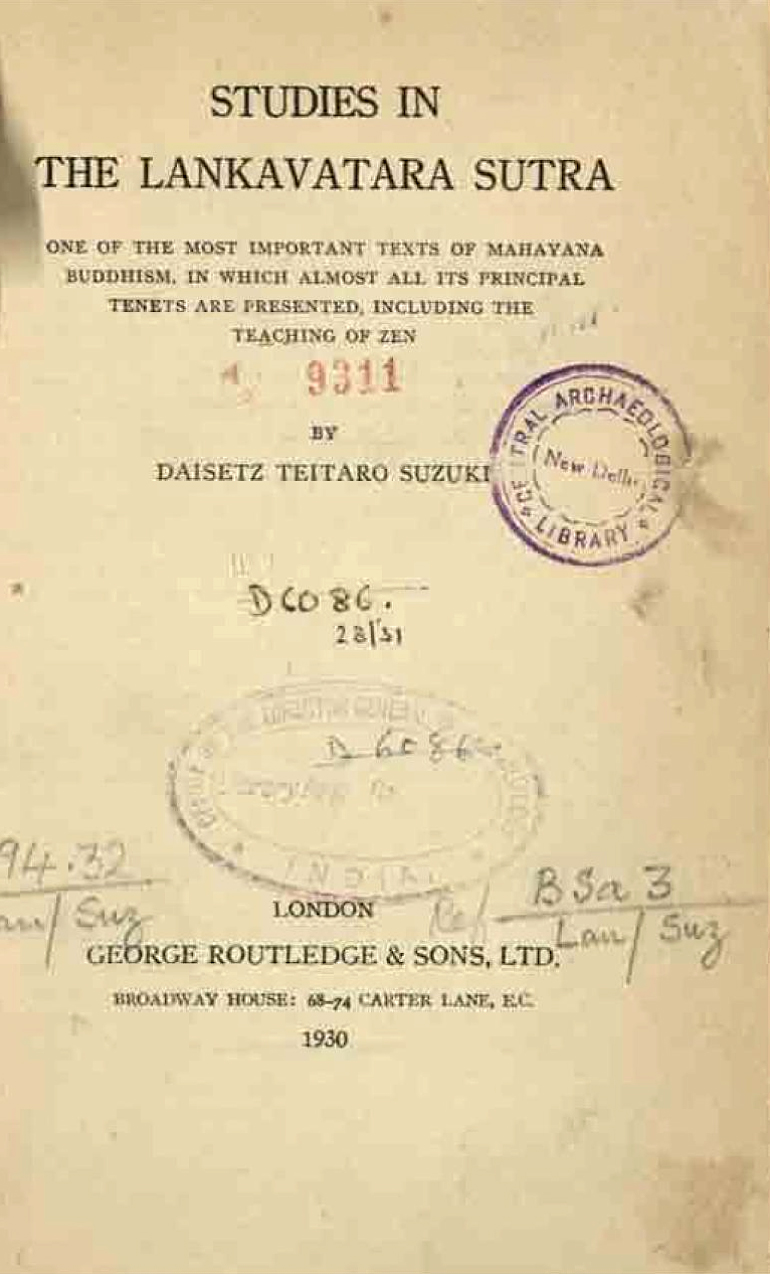
The Laṅkāvatāra is a Mahayana text difficult in more than one way to understand perfectly as to its meaning and also in Its proper historical setting. But its importance as giving most of the fundamental tenets of Mahayana Buddhism has urged the author to publish whatever results he has gained so far in his study. They are no doubt short of being quite satisfactory from a strictly scholarly point of view, but the author's earnest wish is to open the way, if he could so hope, for further study and more thoroughgoing investigation of the text. Mahayana Buddhism is
just beginning to be known in the West. As to the appreciation of its full significance we have to wait patiently for some years yet to come.
The first two parts of these Studies were already published In The Eastern Buddhist, but in the present work they have been revised fully and inaccuracies corrected as far as available. The third part is entirely new. As the Studies were not planned out as a whole from the beginning but have grown progressively in the author's mind, some repetitions have become inevitable. The second part dealing with the Laṅkāvatāra containing the philosophy of Zen Buddhism was written first. As it was being revised after its publication in The Eastern Buddhist, Volume IV, Nos. 3-4, for 1928, the thought suggested itself that the sutra must be studied also textually since there are still three Chinese and one (or two) Tibetan translations. The result was the first part of the present work, which appeared as an independent article in The Eastern Buddhist, Volume V, No. 1, for 1929.
The Laṅkāvatāra does not belong exclusively to the Zen school of Buddhism, it is also the common property of the Mahayana. When it is studied apart from Zen, some of the important conceptions developed in the sutra, which do not
necessarily belong to the philosophy of Zen, are to be expounded, however briefly. Hence the third part of the present Studies, entitled "Some of the Important Theories Expounded in the Laṅkāvatāra."
The author has prepared for the benefit principally of
his Japanese and Cbinese readers a glossary of the Sanskrit technical terms found in the book. This he hopes to be of use in their perusal of Sanskrit Buddhist literature and at the same time illustrative of the methods of the Indian-Chinese translators. (Suzuki, preface, v–vi)


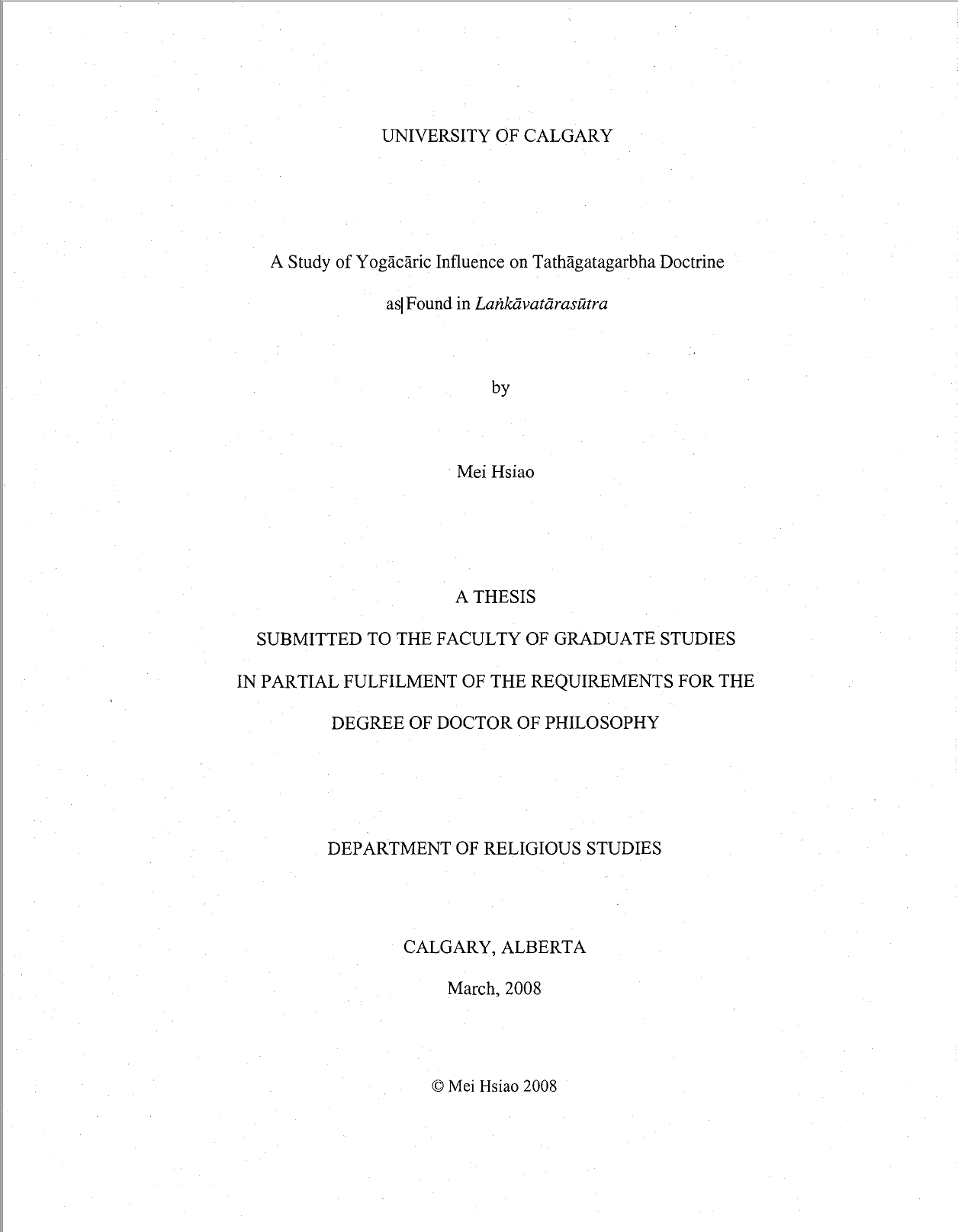
First, in regard to tathāgata-nairātmya-garbha, a doctrinal review of the term "nairātmya" is necessary, because its definition differs according to different traditions. In primitive Buddhism, the term "nairātmya" is a synonym of the term "anātman" (non-existence of a substantial self), which indicates that in the realm of suffering and the impermanence of life phenomena that arise according to the principle of co-dependent origination/ pratītyasamutpāda, no eternal and dependent ātman can be found. According to the Madhyamaka School, the term "nairātmya" is a synonym of the term "niḥsvabhāva" (no intrinsic-nature) which implies that all beings, whether conditioned or unconditioned, are all devoid of an ever-abiding intrinsic nature. For the Yogācāra School, the reality of nairātmya is said to be grasped under the principle of mind-only. That is to say, the imagined self /kalpitātman that is the presentation of mind is unreal, while the indescribable self/ anabhilāpyātman that is the genuine mind itself is real. Finally, it can be said that the tathāgata-nairātmya-garbha in Laṅkāvatārasūtra accords well with the Yogācāra teaching. In other words, it is the Yogācāric sense of nairātmya that sheds an influence upon the tathāgatagarbha doctrine.
Secondly, in regard to tathāgatagarbhālayavijñāna, a doctrinal development is promoted owing to the identification of tathāgatagarbha with ālayavijñāna, which according to the Yogācāra School is also named "sarvabīljavijñāna" (cognition as the seed of everything). This latter synonym references its function of bringing forth all beings just as a giant tree originates from a seed. As a result of its identification with the ālayavijñāna, the tathāgatagarbha is said to be endowed with the function of bringing forth all forms of existence and thus becomes the "producing cause" of all. This interpretation is not seen in earlier scriptures wherein the tathāgatagarbha is described simply as a static substance supporting all beings.
Thirdly, in regard to pariniṣpannasvabhāvastathāgata-garbhahṛdayam, the implication of the tathāgatagarbha was expanded substantially by declaring that pariniṣpannasvabhāva is the very essence of tathāgatagarbha. The term "pariniṣpannasvabhāva" according to some important Yogācāra texts is defined as tathatā (ultimate realm of suchness). The combining of pariniṣpannasvabhāva with tathāgatagarbha that had formerly focused on the subjective potential of realizing wisdom, shifts the doctrinal emphasis toward the objective realm of realized perfection.
This thesis reveals that, having assimilated the Yogācāric doctrine of dharmanairātmya, ālayavijñāna and pariniṣpannasvabhāva, the tathāgatagarbha thinking in Laṅkāvatārasūtra presents the comprehensive and distinctive features in comparison to the scriptures that preceded it.


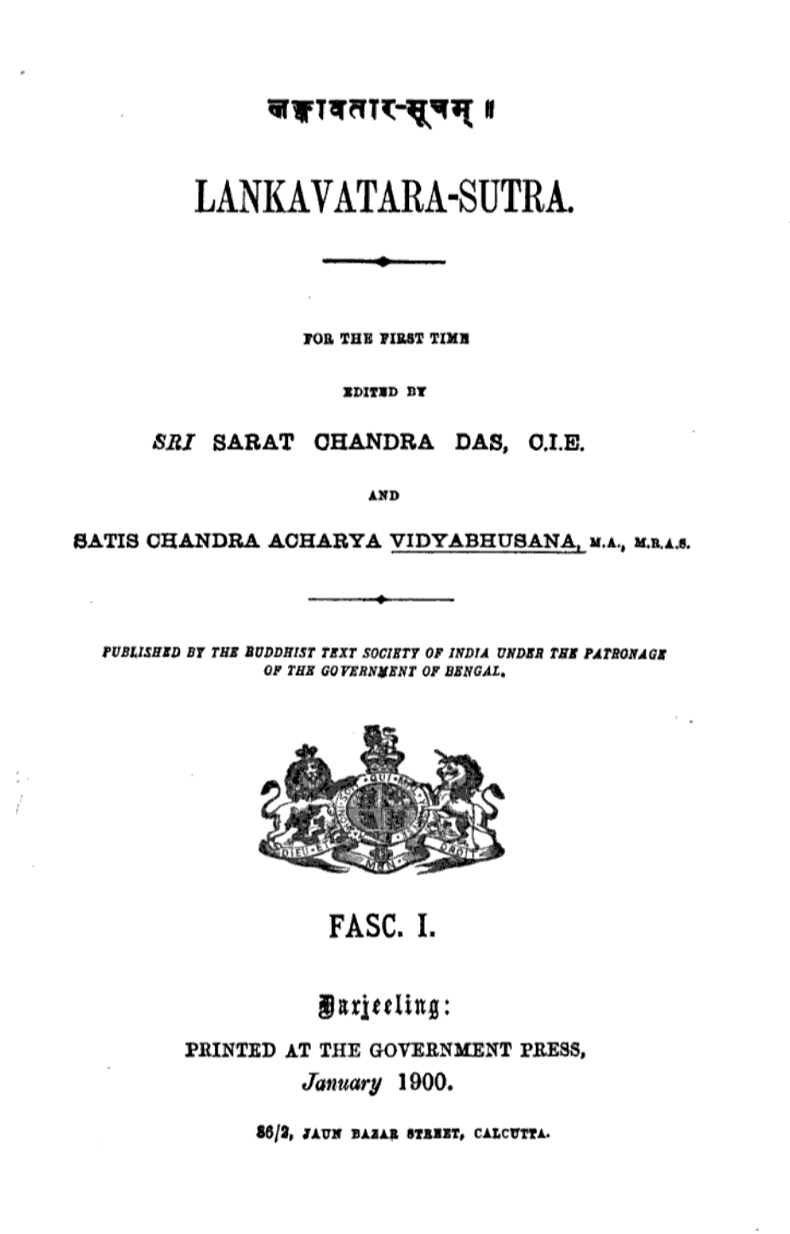
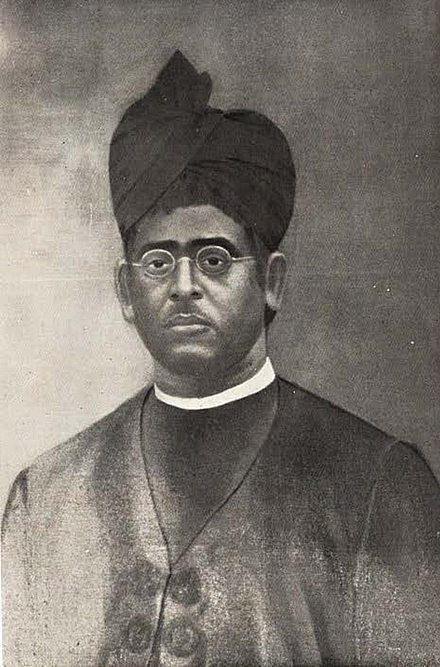
The Laṅkāvatāra Sūtra consists of ten chapters, named respectively —(1) Rāvaṇādhyeṣaṇā parivarta, (2) Sarvadharmasamuccaya parivarta, (3) Anityatā parivarta, (4) Abhisamaya parivarta, (5) Tathāgata - nityānityatva, (6) Kṣaṇika parivarta, (7) Nairmāṇika parivarta, (8) Māṃsabhakṣaṇa parivarta, (9) Dhāraṇīparivarta, and (10) the Parisamāpti parivarta, which bears no special name.
Throughout the Laṅkāvatāra Sūtra the speaker is Buddha himself. The first chapter of the book is addressed to Rāvaṇa, while the person spoken to in the remaining nine chapters is Mahāmati. Rāvaṇa prayed to Buddha for the solution of two questions, viz. : (1) what is the distinction between dharma and adharma, and (2) how could one pass beyond both dharma and adharma? Buddha’s answers to these questions form the subject-matter of the first chapter. Thereafter 108 questions were asked by Mahāmati, and
Buddha’s answers to these questions form the topics of the remaining nine chapters. (Vidyābhūṣaṇa, para 10–11, 833)


Prof. Hauer has started a series of studies, chiefly dedicated to the critical investigation of Indian religion.[1] We cannot help being very greateful to him for this, because we must acknowledge that the various aspects of Indian religion are not yet studied as they deserve.
I do not need to insist on proving the great importance of this research, which is likely to throw much light on many a problem; chiefly on that of the extent of the influences exercised by the aboriginal element on the evolution of Indian religious thought and Indian civilization in general. The Vedas have a great importance, no doubt,
but it is also true that Indian gods, mythology, practices, theories about sacrifice, etc., are, on the whole, very different from the religious ideas expounded in that famous book. The study of the
last phases of Mahāyāna Buddhism, and of its relation with the Hindu systems proper, will prove of the greatest importance for this kind of research; because it is just in the literature of that period that we find the most important documents of these new conceptions and meet the names of a host of gods, demons and goblins of whom we did not hear before that time.
For this reason I think that Prof. Hauer is quite justified in having started his Series with the study of such an important Mahāyāna text as the Laṅkāvatāra, which contains some very interesting allu- sions to the relation between the Buddha and the gods of Hinduism (cf. e.g., p. 192).
The first of the papers dedicated to our text is chiefly concerned with the refutation of the Sāṅkhya system contained in the Laṅk., X, 546 ff. This section has been translated by the author, as he thinks that it represents the reply of the Mahāyāna to the new claim of the Sāṅkhya to be the doctrine of salvation (p. 5.). This Sāṅkhya is, according to the A., the new exposition of the system as contained in the Sāṅkhyakārikā of Iśvarakṛṣṇna. The chronology of either text seems to support this view. In fact, this refutation is contained in the tenth Chapter of the Laṅk., which is wanting in the first Chinese translation by Guṇabhadra (443 A.D.), while it is found in the second
translation, made by Bodhiruci in the year 513 A.D. On the other hand, we may suppose that the kārikā was composed about 450 A.D. That is true, but I do not think we are allowed to infer from this, that there is any interdependence of this kind between the kārikā and the Xth Chapter of the Laṅk. First of all, the history of the various redactions of this text, represents a very difficult and complex problem. I have compared the three Chinese translations with the Sanskrit original and I already had the opportunity to point out that the text of the Laṅkāvatāra underwent many changes,[1] so that we may safely assume that different redactions of the Laṅk, circulated not only at different times, but also in different places. It is true that the allusion to the Huns, which is found in X, 785, must go back to the first decade of the 7th century A.D., but the fact remains that the Sanskrit text of the Xth Chapter, as it has been handed down to us in the Nepalese manuscripts, looks like a compilation from various sources. Thus it has been enlarged by the insertion of various ślokas already quoted in the preceding chapters in prose.[2] As a rule, all these double verses cannot be found in the translation of Śikṣānanda. This I say in order to show that the problem of the various strata composing the vulgata of the Laṅk, as well as the other concerning the age to which they must be attributed is a very complex one. They can only be solved by the comparative study of the Tibetan and Chinese translations. Therefore it is evident that the chronology based upon any passage of the present text cannot be relied upon as definitive, until the history of the text has been reconstructed. On the other hand, the refutation of the Sāṅkhya system, as contained in X, 558 ff, is neither one of the earliest, nor one of the best. The refutation of the satkāryavāda (Sāṅkhya) as well as of the asatkāryavāda (Vaiśeṣika) forms one of the chief contents of the dogmatical works of Mahāyāna Buddhism. It can be found in the Mahāprajñāpāramitā-Śāstra of Nāgārjuna, in the Śataśāstra of Āryadeva, in the Buddhagotraśāstra attributed to Vasubandhu etc.[1] Nor shall we forget that Vasubandhu and
Diṅnāga refuted at length the Sāṅkhya theories in their Paramārthasaptati and Pramāṇasamuccaya respectively. Moreover, as Diṅnāga himself tells us in his commentary upon the Nyāyamukha, he wrote a book exclusively devoted to refuting the Sāṅkhya system. Shen T'ai, a disciple of Yuan Chwang, who commented upon the Nyāyamukha, tells us that this work was a very large one, as it contained six thousand ślokas.
Therefore I do not think that this criticism of the Sāṅkhya as contained in the Laṅkāvatāra can really throw much light on the history of the controversy between the two systems. In fact, we must acknowledge that the value of the Laṅkāvatāra, as a philosophical hook, is rather limited, although it is of the highest importance for the history of the evolution of the Mahāyāna Buddhologie and "Erlosungslehre."
But I can hardly believe that the passage in question is expressly directed against the Sāṅkhya system. It is only meant to assert the idealistic view which is expounded throughout the book. Kapila, it is true, is referred to by name in the verse X, 558 and in three other places; but Kaṇāda also is quoted in X, 548. . . .
But to which school did the Laṅkāvatāra originally belong? It is in general believed that it represents Yogācāra ideas. But, of course, we cannot learn very much from this mere name, because Yogācāra has certainly a very wide meaning. It is also considered as a synonym of Vijñānavāda, and therefore even the vijñaptimātratā theory of Vasubandhu is put under that same item.
In fact, according to the Chinese tradition the book is considered as one of the six sūtras of the Lakṣaṇa school. But if we read these volumes it will be easy to recognize that, though there are some fundamental notions that can be found all throughout, each text or group of texts presents its own peculiarities.
Notes
1. J. W. Hauer, Das Laṅkāvatāra-Sūtra und das Sāṅkhya (eine vorläufige Skizzeo, Stuttgart, 1927.Id, Die Dhāraṇī im nördlichen Buddhismus und ihre parallelen in der sogennannten Mithrasliturgie. Ibid.
Beitrage zur Indischen Sprachwissenschaft und Religionsgeschichte.
1. See. my Studio comparative fra le tre versioni cinesi ed il testo sanskrito del i capitolo del Laṅkāvatāra, Memorie della R. Accademia dei Lincei, serie v, vol xviii, fasc, 5; and Una nuova edizione del Laṅkāvatāra in Studi Mahāyanici, Rivista di studi Orientali, vol. X.
2. In Studi Mahāyanici, pp. 574 ff., I have given a list of the verses inserted in the text, which have been repeated in the tenth chapter. This fact makes me rather doubtful whether many of the other verses collected there are not taken from some Mahāyāna text belonging to the same current of thought. Prof. Hauer thinks that the first Chapter belongs to the most ancient redaction of the book. I can hardly believe that; in fact, it cannot be found in the translation of Gunabhadra, and it has but very little relation with the rest of the book. On the other hand, I think that the gāthās represent the most ancient nucleus of the book, as it is shown by the numerous Prakritisms that have survived and that the redactors of the present vulgata could not avoid: e.g., desemi, pp. 76, 176, 181; vibhāvento, p. 95 ; vikalpenti, pp. 185 186; nāśenti, p. 190 ; deśyante for deśyamāne, p. 201.
1. For other references see Ui’s, Vaiśeṣika philosophy.
2. See my English translation of the Nyāyamukha in "Materiailen zur Kunde des Buddhismus" edited by Prof. Walleser, Heidelberg, to be published shortly.
The Laṅkāvatāra is a Mahayana text difficult in more than one way to understand perfectly as to its meaning and also in Its proper historical setting. But its importance as giving most of the fundamental tenets of Mahayana Buddhism has urged the author to publish whatever results he has gained so far in his study. They are no doubt short of being quite satisfactory from a strictly scholarly point of view, but the author's earnest wish is to open the way, if he could so hope, for further study and more thoroughgoing investigation of the text. Mahayana Buddhism is
just beginning to be known in the West. As to the appreciation of its full significance we have to wait patiently for some years yet to come.
The first two parts of these Studies were already published In The Eastern Buddhist, but in the present work they have been revised fully and inaccuracies corrected as far as available. The third part is entirely new. As the Studies were not planned out as a whole from the beginning but have grown progressively in the author's mind, some repetitions have become inevitable. The second part dealing with the Laṅkāvatāra containing the philosophy of Zen Buddhism was written first. As it was being revised after its publication in The Eastern Buddhist, Volume IV, Nos. 3-4, for 1928, the thought suggested itself that the sutra must be studied also textually since there are still three Chinese and one (or two) Tibetan translations. The result was the first part of the present work, which appeared as an independent article in The Eastern Buddhist, Volume V, No. 1, for 1929.
The Laṅkāvatāra does not belong exclusively to the Zen school of Buddhism, it is also the common property of the Mahayana. When it is studied apart from Zen, some of the important conceptions developed in the sutra, which do not
necessarily belong to the philosophy of Zen, are to be expounded, however briefly. Hence the third part of the present Studies, entitled "Some of the Important Theories Expounded in the Laṅkāvatāra."
The author has prepared for the benefit principally of
his Japanese and Cbinese readers a glossary of the Sanskrit technical terms found in the book. This he hopes to be of use in their perusal of Sanskrit Buddhist literature and at the same time illustrative of the methods of the Indian-Chinese translators. (Suzuki, preface, v–vi)


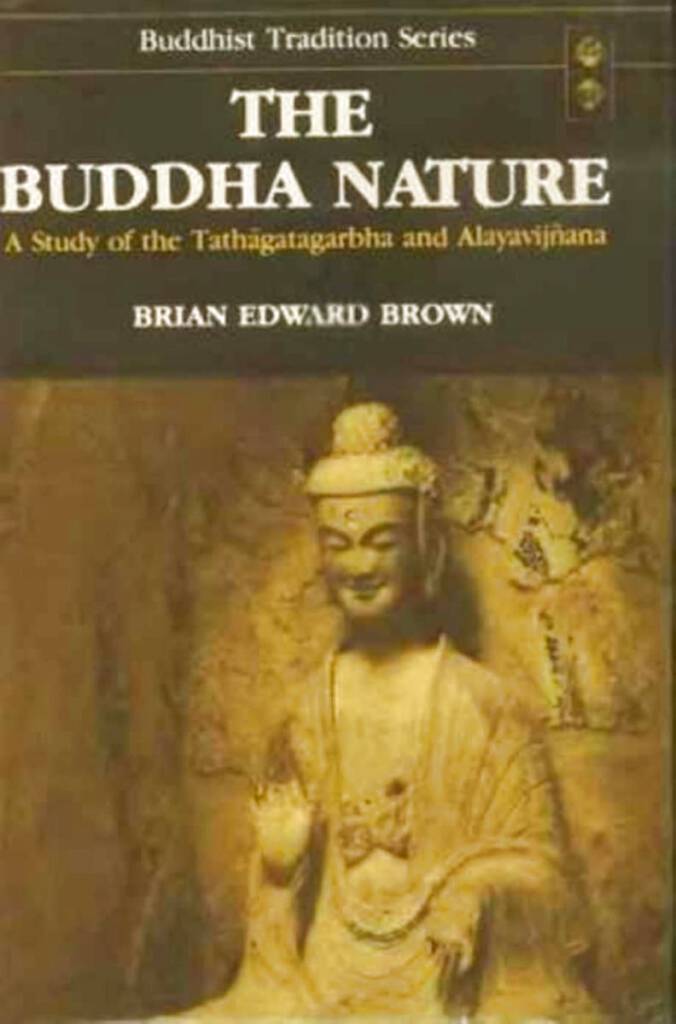
The dissertation interprets the Buddhist enlightenment as the salvific-transformational moment in which Tathatā "awakens" to itself,
comes to perfect self-realization as the Absolute Suchness of reality, in and through phenomenal human consciousness. It is an interpretation of the Buddhist Path as the spontaneous self-emergence of "embryonic" absolute knowledge as it comes to free itself from the concealments of adventitious defilements, and possess itself in fully self-explicitated self-consciousness as the "Highest Truth" and unconditional nature of all existence; it does so only in the form of omniscient wisdom.
Aside from Ruegg's La Theorie du Tathāgatagarbha et du Gotra and Verdu's study of the Ālayavijñāna in Dialectical Aspects in Buddhist Thought, Western scholarship treating of the subject is negligible. And while both sources are excellent technical treatises, they fail to integrate in any detailed analysis the dual concepts as complementary modes of each other. Thus, the dissertation, while adopting the
methodology of textual analysis, has as its emphasis a thematic-interpretive study of its sources. Conducting a detailed analysis into the structure of the texts, the dissertation delineates and appropriates the inherent ontological, soteriological and epistemological foci which they themselves assume as their natural form.
Structurally, the dissertation is divided into three major parts. The first focuses on the Tathāgatagarbha, the second on the Ālayavijñāna, the third on their relation and deeper significance in the human thought tradition. The first two parts are sub-divided into seven and four chapters respectively. The former seven chapters establish the ontological identity of the Tathāgata-embryo (Tathagātagarbha) through a critical examination of the major sūtral authority for the concept, i.e., the Śrī-Mālā-Sūtra, and the primary śāstral elaboration inspired by it, viz., the Ratnagotravlbhāga.
Following the same pattern, the four chapters of part 2 note the role of the Laṅk¯āvatāra Sūtra as a principal scriptural advocate for the theory of the Storehouse Consciousness (Ālayavijñāna), while detailing the scholastic amplification of it in Hsüan Tsang's Ch'eng Wei-Shih Lun. Part 3 concludes the study by recapitulating the principal developments in the emergent complementarity of the two concepts, arguing that any adequate
discussion of the Buddha Nature must be informed on the one hand by the theory of the Tathāgatagarbha which grounds and authenticates its ontological status, and on the other by the Ālayavijñāna, its noetic-cognitive determination. While the former tends to elucidate the
process towards, and experience of enlightenment as a function of Absolute Suchness (Tathatā), the latter adopts the reciprocal perspective and examines the subject in the light and function of phenomenal consciousness.
By way of comparison with Western thought, the chapter likewise demonstrates the analogous dynamic in the bilateral theory of the Tathāgatagarbha-Ālayavijñāna and the Hegelian Absolute Spirit in-and-for-itself. Focusing upon The Phenomenology of Spirit, the chapter notes that the self-becoming process in and through which consciousness realizes its own plenitude is strikingly homologous to the theory of Buddhist enlightenment presented through the concept of the Tathāgatagarbha-Ālayavijñāna. It suggests that these two representative thought systems

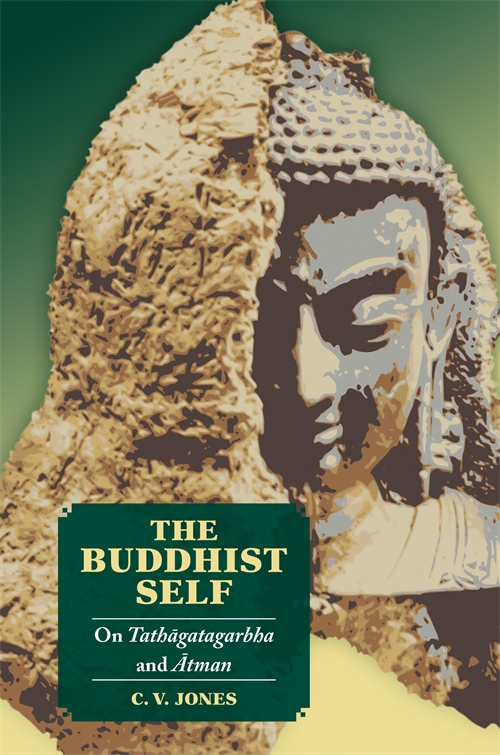
The Buddhist Self is a methodical examination of Indian teaching about the tathāgatagarbha (otherwise the presence of one's “Buddha-nature”) and the extent to which different Buddhist texts and authors articulated this in terms of the self. C. V. Jones attends to each of the Indian Buddhist works responsible for explaining what is meant by the expression tathāgatagarbha, and how far this should be understood or promoted using the language of selfhood. With close attention to these sources, Jones argues that the trajectory of Buddha-nature thought in India is also the history and legacy of a Buddhist account of what deserves to be called the self: an innovative attempt to equip Mahāyāna Buddhism with an affirmative response to wider Indian interest in the discovery of something precious or even divine in one's own constitution. This argument is supplemented by critical consideration of other themes that run through this distinctive body of Mahāyānist literature: the relationship between Buddhist and non-Buddhist teachings about the self, the overlap between the tathāgatagarbha and the nature of the mind, and the originally radical position that the only means of becoming liberated from rebirth is to achieve the same exalted status as the Buddha. (Source: University of Hawai'i Press)

All traditions of Buddhism accept that the Buddha attained enlightenment through stages of meditation that led to the Buddhahood endowed with transcendent wisdom and compassion. According to some Mahāyāna scriptures, the Buddhahood is nothing other than the Buddhanature which is the inherent essence within all beings. The doctrine of the Buddha-nature presented in several Mahāyāna scriptures of the so-called Tathāgatagarbha literature was formed in about the third century CE. There is no evidence that the doctrine of Buddha-nature formed a school in India like the Śūnyatā (Emptiness) of the Mādhyamika or the Vijñaptimātratā (Consciousness-only) of the Yogācāra School, but the Buddha-nature plays an important role in the religious life of Mahāyāna Buddhism in the East and Southeast Asian countries because it provides a faith of the permanence and immortality due to a declaration that all sentient beings possess the innate Buddha-nature and have a potentiality of becoming the Buddhas.
Although most of the followers of Mahāyāna Buddhism believe the doctrine of the Buddha-nature and constantly try their best endeavor to attain the goal of Buddhahood, there were a lot of opinions that criticize the doctrine of the Buddha-nature by asserting that it is not Buddhist because this idea of the Buddha-nature seems to be akin to the permanent Self (ātman/brahman) presented in the Vedānta of Brahmanism. Conversely, according to some other scholars, the Buddha nature or Tathāgatagarbha referred in some Mahāyāna Sūtras does not represent a substantial self or ego; it is rather a positive language to express the thought of śūnyatā and to represent the potentiality of realizing the Buddhahood through Buddhist practices. Modern scholars today fall into an unending discussion about the similarity or difference between the Buddha-nature and Brahman but no one compares the date of these doctrines. Therefore, the purpose of this thesis is an attempt to clarify the Buddhist orthodoxy of the doctrine of the Buddha-nature through chronological comparison of the date of Buddha-nature with that of Brahman. Based on the Laṅkāvatārasūtra and other scriptures, the work attempt to elucidate that the Buddhist thought of the Buddha-nature had existed prior the Vedāntic thought of Brahman. Indeed, the thesis shows that while the doctrine of the Buddha-nature had come into existence in the third century CE in the Tathāgatagarbha literature, the Vedāntic doctrine of Brahman appeared for the first time in the sixth century CE. Consequently, although the Buddha-nature is closely akin to Brahman/ātman of the Vedānta, the doctrine of the Buddha-nature is originally a thought of Buddhism. For this reason, the writer chose the topic entitled “Thought of Buddha-nature as Depicted in the LaṅkāvatāraSūtra” for the Ph.D. thesis.
Study on the Buddha-nature is a task which cannot be carried out without the important texts, teachings, practices and historical movements of Buddhism. This study is mainly based upon the Laṅkāvatārasūtra, a Buddhist text of the later period of the Tathāgatagarbha literature, in which the thought of the Buddha-nature is depicted in relationship with most of the Mahāyāna concepts such as the Buddhatā, Tathāgatagarbha, Ālayavijñāna, Dharmakāya, Mind-only, etc. Especially, the Laṅkāvatārasūtra emphasizes the practice of self-realization and sudden enlightenment of the Buddha-nature. It is also said that the Sūtra was handed down by Bodhidharma to his heir disciple Hui-ke 慧可 as the proof of enlightenment in Chan (Zen) Buddhism.
This thesis is an attempt to investigate and criticize the philosophical and religious thought of the Buddha-nature as depicted in the Laṅkāvatārasūtra. In so doing, we have taken into consideration the following principle themes:
- 1. Evolution of the Buddha-nature Concept
- 2. The Buddha-nature in the Tathāgatagarbha Literature
- 3. The Laṅkāvatārasūtra and Hindu Philosophy
- 4. The Thought of Buddha-nature in the Laṅkāvatārasūtra
- 5. The Practice of Buddha-Nature in the Laṅkāvatārasūtra
- 6. Further Development of the Concept of Buddha-nature in China
The first edition of this Buddhist Bible was published in 1932. When the need of a new edition became evident, it was decided to enlarge it so as to include other Scriptures of like importance so as to make it more comprehensive. This involved making a number of new translations for which we are indebted to Bhikshu Wai-tao. We are also indebted and are very grateful to a number of other Buddhist Scholars for permission to use their translations, as noted in the Appendix.
The compiling of a Buddhist Bible is a very different matter from compiling the Christian Bible. In the first place, there is no Hierarchy or Ecclesiastic Council to pass upon the authenticity of different scriptures, and as to their canonicity. In the second place, Christian Scriptures are a closed system of doctrines and dogmas that have been inspired by the Holy Spirit and are to be accepted in faith. Buddhism, on the contrary, is looked upon as a growing organism whose scriptures are of many kinds as the organism has developed under different racial, temporal and cultural conditions. As disciples follow the Buddha's Noble Path and practice dhyana concentration and intuitive meditation they have an unfolding experience of spiritual insight and grace which any one of them may describe and elucidate. Some of these expediences are of highest value, some of less value. Some are concerned with
the Dharma, some have to do with the rules of the Brotherhoods, some are philosophical, some psychological, some are commentaries and some are commentaries on commentaries. In the third place, there is the difference of quantity. In the Christian Bible there are sixty-six titles; Buddhist scriptures number over ten thousand, only a fraction of which have thus far been translated. In the Sung Dynasty about 972 AD a Chinese version of these scriptures was published consisting of 1521 works, in more than 5000 volumes, covering 130,000 pages.
The nearest approach to canonicity is the Pali Tripitika. That was the earliest collection and was supposed to be limited to the words of Buddha. Southern Buddhists are passionately devoted to these Pali Scriptures and are inclined to disparage and dispute the more philosophical scriptures of the Northern School that developed later after Buddhism had come in contact with other world religions in Persia, Palestine, Egypt and Greece. Under these conditions there developed in Northern India, and Kashgar, a succession of very able minds,
Ashvaghosha, Nargajuna, Vasobandhu and his brother Asangha from whose writings and teachings there developed various important schools of philosophical thought that profoundly changed the understanding of Buddha's Dharma.
Later on as Buddhism spread into China and came under the influence of its immemorial culture and practical good sense, it took on forms of Taoist naturalism and kindly humanism, and there developed forms of "salvation by faith in Amitabha's mercy" and rebirth in his Pure Land. While in Tibet, coming in contact with its ancient Bon religion, and
under the climatic conditions of its high altitudes, it took on forms of strenuousness and magic and tantric conceptions. Later on in Japan owing to political and social conditions incident to the presence of a limited but powerful noble class dominating a suppressed peasantry, which had developed extremes of loyalty and obedience and self-control, it took on forms of concentrative meditation known as Zen, and a still more widely divergent type of the True Pure Land Sect.
Naturally among these diverse conditions Buddhist scriptures vary widely, and the quantity of them being so enormous, they have become segregated into different groups as they are favored by different schools of thought and practice. The Tien-tai favor the more philosophical scriptures, the Shingon, the more esoteric, the Ch’an (Zen), the more intellectual, and the Pure Land, the more emotional. The present editor has been guided in his selection of scriptures for this Buddhist Bible by a sincere purpose to make the selection as comprehensive as possible within its limits and to represent as truly as possible the original teachings of the Blessed One both as understood by the Southern and more primitive school and by the Northern and more philosophical interpreters. He has also humbly tried to have the choice vouched for by his own spiritual experience in his practice of the Noble Path and especially during its Eighth Stage of intuitive Dhyana.
It follows, therefore, that the scriptures thus selected are the generally accepted scriptures of the Dhyana Sects—Ch’an in China, Zen in Japan and Kargyupta in Tibet. Of course among so enormous a collection of scriptures there are others that are favorites also, notably the Saddharma-pundarika (Lotus of the Perfect Law), and the Avatamsaka, said to be the grandest religious document ever written, but these are very large books in themselves. The late W. E. Soothil of London left a very careful translation of the Lotus that still waits a publisher. Dr. Suzuki of Kyoto has made a translation of the Gandhavyuha sections of the Avatamsaka that is now in process of being published. The inclusion of Laotzu’s Tao-teh-king is open to question as it is not strictly a Buddhist
text, but its teaching has such a close affinity to Buddhist teaching and nearly all early Chinese Masters of Buddhism were Taoist scholars who, upon becoming Buddhists, did not give up their Taoist conceptions and terms, and because the Laotzuan teaching in the Tao-teh-king has had such a wholesome
influence on the development of Chinese Buddhism, and, in later years, wherever the Tao-teh-king is held in reverence, it has tended to restrain individual pride of egoism, religious ceremonial, ecclesiasticism, priestcraft and insincerity generally, we make no apology for including it. In fact, it is our earnest wish that the Tao-teh-king may become one of the foundation stones of American and European Buddhism.
Further introductory notes are reserved for the Appendix
under the heads of the individual Scriptures, as are also -grateful appreciation to those who have contributed to the preparation and publication of this Bible, especially to those Buddhist scholars who have courteously granted the Editor permission to use their translations for this purpose
Just a closing word as to the rules that have guided the
Editor in his choice and handling of textual material. He has always kept in mind the spiritual needs of his readers. This Buddhist Bible is not intended to be a source book for critical literary and historical study. It is only intended to be a source of spiritual inspiration designed to awaken faith and to develop faith into aspiration and full realization. The original texts having for centuries been carried in memory and transcribed by hand by scribes who were often more loyal to their Master than to historical exactness, are often overloaded with interpolations and extensions, and in places are confused and obscure. To carry out the design of the Editor, he has omitted a great deal of matter not bearing directly upon the theme of
the particular Scripture, and has interpreted occasionally where it seemed necessary and advisable, in order to provide an easier and more inspiring reading. The need for this course will become apparent to every earnest minded disciple.
In these days when Western civilization and culture is buffeted as never before by foreboding waves of materialism and selfish aggrandisement both individual and national, Buddhism seems to hold out teachings of highest promise. For two thousand years Dhyana Buddhism has powerfully conditioned the cultural, ethical and spiritual life of the great Oriental nations. It well may be the salvation of Western civilization. Its rationality, its discipline, its emphasis on simplicity and sincerity, its thoughtfulness, its cheerful industry not for profit but for service, its love for all animate life, its restraint of desire in all its subtle forms, its actual foretastes of enlightenment and blissful peace, its patient acceptance of karma and rebirth, all mark it out as being competent to meet the problems of this excitement loving, materialistic, acquisitive and thoughtless age.
Its basic principle of an eternal process based on unchanging law and operating in eternal recurrence, leading to mind-control, to highest cognition, to purest conceptions of love and compassion, to ever clearing insight, to highest perfect wisdom, to the self-giving of Bodhisattvas, and Buddhas, to blissful peace, is worthy of confidence; and its Noble Path worthy of
The theme of this Buddhist Bible is designed to show the unreality of all conceptions of a personal ego. Its purpose is to awaken faith in Buddhahood as being one’s true self-nature; to kindle aspiration to realize one’s true Buddha-nature; to energize effort to follow the Noble Path, to become Buddha. The true response to the appeal of this Buddhist Bible is not in outward activities, but in self-yielding, becoming a clear channel for Buddhahood's indrawing compassion, that all sentient beings may become emancipated, enlightened and brought to Buddhahood. (Goddard, preface, v–viii)
First, in regard to tathāgata-nairātmya-garbha, a doctrinal review of the term "nairātmya" is necessary, because its definition differs according to different traditions. In primitive Buddhism, the term "nairātmya" is a synonym of the term "anātman" (non-existence of a substantial self), which indicates that in the realm of suffering and the impermanence of life phenomena that arise according to the principle of co-dependent origination/ pratītyasamutpāda, no eternal and dependent ātman can be found. According to the Madhyamaka School, the term "nairātmya" is a synonym of the term "niḥsvabhāva" (no intrinsic-nature) which implies that all beings, whether conditioned or unconditioned, are all devoid of an ever-abiding intrinsic nature. For the Yogācāra School, the reality of nairātmya is said to be grasped under the principle of mind-only. That is to say, the imagined self /kalpitātman that is the presentation of mind is unreal, while the indescribable self/ anabhilāpyātman that is the genuine mind itself is real. Finally, it can be said that the tathāgata-nairātmya-garbha in Laṅkāvatārasūtra accords well with the Yogācāra teaching. In other words, it is the Yogācāric sense of nairātmya that sheds an influence upon the tathāgatagarbha doctrine.
Secondly, in regard to tathāgatagarbhālayavijñāna, a doctrinal development is promoted owing to the identification of tathāgatagarbha with ālayavijñāna, which according to the Yogācāra School is also named "sarvabīljavijñāna" (cognition as the seed of everything). This latter synonym references its function of bringing forth all beings just as a giant tree originates from a seed. As a result of its identification with the ālayavijñāna, the tathāgatagarbha is said to be endowed with the function of bringing forth all forms of existence and thus becomes the "producing cause" of all. This interpretation is not seen in earlier scriptures wherein the tathāgatagarbha is described simply as a static substance supporting all beings.
Thirdly, in regard to pariniṣpannasvabhāvastathāgata-garbhahṛdayam, the implication of the tathāgatagarbha was expanded substantially by declaring that pariniṣpannasvabhāva is the very essence of tathāgatagarbha. The term "pariniṣpannasvabhāva" according to some important Yogācāra texts is defined as tathatā (ultimate realm of suchness). The combining of pariniṣpannasvabhāva with tathāgatagarbha that had formerly focused on the subjective potential of realizing wisdom, shifts the doctrinal emphasis toward the objective realm of realized perfection.
This thesis reveals that, having assimilated the Yogācāric doctrine of dharmanairātmya, ālayavijñāna and pariniṣpannasvabhāva, the tathāgatagarbha thinking in Laṅkāvatārasūtra presents the comprehensive and distinctive features in comparison to the scriptures that preceded it.Nearly all of the Indic materials that record discussions of meat-eating are canonical, that is, believed to have been spoken by the Buddha himself and therefore of a prescriptive nature. The one exception is the anti-vegetarian polemic that consists of seven verses accompanied by auto-commentary in the ninth Mīmāṃsā chapter of the Madhyamakahṛdayakārikā composed by the sixth-century Madhyamaka scholar, Bhāviveka (500-570 CE). This text is noteworthy because it documents an active defense of a Buddhist meat diet against others' censure. However, while he refutes his non-Buddhist opponent's claims, Bhāviveka eventually contradicts a pro-vegetarian Mahāyāna sūtra, the Laṅkāvatāra. This paper argues that Bhāviveka's anti-vegetarian discourse cannot avoid being read as a critique, even though he did not intend for it to be so.
The Laṅkāvatāra Sūtra consists of ten chapters, named respectively —(1) Rāvaṇādhyeṣaṇā parivarta, (2) Sarvadharmasamuccaya parivarta, (3) Anityatā parivarta, (4) Abhisamaya parivarta, (5) Tathāgata - nityānityatva, (6) Kṣaṇika parivarta, (7) Nairmāṇika parivarta, (8) Māṃsabhakṣaṇa parivarta, (9) Dhāraṇīparivarta, and (10) the Parisamāpti parivarta, which bears no special name.
Throughout the Laṅkāvatāra Sūtra the speaker is Buddha himself. The first chapter of the book is addressed to Rāvaṇa, while the person spoken to in the remaining nine chapters is Mahāmati. Rāvaṇa prayed to Buddha for the solution of two questions, viz. : (1) what is the distinction between dharma and adharma, and (2) how could one pass beyond both dharma and adharma? Buddha’s answers to these questions form the subject-matter of the first chapter. Thereafter 108 questions were asked by Mahāmati, and
Buddha’s answers to these questions form the topics of the remaining nine chapters. (Vidyābhūṣaṇa, para 10–11, 833)
Prof. Hauer has started a series of studies, chiefly dedicated to the critical investigation of Indian religion.[1] We cannot help being very greateful to him for this, because we must acknowledge that the various aspects of Indian religion are not yet studied as they deserve.
I do not need to insist on proving the great importance of this research, which is likely to throw much light on many a problem; chiefly on that of the extent of the influences exercised by the aboriginal element on the evolution of Indian religious thought and Indian civilization in general. The Vedas have a great importance, no doubt,
but it is also true that Indian gods, mythology, practices, theories about sacrifice, etc., are, on the whole, very different from the religious ideas expounded in that famous book. The study of the
last phases of Mahāyāna Buddhism, and of its relation with the Hindu systems proper, will prove of the greatest importance for this kind of research; because it is just in the literature of that period that we find the most important documents of these new conceptions and meet the names of a host of gods, demons and goblins of whom we did not hear before that time.
For this reason I think that Prof. Hauer is quite justified in having started his Series with the study of such an important Mahāyāna text as the Laṅkāvatāra, which contains some very interesting allu- sions to the relation between the Buddha and the gods of Hinduism (cf. e.g., p. 192).
The first of the papers dedicated to our text is chiefly concerned with the refutation of the Sāṅkhya system contained in the Laṅk., X, 546 ff. This section has been translated by the author, as he thinks that it represents the reply of the Mahāyāna to the new claim of the Sāṅkhya to be the doctrine of salvation (p. 5.). This Sāṅkhya is, according to the A., the new exposition of the system as contained in the Sāṅkhyakārikā of Iśvarakṛṣṇna. The chronology of either text seems to support this view. In fact, this refutation is contained in the tenth Chapter of the Laṅk., which is wanting in the first Chinese translation by Guṇabhadra (443 A.D.), while it is found in the second
translation, made by Bodhiruci in the year 513 A.D. On the other hand, we may suppose that the kārikā was composed about 450 A.D. That is true, but I do not think we are allowed to infer from this, that there is any interdependence of this kind between the kārikā and the Xth Chapter of the Laṅk. First of all, the history of the various redactions of this text, represents a very difficult and complex problem. I have compared the three Chinese translations with the Sanskrit original and I already had the opportunity to point out that the text of the Laṅkāvatāra underwent many changes,[1] so that we may safely assume that different redactions of the Laṅk, circulated not only at different times, but also in different places. It is true that the allusion to the Huns, which is found in X, 785, must go back to the first decade of the 7th century A.D., but the fact remains that the Sanskrit text of the Xth Chapter, as it has been handed down to us in the Nepalese manuscripts, looks like a compilation from various sources. Thus it has been enlarged by the insertion of various ślokas already quoted in the preceding chapters in prose.[2] As a rule, all these double verses cannot be found in the translation of Śikṣānanda. This I say in order to show that the problem of the various strata composing the vulgata of the Laṅk, as well as the other concerning the age to which they must be attributed is a very complex one. They can only be solved by the comparative study of the Tibetan and Chinese translations. Therefore it is evident that the chronology based upon any passage of the present text cannot be relied upon as definitive, until the history of the text has been reconstructed. On the other hand, the refutation of the Sāṅkhya system, as contained in X, 558 ff, is neither one of the earliest, nor one of the best. The refutation of the satkāryavāda (Sāṅkhya) as well as of the asatkāryavāda (Vaiśeṣika) forms one of the chief contents of the dogmatical works of Mahāyāna Buddhism. It can be found in the Mahāprajñāpāramitā-Śāstra of Nāgārjuna, in the Śataśāstra of Āryadeva, in the Buddhagotraśāstra attributed to Vasubandhu etc.[1] Nor shall we forget that Vasubandhu and
Diṅnāga refuted at length the Sāṅkhya theories in their Paramārthasaptati and Pramāṇasamuccaya respectively. Moreover, as Diṅnāga himself tells us in his commentary upon the Nyāyamukha, he wrote a book exclusively devoted to refuting the Sāṅkhya system. Shen T'ai, a disciple of Yuan Chwang, who commented upon the Nyāyamukha, tells us that this work was a very large one, as it contained six thousand ślokas.
Therefore I do not think that this criticism of the Sāṅkhya as contained in the Laṅkāvatāra can really throw much light on the history of the controversy between the two systems. In fact, we must acknowledge that the value of the Laṅkāvatāra, as a philosophical hook, is rather limited, although it is of the highest importance for the history of the evolution of the Mahāyāna Buddhologie and "Erlosungslehre."
But I can hardly believe that the passage in question is expressly directed against the Sāṅkhya system. It is only meant to assert the idealistic view which is expounded throughout the book. Kapila, it is true, is referred to by name in the verse X, 558 and in three other places; but Kaṇāda also is quoted in X, 548. . . .
But to which school did the Laṅkāvatāra originally belong? It is in general believed that it represents Yogācāra ideas. But, of course, we cannot learn very much from this mere name, because Yogācāra has certainly a very wide meaning. It is also considered as a synonym of Vijñānavāda, and therefore even the vijñaptimātratā theory of Vasubandhu is put under that same item.
In fact, according to the Chinese tradition the book is considered as one of the six sūtras of the Lakṣaṇa school. But if we read these volumes it will be easy to recognize that, though there are some fundamental notions that can be found all throughout, each text or group of texts presents its own peculiarities.
Notes
1. J. W. Hauer, Das Laṅkāvatāra-Sūtra und das Sāṅkhya (eine vorläufige Skizzeo, Stuttgart, 1927.Id, Die Dhāraṇī im nördlichen Buddhismus und ihre parallelen in der sogennannten Mithrasliturgie. Ibid.
Beitrage zur Indischen Sprachwissenschaft und Religionsgeschichte.
1. See. my Studio comparative fra le tre versioni cinesi ed il testo sanskrito del i capitolo del Laṅkāvatāra, Memorie della R. Accademia dei Lincei, serie v, vol xviii, fasc, 5; and Una nuova edizione del Laṅkāvatāra in Studi Mahāyanici, Rivista di studi Orientali, vol. X.
2. In Studi Mahāyanici, pp. 574 ff., I have given a list of the verses inserted in the text, which have been repeated in the tenth chapter. This fact makes me rather doubtful whether many of the other verses collected there are not taken from some Mahāyāna text belonging to the same current of thought. Prof. Hauer thinks that the first Chapter belongs to the most ancient redaction of the book. I can hardly believe that; in fact, it cannot be found in the translation of Gunabhadra, and it has but very little relation with the rest of the book. On the other hand, I think that the gāthās represent the most ancient nucleus of the book, as it is shown by the numerous Prakritisms that have survived and that the redactors of the present vulgata could not avoid: e.g., desemi, pp. 76, 176, 181; vibhāvento, p. 95 ; vikalpenti, pp. 185 186; nāśenti, p. 190 ; deśyante for deśyamāne, p. 201.
1. For other references see Ui’s, Vaiśeṣika philosophy.
2. See my English translation of the Nyāyamukha in "Materiailen zur Kunde des Buddhismus" edited by Prof. Walleser, Heidelberg, to be published shortly.
The Laṅkāvatāra is a Mahayana text difficult in more than one way to understand perfectly as to its meaning and also in Its proper historical setting. But its importance as giving most of the fundamental tenets of Mahayana Buddhism has urged the author to publish whatever results he has gained so far in his study. They are no doubt short of being quite satisfactory from a strictly scholarly point of view, but the author's earnest wish is to open the way, if he could so hope, for further study and more thoroughgoing investigation of the text. Mahayana Buddhism is
just beginning to be known in the West. As to the appreciation of its full significance we have to wait patiently for some years yet to come.
The first two parts of these Studies were already published In The Eastern Buddhist, but in the present work they have been revised fully and inaccuracies corrected as far as available. The third part is entirely new. As the Studies were not planned out as a whole from the beginning but have grown progressively in the author's mind, some repetitions have become inevitable. The second part dealing with the Laṅkāvatāra containing the philosophy of Zen Buddhism was written first. As it was being revised after its publication in The Eastern Buddhist, Volume IV, Nos. 3-4, for 1928, the thought suggested itself that the sutra must be studied also textually since there are still three Chinese and one (or two) Tibetan translations. The result was the first part of the present work, which appeared as an independent article in The Eastern Buddhist, Volume V, No. 1, for 1929.
The Laṅkāvatāra does not belong exclusively to the Zen school of Buddhism, it is also the common property of the Mahayana. When it is studied apart from Zen, some of the important conceptions developed in the sutra, which do not
necessarily belong to the philosophy of Zen, are to be expounded, however briefly. Hence the third part of the present Studies, entitled "Some of the Important Theories Expounded in the Laṅkāvatāra."
The author has prepared for the benefit principally of
his Japanese and Cbinese readers a glossary of the Sanskrit technical terms found in the book. This he hopes to be of use in their perusal of Sanskrit Buddhist literature and at the same time illustrative of the methods of the Indian-Chinese translators. (Suzuki, preface, v–vi)
The dissertation interprets the Buddhist enlightenment as the salvific-transformational moment in which Tathatā "awakens" to itself,
comes to perfect self-realization as the Absolute Suchness of reality, in and through phenomenal human consciousness. It is an interpretation of the Buddhist Path as the spontaneous self-emergence of "embryonic" absolute knowledge as it comes to free itself from the concealments of adventitious defilements, and possess itself in fully self-explicitated self-consciousness as the "Highest Truth" and unconditional nature of all existence; it does so only in the form of omniscient wisdom.
Aside from Ruegg's La Theorie du Tathāgatagarbha et du Gotra and Verdu's study of the Ālayavijñāna in Dialectical Aspects in Buddhist Thought, Western scholarship treating of the subject is negligible. And while both sources are excellent technical treatises, they fail to integrate in any detailed analysis the dual concepts as complementary modes of each other. Thus, the dissertation, while adopting the
methodology of textual analysis, has as its emphasis a thematic-interpretive study of its sources. Conducting a detailed analysis into the structure of the texts, the dissertation delineates and appropriates the inherent ontological, soteriological and epistemological foci which they themselves assume as their natural form.
Structurally, the dissertation is divided into three major parts. The first focuses on the Tathāgatagarbha, the second on the Ālayavijñāna, the third on their relation and deeper significance in the human thought tradition. The first two parts are sub-divided into seven and four chapters respectively. The former seven chapters establish the ontological identity of the Tathāgata-embryo (Tathagātagarbha) through a critical examination of the major sūtral authority for the concept, i.e., the Śrī-Mālā-Sūtra, and the primary śāstral elaboration inspired by it, viz., the Ratnagotravlbhāga.
Following the same pattern, the four chapters of part 2 note the role of the Laṅk¯āvatāra Sūtra as a principal scriptural advocate for the theory of the Storehouse Consciousness (Ālayavijñāna), while detailing the scholastic amplification of it in Hsüan Tsang's Ch'eng Wei-Shih Lun. Part 3 concludes the study by recapitulating the principal developments in the emergent complementarity of the two concepts, arguing that any adequate
discussion of the Buddha Nature must be informed on the one hand by the theory of the Tathāgatagarbha which grounds and authenticates its ontological status, and on the other by the Ālayavijñāna, its noetic-cognitive determination. While the former tends to elucidate the
process towards, and experience of enlightenment as a function of Absolute Suchness (Tathatā), the latter adopts the reciprocal perspective and examines the subject in the light and function of phenomenal consciousness.
By way of comparison with Western thought, the chapter likewise demonstrates the analogous dynamic in the bilateral theory of the Tathāgatagarbha-Ālayavijñāna and the Hegelian Absolute Spirit in-and-for-itself. Focusing upon The Phenomenology of Spirit, the chapter notes that the self-becoming process in and through which consciousness realizes its own plenitude is strikingly homologous to the theory of Buddhist enlightenment presented through the concept of the Tathāgatagarbha-Ālayavijñāna. It suggests that these two representative thought systems
The Buddhist Self is a methodical examination of Indian teaching about the tathāgatagarbha (otherwise the presence of one's “Buddha-nature”) and the extent to which different Buddhist texts and authors articulated this in terms of the self. C. V. Jones attends to each of the Indian Buddhist works responsible for explaining what is meant by the expression tathāgatagarbha, and how far this should be understood or promoted using the language of selfhood. With close attention to these sources, Jones argues that the trajectory of Buddha-nature thought in India is also the history and legacy of a Buddhist account of what deserves to be called the self: an innovative attempt to equip Mahāyāna Buddhism with an affirmative response to wider Indian interest in the discovery of something precious or even divine in one's own constitution. This argument is supplemented by critical consideration of other themes that run through this distinctive body of Mahāyānist literature: the relationship between Buddhist and non-Buddhist teachings about the self, the overlap between the tathāgatagarbha and the nature of the mind, and the originally radical position that the only means of becoming liberated from rebirth is to achieve the same exalted status as the Buddha. (Source: University of Hawai'i Press)
All traditions of Buddhism accept that the Buddha attained enlightenment through stages of meditation that led to the Buddhahood endowed with transcendent wisdom and compassion. According to some Mahāyāna scriptures, the Buddhahood is nothing other than the Buddhanature which is the inherent essence within all beings. The doctrine of the Buddha-nature presented in several Mahāyāna scriptures of the so-called Tathāgatagarbha literature was formed in about the third century CE. There is no evidence that the doctrine of Buddha-nature formed a school in India like the Śūnyatā (Emptiness) of the Mādhyamika or the Vijñaptimātratā (Consciousness-only) of the Yogācāra School, but the Buddha-nature plays an important role in the religious life of Mahāyāna Buddhism in the East and Southeast Asian countries because it provides a faith of the permanence and immortality due to a declaration that all sentient beings possess the innate Buddha-nature and have a potentiality of becoming the Buddhas.
Although most of the followers of Mahāyāna Buddhism believe the doctrine of the Buddha-nature and constantly try their best endeavor to attain the goal of Buddhahood, there were a lot of opinions that criticize the doctrine of the Buddha-nature by asserting that it is not Buddhist because this idea of the Buddha-nature seems to be akin to the permanent Self (ātman/brahman) presented in the Vedānta of Brahmanism. Conversely, according to some other scholars, the Buddha nature or Tathāgatagarbha referred in some Mahāyāna Sūtras does not represent a substantial self or ego; it is rather a positive language to express the thought of śūnyatā and to represent the potentiality of realizing the Buddhahood through Buddhist practices. Modern scholars today fall into an unending discussion about the similarity or difference between the Buddha-nature and Brahman but no one compares the date of these doctrines. Therefore, the purpose of this thesis is an attempt to clarify the Buddhist orthodoxy of the doctrine of the Buddha-nature through chronological comparison of the date of Buddha-nature with that of Brahman. Based on the Laṅkāvatārasūtra and other scriptures, the work attempt to elucidate that the Buddhist thought of the Buddha-nature had existed prior the Vedāntic thought of Brahman. Indeed, the thesis shows that while the doctrine of the Buddha-nature had come into existence in the third century CE in the Tathāgatagarbha literature, the Vedāntic doctrine of Brahman appeared for the first time in the sixth century CE. Consequently, although the Buddha-nature is closely akin to Brahman/ātman of the Vedānta, the doctrine of the Buddha-nature is originally a thought of Buddhism. For this reason, the writer chose the topic entitled “Thought of Buddha-nature as Depicted in the LaṅkāvatāraSūtra” for the Ph.D. thesis.
Study on the Buddha-nature is a task which cannot be carried out without the important texts, teachings, practices and historical movements of Buddhism. This study is mainly based upon the Laṅkāvatārasūtra, a Buddhist text of the later period of the Tathāgatagarbha literature, in which the thought of the Buddha-nature is depicted in relationship with most of the Mahāyāna concepts such as the Buddhatā, Tathāgatagarbha, Ālayavijñāna, Dharmakāya, Mind-only, etc. Especially, the Laṅkāvatārasūtra emphasizes the practice of self-realization and sudden enlightenment of the Buddha-nature. It is also said that the Sūtra was handed down by Bodhidharma to his heir disciple Hui-ke 慧可 as the proof of enlightenment in Chan (Zen) Buddhism.
This thesis is an attempt to investigate and criticize the philosophical and religious thought of the Buddha-nature as depicted in the Laṅkāvatārasūtra. In so doing, we have taken into consideration the following principle themes:
- 1. Evolution of the Buddha-nature Concept
- 2. The Buddha-nature in the Tathāgatagarbha Literature
- 3. The Laṅkāvatārasūtra and Hindu Philosophy
- 4. The Thought of Buddha-nature in the Laṅkāvatārasūtra
- 5. The Practice of Buddha-Nature in the Laṅkāvatārasūtra
- 6. Further Development of the Concept of Buddha-nature in China