Studies in the Lankavatara Sutra (1930)

From Bodhicitta
< BooksBooks/Studies in the Lankavatara Sutra (1930)

🤓 Admin Zone 🛠️ hidden to non-admins
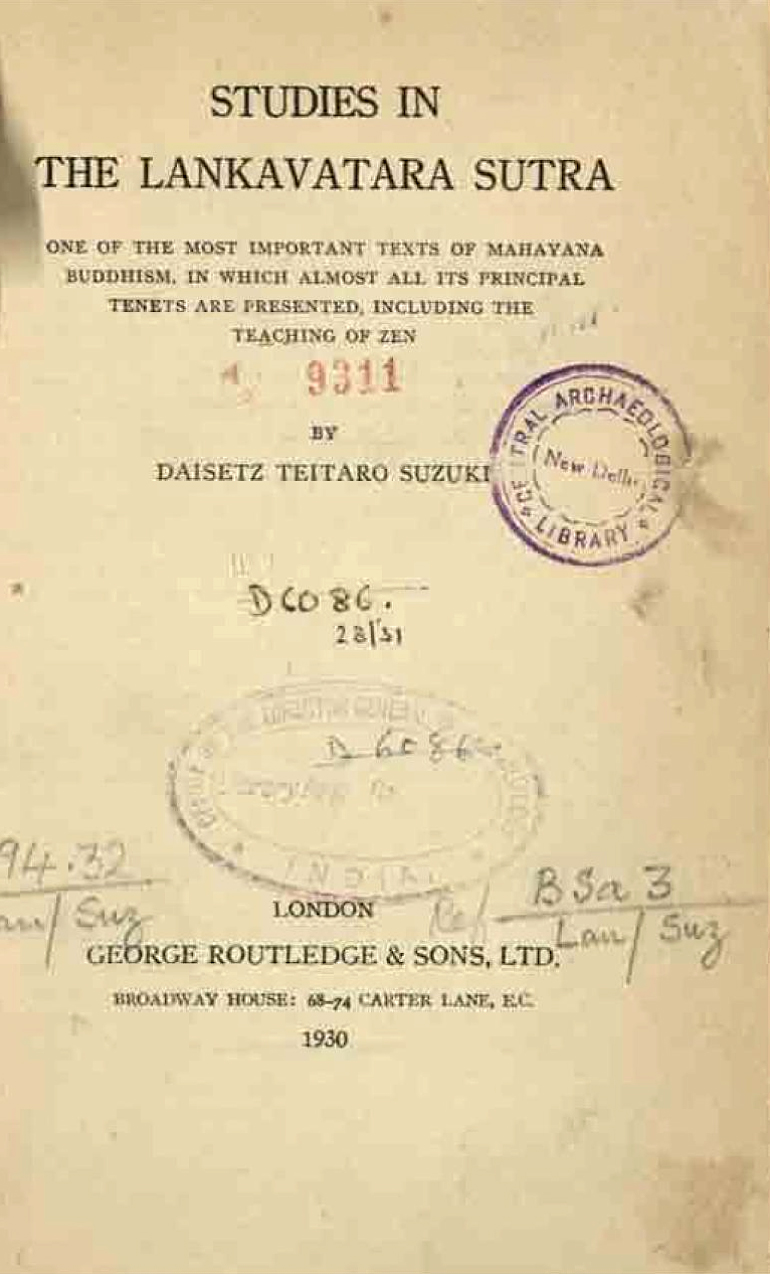
Studies in the Laṅkāvatāra Sūtra: One of the Most Important Texts of Mahayana Buddhism, in which Almost All Its Principal Tenets are Presented, Including the Teaching of Zen
Book


Please note that many items in our library are simply pages that represent a detailed library catalog entry and citation of someone else's work, presentation, or performance. Read our General Disclaimer for more information.
Studies in the Lankavatara Sutra (1930)-front.jpg

Description

While preparing a second series of Essays in Zen Buddhism, the author thought it desirable for the reader to know something more about the Laṅkāvatāra than had been sketched out in the First Series. To do this he had to study the sutra more thoroughly, and as he was doing so, his interest in it grew stronger and wider. Then, he came to the conclusion that his study of the Laṅkāvatāra might be published independently and even prior to the second series of Zen essays. The result is this book now before the reader.
      The Laṅkāvatāra is a Mahayana text difficult in more than one way to understand perfectly as to its meaning and also in Its proper historical setting. But its importance as giving most of the fundamental tenets of Mahayana Buddhism has urged the author to publish whatever results he has gained so far in his study. They are no doubt short of being quite satisfactory from a strictly scholarly point of view, but the author's earnest wish is to open the way, if he could so hope, for further study and more thoroughgoing investigation of the text. Mahayana Buddhism is

just beginning to be known in the West. As to the appreciation of its full significance we have to wait patiently for some years yet to come.
      The first two parts of these Studies were already published In The Eastern Buddhist, but in the present work they have been revised fully and inaccuracies corrected as far as available. The third part is entirely new. As the Studies were not planned out as a whole from the beginning but have grown progressively in the author's mind, some repetitions have become inevitable. The second part dealing with the Laṅkāvatāra containing the philosophy of Zen Buddhism was written first. As it was being revised after its publication in The Eastern Buddhist, Volume IV, Nos. 3-4, for 1928, the thought suggested itself that the sutra must be studied also textually since there are still three Chinese and one (or two) Tibetan translations. The result was the first part of the present work, which appeared as an independent article in The Eastern Buddhist, Volume V, No. 1, for 1929.
      The Laṅkāvatāra does not belong exclusively to the Zen school of Buddhism, it is also the common property of the Mahayana. When it is studied apart from Zen, some of the important conceptions developed in the sutra, which do not necessarily belong to the philosophy of Zen, are to be expounded, however briefly. Hence the third part of the present Studies, entitled "Some of the Important Theories Expounded in the Laṅkāvatāra."
      The author has prepared for the benefit principally of his Japanese and Cbinese readers a glossary of the Sanskrit technical terms found in the book. This he hopes to be of use in their perusal of Sanskrit Buddhist literature and at the same time illustrative of the methods of the Indian-Chinese translators. (Suzuki, preface, v–vi)

Read more here . . .

Citation
Suzuki, Daisetz Teitaro, trans. Studies in the Lankavatara Sutra: One of the Most Important Texts of Mahayana Buddhism, in which Almost All Its Principal Tenets are Presented, Including the Teaching of Zen. London: George Routledge and Sons, 1930. https://archive.org/details/in.gov.ignca.9311/page/n5/mode/2up
Table of contents
  • BODHIDHARMA by 牧谿 (Mu-ch'i)Frontispiece
  • Prefacev
  • Abstracts of Studiesxi

I
  • AN INTRODUCTION TO THE STUDY OF THE
       LANKAVATARA SUTRA
    3

II
  • THE LANKAVATARA SUTRA AND THE TEACHING
       OF ZEN BUDDHISM
    89
    • I. General Survey of the Principal Ideas Expounded in
          the Sutra
      90
    • II. (A) The Intellectual Contents of the Buddhist
          Experience
      153
    •      (B) The Psychology of the Buddhist Experience169
    • III. Life and Works of the Bodhisattva202

III
  • SOME OF THE IMPORTANT THEORIES EXPOUNDED
       IN THE LANKAVATARA SUTRA
    239
    • (I} The Doctrine of Mind-Only241
    • (II} The Conception of No-Birth283
    • (III) The Triple Body of the Buddha308
    • (IV) The Tathagata339
    • (V) Other Minor Subjects357

  • A SANSKRIT-CHINESE-ENGLISH GLOSSARY373
  • INDEX459
Interconnections
1 Partial translation of
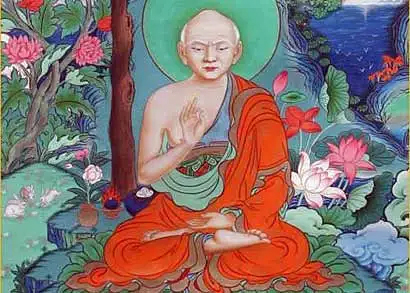
Gunabhadra-dakinitranslations.jpg
Classical WorksAbout this item
An important Mahāyāna sūtra that was highly influential in East Asia as well as in Nepal, where a manuscript was discovered that remains the only extant Sanskrit recension of this text. It is notable for its inclusion of many doctrinal features that would come to be associated with the Yogācāra philosophy of Mind-Only (Cittamātra), such as the ālayavijñāna, or store-house consciousness, that acts as a repository for the seeds of karmic actions. It also includes several lengthy discussions of tathāgatagarbha and, though it is never actually referenced in the Uttaratantra, it is often listed among the so-called tathāgatagarbha sūtras. While its lack of mention in the Uttaratantra has been interpreted by scholars as evidence that the sūtra postdates the treatise, it should be noted that the ways in which the tathāgatagarbha is discussed in the sūtra is often at odds with its presentation in the Uttaratantra.
1 Other editions
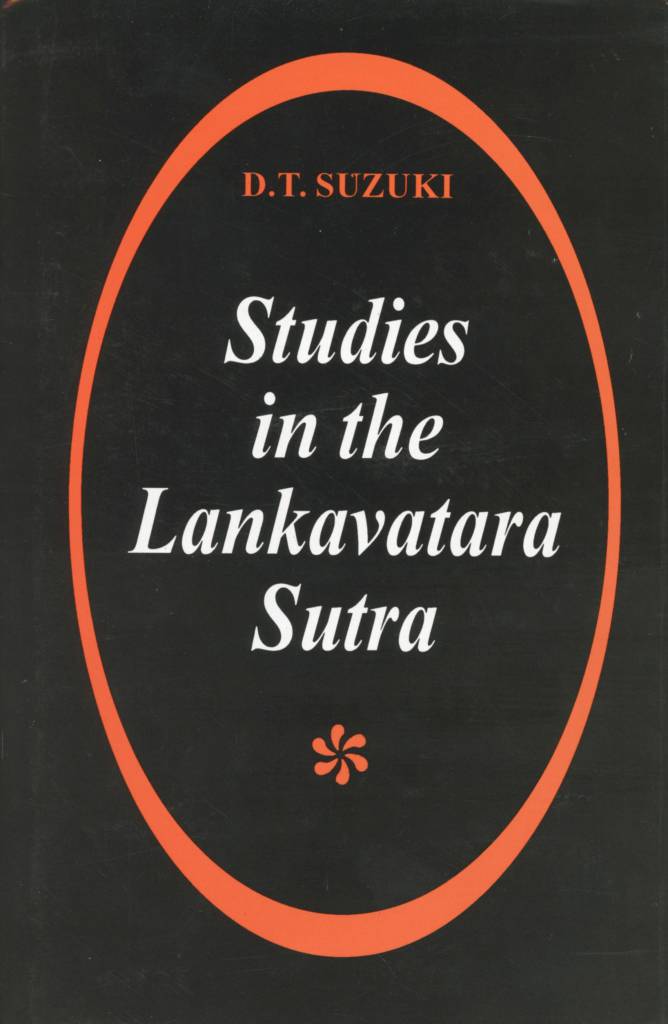
Studies in the Lankavatara Sutra-front.jpg
Books2016About this item
The Lankavatara Sutra is one of the most important Mahayana texts, and the Napalese Buddhists consider it to be one of the nine canonical texts. The text contains almost all the main ideas, both philosophical and theological, of Mahayana Buddhism. The Yogacara School of Mahayana considers this text to be its fundamental text, as it contains all those ideas of idealism, like Mind-only, store-house-consciousness, which would form the basis of the philosophy of this school. As the text is terse, difficult to understand, and complex insofar as the presentation of ideas in concerned, the author has tried his best to explain the basic ideas of the Lankavatara in the context of historical evolution of Buddhism, which culminated in the emergence of Mahayana. In the first part of the book the author has made a textual study of the text in the context of various translations that were carried out in China. Simultaneously the author also has pointed out the impact of the text exerted upon Chinese and Japanese Buddhism, and particularly upon the Zen. In the rest of the book the author has engaged himself in explaining the complex philosophical ideas that are to be found in the text, and how these ideas were made use of by various Buddhist schools.
1 Other volumes
Studies in the Lankavatara Sutra-front.jpg
Books2016About this item
The Lankavatara Sutra is one of the most important Mahayana texts, and the Napalese Buddhists consider it to be one of the nine canonical texts. The text contains almost all the main ideas, both philosophical and theological, of Mahayana Buddhism. The Yogacara School of Mahayana considers this text to be its fundamental text, as it contains all those ideas of idealism, like Mind-only, store-house-consciousness, which would form the basis of the philosophy of this school. As the text is terse, difficult to understand, and complex insofar as the presentation of ideas in concerned, the author has tried his best to explain the basic ideas of the Lankavatara in the context of historical evolution of Buddhism, which culminated in the emergence of Mahayana. In the first part of the book the author has made a textual study of the text in the context of various translations that were carried out in China. Simultaneously the author also has pointed out the impact of the text exerted upon Chinese and Japanese Buddhism, and particularly upon the Zen. In the rest of the book the author has engaged himself in explaining the complex philosophical ideas that are to be found in the text, and how these ideas were made use of by various Buddhist schools.
1 Scholarship on
Gunabhadra-dakinitranslations.jpg
Classical WorksAbout this item
An important Mahāyāna sūtra that was highly influential in East Asia as well as in Nepal, where a manuscript was discovered that remains the only extant Sanskrit recension of this text. It is notable for its inclusion of many doctrinal features that would come to be associated with the Yogācāra philosophy of Mind-Only (Cittamātra), such as the ālayavijñāna, or store-house consciousness, that acts as a repository for the seeds of karmic actions. It also includes several lengthy discussions of tathāgatagarbha and, though it is never actually referenced in the Uttaratantra, it is often listed among the so-called tathāgatagarbha sūtras. While its lack of mention in the Uttaratantra has been interpreted by scholars as evidence that the sūtra postdates the treatise, it should be noted that the ways in which the tathāgatagarbha is discussed in the sūtra is often at odds with its presentation in the Uttaratantra.