Explore/Chapter 4 - Conscientiousness
- Chapter 1 - The Excellence and Benefits of Bodhicitta
- Chapter 10 - Dedication
- Chapter 2 - Confession of Negativity
- Chapter 3 - Taking Hold of Bodhicitta
- Chapter 4 - Conscientiousness
- Chapter 5 - Vigilant Introspection
- Chapter 6 - Patience
- Chapter 7 - Diligence
- Chapter 8 - Meditative Concentration
- Chapter 9 - Wisdom
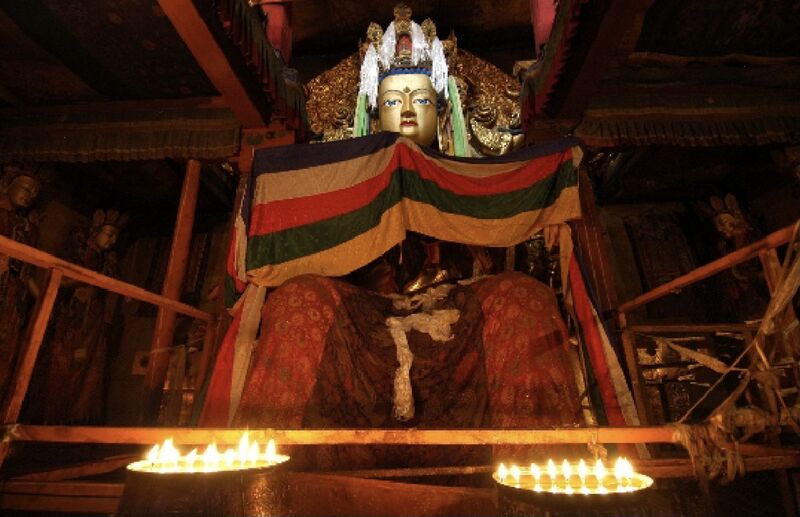
In chapter 4, Śāntideva addresses the topic of conscientiousness (apramāda, བག་ཡོད་), sometimes also translated as carefulness—a mental factor that protects the mind from negative action and helps us discern what to take up and what to avoid on the path.
Concise Summary of Essential Points
The first three chapters of The Way of the Bodhisattva introduce the bodhisattva's way of life and conduct and impress upon us the qualities and benefits of bodhicitta and of developing altruistic compassion for the sake of all others. All of those contemplations come under the section of the text which covers the cultivation of bodhicitta where it has not previously been cultivated.
In the first verse of chapter 4, Śāntideva urges us to make sure that once we have cultivated this precious mind of bodhicitta we never turn away from it.
The children of the Conqueror who thus Have firmly grasped this bodhichitta, Should never turn aside from it, Strive never to transgress its disciplines.
Page(s) 53
Blankleder, Helena, and Wulstan Fletcher (Padmakara Translation Group), trans. The Way of the Bodhisattva: A Translation of the Bodhicharyāvatāra. By Śāntideva. Rev. ed. Shambhala Classics. Boston: Shambhala Publications, 2006.
༈ རྒྱལ་བའི་སྲས་ཀྱིས་དེ་ལྟ་བུར། །
བྱང་ཆུབ་སེམས་རབ་བརྟན་བཟུང་ནས། ། གཡེལ་བ་མེད་པར་རྟག་ཏུ་ཡང་། །
བསླབ་ལས་མི་འདའ་འབད་པར་བྱ། །!_rgyal ba'i sras kyis de lta bur/_/
byang chub sems rab brtan bzung nas/_/ g.yel ba med par rtag tu yang /_/
bslab las mi 'da' 'bad par bya/_/The next three chapters, from chapter 4 through chapter 6, are concerned with protecting this freshly arisen bodhicitta from declining. But how do we work with our minds in order to do this? What way of thinking and conduct are needed to protect this incredible mind of bodhicitta? The answer, Śāntideva suggests, is discipline.
The Need for Discipline
In order to protect bodhicitta, one of the primary factors needed is discipline, which is the main theme of chapters 4 and 5. Discipline is required in order to subdue our scattered minds and to prevent the awakening mind from weakening. To establish good discipline, we need the mental tools of conscientiousness, mindfulness, and vigilance. These tools are the chief means through which we are able to subdue our minds, and they provide crucial support for the bodhisattva's practice of the perfection (pāramitā) of ethical discipline. These two chapters lay out the functions and methods of cultivating these three essential mental factors, which aid us in maintaining the wish to attain full enlightenment for the welfare of all sentient beings. To maintain this bodhicitta, these three mental factors assist us in distinguishing between those practices that help our progress and should be taken up on the path and those practices that hinder us and should be avoided.
The fourth chapter focuses primarily on conscientiousness. The Tibetan historian and Buddhist researcher Geshe Dungkar Rinpoche Lobsang Trinley (1927–1997) describes it as a way of tuning or adjusting our minds such that when we are thinking of engaging in some kind of negative activity, conscientiousness assists us in becoming aware that those actions are faulty and unconstructive. He goes on to explain that the main thrust of the chapter is about how to behave when interacting with others, and how to act when our minds are scattered.[1]
Preciousness of Human Rebirth
We may feel that we are always unlucky or lack good fortune and that things often go against us. Śāntideva takes a much wider perspective and reminds us that our current situation actually contains a tremendous opportunity.
Verse 16 of chapter 4, for example, speaks to us of how rare and fortunate we are to be born in the human realm and particularly to have the freedoms and advantages of a precious human rebirth.
Today, indeed, I’m hale and well, I have enough to eat and I am not in danger. But this life is fleeting, unreliable, My body is like something briefly lent.
Page(s) 55
Blankleder, Helena, and Wulstan Fletcher (Padmakara Translation Group), trans. The Way of the Bodhisattva: A Translation of the Bodhicharyāvatāra. By Śāntideva. Rev. ed. Shambhala Classics. Boston: Shambhala Publications, 2006.
ནད་མེད་ཉི་མ་འདི་ལྟ་བུ། །
ཟས་བཅས་འཚེ་བ་མེད་ཀྱང་ནི། ། ཚེ་ནི་སྐད་ཅིག་བསླུ་བ་སྟེ། །
ལུས་ནི་ཐང་ཅིག་བརྙན་པོ་བཞིན། །nad med nyi ma 'di lta bu/_/
zas bcas 'tshe ba med kyang ni/_/ tshe ni skad cig bslu ba ste/_/
lus ni thang cig brnyan po bzhin/_/Śāntideva encourages us to see the rare opportunity we have right now—fleeting and fragile, like something of great value briefly lent to us. We should therefore uplift our minds and strive in virtue rather than being despondent about temporary obstacles.
The Defects of the Afflictive Emotions
In this chapter, Śāntideva also reflects on the faults of afflictive mental states as a way to ingrain conscientiousness into our behavior.
Anger, lust, these enemies of mine, Are limbless and devoid of faculties. They have no bravery, no cleverness; How then have they reduced me to such slavery?
Page(s) 57
Blankleder, Helena, and Wulstan Fletcher (Padmakara Translation Group), trans. The Way of the Bodhisattva: A Translation of the Bodhicharyāvatāra. By Śāntideva. Rev. ed. Shambhala Classics. Boston: Shambhala Publications, 2006.
Here, Śāntideva asserts that we are completely at the beck and call of our emotions, slaves to our desire and our aversion. We may follow these emotions even at the cost of our lives, and yet they lead us only to disaster. Alongside ignorance, these emotions are our own inner enemies, the real enemies. Unlike external enemies, they are lazy and cowardly. Śāntideva reprimands us and asks how all of us, whether weak or strong, have allowed these stupid afflictions to reduce us to such abject slavery and suffering, deprived of every freedom. He reminds us that external enemies such as thieves or bandits may cause us injury over a period of a few years, but the mental afflictions have caused us harm over countless lifetimes. If we do not vanquish them now, they will continue to cause us great harm into the future.
Abandoning Emotional Defilement
Chapter 4 ends with some stirring words from Śāntideva, as he incites us to wage war on the defiled emotions. Better, he says, to perish by fire than allow ourselves to become servants to the afflictive emotions. But he also offers us hope in the fight against these negative mental states. Common external enemies, once driven away, can regroup and return to fight another day. But the afflictions have no such strategy, and once properly routed with the eye of wisdom, they can be forever banished. Therefore, Śāntideva says, we must vow day and night to rise up and challenge the mental afflictions and never give up that fight until we see them overcome before our very eyes.
I will not leave the fight until, before my eyes,
These enemies of mine are all destroyed. (4.36ab)[2]
His last words to us in the chapter encourage us to take the medicine of conscientiousness that has been prescribed.
What invalids in need of medicine Ignored their doctor’s words and gained their health? (4.48cd)[3]
Spurred on by the thought of our precious and rare opportunity and how fragile that can be, Śāntideva implores us to seize the day and strive to develop this conscientiousness that helps us maintain a healthy and disciplined mind.
As Nāgārjuna says in his Letter to a Friend (Suhṛllekha):
Carefulness is the way to deathlessness, While carelessness is death, the Buddha taught. And thus, so that your virtuous deeds may grow, Be careful, constantly and with respect.[4]
Notes
- ↑ Dungkar Rinpoche Lobsang Trinley, An Introduction to the Bodhicaryāvatāra, Spyod 'jug gi gzhung gi ngo sprod (Dharamsala: Sara Tibetan Publishing House, 2017), 44.
- ↑ Helena Blankleder and Wulstan Fletcher (Padmakara Translation Group), trans., The Way of the Bodhisattva: A Translation of the Bodhicharyāvatāra, by Śāntideva (Boston: Shambhala Publications, 2006), 58.
- ↑ Blankleder and Fletcher, Way of the Bodhisattva, 60.
- ↑ Stephen Gethin, Helena Blankleder, and Wulstan Fletcher (Padmakara Translation Group), trans., Nagarjuna's Letter to a Friend: With Commentary by Kangyur Rinpoche (Ithaca, NY: Snow Lion Publications, 2005), 31.
Additional resources
Learn About Śāntideva's Texts
The Way of the Bodhisattva
The Compendium of Training
Recommended Texts Related to Chapter 4
Recommended Books Related to Chapter 4
Throughout this transcript, Rimpoche uses the English translation by Stephen Batchelor, published by the Library of Tibetan Works and Archives. Since Rinpoche frequently makes reference to Tibetan words and phrasing, the Tibetan translation of the Sanskrit original is included in Wylie transliteration.
Rinpoche did not introduce a traditional extensive outline in giving this teaching. For those interested, an outline of this sort may be found in Geshe Kelsang Gyatso's Meaningful to Behold. The headings and subheadings in this present volume have been added by the editor for ease of reference, and to help delineate changes of topic. A brief bibliography is included. For a glossary, see the previous volumes in this series.
The transcription of these teachings from tapes was done by Hartmut Sagolla and Jayapushpa. (Anne Warren, acknowledgements, i)Recommended Videos Related to Chapter 4
The chapters in focus here are Carefulness, Vigilant Introspection, and Patience.
- Chapter 4: 00:00 to 43:08.
- Chapter 5: 43:08 to 1:33:10
- Chapter 6: 1:33:10 to end.
Prayers begin at 7:01. First verse begins at 41:26.
(Source Accessed Oct 29, 2021)Lesson 4. Carefulness
Online Course hosted by The Buddhist Society - Thursday 25th March 2021 during lockdown
Ringu Tulku Rinpoche will analyse the Bodhicaryāvatāra, often translated as A Guide to the Bodhisattva's Way of Life, an 8th-century masterpiece from Indian scholar and yogi Shantideva. In each of the ten lessons, H.E. Ringu Tulku Rinpoche will focus on one of the ten chapters of the Bodhicaryāvatāra.
The Bodhicaryāvatāra is regarded as one of the most important Tibetan Buddhist texts and is studied extensively by Tibetan Buddhist practitioners everywhere. Rinpoche delivers his understanding of the text in a way that makes it fully accessible to anyone who is looking for support and help in these times.
Course Outline
Lesson 1. The Excellence of Bodhicitta - Thursday 18th February at 12pm
Lesson 2. Confession - Thursday 25th February at 12pm
Lesson 3. Taking Hold of Bodhicitta - Thursday 11th March at 12pm
Lesson 4. Carefulness - Thursday 25th March at 12pm
Lesson 5. Vigilance - Thursday 22nd April at 12pm
Lesson 6. Patience - Thursday 6th May at 12pm
Lesson 7. Diligence - Thursday 20th May at 12pm
Lesson 8. Meditation - Thursday 3rd June at 12pm
Lesson 9. Wisdom - Thursday 17th June at 12pm
Ringu Tulku Rinpoche, Bodhicharya Online Shedra (November 2, 2011)
Further recommended reading: the commentary book by Kunzang Pelden (Khenpo Kunpal), The Nectar of Manjushri’s Speech, p. 139-144.