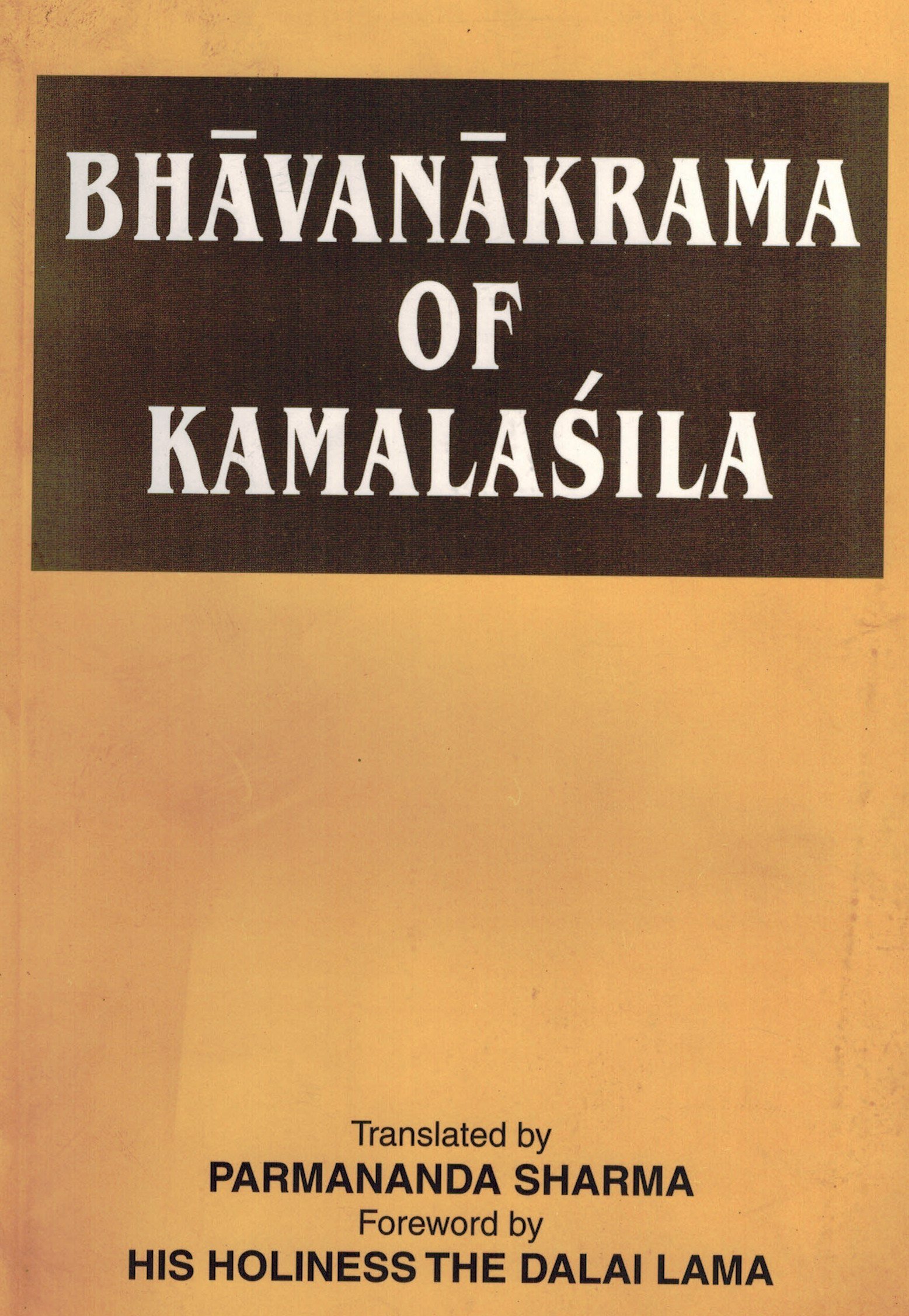
Bhāvanākrama of Kamalaśīla (2 of 3)
| 🤓 Admin Zone 🛠️ hidden to non-admins | |


Description


This research project aimed to elucidate the ideological structure of Indian Madhyamaka philosophy through Indian and Tibetan texts. The texts targeted for elucidation in this research are: Jñānagarbha's Satyadvayavibhaṅga (Distinguishing the Two Truths), Śāntarakṣita's Madhyamakālaṃkāra (Ornament of the Middle Way), Kamalaśīla's Madhyamakāloka (Illumination of the Middle Way), Bhāvanākrama (Stages of Meditation), and commentaries on Haribhadra's Abhisamayālaṃkārālokā.
Previously, I published A Study and Translation of the Madhyamakālaṃkāra (Daito Publishing, 1985), and within that, I prepared Tibetan texts of Śāntarakṣita's Madhyamakālaṃkāra and its autocommentary, and Kamalaśīla's Madhyamakālokavṛtti. Through this, it became possible for the first time to critically examine the philosophical issues contained in these works in their original form, and one step of the elucidation of the ideological structure of Indian Madhyamaka philosophy was achieved.
For this reason, in preparing the critical edition and Japanese translation of the Tibetan text this time, I have attempted to further advance the elucidation of the stages of thought in the Buddhist Yogācāra-Madhyamaka school, comparing it with Haribhadra's Abhisamayālaṃkārālokā and the Bhāvanākrama.
Regarding the fundamental stance of this book, in the Madhyamakālaṃkāra, which is considered to represent Śāntarakṣita's thought, while he extensively references other schools of thought and tries to synthesize them organizationally and systematically, his fundamental position is said to take the ideological standpoint of Nāgārjuna from the Middle Period. The correct understanding of Indian Madhyamaka philosophy and the issues concerning Indian Madhyamaka are not clear. However, Kamalaśīla's Bhāvanākrama is a highly practical work that puts such doctrinal theory into actual practice. And within its three sections, there is a discussion that distinguishes between "analytical meditation" and "stabilizing meditation" - problems of practice and theory. This places the practice [of meditation] at the center and attempts to unify Śāntarakṣita's ideological system as a whole. That is to say, through the composition of the Bhāvanākrama, it can be understood that the ideological system of "Indian Madhyamaka Philosophy" is clarified from the perspectives of theory and practice. (Ichigō, preface, i)
ordinary reasoning processes (cintāmayī prajñā) but rather with a form of experiential knowing (bhāvanāmayī prajñā, vipaśyanā) that is conceptual in nature. It is in accordance with this conception that the actual translation of the texts has been undertaken.
The second chapter of the commentary examines the concept of insight (vipaśyanā) in light of the earlier findings. Here the text is analyzed for its explanations of its insight, understood in terms of the important technical term bhūtapratyavekṣā. Here an argument is made for translating this term in a particular manner consistent with the conception of meditation outlined in Chapter 1. The term is explored in light of key passages containing descriptions of the cultivation of wisdom as well as in light of other important technical terms appearing in the texts, notably dharmapravicaya, smṛti and manasikāra. Chapter 2 closes with a discussion of Kamalaśīla's ideas of śrāvaka insight meditation (vipaśyanā) and how it differs from that of the Mahāyāna. Most notable in this regard is the suggestion that Kamalaśīla may have regarded śrāvaka insight practices (vipaśyanā) as instances of śamatha meditation. In the third chapter the suggestion is made that such considerations could lead to the development of an important area of future research into the differences among diverse Indian Buddhist traditions. The concluding section of Chapter 3 contains a summary of the concrete findings of this analysis.


This research project aimed to elucidate the ideological structure of Indian Madhyamaka philosophy through Indian and Tibetan texts. The texts targeted for elucidation in this research are: Jñānagarbha's Satyadvayavibhaṅga (Distinguishing the Two Truths), Śāntarakṣita's Madhyamakālaṃkāra (Ornament of the Middle Way), Kamalaśīla's Madhyamakāloka (Illumination of the Middle Way), Bhāvanākrama (Stages of Meditation), and commentaries on Haribhadra's Abhisamayālaṃkārālokā.
Previously, I published A Study and Translation of the Madhyamakālaṃkāra (Daito Publishing, 1985), and within that, I prepared Tibetan texts of Śāntarakṣita's Madhyamakālaṃkāra and its autocommentary, and Kamalaśīla's Madhyamakālokavṛtti. Through this, it became possible for the first time to critically examine the philosophical issues contained in these works in their original form, and one step of the elucidation of the ideological structure of Indian Madhyamaka philosophy was achieved.
For this reason, in preparing the critical edition and Japanese translation of the Tibetan text this time, I have attempted to further advance the elucidation of the stages of thought in the Buddhist Yogācāra-Madhyamaka school, comparing it with Haribhadra's Abhisamayālaṃkārālokā and the Bhāvanākrama.
Regarding the fundamental stance of this book, in the Madhyamakālaṃkāra, which is considered to represent Śāntarakṣita's thought, while he extensively references other schools of thought and tries to synthesize them organizationally and systematically, his fundamental position is said to take the ideological standpoint of Nāgārjuna from the Middle Period. The correct understanding of Indian Madhyamaka philosophy and the issues concerning Indian Madhyamaka are not clear. However, Kamalaśīla's Bhāvanākrama is a highly practical work that puts such doctrinal theory into actual practice. And within its three sections, there is a discussion that distinguishes between "analytical meditation" and "stabilizing meditation" - problems of practice and theory. This places the practice [of meditation] at the center and attempts to unify Śāntarakṣita's ideological system as a whole. That is to say, through the composition of the Bhāvanākrama, it can be understood that the ideological system of "Indian Madhyamaka Philosophy" is clarified from the perspectives of theory and practice. (Ichigō, preface, i)
ordinary reasoning processes (cintāmayī prajñā) but rather with a form of experiential knowing (bhāvanāmayī prajñā, vipaśyanā) that is conceptual in nature. It is in accordance with this conception that the actual translation of the texts has been undertaken.
The second chapter of the commentary examines the concept of insight (vipaśyanā) in light of the earlier findings. Here the text is analyzed for its explanations of its insight, understood in terms of the important technical term bhūtapratyavekṣā. Here an argument is made for translating this term in a particular manner consistent with the conception of meditation outlined in Chapter 1. The term is explored in light of key passages containing descriptions of the cultivation of wisdom as well as in light of other important technical terms appearing in the texts, notably dharmapravicaya, smṛti and manasikāra. Chapter 2 closes with a discussion of Kamalaśīla's ideas of śrāvaka insight meditation (vipaśyanā) and how it differs from that of the Mahāyāna. Most notable in this regard is the suggestion that Kamalaśīla may have regarded śrāvaka insight practices (vipaśyanā) as instances of śamatha meditation. In the third chapter the suggestion is made that such considerations could lead to the development of an important area of future research into the differences among diverse Indian Buddhist traditions. The concluding section of Chapter 3 contains a summary of the concrete findings of this analysis.


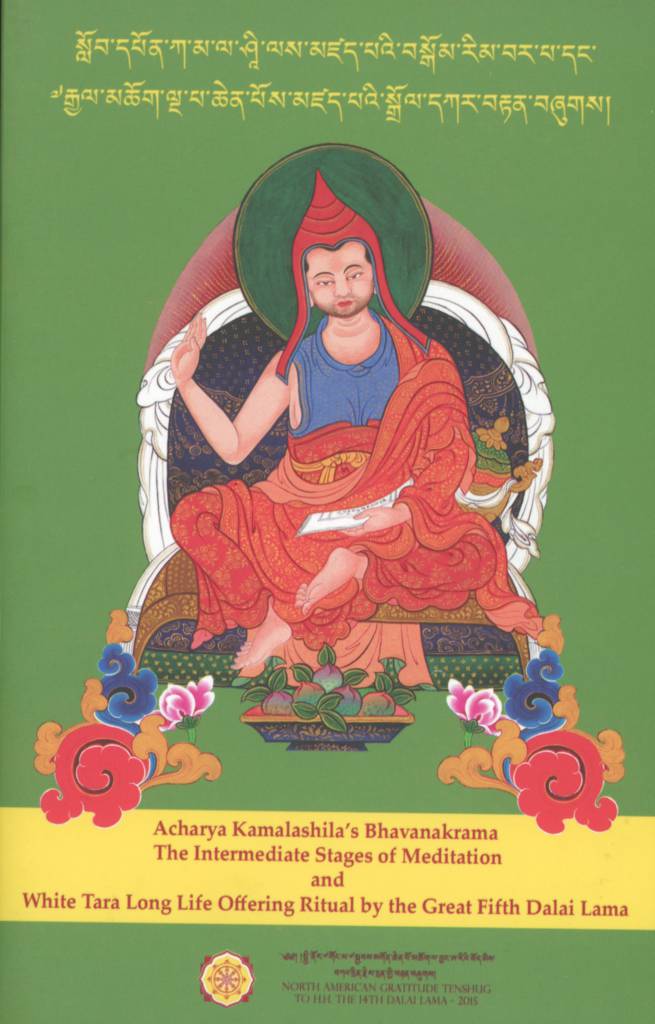
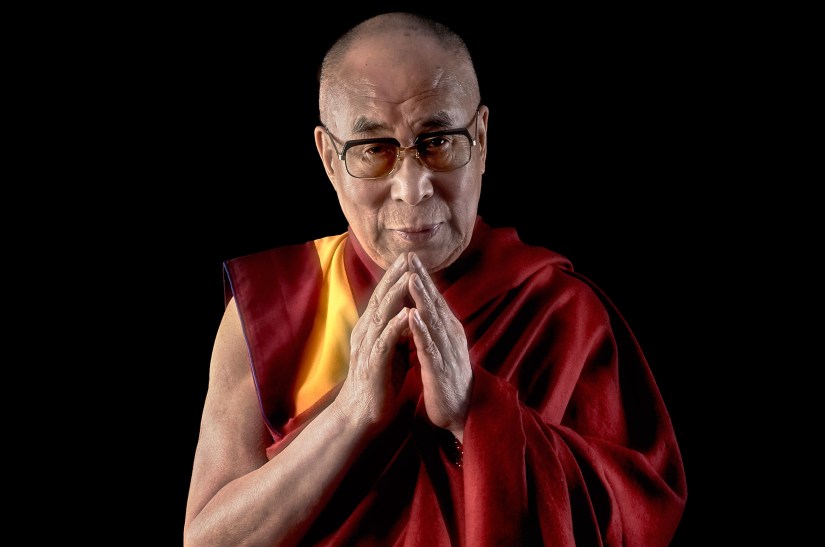
His Holiness's teachings were based on: The Middle Stages of Meditation by Kamalashila. This concise text teaches how to generate the two kinds of bodhichitta, conventional and ultimate, both of which are permeated by kindness and compassion and serve as the roots for all qualities of Buddhahood.
This event was held in observance of His Holiness the 14th Dalai Lama's 80th birthday. (Source: Book Introduction)


(See also: "Bhāvanākrama." In The Princeton Dictionary of Buddhism, 112-13. Princeton University Press, 2014. http://www.jstor.org/stable/j.ctt46n41q.27.)
- Bhāvanākrama. (T. Sgom rim). In Sanskrit, "Stages of Meditation," the title of three separate but related works by the late eighth century Indian master Kamalaśīla (RKTST 4228, RKTST 4229, and RKTST 4230). During the reign of the Tibetan king Khri srong lde btsan at the end of the eighth century, there were two Buddhist factions at court, a Chinese faction led by the Northern Chan (Bei zong) monk Heshang Moheyan (Mahāyāna) and an Indian faction of the recently deceased Śāntarakṣita, who with the king and Padmasambhava had founded the first Tibetan monastery at Bsam yas (Samye). According to traditional accounts, Śāntarakṣita foretold of dangers and left instructions in his will that his student Kamalaśīla should be summoned from India. A conflict seems to have developed between the Indian and Chinese partisans (and their allies in the Tibetan court) over the question of the nature of enlightenment, with the Indians holding that enlightenment takes place as the culmination of a gradual process of purification, the result of perfecting morality (śīla), concentration (samādhi), and wisdom (prajñā). The Chinese spoke against this view, holding that enlightenment was the intrinsic nature of the mind rather than the goal of a protracted path, such that one need simply to recognize the presence of this innate nature of enlightenment by entering a state of awareness beyond distinctions; all other practices were superfluous. According to both Chinese and Tibetan records, a debate was held between Kamalaśīla and Moheyan at Bsam yas, circa 797, with the king himself serving as judge. According to Tibetan reports (contradicted by the Chinese accounts), Kamalaśīla was declared the winner and Moheyan and his party banished from Tibet, with the king proclaiming that thereafter the Madhyamaka school of Indian Buddhist philosophy (to which Śāntarakṣita and Kamalaśīla belonged) would have pride of place in Tibet. According to Tibetan accounts, after the conclusion of the debate, the king requested that Kamalaśīla compose works that presented his view, and in response, Kamalaśīla composed the three Bhāvanākrama. There is considerable overlap among the three works. All three are germane to the issues raised in the debate, although whether all three were composed in Tibet is not established with certainty; only the third, and briefest of the three, directly considers, and refutes, the view of "no mental activity" (amanasikāra, cf. wunian), which is associated with Moheyan. The three texts set forth the process for the potential bodhisattva to cultivate bodhicitta and then develop śamatha and vipaśyanā and progress through the bodhisattva stages (bhūmi) to buddhahood. The cultivation of vipaśyanā requires the use of both scripture (āgama) and reasoning (yukti) to understand emptiness (śūnyatā); in the first Bhāvanākrama, Kamalaśīla sets forth the three forms of wisdom (prajñā): the wisdom derived from leaming (śrutamayīprajñā), the wisdom derived from reflection (cintāmayīprajñā), and the wisdom derived from cultivation (bhāvanāmayīprajñā), explaining that the last of these gradually destroys the afflictive obstructions (kleśāvaraṇa) and the obstructions to omniscience (jñeyāvaraṇa). The second Bhāvanākrama considers many of these same topics, stressing that the achievement of the fruition of buddhahood requires the necessary causes, in the form of the collection of merit (puṇyasaṃbhāra) and the collection of wisdom (jñānasaṇbhāra). Both the first and second works espouse the doctrine of mind only (cittamātra); it is on the basis of these and other statements that Tibetan doxographers classified Kamalaśīla as a Yogācāra-Svātantrika-Madhyamaka. The third and briefest of the Bhāvanākrama is devoted especially to the topics of śamatha and vipaśyanā, how each is cultivated, and how they are ultimately unified. Kamalaśīla argues that analysis (vicāra) into the lack of self (ātman) in both persons (pudgala) and phenomena (dharma) is required to arrive at a nonconceptual state of awareness. The three texts are widely cited in later Tibetan Buddhist literature, especially on the process for developing śamatha and vipaśyanā.

About the Text:
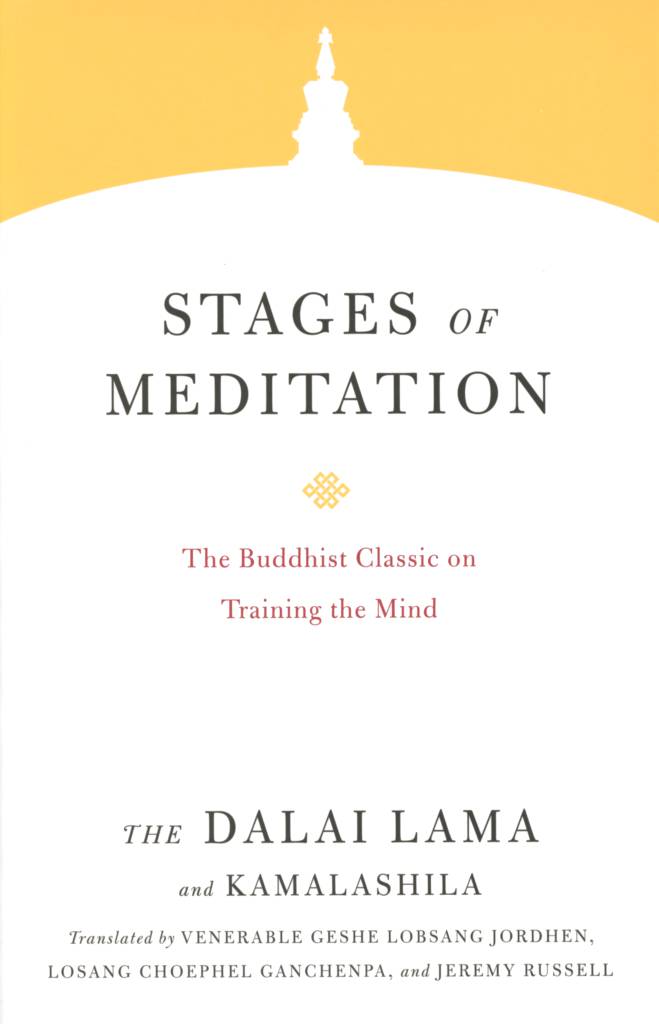
Stages of Meditation (Sanskrit. Bhāvanākrama; Tibetan. Gomrim Barpa) offers lucid instructions on cultivating a meditative mind. In great detail, it instructs practitioners on acquiring familiarity and developing expertise in two forms of meditation that will lessen suffering and ultimately lead to enlightenment. These two are śamatha, or calm abiding, and vipaśyanā, or stainless insight. Kamalaśīla clearly outlines why both methods are essential to the practitioner's development and why both must be grounded in compassion.
This research project aimed to elucidate the ideological structure of Indian Madhyamaka philosophy through Indian and Tibetan texts. The texts targeted for elucidation in this research are: Jñānagarbha's Satyadvayavibhaṅga (Distinguishing the Two Truths), Śāntarakṣita's Madhyamakālaṃkāra (Ornament of the Middle Way), Kamalaśīla's Madhyamakāloka (Illumination of the Middle Way), Bhāvanākrama (Stages of Meditation), and commentaries on Haribhadra's Abhisamayālaṃkārālokā.
Previously, I published A Study and Translation of the Madhyamakālaṃkāra (Daito Publishing, 1985), and within that, I prepared Tibetan texts of Śāntarakṣita's Madhyamakālaṃkāra and its autocommentary, and Kamalaśīla's Madhyamakālokavṛtti. Through this, it became possible for the first time to critically examine the philosophical issues contained in these works in their original form, and one step of the elucidation of the ideological structure of Indian Madhyamaka philosophy was achieved.
For this reason, in preparing the critical edition and Japanese translation of the Tibetan text this time, I have attempted to further advance the elucidation of the stages of thought in the Buddhist Yogācāra-Madhyamaka school, comparing it with Haribhadra's Abhisamayālaṃkārālokā and the Bhāvanākrama.
Regarding the fundamental stance of this book, in the Madhyamakālaṃkāra, which is considered to represent Śāntarakṣita's thought, while he extensively references other schools of thought and tries to synthesize them organizationally and systematically, his fundamental position is said to take the ideological standpoint of Nāgārjuna from the Middle Period. The correct understanding of Indian Madhyamaka philosophy and the issues concerning Indian Madhyamaka are not clear. However, Kamalaśīla's Bhāvanākrama is a highly practical work that puts such doctrinal theory into actual practice. And within its three sections, there is a discussion that distinguishes between "analytical meditation" and "stabilizing meditation" - problems of practice and theory. This places the practice [of meditation] at the center and attempts to unify Śāntarakṣita's ideological system as a whole. That is to say, through the composition of the Bhāvanākrama, it can be understood that the ideological system of "Indian Madhyamaka Philosophy" is clarified from the perspectives of theory and practice. (Ichigō, preface, i)
ordinary reasoning processes (cintāmayī prajñā) but rather with a form of experiential knowing (bhāvanāmayī prajñā, vipaśyanā) that is conceptual in nature. It is in accordance with this conception that the actual translation of the texts has been undertaken.
The second chapter of the commentary examines the concept of insight (vipaśyanā) in light of the earlier findings. Here the text is analyzed for its explanations of its insight, understood in terms of the important technical term bhūtapratyavekṣā. Here an argument is made for translating this term in a particular manner consistent with the conception of meditation outlined in Chapter 1. The term is explored in light of key passages containing descriptions of the cultivation of wisdom as well as in light of other important technical terms appearing in the texts, notably dharmapravicaya, smṛti and manasikāra. Chapter 2 closes with a discussion of Kamalaśīla's ideas of śrāvaka insight meditation (vipaśyanā) and how it differs from that of the Mahāyāna. Most notable in this regard is the suggestion that Kamalaśīla may have regarded śrāvaka insight practices (vipaśyanā) as instances of śamatha meditation. In the third chapter the suggestion is made that such considerations could lead to the development of an important area of future research into the differences among diverse Indian Buddhist traditions. The concluding section of Chapter 3 contains a summary of the concrete findings of this analysis.
The article examines how Kamalaśīla presents two different conceptions of bodhicitta across his writings:
In the first volume of the Bhāvanākrama, bodhicitta is divided into:
Praṇidhicitta (aspiration mind): The initial vow to become a Buddha for all beings
Prasthānacitta (implementation mind): Aspiration accompanied by practice
In the middle volume of the Bhāvanākrama, bodhichitta is instead divided into:
Conventional bodhichitta: Similar to praṇidhicitta - the initial resolution to attain enlightenment
Ultimate bodhichitta: Not a stage of practice but a transcendent state attained through practice
The article also discusses Kamalaśīla's Yogabhāvanāvatāra text, which presents bodhichitta in the same way as the middle volume of Bhāvanākrama, focusing primarily on śamatha (calm-abiding) and vipaśyanā (insight meditation). The author analyzes textual connections between Kamalaśīla's works and Śāntideva's Śikṣāsamuccaya, noting that:
Kamalaśīla's first volume borrows extensively from the Śikṣāsamuccaya's discussion of bodhichitta
While the Śikṣāsamuccaya presents multiple causes for generating bodhichitta, Kamalaśīla critically selects and emphasizes compassion (karuṇā) as the primary cause

knowledge as it is presented in the Bhāvanākramas. Kamalaśīla’s presentation in these texts makes use of the schema of three wisdoms or prajñās (śrutamayī-, cintāmayī, and bhāvanāmayī-prajñā) and a very specific understanding of the notion of bhūtapratyavekṣā as "the discernment of reality." My analysis is framed in the context of a recent controversy concerning the epistemological role of meditation in relation to the views of the opposing sides of the historical debate at Bsam yas. I argue that the Bhāvanākramas assign a necessary and very specific
function to conceptual meditation in the process of acquiring a direct, nonconceptual knowledge of reality (nirvikalpajñāna).
About the Text:

This research project aimed to elucidate the ideological structure of Indian Madhyamaka philosophy through Indian and Tibetan texts. The texts targeted for elucidation in this research are: Jñānagarbha's Satyadvayavibhaṅga (Distinguishing the Two Truths), Śāntarakṣita's Madhyamakālaṃkāra (Ornament of the Middle Way), Kamalaśīla's Madhyamakāloka (Illumination of the Middle Way), Bhāvanākrama (Stages of Meditation), and commentaries on Haribhadra's Abhisamayālaṃkārālokā.
Previously, I published A Study and Translation of the Madhyamakālaṃkāra (Daito Publishing, 1985), and within that, I prepared Tibetan texts of Śāntarakṣita's Madhyamakālaṃkāra and its autocommentary, and Kamalaśīla's Madhyamakālokavṛtti. Through this, it became possible for the first time to critically examine the philosophical issues contained in these works in their original form, and one step of the elucidation of the ideological structure of Indian Madhyamaka philosophy was achieved.
For this reason, in preparing the critical edition and Japanese translation of the Tibetan text this time, I have attempted to further advance the elucidation of the stages of thought in the Buddhist Yogācāra-Madhyamaka school, comparing it with Haribhadra's Abhisamayālaṃkārālokā and the Bhāvanākrama.
Regarding the fundamental stance of this book, in the Madhyamakālaṃkāra, which is considered to represent Śāntarakṣita's thought, while he extensively references other schools of thought and tries to synthesize them organizationally and systematically, his fundamental position is said to take the ideological standpoint of Nāgārjuna from the Middle Period. The correct understanding of Indian Madhyamaka philosophy and the issues concerning Indian Madhyamaka are not clear. However, Kamalaśīla's Bhāvanākrama is a highly practical work that puts such doctrinal theory into actual practice. And within its three sections, there is a discussion that distinguishes between "analytical meditation" and "stabilizing meditation" - problems of practice and theory. This places the practice [of meditation] at the center and attempts to unify Śāntarakṣita's ideological system as a whole. That is to say, through the composition of the Bhāvanākrama, it can be understood that the ideological system of "Indian Madhyamaka Philosophy" is clarified from the perspectives of theory and practice. (Ichigō, preface, i)ordinary reasoning processes (cintāmayī prajñā) but rather with a form of experiential knowing (bhāvanāmayī prajñā, vipaśyanā) that is conceptual in nature. It is in accordance with this conception that the actual translation of the texts has been undertaken.
The second chapter of the commentary examines the concept of insight (vipaśyanā) in light of the earlier findings. Here the text is analyzed for its explanations of its insight, understood in terms of the important technical term bhūtapratyavekṣā. Here an argument is made for translating this term in a particular manner consistent with the conception of meditation outlined in Chapter 1. The term is explored in light of key passages containing descriptions of the cultivation of wisdom as well as in light of other important technical terms appearing in the texts, notably dharmapravicaya, smṛti and manasikāra. Chapter 2 closes with a discussion of Kamalaśīla's ideas of śrāvaka insight meditation (vipaśyanā) and how it differs from that of the Mahāyāna. Most notable in this regard is the suggestion that Kamalaśīla may have regarded śrāvaka insight practices (vipaśyanā) as instances of śamatha meditation. In the third chapter the suggestion is made that such considerations could lead to the development of an important area of future research into the differences among diverse Indian Buddhist traditions. The concluding section of Chapter 3 contains a summary of the concrete findings of this analysis.The article examines how Kamalaśīla presents two different conceptions of bodhicitta across his writings:
In the first volume of the Bhāvanākrama, bodhicitta is divided into:
Praṇidhicitta (aspiration mind): The initial vow to become a Buddha for all beings
Prasthānacitta (implementation mind): Aspiration accompanied by practice
In the middle volume of the Bhāvanākrama, bodhichitta is instead divided into:
Conventional bodhichitta: Similar to praṇidhicitta - the initial resolution to attain enlightenment
Ultimate bodhichitta: Not a stage of practice but a transcendent state attained through practice
The article also discusses Kamalaśīla's Yogabhāvanāvatāra text, which presents bodhichitta in the same way as the middle volume of Bhāvanākrama, focusing primarily on śamatha (calm-abiding) and vipaśyanā (insight meditation). The author analyzes textual connections between Kamalaśīla's works and Śāntideva's Śikṣāsamuccaya, noting that:
Kamalaśīla's first volume borrows extensively from the Śikṣāsamuccaya's discussion of bodhichitta
While the Śikṣāsamuccaya presents multiple causes for generating bodhichitta, Kamalaśīla critically selects and emphasizes compassion (karuṇā) as the primary cause
About the Text:
Stages of Meditation (Sanskrit. Bhāvanākrama; Tibetan. Gomrim Barpa) offers lucid instructions on cultivating a meditative mind. In great detail, it instructs practitioners on acquiring familiarity and developing expertise in two forms of meditation that will lessen suffering and ultimately lead to enlightenment. These two are śamatha, or calm abiding, and vipaśyanā, or stainless insight. Kamalaśīla clearly outlines why both methods are essential to the practitioner's development and why both must be grounded in compassion.His Holiness's teachings were based on: The Middle Stages of Meditation by Kamalashila. This concise text teaches how to generate the two kinds of bodhichitta, conventional and ultimate, both of which are permeated by kindness and compassion and serve as the roots for all qualities of Buddhahood.
This event was held in observance of His Holiness the 14th Dalai Lama's 80th birthday. (Source: Book Introduction)About the Text: