Bhāvanākrama of Kamalaśīla (2 of 3)/Full text
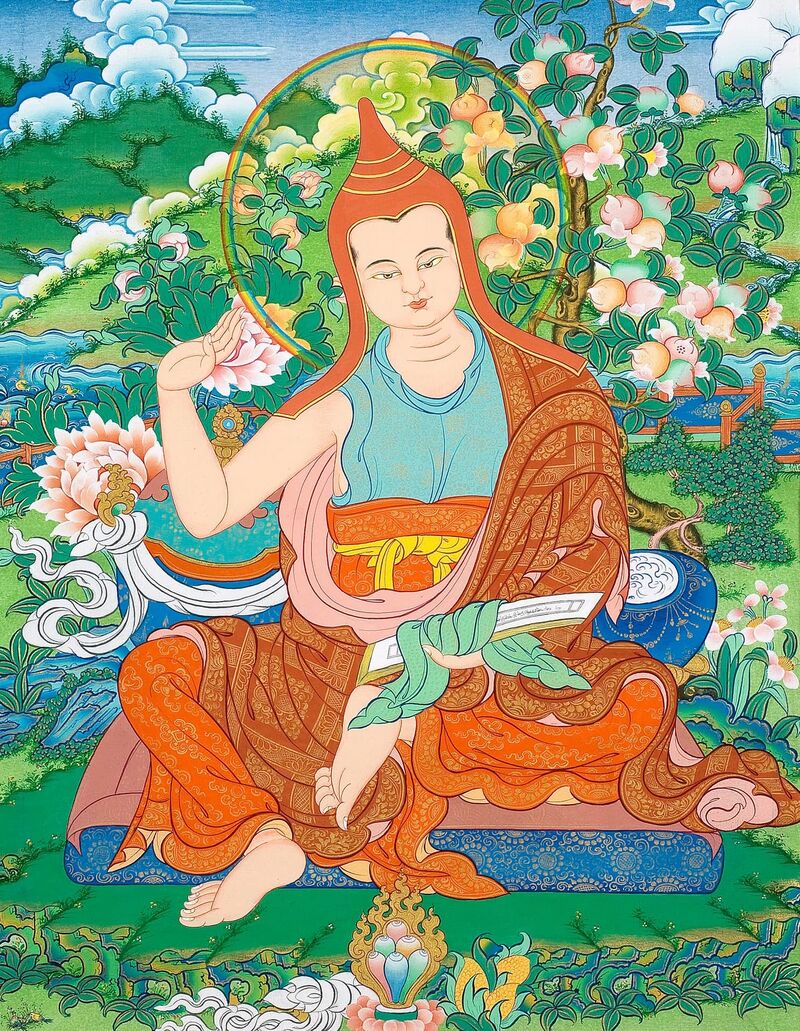
The second Bhāvanākrama considers many of [the] same topics [as the first], stressing that the achievement of the fruition of buddhahood requires the necessary causes, in the form of the collection of merit (puṇyasaṃbhāra) and the collection of wisdom (jñānasaṃbhāra). Both the first and second works espouse the doctrine of mind only (cittamātra); it is on the basis of these and other statements that Tibetan doxographers classified Kamalaśīla as a Yogācāra-Svātantrika-Madhyamaka. (Source: "Bhāvanākrama." In The Princeton Dictionary of Buddhism, 112–13. Princeton University Press, 2014. http://www.jstor.org/stable/j.ctt46n41q.27.)
| Reference | Kamalaśīla (པདྨའི་ངང་ཚུལ་). bhāvanākrama [भावनाक्रम]. bsgom pa'i rim pa [བསྒོམ་པའི་རིམ་པ]. [Stages of Meditation 2 of 3]. Tengyur, RKTST 4229 http://www.rkts.org/cat.php?id=4229&typ=2. |
|---|---|
| People | Kamalaśīla, Yeshe De, Prajñāvarman |

ordinary reasoning processes (cintāmayī prajñā) but rather with a form of experiential knowing (bhāvanāmayī prajñā, vipaśyanā) that is conceptual in nature. It is in accordance with this conception that the actual translation of the texts has been undertaken.
The second chapter of the commentary examines the concept of insight (vipaśyanā) in light of the earlier findings. Here the text is analyzed for its explanations of its insight, understood in terms of the important technical term bhūtapratyavekṣā. Here an argument is made for translating this term in a particular manner consistent with the conception of meditation outlined in Chapter 1. The term is explored in light of key passages containing descriptions of the cultivation of wisdom as well as in light of other important technical terms appearing in the texts, notably dharmapravicaya, smṛti and manasikāra. Chapter 2 closes with a discussion of Kamalaśīla's ideas of śrāvaka insight meditation (vipaśyanā) and how it differs from that of the Mahāyāna. Most notable in this regard is the suggestion that Kamalaśīla may have regarded śrāvaka insight practices (vipaśyanā) as instances of śamatha meditation. In the third chapter the suggestion is made that such considerations could lead to the development of an important area of future research into the differences among diverse Indian Buddhist traditions. The concluding section of Chapter 3 contains a summary of the concrete findings of this analysis.

