Bhāvanākrama of Kamalaśīla (2 of 3)/Full text
From Bodhicitta
< Texts | Bhāvanākrama of Kamalaśīla (2 of 3)(Redirected from Bhāvanākrama 2)
Texts/Bhāvanākrama of Kamalaśīla (2 of 3)/Full text
Texts/Bhāvanākrama of Kamalaśīla (2 of 3)/Full text
भावनाक्रम
Bhāvanākrama of Kamalaśīla (2 of 3)
Stages of Meditation 2 of 3
FULL TEXT
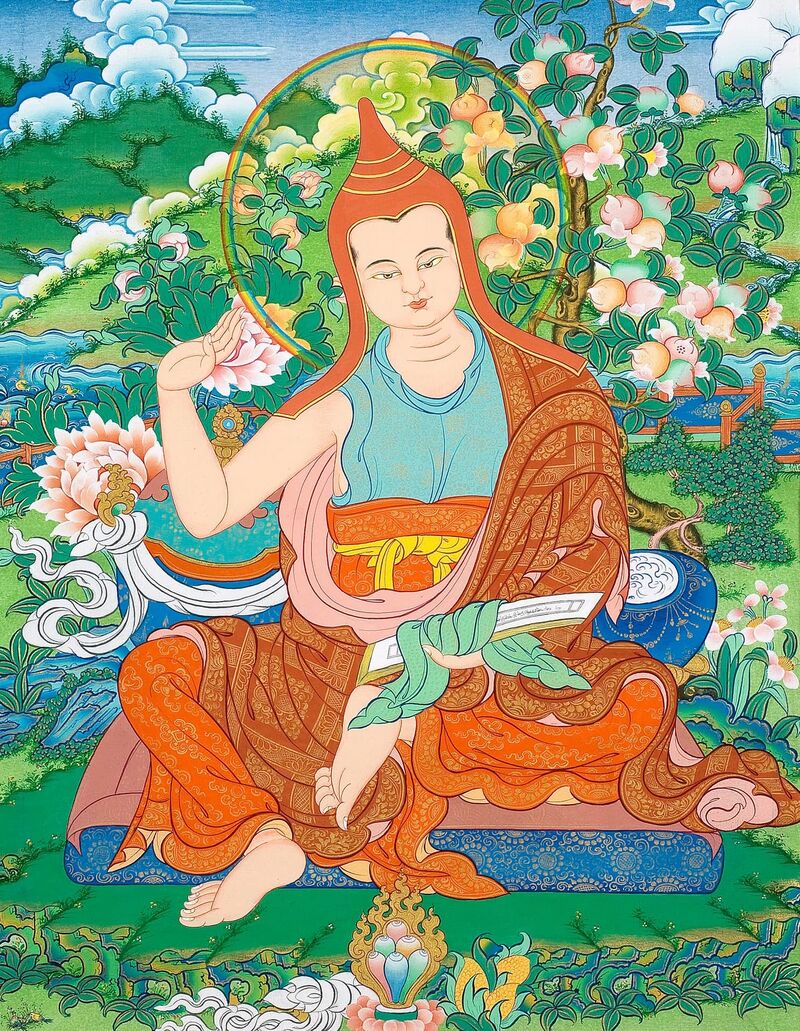
Description
The second Bhāvanākrama considers many of [the] same topics [as the first], stressing that the achievement of the fruition of buddhahood requires the necessary causes, in the form of the collection of merit (puṇyasaṃbhāra) and the collection of wisdom (jñānasaṃbhāra). Both the first and second works espouse the doctrine of mind only (cittamātra); it is on the basis of these and other statements that Tibetan doxographers classified Kamalaśīla as a Yogācāra-Svātantrika-Madhyamaka. (Source: "Bhāvanākrama." In The Princeton Dictionary of Buddhism, 112–13. Princeton University Press, 2014. http://www.jstor.org/stable/j.ctt46n41q.27.)
| Reference | Kamalaśīla (པདྨའི་ངང་ཚུལ་). bhāvanākrama [भावनाक्रम]. bsgom pa'i rim pa [བསྒོམ་པའི་རིམ་པ]. [Stages of Meditation 2 of 3]. Tengyur, RKTST 4229 http://www.rkts.org/cat.php?id=4229&typ=2. |
|---|---|
| People | Kamalaśīla, Yeshe De, Prajñāvarman |
