Śāntideva and the Moral Psychology of Fear
From Bodhicitta
< Articles(Redirected from Śāntideva and the Moral Psychology of Fear)
Articles/Śāntideva and the Moral Psychology of Fear
Articles/Śāntideva and the Moral Psychology of Fear
| 🤓 Admin Zone 🛠️ hidden to non-admins | |
Śāntideva and the Moral Psychology of Fear
Chapter in a Book
- A Fearless Heart
- A Flash of Lightning in the Dark of Night
- Becoming Bodhisattvas
- Bodhicaryāvatāra and Tibetan Mind Training (Lojong)
- Bodhicitta: Cultivating the Compassionate Mind of Enlightenment
- Bodhisattvacaryāvatāra: Exposition de la pratique des bodhisattvas
- Buddhist Ethics (2003)
- Comparative Confession: A Comparative Study of Confession in the Writings of Tertullian, Cassian, and Śāntideva
- Courageous Compassion
- Das Ritual der Entschlussfassung im Bodhicaryāvatāra (Kap. II und III)
- Demandingness, Self-Interest and Benevolence in Santideva's Introduction to the Practice of Awakening (Bodhicaryavatara)
- Ethical Revaluation in the Thought of Śāntideva
- Features of Śraddhā in the Śikṣāsamuccaya
- Following in the Buddha's Footsteps
- For the Benefit of All Beings
- From the Profound View of the Ultimate to Everyday Practice: Tokme Zangpo's Integration of Śāntideva's Teachings into Mind Training
- In Praise of Great Compassion
- Mapping the Bodhicaryāvatāra
- Mental Purification (Blo sbyong): A Native Tibetan Genre of Religious Literature
- No Time to Lose
- One Aspect of the Acceptance of the Bodhisattva-śīla in Tibet
- Perfecting Patience
- Performing Text as Practice: Rdza Dpal sprul's Practice Manual on the Bodhi(sattva)caryāvatāra
- Plant Seed, Pull Weed
- Readings of Śāntideva's Guide to Bodhisattva Practice
- Readings of Śāntideva's Guide to Bodhisattva Practice-Review by Harris
- Ritual Structure and Material Culture in the Guide to Bodhisattva Practice
- Seeing from All Sides
- Self-Protection through Mindfulness, Śāntideva
- Suffering Made Sufferable: Śāntideva, Dzongkaba, and Modern Therapeutic Approaches to Suffering's Silver Lining
- The Awakening Mind (Tsering 2008)
- The Bodhisattva Doctrine in Buddhist Sanskrit Literature
- The Bodhisattva Guide
- The Buddhist Roots of Secular Compassion Training: A Comparative Study of Compassion Cultivation in Indian and Tibetan Mahāyāna Sources with the Contemporary Secular Program of Compassion Cultivation Training (CCT)
- The Concept of Bodhicitta in Santideva's Bodhicaryavatara
- The Concept of Bodhicitta in Śāntideva's Bodhicaryāvatāra-Review by Edelglass
- The Concept of Bodhicitta in Śāntideva's Bodhicaryāvatāra-Review by Tatz
- The Triskandha, Practice in Three Parts: Study of an Early Mahāyāna Buddhist Ritual
- Uncommon Happiness
- Śāntideva (Internet Encyclopedia of Philosophy)
- Śāntideva and the Moral Psychology of Fear
- Śāntideva's Statement about Confession
Please note that many items in our library are simply pages that represent a detailed library catalog entry and citation of someone else's work, presentation, or performance. Read our General Disclaimer for more information.
Description
No abstract given. Here are the first relevant paragraphs:
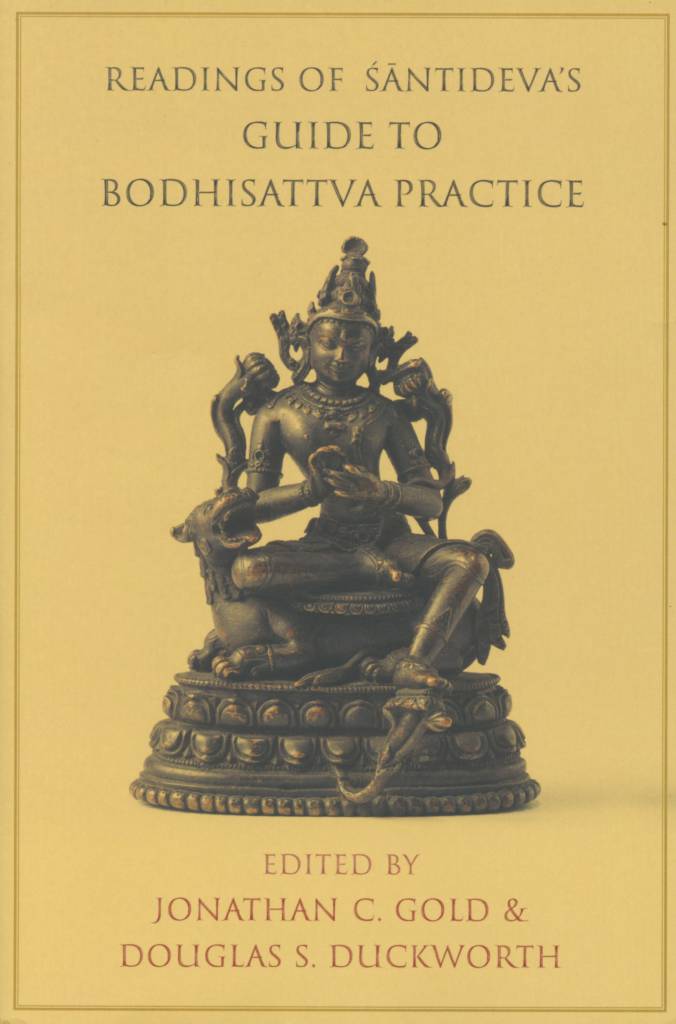
In chapters 2 and 7 of the Guide to Bodhisattva Practice (Bodhicaryāvatāra, hereafter Guide), Śāntideva provides a series of provocative verses aimed at inciting fear to motivate taking refuge in the bodhisattvas, the "Conquerors" (2.48) and "mighty Protectors of the world" (2.48), and thereby achieve fearlessness. My aim in this chapter is to investigate the moral psychology involved in this transition. (Finnigan, introductory remarks, 221)
Citation
Finnigan, Bronwyn. "Śāntideva and the Moral Psychology of Fear." In Readings of Śāntideva's Guide to Bodhisattva Practice, edited by Jonathan C. Gold and Douglas S. Duckworth, 221–34. New York: Columbia University Press, 2019.
Interconnections
1 Chapter or part of

This book serves as a companion to the Bodhicaryāvatāra. The fifteen essays contained here illuminate the Guide's many philosophical, literary, ritual, and ethical dimensions.
1 Scholarship on

An "Introduction to Bodhisattva Practice," the Bodhisattvacaryāvatāra is a poem about the path of a bodhisattva, in ten chapters, written by the Indian Buddhist Śāntideva (fl. c. 685–763). One of the masterpieces of world literature, it is a core text of Mahāyāna Buddhism and continues to be taught, studied, and commented upon in many languages and by many traditions around the world. The main subject of the text is bodhicitta, the altruistic aspiration for enlightenment, and the path and practices of the bodhisattva, the six perfections (pāramitās). The text forms the basis of many contemporary discussions of Buddhist ethics and philosophy.