Part 1: About the Text
Titles of the Text
The text examined in this study is known in Tibetan as Blo sbyong don bdun ma, which translates as "Mind Training in Seven Points" or "Seven-Point Mind Training." The Tibetan term blo sbyong (lojong) combines blo (mind, thought, attitudes) with sbyong (training, habituation, purification, cleansing), carrying four interrelated but distinct semantic dimensions. The suffix don bdun ma literally means "seven points" or "seven topics," referring to the systematic organization Chekawa Yeshe Dorje imposed upon previously scattered oral instructions. Chekawa arranged the root lines into seven categories, which became the standard presentation of Lojong, thus establishing the term "seven points" as synonymous with this particular formulation of mind training. The work is classified as a didactic manual written in seven-syllable verse, noted for its mnemonic structure and use of colloquial language, including Tibetan proverbs.
The term lojong itself has sparked philological discussion regarding its most appropriate English rendering. Some scholars argue that "mental purification" more accurately reflects the etymological sense of sbyong, while others prefer "mind training" as better capturing the genre's functional character in Tibetan Buddhist pedagogy. This debate extends to whether lojong should be understood prescriptively through its classical etymology or descriptively as a recognized genre name in the Tibetan literary tradition. The seven-point formulation by Chekawa became so influential that The Seven Points functions almost as a proper name for this particular branch of the lojong literature, distinguishing it from other mind training texts such as Langri Thangpa's Eight Verses on Mind Training (Blo sbyong tshig brgyad ma).
Table 1: Language Forms and Canonical Identifiers
| Language |
Form |
BDRC ID |
Notes
|
| Tibetan
|
Blo sbyong don bdun ma
|
WA15433 (BDRC Work ID)
|
Standard title; Wylie transliteration
|
| Tibetan
|
Blo sbyong don bdun ma'i rtsa tshig sogs
|
MW1NLM668 (Mongolia MS)
|
"Root verses . . . and others"
|
| Tibetan
|
Sngags chen lam rim dang blo sbyong don bdun ma'i 'grel pa
|
MW1AC25 (Lhasa print, series 348)
|
Includes Lamrim material
|
| Tibetan
|
Blo sbyong don bdun ma'i snyan brgyud kyi tshig rnams
|
MW1PD89084 (Bka' gdams gsung 'bum)
|
Tokme Zangpo commentary witness
|
| English
|
Seven-Point Mind Training
|
—
|
Most common translation
|
| English
|
Mind Training in Seven Points
|
—
|
Alternative translation
|
| English
|
Seven-Topic Mental Purification
|
—
|
Sweet 1996 translation (prescriptive)
|
Content and Structure
While Chekawa is credited with the seven-point systematization, the root lines themselves are understood to derive from the scattered oral instructions (upadeśa, man ngag) of the Indian master Atiśa Dīpaṃkara Śrījñāna (982–1054). These instructions were initially transmitted as restricted teachings (lkog chos), given orally to select disciples. Chekawa's innovation lay not in authoring entirely original verses but in compiling, organizing, and publicly disseminating what had previously been esoteric transmission material. The biographical literature consistently credits Chekawa as "the great systematizer" of the lojong teachings, a title that captures his historical role more precisely than "author" in the modern compositional sense.
His Seven Points organizes bodhicitta cultivation into a systematic, progressive framework consisting of seven main topics. This structure begins with foundational preliminary practices, proceeds through the core training in ultimate and conventional awakening mind, addresses the transformation of adversities, integrates practice into one's entire life, establishes measures of proficiency, delineates specific commitments, and concludes with practical precepts.
Point 1: Presentation of the Preliminaries
The first point establishes the foundational practices necessary for mind training. Commentarial literature identifies these as contemplating the rarity and preciousness of human birth, meditating on impermanence and death's certainty, and recognizing samsara's pervasive faults. These four contemplations generate the urgency and appropriate motivation required for the main practice.
Point 2: Training in the Awakening Mind
The second point constitutes the core of The Seven-Point Mind Training, divided into training in ultimate awakening mind (don dam byang chub kyi sems) and conventional awakening mind (kun rdzob byang chub kyi sems). This dual structure reflects the Mahāyāna understanding that complete enlightenment requires both wisdom realizing emptiness and compassionate engagement with suffering beings.
Ultimate bodhicitta training centers on emptiness meditation using approaches like viewing all phenomena as dreamlike or examining the nature of unborn awareness. Conventional bodhicitta training centers on tonglen (gtong len), "giving and taking," coordinated with breathing. Practitioners alternate between giving their happiness to others (on exhalation) and taking upon themselves others' suffering (on inhalation). Post-meditation instruction teaches the practitioner to work with "three objects, three poisons, and three roots of virtue," to maintain mindfulness by recognizing types of experiential objects and noting which afflictions they evoke, and to immediately transform afflictive responses into virtuous opposites.
Point 3: Taking Adverse Conditions onto the Path
The third point teaches the distinctive lojong approach to difficulties and obstacles. Rather than viewing hardships as impediments, mind training transforms them into catalysts for awakening. Key instructions include identifying self-cherishing as the sole cause of suffering and recognizing even harmful beings as teachers providing opportunities to practice patience.
Point 4: Condensing Practice into One Lifetime
The fourth point addresses how to integrate the entire path into one's actual life circumstances through the five powers: repeatedly renewing one's commitment to bodhicitta, consistent practice, accumulating merit, rejecting self-cherishing, and dedicating merit toward enlightenment.
Point 5: The Measure of Proficiency
The fifth point establishes criteria for evaluating progress. The primary measure emphasizes the practice aiming at reducing self-grasping and self-cherishing. Other measures include relying on one's own mind as principal witness rather than others' perceptions, maintaining a joyful attitude, and practicing effectively even while distracted.
Point 6: The Commitments of Mind Training
The sixth point delineates specific commitments that practitioners undertake, functioning as safeguards preventing practice from becoming merely theoretical. These address maintaining practice consistency, avoiding spiritual pride, refraining from public display, avoiding dwelling on others' faults, and working on one's own worst defects first.
Point 7: The Precepts of Mind Training
The seventh point presents practical precepts for daily application, expressed in colloquial language reflecting their oral origins. Examples include "do everything with one intention" (maintain bodhicitta in all activities), "correct all wrongs with one remedy" (use awareness and compassion), and "whichever of the two occurs, be patient."
Table 2: Thematic Structure of The Seven Points of Mind Training
| Section/Point |
Primary Theme |
Key Concepts |
Significance
|
| Point 1: Preliminaries
|
Foundational practices
|
Precious human birth, impermanence, samsaric suffering
|
Generates renunciation and urgency; establishes motivation
|
| Point 2.A: Ultimate Bodhicitta
|
Wisdom training
|
Emptiness, dream analogy, unborn awareness, basis-of-all, illusory body
|
Develops wisdom that prevents substantial grasping
|
| Point 2.B: Conventional Bodhicitta
|
Compassion training
|
Tonglen (giving-taking), breath coordination, three objects/poisons/virtues
|
Actualizes exchanging self and other; transforms motivation
|
| Point 3: Adversity as Path
|
Obstacle transformation
|
Blaming self-grasping, recognizing kindness, emptiness of harm, offerings
|
Converts difficulties into spiritual opportunities
|
| Point 4: Lifetime Integration
|
Essential practices
|
Five powers (intention, familiarization, white seed, repudiation, prayer), application to death
|
Condenses path; addresses dying process
|
| Point 5: Proficiency Measures
|
Progress evaluation
|
Reduction of self-grasping, self-witness, joyful attitude, distracted proficiency
|
Provides concrete criteria for assessing development
|
| Point 6: Commitments
|
Ethical safeguards
|
Avoiding pride, maintaining consistency, refraining from exploitation, giving up competition
|
Prevents deviation and self-deception
|
| Point 7: Precepts
|
Daily application
|
One intention, one remedy, beginning/ending practices, three difficulties, three causes
|
Translates principles into moment-by-moment behavior
|
Textual Heritage and Transmission
The Seven-Point Mind Training belongs to the Kadam (Bka' gdams) tradition of Tibetan Buddhism, founded by Atiśa Dīpaṃkara Śrījñāna following his arrival in Tibet in 1042. Atiśa transmitted mind training instructions as "hidden Dharma" (lkog chos) or pith instructions (man ngag) to Dromtön Gyalwai Jungne (1005–1064), who became the primary lineage holder. These instructions remained closely guarded oral teachings, transmitted through several generations: from Atiśa through Dromtön to Potowa Rinchen Sal (1027–1105), then to Sharawa Yonten Drak (1070–1141), who became Chekawa's principal teacher. Following Sharawa's death in 1141, Chekawa succeeded him as teacher and lineage holder.
Initially, Chekawa maintained the tradition of restricted transmission, teaching the instructions to only one or two disciples at a time. However, he later made the landmark decision to teach the system openly as "public Dharma" (tshogs chos), with his composition of The Seven-Point Mind Training serving as the vehicle for this shift. This innovation marked a pivotal moment in the history of lojong literature, transforming previously esoteric oral instructions into a widely accessible written text. The biographical literature explicitly credits Chekawa with originating the public Lojong teaching tradition through this act of opening the transmission. His most important direct disciple was Se Chilbu Chökyi Gyaltsen (1121–1189), who compiled his teacher's lecture notes. Scholarly consensus recognizes Se Chilbu's compilation as the first commentary on The Seven Points, making Tokme Zangpo's fourteenth-century work the second earliest known commentary rather than the first, as some earlier scholarship suggested. Following its organization into seven key points, the text effectively became the root text of Atiśa's mind training teachings, attracting numerous commentaries from major Tibetan teachers across several centuries. As mentioned by Jinpa, at least twelve well-known commentaries exist, representing various lineages and interpretive traditions within Tibetan Buddhism.[1]
Manuscript and printed witnesses of the text exist in multiple locations and formats. The National Library of Mongolia preserves a manuscript witness containing fifteen folios of the root text along with other liturgical materials.[2] The Collected Works of the Kadampas (Bka' gdams gsung 'bum) includes multiple witnesses. The existence of at least six different redactions of the root lines suggests that Chekawa's Seven Points represents one specific—and ultimately the most famous— arrangement of a common oral tradition rather than a singular original composition.
The Tibetan author Sonam Lhai Wangpo's fifteenth-century History of the Kadam Tradition (Bka' gdams chos 'byung rin po che) classifies Atiśa's teachings into four categories: teachings on the stages of the path, scattered sayings, epistles, and pith instructions. Within this taxonomy, he lists the entire collection of mind training teachings as "scattered sayings," which explains why the root lines do not appear in the Tengyur (canonical Buddhist treatises) under Atiśa's name. These lines most probably originated as spontaneous instructions that Atiśa gave to different individuals on various occasions, later compiled by teachers into oral transmissions to prevent their loss. The brevity and vernacular style of the verses confirm their oral origins.
As explained in detail by Jinpa, the transmission lineages of The Seven Points bifurcated into northern and southern streams, each emphasizing different interpretive approaches. This division manifests most clearly in the understanding of the phrase "place your mind on the basis of all that is the path's essence" (kun gzhi). Northern-lineage proponents, following teachers like Radrengpa, identify this as emptiness (śūnyatā), emphasizing the ultimate nature of mind. Southern-lineage advocates, following masters like Tokme Zangpo, interpret it as the uncontrived natural mind, placing greater emphasis on recognizing the mind's innate luminosity. The fourteenth-century master Shönu Gyalchok's Compendium of All Well-Uttered Insights (Blo sbyong legs bshad kun btus) synthesized both approaches, creating a third interpretive tradition that sought to reconcile the divergent readings.[3]
The textual history of The Seven Points involves multiple redactions and versions, reflecting both the oral origins of the root verses and the evolution of the text through successive transmissions. At least six different arrangements of lojong root lines attributed to Atiśa's teachings existed before or contemporaneous with Chekawa's systematization. These variants suggest that different lineages preserved slightly different selections of verses or organized them according to varying pedagogical priorities.
One of the most significant textual variations concerns the ordering of ultimate and conventional bodhicitta within Point 2. Some versions place meditation on ultimate bodhicitta (emptiness) before conventional bodhicitta (compassion practices like tonglen), while others reverse this order. This variation reflects more than arbitrary arrangement; it embodies different views on the relationship between wisdom and method. Versions placing ultimate bodhicitta first suggest that emptiness realization should precede compassion cultivation, preventing compassion from being contaminated by substantial grasping. Versions placing conventional bodhicitta first emphasize that compassionate motivation provides the necessary context for emptiness meditation, preventing wisdom from becoming mere intellectual understanding divorced from care for beings.
Scholarly research, particularly Stenzel's (2018) analysis of early commentarial literature, reveals the historical development of these orderings. Chekawa and his student Se Chilbu Chökyi Gyaltsen (1121–1189) understood ultimate bodhicitta training as a brief preliminary to tonglen practice, serving to prevent dualistic conceptualization of subject and object from tainting the subsequent compassion meditation. In this arrangement, meditation on emptiness comes before the conventional practice of tonglen. However, Sangye Gompa (1179–1250), author of the Public Explications of Mind Training (Blo sbyong tshogs bshad ma), adopted a different approach by positioning his discussion of ultimate bodhicitta at the conclusion of his commentary, thereby indicating that emptiness meditation should follow rather than precede conventional bodhicitta training.
According to Stenzel, citing Thupten Jinpa's research, Sangye Gompa's arrangement significantly influenced the later tradition. His ordering was adopted by Namkha Pal's Rays of the Sun and became the standard presentation in Geluk schools, with ultimate bodhicitta placed after conventional practices. In contrast, most non-Geluk authors follow the text embedded in Tokme Zangpo's (1297–1371) commentary, which places meditation on ultimate bodhicitta before conventional bodhicitta. This variation between schools persists into modern transmission, with different contemporary teachers following the ordering of their lineage's preferred redaction.
Another area of textual variation concerns the precise wording of individual verses. Given the oral origins and mnemonic function of the root lines, slight variations in wording occurred naturally as different students memorized their teacher's instructions. These variations typically preserve the same essential meaning while expressing it through slightly different vocabulary or phrasing. Modern critical editions attempt to document major textual variants, though the full manuscript tradition remains incompletely studied.
A colophon attributed to Chekawa appears in several versions of The Seven Points, with wording variations reflecting the text's oral transmission history. One widely circulated translation renders it: "These instructions, which turn all factors favorable and unfavorable into the path of enlightenment, are the essence of the nectar-like profound oral instructions of Serlingpa. Emerging from the lineage of the golden early Kadampas, they are like the rays of the sun." While specific phrasings vary across editions, the colophon consistently attributes the teachings to Serlingpa (Atiśa's teacher) and characterizes them as transformative instructions capable of converting adverse circumstances into spiritual opportunities. This attribution establishes Chekawa's self-understanding as transmitting Atiśa's lineage while making these formerly restricted teachings accessible to broader audiences.
The Text's Integration into Larger Collections
The Seven Points exists not only as an independent text but also as part of larger anthologies compiled by later masters. The most comprehensive collection is the Lojong Gyatsa (Blo sbyong brgya rtsa), the "Hundred Mahāyāna Mind Trainings," compiled by Shönu Gyalchok (fourteenth/fifteenth c.) and expanded by his student Könchok Gyaltsen (1388–1469). This massive anthology contains diverse lojong texts from various lineages, demonstrating the proliferation of mind training literature following Chekawa's systematization.
The nineteenth-century master Jamgön Kongtrul Lodrö Thaye (1813–1899) included The Seven Points and its commentaries in his encyclopedic Treasury of Precious Instructions (Gdams ngag mdzod). This inclusion alongside teachings from all Tibetan Buddhist schools affirms the text's status as essential Tibetan Buddhist literature transcending sectarian boundaries. Kongtrul's own commentary, titled A Guidebook for the Path to Enlightenment: An Instruction Manual on the Mahāyāna Seven-Point Mind Training, draws on multiple earlier commentarial traditions while offering his synthesis.
Part 2: About the Author
Traditional Attribution and Biographical Profile
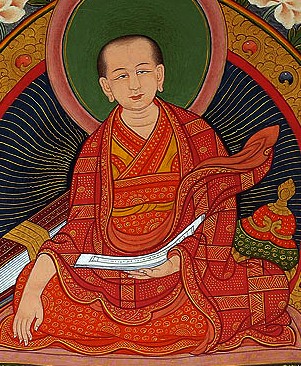
Chekawa Yeshe Dorje (1101–1175) is consistently identified across Tibetan biographical sources and modern catalogs as the author of The Seven Points of Mind Training. He was born in the Iron Snake year of 1101 in Luro or Lura to Pakpa Kyab and Sonam Kyi of the Ja clan (Bya). His birth name was likely Yeshe Dorje, with "Chekawa" deriving from the name of the monastery, Cheka ('Chad kha), he later founded.
The biographical sources present a comprehensive portrait of Chekawa's spiritual formation and achievements. As a youth, he studied with the renowned yogi Rechungpa (1084–1161), a principal disciple of Milarepa, receiving novice ordination at age twenty-one. The choice to ordain relatively late suggests prior engagement with nonmonastic Buddhist practice, possibly influenced by his early exposure to Rechungpa's yogic approach. He took full monastic ordination at age twenty-three in 1123, by which time he had already embarked on a comprehensive Buddhist education. His monastic name remained Yeshe Dorje.
Education and Teachers
Chekawa's education was remarkably thorough and drew from multiple lineages within the Kadam tradition, demonstrating the integrative character of his training. From Geshe Tsen, he received instruction on Asaṅga/Maitreya's Ornament of the Sūtras (Sūtrālaṃkāra) several times. This repeated study of a single major text exemplifies the Kadam approach to textual mastery, ensuring not merely intellectual comprehension but deep internalization of the text's meaning and capacity to apply its teachings. The Sūtrālaṃkāra provided him with systematic understanding of Mahāyāna philosophy, particularly the Yogācāra-influenced presentation of the bodhisattva path and the cultivation of bodhicitta.
From Rechungpa, Chekawa received esoteric meditation instructions associated with Milarepa's lineage. This connection to the Kagyu tradition, though not extensively documented in biographical sources, suggests that Chekawa's education included exposure to Mahāmudrā contemplative approaches alongside Kadam scholastic training.
Geshe Nyangchak Zhingpa introduced Chekawa to Langri Thangpa's Eight Verses on Mind Training, which profoundly affected him. According to his biography, Chekawa was particularly struck by the fifth verse, which articulates the counterintuitive practice of accepting defeat and offering victory to others. This verse moved him so deeply that he resolved to seek out its author and study the complete mind training tradition. The biographical literature emphasizes this encounter as the turning point that redirected Chekawa's spiritual trajectory from general Kadam studies toward specialized focus on lojong teachings.
In 1130, at age twenty-nine, Chekawa traveled to Lhasa with the intention of studying with Langri Thangpa (1054–1123). Upon arriving, he discovered that the master had already died. This disappointment led to his fateful encounter with Sharawa Yönten Drak (1070–1141), who would become his most influential teacher and the source of the complete lojong transmission.
The Decisive Relationship with Sharawa Yönten Drak
Sharawa Yönten Drak became Chekawa's root teacher and the direct source of the mind training instructions he would later systematize. The biographical literature provides detailed information about this crucial relationship. As mentioned in his biography on The Treasury of Lives, Chekawa studied with Sharawa for sixteen years total, including eight intensive years residing at Sharawa's monastery. During thirteen of these sixteen years, Sharawa transmitted extensive mind training instructions, including the secret practice of exchanging self with others that Atiśa had transmitted only to select disciples.[4]
The transmission Chekawa received from Sharawa encompassed not merely the technical instructions but the complete lineage understanding of how these teachings fit within the broader Buddhist path. Sharawa himself had received the lojong teachings through the Kadam lineage tracing back to Atiśa, and he recognized in Chekawa a worthy vessel for this transmission. The biographical sources emphasize that Sharawa entrusted Chekawa with the complete lineage, formally establishing him as a lineage holder authorized to transmit these teachings.
The content of Sharawa's instruction to Chekawa apparently included various redactions of the root verses for mind training that had circulated orally within the Kadam school. These verses derived from Atiśa's oral instructions, preserved and transmitted through successive generations of Kadam teachers but not yet organized into a standardized framework. Chekawa's exposure to multiple versions of these instructions positioned him to recognize patterns and organize them systematically.
Under Sharawa's guidance, Chekawa became a highly regarded teacher in the Kadam tradition, particularly within the Zhungpa (Gzhung pa) subtradition, which emphasized rigorous textual study and systematic application of the gradual path (lam rim). This institutional positioning within the textual lineage of the Kadam school rather than the oral instruction lineage (gdams ngag pa) appears somewhat paradoxical given his later role in systematizing oral instructions. However, the integration of scholarly rigor with practical instruction characterizes Chekawa's approach and may explain his effectiveness in organizing previously unsystematized oral teachings.
Succession and Institutional Leadership
Following Sharawa's death in 1141, Chekawa succeeded him as lineage holder and teacher, assuming responsibility for continuing the transmission of these precious instructions. In 1141 or 1142, shortly after Sharawa's passing, Chekawa founded Chekha Monastery in Meldro (Mal gro), approximately seventy kilometers northeast of Lhasa. The location of this foundation, removed from the major monastic centers of Lhasa and the Tsang region, allowed Chekawa to establish a distinct community focused on intensive mind training practice.
The monastery flourished under his leadership, eventually housing approximately nine hundred monks. This substantial community indicates both Chekawa's effectiveness as a teacher and administrator and the growing appeal of the mind training teachings he championed.
The biographical sources provide conflicting information regarding how long Chekawa served as abbot of Chekha Monastery. One account states that he remained there for eleven years, while another claims thirty-four years. Several possibilities might explain this discrepancy. The eleven-year figure might represent his active leadership period before entering extended retreat, while the thirty-four-year figure might count from founding (1141/42) to death (1175), encompassing both active and semiretired periods.
Later Life and Retreat Practice
Chekawa spent the later portion of his life in intensive retreat practice at Jadurmo (Bya dur mo), though the sources are somewhat less specific about the duration and exact timing of this retreat period. His final months were spent at Tapur (Mtha' phur) in concentrated meditation. The biographical sources suggest this final period involved preparation for death through application of the very practices he had taught—particularly the five powers applied to the dying process. He passed away in 1175 at age seventy-five in the Wood Sheep year. His death is not described as involving unusual circumstances or dramatic displays of realization, consistent with the Kadam emphasis on practical, unsensational spirituality focused on actual inner transformation rather than external signs.
Textual Legacy
Chekawa's most important disciple was Se Chilbu Chökyi Gyaltsen (1121–1189), who compiled his teacher's lecture notes into what scholarly consensus now recognizes as the first commentary on The Seven Points. The existence of this immediate commentarial activity by a direct disciple confirms both the text's rapid acceptance within the Kadam school and its perceived need for explanatory elaboration despite its apparent simplicity. Se Chilbu's compilation from Chekawa's lectures suggests that Chekawa taught extensively on The Seven Points, providing detailed explanations that were necessary to make the terse root verses comprehensible and applicable. The root text alone, with its cryptic verses and minimal elaboration, required oral transmission and commentary to become an effective teaching tool.
Chekawa's relationship with lojong literature extended beyond his famous Seven Points. His biography records that he had received teachings on Langri Thangpa's Eight Verses of Mind Training from Geshe Nyangchak Zhingpa, and a colophon explicitly attributes a commentary on this text to Chekawa himself. This demonstrates his role not only as an innovator who systematized the scattered teachings into seven points but also as a dedicated preserver and commentator within the existing lojong lineage. He simultaneously innovated and conserved, creating a new organizational schema while remaining faithful to the content of received teachings.
Historical Significance and Innovations
The biographical sources consistently present Chekawa as operating within multiple intersecting roles: accomplished meditation master, systematic scholar, monastery founder, and lineage holder. He is celebrated as "the great systematizer" of lojong teachings, a title that accurately captures his primary historical contribution. While he did not compose entirely original teachings—the root lines derive from Atiśa's scattered instructions—his organizational achievement proved extraordinarily influential. By arranging previously disparate oral instructions into a coherent seven-point framework, he created a structure so effective that it became the standard presentation of mind training within Tibetan Buddhism, persisting across centuries and school boundaries.
Chekawa's decision to teach the lojong instructions openly, transforming them from restricted oral transmission to public teaching, represents a pivotal innovation in Tibetan Buddhist history. Prior to Chekawa, these teachings were considered hidden Dharma (lkog chos), transmitted privately to qualified disciples. Biographical accounts attribute this restriction to several factors: the teachings' power and potential for misunderstanding, their status as Atiśa's most precious instructions, and the requirement for proper preliminary training to receive them beneficially.
Chekawa's choice to make them accessible to broader audiences facilitated the access to practices previously reserved for advanced practitioners. This decision reflects both pedagogical confidence in the teachings' value for general practitioners and perhaps institutional recognition that restricting access too tightly risked losing valuable instructions altogether. The biographical literature explicitly credits this act of opening the transmission as the origin of the public Lojong teaching tradition, marking Chekawa as the first Tibetan master to expand the audience for these practices beyond the small circle of qualified disciples.
The innovation of public teaching did not mean indiscriminate distribution without guidance. Chekawa maintained the importance of preliminary training—the four thoughts that turn the mind (blo ldog rnam bzhi)—as essential preparation for mind training practice. His opening of the transmission meant making the teachings available to sincere practitioners who had completed preliminaries, not eliminating the graduated path structure entirely. This balanced approach preserved the teachings' integrity while extending their reach.
Doctrinal Positions and Philosophical Commitments
Regarding the doctrinal positions Chekawa defended, the available sources emphasize his role as transmitter and systematizer rather than as an original doctrinal innovator. His commitment to the Kadam tradition places him firmly within the Madhyamaka philosophical school, specifically the Prāsaṅgika-Madhyamaka interpretation as transmitted through Atiśa. The Kadam school's founder, Atiśa, had established this philosophical orientation, and subsequent Kadam teachers maintained it as the correct view for understanding emptiness.
Chekawa's organization of The Seven Points reflects key Kadam doctrinal emphases: the integration of sūtra and tantra (evident in combining emptiness meditation with compassion practices), the centrality of bodhicitta as the essential Mahāyāna practice, the practical application of philosophical insight to lived experience, and the transformation of adverse conditions through reframing rather than avoidance. His presentation of ultimate and conventional bodhicitta as complementary rather than sequential practices represents a distinctive Kadam approach, contrasting with traditions that emphasize achieving perfect realization of emptiness before cultivating compassion. The Seven Points insists that wisdom and compassion must develop together, each supporting and protecting the other from potential distortions.
Chekawa's emphasis on the practice of tonglen as the principal method for cultivating conventional bodhicitta represents a specifically Kadam approach to implementing Śāntideva's teaching on exchanging self and other. While Śāntideva presented the exchange primarily as an ethical and philosophical reorientation, the Kadam lineage developed concrete meditation techniques—particularly the breath-coordinated tonglen practice—for actualizing this exchange at an experiential level. Chekawa's clear articulation of this practice in The Seven Points contributed significantly to its widespread adoption across Tibetan Buddhist schools.
His systematic presentation of adversity transformation techniques, particularly the instruction on countering self-grasping, reflects the Kadam emphasis on taking personal responsibility for one's experience rather than externalizing blame. This position carries both psychological and doctrinal implications. Psychologically, it empowers practitioners by locating the source of suffering within one's own attitudes rather than in unchangeable external circumstances. Doctrinally, it embodies the Buddhist teaching that suffering arises from afflictive mental states rather than from objects themselves.
Biographical Data Summary
Table 3: Key Biographical Data
| Birth year
|
1101 (Iron Snake)
|
| Death year
|
1175 (Wood Sheep), age 75
|
| Birthplace
|
1175 (Wood Sheep), age 75
|
| Birthplace
|
Luro/Lura
|
| Parents
|
Pakpa Kyab (father), Sonam Kyi (mother)
|
| Clan
|
Ja clan (Tibetan: Bya)
|
| Novice ordination
|
Age 21 (1121)
|
| Full ordination
|
Age 23 (1123)
|
| Primary teacher
|
Sharawa Yönten Drak (1070–1141)
|
| Other teachers
|
Rechungpa (1084–1161), Geshe Tsen, Geshe Nyangchak Zhingpa
|
| Failed meeting
|
Langri Thangpa (1054–1123)
|
| Succession
|
1141
|
| Monastery founded
|
Chekha, Meldro (1141 or 1142)
|
| Retreat location
|
Jadurmo (Bya dur mo)
|
| Death location
|
Tapur (Mtha' phur)
|
| Primary disciple
|
Se Chilbu Chökyi Gyaltsen (1121–1189)
|
- ↑ The major commentaries on Chekawa Yeshe Dorje's Seven-Point Mind Training include: (1) Se Chilbu's commentary compiled from Chekawa's teaching; (2) Tokme Zangpo's commentary; (3) Shönu Gyalchok (Gzhon nu rgyal mchog, 14th c.), Compendium of All Well-Uttered Insights (Legs bshad kun 'dus); (4) Konchok Gyaltsen (Dkon mchog rgyal mtshan, 1388-1469), Supplement to Oral Transmission (Zhal shes kyi lhan thabs); (5) Radrengpa (Rwa sgreng pa, 15th c.), Stream of the Awakening Mind (Byang chub sems kyi chu rgyun); (6) Horton Namkha Pal (Hor ston nam mkha' dpal, 1440–1511), Mind Training: Rays of the Sun (Blo sbyong nyi ma'i 'od zer); (7) First Dalai Lama Gendün Drup (Dge 'dun grub, 1391–1474), Lucid and Succinct Guide to Mind Training (Blo sbyong gsal bsdus); (8) Khedrup Sangye Yeshe (Mkhas grub sangs rgyas ye shes, 1525–1590), How to Integrate into One's Mind the Well-Known Seven-Point Mind Training (Blo sbyong don bdun ma grags chen ji ltar nyams su len tshul); (9) Kalden Gyatso (Skal ldan rgya mtsho, 1607–1677), Dispelling the Darkness of Mind (Blo sbyong mun sel); (10) Yongzin Yeshe Gyaltsen (Yongs 'dzin ye shes rgyal mtshan, 1713–1793), Essence of Ambrosia (Bdud rtsi snying po); (11) Ngülchu Dharmabhadra (Dngul chu dharma b+ha dra, 1772–1851), Heart Jewel of the Bodhisattvas (Byang sems snying nor); (12) Jamyang Khyentse Wangpo ('Jam dbyangs mkhyen brtse'i dbang po, 1820–1892), Seeds of Benefit and Well-Being (Phan bde'i sa bon). See Thupten Jinpa, trans. and ed., Mind Training: The Great Collection, compiled by Shönu Gyalchok (Gzhon nu rgyal mchog) and Könchok Gyaltsen (Dkon mchog rgyal mtshan). Library of Tibetan Classics 1 (Boston: Wisdom Publications, 2006), 11–12.
- ↑ See 'Chad kha pa ye shes rdo rje, Blo sbyong don bdun maʼi rtsa tshig sogs, 1 vol., http://purl.bdrc.io/resource/MW1NLM668.
- ↑ See Jinpa, Mind Training, 12.
- ↑ See Samten Chhosphel, "Chekhawa Yeshe Dorje," Treasury of Lives, accessed November 04, 2025, http://treasuryoflives.org/biographies/view/Chekhawa-Yeshe-Dorje/5791.