- [[<span class="smw-highlighter" data-type="4" data-state="inline" data-title="Warning" title="Some use of "|]]
- "
- In your query was not closed by a matching "
- "
- [[.">Some use of "" in your query was not closed by a matching "".|]]
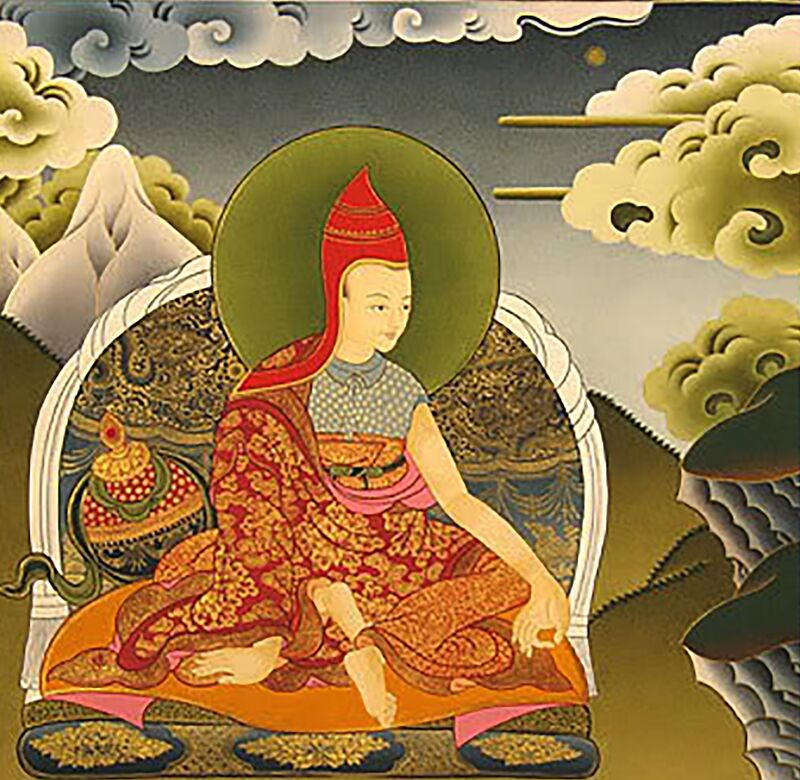
The following extract from The Way of the Bodhisattva[1] gives a concise overview of Śāntideva's Bodhisattvacharyāvatāra. It introduces the concept of bodhicitta and its two aspects: ultimate and relative. Following the text's structure, it outlines three main sections: the dawn of bodhicitta, protecting and maintaining bodhicitta, and intensifying bodhicitta. Key takeaways include the importance of vigilant introspection, the value of patience, and the practices of meditating on the equality of self and other and their exchange.
This overview serves as a valuable resource for those exploring "The Way of the Bodhisattva". It provides a comprehensive framework of the text's themes, making it useful for both beginners and advanced practitioners. The article's emphasis on Śāntideva's practical approach to spiritual development and its contextualization within Mahāyāna Buddhist thought enhances readers' understanding of the text's significance. By addressing potential misconceptions and discussing specific practices, it serves as a helpful introduction to the original text.
The Way of the Bodhisattva[2] is one of the great classics of the Mahāyāna,
the Buddhism of the Great Vehicle. Presented in the form of a personal
meditation, but offered in friendship to whoever might be interested, it is
an exposition of the path of the Bodhisattvas—those beings who, turning
aside from the futility and sufferings of saṃsāra, nevertheless renounce
the peace of an individual salvation and vow to work for the deliverance
of all beings and to attain the supreme enlightenment of Buddhahood for
their sake. As such, Shāntideva's work embodies a definition of compassion raised to its highest power and minutely lays out the methods by
which this is to be achieved. It is an overwhelming demonstration of how
concern for others, in a love that wholly transcends desire and concern for
self, lies at the core of all true spiritual endeavor and is the very heart of
enlightened wisdom.
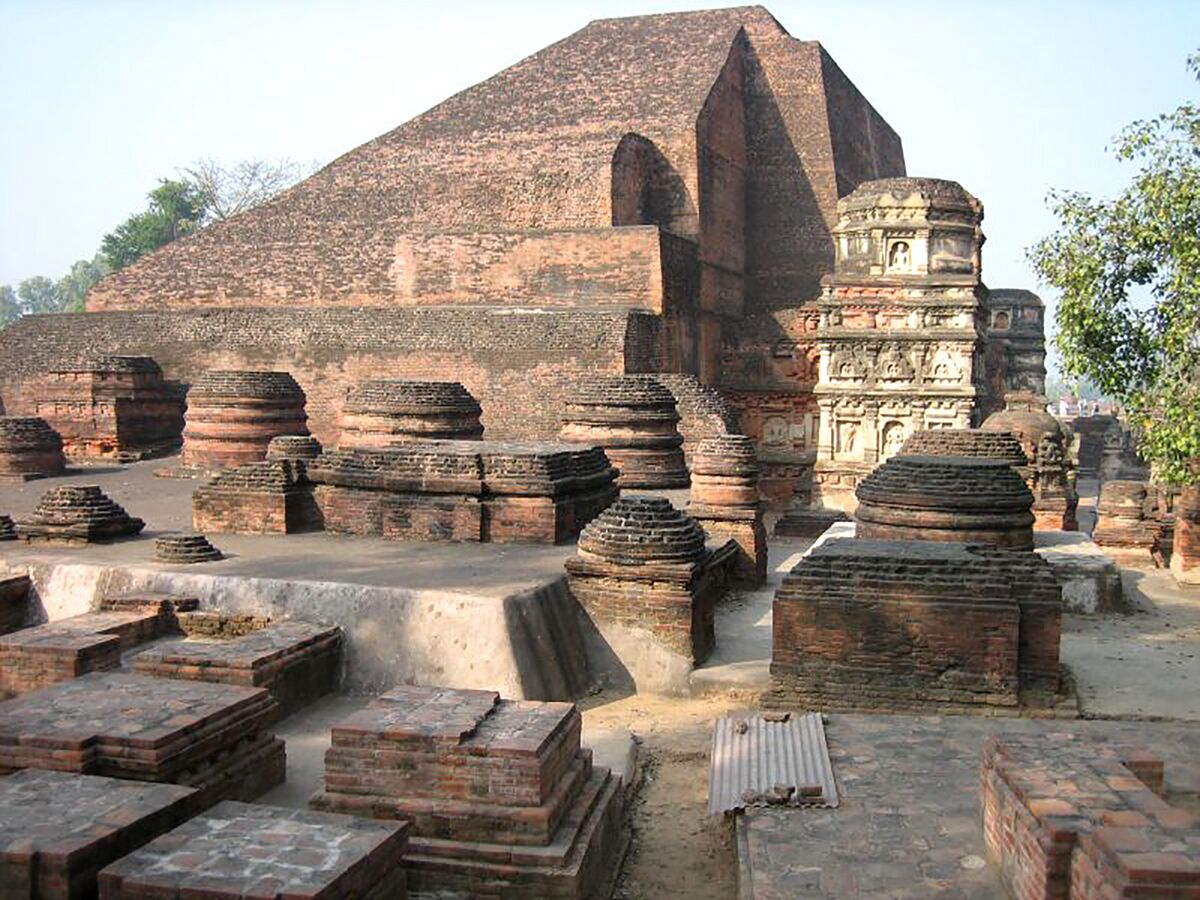
The author of The Way of the Bodhisattva was a member of the monastic university of Nālandā, which, like the other great university of Vikramashīla, was one of the most celebrated centers of learning in ancient India. Little is known about him, although a number of colorful legends have come down to us over the centuries—tantalizing half-lights that give us a glimpse of a highly unusual and independent personality. It would seem that Shāntideva was very much his own master, temperamentally impervious to social and ecclesiastical pressures, and able to pursue his insights irrespective of conventional expectations and public opinion.[3] He was drawn at an early age to the wisdom teachings of the Mahāyāna, as embodied in the Bodhisattva Mañjushrī, and thus to the Madhyamaka or Middle Way school of Buddhist philosophy, renowned for its profundity and dialectic subtlety. Yet, as his work reveals, Shāntideva was by no means a dry academic. Like Nāgārjuna before him, he possessed to a remarkable degree the unusual combination of a powerful intelligence linked with a keen appreciation of the sufferings of the world and a deep sense of tenderness toward others.
It is impossible here to give an adequate description of Shāntideva's great poem, but it is hoped that with the passage of time it will be possible to make available translations of the commentaries of the great masters of the past. The following introduction is intended only as a guideline to help readers find their bearings, especially those who are unfamiliar with fundamental Buddhist ideas.

It is a frequent practice among commentators to divide The Way of the Bodhisattva into three main sections, along the lines of a famous prayer, perhaps traceable to Nāgārjuna:[4]
May bodhichitta, precious and sublime, Arise where it has not yet come to be; And where it has arisen may it never fail But grow and flourish ever more and more.
According to this scheme, the first three chapters ("The Excellence of Bodhichitta," "Confession," and "Taking Hold of Bodhichitta") are designed to stimulate the dawning of bodhichitta in the mind. The following three chapters ("Carefulness," "Vigilant Introspection," and "Patience") give instructions on how to prevent the precious attitude from being dissipated, while the seventh, eighth, and ninth chapters ("Diligence,""Meditative Concentration," and "Wisdom") prescribe ways in which bodhichitta may be progressively intensified. The tenth chapter is a concluding prayer of dedication.
The Dawn of Bodhichitta

What is bodhichitta? The word has many nuances and is easier to understand, perhaps, than to translate. For this reason we have used the Sanskrit term, in the hope that by dint of careful definition it may be incorporated into, and allowed to enrich our language. Chitta means "mind," "thought," "attitude." Bodhi means "enlightenment," "awakening," and is cognate with the term buddha itself. This gives us "mind of enlightenment," "awakened mind"—the attitude of mind that tends toward Buddhahood, the enlightened state. It should be noted that bodhichitta is not a synonym for compassion; it is a broader term in which compassion is implied.
According to tradition, bodhichitta is said to have two aspects, or rather to exist on two levels. First, one speaks of ultimate bodhichitta, referring to the direct cognizance of the true status of phenomena. This is the wisdom of emptiness: an immediate, nondual insight that transcends conceptualization. Second, there is relative bodhichitta, by which is meant the aspiration to attain the highest good, or Buddhahood, for the sake of all, together with all the practical steps necessary to achieve this goal. The connection between these two bodhichittas—the wisdom of emptiness on the one hand, the will to deliver beings from suffering on the other— is not perhaps immediately clear. But within the Buddhist perspective, as Shāntideva gradually reveals, ultimate and relative bodhichitta are two interdependent aspects of the same thing. The true realization of emptiness is impossible without the practice of perfect compassion, while no compassion can ever be perfect without the realization of the wisdom of emptiness.
At first sight, this apparently closed circle suggests that bodhichitta is impossible to achieve. It is nevertheless the startling assertion of Buddhist teaching that the mind itself, even the mind in saṃsāra, is never, and has never been, ultimately alienated from the state of enlightenment. Bodhichitta is in fact its true nature and condition. The mind is not identical with the defilement and distraction that beset and usually overwhelm it, and thus it may be freed from them; it is capable of growth and improvement and may be trained. By using methods and tools grounded in the duality of subject and object, the mind has the power to evolve toward a wisdom and a mode of being (in fact its own true nature) that utterly transcends this duality. At present, of course, for most of us, this is something that remains to be seen, something to take on trust. And so it is with an extraordinary didactic skill, and with an immediacy and relevance that the lapse of over a thousand years has done nothing to diminish, that Shāntideva brings to our attention the realities of egocentric existence, in all its pain and idiocy, and places before us the vision of a wholly new alternative, together with a practical instruction whereby that vision may become an actual experience.
For all its practicability, however, the fact remains that the first stirrings of bodhichitta in the mind are profoundly mysterious, for what could possibly be their origin? "This noble, jewel-like state of mind arises truly wondrous, never seen before" (1.25). Indeed, given the habitual orientation of the mind, fixed as it is upon the supposed reality of ego and phenomena, rooted in the duality of subject and object, wandering in saṃsāra from beginningless time—that an impulse toward perfect altruism and self-forgetting can arise at all seems nothing short of miraculous. What could go more radically against the grain? To say that it is possible is an impressive affirmation of the mind’s potential. Even so, bodhichitta is itself so extraordinary that its first impulses appear to come from outside.
Just as on a dark night black with clouds, The sudden lightning glares and all is clearly shown, Likewise rarely, through the Buddhas’ power, Virtuous thoughts rise, brief and transient, in the world.
Page(s) 32
Blankleder, Helena, and Wulstan Fletcher (Padmakara Translation Group), trans. The Way of the Bodhisattva: A Translation of the Bodhicharyāvatāra. By Śāntideva. Rev. ed. Shambhala Classics. Boston: Shambhala Publications, 2006.
ཇི་ལྟར་མཚན་མོ་མུན་ནག་སྤྲིན་རུམ་ན* ནས། in the source text. ། །
གློག་འགྱུ་སྐད་ཅིག་རབ་སྣང་སྟོན་པ་ལྟར། ། དེ་བཞིན་སངས་རྒྱས་མཐུ་ཡིས་བརྒྱ་ལམ་ན། །
འཇིག་རྟེན་བསོད་ནམས་བློ་གྲོས་ཐང་འགའ་འབྱུང་། །ji ltar mtshan mo mun nag sprin rum na* nas/[ in the source text.] /_/
glog 'gyu skad cig rab snang ston pa ltar/_/ de bzhin sangs rgyas mthu yis brgya lam na/_/
'jig rten bsod nams blo gros thang 'ga' 'byung /_/
It is in this same spirit of an external prompting that Shāntideva begins his poem. The first chapter consists of a rhapsodic celebration of bodhichitta intended to fill the mind with enthusiasm and orientate it toward a new and wonderful goal. Shāntideva encourages himself and his readers, first toward an interest, then toward practical engagement, in the Bodhisattva path.
Shāntideva's pedagogical method, pursued throughout the poem and already familiar from the teachings of the Buddha himself, is simple and effective: first encouragement through reflection on the advantages and excellence of the objective, then a stimulus through meditation on the dire consequences of weakness and backsliding. His basic rule of thumb is that ground gained must be retained at all cost and never yielded. Once attention has been caught, and interest kindled, the task is one of consolidation: the original impulse and fervor must be safeguarded and never allowed to disappear. The importance of this is only too obvious. We have only to consider the sheer fragility of normal, everyday mental states. "Virtuous thoughts rise, brief and transient..." and it is one of the most alarming aspects of spiritual and moral life that insights, left unattended and without support, will invariably fade. Realizations evaporate and enthusiasm drains away into the sands of inadvertence and old habits. It is possible to embark on the practice of Dharma with great energy and interest but later, perhaps years later, to turn away empty-handed, with nothing to show for all the time taken.
Thus, for Shāntideva, as with the Buddhist tradition in general, in the education of the mind—our own minds—fear and the dread of the consequences of evil are tools as legitimate as those of enthusiasm and encouragement. It is in this spirit of mental training that Shāntideva places before us the unpalatable facts of human existence: its fragility, its impermanence, the certainty and horrible realities of death, and the possibility, if not probability, of postmortem suffering in infernal torment. Perhaps it is because the stakes are so high that he tears away so mercilessly the pretenses and facile optimisms with which we veil the facts, trying to convince ourselves that "after all, things are not so bad." To those new to Buddhadharma, it often comes as a surprise that in a tradition which places such a high premium on love and compassion, so much attention should be given to the sufferings of the lower states: those of animals, of hungry ghosts, and of beings in hell. The scriptures and commentaries abound in detailed descriptions, and Buddhist iconography can be horrifyingly explicit. To the unprepared Westerner, the shock is often severe. And no doubt through an overhasty comparison with similar themes (rightly or wrongly understood), as these have played themselves out in the history of European and Near Eastern religious thought, the Buddhist ideas are not infrequently dismissed as being of morbid and sadistic origin.
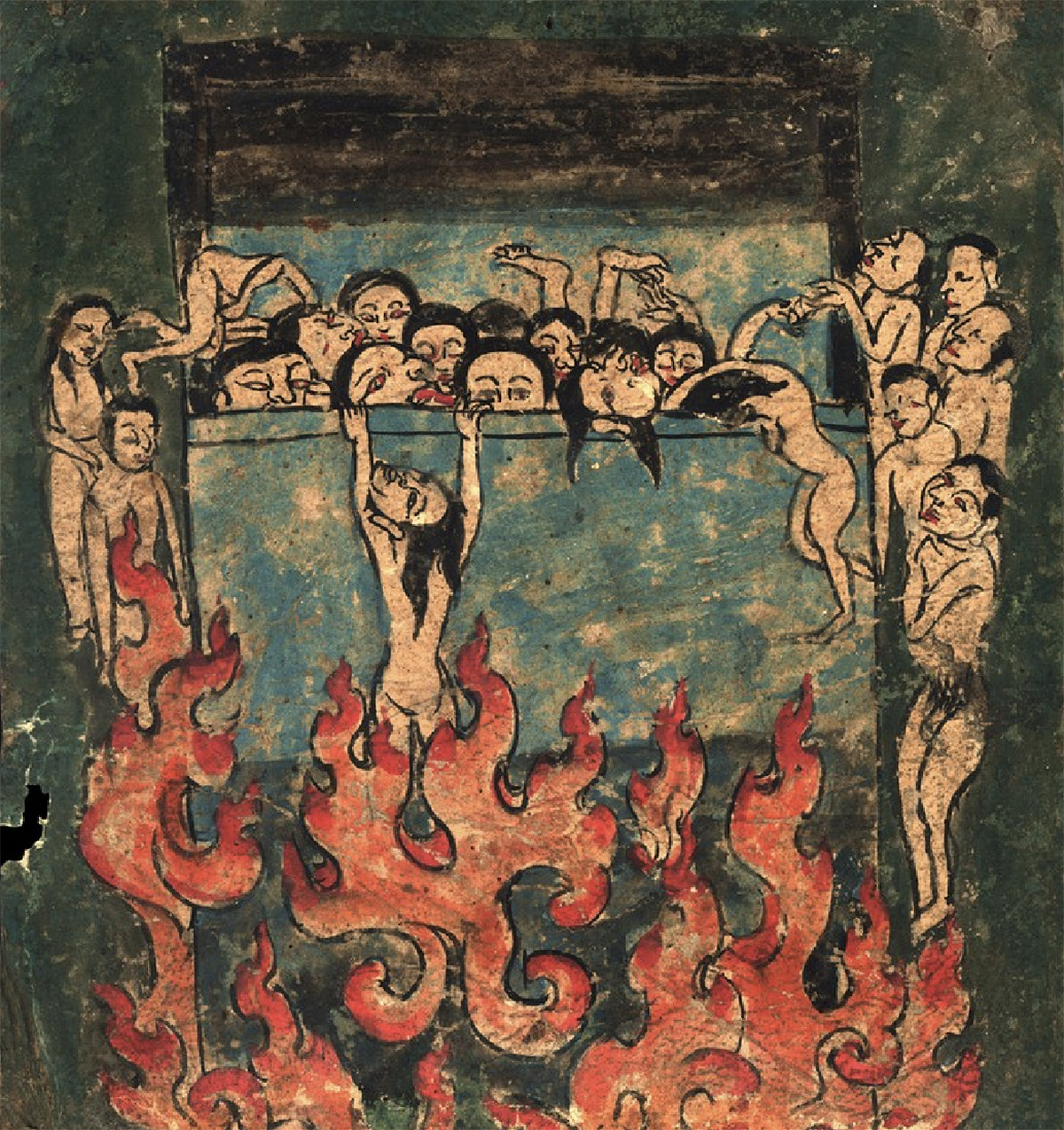
Source: Himalayan Art Resources
Superficial similarity, however, masks a radical difference. According to Buddhist teaching, the definition of moral good or evil is made exclusively in terms of cause and effect. An act is considered evil, negative, nonvirtuous, or sinful, not because it is a transgression of a divinely ordained principle, laid down by the creator of the universe, but because it is productive of suffering in this or future existences. Virtue, on the other hand, is that which brings about happiness and tends to spiritual development. The experiences of the infernal states are the ineluctable result of evil attitudes and actions. Whether or not the modern Westerner wishes to believe in the existence of infernal realms is in a sense beside the point. Every evil and unwholesome action simply brings forth suffering; and it hardly matters whether one conceives of this in the picturesque terms of Dante's inferno or shares the view of Jean-Paul Sartre that "hell is other people.' Nevertheless, it is important to grasp that the idea of an eternal damnation as a punishment for sin is foreign to Buddhist understanding. Suffering is a consequence of one's own action, not a retribution inflicted by an external power. Infernal torments, moreover, though they may last for aeons, belong to samsara and are not exempt from the law of impermanence. And even if the notion of a divine vengeance is regarded as an approximation, in mythological terms, to the concept of karmic consequences, it is perhaps worth suggesting that the impersonal view proposed by Buddhism should have the advantage of exorcizing the paralyzing sense of guilt, or revolt, that can so often be the outcome of a too anthropomorphic theism. The doctrine of karma has only one message: the experience of states of being follows upon the perpetration of acts. We are the authors of our own destiny; and being the authors, we are ultimately, perhaps frighteningly, free.
With regard to The Way of the Bodhisattva, there are two things we should notice. The first is that not only does Shāntideva accept the reality of the lower realms, he literally forces them on our attention. This has the educative purpose mentioned above, but it also reveals a vital characteristic of the Bodhisattva's attitude. Shāntideva's constant and overwhelming concern is with the predicament of his fellow beings, and from their pain and degradation he does not avert his eyes. He is ready to confront suffering in all its horrifying reality, and having abandoned all thought for his own comfort and security, he does not draw back in fear or revulsion. He gazes into the heart of darkness unflinchingly, with an intense fixity of purpose. He is prepared to accompany the damned into the pit. He is neither revolted nor depressed, being one who in compassion "will venture into hell of Unrelenting Pain, as swans sweep down upon a lotus lake" (8.107). The keynote is courage, and time and time again in The Way of the Bodhisattva, compassion emerges not as a sorrowing, lachrymose state of mind, but as a protective concern that is vibrant with joy and heroic confidence.
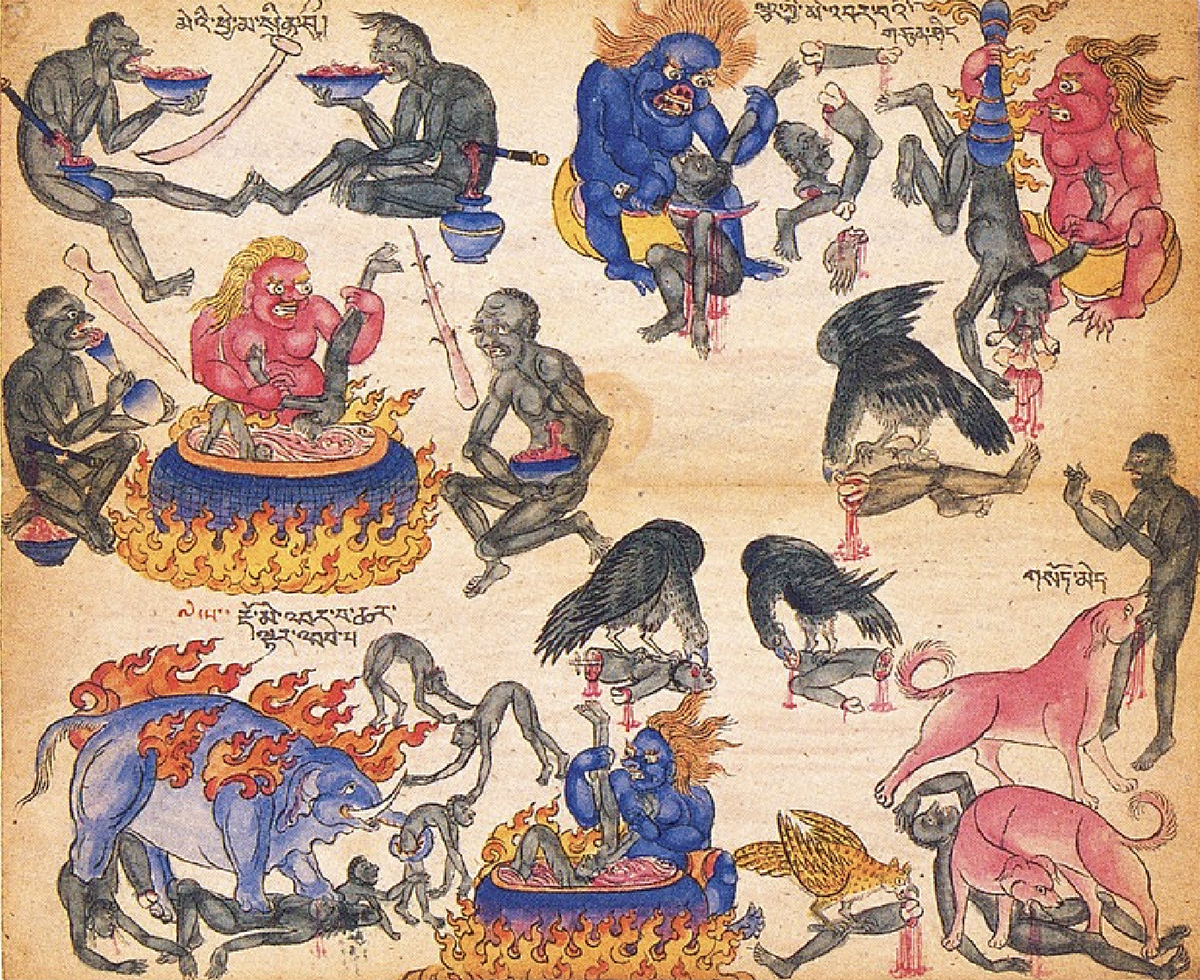
Source: Himalayan Art Resources
The second thing to note is that in Shāntideva's description of sufferings, there is a notable absence of moral comment or judgment. This is brought out clearly in the tenth chapter where the merits of composition are dedicated to the emptying of the hells and the deliverance of their inhabitants. The fires are quenched in a rain of flower-scented water, the glaciers are thawed, the prisoners of hell are set free and comforted by the presence of the great Bodhisattvas. It is a wonderful vision, and we are borne along by its beauty. But where, we might ask, is the justice in it? Shāntideva's obvious wish is simply to save from suffering, with no questions asked. We on the other hand might protest, with a sense of moral indignation and in the name of right, that the damned are indeed damnable and are where they are for good reason. They are, after all, the serial killers, the child murderers, the tyrants of evil regimes, the perpetrators of pogroms, the ethnic cleansers and the keepers of the death camps, the witch-hunters, the interrogators, the torturers, the inquisitors.
The strength and impartiality of Shāntideva's compassion seem to be a subversion of universal order; and in a sense they are. They point to a new vision of things ultimately grounded not in the concepts of right and wrong, but in compassion and the wisdom of emptiness. Instead of dividing the universe now and forever into twin compartments of good and evil, the sinners and the just, the blessed and the damned, Buddhism focuses on the predicament of saṃsāra as such.
In saṃsāra, as we have noted, all experiences, of pleasure and of pain, have their roots in previous action. The mind, conditioned by ignorance, attraction, and aversion, can only respond egocentrically to situations as they arise, contriving its own evolution, favorable or otherwise as the case may be. It passes through a stream of temporary experiences that, good or bad, are all fundamentally flawed by suffering or the possibility of suffering—experiences that lead nowhere and which are thus always and necessarily meaningless. It would, however, be a ridiculous mistake to accuse Shāntideva of moral nihilism, or to suppose that he is in revolt against the doctrine of karma. Yet his unconditional compassion draws our attention to the fact that the law of karma does not amount to a theory of human justice, neither does it provide the basis for feelings of moral outrage or ethical superiority. In any case, since experience is the fruit of action, it must follow that in saṃsāra—and this in certain contexts may be difficult to accept—there can be no completely innocent victims. In response to this, Buddhism teaches that the object of compassion is simply suffering itself. It would, after all, be absurd to withdraw compassion from the "guilty" and reserve it only for the "worthy," those assumed to be morally innocent—for the simple reason that in saṃsāra, there are no worthy objects in this sense. For Shāntideva on the other hand, since suffering is all-pervasive, all beings, at all times and regardless of circumstances, are worthy objects. Relatively speaking, of course, the concepts of right and wrong are crucial, and for the practitioner, the importance of pure ethics is fundamental. But to cling to moral values in a spirit of self-righteous judgment is evidence of superficiality and ego-clinging and does not form part of the Bodhisattva's attitude.
In any case, the vow of the Bodhisattva is to deliver beings from suffering, in other words, to deliver them from the causes of their suffering. The work of the Buddha or Bodhisattva is therefore to teach, to show the way—first by revealing values to be adopted or abandoned (and thus the means whereby wholesome and propitious existential states are produced), then by teaching the wisdom whereby saṃsāra is wholly transcended. This is of course the definition of Dharma; the Bodhicharyāvatāra is itself Shāntideva's liberating message to the world.
Despite the occasional somberness of the picture, Shāntideva's teaching is profoundly optimistic. If suffering is the fruit of thought and action, it can be avoided. The realization that we are in a position to change ourselves and so shape our destiny, leads logically to confession, the subject of Shāntideva’s second chapter. Here it should be understood that although regret is naturally entailed, this does not involve an orgy of guilty breast-beating or exaggerated feelings of inadequacy. In Buddhism, confession is to be understood principally in the sense of open acknowledgment—primarily to oneself—of past behavior. When former actions and one's own nature are confronted, when old behavior patterns and tendencies are raised into consciousness, then and only then can they be changed; then and only then is a new direction possible. It is interesting to note that, having called upon the Buddhas and Bodhisattvas and declared his guilt, Shāntideva does not ask them for forgiveness. They are invoked as protectors and the supreme witnesses of his self-disclosure and resolve. It is in their presence that an old course comes to an end and a new one begins.
And so, borne along on a wave of elation and confidence, supported by the glorious vision of the attainments of the Buddhas and great beings of the past, and spurred by the realization that time is short and the stakes high, Shāntideva is impelled (in chapter 3) toward commitment to the Bodhisattva path—in words that have since become the standard formula, in the Tibetan tradition, for the taking of the Bodhisattva vow.[5]
Protecting and Maintaining Bodhichitta
That the original resolve of bodhichitta needs consolidation becomes evident from the very first stanzas of chapter 4, where Shāntideva takes stock of what he has just done and begins to count the cost. The undertaking to which he has committed himself in a moment of optimistic zeal is devastating. Hesitation is understandable. However, in view of the alternatives, and in order to stiffen his resolve, Shāntideva embarks on a graphic description of the dreadful consequences of retraction. As always, the aim is pedagogical. Shāntideva is no tub-thumping preacher content merely to terrorize his listeners. The situation as he describes it is certainly grim, but he shows the way out and in so doing plots out a scheme of mental training that, for its spiritual profundity and psychological acuity, has rarely been equaled and surely never surpassed anywhere or at any time in the history of the world's religions.
The first message is that, however immense the goal may seem, it is possible—provided that we want it and make the necessary effort. We can learn to be free and to become Buddhas. Moreover, Shāntideva points out that having attained a human existence, we are at a crossroads; we have reached a critical point. According to Buddhist teachings, human life, at once so precious and so fragile, is the existential opportunity par excellence. Of all forms of existence, it is the only one in which development along a spiritual trajectory is truly possible. And yet the occasion is easily, in fact habitually, squandered in trivial pursuits. Time passes, and we "measure out our lives in coffee spoons." Perceiving the nature of the opportunity, and realizing how it is slipping through his fingers, Shāntideva responds with almost a note of panic:
For it’s as if by chance that I have gained This state so hard to find, wherein to help myself. If now, while having such discernment, I am once again consigned to hell,
Page(s) 57
Blankleder, Helena, and Wulstan Fletcher (Padmakara Translation Group), trans. The Way of the Bodhisattva: A Translation of the Bodhicharyāvatāra. By Śāntideva. Rev. ed. Shambhala Classics. Boston: Shambhala Publications, 2006.
I am as if benumbed by sorcery, As if reduced to total mindlessness. I do not know what dulls my wits. O what is it that has me in its grip?
Page(s) 57
Blankleder, Helena, and Wulstan Fletcher (Padmakara Translation Group), trans. The Way of the Bodhisattva: A Translation of the Bodhicharyāvatāra. By Śāntideva. Rev. ed. Shambhala Classics. Boston: Shambhala Publications, 2006.
སྔགས་ཀྱིས་རྨོངས་པར་བྱས་པ་བཞིན། །
བདག་ལ་འདིར་སེམས་མེད་དུ་ཟད། ། ཅིས་རྨོངས་བདག་ཀྱང་མ་ཤེས་ཏེ། །
བདག་གི་ཁོང་ན་ཅི་ཞིག་ཡོད། །sngags kyis rmongs par byas pa bzhin/_/
bdag la 'dir sems med du zad/_/ cis rmongs bdag kyang ma shes te/_/
bdag gi khong na ci zhig yod/_/kleśa
The situation is certainly perilous, but what is it that constitutes the danger? It is the kleshas, defiled emotions: "Anger, lust, these enemies of mine" (4.28). These are the roots of sorrow, to which every suffering, be it on a personal or cosmic scale, can ultimately be traced. And yet these kleshas, however terrible they may be in their effects, are nothing more than thoughts: intangible, fleeting mental states. To become aware of this fact, and to see therefore that our destiny lies in the way we are able to order the workings of our minds, is the theme of the fourth chapter. How is it, Shāntideva asks, that mere thoughts can cause so much havoc? The answer is simply that we allow them to do so. "They dwell within my mind and at their pleasure injure me" (4.29). With these words, the battle lines are drawn. The enemy is the afflictions, the thoughts of pride, anger, lust, jealousy, and the rest. The arena is the mind itself. Shāntideva steels himself for the fray, giving himself confidence by stimulating his own sense of pride and self-worth. As a method, this is highly original and very characteristic of Shāntideva's pragmatic approach—a sort of psychological homeopathy, in which an attitude normally considered a defilement is consciously and strenuously adopted as an antidote to defilement itself. The theme is developed at greater length later on in the book, but for the time being, chapter 4 concludes on a ringing note of aggression. Emotional defilements are the enemy; they must be destroyed. "This shall be my all-consuming passion. Filled with rancor I will wage my war!" (4.43). Paradoxically, the conflict need not be an arduous one. Defilements after all are merely thoughts. Through analysis and skill, they can be easily removed. Once scattered by the eye of wisdom and driven from the mind, they cease by definition to exist. And yet Shāntideva reflects, with sentiments that must go to the heart of every would-be practitioner: "But oh, my mind is feeble. I am indolent!" (4.46).
Once it is clear, however, that the problem lies in the mind itself, or rather in the emotions that arise there, the simple but difficult task is to become aware of how thoughts emerge and develop. This is the theme of the fifth chapter, on vigilant introspection. Again we find the same note of practical optimism. Just as the mind is the source of every suffering, likewise it is the wellspring of every joy. And once again, the good news is that the mind can be controlled and trained.
If, with mindfulness’ rope, The elephant of mind is tethered all around, Our fears will come to nothing, Every virtue drop into our hands.
Page(s) 61
Blankleder, Helena, and Wulstan Fletcher (Padmakara Translation Group), trans. The Way of the Bodhisattva: A Translation of the Bodhicharyāvatāra. By Śāntideva. Rev. ed. Shambhala Classics. Boston: Shambhala Publications, 2006.
ཀུན་ནས་དྲན་པའི་ཐག་པ་ཡིས། །
སེམས་ཀྱི་གླང་པོ་དམ་བཏགས་ན། ། འཇིགས་པ་ཐམས་ཅད་མེད་འགྱུར་ཞིང་། །
དགེ་བ་ཐམས་ཅད་ལག་ཏུ་འོང་། །kun nas dran pa'i thag pa yis/_/
sems kyi glang po dam btags na/_/ 'jigs pa thams cad med 'gyur zhing /_/
dge ba thams cad lag tu 'ong /_/The essential problem, which a moment's reflection on experience will confirm, is not that defilements occur within our minds, but that nine times out of ten, we are not aware that they are there. Or rather, by the time they obtrude upon our waking consciousness, they have usually acquired such dimensions and strength that in the ordinary run of things we are powerless to prevent their consequences. The sudden outburst of destructive anger, the lustful impulse, the cruel or arrogant word that can have life-changing consequences, must have had their source, perhaps a long time previously, in a momentary flash of impatience or desire that, had it been adverted to at the time, might easily have been neutralized and dispelled. All very well, but how precisely is one to become so perfectly self-possessed that no impulse of the mind, however slight, is able to pass unnoticed? Alas, there are no magical solutions. The technique prescribed by Shāntideva is that of constant, unrelenting vigilance—a continuous advertence to what is happening within the inner forum. He says that we should guard our minds with the same care with which we would protect a broken or wounded arm while moving through an unruly crowd; and here again, the educative methods of fear and encouragement have their place. Shāntideva recommends that as soon as we feel the urge to do anything—to speak or even to walk across the room—we should get into the habit of self-scrutiny. The slightest impulse to negativity should be greeted with a total paralysis of the system: "It's then that like a log you should remain" (5.50-5.53). No thought should be allowed to develop into action unchallenged. Given the required degree of self-awareness, it comes as no surprise that Shāntideva should refer to the minutiae of everyday behavior—all the little things we habitually overlook, excusing ourselves with the thought that they are too insignificant to bother about. In such a practice, in fact, it is precisely the small, often subliminal impulses and behavior patterns that require the closest attention. And in any case, everything we do affects the world. Any action can be the cause, or the cause of the cause, of another's suffering. Thus the way we eat, walk, move furniture around, even matters of personal hygiene—all are significant.
A heightening of consciousness of the kind Shāntideva advocates is liable to awaken an understanding of something that for most of us passes, if not actually unnoticed, at least unexamined. This is the peculiar infatuation that the mind has with its physical support. We love our bodies and are deeply involved in them. We are engrossed in their sensations to the point that we identify them as ourselves and invent philosophies, and theologies, to justify this. Like the Buddha before him, Shāntideva calls all this into question, pointing out how strange it is that the mind should identify with, and find desirable, something so external to itself, so fragile, so ultimately disappointing and, in its constituent parts, so repulsive as the physical body. In relation to its own bodily support and that of other beings, the mind seems to move in a dimension that is almost entirely one of make-believe; and it is an extraordinary paradox that it can experience the most powerful yearning for something by which, on closer inspection, it is almost invariably repelled. Nevertheless, Shāntideva does not in any way repudiate the body, and the spirit of destructive asceticism and repression is as foreign to him as to any other Buddhist teacher. The body has its place and value, but the mind must be freed from an obsessive and enslaving preoccupation with it.
Reflections on the status of the body and the importance played by it in the context of personal experience are developed at length in the chapter on patience. Coming at the conclusion of the section devoted to the protection of bodhichitta, patience is celebrated as the supreme austerity. It is the antidote to anger, regarded in Buddhism as the most destructive and perilous of all mental factors. Anger, defined as the flooding of the mind with violent and aggressive feelings, leading naturally to hostility and conflict, is outlawed in Buddhism as in no other religious tradition. Even so-called righteous anger, so often excused as having injustice and abuse as its object, is utterly condemned if this involves the overpowering of the mind in a wave of uncontrollable and destructive passion. Aside from a purely external and, as it were, artificial indignation put on for educational purposes—which has compassion as its motive and is acted out by one whose mind is under control—anger has absolutely no place in the scheme of spiritual development. It is totally inimical to mental training and will ruin and annihilate in an instant all progress and merit gained.
This being so, the crucial question of how to behave in a hostile environment begins to emerge. Step by step, Shāntideva focuses on the real source of the problem, the basis of anger as of every other defilement. This is the ego, the self, the sense of "I," experienced as the center of the universe, a universe interpreted as friend or enemy in relation to how it is perceived from the egocentric viewpoint. In Buddhism, this is of course the central issue, and it is only in the light of the full teachings on emptiness that it can be satisfactorily discussed. For the moment, however, Shāntideva remains on the level of relative practice. His concern is to show how the problem of enemies—aggression and retaliation—can be dealt with in the context of everyday experience. His arguments are ingenious, his logic relentless; and by the end of the chapter, one is forced to see not only that the angry response must never be allowed to develop, but that situations of conflict, endured and resolved through patience, are invaluable, in fact indispensable, as occasions for spiritual growth. Patience, as Shāntideva describes it, implies an almost incredible degree of resilience and courage, the courage of a Mahatma Gandhi or a Martin Luther King. Far from being a sort of limp and spineless acquiescence, as Nietzsche would have us believe, Shāntideva's patience is the ultimate heroism, fearlessness perfected to the highest intensity.
Shāntideva points out that anger, the normal reaction to hostility and adversity, achieves nothing but to increase our sufferings. It is our "sorrow-bearing enemy" (6.6). As such it is to be eliminated; and in a way that we have by now come to expect, Shāntideva rises to the challenge, heartening himself with cheerful words. After all, suffering, though of course unwanted, has its uses. Without it we would be like the gods, never longing for release from saṃsāra. It humbles our pride and engenders sympathy toward those who also suffer. Even virtue comes to seem attractive!
Irritation arises naturally in the mind against fellow beings perceived as unpleasant or threatening, and it seems normal to resent the aggressor. But Shāntideva asks us to be less superficial. When we suffer the physical discomforts of illness, for example, we know very well that the pain is due to bodily imbalances. We may dislike the pain, but it would be absurd to resent it angrily. In the same way, the hostile behavior of enemies does not arise spontaneously; it too is the product of causes and conditions. Why resent those who are themselves the victims of emotional defilement? The very act of identifying an aggressor as a really existing self over against our own (instead of being aware simply of an interplay of impersonal psychophysical forces) is itself unjustified. That which strikes us as the unruly behavior of other beings may indeed be difficult to put up with; but when we understand the reality of the situation, the inconvenience becomes easier to manage. Thus when we are attacked, it is important to remember that our aggressors, acting on the impulse of their own defilements, are creating the causes of their own suffering. Knowing this, Shāntideva says, "What purpose does our anger serve?" (6.38). In any case, viewed objectively, enemies can only be of two kinds. Either they are intrinsically hostile, in which case to resent their behavior is as absurd as to resent fire for being hot; or they are fundamentally well disposed but have momentarily succumbed to a crisis of defilement. Here, too, animosity is out of place: it is as foolish as resenting the sky when it is filled with smoke. Besides, when someone hits me with a stick, I am not angry with the stick but with the person beating me. By the same token, it is illogical for me to hate my enemies. They may wield their weapons, but they themselves are in the grip of their defilements. It is therefore the emotion, of which they are the victim, that I should resent.
Taking his argument a step further, Shāntideva points out that in any conflict, the victim and aggressor are both caught up in a situation of mutual dependence. In the case of a physical attack, for example, if pain occurs, it has two equally important sources corresponding to the agent and to the object of the assault. The fact that suffering happens depends as much on the degree to which the victims' minds cling to their bodies as on the wound inflicted by their aggressors.
Their weapons and my body— Both are causes of my torment! They their weapons, I my body brandished; Who then is more worthy of my rage?
Page(s) 83
Blankleder, Helena, and Wulstan Fletcher (Padmakara Translation Group), trans. The Way of the Bodhisattva: A Translation of the Bodhicharyāvatāra. By Śāntideva. Rev. ed. Shambhala Classics. Boston: Shambhala Publications, 2006.
དེ་ཡི་མཚོན་དང་བདག་གི་ལུས། །
གཉིས་ཀ་སྡུག་བསྔལ་རྒྱུ་ཡིན་ཏེ། ། དེས་མཚོན་བདག་གིས་ལུས་ཕྱུང་ན། །
གང་ཞིག་ལ་ནི་ཁྲོ་བར་བྱ། །de yi mtshon dang bdag gi lus/_/
gnyis ka sdug bsngal rgyu yin te/_/ des mtshon bdag gis lus phyung na/_/
gang zhig la ni khro bar bya/_/Once again, all experience is karmically conditioned. Events that seem beyond our control are in fact the fruits of former actions, which means that it is incorrect to claim that the enemy is nothing but an aggressor. "Those who harm me rise against me—it's my karma that has summoned them" (6.47). Even more, given the consequences of the enemies' evil deeds, and also the great results of patience in the face of adversity, we arrive at the paradoxical conclusion: "Therefore I am their tormentor! Therefore it is they who bring me benefit!" (6.49). And with these words, Shāntideva reduces to absurdity the conventional approach to the hostility of aggressors.
Pursuing the argument yet further, Shāntideva shows how enemies are not merely the objects of tolerance; they are to be cherished as indispensable helpers on the Bodhisattva path. Our enemies do for us what no friend or loved one can. By awakening us to the reality of our own ego-clinging, our enemies provide opportunities for patience, purification, the exhaustion of evil karma. And so the inevitable conclusion:
They, like Buddha’s very blessing, Bar my way, determined as I am To plunge myself headlong in sorrow: How can I be angry with them?
Page(s) 91
Blankleder, Helena, and Wulstan Fletcher (Padmakara Translation Group), trans. The Way of the Bodhisattva: A Translation of the Bodhicharyāvatāra. By Śāntideva. Rev. ed. Shambhala Classics. Boston: Shambhala Publications, 2006.
བདག་ནི་སྡུག་བསྔལ་འཇུག་འདོད་ལ། །
སངས་རྒྱས་ཀྱིས་ནི་བྱིན་བརླབས་བཞིན། ། མི་གཏོང་སྒོ་འཕར་ཉིད་གྱུར་པ། །
དེ་ལ་བདག་ནི་ཇི་ལྟར་ཁྲོ། །bdag ni sdug bsngal 'jug 'dod la/_/
sangs rgyas kyis ni byin brlabs bzhin/_/ mi gtong sgo 'phar nyid gyur pa/_/
de la bdag ni ji ltar khro/_/Intensifying Bodhichitta
Shāntideva now moves on to the culminating chapters of his great work and sets out ways in which bodhichitta may be intensified to the highest pitch. As in chapters 1 and 4, he begins by whipping up a sense of urgency and enthusiasm. Here the stark realities of the proximity of death and the possibility of rebirth in the infernal states are forced upon us with unprecedented force. If we squander the incredible opportunity for liberation afforded by this human existence, how will we feel when the servants of the Lord of Death make their appearance and the din of hell breaks upon our ears? Moreover, however well-off and virtuous we may think we are at the present time, Shāntideva assures us that, lodged in the recesses of our minds, from time without beginning, we have karmic residues more than sufficient to precipitate a disastrous fall.
How can you remain at ease like this When you have done the deeds that lead To contact on your tender baby-flesh Of boiling liquids in the hell of Extreme Heat?
Page(s) 99
Blankleder, Helena, and Wulstan Fletcher (Padmakara Translation Group), trans. The Way of the Bodhisattva: A Translation of the Bodhicharyāvatāra. By Śāntideva. Rev. ed. Shambhala Classics. Boston: Shambhala Publications, 2006.
ཆུ་ཚན་གྱིས་ནི་རེག་པ་ན། །
གཞོན་ཤ་ཅན་ལ་རབ་ཚ་བའི། ། དམྱལ་བ་ཡི་ནི་ལས་བྱས་ནས། །
ཅི་ཕྱིར་འདི་ལྟར་བདེ་བར་གནས། །chu tshan gyis ni reg pa na/_/
gzhon sha can la rab tsha ba'i/_/ dmyal ba yi ni las byas nas/_/
ci phyir 'di ltar bde bar gnas/_/This human life indeed is not the time for complacency. And yet, as always, Shāntideva's message is full of hope and practical assurance. We have this opportunity now; our destiny is in our own hands. "Take advantage," he says, "of this human boat. Free yourself from sorrow's mighty stream" (7.14). The requisite qualities are courage and a steadfast refusal to give up. Shāntideva points out that to let ourselves off the hook with the excuse that the effort is beyond us, far from corresponding with the facts, is nothing but indolence and cowardice. After all, with perseverance, even insects have it in them to gain liberation. Here again we find the theme of pride as a positive tool in the task of maintaining one's resolve. Shāntideva develops this at great length, distinguishing wholesome confidence from arrogance, in a kind of word play (hardly possible to bring out in translation) that results in a sort of humorous riddle. As before, and despite more somber reflections, the general tone is overwhelmingly positive. To shelter themselves from the midday sun, elephants will plunge into the waters of a lake. Just so, Bodhisattvas throw themselves into their great work for beings. Chapter 7 concludes on a note of calm, immovable resolve.
The Bodhisattva in training, with an intention consolidated by carefulness, vigilant introspection, and the perfection of patience, and stirred by the desire to labor unrelentingly until the goal is reached, now proceeds to embrace the real, the truly mind-transforming discipline. The eighth chapter, on meditative concentration, which is the culmination of the teachings on the level of relative bodhichitta, falls into two main sections. First there is a preliminary instruction on how to create the proper environment for the meditation (the first ninety stanzas). Then there follows a lengthy description of the meditation itself. Shāntideva presents the case from the standpoint of monastic renunciation. He was himself a monk and it will be remembered that the first public reading of the Bodhicharyāvatāra was given to the monastic assembly at Nālandā. Even so, it would be a mistake for the lay practitioner to dismiss Shāntideva's teaching as being exclusively relevant to ordained clerics. On the contrary, Shāntideva delineates principles of universal validity that are in fact mandatory for everyone wishing to follow a path of profound and effective spiritual transformation.
The chapter begins, as we might expect, with a demand for concentration and the elimination of mental wandering. And the point is driven home that, whether one enters a monastery or prefers to remain in the lay condition, there can be no progress in concentration without a severe reduction in one's involvement in worldly affairs. Naturally, the external observance of the monastic rule is understood to be peculiarly propitious to the development of mental calm, but in the last analysis, it is inner motive and personal discipline that count. Thus we are counseled at length to be careful about the company we keep, recognizing the simple fact that an unexamined lifestyle, in which we are immersed in the materialistic values and behavior of worldly friends, will get us nowhere. Only frustration and inanity will be the result. Shāntideva advises us to fight shy of those whose values are contrary to the Dharma—people he habitually refers to as "those who are like children" (in other words, in terms designed to stimulate feelings of concern rather than resentment). Thus Shāntideva prescribes solitude, a flight from the world—not of course in a puritanical, world-denying sense, but in a spirit of inner freedom. Tranquillity of mind, he says significantly, is "found by people who are happy to be free from worldly ties," and who for that reason, "never turns . . . a backward glance" (8.4,8.26). And he is lyrical in his celebration of retreat in the wilderness.
The practice is naturally attended by difficulties and obstacles, and these are summarized under two headings: desire for companionship and desire for property. In the first case, Shāntideva addresses the question of sex and the problem posed by physical desire—which naturally leads to the practical matter of how to attenuate, and defuse, sexual obsession. As a meditative technique, he recommends to himself and to his monastic audience a reflection and concentration on the impure, unattractive aspects of women's bodies. And, not without a sense of humor, he expatiates on the absurdity of the social conventions of courtship and marriage—not only with reference to the sheer physical realities, but also from the point of view of impermanence and death. Shāntideva thus gives important instructions for the ordained community on how the virtue of chastity might be cultivated and the state of celibacy preserved. But as we have said, since the point at issue is physical desire as such, the teaching here is of universal application, irrespective of social status and, for that matter, sexual orientation. Lay practitioners also are obliged to recognize that in sexual life, as in other aspects of saṃsāric existence, the mind is attracted to what is in fact a mirage. It habitually functions by thoroughly ignoring objective physical realities or at any rate by being highly selective in what it notices. And in any case, desire is desire—it must be transcended if progress on the path (the tantric path included) is to be possible.
As with personal attachments, so with the acquisition of property, Shāntideva's message is the same: people spend their lives chasing chimeras. They destroy themselves in the quest for wealth which, even when acquired, is only for the enjoyment of a brief and passing moment—the scraps of grass that the ox is able to snatch along the way as it laboriously pulls the cart! And yet, Shāntideva exclaims, "with but a millionth part of such vexation enlightenment itself could be attained!" (8.83).
After again extolling the advantages of solitude, Shāntideva begins to consider two themes that form the high point of his teaching and which are the essence of the Bodhisattva path: meditation on the equality of self and other, and meditation on the exchange of self and other.[6] Here the subject matter becomes complex, hinging as it does on the profound doctrine of emptiness. For it quickly becomes apparent that on the Bodhisattva path, compassion is understood not merely as sympathy for the sufferings of beings, or even as the resolve to do something about it in practical terms (however admirable such work may be). In Mahāyāna Buddhism, compassion involves, through the application of wisdom, the transcending of the notion of ego itself and the understanding that, in the final analysis, the existential barrier dividing self from other is totally unreal, a mere mental construction. Once this barrier has been crossed, and Bodhisattvas realize the unreality of the distinction between self and other, the sufferings of others become as real to them as their own. Indeed, the sufferings of others are the Bodhisattvas' own sufferings; and the urge to relieve them, both immediately and ultimately, becomes their primary impulse. These ideas will be unfamiliar and perhaps disconcerting to many readers, and the meaning of the text itself is not always easy to understand. For this reason, a substantial excerpt from the Tibetan commentary of Kunzang Pelden has been provided in appendix 2 at the end of the book. It is sufficient to emphasize here that the Buddhist teachings on compassion are grounded in the wisdom of emptiness. It is from this that they derive their meaning and compelling force, their validity and at the same time their practical possibility.
Those desiring speedily to be A refuge for themselves and others Should make the interchange of "I” and "other,” And thus embrace a sacred mystery.
Page(s) 126
Blankleder, Helena, and Wulstan Fletcher (Padmakara Translation Group), trans. The Way of the Bodhisattva: A Translation of the Bodhicharyāvatāra. By Śāntideva. Rev. ed. Shambhala Classics. Boston: Shambhala Publications, 2006.
གང་ཞིག་བདག་དང་གཞན་རྣམས་ནི། །
མྱུར་དུ་བསྐྱབ་པར་འདོད་པ་དེས། ། བདག་དང་གཞན་དུ་བརྗེ་བྱ་བ། །
གསང་བའི་དམ་པ་སྤྱད་པར་བྱ། །gang zhig bdag dang gzhan rnams ni/_/
myur du bskyab par 'dod pa des/_/ bdag dang gzhan du brje bya ba/_/
gsang ba'i dam pa spyad par bya/_/This exchange, possible to the extent that the duality of self and other has been transcended, is the peak of Bodhisattva practice and takes us to the heart of Buddhist wisdom. This is the point from which all the teachings of The Way of the Bodhisattva derive their sense and where they find their completion. Everything is condensed into a single stanza which Shāntideva proclaims with the finality of a cosmic principle:
All the joy the world contains Has come through wishing happiness for others. All the misery the world contains Has come through wanting pleasure for oneself.
Page(s) 127
Blankleder, Helena, and Wulstan Fletcher (Padmakara Translation Group), trans. The Way of the Bodhisattva: A Translation of the Bodhicharyāvatāra. By Śāntideva. Rev. ed. Shambhala Classics. Boston: Shambhala Publications, 2006.
འཇིག་རྟེན་བདེ་བ་ཇི་སྙེད་པ། །
དེ་ཀུན་གཞན་བདེ་འདོད་ལས་བྱུང་། ། འཇིག་རྟེན་སྡུག་བསྔལ་ཇི་སྙེད་པ། །
དེ་ཀུན་རང་བདེ་འདོད་ལས་བྱུང་། །jig rten bde ba ji snyed pa/_/
de kun gzhan bde 'dod las byung /_/ 'jig rten sdug bsngal ji snyed pa/_/
de kun rang bde 'dod las byung /_/Here, as always, Shāntideva does not leave us gaping in stunned amazement. He quickly sets about with methods designed to help us on our way. In so doing, he indicates a practice that, according to His Holiness the Dalai Lama, is unique in the entire range of Buddhist teaching. Directed at the principal obstacle to the realization of equality (namely, the ego itself), and taking as his cue the idea of exchange, Shāntideva describes a meditation that consists in projecting oneself, through a feat of sympathetic imagination, into the position of an opponent. Looking back, as it were, through the opponent's eyes, meditators must target their own egos, generating the appropriate "negative" emotion of jealousy, competitive rivalry or pride, and getting a firsthand impression of what it is like to be at the receiving end of their own behavior. This technique, which is of great psychological interest and effectiveness, has been commented on at length by Kunzang Pelden, and a translation of his remarks is found in appendix 3. Fascinating as this technique is as a means of diminishing the ego's strength and also of attenuating the illusory barrier between self and other, it will be evident from what has been said previously that for the real experience of equality and exchange to occur, a true understanding of the wisdom of emptiness is indispensable. We can thus perceive the importance of Shāntideva's metaphysical position and appreciate the extent to which his entire teaching is inspired and underpinned by this. The Bodhicharyāvatāra would be incomplete without a detailed discussion of wisdom.
Notes
- ↑ Helena Blankleder and Wulstan Fletcher (Padmakara Translation Group), trans. The Way of the Bodhisattva: A Translation of the Bodhicharyāvatāra. By Śāntideva. Rev. ed. Shambhala Classics. Boston: Shambhala Publications, 2006.
- ↑ There are two Sanskrit titles of Shāntideva’s work. The longer one, Bodhisattvacharyāvatāra, was rendered literally as the title of the Tibetan version (byang chub sems dpa'i spyod pa la 'jug pa), the literal meaning of which is The Entrance to the Way of the Bodhisattva. There exists a shorter and much-used title, Bodhicharyāvatāra, which means Entrance to the Path of Awakening.
- ↑ See appendix 1 for a traditional account of Shāntideva’s life. Additional details may be found in the excellent introduction to the translation of the Bodhicharyāvatāra by Kate Crosby and Andrew Skilton.
- ↑ See the Dalai Lama, Essence of Refined Gold, p. 136
- ↑ See verses 23-24 of chapter 3.
- ↑ See also the Dalai Lama, Path to Bliss, pp. 161-174.
