Transcendent Wisdom (2009)
From Bodhicitta
| 🤓 Admin Zone 🛠️ hidden to non-admins | |
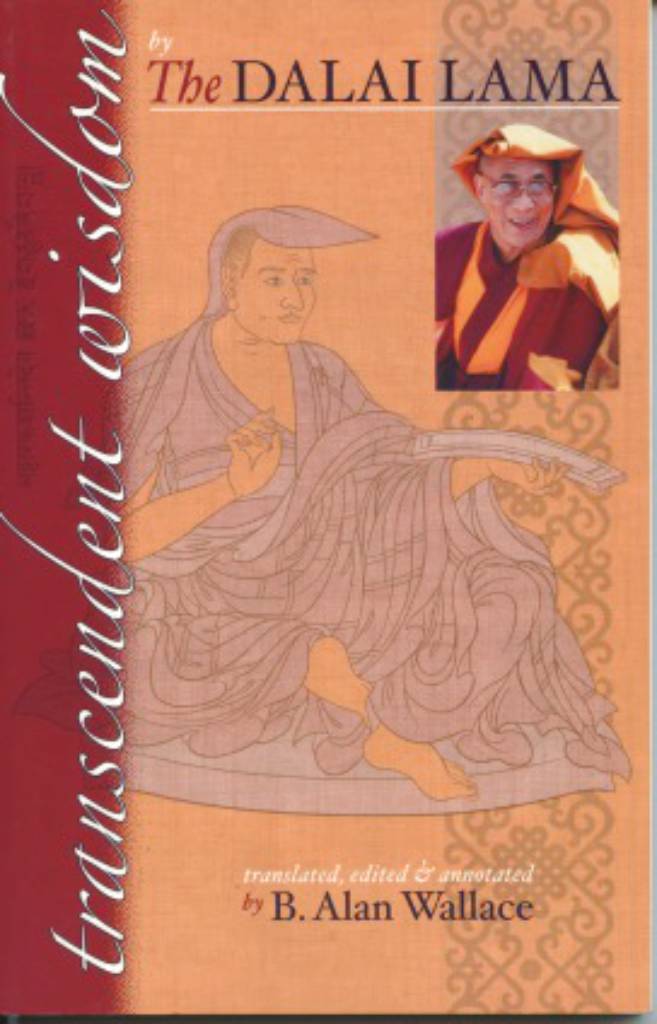
Transcendent Wisdom: A Teaching on the Wisdom Section of Shantideva's Guide to the Bodhisattva Way of Life.
Book
- A Few Good Men
- A Great Commentary on Shantideva's Guide to the Bodhisattva's Way of Life, Vol. 1
- A Guide to the Bodhisattva Way of Life
- A Guide to the Bodhisattva's Way of Life (1985)
- A Guide to the Bodhisattva's Way of Life (1999)
- A Guide to the Bodhisattva's Way of Life of Shantideva (2002)
- Appendix B: Excerpt from A Lamp Completely Illuminating the Profound Reality of Interdependence
- Becoming Bodhisattvas
- Bodhicaryāvatāra para Parama Pāvana Dalāi Lāmā Jī ka viśesha pravacana
- Bodhicaryāvatāra with Commentary (O'Sullivan)
- Bodhisattvacaryāvatāra: Entering the Way of the Bodhisattvas (2022, Khenpo Gawang and Wiener)
- Buddha Mind - Christ Mind
- Discourses on Bodhicharyāvatāra
- Drops of Nectar: Khenpo Kunpal's Commentary on Shantideva's Entering the Conduct of the Bodhisattvas
- Engaging in Bodhisattva Behavior
- Engaging in the Bodhisattva Deeds
- Engaging in the Conduct of the Bodhisattvas
- Entering the Way of the Bodhisattva: A New Translation and Contemporary Guide
- For the Benefit of All Beings
- Guide to the Bodhisattva's Way of Life (Bodhicaryavatara): A Commentary by Geshe Tenzin Zopa
- Guide to the Good Life
- Healing Anger
- How to Be a Bodhisattva: Introduction to the Practice of the Bodhisattva Path (The Bodhicaryāvatāra)
- Le commentaire de Mi-pham au chapitre IX du Bodhicaryāvatāra de Śāntideva: Échos modernes d'une controverse du XVème siècle
- No Time to Lose
- Patience: A Guide to Shantideva's Sixth Chapter (Zopa 2020)
- Peaceful Heart
- Perfecting Patience
- Perfecting Wisdom
- Practicing Wisdom
- Shantideva and Friends
- Shantideva's Guide to the Bodhisattva's Way Of Life: An Oral Explanation of Chapter 4
- Shantideva's Guide to the Bodhisattva's Way Of Life: An Oral Explanation of Chapter 5
- Shantideva's Guide to the Bodhisattva's Way Of Life: An Oral Explanation of Chapter 6
- Shantideva's Guide to the Bodhisattva's Way Of Life: An Oral Explanation of Chapter 7
- Shantideva's Guide to the Bodhisattva's Way Of Life: An Oral Explanation of Chapter 8
- Shantideva's Guide to the Bodhisattva's Way of Life: An Oral Explanation of Chapter 1
- Shantideva's Guide to the Bodhisattva's Way of Life: An Oral Explanation of Chapter 2
- Shantideva's Guide to the Bodhisattva's Way of Life: An Oral Explanation of Chapter 3
- Studies in the Philosophy of the Bodhicaryāvatāra (2000)
- Sur l'océan du Mahayana
- Sāntideva, The Bodhicaryāvatāra, Chapter 8 (verses 89-140)
- The Beautiful Way of Life
- The Bodhisattva Guide
- The Center of the Sunlit Sky
- The Endlessly Fascinating Cry
- The Entrance for the Children of the Conquerors
- The Nectar of Manjushri's Speech
- The Profound Reality of Interdependence
- The Profound Reality of Interdependence-Review by Bouthillette
- The Reflexive Nature of Awareness (1998)
- The Transmission of the Bodhicaryāvatāra: The History, Diffusion, and Influence of a Mahāyāna Buddhist Text
- The Way of Awakening
- The Way of the Bodhisattva (1997)
- The Way of the Bodhisattva (2006)
- The Wisdom Chapter
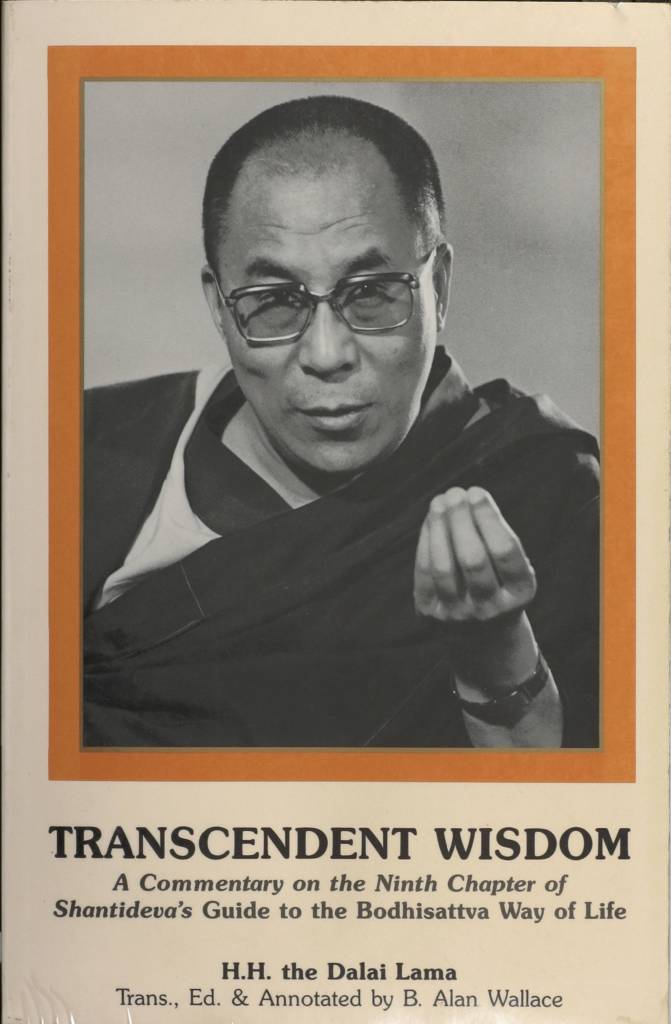
- Transcendent Wisdom (1988)
- Transcendent Wisdom (2009)
- Wisdom: Two Buddhist Commentaries
Please note that many items in our library are simply pages that represent a detailed library catalog entry and citation of someone else's work, presentation, or performance. Read our General Disclaimer for more information.
-front.jpg)
Description
The Guide to the Bodhisattva Way of Life is one of the most highly recommended texts for Mahayana practice. The ninth chapter of that book, the chapter on Transcendent Wisdom, is known among Buddhist scholars as a challenging and profound exposition of the Madhyamika View of Buddhist philosophy. It is difficult to understand without a commentary.
This extraordinarily clear exposition is based on an oral teaching given in 1979 by His Holiness the Dalai Lama before an assembly of over a thousand Tibetans and Westerners. He explicates the different points and shows how the Centrist View differs from other Buddhist and non-Buddhist views. This invaluable volume, with its precise elucidation of core issues of Tibetan Buddhism, stands as a key work in Buddhist literature. (Source: back cover)
This extraordinarily clear exposition is based on an oral teaching given in 1979 by His Holiness the Dalai Lama before an assembly of over a thousand Tibetans and Westerners. He explicates the different points and shows how the Centrist View differs from other Buddhist and non-Buddhist views. This invaluable volume, with its precise elucidation of core issues of Tibetan Buddhism, stands as a key work in Buddhist literature. (Source: back cover)
Citation
Dalai Lama, 14th. Transcendent Wisdom: A Teaching on the Wisdom Section of Shantideva's Guide to the Bodhisattva Way of Life. Translated, edited, and annotated by B. Alan Wallace. Ithaca, NY: Snow Lion Publications, 2009.
Table of contents
- Foreword7
- Preface: The Place of Wisdom in Spiritual Practice11
- Part I: THE METHODS NEEDED FOR CULTIVATING WISDOM13
- 1. Introduction to the Two Truths that Comprise Reality15
- The Classification of the Two Truths
- People Who Ascertain the Two Truths
- Qualms Concerning the Lack of Intrinsic Existence
- 2. Critique of the Idealist View25
- 3. The Necessity of the Centrist Path34
- The Necessity of Realizing Emptiness
- Part II: IDENTITYLESSNESS51
- 4. Personal Identitylessness53
- Refutation of an intrinsic "I"
- Refutation of the Samkhya theory of self
- Refutation of the Nyaya theory of self
- Rebuttal of arguments against identitylessness
- 5. Phenomenal Identitylessness67
- The four applications of mindfulness
- Mindfulness of the body
- Mindfulness of the feelings
- Mindfulness of the mind
- Mindfulness of phenomena
- Refutation of objections
- The four applications of mindfulness
- Part III: REFUTATION OF TRUE EXISTENCE89
- 6. Refutation of Others' Conceptions of True Existence87
- 7. Proofs of the Absence of True Existence90
- The "Diamond-splinters" argument
- The interdependence argument
- The argument concerning the arising and cessation of entities and non-entities
- 8. Encouragement to Strive to Realize Emptiness106
- Notes111
- Bibliography141
Interconnections
1 Partial translation of

An "Introduction to Bodhisattva Practice," the Bodhisattvacaryāvatāra is a poem about the path of a bodhisattva, in ten chapters, written by the Indian Buddhist Śāntideva (fl. c. 685–763). One of the masterpieces of world literature, it is a core text of Mahāyāna Buddhism and continues to be taught, studied, and commented upon in many languages and by many traditions around the world. The main subject of the text is bodhicitta, the altruistic aspiration for enlightenment, and the path and practices of the bodhisattva, the six perfections (pāramitās). The text forms the basis of many contemporary discussions of Buddhist ethics and philosophy.
2 Other editions

A clear exposition on the wisdom section of A Guide to the Bodhisattva Way of Life based on an oral teaching given in Switzerland by H.H. the Dalai Lama in 1979.

A translation of a commentary by the 14th Dalai Lama on the ninth chapter of the Bodhicaryāvatāra, based on an oral teaching given in 1979 in Rikon, Switzerland.
1 Teaching based on
An "Introduction to Bodhisattva Practice," the Bodhisattvacaryāvatāra is a poem about the path of a bodhisattva, in ten chapters, written by the Indian Buddhist Śāntideva (fl. c. 685–763). One of the masterpieces of world literature, it is a core text of Mahāyāna Buddhism and continues to be taught, studied, and commented upon in many languages and by many traditions around the world. The main subject of the text is bodhicitta, the altruistic aspiration for enlightenment, and the path and practices of the bodhisattva, the six perfections (pāramitās). The text forms the basis of many contemporary discussions of Buddhist ethics and philosophy.