Living Traditions of Practice: Bodhicitta and Vegetarianism

From Bodhicitta


Bodhicitta and Animals
Living Traditions of Practice
Listen to this page


Buddhism's teachings on compassion and non-harm are among its most recognizable features, and yet many practitioners regularly eat meat. The question of diet has a long and complex history within Buddhism, and the tradition has never spoken with a single voice on the matter. In the Pāli canon, the Buddha permitted monastics to eat meat under certain conditions—most notably that they had no knowledge or suspicion of an animal being killed specifically for them—and declined to make vegetarianism a monastic rule. Later Mahāyāna texts, particularly the Laṅkāvatārasūtra and Mahāparinirvāṇasūtra, took a considerably stronger position, arguing that meat eating is incompatible with the bodhisattva's universal compassion, and this became the doctrinal foundation for the strict vegetarianism practiced in Chinese and Vietnamese Buddhist monasticism. Throughout Buddhist history, teachers have continued to return to this question—from classical Indian sūtras to Tibetan masters such as Shabkar Tsokdruk Rangdrol—arguing that genuine compassion cannot be selectively applied. The general attitude of Buddhist communities has nonetheless been shaped by historical, geographical, and cultural factors that vary from tradition to tradition, most notably in Tibet, where the extreme altitude and climate made cultivation of crops across vast areas impossible, giving rise to a culture in which meat eating became both practical necessity and deep-rooted custom. The materials gathered here are an invitation to revisit this question—through classical Buddhist sources, the writings and teachings of contemporary masters, and the reflections of practitioners who have grappled with it firsthand.

The Debate over Vegetarianism in Tibet

For centuries, meat has been woven into Tibetan diet, medicine, ritual, and social life. Yet for practitioners of a tradition whose ethical center is compassion for all sentient beings, this fact has generated persistent unease. Whether a Buddhist monk or layperson, tantric adept or Vinaya observer may or must refrain from meat is a question that has occupied Tibetan thinkers across many generations, and it remains an issue in contemporary times.

The canonical record itself offers no single answer. The Vinaya's rule of "threefold purity"—which holds that meat is permissible if the consumer did not kill the animal, did not request its killing, and had no reason to suspect it was killed on their behalf—provided one basis for defending meat consumption, while the Laṅkāvatārasūtra explicitly challenged such reasoning, implicating the consumer in the animal's death regardless of personal distance from the act. Tibetan masters built elaborate positions on these foundations, arriving at conclusions that range widely: vegetarianism as moral imperative, as personal ideal, as unnecessary burden, or as a practice reserved for the exceptionally realized.

Some of the tradition's most celebrated figures came down firmly on the side of abstention. The Bön master Metön Sherab Özer, the Sakya luminary Ngorchen Kunga Sangpo, the Jonang founder Dolpopa Sherab Gyaltsen, and—perhaps most memorably—the wandering yogin Shabkar Tsokdruk Rangdröl each made the case for vegetarianism through different means: monastic discipline, doctrinal argument, and, in Shabkar's case, vivid verse that pressed directly on the reader's compassion. The Nyingma master Jikmé Lingpa offered something closer to a meditation on animal suffering than a scholastic treatise, asking practitioners to imagine, in the most concrete terms, the fear of a creature about to be slaughtered.

Equally sophisticated were those who argued the other side, among them the Geluk scholar Khedrupjé Gelek Palsang, who maintained that meat consumption is morally permissible for monastics and that the Laṅkāvatārasūtra's stricter prohibitions were addressed to a specific class of bodhisattva rather than the community at large. The cultural pressures that have sustained meat-eating also deserve attention: a medical tradition that framed meat as a physiological necessity, a climate that made plant-based diets genuinely difficult for part of the year, and social values linking meat to wealth, strength, and vitality. The sources gathered here trace these arguments from their earliest expressions to contemporary teachers who continue to wrestle with the question.

Reevaluating Our Relationship with All Beings

Wulstan Fletcher, member of the Padmakara Translation Group and long-time Buddhist practitioner, presents a personal reflection on the complex relationship between the bodhisattva path and meat consumption. He observes that while Tibet's extreme geography historically necessitated a meat-based diet, this practice often persists among Westerners and Tibetans living abroad. While Fletcher is careful not to criticize individual choices—acknowledging medical, social, or personal factors—he points out that scriptural authorities such as Śāntideva and various Mahāyāna sūtras strongly advocate for abstinence as the "default position" of the tradition. He encourages a gradual "noble change" in mindset, suggesting that even if practitioners cannot immediately adopt vegetarianism, they should remain aware of the significant suffering inherent in modern industrial farming. Simply acknowledging the importance of compassion for all beings and maintaining a "general sensitivity" to animal suffering is a vital step in the gradual progress of the bodhisattva way.

Wulstan Fletcher: On Our Relationship with Animals and the Consumption of Meat
“ Jīvaka, I say that there are three instances in which meat should not be eaten: when it is seen, heard, or suspected [that the living being has been slaughtered for the bhikkhu]. I say that meat should not be eaten in these three instances. I say that there are three instances in which meat may be eaten: when it is not seen, not heard, and not suspected [that the living being has been slaughtered for the bhikkhu], I say that meat may be eaten in these three instances.”
— Śākyamuni Buddha, Jīvaka Sutta

Featured Books

 
2008
Translations
Food of Bodhisattvas
Based on the teachings of the Buddha, this book offers the most compelling and impassioned indictment of meat-eating to be found in Tibetan literature and is pertinent to anyone interested in vegetarianism as a moral or spiritual issue. The Buddha's teachings show how destructive habits can be examined and transformed gradually from within. The aim is not to repress one's desire for meat and animal products by force of will, but to develop heartfelt compassion and sensitivity to the suffering of animals, so that the desire to exploit and feed on them naturally dissolves. There are two texts presented here. One is an excerpt from Shabkar's Book of Marvels, consisting of quotations from the Buddhist scriptures and the teachings of masters of Tibetan Buddhism that argue against the consumption of meat, with Shabkar's commentary. The second, the Nectar of Immortality, is Shabkar's discourse on the importance of developing compassion for animals. (Source: Shambhala Publications)
Book
 
2017
Contemporary Buddhist Writings
A Plea for the Animals
Every cow just wants to be happy. Every chicken just wants to be free. Every bear, dog, or mouse experiences sorrow and feels pain as intensely as any of us humans do. In a compelling appeal to reason and human kindness, Matthieu Ricard here takes the arguments from his best-sellers Altruism and Happiness to their logical conclusion: that compassion toward all beings, including our fellow animals, is a moral obligation and the direction toward which any enlightened society must aspire. He chronicles the appalling sufferings of the animals we eat, wear, and use for adornment or “entertainment,” and submits every traditional justification for their exploitation to scientific evidence and moral scrutiny. What arises is an unambiguous and powerful ethical imperative for treating all of the animals with whom we share this planet with respect and compassion. (Source: Shambhala Publications)
Book
 
2017
Contemporary Buddhist Writings
A Buddhist Perspective on the Faults of Eating Meat
Each year, around 120 billion land animals and 1.5 trillion sea animals are killed for human consumption. This book provides compelling arguments on the wisdom of giving up meat and adopting a vegetarian diet. Lama Phurbu Tashi Rinpoche draws on Buddhist teachings, both sutra and tantric, to support his case, while Matthieu Ricard refers to scientific evidence on the environmental damage caused by the industrial farming of animals and commercial fishing. Both authors invite us to extend our compassion to reduce the vast number of animals raised and slaughtered for human consumption.
Book
 
2018
Academic Publications
Food of Sinful Demons
Tibetan Buddhism teaches compassion toward all beings, a category that explicitly includes animals. Slaughtering animals is morally problematic at best and, at worst, completely incompatible with a religious lifestyle. Yet historically most Tibetans—both monastic and lay—have made meat a regular part of their diet. In this study of the place of vegetarianism within Tibetan religiosity, Geoffrey Barstow explores the tension between Buddhist ethics and Tibetan cultural norms to offer a novel perspective on the spiritual and social dimensions of meat eating. Food of Sinful Demons shows the centrality of vegetarianism to the cultural history of Tibet through specific ways in which nonreligious norms and ideals shaped religious beliefs and practices. Barstow offers a detailed analysis of the debates over meat eating and vegetarianism, from the first references to such a diet in the tenth century through the Chinese invasion in the 1950s. He discusses elements of Tibetan Buddhist thought—including monastic vows, the Buddhist call to compassion, and tantric antinomianism—that see meat eating as morally problematic. He then looks beyond religious attitudes to examine the cultural, economic, and environmental factors that oppose the Buddhist critique of meat, including Tibetan concepts of medicine and health, food scarcity, the display of wealth, and idealized male gender roles. Barstow argues that the issue of meat eating was influenced by a complex interplay of factors, with religious perspectives largely supporting vegetarianism while practical concerns and secular ideals pulled in the other direction. He concludes by addressing the surge in vegetarianism in contemporary Tibet in light of evolving notions of Tibetan identity and resistance against the central Chinese state. The first book to discuss this complex issue, Food of Sinful Demons is essential reading for scholars interested in Tibetan religion, history, and culture as well as global food history. (Source: Columbia University Press)
Book
 
2019
Translations
The Faults of Meat
Should all Buddhists be vegetarian?

Vegetarianism is an important topic of debate in Buddhist circles—some argue that Buddhists should avoid meat entirely while others suggest that it is acceptable. For the most part, however, this ethical query has been conducted in the West without consulting traditional literature on the subject. The Faults of Meat brings together for the first time a collection of rich and intricate explorations of authoritative Tibetan views on eating meat. These fourteen nuanced texts, ranging from scholastic treatises to poetic verse, reveal vegetarianism as a significant, ongoing issue of debate for Tibetans across time and traditions, with a wide variety of voices marshaled against meat, and a few in favor. Authors include many important Tibetan teachers:

Dolpopa Sherab Gyaltsen (1292–1361) Khedrup Jé (1385–1438) The eighth Karmapa, Mikyö Dorjé (1507–1554) Shabkar Tsokdrük Rangdröl (1781–1851) Khenpo Tsultrim Lodrö (1961– ) and many more.

These Buddhist teachers recognize both the ethical problems that surround meat eating and the practical challenges of maintaining a vegetarian diet; their skilled arguments are illuminated further by the translators’ introductions to each work.

The perspectives in The Faults of Meat are strikingly relevant to our discussions of vegetarianism today; they introduce us to new approaches and solutions to a contentious issue for Buddhists. (Source: Wisdom Publications)
Book
 
2007
Edited Dharma Teaching
Protecting the Lives of Helpless Beings
This ebook presents a detailed discussion in support of vegetarianism and animal welfare. Geshe Soepa's presentation begins with an extensive look at the various sutras and tantras which reveal the Buddha's teachings on why we should avoid eating meat. There is a question and answer section on topics including tantric rituals and whether to offer meat to the Sangha. Geshe Soepa also discusses the practice of neutering animals and concludes that eating meat or otherwise exploiting animals is contrary to the core Buddhist practice of compassion.

His Holiness the Fourteenth Dalai Lama, Tenzin Gyatso, has read through Geshe Soepa's explanation and said "It is well written. It would be nice if more equally useful texts were written for people to read."

Protecting the Lives of Helpless Beings is a must-read for all Buddhists and especially for those who wish to support and advocate for vegetarianism. A proponent of animal welfare, Geshe Thubten Soepa has taught extensively on the subject of vegetarianism. (Source Accessed May 2, 2026)
Book
“When we have acquired an awareness of the fact that all beings have been our mothers, and when this awareness is constant, the result will be that when we see meat, we will be conscious of the fact that it is the flesh of our own mothers.”
— Shabkar Tsokdruk Rangdröl, Food of Bodhisattvas

Featured Articles

 
2019
 
On the Moral Standing of Animals in Tibetan Buddhism
Like other Buddhist traditions, Tibetan Buddhism recognizes that because animals are sentient beings they have some level of moral standing, meaning that humans should take animal needs and concerns into account when deciding what to do in any given situation. In this article, therefore, I do not seek to determine whether animals have moral standing at all, but rather whether this moral standing is minimal (meaning that animal concerns are far below human concerns) or maximal (animals and humans are equally important). Through an analysis of Tibetan Buddhist textual sources, I argue that while this tradition does place humans above animals, it nonetheless grants animals a relatively high degree of moral status, and as such the impact of human actions on animals needs to be taken seriously.


Read this article here.
Journal Article
 
2014
 
A Controversy on Vegetarianism
Amdo, the northeastern part of Tibet, has seen important changes since the launch of the "Develop the West" campaign in 2000. The hasty implementation of governmental programs of sedentarisation confronted pastoralists with a new lifestyle for which they are little prepared. Everywhere in Amdo, one can see numerous new settlement villages with rows of similar houses. Deprived of their herds and pastures, unable to find their place in the Chinese-dominated economy because they lack the appropriate qualifications and language abilities, most of the pastoralists are left without any means of subsistence.

But another phenomenon is taking place at the same time; a movement launched by high clerics in Eastern Tibet which is a firm desire to affirm, in what can be described as an emergent Tibetan Buddhist fundamentalism, a strong sense of Tibetaness. This movement that started some decades ago knew a new impetus after the demonstrations of 2008 that spread all over the Tibetan Plateau. The main religious figure in this movement was Khempo Jigme Phuntsok (Mkhan po 'Jigs med phun tshogs, 1933-2004), the charismatic head of themonastic camp of Larung Gar (Bla rung sgar). Several articles have been written on his life and work. But many other monastics have contributed to this movement which is based on a new set of Ten Virtues: 1) not to butcher and sell meat; 2) not to steal and rob; 3) not to fight with weapons; 4) not to prostitute one's body; 5) not to sell guns and opium; 6) not to smoke opium or cigarettes; 7) not to drink alcohol; 8) not to gamble; 9) not to hunt and 10) not to wear skin and fur of animals. The subject has ignited the web to the point that the website Tibet Web Digest called the new Ten Virtues "the most debated topic on Tibetan blogs last year." Some researchers have already started to deal with the subject and published on it.

In the following pages, I would simply like to add a small piece of work dedicated to Elliot Sperling on this topic. Elliot Sperling is, of course, well-known for his work as a historian of Tibet and Sino-Tibetan relationships, but his passion for contemporary history and his concern for the Tibetan situation are also strong, and have made him one of the few outspoken researchers on the subject, even when expressing his views has come at the cost of his personal interest. This is why he might be curious about an article published by Jamyang Kyi ('Jam dbyangs skyid) arguing against vegetarianism, which appeared on June 24th, 2013 on the blog of the famous writer Sangdor. His blog having recently been shut down, this article is no longer accessible. My aim is thus to provide here a translation of this article and some comments. (Buffetrille, "A Controversy on Vegetarianism," 113–14)


Read "Coerced Vegetarianism and the Welfare of Tibetans" By Jamyang Kyi, Translated by Katia Buffetrille.
Chapter in a Book
 
2017
 
The Compassionate Treatment of Animals: A Contemporary Buddhist Approach in Eastern Tibet
The compassionate treatment of animals has been the focal point of speeches and writings by one of the most influential Buddhist cleric-scholars on the Tibetan plateau today, Khenpo Tsultrim Lodrö of Larung Buddhist Academy. This essay surveys the Khenpo's broad-based advocacy for animal welfare and details his discrete appeals to nomads in eastern Tibet to forgo selling livestock for slaughter, to eat a vegetarian diet on religious holidays, to relinquish wearing animal fur, to protect wildlife habitat, and to liberate the lives of animals. I focus on the modernist "this worldly" dimension of his advocacy, calling attention to how Tsultrim Lodrö goes beyond traditional scare tactics that emphasize the karmic effects of negative deeds in future lives and instead invokes compassion by attending to the lived experience and suffering of animals. In doing so, the Khenpo positions Buddhism as a civilizing force in order to reform certain Tibetan customs and mitigate the influence of Chinese modernity and state marketization policies. I argue that his strategy of "reverse orientalism" appropriates state civilizational discourse and reverses its terms.


Read this article here.
Journal Article
 
2016
 
Tibetan Identity and Tibetan Buddhism in Trans-Regional Connection: The Contemporary Vegetarian Movement in Pastoral Areas of Tibet (China)
This article examines the religious teachings of the influential Tibetan Buddhist master Tsultrim Lodroe on the tradition of refraining from eating meat. It considers these teachings in light of the social and religious meanings of the current vegetarianism movement, the processes through which it has taken place, the complexity and particularity of its manifestation, and the implications of the movement in transforming Tibetan society and its cultural landscape. It argues that the vegetarian movement is associated with interactions between leading Tibetan Buddhist teachers and Chinese Buddhist communities, particularly in the response of Tibetan Buddhist teachers to critiques by Chinese Buddhists regarding the Tibetan tradition of widespread meat consumption.


Read this article here.
Journal Article
 
2018
 
The Hidden Vegetarians of Tibet
This article by Geoffrey Barstow challenges the widespread assumption that vegetarianism was absent from traditional Tibetan Buddhism. Drawing on biographical and textual sources, it documents more than 110 named lamas who abstained from meat prior to the Chinese invasion of the 1950s, including major figures such as Dolpopa, Jikten Gonpo, Shabkar, and Jigme Lingpa. These masters advocated vegetarianism primarily on grounds of compassion for sentient beings, while openly acknowledging the prevalent Tibetan medical view that a meatless diet was physically harmful. The article traces the key doctrinal debates surrounding meat consumption — including the rule of threefold purity and Tantric justifications for eating meat — and the vegetarian counter-arguments mounted against them. It concludes by situating this historical tradition within the context of a growing contemporary vegetarian movement in Tibet, arguing that the movement reflects indigenous religious values rather than merely external Chinese or Western influence.


Read this article here.
Article
 
2013
 
Buddhism Between Abstinence and Indulgence: Vegetarianism in the Life and Works of Jigmé Lingpa
Tibetan Buddhism idealizes the practice of compassion, the drive to relieve the suffering of others, including animals. At the same time, however, meat is a standard part of the Tibetan diet, and abandoning it is widely understood to be difficult. This tension between the ethical problems of a meat based diet and the difficulty of vegetarianism has not been lost on Tibetan religious leaders, including the eighteenth century master Jigmé Lingpa. Jigmé Lingpa argues repeatedly that meat is a sinful food, incompatible with a compassionate mindset. At the same time, however, he acknowledges the difficulties of vegetarianism, and refuses to mandate vegetarianism among his students. Instead, he offers a variety of practices that can ameliorate the inherent negativity of eating meat. By so doing, Jigmé Lingpa offers his students a chance to continue cultivating compassion without having to completely abandon meat.


Read this article here.
Journal Article
 
2019
 
Monastic Meat: The Question of Meat Eating and Vegetarianism in Tibetan Buddhist Monastic Guidelines (bca' yig)
The practice of vegetarianism has long been connected with monasticism in Tibet, despite explicit statements in the vinaya that monks and nuns are allowed to eat meat. This paper examines one particular aspect of this connection: the rules governing meat eating found in monastic guidelines. Texts of this genre reveal a variety of approaches to the question of meat eating, from avoiding the issue entirely (the most common) to banning meat outright (the least). In this paper I argue that, when viewed collectively, those monastic guidelines that discuss meat do so in a measured way that makes clear that while meat is not fully condoned, individual monks or nuns can choose how strictly they will adhere to this ideal. Meat was, thus, generally permitted, but within a context in which it was still viewed in a negative light.
Journal Article
 
2015
 
Development as Entangled Knot: The Case of the Slaughter Renunciation Movement in Tibet, China
A common conceptualization of development as a binary relationship between trustees and target groups is inadequate. This article proposes the metaphor of development as an entangled cultural knot, constituted by multiple power relations. It uses this concept to analyze a recent slaughter renunciation movement, in which some leading Tibetan Nyingma masters from Larung Gar have suggested that Tibetan herders give up selling their livestock to the slaughter market for religious reasons. The movement reflects an alternative form of development articulated by several leading Tibetan Buddhist teachers, particularly Khenpo Tsultrim Lodroe, yet it goes against the state project of developing the yak meat industry. This movement has been criticized not only by state officials, but also by secular Tibetan intellectuals, as well as by herders. This article argues that the complex relationships among Tibetan Nyingma teachers, state officials, Tibetan secularists, and herders; their shared and competing interests; and the apparently contradictory positions they take on various issues require a much more sophisticated conceptual tool than the simple dichotomous conceptualization of development.
Journal Article
 
2017
 
Bold Judgments on Eating Meat
The Faults of Eating Meat is a Tibetan-language text by Shardza Tashi Gyaltsen (1859–1935), the preeminent Bon scholar and practitioner of his era. Written in a colloquial style for a broad but literate audience, the text navigates the tension between the Buddhist and Bon ethical imperative of compassion toward all beings and the practical reality of the high-altitude Tibetan diet. Shardza opens with a forceful condemnation of meat eating, equating it with karmic consequences and a lack of compassion, before conceding that meat may be a medical necessity in the Tibetan context—a position rooted in the indigenous medical tradition's view that abstaining from meat weakens the body and compromises one's ability to practice the Dharma. His resolution invokes the Vinaya rule of threefold purity, permitting only meat not seen, heard, or suspected to have been killed for the consumer, and proposes the consumption of meat from animals that died naturally or accidentally as the only ethically defensible option for those unable to maintain a vegetarian diet. The text reflects the broader vegetarian movement that flourished in late nineteenth- and early twentieth-century Kham, particularly among non-Geluk practitioners associated with the rime (nonsectarian) movement, of which Shardza was an active participant. As a Bon contribution to an overwhelmingly Buddhist discourse on vegetarianism, The Faults of Eating Meat occupies a distinctive place in the corpus of Tibetan ethical literature on diet and animal welfare.
Chapter in a Book
“It is certain that consuming the meat and blood of beings out of desire will result in being flung to the lower realms. For this reason, it is important to abandon meat forever.
At the same time, however, the Buddha is the extraordinary support for practice, and this free and favored human life is difficult to obtain. Eating meat supports long life, making it necessary for obtaining the supreme objective.”
—Shardza Tashi Gyaltsen, The Faults of Eating Meat

Featured Multimedia
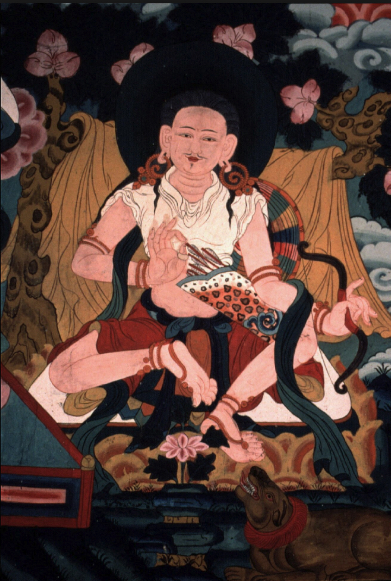
Jetsunma Tenzin Palmo: I Don't Eat My Friends (Part 1 of 5)
Karma, Meat, and Vegetarianism by Khentrul Rinpoche
Khenpo Sodargye: Vegetarianism in Tibetan Buddhism
Matthieu Ricard: A Plea for Animals, the Planet, and Human Beings A Plea For The Animals (Video)
Matthieu Ricard: A Plea for Animals
Samdhong Rinpoche: Ethics of Eating Meat
The Ethics of Vegetarianism with Geoff Barstow
Lama Jampa Thaye: Are Buddhists Vegetarian?
The Dalai Lama on Vegetarianism
The 17th Karmapa, Orgyen Trinley Dorje: Vegetarianism and the Threefold Purity of Meat in the Vinaya (Part 1 of 2)
Khenpo Tsultrim Lodrö: Vegetarianism and the Compassionate Treatment of Animals
Liberating Yaks:The Vegetarian Question in Tibet by Khenchen Tsultrim Lodrö Rinpoche
Buddhism and Vegetarianism by Khenchen Tsewang Gyatso
Tulku Pema Wangyal on Vegetarianism and Buddha's Teaching
Eat Less, or No Meat: Kyabje Dzongsar Jamyang Khyentse Rinpoche
Vegetarianism in Tibetan Buddhism
A Partial List of Teachers Who Engaged the Question of Meat-Eating


2500 BCE
Red Horizontal Vajra.png
Kātyāyana, also known as "Kātyāyana the Great" (Mahākātyāyana; P. Mahākaccāna), one of the Buddha's ten major disciples, hailed from the Avanti region and later returned to his native land to disseminate Buddhism. He is said to have requested that the Buddha allow for special dispensation to ordain new monks in outlying regions without the requisite number of ten monastic witnesses. (Source: Princeton Dictionary of Buddhism, 498)

Quotes & Descriptions from Shabkar.org

Separator narrow.png
8th c.
Red Horizontal Vajra.png
One of the most important Madhyamaka authors of late Indian Buddhism, a major representative of the Yogācāra-Madhyamaka synthesis, and a participant in the famous Bsam yas Debate. He wrote the Bhāvanākrama (Stages of Meditation), a set of three Buddhist texts written in Sanskrit on the practice of śamatha and vipaśyanā.

Quotes & Descriptions from Shabkar.org

Separator narrow.png
8th c.
Red Horizontal Vajra.png
The Indian Dzogchen master Vimalamitra is believed to have translated, composed, and concealed some of the central tantric teachings of the Nyingma tradition during the late eighth century reign of Tri Songdetsen. Historically, very few details surrounding his life and teachings can be confirmed. The dates of his birth, the location of his birthplace in India, the names of his parents, and the date of his arrival in Tibet have all been disputed.

Quotes & Descriptions from Shabkar.org

Separator narrow.png
10th–11th c.
Red Horizontal Vajra.png
A Tibetan king of the western region of Guge credited with inspiring a revival of Buddhism that initiated the latter dissemination (phyi dar) of Buddhism in Tibet. He decried the state of Tibetan Buddhist practice, especially the practice of Tantra, complaining that people were engaging in murder and illicit sex under the guise of the tantric practices of "liberation" (grol) and "union" (sbyor). He eventually succeeded in bringing Atiśa to Tibet to attempt to remedy the situation.

Quotes & Descriptions from Shabkar.org

Separator narrow.png
10th–11th c.
Red Horizontal Vajra.png
Atiśa (982-1054) is famous for being a master from the ancient Indian Buddhist land of Bengal and for his journeys in Indonesia and Nepal. He is most well known for the last thirteen years of his life in Tibet where he became the founding father of the Kadam tradition.

Quotes & Descriptions from Shabkar.org

Separator narrow.png
11th c.
Red Horizontal Vajra.png
Jñānaśrībhadra was from Kashmir and active in the 11th century. In addition to his commentary on the Laṅkāvatārasūtra, he wrote a commentary on Maitreyanātha's Mahāyānasūtrālaṃkāra (Mahāyānasūtrālaṃkārapiṇḍārtha) and a commentary on Dharmakīrti's Pramāṇaviniścaya (Pramāṇaviniścayaṭīkā).

Quotes & Descriptions from Shabkar.org

Separator narrow.png
11th c.
Red Horizontal Vajra.png
Dromtönpa Gyalwa Jungne was one of the primary disciples of Atiśa and is considered the founder of the Kadampa school of Tibetan Buddhism. A layman, he nevertheless established Reting Monastery in 1057, one of the great centers of the Kadampa tradition.

Quotes & Descriptions from Shabkar.org

Separator narrow.png
11th c.
Red Horizontal Vajra.png
Kṛṣṇapa, or Kṛṣṇapaṇḍita, was an Indian scholastic who was the author or translator of numerous works. He was the author of one of the most respected commentaries to Śāntideva's Guide to the Bodhisattva's Way of Life. In his Mahāyānamelāyanāpradīpa (Theg pa chen po bsdus pa'i sgron ma) ("Lamp Summarizing the Meaning of the Mahāyāna" - D3720), he writes about how one should always abstain from killing, stealing, sexual misconduct, lying, slander, harsh speech, idle talk, covetousness, malice, wrong views, meat, fish, alcohol, garlic, and radish, dyeing work, sesame work, farming, and so forth.

Quotes & Descriptions from Shabkar.org

Separator narrow.png
11th–12th c.
Red Horizontal Vajra.png
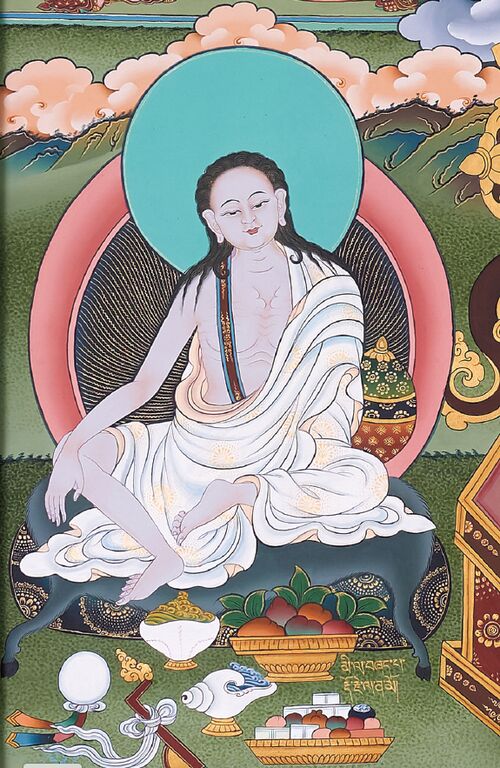
Milarepa, one of the best-known Tibetan saints, was a primary figure in the formation of the Kagyu traditions and a model of religious practice for all Tibetans, and famous for having purified the sins of his youth and attaining enlightenment in one lifetime. He received teachings from Marpa Chokyi Lodro only after Marpa put him through an arduous series of tasks designed to purify him of his previous misdeeds.

Quotes & Descriptions from Shabkar.org

Separator narrow.png
11th–12th c.
Red Horizontal Vajra.png
Metön Sherab Özer (1058–1132) was a Bön master who was instrumental in the establishment of Bön monasticism. One of the earliest advocates for vegetarianism, he criticized meat eating in his Vinaya Compendium, one of the earliest Bön texts on the Vinaya. Metön Sherab Özer’s critique focuses specifically on the question of compassion. (Source: Barstow, The Faults of Meat, 235)
Separator narrow.png
11th–12th c.
Red Horizontal Vajra.png
Sachen Kunga Nyingpo was the first of the Sakya Jetsun Gongma Nga, the five founding patriarchs of Sakya. These five men of the Khon family are credited with having laid the foundations for the Sakya tradition. Sachen was a layman and the third Sakya Tridzin or throne holder, a position distinct from his later designation as a patriarch. His father, Khon Khonchog Gyelpo, was the first Sakya throne holder and the founder of what became Sakya Monastery.

Quotes & Descriptions from Shabkar.org

Separator narrow.png
12th c.
Red Horizontal Vajra.png
Jñānavajra was the author of a commentary on the Laṅkāvatārasūtra, the Tathāgatahṛdāyalāṃkara (De bzhin gshegs pa'i snying po rgyan), preserved in the Tengyur collection. There is some argument over whether he was Indian or Chinese based on the colophon to the text: 'phags pa lang kar gshegs pa zhes bya ba theg pa chen po'i mdo'i 'grel pa de bzhin gshegs pa'i snying po'i rgyan zhes bya ba rgya'i mkhan po dz+nyA na badzras mdzad pa rdzogs so.

Quotes & Descriptions from Shabkar.org

Separator narrow.png
12th c.
Red Horizontal Vajra.png
Pakmodrupa was a disciple of Gampopa and is one of the earliest patriarchs of the Kagyu tradition. His monastery, Densatil, which he founded in 1158, was the training ground for most of the founders of the Kagyu subtraditions, such as Taklungtangpa and Jikten Gonpo, who went on to establish the Taklung and Drigung Kagyu, respectively. He integrated teachings that he received from Kadam, Sakya and, in vision, Zhije instructors into those he received from Gampopa.

Quotes & Descriptions from Shabkar.org

Separator narrow.png
12th–13th c.
Red Horizontal Vajra.png
Taklungtangpa, one of the main disciples of Pakmodrupa, stands at the head of the Taklung Kagyu lineage. He founded Taklungtang Monastery in about the year 1180.

Quotes & Descriptions from Shabkar.org

Separator narrow.png
12th–13th c.
Red Horizontal Vajra.png
Jetsun Drakpa Gyeltsen of the aristocratic Khon family was the third of the five men credited with founding the Sakya order. He was also the Fifth Sakya Tridzin, or throne holder. His father Sachen Kunga Nyingpo and his elder brother Sonam Tsemo were the first and second Sakya patriarchs. Drakpa Gyeltsen was instrumental in the early recording and compiling of the Lamdre teachings that form the basis of the Sakya tradition.

Quotes & Descriptions from Shabkar.org

Separator narrow.png
12th–13th c.
Red Horizontal Vajra.png
Zhangtön Darma Gyaltsen was a Kadampa monk who was affiliated with a place called Stabs ka (Tapka). This was the seat of the Tapka lineage and one of the three monastic sites founded by the great Geshe Tapkawa, a place where the explanation of the Abhidharmakośa and the Vinaya flourished for a long time. Zhangtön's known teacher was Naljorpa Rinchen Gyalsten (Rnal 'byor pa rin chen rgyal mtshan). His student was Tapkawa Changchub Zangpo (Tab ka ba byang chub bzang po). (Source: BDRC).

Quotes & Descriptions from Shabkar.org

Separator narrow.png
13th–14th c.
Red Horizontal Vajra.png
Dölpopa Sherab Gyaltsen was one of the most influential Buddhist masters in Tibetan history. He first became an important scholar of the Sakya tradition, but then moved to Jonang Monastery. There he became the fourth holder of the monastic seat and constructed a monumental stupa. Dölpopa’s ideas, specifically his famous formulation of the zhentong view and his interpretations of Mahāyāna and Vajrayāna doctrine, have elicited controversy for nearly seven hundred years.
Separator narrow.png
14th–15th c.
Red Horizontal Vajra.png
Ngorchen Kunga Zangpo was one of the most famous and influential Sakya teachers of the fifteenth century. A student of Sharchen Yeshe Gyeltsen and Buddhaśrī, he played an important role in the revitalization of the Sakya tradition following the collapse of Yuan patronage, with the establishment of Ngor Monastery in 1429, and the cultivation of support from Mustang and the Rinpung family in Shigatse. He famously engaged in a polemical debate with Khedrubje over the authenticity of the Sakya Hevajra teachings.
Separator narrow.png
14th–15th c.
Red Horizontal Vajra.png
Khedrubje Gelek Pelzang was one of the primary disciples of Tsongkhapa. A native of Tsang, he was involved in the establishment of the great monastery in Gyantse, Pelkhor Chode, before assuming the throne of Ganden in 1431. He was posthumously given the title of First Paṇchen Lama by virtue of being considered a pre-incarnation of the Fourth Paṇchen, Lobzang Chokyi Gyeltsen.

Quotes & Descriptions from Shabkar.org

Separator narrow.png
15th c.
Red Horizontal Vajra.png
Gorampa Sönam Sengge, the Sixth Ngor Khenchen, was a disciple of Rongton Sheja Kunrik and Ngorchen Kunga Zangpo. He was an important thinker of the Sakya tradition, establishing a Madhyamaka view that was critical of both Dolpopa and Tsongkhapa. Gorampa founded Tanak Serling and Tanak Tubten Namgyel monasteries.
Separator narrow.png
15th–16th c.
Red Horizontal Vajra.png
Drukpa Kunle was an itinerant, homeless yogin in the tradition of Milarepa, who spent his life wandering through south-central Tibet and throughout the areas known today as Bhutan and Sikkim, singing songs and promoting his own unusual brand of Buddhism. A profoundly learned and penetratingly insightful social critic, his career as a "divine madman" gave rise to a rich tradition of folk tales celebrating his antinomian behavior . . .

Quotes & Descriptions from Shabkar.org

Separator narrow.png
15th–16th c.
Red Horizontal Vajra.png
Ngari Paṇchen Pema Wangyal was a major Nyingma lama of the early sixteenth century. Born in present day Mustang, Nepal, he traveled widely around Tibet promoting the Jangter tradition with his brother, Lekden Dorje. He is remembered to have strictly observed his monastic vows and was the author of many texts, including Ascertaining the Three Vows, which lays out the Buddhist path according to the Nyingma tradition.

Quotes & Descriptions from Shabkar.org

Separator narrow.png
15th–16th c.
Red Horizontal Vajra.png
Gotsang Repa Natsok Rangdröl (Rgod tshang ras pa sna tshogs rang grol, 1494–1570) was a Kagyu master and disciple of Tsangnyon Heruka (1452–1507). He wrote the most substantial biography of Tsangnyon Heruka, as well as a sixteenth-century Life of Rechungpa (Rje btsun ras chung ba'i rnam thar).

Quotes & Descriptions from Shabkar.org

Separator narrow.png
16th c.
Red Horizontal Vajra.png
The eighth member of the incarnation lineage of the Karmapas, Mikyö Dorje, was a prolific scholar and an acclaimed artist, often credited with the development of the Karma Gadri style of painting. Though he only lived into his mid-40's, his contributions to the Karma Kagyu and the Tibetan tradition in general were immense.
Pecha-icon.png 'Dul ba mdo rtsa ba'i rgya cher 'grel spyi'i don mtha' dpyad dang bsdus don sa bcad dang 'bru yi don mthar chags su gnyer ba bcas 'dzam bu'i gling gsal bar byed pa'i rgyan nyi ma'i dkyil 'khor zhes bya ba glegs bam dang po
Pecha-icon.png Gangs ri'i khrod na gnas pa gtso bor gyur pa skyabs med ma rgan tshogs la sha zar mi rung ba'i springs yig sogs
Pecha-icon.png Dga' tshal karma gzhung lugs gling dang por sgar chen 'dzam gling rgyan du bzhugs dus kyi 'phral gyi bca' yig
Separator narrow.png
17th c.
Red Horizontal Vajra.png
Tsele Natsok Rangdrol (b. 1608) was born near the border of the Tibetan provinces Kongpo and Dakpo. He was recognized as the immediate reincarnation of Tendzin Dorje (1535-1605?), and also as a reincarnation of Götsangpa, a great master of the Drukpa Kagyü lineage, an emanation of Milarepa. In his youth he studied with the Third Pawo Rinpoche and the famous tertön Jatsön Nyingpo as well as other great teachers of the Kagyü and Nyingma lineages. (Source: Rigpa Wiki)
Separator narrow.png
18th c.
Red Horizontal Vajra.png
Jigme Lingpa was one of the most influential treasure revealers of the Nyingma tradition, best known for his Longchen Nyingtik treasury cycle. Active in in the eighteenth century in the Chonggye region, primarily at Pelri Monastery, and at the Chimpu cave complex above Samye Monastery, he received patronage from the king and queen of Derge, helping to promote Nyingma teachings in that kingdom and training many of the prominent Nyingma lamas from the Kham region, including the First Dodrubchen.

Quotes & Descriptions from Shabkar.org

Separator narrow.png
18th c.
Red Horizontal Vajra.png
Jamyang Gyamtso ('jam dbyang rgya mtsho, 17??-1800). One of Shabkar's root teachers. He was a highly accomplished master thoroughly versed in the teachings of both the Nyingma and Sarma traditions; he instructed Shabkar in the mind-training teachings and gave him many empowerments from the cycles of Nyingma treasures, including the Longchen Nyingthig of the vidyadhara Jigme Lingpa. (Source: Food of Bodhisattvas, 136)

Quotes & Descriptions from Shabkar.org

Separator narrow.png
18th–19th c.
Red Horizontal Vajra.png
Tenpa Rabgye was the Second Reting Rinpoche. Identified as the reincarnation of Ngawang Chokden, the Fifty-Fourth Ganden Tripa, he was offered Reting Monastery as his seat. He was educated at Sera and Gyume Monasteries.

Quotes & Descriptions from Shabkar.org

Separator narrow.png
18th–19th c.
Red Horizontal Vajra.png
Shabkar Tsokdruk Rangdrol was a Nyingma lama in Amdo active in the first half of the nineteenth century. A native of the tantric practice center of Rebkong, Zhabkar meditated in sacred places across the Tibetan Plateau, including Labchi and Kailash. His autobiography is a classic of Tibetan literature, much beloved for its simple and moving account of the life of a wandering yogin from childhood until his ultimate spiritual realization. He was a teacher to many of the nineteenth century's greatest lamas of Kham and Amdo.

Quotes & Descriptions from Shabkar.org

Separator narrow.png
19th c.
Red Horizontal Vajra.png
Dza Patrul Rinpoche, the author of the famed Words of My Perfect Teacher, was among the most significant transmitters of the Longchen Nyingtik practice lineage in the nineteenth century. Patrul was renowned for his uncommon humility, his forthright honesty, his brilliant oratory, and beyond all his skillful diffusion of the heart of the dharma.

Quotes & Descriptions from Shabkar.org

Separator narrow.png
19th c.
Red Horizontal Vajra.png
Nyakla Pema Dudul was a treasure revealer and prominent Nyingma master associated with Katok. He studied mainly under Drubchen Choying Rangdrol and specialized in Dzogchen. At his death he is said to have accomplished a rainbow-body. He was the founder of Kelzang Sanggye Choling as his own seat and also Sangngak Dechen Ling Monastery and Tsogyel Nunnery.

Quotes & Descriptions from Shabkar.org

Separator narrow.png
19th–20th c.
Red Horizontal Vajra.png
Shardza Tashi Gyaltsen (1859–1933 or 1935 was a great Dzogchen master of the Bön tradition of Tibet who took not only Bon disciples but gathered students from all traditions of Tibetan Buddhism. According to tradition, Shardza Tashi Gyaltsen famously realized the rainbow body.
Separator narrow.png
19th–20th c.
Red Horizontal Vajra.png
Gaton Ngawang Lekpa was one of the most prominent Sakya lamas of the early twentieth century. He was a disciple of Jamyang Khyentse Wangpo and the root teacher of Dezhung Rinpoche. In addition to teaching widely in Kham, Ngawang Legpa spent fifteen years in closed retreat.
Separator narrow.png
20th c.
Red Horizontal Vajra.png
Kangyur Rinpoche, Longchen Yeshe Dorje (1898-1975) was a great master and tertön from Riwoche Monastery in Kham, East Tibet; his root teacher was Jedrung Trinlé Jampa Jungné. In exile, he lived in Darjeeling, where he met and taught some of the very first western students of Tibetan Buddhism, including Matthieu Ricard.

Quotes & Descriptions from Shabkar.org

Separator narrow.png
20th–21st c.
Red Horizontal Vajra.png
Kyabjé Chatral Rinpoche, Sangye Dorje (1913–2015) was a renowned Dzogchen master, a reclusive yogin famous for his great realization and strict discipline. A disciple of the great master Khenpo Ngakchung, he was widely regarded as one of the most highly realized Dzogchen yogins of recent times.

Quotes & Descriptions from Shabkar.org

Separator narrow.png
20th–21st c.
Red Horizontal Vajra.png
Drubwang Konchok Norbu Rinpoche (1921/22–2007) was born in Drikung, Tibet, and trained at Drikung Nyima Changra Buddhist Institute. He studied for many years under the retreat master Drubwang Pachung Rinpoche (1901–1988), through whose guidance he gained realization of Mahāmudrā. At the request of the 14th Dalai Lama, he traveled extensively to propagate the practice of Avalokiteśvara's six-syllable mantra.

Quotes & Descriptions from Shabkar.org

Separator narrow.png
20th–21st c.
Red Horizontal Vajra.png
Kyabje Lati Rinpoche (1922–2010) was born in Kham, Eastern Tibet, and trained at Gaden Shartse Norling College, receiving his Geshe Lharampa degree in 1959. Following the 1959 exodus he joined the 14th Dalai Lama in exile, serving as his Spiritual Advisor and later as Abbot of Gaden Shartse Norling College in exile.

Quotes & Descriptions from Shabkar.org

Separator narrow.png
20th–21st c.
Red Horizontal Vajra.png
Lama Thubten Phuntsok Rinpoche ([1928]?-2012) was a contemporary Tibetan master, originally from the Geluk tradition, but who has was trained in the Dudjom Tersar lineage by Golok Serta Rinpoche. He practiced Chö in 108 charnel grounds all over Tibet, India, and the Himalayan countries, and also regularly performed healing Chö practice for local people, and had been living in the United States between 1999-2007.

Quotes & Descriptions from Shabkar.org

Separator narrow.png
20th–21st c.
Red Horizontal Vajra.png
Tenzin Gyatso, the 14th Dalai Lama (b. 1935), was born to a farming family in Taktser, Amdo, northeastern Tibet, and recognized at age two as the reincarnation of the 13th Dalai Lama, Thubten Gyatso. He is the spiritual leader of Tibet and believed to be a manifestation of Avalokiteśvara, the Bodhisattva of Compassion and patron of Tibet. He describes himself as a simple Buddhist monk.

Quotes & Descriptions from Shabkar.org

Separator narrow.png
20th–21st c.
Red Horizontal Vajra.png
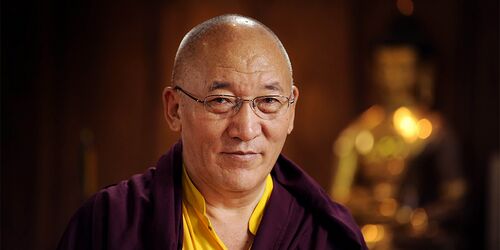
Geshe Lhundrup Rigsel (1941–2011) was born in Tibet, joined Sera Monastery as a boy, and fled to India following the 1959 Chinese invasion. He received his Geshe degree from Sera Monastic University in South India and met Lama Thubten Yeshe and Lama Zopa at the Buxa refugee camp. Called to Kopan Monastery in Nepal by Lama Yeshe in 1972 to teach Buddhist philosophy, he was appointed Abbot of Kopan Monastery by the Dalai Lama in 2000.
Quotes & Descriptions from Shabkar.org

Separator narrow.png
20th–21st c.
Red Horizontal Vajra.png
H. E. Chöje Ayang Tulku Rinpoche (1942–2024) was a Tibetan Buddhist lama known for both his charitable work and his extensive academic work especially in relation to bardo and pure land.

Quotes & Descriptions from Shabkar.org

Separator narrow.png
20th–21st c.
Red Horizontal Vajra.png
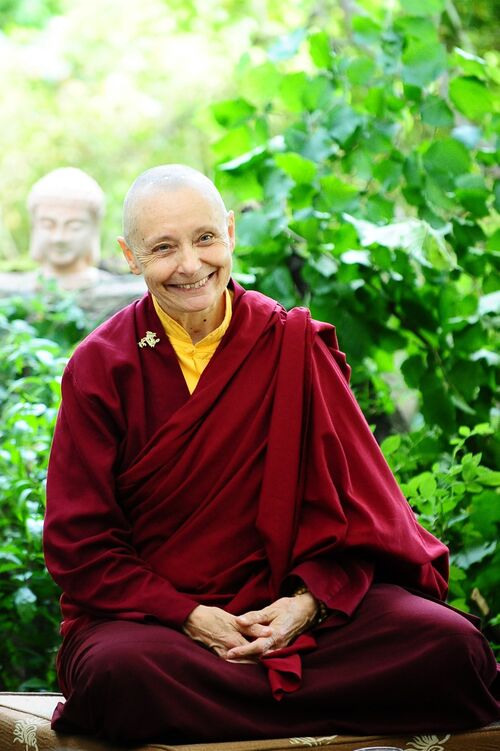
Jetsunma Tenzin Palmo (b. 1943) is a bhikṣuṇī in the Drukpa Lineage of the Kagyu school of Tibetan Buddhism. She is an author, teacher and founder of the Dongyu Gatsal Ling Nunnery in Himachal Pradesh, India.

Quotes & Descriptions from Shabkar.org

Separator narrow.png
20th–21st c.
Red Horizontal Vajra.png
Pema Wangyal Rinpoche (b. 1945) is the eldest son of Kangyur Rinpoche, trained under Kangyur Rinpoche, Dilgo Khyentse Rinpoche, and Dudjom Rinpoche. Following his family's exile to India in 1958 and later France, he has taught internationally since 1975 and has guided three-year retreat programs in France since 1980. He oversees the Padmakara Translation Group and has initiated numerous projects for the conservation and reprinting of rare Tibetan manuscripts.

Quotes & Descriptions from Shabkar.org

Separator narrow.png
20th–21st c.
Red Horizontal Vajra.png
Lobsang Tubten Jigme Gyatso, officially the 8th Arjia Hotogtu, born 1950 in Haiyan County, Qinghai, is one of the most prominent Buddhist teachers and lamas to have left Tibet. At age two, Arjia Rinpoche was recognized by Choekyi Gyaltsen, 10th Panchen Lama as the 20th Arjia Danpei Gyaltsen, the reincarnation of Je Tsongkhapa's father, Lumbum Ghe, the throne holder and abbot of Kumbum Monastery. He has trained with lineage teachers, such as the 14th Dalai Lama, the 10th Panchen Lama, and Gyayak Rinpoche—from whom he received many sacred teachings and ritual instructions.

Quotes & Descriptions from Shabkar.org

Separator narrow.png
20th–21st c.
Red Horizontal Vajra.png
Geshe Phelgye (b. 1956) is the founder of the Universal Compassion Movement, which advocates for vegetarianism around the world. He has served as a member of the Tibetan Parliament in Exile to represent the Gelug tradition of Buddhism. In addition to giving Buddhist teachings, he travels the world advocating vegetarianism and Universal Compassion for world peace.

Quotes & Descriptions from Shabkar.org

Separator narrow.png
20th–21st c.
Red Horizontal Vajra.png
Muktinath Lama Wangyal (b. 1956) is a Nyingma ngagpa (tantric householder practitioner) born in Muktinath Valley, Nepal, and the current abbot of Chumig Gyatsa (Muktinath), a position he inherited from his grandfather Jampal Rabgyé Rinpoche in 1978 following a traditional retreat of three years, three months, three weeks, and three days. He is a strict vegetarian, refraining from meat, fish, eggs, and alcohol. He served as the personal lama of the late King Birendra of Nepal and co-founded the Muktinath Foundation International in 1999.

Quotes & Descriptions from Shabkar.org

Separator narrow.png
20th–21st c.
Red Horizontal Vajra.png
Khenpo Tsultrim Lodrö (b. 1962) is a renowned contemporary Nyingma teacher of Tibetan Buddhism based at Larung Gar (formally known as the Serthar Larung Five Sciences Buddhist Institute), where he serves as a standing Vice Principal. He is a native of Draggo (Ch: Luhuo) County in Sichuan Province. He is an influential public intellectual. . . . Since 2003, Khenpo has given largescale teachings across many farming and nomadic areas in Tibetan regions. He has taught the fundamentals of correct view and practice in Tibetan Buddhism, and has promoted non-killing, caring for living beings, and vegetarianism.
Separator narrow.png
20th–21st c.
Red Horizontal Vajra.png
Jigme Pema Wangchen (b. 1963) is the twelfth and present incarnation of the Gyalwang Drukpa and the spiritual head of the Drukpa lineage. He is an active environmentalist and educator and is a champion of veganism.
Separator narrow.png
20th–21st c.
Red Horizontal Vajra.png
Jigme Khyentse Rinpoche (b. 1963) is the youngest son of Kangyur Rinpoche and was recognized as the incarnation of Jamyang Khyentse Chökyi Lodrö by Dilgo Khyentse Rinpoche, Dudjom Rinpoche, and the 16th Karmapa. Rinpoche oversees the projects of Padmakara Translation Group, leads retreats, and teaches seminars all over the world.

Quotes & Descriptions from Shabkar.org

Separator narrow.png
20th–21st c.
Red Horizontal Vajra.png
Lama Kunzang Dorjee Rinpoche was born in 1970 into the sacred Nyo lineage of Gyalwang Lhanangpa. He is the Head Lama of the Jangsa Dechen Choling Monastery in Kalimpong, India and also heads Lhundrup Dechenling Monastery in Eastern Bhutan, and Pema Yoedling Monastery in Southern Bhutan. Besides overseeing his monasteries in India and Bhutan, Lama Kunzang Dorjee Rinpoche raises interest in animal saving through his Jangsa Animal Saving Trust, an NGO in Bhutan.

Quotes & Descriptions from Shabkar.org

Separator narrow.png
20th–21st c.
Red Horizontal Vajra.png
Lama Phurbu Tashi Rinpoche (b. 1973) is the founder and spiritual teacher of the Gampopa Center in Annapolis, Maryland, USA and Mani House Jakarta and Mani House Medan in Indonesia.

Quotes & Descriptions from Shabkar.org

Separator narrow.png
20th–21st c.
Red Horizontal Vajra.png
Khamtrul Rinpoche Jigme Pema Nyinjadh (b. 1981), the Ninth Gyalwa Dokhampa, was born into the family of the Twelfth Gyalwang Drukpa and recognized by the Dalai Lama, the Gyalwang Drukpa, and the First Thuksey Rinpoche. He completed a nine-year Masters degree at Tango Monastic University in Thimphu, Bhutan, and studied under the Gyalwang Drukpa as his root teacher. He teaches the Drukpa lineage internationally and is the author of Restful Mind: A New Way of Thinking, A New Way of Life. He currently resides in Bhutan. Choosing a Vegetarian Lifestyle
Separator narrow.png
20th–21st c.
Red Horizontal Vajra.png
Ogyen Trinley Dorje, the 17th Gyalwang Karmapa (b. 1985), is the head of the 900-year-old Karma Kagyu lineage and a guide to millions of Buddhists worldwide. Born in Tibet, he made a dramatic escape to India in 2000 and currently resides at Gyuto Monastery. In addition to teaching traditional Tibetan Buddhist Dharma, he actively advocates for environmental conservation, gender equality, and the digitization of Buddhist teachings.

Quotes & Descriptions from Shabkar.org

Separator narrow.png

Bibliography: Works on Animals and Vegetarianism