Sha'i nyes dmigs mdor bsdus
| 🤓 Admin Zone 🛠️ hidden to non-admins | |

Description
Instead, he is claiming that people should eat meat despite the fact that it is sinful. Further, he proposes that, in order to minimize the negative karma of meat eating, people should eat "suitable" meat. But what kind of meat is suitable? To this Shardza gives two examples: the meat of animals that have died naturally and meat purchased in a market. The first involves no act of killing, so is karmically pure. Shardza himself followed just such a diet, eating only the meat of animals that died naturally. Meat purchased in the market is more problematic, and Shardza clearly sees it as an inferior option. But he does include it, seeming to reflect the idea that meat purchased in the market is more distant from the act of killing than when someone either personally kills the animal or specifically asks someone else to do it for them. (Source: Barstow, The Faults of Meat, 237)

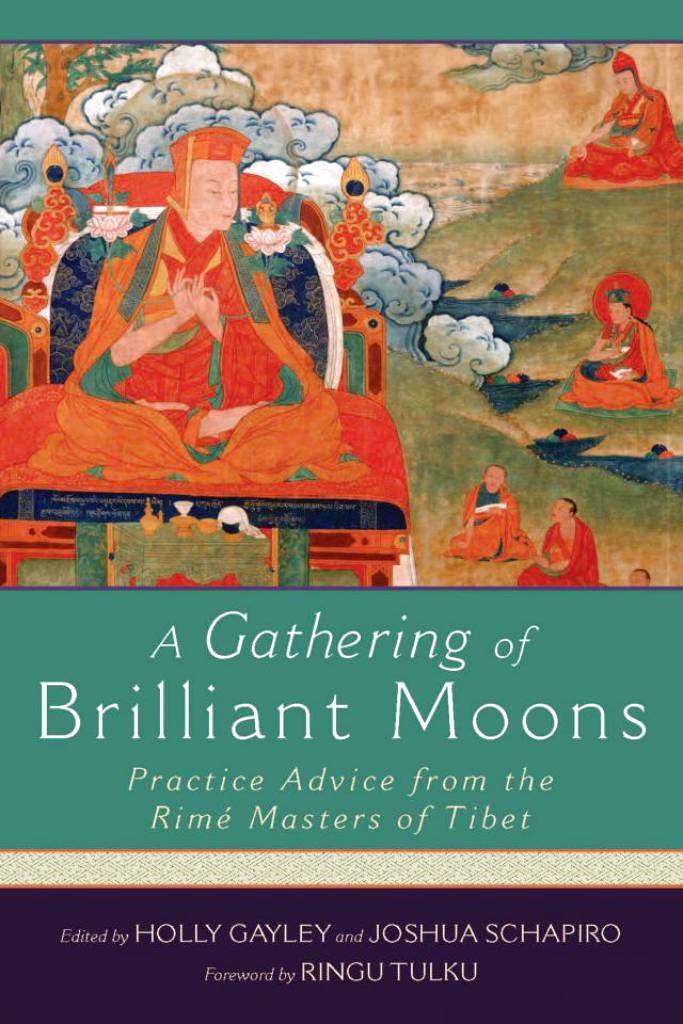
Includes works from Jamgon Kongtrul, Dza Patrul Rinpoché, Ju Mipham Rinpoché, Dudjom Lingpa, The Third Dodrupchen, Do Khyentsé, Tokden Sakya Sri, Jikmé Lingpa, Shardza Tashi Gyaltsen, Getsé Mahapandita, Shangton Tenpa Gyatso, and Bamda Thupten Gelek Gyatso.
This book arose from a unique conference on Tibetan translation, where the fourteen translators shared their process with each other and received feedback from their peers with a special focus on the literary aspects of the source texts. As a reflection of this genesis, the accompanying essays in this volume by the translators explore the aesthetic qualities of their chosen works, highlight ecumenical features in them, and comment on the journey of translation. This unique book will be welcomed by religious scholars, Buddhist practitioners, and meditators. (Source: Wisdom Experience)
On the topic of buddha-nature, see especially Tina Draszczyk's translation of Jamgön Kongtrul's Immaculate Vajra Moonrays: An Instruction for the View of Shentong, the Great Madhyamaka in chapter 12, Putting Buddha Nature into Practice.
Vegetarianism is an important topic of debate in Buddhist circles—some argue that Buddhists should avoid meat entirely while others suggest that it is acceptable. For the most part, however, this ethical query has been conducted in the West without consulting traditional literature on the subject. The Faults of Meat brings together for the first time a collection of rich and intricate explorations of authoritative Tibetan views on eating meat. These fourteen nuanced texts, ranging from scholastic treatises to poetic verse, reveal vegetarianism as a significant, ongoing issue of debate for Tibetans across time and traditions, with a wide variety of voices marshaled against meat, and a few in favor. Authors include many important Tibetan teachers:
Dolpopa Sherab Gyaltsen (1292–1361) Khedrup Jé (1385–1438) The eighth Karmapa, Mikyö Dorjé (1507–1554) Shabkar Tsokdrük Rangdröl (1781–1851) Khenpo Tsultrim Lodrö (1961– ) and many more.
These Buddhist teachers recognize both the ethical problems that surround meat eating and the practical challenges of maintaining a vegetarian diet; their skilled arguments are illuminated further by the translators’ introductions to each work.
The perspectives in The Faults of Meat are strikingly relevant to our discussions of vegetarianism today; they introduce us to new approaches and solutions to a contentious issue for Buddhists. (Source: Wisdom Publications)