- [[<span class="smw-highlighter" data-type="4" data-state="inline" data-title="Warning" title="Some use of "|]]
- "
- In your query was not closed by a matching "
- "
- [[.">Some use of "" in your query was not closed by a matching "".|]]
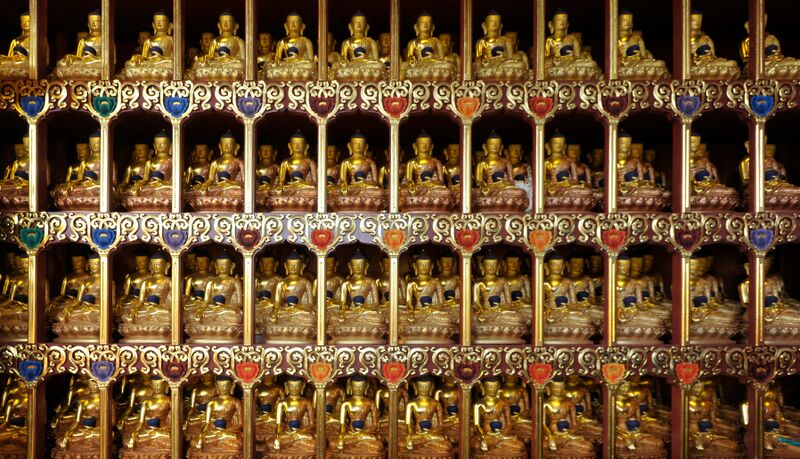
Chapters 16–19 cover the fourth major topic of The Compendium of Training—namely, enhancement of the body, possessions, and merit. According to Śāntideva, true fulfillment is only achieved by the attainment of buddhahood. Therefore, a bodhisattva's body, possessions, and virtue must be enhanced through various practices, including the culitvation of right effort and enthusiasm, charitable giving, making offerings and prostrations, recollecting the Three Jewels, and putting other sentient beings at the center of all of one's activities.
Chapter 18: Recollecting the Three Jewels
The chapter on recollection of the Three Jewels begins with the list of four dharmas which can help someone who has entered the Mahāyāna path not decline but go higher, as presented in The Sūtra on the Buddha's Secrets. Among the four, the first is faith, which leads one closer to sublime beings, the second is respect, which leads one to listen to the sublime beings, the third is lack of arrogance, which leads one to venerate and pay homage to the sublime beings, and the fourth one is enthusiasm/effort, which makes the body and mind agile to have control over one's works.
The Teachings of Akṣayamati presents the five faculties of faith, effort, mindfulness, concentration, and wisdom. Faith in the correct view of the world helps one observe the law of cause and effect and eschew negative actions, faith in the conduct of bodhisattvas helps one engage in the bodhisattva path and avoid interest in other paths, faith in the profound reality of nonself, interdependence, emptiness, signlessness, and wishlessness helps one eschew opinionated views, and faith in the qualities and features of the Buddha helps one overcome doubt and seek buddhahood earnestly.
The faculty of effort refers to the enthusiasm and diligence to pursue the things in which one has developed faith. The faculty of mindfulness holds what is pursued through effort without letting it go to waste. The faculty of concentration, then, focuses on the Dharma, which the faculty of effort has held together. The faculty of wisdom finally examines and discerns the Dharma on which one is focused and develops an unassailable and independent knowledge. In possession of these five faculties, a bodhisattva will not be defeated by evil forces, will not be attracted by the lower vehicles, will not withdraw from the Mahāyāna path, will not be overcome by afflictive emotions, will not be affected by enemies, will firmly hold pledges and powers, and will be able to accomplish the qualities of the Buddha. Like the faculties, a bodhisattva must also hold loving-kindness, as it is more meritorious than making immeasurable offerings to the buddhas in innumerable realms.
Śāntideva cites The Questions of Rāṣṭrapāla Sūtra (Skt. Rāṣṭrapālaparipṛcchāsūtra) to elaborate on how to recollect the Buddha. The sūtra describes the physical attributes of the Buddha, including the marks and tokens. It describes the golden hue; beautiful smooth hair; uṣṇīṣa, or the protrusion on the crown; the hair on the forehead; the eyes; the broad, thin, copper-colored tongue; the Buddha's voice; teeth; bodily glow; limbs; and the graceful physical comportment. It then recounts the personal traits, inner spiritual qualities, achievements, and attainments of the Buddha using various analogies and references. This is further substantiated by citations from The Compendium of Dharma Sūtra, which describes the Buddha as a refuge, guardian, and physician who possesses heaps of merit and wisdom, loving-kindness and compassion, and as one who is like a parent to all sentient beings. The sūtras describe the Buddha's vision, values, magnificence, benevolence, outlooks, approaches, and activities, and the impact they have on the world and sentient beings, and they exhort a bodhisattva to engage in the recollection of the Buddha.
Śāntideva continues to cite The Compendium of Dharma Sūtra on the recollection of the Dharma and the Sangha. The recollection of the Dharma focuses on how Dharma is the source of the innumerable qualities and achievements of the Buddha. It is Dharma which produced, manifested, and brought about the ten powers, four fearlessnesses, eighteen distinct qualities, thirty-two marks, and eighty tokens which the Buddha possesses. In fact, all states of mundane and supramundane joy and happiness are outcomes of Dharma. Thus, a bodhisattva seeking buddhahood must primarily seek, cherish, depend on, and accomplish Dharma. Dharma is impartial, equanimous, meaningful, constant, timeless, primordial, nonconceptual, and is not bound by time, space, or individuals. Thus, one must think in accordance with Dharma, the protector and refuge of the world, without attachment or aversion.
The Sangha, The Compendium of Dharma Sūtra describes, is composed of those who hold, venerate, think of, and speak about Dharma, and those who engage in activities associated with Dharma. It is made up of those who are honest, pure, compassionate, reclusive, inclined to Dharma, and who are constantly engaged in positive things. Recollection of the Sangha is to think "I shall accomplish the noble qualities of the Sangha for myself and all other sentient beings."
The Teachings of Vimalakīrti (Skt. Vimalakīrtinirdeśasūtra) discusses the qualities and virtues of the Sangha in detail, mentioning how the Sangha teaches impermanence, emptiness, etc. to beings in different languages and tunes, manifesting itself in different ways to tame the beings, give vast charity and dedicate the virtue, learn different sciences, arts, and techniques to benefit beings, take the forms of the sun, moon, earth, fire, water, air, medicine, food, drink, etc. to help beings, promote loving-kindness during conflicts, travel to various realms, including hell, for the sake of others, engage in sensual pleasure or reclusive life according to requirement, become a prostitute, slave, servant, pupil, leader, minister, and others as required to help beings, overcome arrogant people with superior power, give protection to those who are scared, and place sentient beings on the path of bodhisattvas. The sūtra claims that even the buddhas cannot fully express the qualities of the Sangha.
The Dhāraṇī of the Jewel Lamp (Skt. Ratnolkādhāraṇī) extols the way in which the Sangha of bodhisattvas worships the Buddha through the offering of flowers, incense, fragrance, garlands, powdered incense, clothes, parasols, gems, banners, bell, etc. It also extols the many avenues of practice and engagements, such as giving, discipline, patience, and so forth, in which the Sangha of bodhisattvas enters. Similarly, it mentions the many ways and forms in which the Sangha of bodhisattvas works to benefit beings, teaches them Dharma in various languages and words, sends forth dozens of types of rays of light to clear various problems, and leads sentient beings on the right path. It also lists the innumerable states of meditative absorption the Sangha of bodhisattvas enters and rises from to manifest myriad miracles and manifestations in countless realms of buddhas. Having enumerated the numerous qualities of the Sangha, the sūtra asks: "If Indra, who has attachment, aversion, and ignorance, can please his subjects with miraculous manifestations, why wouldn't one who is not tired of benefiting sentient beings, but applying oneself to it, not be able to please the world with the power of his miracles?"[1] In the same way, the sūtra states, "If Brahmā, the lord of the trichiliocosm, appears in the Brahmā world in all the billion microcosms and speaks with the beautiful voice of Brahmā through the meditation and clairvoyance of the Brahmā world, why wouldn't one who transcends the world and remains in the unsurpassable meditative state of liberation not be able to manifest?"[2] A few other comparisons are also given to illustrate the power and ability of the Sangha of bodhisattvas, whose qualities, virtues, and achievements one must recollect and aspire to attain.
Additional resources
Here we need to think about what would be particularly useful to the student/reader at this point. Link to key terms found in chapter one? Any thoughts?
Notes
- ↑ Derge Tanjur, Khi, f. 186b: །བརྒྱ་བྱིན་ཆགས་སྡང་གཏི་མུག་ལྡན་པ་ཡང་། །སྤྲུལ་པས་རང་གི་འཁོར་རྣམས་དགའ་བྱེད་ན། །འགྲོ་དོན་མི་སྐྱོ་སྦྱོར་རྣམས་ཅི་ཡི་ཕྱིར། །རྫུ་འཕྲུལ་སྟོབས་ཀྱིས་འཇིག་རྟེན་མགུ་མི་བྱེད། །
- ↑ Derge Tanjur, Khi, f. 187a: །སྟོང་གསུམ་གནས་ཀྱི་བདག་པོ་ཚངས་པ་ཡང་། །སྟོང་གསུམ་ཚངས་གནས་ཇི་སྙེད་ཡོད་པ་ན། །དེ་དག་ཀུན་ན་འདུག་པར་རབ་སྣང་ཞིང་། །ཚངས་པའི་སྒྲ་དབྱངས་ཤིན་ཏུ་ཡིད་འོང་སྒྲོགས། །ཚངས་དེ་འཇིག་རྟེན་པ་ཡི་ཚངས་ལམ་གྱི། །བསམ་གཏན་མངོན་ཤེས་རྣམ་པར་འཕྲུལ་བྱེད་ན། །འཇིག་རྟེན་རབ་འདས་བླ་ན་མེད་པ་ཡི། །བསམ་གཏན་རྣམ་ཐར་གནས་པ་ཅིས་མི་འཕྲུལ། །
