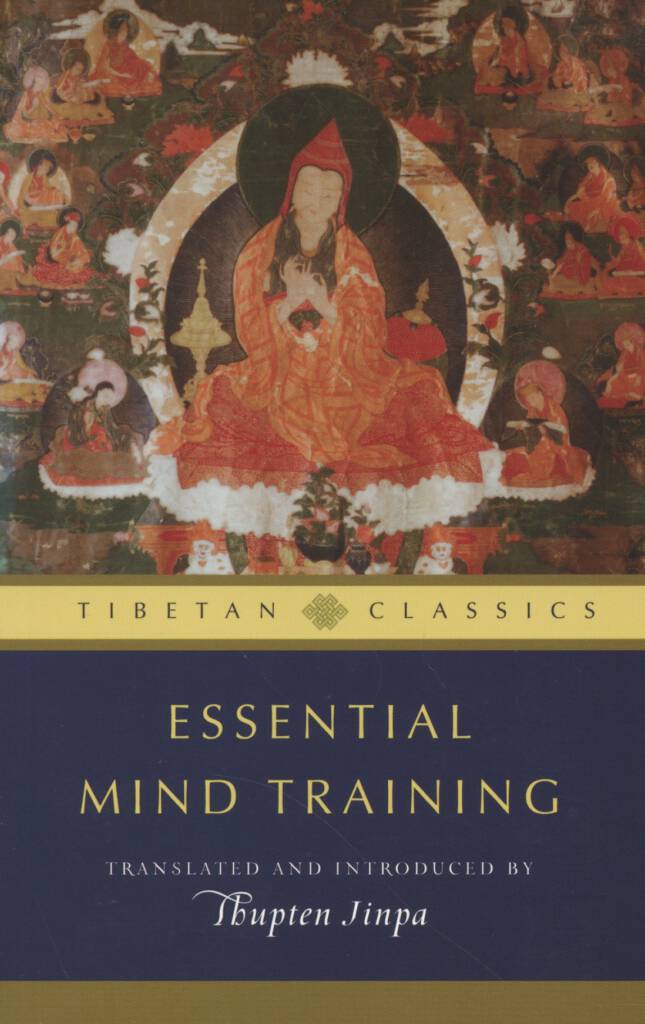
Essential Mind Training (Jinpa 2011)
| 🤓 Admin Zone 🛠️ hidden to non-admins | |
-front.jpg)
Description
This volume contains eighteen individual works selected from Mind Training: The Great Collection, the earliest compilation of mind-training (lojong) literature. The first volume of the historic Tibetan Classics series, Essential Mind Training includes both lesser-known and renowned classics such as Eight Verses on Mind Training and The Seven-Point Mind Training. These texts offer methods for practicing the golden rule of learning to love your neighbor as yourself and are full of practical and down-to-earth advice.
The techniques explained here, by enhancing our capacity for compassion, love, and perseverance, can give us the freedom to embrace the world. (Source: Wisdom Publications)
- Prefaceix
- Introduction1
- ATIŚA'S LEGACY21
- 1. Bodhisattva's Jewel Garland
- Atiśa25
- 2. Root Lines of Mahayana Mind Training
- Attributed to Atiśa31
- SEVEN POINTS35
- 3. Seven-Point Mind Training
- Chekawa Yeshé Dorjé39
- 4. A Commentary on the "Seven-Point Mind Training"
- Sé Chilbu Chökyi Gyaltsen43
- EIGHT VERSES103
- 5. Eight Verses on Mind Training
- Langri Thangpa107
- 6. A Commentary on "Eight Verses on Mind Training"
- Chekawa Yeshé Dorjé111
- EQUANIMITY127
- 7. Leveling Out All Conceptions
- Attributed ot Serlingpa131
- 8. A Commentary on "Leveling Out All Conceptions"
- Attributed to Atiśa135
- KARMIC JUSTICE143
- 9. Wheel of Sharp Weapons
- Attributed to Dharmarakṣita149
- A VAJRA SONG175
- 10. Melodies of an Adamantine Song: A Chanting Meditation on Mind Training
- Attributed to Maitrīyogi179
- TRANSFORMING ADVERSITY185
- 11. A Teaching on Taking Afflictions onto the Path187
- 12. Mind Training Taking Joys and Pains onto the Path189
- NEW ATTITUDES193
- 13. Sumpa Lotsāwas' Ear-Whispered Mind Training197
- 14. Bodhisatva Samantabhadra's Mind Training201
- 15. Mind Training Removing Obstacles211
- 16. Mahayana Mind Training Eliminating Future Adversities213
- FORMAL PRACTICES21
- 17. Mind Training in a Single Session
- Chim Namkha Drak223
- 18. Glorious Virvapas Mind Training
- Lo Lotsāwa231
- Notes239
- Glossary255
- Bibliography269
- Index of Names and Titles275

According to the Wheel of Sharp Weapons, the way to make an end of this cycle is to understand how this process comes about and how it is rooted in the grasping at a self or "I". When we contemplate how our actions, rooted in the sense of self and other, cause suffering, then we use these very negative actions we have done in the past as a contemplative "weapon" to attack self grasping, the real "foe" in our lives. Thus, the weapon which harms us is turned against the heart or source of our suffering, our "true enemy".
Despite the fact that Wheel of Sharp Weapons has come to be considered a Mahāyāna text, Dharmarakṣita is said to have subscribed to the Vaibhāṣika view. His authorship of the text is considered questionable by scholars for various reasons. (Adapted from Source April 25, 2025)


According to Thupten Jinpa,
"Although this text appears in the Tengyur (Toh 3951) as a self-standing work, it also exists almost in its entirety in another of Atiśa's works, entitled Letter of Unblemished Precious Jewels (Toh 4188), a letter sent by Atiśa to the Indian Bengali royalty Nayapāla from Nepal. Noting this, the Tibetan historian Pawo Tsuklak Trengwa asserts that Bodhisattva's Jewel Garland may actually have been compiled by Dromtönpa by drawing from Atiśa's writings. See his Joyful Feast for the Learned (Mkas pa'i dga' ston), p. 709." (Source Accessed Mar 14, 2025)

- If you can tolerate anything, whatever you do brings happiness;
If your mind rests where it's placed, you can journey anywhere;
If your mind is fused with Dharma, it's okay even if you die;
If you have recognized the mind as unborn, there is no death.

Compiled by Shonu Gyalchok (ca. fourteenth-fifteenth centuries) and Konchok Gyaltsen (1388-1469)
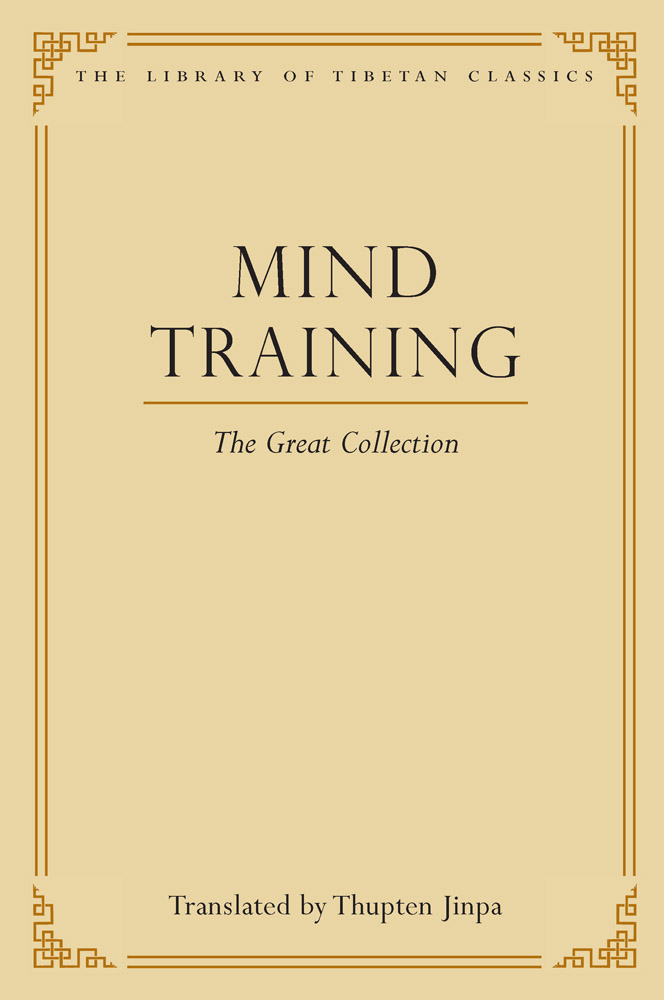
Compiled in the fifteenth century, Mind Training: The Great Collection (Theg pa chen po blo sbyong rgya rtsa) represents the earliest anthology of a special genre of Tibetan spiritual literature known simply as "mind training" or lojong in Tibetan. Tibetans revere the mind training tradition for its pragmatic and down-to-earth advice, especially the teachings on "transforming adversities into favorable opportunities." This volume contains forty-three individual texts, including the most important works of the mind training cycle, such as Serlingpa's Leveling out All Conceptions, Atisa's Bodhisattva's Jewel Garland, Langri Thangpa's Eight Verses on Mind Training, and Chekawa's Seven-Point Mind Training, together with the earliest commentaries on these seminal texts as well as other independent works. These texts expound the systematic cultivation of such altruistic thoughts and emotions as compassion, love, forbearance, and perseverance. Central to this discipline are the diverse practices for combating our habitual self-centeredness and the afflictive emotions and way of being that arise from it. (Source: Mind Training: The Great Collection translated by Thupten Jinpa)