No edit summary |
No edit summary |
||
| Line 6: | Line 6: | ||
|full-width=yes | |full-width=yes | ||
|image=File:Nagarjuna thangka.jpg | |image=File:Nagarjuna thangka.jpg | ||
|imageSource=Thangka by Shawo Thar, 2003. | |imageSource=Nāgārjuna: Thangka by Shawo Thar, 2003. | ||
|text=Emptiness in Tibetan Buddhism refers to the absence of inherent, independent existence in all phenomena. Nothing exists by itself or has a fixed, unchanging essence. Everything arises through interdependence and relationships with other causes and conditions. This doesn't mean things don't exist, but that they lack absolute, separate reality. | |text=Emptiness in Tibetan Buddhism refers to the absence of inherent, independent existence in all phenomena. Nothing exists by itself or has a fixed, unchanging essence. Everything arises through interdependence and relationships with other causes and conditions. This doesn't mean things don't exist, but that they lack absolute, separate reality. | ||
}} | }} | ||
}} | }} | ||
Revision as of 09:03, 2 August 2025
Emptiness
Key Concepts
- Buddha-Nature
- Compassion
- Defining Bodhicitta
- Emptiness
- Equalizing & Exchanging Self and Others
- Equanimity
- History of Bodhicitta Teachings
- How to Develop Bodhicitta
- Interdependent Origination
- Lineage of the Profound View
- Lineage of the Vast Conduct
- Mahāyāna
- Mind Training
- Non-Self
- Seven-Point Instructions of Cause and Effect
- The Bodhisattva Ideal
- The Bodhisattva Path
- The Bodhisattva Vow
- The Bodhisattva's Goal
- The Four Immeasurables
- The Six Perfections
- The Three Higher Trainings
- The Two Accumulations
- The Two Truths
- Tonglen: The Practice of Sending and Receiving
- Types of Bodhicitta
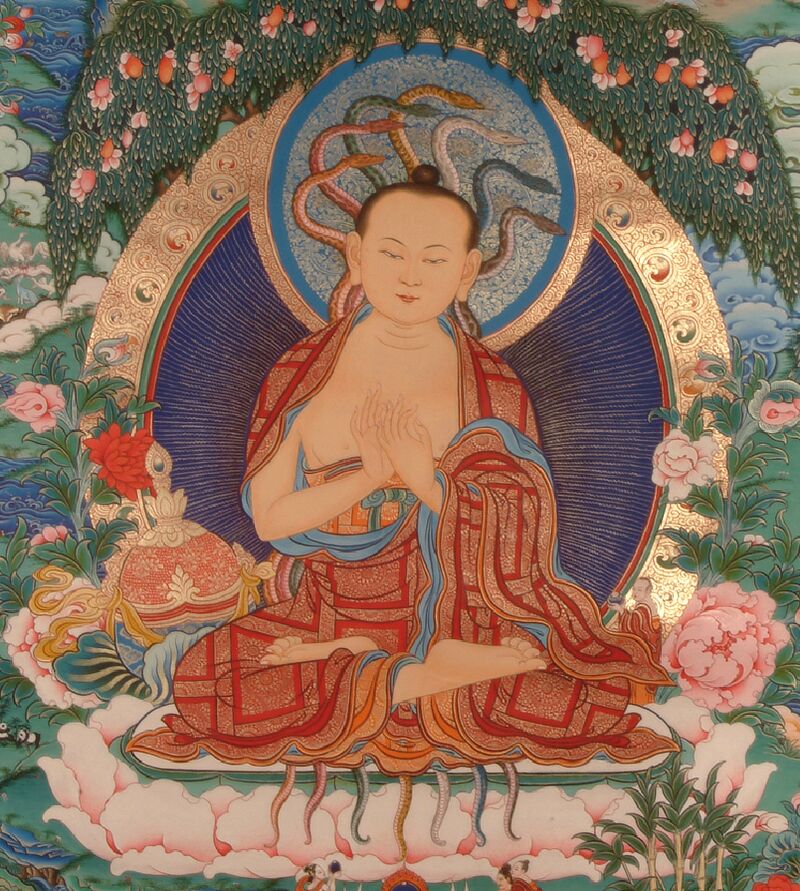
Nāgārjuna: Thangka by Shawo Thar, 2003.
Emptiness in Tibetan Buddhism refers to the absence of inherent, independent existence in all phenomena. Nothing exists by itself or has a fixed, unchanging essence. Everything arises through interdependence and relationships with other causes and conditions. This doesn't mean things don't exist, but that they lack absolute, separate reality.
