Nor bu ke ta ka

From Bodhicitta
< Texts(Redirected from Nor bu ke ta ka)
Texts/Nor bu ke ta ka

🤓 Admin Zone 🛠️ hidden to non-admins
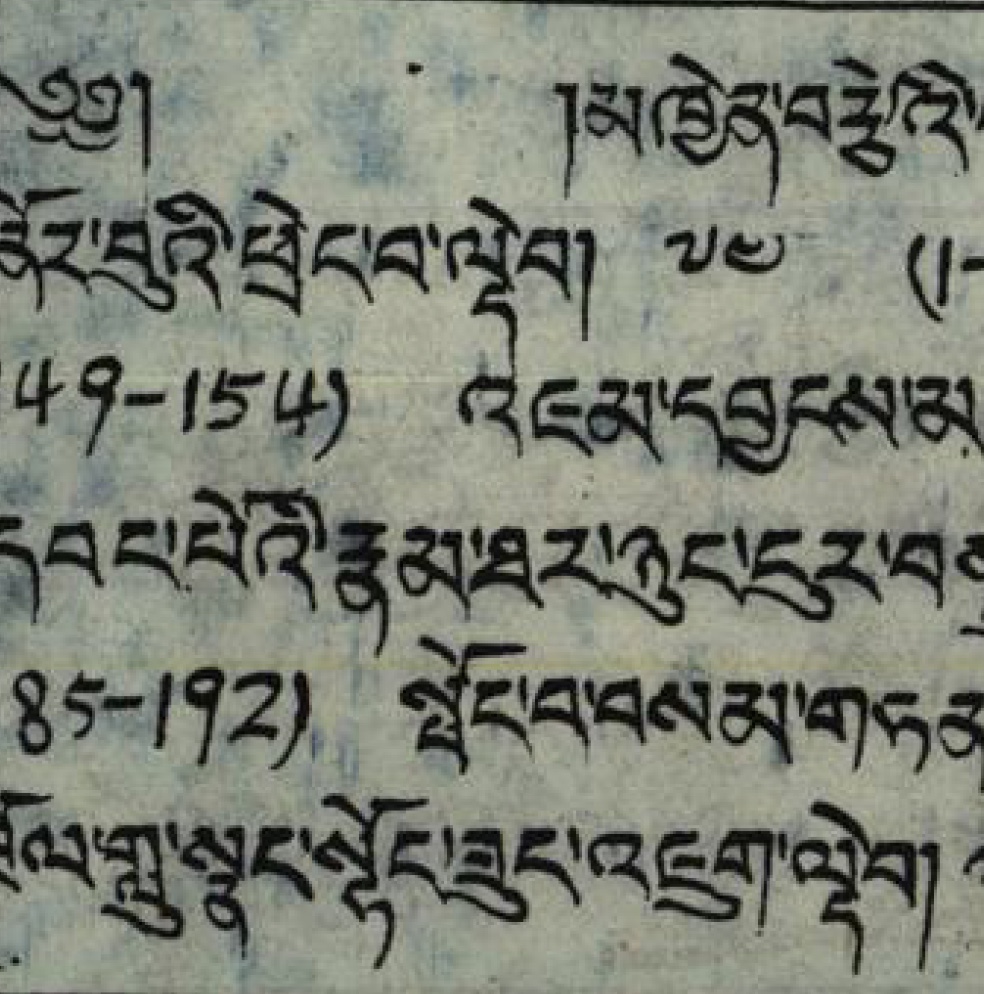
ཤེས་རབ་ལེའུའི་ཚིག་དོན་གོ་སླ་བར་རྣམ་པར་བཤད་པ་ནོར་བུ་ཀེ་ཏ་ཀ།
shes rab le'u'i tshig don go sla bar rnam par bshad pa nor bu ke ta ka
The Ketaka Jewel: An Easy to Understand Explanation of the Words and Meaning of the Wisdom Chapter
Text
See Timeline of BCA Commentaries


Please note that many items in our library are simply pages that represent a detailed library catalog entry and citation of someone else's work, presentation, or performance. Read our General Disclaimer for more information.

Description

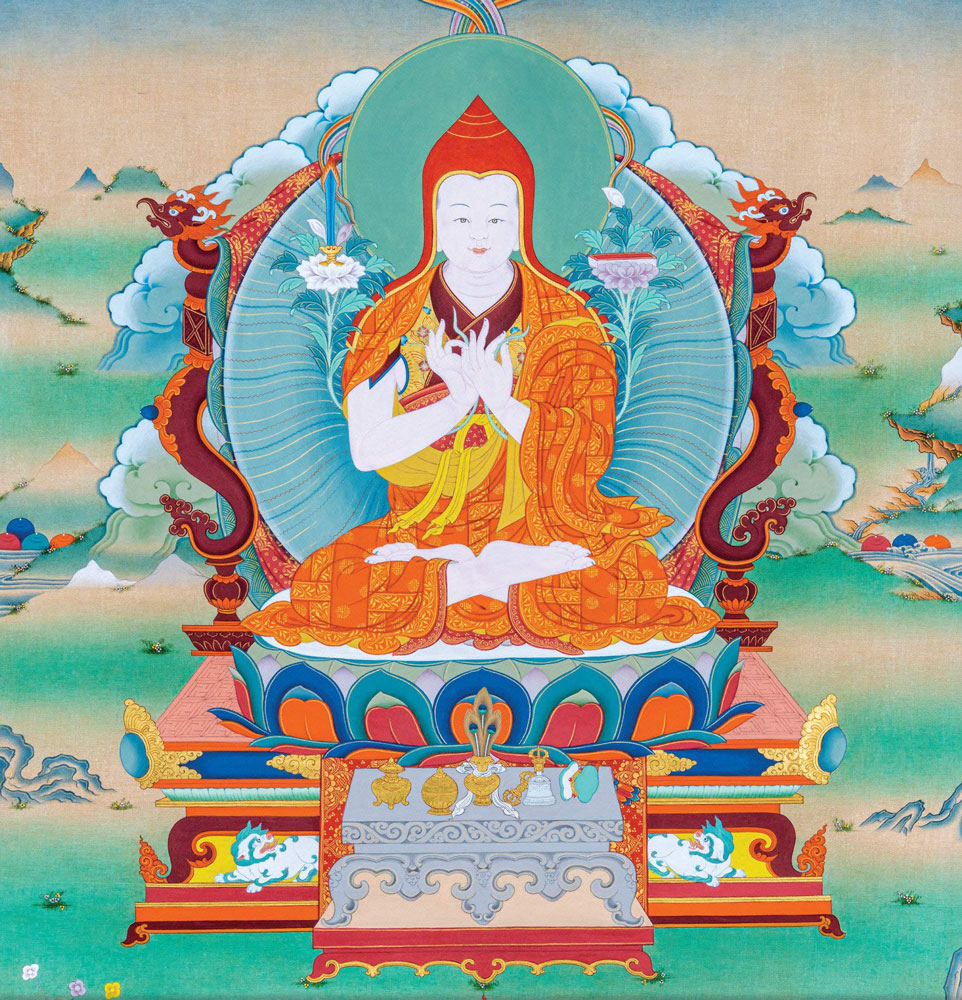
The Norbu Ketaka, also known as the Ketaka Jewel, is Mipham Rinpoche's commentary on the ninth chapter of Śāntideva's Bodhicaryāvatāra, composed in 1878 when Mipham was 32 years old. This ninth chapter, known as the "Wisdom Chapter," expounds on the perfection of wisdom through the Madhyamaka (Middle Way) view, which is considered the essence of the Prajñāpāramitā sūtras and the heart of Mahāyāna Buddhism. Although Mipham belonged to the Nyingma school, the Ketaka was written within the context of the Rime (nonsectarian) movement in eastern Tibet, which sought to preserve and reinvigorate the traditions of all schools of Tibetan Buddhism. Although not Mipham's first or most extensive work on Madhyamaka, the Ketaka provoked significant controversy that lasted for over three decades, due to its challenge to the prevailing Geluk interpretation of the text. From a literary perspective, the Ketaka is a hundred-thirty page long word and meaning commentary (tshig don gyi 'grel pa).

This commentary presents Mipham's explanation of Śāntideva's text implicitly questioning the dominant Geluk interpretation. Mipham's commentary sparked intense debate and opposition from Geluk scholars and even some from his own Nyingma school. The disagreements were significant enough to prompt epistolary debates through a series of written refutations composed by prominent Geluk scholars. These disputes centered around differing interpretations of key Mādhyamika concepts and their implications for Buddhist practice and realization. Mipham's work represented a reassertion of the older school's understanding of Madhyamaka, which had been largely overshadowed by the Geluk interpretation propagated by Tsongkhapa and his followers. The controversy surrounding the Ketaka reflects the broader doctrinal tensions between the Geluk school's philosophical positions and those of the earlier Tibetan Buddhist traditions.

More on this text:

The Ketaka[1] Gem (Tib. ནོར་བུ་ཀེ་ཏ་ཀ་, Norbu Ketaka, Wyl. nor bu ke ta ka) — a commentary on the ninth chapter of the Bodhicharyavatara written by Mipham Rinpoche, based on the teachings of Patrul Rinpoche. It was composed in 1878, when Mipham Rinpoche was 32.

Lhobpon Rechunpa said:

From the emanation of Lokeshvara, Dza Paltrul Rinpoche, [Mipham Rinpoche] received the Wisdom Chapter of the Bodhicharyavatara in only five days. Based on this, he wrote the commentary on the Wisdom Chapter known as the She Drel Keta Ka.[2]

Mipham Rinpoche himself said:

When I was young, I was present when many accomplished, learned lamas gave Dharma teachings, but I only seriously studied Dza Patrul Rinpoche’s teachings on the Wisdom Chapter of the Bodhicharyavatara. Later, in dependence on the kindness of my venerable lama and Manjushri, no difficulties with study ever arose for me.

In the ninth chapter of Nectar of Manjushri's Speech, Khenpo Kunpal's commentary on the whole Bodhicharyavatara, Khenpo Kunpal closely followed (almost verbatim) Mipham Rinpoche's Norbu Ketaka.[3]

The commentary provoked several refutations from Gelugpa scholars, especially Pariwa Lobzang Rabsal and Drakkar Lobzang Palden Tendzin Nyendrak. Mipham Rinpoche wrote two lengthy responses to their objections: Clear Logic Illuminating Reality (rigs lam rab gsal de nyid snang byed) in response to Pariwa Lobzang Rabsal, and Response to Objections: The Light of the Sun (rgal lan nyin byed snang ba) to Drakkar Lobzang Palden Tendzin Nyendrak. (Source Accessed Jan 3, 2022)

Notes
  1. Ketaka is a gemstone that is said to be able to purify dirty water.
  2. Biography of Jamgon Ju Mipham Rinpoche Namgyal Gyatso by Lhobpon Rechungpa and Eric Forgeng (see rangjung.com)
  3. See Nectar of Manjushri's Speech, Padmakara Translations, Nov 2007, page 250.
Reference
Mi pham rgya mtsho (མི་ཕམ་རྒྱ་མཚོ་). shes rab le'u'i tshig don go sla bar rnam par bshad pa nor bu ke ta ka [ཤེས་རབ་ལེའུའི་ཚིག་དོན་གོ་སླ་བར་རྣམ་པར་བཤད་པ་ནོར་བུ་ཀེ་ཏ་ཀ།]. [The Ketaka Jewel: An Easy to Understand Explanation of the Words and Meaning of the Wisdom Chapter].

Recensions

Shes rab kyi le'u'i tshig don go sla bar rnam par bshad pa nor bu ke ta ka. (The Ketaka Jewel: An Easy to Understand Explanation of the Words and Meaning of the Wisdom Chapter). Recension information:
Tibetan Mi pham rgya mtsho. ཤེས་རབ་ལེའུའི་ཚིག་དོན་གོ་སླ་བར་རྣམ་པར་བཤད་པ་ནོར་བུ་ཀེ་ཏ་ཀ།, (Shes rab kyi le'u'i tshig don go sla bar rnam par bshad pa nor bu ke ta ka).
  • Spyod 'jug shes rab le'u'i tshig don go slar bshad pa. Buda by BDRC Logo.jpg
  • Shes rab kyi le'u'i tshig don go sla bar rnam par bshad pa nor bu ke ta ka. Buda by BDRC Logo.jpg
  • Shes rab le'u'i 'grel pa. Buda by BDRC Logo.jpg
  • In Gsung 'bum/ Mi pham rgya mtsho, Vol. 13: 1-95. Gangtok: Sonam Topgay Kazi, 1975. Buda by BDRC Logo.jpg
  • In Gsung 'bum/ Mi pham rgya mtsho: The Expanded Redaction of the Complete Works of Collected Writings of the Famed Nyingma Polymath, Jamgon Ju Mipam Gyatso, Vol. 14: 1-96. Paro, Bhutan: Lama Ngodrup and Sherab Drimey, 1984-1993. Buda by BDRC Logo.jpg
  • In Gsung 'bum/ 'jam dbyangs rnam rgyal rgya mtsho, Vol. 13: 1-95. No Publication Data. Buda by BDRC Logo.jpg
  • In Gsung 'bum/ mi pham rgya mtsho, Vol. 18: 1a-60a. Khreng tu'u: Gangs can rig gzhung dpe rnying myur skyobs lhan tshogs, 2007. Buda by BDRC Logo.jpg
  • In 'Ju mi pham bka' 'bum, Vol. 18: 47-188. kaH thog rgyud sde bshad sgrub nor bu'i lhun pos bsgrigs. Chengdu: Si khron mi rigs dpe skrun khang, 2012. Buda by BDRC Logo.jpg
  • In Mi pham gsung 'bum las gzhung 'grel skor, Vol. 22: 31-119. Khreng tu'u: 'Jam dpal d+hI yig ser po'i dpe skrun tshogs pa, 2008. Buda by BDRC Logo.jpg
  • In Sher 'grel nor bu ke ta ka, 1-117. Gser rta rdzong: Gser thang bla rung lnga rig nang bstan slob gling, n.d. Buda by BDRC Logo.jpg
  • In Collection of Tsultrim Zangpo in Delhi. Buda by BDRC Logo.jpg
  • In Collection of Choney Zangmo in Bauddha Nath. Buda by BDRC Logo.jpg
  • In Collection of Gonjang Tulku in sTag rtse. Buda by BDRC Logo.jpg

Citations of Related Scholarship

Interconnections
All 61Books 17Articles 19Classical Works 15Dissertations 5Tibetan Publications 5
3 Recensions
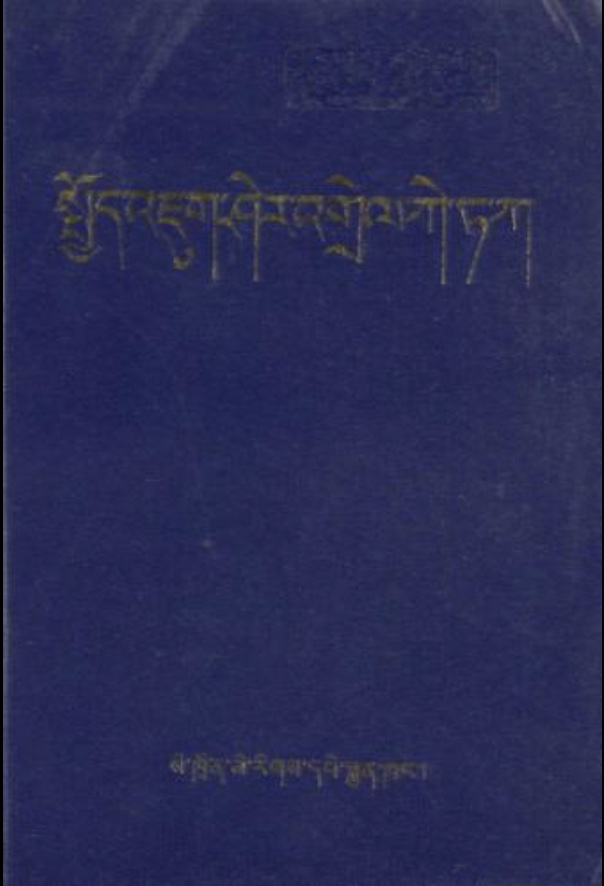
Spyod 'jug sher 'grel ke ta ka (Si khron mi rigs dpe skrun khang 1993)-front.jpg
Tibetan Publications1993About this item
This is a recension of the Norbuketaka, a word and meaning commentary (tshig don gyi 'grel pa) on the ninth chapter of the Bodhicaryāvatāra by Mipham Rinpoche based on the teachings of Patrul Rinpoche.
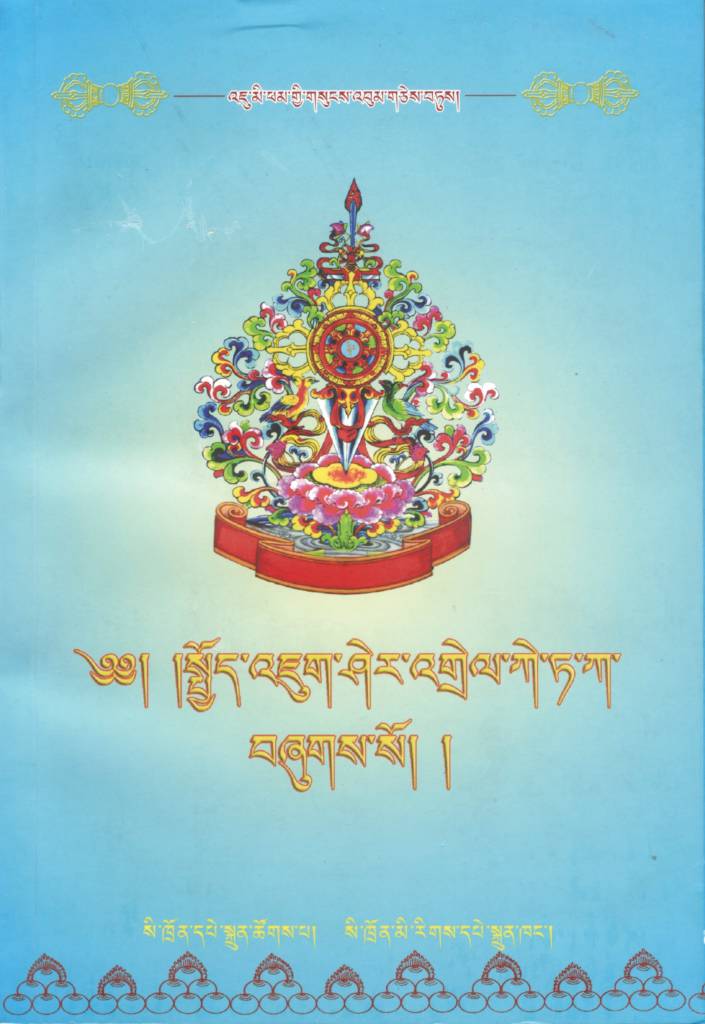
Spyod 'jug sher 'grel ke ta ka (Si khron mi rigs dpe skrun khang 1994)-front.jpg
Tibetan Publications1994About this item
This is a recension of the Norbuketaka, a word and meaning commentary (tshig don gyi 'grel pa) on the ninth chapter of the Bodhicaryāvatāra by Mipham Rinpoche.
3 Full translations
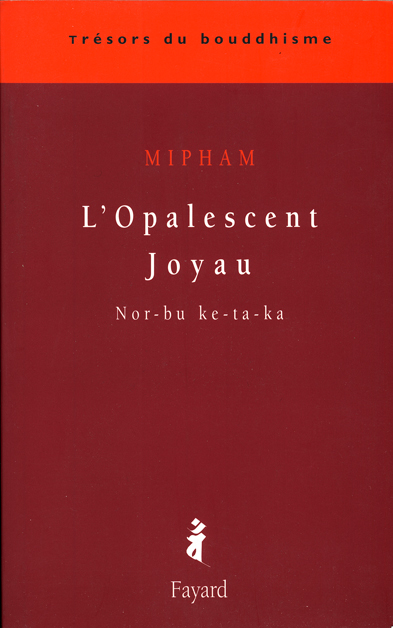
L'Opalescent Joyau-front.jpg
Books2004About this item
A French translation by Stéphane Arguillère of Mipam Gyatso's Nor bu ke ta ka, a commentary on the ninth chapter of the Bodhicaryāvatāra.
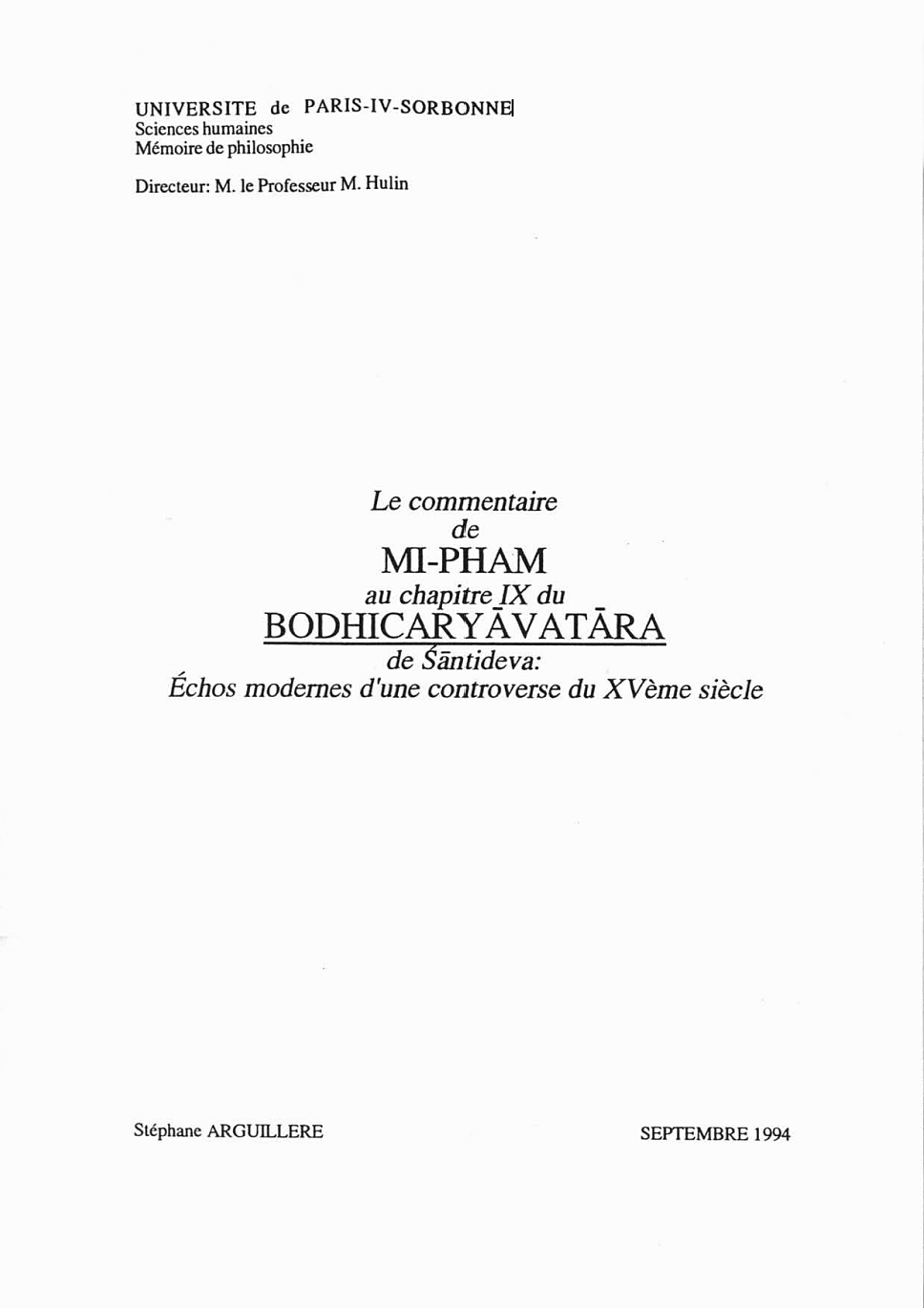
La commentaire de Mi-Pham au chapitre IX du Bodhicaryāvatāra de Śāntideva-front.jpg
Dissertations1994About this item
This dissertation includes a French translation of the first two thirds of Mipam Gyatso's commentary to the ninth chapter of Śāntideva's Bodhicaryāvatāra.
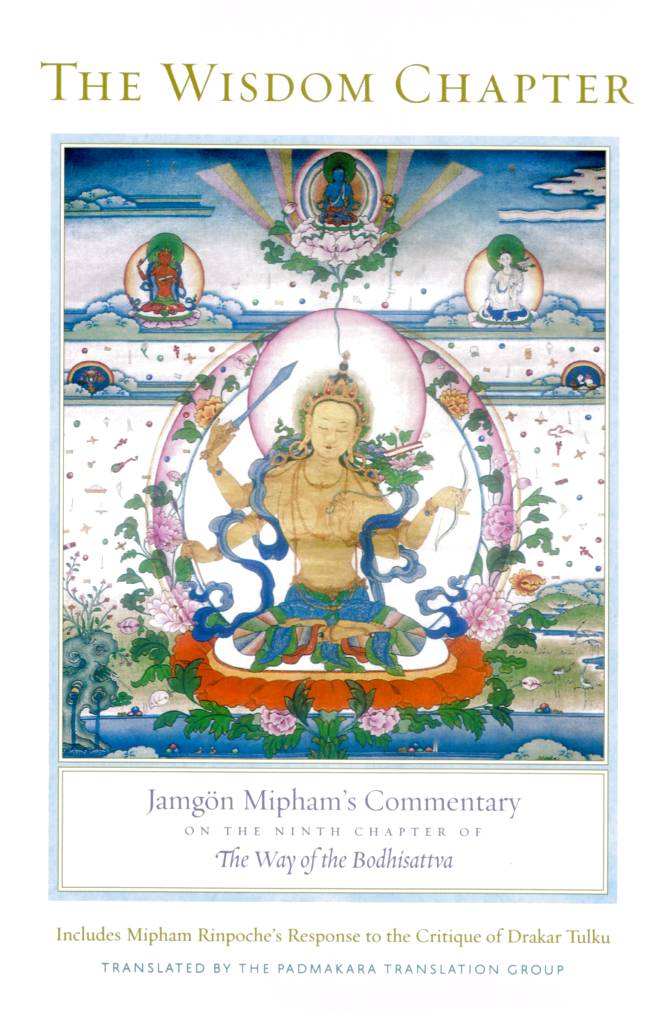
The Wisdom Chapter-front.jpg
Books2017About this item
An English translation of Mipam Gyatso's commentary to the ninth chapter of Śāntideva's Bodhicaryāvatāra by the Padmakara Translation Group.
1 Classical commentary of
Shantideva high res brighter cropped.jpg
Classical WorksAbout this item
An "Introduction to Bodhisattva Practice," the Bodhisattvacaryāvatāra is a poem about the path of a bodhisattva, in ten chapters, written by the Indian Buddhist Śāntideva (fl. c. 685–763). One of the masterpieces of world literature, it is a core text of Mahāyāna Buddhism and continues to be taught, studied, and commented upon in many languages and by many traditions around the world. The main subject of the text is bodhicitta, the altruistic aspiration for enlightenment, and the path and practices of the bodhisattva, the six perfections (pāramitās). The text forms the basis of many contemporary discussions of Buddhist ethics and philosophy.
1 Partial translations
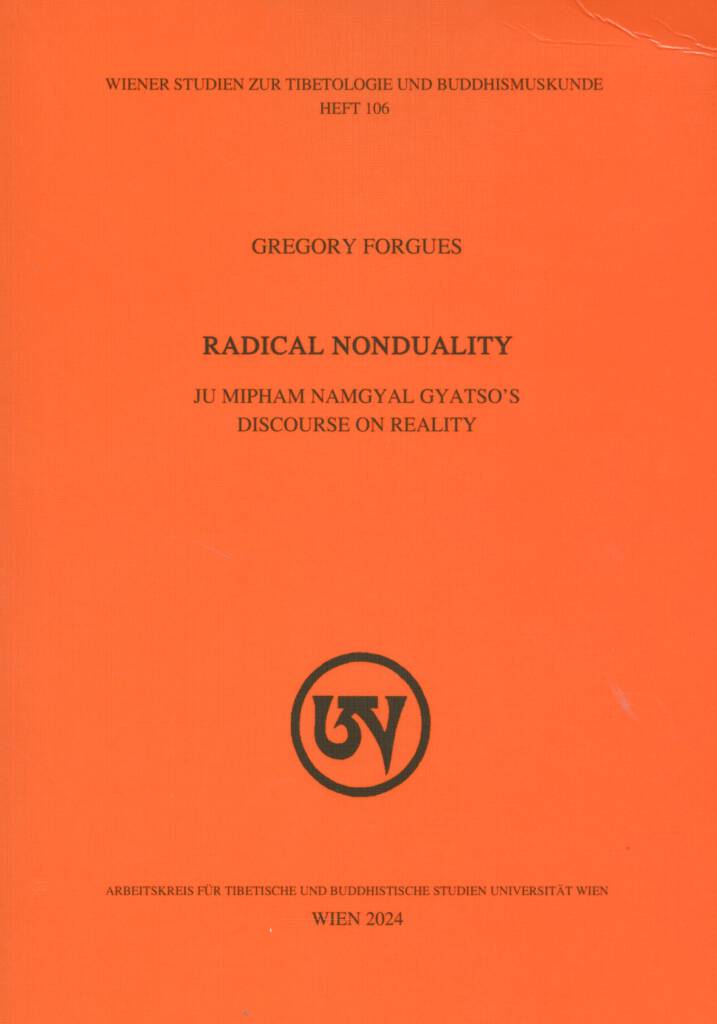
Radical Nonduality (Forgues 2024)-front.jpg
Books2024About this item
Ju Mipham (1846–1912) stands as one of the preeminent scholars within the Nyingma tradition of Tibetan Buddhism. The objective of this study is to present Mipham’s nonconceptual nondualism by analyzing his discourse with regard to the ground (gzhi), the path (lam), and the result (’bras bu). In the initial sections of the book, the examination centers on Mipham’s teaching on the core components of the path: view, practice, and conduct. In the first part of the book, Mipham’s interpretation of the view primarily as a form of ontological nondualism is examined within the wider context of the path. This discussion presents in detail Mipham’s utilization of an array of ascending views in his discourse on the two truths. The subsequent part delves into the interplay between knowledge and liberation that shapes Mipham’s soteriological project through the central notions of practice and conduct. This exploration sheds light on how practices rooted in cognitive nondualism facilitate the actualization of ontological nondualism. The concluding part of the book shifts focus to Mipham’s soteriological nondualism in which the ground of being taken as the starting point of the path and the result of the path itself are understood to be beyond any distinction or separation. (Source: WSTB)
3 Works containing teachings
The Ninth Chapter of The Way of the Bodhisattva - Part 1 (Sherab and Fletcher 2018)-front.jpg
Books2018About this item
Transcription of the commentary by Khenchen Pema Sherab Rinpoche including revision sessions by Wulstan Fletcher of teachings at the Palácio Villa Helena in Lisboa, Portugal from 14th - 20th November 2017. This event was organized by Stupa - Associação pela Paz no Mundo; Songtesn - Casa da Cultura do Tibete; Fundação Kangyur Rinpoche - Fundação para a Preservação da Cultura Tibetana and União Budista Portuguesa.
The Ninth Chapter of The Way of the Bodhisattva - Part 2 (Sherab and Fletcher 2019)-front.jpg
Books2019About this item
Transcription of the commentary by Khenchen Pema Sherab Rinpoche including revision sessions by Wulstan Fletcher of teachings at the Hotel VIP Executive Entrecampos in Lisboa, Portugal from 9th - 15th August 2018. This event was organized by Stupa - Associação pela Paz no Mundo; Songtesn - Casa da Cultura do Tibete; União Budista Portuguesa and Fundação Kangyur Rinpoche - Fundação para a Preservação da Cultura Tibetana.
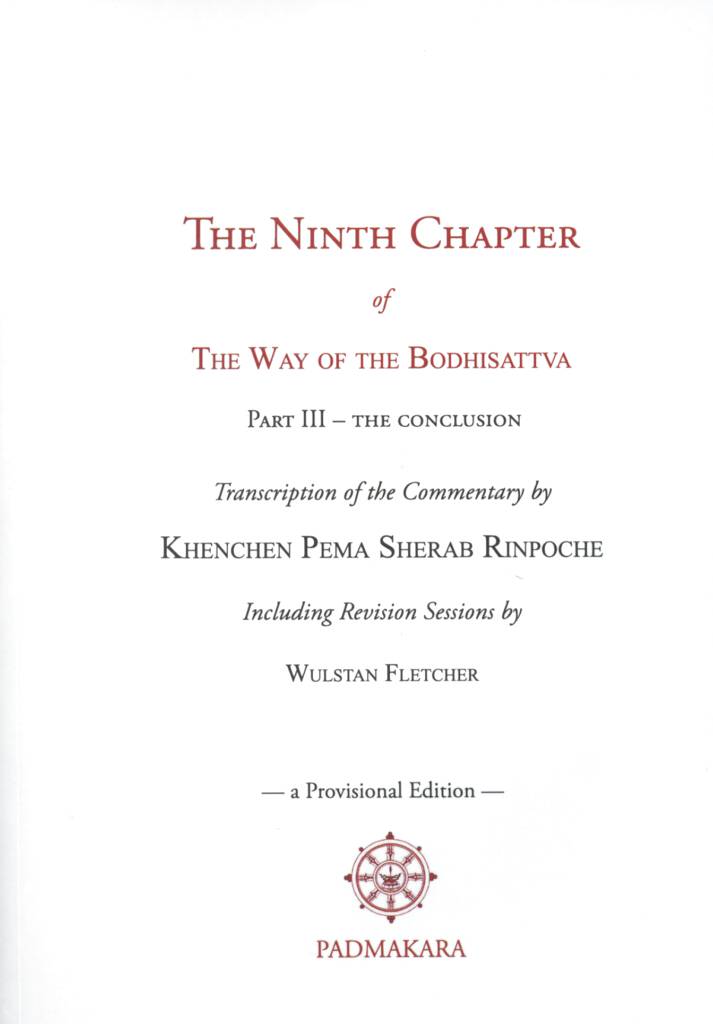
The Ninth Chapter of The Way of the Bodhisattva - Part 3 (Sherab and Fletcher 2020)-front.jpg
Books2020About this item
Transcription of the commentary by Khenchen Pema Sherab Rinpoche including revision sessions by Wulstan Fletcher of teachings at the União Budista Portuguesa in Lisboa, Portugal from 6th - 12th October 2019. This event was organized by Stupa - Associação pela Paz no Mundo; Songtesn - Casa da Cultura do Tibete; União Budista Portuguesa and Fundação Kangyur Rinpoche - Fundação para a Preservação da Cultura Tibetana.
15 Scholarship
Blankleder Helena Tsadra.jpg
Articles2017About this item
In The Wisdom Chapter: Jamgön Mipham's Commentary on the Ninth Chapter of "The Way of the Bodhisattva", Wulstan Fletcher and Helena Blankleder give a detailed presentation of Mipham's understanding of Madhyamaka and his responses to criticisms from Gelukpa scholars. Mipham's approach to reconciling the Svātantrika and Prāsaṅgika schools of thought is analyzed in depth in the light of his interpretation of the two truths, his view on ultimate truth, and his efforts to revive a distinct Nyingma voice in the Tibetan hermeneutical debate on how central Indian Buddhist scriptures should be understood. This examination of Mipham's writings and his responses to critics allows readers to understand the subtleties of the debates and the reasoning behind different positions. It explains the historical and cultural context of these philosophical discussions, including the role of sectarian affiliations and efforts to preserve and revive traditional interpretations, illustrating the diversity of Madhyamaka positions in Tibet.
Blankleder Helena Tsadra.jpg
Articles2017About this item
In this excerpt from the translators' introduction to The Wisdom Chapter, Helena Blankleder and Wulstan Fletcher of the Padmakara Translation Group examine the controversy surrounding Mipham Rinpoche's commentary on the "Wisdom Chapter" of the Bodhicaryāvatāra, known as the Ketaka Jewel. The rise of the Geluk school and its relation to other Tibetan Buddhist traditions are explored, along with Mipham's role in the nonsectarian Rime movement, which aimed to preserve endangered Buddhist Tibetan Buddhist traditions while fostering intellectual freedom. This exploration of Mipham's motivations, his approach to doctrinal debates, and the challenges faced by non-Geluk traditions provides insight into the complex interplay between different schools of thought and the political landscape of Tibet. It sheds light on the complex relationship between historical and political conditions and the arising of doctrinal interpretations, offering context for understanding the philosophical debates that shaped Tibetan Buddhism.
Markus Viehbeck brighter.jpg
Articles2014About this item
This excerpt from Markus Viehbeck's book Polemics in Indo-Tibetan Scholasticism reconstructs the historical development of the controversy surrounding Mipham's commentary on the "Wisdom Chapter" of the Bodhicaryāvatāra, known as the Nor bu ke ta ka. It outlines the challenges in reconstructing historical events from hagiographies and oral accounts, tracing the chronology of debates that lasted nearly thirty years. Key figures, including Mipham and his Geluk opponents, are described, along with the exchange of critical letters and treatises between them. In this essay, Viehbeck shows how these debates connected scholars from different cultural regions and monastic centers across Tibet, illustrating the interconnectedness of Tibetan intellectual circles and the impact of their philosophical discussions. His overview demonstrates the complexities of reconstructing historical events from limited sources and offers insights into the nature and history of scholastic debates in Tibet.
Markus Viehbeck brighter.jpg
Articles2011 (2012)About this item
No abstract given. Here are the first relevant paragraphs:

With its roots in the rich Indian tradition of religio-philosophical disputation, the phenomenon of debating in Tibet is an integral element of monastic scholarship as it developed on the plateau. In the course of monastic education specific types of debates are utilised as a heuristic method to facilitate a student’s entrance into the intricacies of Buddhist doctrine.[2] Beyond the frame of everyday monastic courtyard debating, debates between different factions and schools serve not only as a pedagogical means, but often exhibit a more antagonistic nature. While Tibetan history is full of accounts of—at times very fierce—personal disputations, there are no records informing us about the exact development of these. As opponents were not always proximate in terms of space and time, debates also materialised in the form of polemical texts, composed to refute a (living or dead) opponent. These texts came to form an independent genre of Tibetan literature.[3] It is in texts of this genre where we find recorded not only rather eristic forms of criticism, but also the expression of views that contributed to and reflected the most fundamental doctrinal differences that evolved in the different religio-philosophical traditions.[4]
      In this paper, I intend to give a few glimpses into one specific controversy, a series of debates that originated towards the end of the nineteenth century subsequent to the composition of 'Ju Mipham's Nor bu ke ta ka. Providing a comprehensive picture of these debates is not only very difficult in general, but virtually impossible in the frame of a short article. I will therefore limit my focus to the discussion of a single concept, the doctrine of satyadvaya.[5]

Notes
  1. (This note is attached to the article title) This article is the substantially revised and enlarged version of a paper titled "Die Lehre von satyadvaya in 'Ju Mi phams' Nor bu ke ta ka" that was presented at the Conference of German Orientalists (Deutscher Orientalistentag) in Freiburg in September 2007 and published in 2009 (Viehbeck 2009). I would like to thank Helmut Tauscher, Anne MacDonald, Dorji Wangchuk, Birgit Kellner, Patrick McAllister, and Susanne Kimm for their numerous comments and corrections. The research for this article was conducted within the project "Tibetan Madhyamaka Exegesis: Later Developments" (project P19597), headed by Helmut Tauscher and funded by the Austrian Science Fund (FWF). The final version of this article was completed within the project "Reasoning in South Asian and Tibetan Buddhism" under the leadership of Birgit Kellner, as part of the Cluster of Excellence" Asia and Europe in a Global Context," Heidelberg University.
  2. See Dreyfus 2003b for a detailed description of the role of debate in the monastic education system.
  3. Lopez 1996 gives a short description of 'polemics' as a literary genre. A more extensive discussion is found in Cabezón & Dargyay 2007: 11 ff.,together with a sketch of the history of polemical literature (pp. 18 ff.).
  4. As Cabezón has pointed out, studying polemical texts can therefore lead to a fuller picture of the richness and variegation of Tibetan scholastic culture, which can be easily overlooked when dealing with self-contained depictions of Buddhist doctrine by individual authors; cf. Cabezón 1995: 645 ff.
  5. It should be noted that the present article, concerned only with a single concept and focussed more on the starting point of the debates, the Nor bu ke ta ka, is preliminary, and that some of its assessments are tentative. More details of these debates, in particular within the controversy between 'Ju Mipham and Dpa' ris Rab gsal, are discussed in my Ph.D. thesis, see Viehbeck 2012.
Smith Gene Lagacy.jpg
[[Articles/Introduction to Gzhan gyis brtsad pa'i lan mdor bsdus pa rigs lam rab gsal de nyid snang byed: An Answer to Blo-bzang-rab-gsal's Refutation of the Author's 'Sher le nor bu ke ta ka' and Its Defence, the Brgal lan nyin byed snang ba|Smith, E. Gene. Introduction to Gzhan gyis brtsad pa'i lan mdor bsdus pa rigs lam rab gsal de nyid snang byed: An Answer to Blo-bzang-rab-gsal's Refutation of the Author's 'Sher le nor bu ke ta ka' and Its Defence, the Brgal lan nyin byed snang ba, by 'Jam mgon Mi pham rgya mtsho of 'Ju, 1–11. Gangtok, Sikkim: Sonam T. Kazi, 1969. Buda by BDRC Logo.jpg]]
Articles1969About this item
This is E. Gene Smith's introduction to Mipam Gyatso's text. It discusses the Bodhicaryāvatāra and the controversy engendered by Mipam's commentary on the ninth chapter.
Markus Viehbeck brighter.jpg
Articles2014About this item
The following excerpt is drawn from Markus Viehbeck's Polemics in Indo-Tibetan Scholasticism. It discusses the debate between Mipham and his contemporary from the Geluk school, Pari Rabsel (Dpa' ris Rab gsal, 1840–1912), outlining the various topics of disagreement over their interpretations of the ninth chapter of the Bodhicaryāvatāra. Four main topics of controversy are explored: the relationship between insight and other perfections, the nature of ego-clinging and selflessness, the realization of emptiness by śrāvakas and pratyekabuddhas, and issues concerning the two truths and the nature of ultimate reality. This detailed examination of the arguments and counterarguments of both scholars, contextualized within the broader Tibetan Buddhist philosophical landscape, offers a comprehensive look at how different schools of thought interpret key Madhyamaka concepts. It provides insight into the methods of Tibetan scholastic debate and the ways in which different traditions engage with and interpret canonical texts, serving as a valuable resource for those seeking to deepen their understanding of Tibetan Buddhist philosophy and ongoing discussions surrounding the interpretation of foundational texts.
La commentaire de Mi-Pham au chapitre IX du Bodhicaryāvatāra de Śāntideva-front.jpg
Dissertations1994About this item
This dissertation includes a French translation of the first two thirds of Mipam Gyatso's commentary to the ninth chapter of Śāntideva's Bodhicaryāvatāra.
Markus Viehbeck brighter.jpg
Articles2014About this item
In this his essay drawn from Markus Viehbeck's book Polemics in Indo-Tibetan Scholasticism, the author establishes the wider literary and sociohistorical background of the debate between 'Ju Mi pham and Dpa' ris Rab gsal. The history of philosophical controversies in Tibet is traced, from early disagreements about proper Buddhist practice to later doctrinal disputes between schools. Viehbeck explains in detail how these debates centered on the correct interpretation of Madhyamaka philosophy, with different lineages claiming to represent the authentic transmission of Indian Buddhist thought. By situating specific controversies within a broader historical context, this overview helps readers appreciate the significance of these debates beyond mere philosophical disagreements. It demonstrates how polemical literature served as a means for different schools to define their identities and claim legitimacy, highlighting the intricate ways in which Tibetan scholars engaged with their intellectual heritage and creatively reinterpreted earlier ideas to address contemporary concerns.
Smith Gene Lagacy.jpg
Articles2001About this item
This is chap. 16 in E. Gene Smith's book Among Tibetan Texts. It discusses the Bodhicaryāvatāra and the controversy engendered by Mipam's commentary on the ninth chapter.
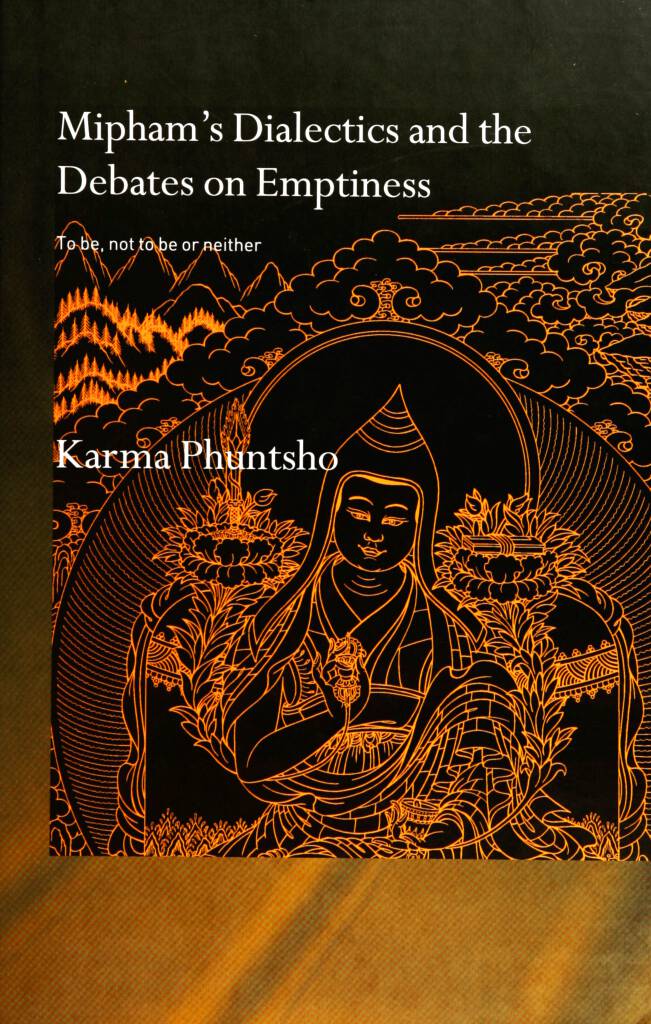
Mipham's Dialectics and the Debates on Emptiness-front.jpg
Books2005About this item
Karma Phuntsho's introduction to the Buddhist philosophy of Emptiness and an examination of the critique by Mipham (1846-1912) formulated in his diverse writings
Polemics in Indo-Tibetan Scholasticism-front.jpg
Books2014About this item
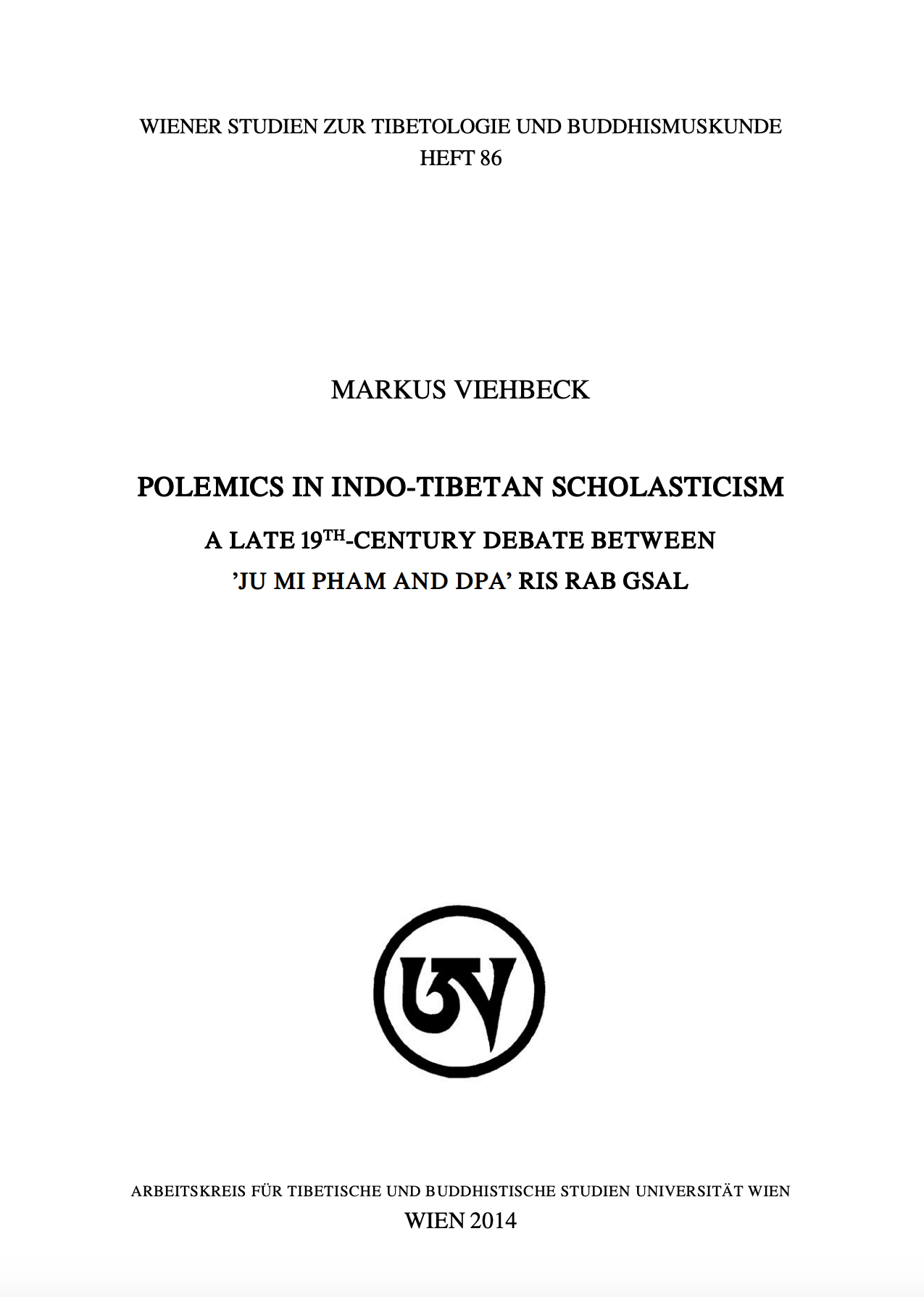
The work investigates the series of debates between ’Ju Mi pham (1846–1912) and his contemporary opponents from the Dge lugs school – in particular Dpa’ ris Rab gsal (1840–1912).
Radical Nonduality (Forgues 2024)-front.jpg
Books2024About this item
Ju Mipham (1846–1912) stands as one of the preeminent scholars within the Nyingma tradition of Tibetan Buddhism. The objective of this study is to present Mipham’s nonconceptual nondualism by analyzing his discourse with regard to the ground (gzhi), the path (lam), and the result (’bras bu). In the initial sections of the book, the examination centers on Mipham’s teaching on the core components of the path: view, practice, and conduct. In the first part of the book, Mipham’s interpretation of the view primarily as a form of ontological nondualism is examined within the wider context of the path. This discussion presents in detail Mipham’s utilization of an array of ascending views in his discourse on the two truths. The subsequent part delves into the interplay between knowledge and liberation that shapes Mipham’s soteriological project through the central notions of practice and conduct. This exploration sheds light on how practices rooted in cognitive nondualism facilitate the actualization of ontological nondualism. The concluding part of the book shifts focus to Mipham’s soteriological nondualism in which the ground of being taken as the starting point of the path and the result of the path itself are understood to be beyond any distinction or separation. (Source: WSTB)
Viehbeck Markus 2012 The Case of ’Ju Mi pham (1846–1912) and Dpa’ ris Rab gsal (1840–1912) A Study in Dgag lan Debate PhD Diss University of Vienna.jpg
Dissertations2012About this item
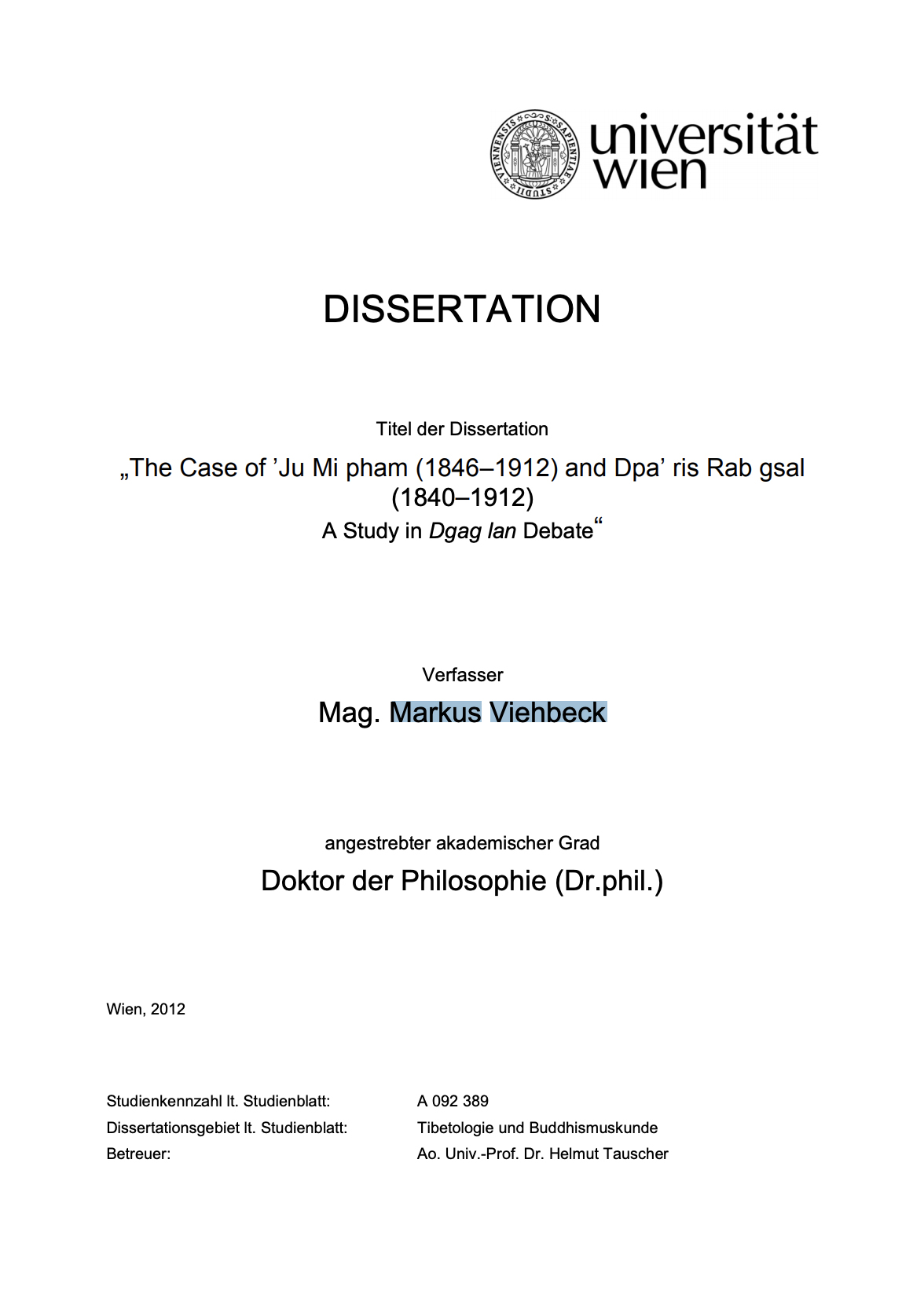
A case study in dgag lan debate and the dispute that evolved between 'Ju Mi pham and Dpa' ris Rab gsal on the correct interpretation of the 9th chapter of the Bodhicaryāvatāra.
Blankleder Helena Tsadra.jpg
Articles2017About this item
In the following excerpt from The Wisdom Chapter: Jamgön Mipham's Commentary on the Ninth Chapter of "The Way of the Bodhisattva", Wulstan Fletcher and Helena Blankleder focus on Mipham's Light of the Day Star, his response to Drakar Lobzang Palden Tenzin Nyendrak's criticism of his commentary on the ninth chapter of the Bodhicaryāvatāra. The debate between Mipham, a Nyingma scholar, and Drakar Tulku, a Gelukpa scholar, regarding the interpretation of Śāntideva's "Wisdom Chapter" in the Bodhicaryāvatāra is discussed in detail. Their differing views on the nature of arhatship and the realization of emptiness in Hīnayāna and Mahāyāna traditions are explored along with biographical information on Drakar Tulku and his contributions to Buddhist scholarship. This examination offers insight into the intellectual and cultural milieu of early twentieth-century Tibet, showcasing the interconnectedness of scholarship and religious practice. It is also valuable to better understand the complexities involved in interpreting Buddhist texts translated from Sanskrit into Tibetan.
6 Polemical content
Drakkar Lobzang Palden.jpg
Classical WorksAbout this item
This is another criticism of Mipam's commentary (Nor bu ke ta ka) by Drakar Lobzang Palden Tenzin Nyendrak (Brag dkar blo bzang dpal ldan bstan 'dzin snyan grags). Type of Commentary: objections to Mipam's commentary, Nor bu ke ta ka (second part)
Length: 16
Tradition: Geluk
Blo bzang rab gsal.jpg
Classical WorksAbout this item
A polemic against certain aspects of Mipam's Norbu ketaka, based on scriptural sources and reasoning. Type of Commentary: The main polemic against certain aspects of Mipam's commentary on the 9th chapter of the BCA
Length: 59
Tradition: Geluk
Blo bzang rab gsal.jpg
Classical WorksAbout this item
"In his last letter to Mi pham, Rab gsal mentioned that he had seen another critical work addressed to Mi pham, called Rgol ngan 'joms pa'i rdo rje pha lam. Apart from the name and a short remark about its erudition, no further information is provided. Mi pham also seems to have taken no special note of this work." Viehbeck, Markus. Polemics in Indo-Tibetan Scholasticism: A Late 19th-Century Debate Between 'Ju Mi pham and Dpa' ris Rab gsal. Vienna Series for Tibetan and Buddhist Studies 86. Vienna: Association for Tibetan and Buddhist Studies, 2014. See page 36. Type of Commentary: Not a commentary, but a letter of refutation
Length: ?
Tradition: Geluk
Blo bzang rab gsal.jpg
Classical WorksAbout this item
This was Pari Lobzang Rapsal's preliminary polemical work against Mipam, written in 1897. Type of Commentary: The preliminary polemic against certain aspects of Mipam's commentary on the 9th chapter of the BCA
Length: 4
Tradition: Geluk
29 A topic of
Drakkar Lobzang Palden.jpg
Classical WorksAbout this item
This is another criticism of Mipam's commentary (Nor bu ke ta ka) by Drakar Lobzang Palden Tenzin Nyendrak (Brag dkar blo bzang dpal ldan bstan 'dzin snyan grags). Type of Commentary: objections to Mipam's commentary, Nor bu ke ta ka (second part)
Length: 16
Tradition: Geluk
Blo bzang rab gsal.jpg
Classical WorksAbout this item
A polemic against certain aspects of Mipam's Norbu ketaka, based on scriptural sources and reasoning. Type of Commentary: The main polemic against certain aspects of Mipam's commentary on the 9th chapter of the BCA
Length: 59
Tradition: Geluk
Mi-pham-rgya-mtsho-rin-po-che-Padmakara.jpg
Classical WorksAbout this item
This is Mipam Rinpoche's answer to Drakar Tulku's objections to some points in his commentary on the ninth chapter of the Bodhicaryāvatāra (Nor bu ke ta ka).
Blankleder Helena Tsadra.jpg
Articles2017About this item
In this excerpt from the translators' introduction to The Wisdom Chapter, Helena Blankleder and Wulstan Fletcher of the Padmakara Translation Group examine the controversy surrounding Mipham Rinpoche's commentary on the "Wisdom Chapter" of the Bodhicaryāvatāra, known as the Ketaka Jewel. The rise of the Geluk school and its relation to other Tibetan Buddhist traditions are explored, along with Mipham's role in the nonsectarian Rime movement, which aimed to preserve endangered Buddhist Tibetan Buddhist traditions while fostering intellectual freedom. This exploration of Mipham's motivations, his approach to doctrinal debates, and the challenges faced by non-Geluk traditions provides insight into the complex interplay between different schools of thought and the political landscape of Tibet. It sheds light on the complex relationship between historical and political conditions and the arising of doctrinal interpretations, offering context for understanding the philosophical debates that shaped Tibetan Buddhism.
Markus Viehbeck brighter.jpg
Articles2014About this item
This excerpt from Markus Viehbeck's book Polemics in Indo-Tibetan Scholasticism reconstructs the historical development of the controversy surrounding Mipham's commentary on the "Wisdom Chapter" of the Bodhicaryāvatāra, known as the Nor bu ke ta ka. It outlines the challenges in reconstructing historical events from hagiographies and oral accounts, tracing the chronology of debates that lasted nearly thirty years. Key figures, including Mipham and his Geluk opponents, are described, along with the exchange of critical letters and treatises between them. In this essay, Viehbeck shows how these debates connected scholars from different cultural regions and monastic centers across Tibet, illustrating the interconnectedness of Tibetan intellectual circles and the impact of their philosophical discussions. His overview demonstrates the complexities of reconstructing historical events from limited sources and offers insights into the nature and history of scholastic debates in Tibet.
Forgues-Gregory-Darthmouth-2026.png
Articles2024About this item
This article by Greg Forgues explores and contextualizes the philosophical debates between Mipham Rinpoche, representing the Nyingma tradition, and Geluk scholars like Drakar Tulku and Pari Lobsang Rabsel in nineteenth-century Tibet. The debates centered around interpretations of Madhyamaka philosophy, particularly focusing on Mipham's commentary, Ketaka Jewel, on Śāntideva's Bodhicaryāvatāra. Key points of contention included the nature of the two truths, the object of negation in Madhyamaka reasoning, the realization of emptiness by arhats, and the relationship between the six perfections on the bodhisattva path. This examination offers valuable insights into the rich philosophical discourse on the "Wisdom Chapter" of the Bodhicaryāvatāra that developed over the centuries within Tibetan Buddhism. It highlights fundamental differences between the Geluk and Nyingma schools in their approach to Buddhist philosophy and practice. By contrasting Tsongkhapa's Geluk interpretation with Mipham's Nyingma view, this article gives a detailed account of how these traditions interpret key concepts like the two truths, the nature of ultimate reality, and the path to enlightenment.
Mi-pham-rgya-mtsho-rin-po-che-Padmakara.jpg
Classical WorksAbout this item
This is Mipam Rinpoche's answer to Pariwa Lobzang Rapsal's objections to some points in his commentary on the ninth chapter of the Bodhicaryāvatāra (Nor bu ke ta ka). Mipam completed this work in 1903, in the 5th month, and Pariwa Lobzang Rapsal received it on the 8th day of the 9th month of 1903.
Smith Gene Lagacy.jpg
[[Articles/Introduction to Gzhan gyis brtsad pa'i lan mdor bsdus pa rigs lam rab gsal de nyid snang byed: An Answer to Blo-bzang-rab-gsal's Refutation of the Author's 'Sher le nor bu ke ta ka' and Its Defence, the Brgal lan nyin byed snang ba|Smith, E. Gene. Introduction to Gzhan gyis brtsad pa'i lan mdor bsdus pa rigs lam rab gsal de nyid snang byed: An Answer to Blo-bzang-rab-gsal's Refutation of the Author's 'Sher le nor bu ke ta ka' and Its Defence, the Brgal lan nyin byed snang ba, by 'Jam mgon Mi pham rgya mtsho of 'Ju, 1–11. Gangtok, Sikkim: Sonam T. Kazi, 1969. Buda by BDRC Logo.jpg]]
Articles1969About this item
This is E. Gene Smith's introduction to Mipam Gyatso's text. It discusses the Bodhicaryāvatāra and the controversy engendered by Mipam's commentary on the ninth chapter.
Markus Viehbeck brighter.jpg
Articles2014About this item
The following excerpt is drawn from Markus Viehbeck's Polemics in Indo-Tibetan Scholasticism. It discusses the debate between Mipham and his contemporary from the Geluk school, Pari Rabsel (Dpa' ris Rab gsal, 1840–1912), outlining the various topics of disagreement over their interpretations of the ninth chapter of the Bodhicaryāvatāra. Four main topics of controversy are explored: the relationship between insight and other perfections, the nature of ego-clinging and selflessness, the realization of emptiness by śrāvakas and pratyekabuddhas, and issues concerning the two truths and the nature of ultimate reality. This detailed examination of the arguments and counterarguments of both scholars, contextualized within the broader Tibetan Buddhist philosophical landscape, offers a comprehensive look at how different schools of thought interpret key Madhyamaka concepts. It provides insight into the methods of Tibetan scholastic debate and the ways in which different traditions engage with and interpret canonical texts, serving as a valuable resource for those seeking to deepen their understanding of Tibetan Buddhist philosophy and ongoing discussions surrounding the interpretation of foundational texts.
L'Opalescent Joyau-front.jpg
Books2004About this item
A French translation by Stéphane Arguillère of Mipam Gyatso's Nor bu ke ta ka, a commentary on the ninth chapter of the Bodhicaryāvatāra.
La commentaire de Mi-Pham au chapitre IX du Bodhicaryāvatāra de Śāntideva-front.jpg
Dissertations1994About this item
This dissertation includes a French translation of the first two thirds of Mipam Gyatso's commentary to the ninth chapter of Śāntideva's Bodhicaryāvatāra.
Markus Viehbeck brighter.jpg
Articles2014About this item
In this his essay drawn from Markus Viehbeck's book Polemics in Indo-Tibetan Scholasticism, the author establishes the wider literary and sociohistorical background of the debate between 'Ju Mi pham and Dpa' ris Rab gsal. The history of philosophical controversies in Tibet is traced, from early disagreements about proper Buddhist practice to later doctrinal disputes between schools. Viehbeck explains in detail how these debates centered on the correct interpretation of Madhyamaka philosophy, with different lineages claiming to represent the authentic transmission of Indian Buddhist thought. By situating specific controversies within a broader historical context, this overview helps readers appreciate the significance of these debates beyond mere philosophical disagreements. It demonstrates how polemical literature served as a means for different schools to define their identities and claim legitimacy, highlighting the intricate ways in which Tibetan scholars engaged with their intellectual heritage and creatively reinterpreted earlier ideas to address contemporary concerns.
Smith Gene Lagacy.jpg
Articles2001About this item
This is chap. 16 in E. Gene Smith's book Among Tibetan Texts. It discusses the Bodhicaryāvatāra and the controversy engendered by Mipam's commentary on the ninth chapter.
Mipham's Dialectics and the Debates on Emptiness-front.jpg
Books2005About this item
Karma Phuntsho's introduction to the Buddhist philosophy of Emptiness and an examination of the critique by Mipham (1846-1912) formulated in his diverse writings
Mi-pham-rgya-mtsho-rin-po-che-Padmakara.jpg
Classical WorksAbout this item
This is Mipam's response to Rapsal's Shes ldan yid kyi gdung sel rigs lam ga bur chu rgyun. In the Ketaka text, published as a modern book by Namdroling monastery (Penor Shedra 2018), this text is called Mkhas mchog blo bzang rab gsal mdun phul rgyu rjes ma. It has seven pages and is an integral part of Mipam's Gzhan gyis brtsad pa'i lan mdor bsdus pa rigs lam rab gsal de nyid snang byed. Gengye Könchok Gyatso (Rgan rgya'i dkon mchog rgya mtsho) (who has written an article about Rapsal at: http://www.tb1025.cn/lg/muna/xidaidanz/2020-09-27/3581.html) confirms that text was sent to Rapsal by Mipam after he had received Rapsal's Shes ldan yid kyi gdung sel rigs lam ga bur chu rgyun. Type of Commentary:
Length: 7
Tradition: Nyingma
Polemics in Indo-Tibetan Scholasticism-front.jpg
Books2014About this item
The work investigates the series of debates between ’Ju Mi pham (1846–1912) and his contemporary opponents from the Dge lugs school – in particular Dpa’ ris Rab gsal (1840–1912).
Radical Nonduality (Forgues 2024)-front.jpg
Books2024About this item
Ju Mipham (1846–1912) stands as one of the preeminent scholars within the Nyingma tradition of Tibetan Buddhism. The objective of this study is to present Mipham’s nonconceptual nondualism by analyzing his discourse with regard to the ground (gzhi), the path (lam), and the result (’bras bu). In the initial sections of the book, the examination centers on Mipham’s teaching on the core components of the path: view, practice, and conduct. In the first part of the book, Mipham’s interpretation of the view primarily as a form of ontological nondualism is examined within the wider context of the path. This discussion presents in detail Mipham’s utilization of an array of ascending views in his discourse on the two truths. The subsequent part delves into the interplay between knowledge and liberation that shapes Mipham’s soteriological project through the central notions of practice and conduct. This exploration sheds light on how practices rooted in cognitive nondualism facilitate the actualization of ontological nondualism. The concluding part of the book shifts focus to Mipham’s soteriological nondualism in which the ground of being taken as the starting point of the path and the result of the path itself are understood to be beyond any distinction or separation. (Source: WSTB)
Blo bzang rab gsal.jpg
Classical WorksAbout this item
This was Pari Lobzang Rapsal's preliminary polemical work against Mipam, written in 1897. Type of Commentary: The preliminary polemic against certain aspects of Mipam's commentary on the 9th chapter of the BCA
Length: 4
Tradition: Geluk
Spyod 'jug sher 'grel ke ta ka (Si khron mi rigs dpe skrun khang 1994)-front.jpg
Tibetan Publications1994About this item
This is a recension of the Norbuketaka, a word and meaning commentary (tshig don gyi 'grel pa) on the ninth chapter of the Bodhicaryāvatāra by Mipham Rinpoche.
Viehbeck Markus 2012 The Case of ’Ju Mi pham (1846–1912) and Dpa’ ris Rab gsal (1840–1912) A Study in Dgag lan Debate PhD Diss University of Vienna.jpg
Dissertations2012About this item
A case study in dgag lan debate and the dispute that evolved between 'Ju Mi pham and Dpa' ris Rab gsal on the correct interpretation of the 9th chapter of the Bodhicaryāvatāra.
Blankleder Helena Tsadra.jpg
Articles2017About this item
In the following excerpt from The Wisdom Chapter: Jamgön Mipham's Commentary on the Ninth Chapter of "The Way of the Bodhisattva", Wulstan Fletcher and Helena Blankleder focus on Mipham's Light of the Day Star, his response to Drakar Lobzang Palden Tenzin Nyendrak's criticism of his commentary on the ninth chapter of the Bodhicaryāvatāra. The debate between Mipham, a Nyingma scholar, and Drakar Tulku, a Gelukpa scholar, regarding the interpretation of Śāntideva's "Wisdom Chapter" in the Bodhicaryāvatāra is discussed in detail. Their differing views on the nature of arhatship and the realization of emptiness in Hīnayāna and Mahāyāna traditions are explored along with biographical information on Drakar Tulku and his contributions to Buddhist scholarship. This examination offers insight into the intellectual and cultural milieu of early twentieth-century Tibet, showcasing the interconnectedness of scholarship and religious practice. It is also valuable to better understand the complexities involved in interpreting Buddhist texts translated from Sanskrit into Tibetan.
The Ninth Chapter of The Way of the Bodhisattva - Part 1 (Sherab and Fletcher 2018)-front.jpg
Books2018About this item
Transcription of the commentary by Khenchen Pema Sherab Rinpoche including revision sessions by Wulstan Fletcher of teachings at the Palácio Villa Helena in Lisboa, Portugal from 14th - 20th November 2017. This event was organized by Stupa - Associação pela Paz no Mundo; Songtesn - Casa da Cultura do Tibete; Fundação Kangyur Rinpoche - Fundação para a Preservação da Cultura Tibetana and União Budista Portuguesa.
The Ninth Chapter of The Way of the Bodhisattva - Part 2 (Sherab and Fletcher 2019)-front.jpg
Books2019About this item
Transcription of the commentary by Khenchen Pema Sherab Rinpoche including revision sessions by Wulstan Fletcher of teachings at the Hotel VIP Executive Entrecampos in Lisboa, Portugal from 9th - 15th August 2018. This event was organized by Stupa - Associação pela Paz no Mundo; Songtesn - Casa da Cultura do Tibete; União Budista Portuguesa and Fundação Kangyur Rinpoche - Fundação para a Preservação da Cultura Tibetana.
The Ninth Chapter of The Way of the Bodhisattva - Part 3 (Sherab and Fletcher 2020)-front.jpg
Books2020About this item
Transcription of the commentary by Khenchen Pema Sherab Rinpoche including revision sessions by Wulstan Fletcher of teachings at the União Budista Portuguesa in Lisboa, Portugal from 6th - 12th October 2019. This event was organized by Stupa - Associação pela Paz no Mundo; Songtesn - Casa da Cultura do Tibete; União Budista Portuguesa and Fundação Kangyur Rinpoche - Fundação para a Preservação da Cultura Tibetana.
The Wisdom Chapter-front.jpg
Books2017About this item
An English translation of Mipam Gyatso's commentary to the ninth chapter of Śāntideva's Bodhicaryāvatāra by the Padmakara Translation Group.